 Contact Us

Table of Contents

Contact Us
Choose an activewear manufacturer on five things: performance-fabric sourcing, fit and compression development, construction method (cut-and-sew or seamless), MOQ conditions, and quality control. Ask each factory how it specifies stretch, recovery and opacity, how many sample revisions it allows, and what minimum applies to stock versus custom fabric — then verify the answers against a real sample before committing to bulk.
- Judge product skill, not factory size. Activewear fails on fabric behaviour, fit and seam construction, so assess how a supplier develops stretch garments rather than how many machines it runs.
- Compare MOQ by material condition. Stock fabric, custom-developed fabric or dyeing, and seamless programs carry different minimums and cannot be compared as one number.
- Sample approval is a test, not a guarantee. Approve only after checking stretch and recovery on the intended body area, and record what was approved so bulk can be compared against it.
- Timelines must name their starting point. Sampling and bulk days mean little without the milestone they run from — sample approval, material arrival or order confirmation.
- Use one conditional reference point. Minghang Garments publishes MOQ from 100 pcs per color per style on stock fabric, 300–500 pcs for custom fabric or dyeing, and 7–15 working-day sampling. Treat these as one manufacturer's stated terms, with their conditions attached.
What Does an Activewear Manufacturer Actually Do?
An activewear manufacturer develops and produces performance garments — sports bras, leggings, shorts, tops and coordinated sets — which means it handles stretch fabrics, fit and compression behaviour, and construction methods built for movement. A general apparel factory may sew the same silhouettes, but activewear selection turns on whether the supplier can engineer fabric behaviour and fit, not just assemble panels.
Minghang Garments' activewear page describes both cut-and-sew and seamless development and names stretch and recovery, opacity, fit, compression and seam construction as activewear engineering considerations. The same manufacturer's homepage lists sports bras, leggings, shorts and related categories alongside product development, fabric and trim sourcing, pattern making, sampling, bulk production, printing, embroidery, garment washing, labels and packaging.
That service list is the practical definition to test against. If a factory cannot describe how it develops a stretch garment and who owns each step, it is being considered as a custom activewear manufacturer without the product-specific capability the category requires.
[DIAGRAM: A linear vetting sequence from written product brief → fabric check → fit and compression sample → construction choice → capability questions → MOQ and commercial terms → sample approval and bulk QC, marking where each selection decision is made.]
Step 1 — Define Your Product Before You Shortlist Factories
Shortlist factories only after you can state the garment, the activity it is built for, the fabric behaviour it needs, and the size range you will sell. Suppliers quote against a brief; a vague one produces incomparable quotes and samples you cannot evaluate.
CMP Sportswear's buyer guide organises manufacturer selection into 10 steps, starting with product needs and fabric before quality, MOQ, pricing and communication. That order matters: those later comparisons only work once the product is fixed.
Write the brief in six parts before you contact anyone:
- Name the garment and the activity it is built for.
- State the required fabric behaviour — stretch and recovery, opacity, hand feel, moisture management.
- State a construction preference, or leave it open for the supplier to recommend.
- List the size range and how it should be graded.
- State the target order quantity per color and style.
- Note branding methods (printing, embroidery, labels, packaging) and any garment washing finish.
Structured evaluation is normal in this category, not overkill. Wearzio's guide builds in a manufacturer evaluation scorecard, and its retrieved page map reports roughly 3,027 words across 8 comparison tables — evidence that buyers are expected to compare suppliers criterion by criterion rather than on a single quote.
Step 2 — Assess Performance-Fabric Sourcing
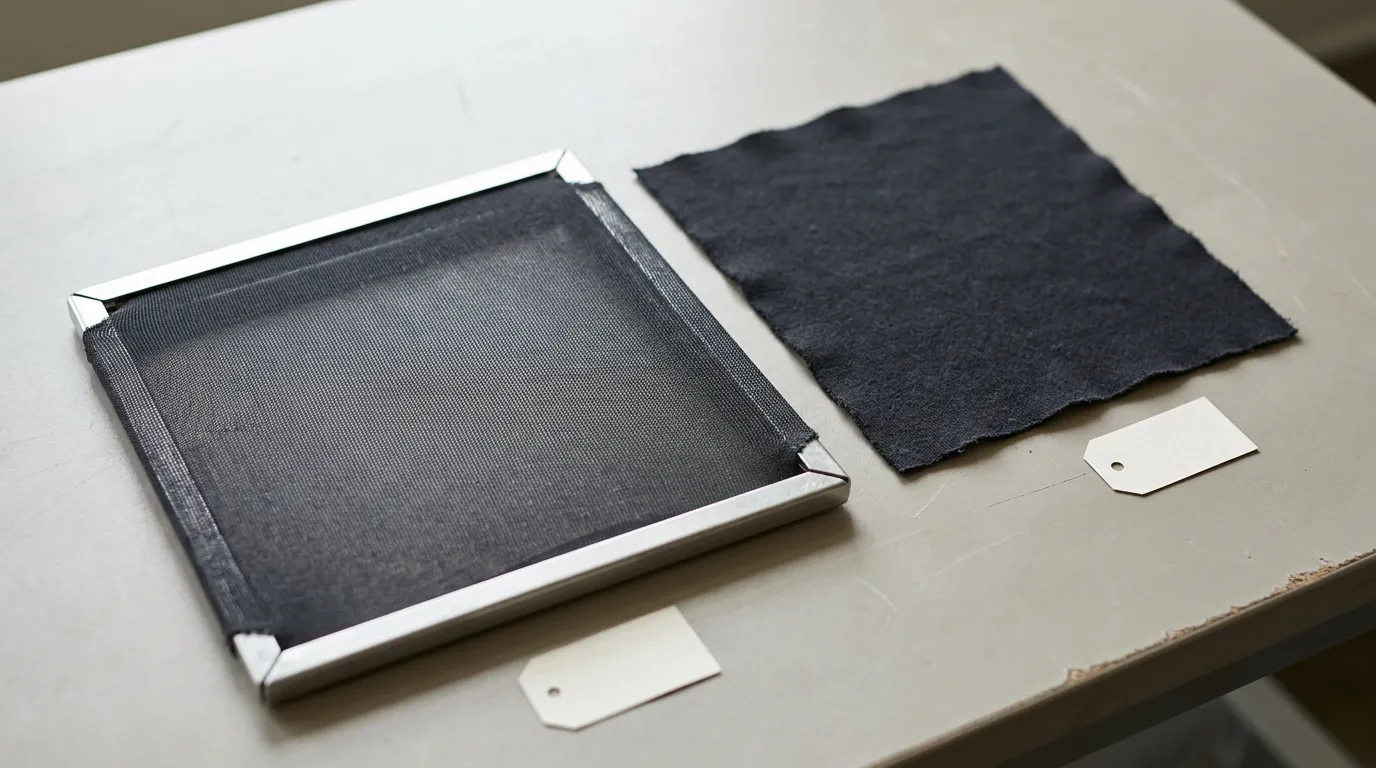
Ask the factory to specify fabric composition and weight and to show how it tests stretch, recovery and opacity before bulk. Fabric behaviour decides whether a legging stays opaque under tension, so sourcing capability is a selection criterion, not a detail to settle after sampling.
Minghang Garments' activewear page lists stretch and recovery and opacity among its stated activewear engineering considerations. The same manufacturer's homepage states that custom-developed fabrics or dyeing typically require 300–500 pieces — a signal that custom fabric carries a different commitment from a stock-fabric route, which it states starts from 100 pcs per color per style.
| Fabric or spec item | What you specify in the brief | How you verify with the supplier |
|---|---|---|
| Composition and weight (GSM) | Base fibre blend and target weight in grams per square metre | Ask whether stock or custom, and request a swatch before sampling |
| Stretch and recovery | Required stretch direction and how the fabric should return | Test the sample on the intended body area, not flat on a table |
| Opacity | Required coverage under stretch | Observe the sample under tension in the areas that stretch most |
| Hand feel and finish | Touch, surface finish and any washing effect | Compare a swatch against your own reference garment |
| Fabric continuity | Same quality held from sample through bulk | Ask how the material is sourced and reserved for the order |
For the specification side of this work, see how to choose fabric for activewear.
Step 3 — Judge Fit, Support and Compression Development
Evaluate fit, support and compression by wearing the sample through the intended movement and checking specific points: band and cup support on a sports bra, waistband stay and gusset comfort on leggings, seam placement under stretch. A factory that cannot discuss adjustments in those terms is unlikely to develop the product with you.
Minghang Garments' activewear page lists fit and compression among its stated development considerations, and its homepage states sampling typically takes 7–15 working days depending on product complexity, fabric and customization. That range is a planning input, not a promise: revisions extend the calendar, so agree how many revision rounds are included before the first sample is cut.
Four decision rules keep this stage honest:
- Fit-test a defined size range, not a single sample size.
- Wear the garment through the movement the product is sold for.
- Ask what the supplier recommends changing, and why.
- Log every approval — photographs, measurements and comments — because an unlogged change cannot be compared later.
Step 4 — Choose the Construction Method: Cut-and-Sew vs Seamless
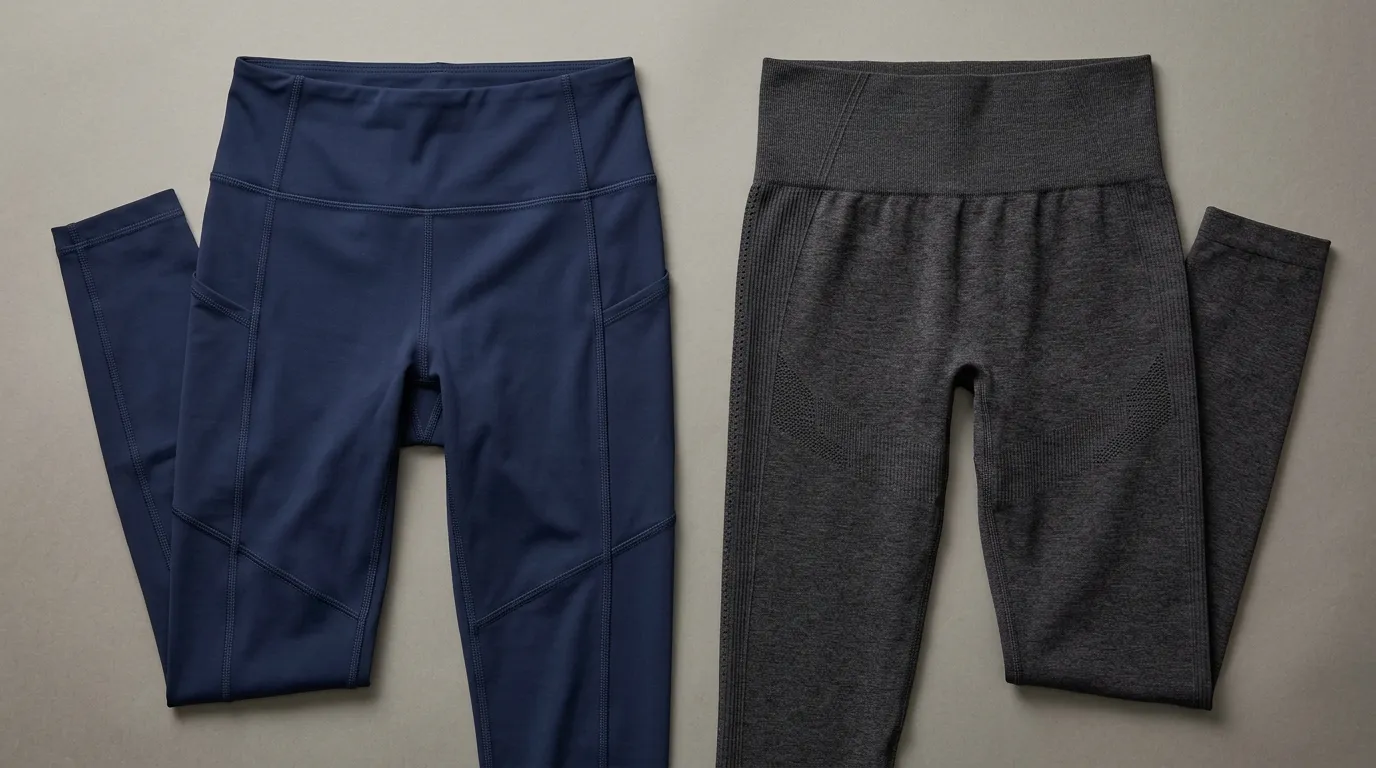
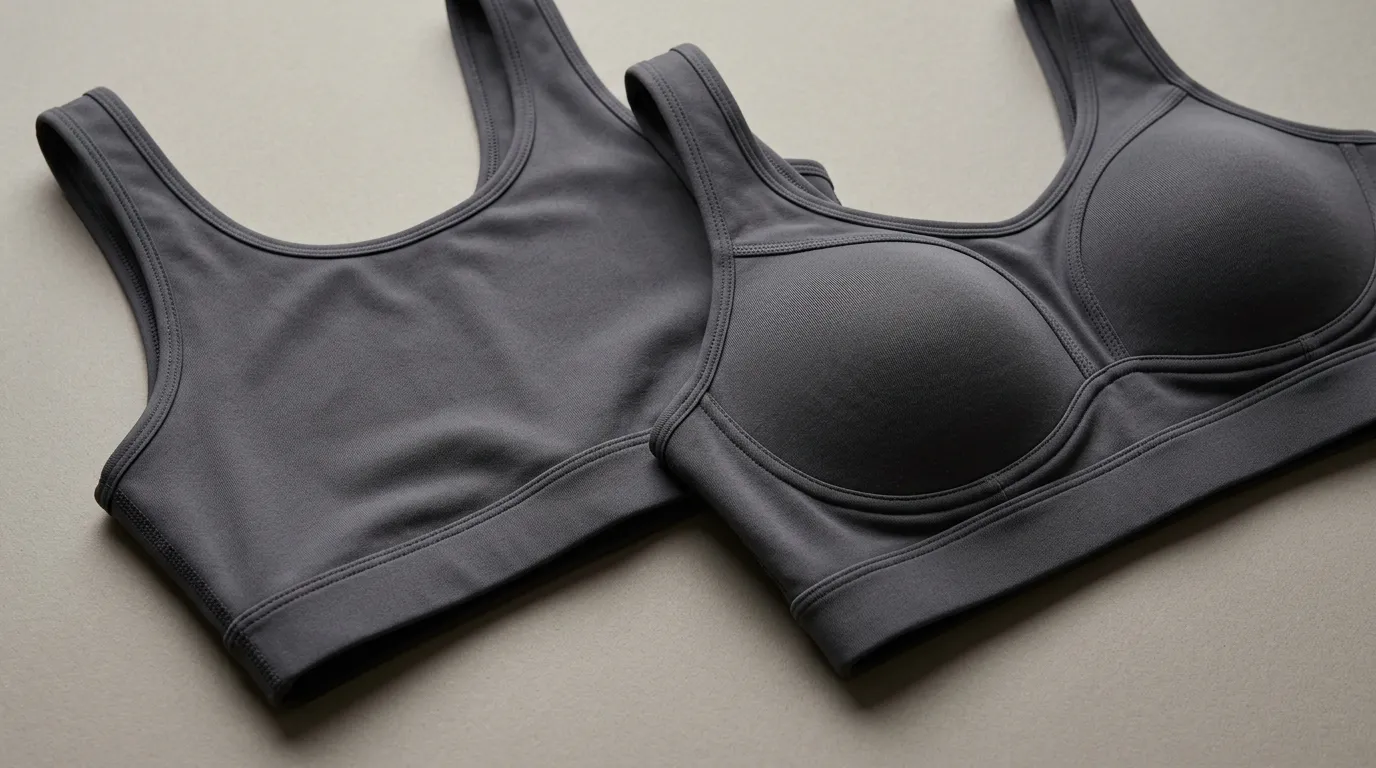
Cut-and-sew gives you panels, seams, easier colour-blocking and simpler fit adjustments. Seamless knitting reduces seam bulk and chafing points but constrains design changes and usually demands a higher minimum. Choose by the garment's activity, the body areas that must not chafe, and the order size you can commit to.
Minghang Garments describes both approaches on its activewear page, and its homepage states that seamless products start from 500 pcs per color, size and style, while regular styles start from 100 pcs per color per style on stock fabric. Both are that manufacturer's published terms.
| Factor | Cut-and-sew | Seamless |
|---|---|---|
| Best fit for | Sculpted fit, panelling, colour-blocking, easier revisions | Reduced-seam comfort garments and high-volume basics |
| Design flexibility | Higher — panels and seams can be re-cut | Lower — changes affect the knit program |
| Minimum order | Minghang Garments states regular activewear from 100 pcs per color per style on stock fabric | Minghang Garments states 500 pcs per color, size and style |
| Sample path | Pattern and sewing revisions | Knit program plus fit revisions |
For a fuller comparison of the two routes, see cut and sew vs seamless activewear manufacturing.
[DIAGRAM: A cut-and-sew garment panel layout beside a seamless knit garment, highlighting where seams fall and how much redesign each route allows.]
Step 5 — Verify Services, Capability, Communication and Outsourced Steps
Ask which steps are in-house — pattern making, sampling, cutting, sewing, printing, embroidery, washing, labelling and packaging — and which are subcontracted. Outsourcing is normal in apparel, but you need to know who owns quality, timing and material continuity for each outsourced step.
Minghang Garments' homepage lists product development, fabric and trim sourcing, pattern making, sampling, bulk production, printing, embroidery, garment washing, labels and packaging among its services, and describes a 5+1 quality-control system covering incoming materials, cutting, in-line sewing, semi-finished garments, 100% final inspection and pre-shipment verification.
Use this question set once, in writing, and keep the answers:
- Which steps are in-house, and which are outsourced?
- Who is my single point of contact, and how often will I receive updates?
- What quality checkpoints exist, and who signs off each one?
- How are design changes tracked after approval?
- How is material continuity maintained between sample and bulk?
- What compliance evidence applies to my product and destination market, and what is its current scope?
Certification relevance depends on the product and the market you sell into. Request current documentation and its scope rather than assuming a certificate applies to your order.
Step 6 — Compare MOQ, Sampling and Bulk Terms Like With Like
Compare MOQ only within the same material condition — stock fabric, custom-developed fabric or dyeing, and seamless — because the minimum changes with the fabric and construction route. Compare timelines only when each supplier names the milestone the countdown starts from.
Minghang Garments' homepage states MOQ from 100 pcs per color per style on stock fabric, 300–500 pcs for custom-developed fabric or dyeing, sampling in 7–15 working days, and bulk in 25–45 days after sample and material approval. Read those as one supplier's published terms with conditions attached, not as an industry benchmark.
| Supplier | Stock-fabric MOQ | Custom fabric or dyeing MOQ | Seamless MOQ | Sampling time | Bulk time | Timeline starts from | Quote inclusions |
|---|---|---|---|---|---|---|---|
| Minghang Garments (published terms) | From 100 pcs per color per style | 300–500 pcs | From 500 pcs per color, size and style | 7–15 working days, depending on product complexity, fabric and customization | 25–45 days | Sample and material approval | Services listed on its site |
| Your other suppliers | Complete from their written quotes | Complete from their written quotes | Complete from their written quotes | Complete from their written quotes | Complete from their written quotes | Complete from their written quotes | Complete from their written quotes |
On pricing, compare unit cost alongside what the quote includes: branding, packing, freight responsibilities and any tooling or development fees. FittDesign's guide lists MOQ, transparent fees, customization, lead times, scalability, reputation and logistics among the factors buyers should weigh. Ask what triggers a cost change — quantity, fabric route, or a revision after approval — and treat verbal figures as provisional until they appear in writing.
[PHOTO: A buyer's comparison sheet on screen or paper showing the MOQ and timeline columns above filled in for two or three suppliers side by side.]
Step 7 — Approve Sampling and Set Up QC for Bulk Consistency
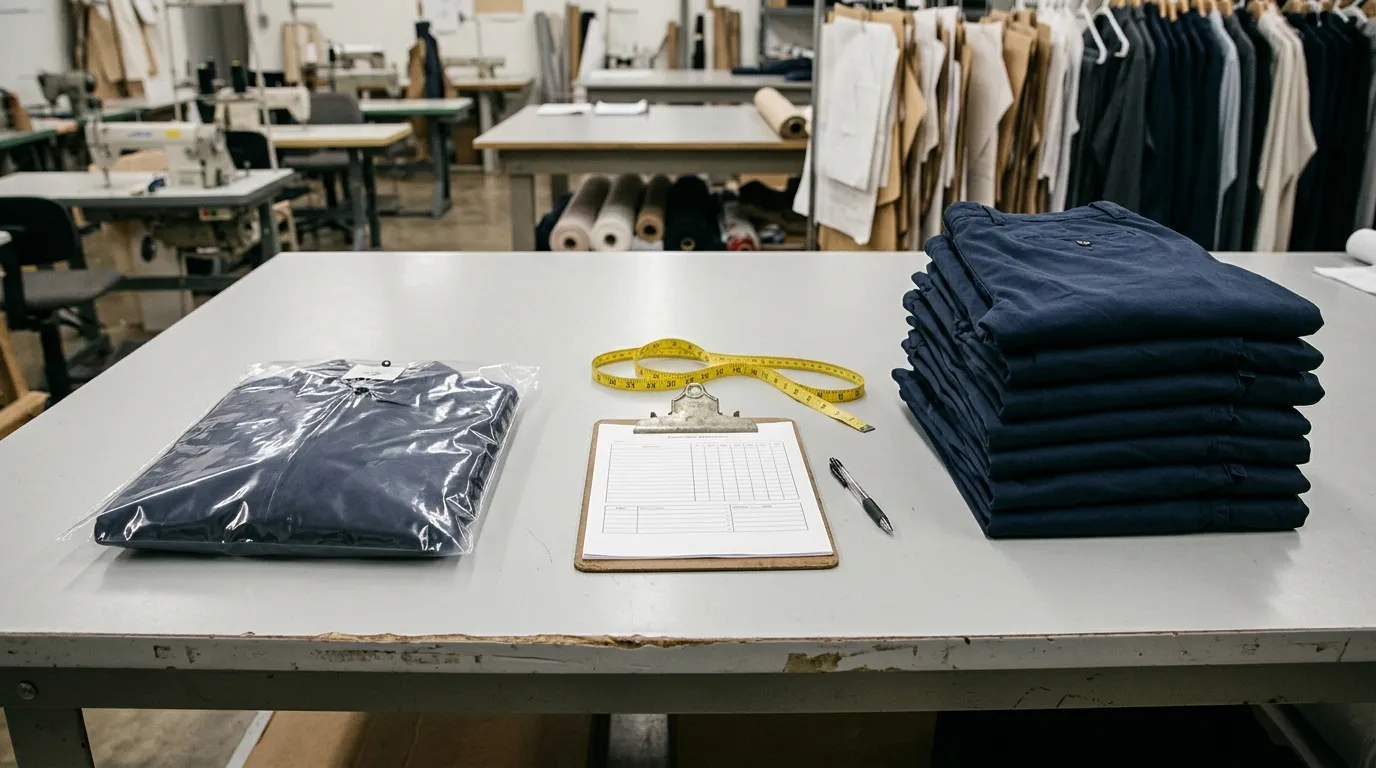
Approve a sample only after checking fabric, fit, construction, measurements and branding against your brief, and then lock it as the reference for bulk. Bulk consistency is protected by agreed checkpoints — measurement checks, in-line inspection and a final pre-shipment review — not by the quality of one sample.
Follow the same sequence every time:
- Run the movement and fit checks from the fit and compression stage.
- Confirm fabric and trim match the swatch and specification.
- Check measurements across at least two sizes.
- Confirm branding, labels and packaging.
- Log revisions and re-sample if anything changed.
- Sign off a sealed reference sample.
- Agree the bulk QC checkpoints and who signs each one.
- Compare bulk output against the sealed reference sample.
Minghang Garments' 5+1 quality-control system covers incoming materials, cutting, in-line sewing, semi-finished garments, 100% final inspection and pre-shipment verification, and its stated bulk window is 25–45 days after sample and material approval. A documented QC system does not guarantee defect-free output, though. Agree the inspection scope and what counts as a defect in writing before bulk begins.
[DIAGRAM: A sealed approved reference sample on the left and the bulk QC checkpoints on the right, showing which attributes are compared at each checkpoint.]
Red Flags and a Final Vetting Checklist
Treat vagueness as a red flag: no named QC checkpoints, an MOQ quoted without a material condition, timelines without a start milestone, no clear account contact, or reluctance to discuss fit and compression in specific terms. A supplier that answers these clearly is a reasonable shortlist candidate; one that deflects is a risk on your first bulk order.
Zuni Sportswear's buyer guide discusses red flags alongside MOQ, lead times and scalability, and notes that its framing is United States-oriented — useful to keep in mind if your market, labelling rules or shipping route sit elsewhere.
Before committing, confirm each of these:
- Product brief written, with fabric behaviour and size range stated.
- Fabric sourcing verifiable against a swatch and the sample.
- Fit and compression discussed in observable terms.
- Construction choice justified by garment, activity and order size.
- In-house and outsourced steps named, with one contact per step.
- MOQ and timelines conditional, and confirmed in writing.
- QC checkpoints and a sealed reference sample agreed.
For recurring problems at this stage, see mistakes working with clothing manufacturer.
What is the most important thing to check when choosing an activewear manufacturer?
The ability to develop performance fabric behaviour, fit and compression, verified through a physical sample rather than a brochure. Minghang Garments' activewear page lists stretch and recovery, opacity, fit and compression as development considerations, and its homepage states sampling takes 7–15 working days — enough scope to judge how a factory handles revisions before you commit to bulk.
How many samples should I expect before approving bulk production?
Plan for at least one fit and size-set revision round, and more if the fabric or construction changes. Minghang Garments' stated sampling window of 7–15 working days covers the first sample, not unlimited revisions, so agree how many rounds are included and seal an approved reference sample before bulk starts.
Is a higher MOQ always worse for a new brand?
No. The minimum depends on the material condition and construction route, so a stock-fabric style may allow a smaller first order than a custom-dyed or seamless one. Minghang Garments states 100 pcs per color per style on stock fabric, 300–500 pcs for custom fabric or dyeing, and 500 pcs for seamless — treat MOQ as a fit question, not a quality ranking.
If you have written the brief and the checklist above, the next practical step is to put both in front of a manufacturer and ask directly how its stock-fabric and custom-fabric minimums, sampling timeline and QC checkpoints would apply to your specific style.
-
Share
-

-

-