 Contact Us
  Home /

Clothing MOQ Guide: How Minimum Order Quantities Work
MOQ in custom clothing is shaped by fabric procurement, dyeing, cutting efficiency, decoration setup, size breakdowns, and production planning. This guide explains what determines apparel MOQ, why different products have different minimums, and how to choose the most practical production route for your brand.
Why Can’t I Just Order 30 Pieces?
Understanding MOQ Realities
For a new clothing brand, ordering 20 or 30 pieces can sound like the safest way to test the market. In some cases, very small runs are possible — especially when using available fabrics, simple decoration, or existing garment bases.
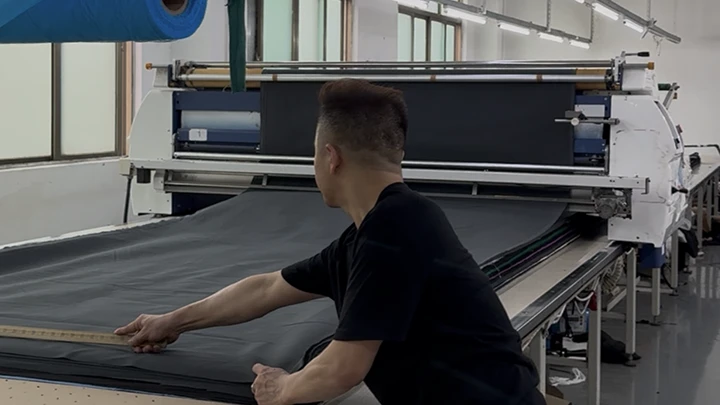
However, fully customized cut-and-sew production involves more than sewing 30 garments. Fabric purchasing, color matching, cutting markers, size ratios, print or embroidery setup, trims, and quality control all have their own production minimums.
That is why apparel MOQ is not simply an arbitrary factory policy. It is the point where material availability, production efficiency, customization requirements, and unit cost become commercially workable.
The sections below explain what actually determines your MOQ — and when choosing stock fabrics, custom fabrics, or different production methods changes the minimum.
How Stock Fabrics Can Reduce MOQ — and What to Consider
Available stock fabrics can significantly reduce development time and material minimums because the fabric has already been produced and is ready for purchase. For startups, test collections, and smaller production runs, this can be a practical and cost-efficient option.
The trade-off is flexibility. Compared with custom-developed fabric, brands may have fewer choices in exact color, composition, weight, finish, and long-term availability.
- Color Availability: Stock programs usually offer predefined colors. If your brand requires an exact Pantone or custom shade, custom dyeing may be necessary.
- Reorder Continuity:Popular stock fabrics may be replenished regularly, while some seasonal or limited fabrics may change or sell out. Reorder availability should therefore be confirmed before selecting a fabric for a long-term core style.
- Fabric Exclusivity: Stock fabric is normally available to multiple buyers. Brands requiring a proprietary hand-feel, composition, GSM, finish, or performance specification should consider custom fabric development.
Stock fabric is not “lower quality” — it is simply a different sourcing strategy. For many first collections, it is the most practical way to reduce risk before investing in custom fabric development.
Minghang MOQ Structure: What Determines the Minimum?
Different production methods have different material and setup requirements. Our MOQ is based primarily on fabric availability, customization level, construction method, and production efficiency.
Available Stock Fabrics (MOQ: typically from 100 pcs per color per style)
For regular activewear and streetwear using suitable available stock fabrics, production typically starts from 100 pieces per color per style.
Using existing fabric programs reduces the need for custom knitting or dyeing and makes smaller production runs more practical.
Size breakdowns can be planned according to the product and order requirements rather than using a universal fixed quantity per size.
Custom Fabric Development & Color (MOQ: typically 300–500 pcs per color)
When a brand requires a custom fabric composition, GSM, hand-feel, finish, performance specification, or custom-dyed color, the material supplier must produce a dedicated fabric lot.
These programs typically require 300–500 pieces per color, depending on fabric construction, mill requirements, dyeing method, and garment consumption.
Seamless Activewear (MOQ: typically from 500 pcs per style / color / size)
Seamless garments are produced directly on specialized knitting machines rather than being cut from conventional fabric rolls. Yarn setup, machine programming, color changes, and knitting efficiency create higher production minimums.
For this reason, seamless styles typically start from 500 pieces per style, color, and size, subject to yarn and construction requirements.

Ready to Plan a Practical, Scalable Production Run?
Tell us your product type, fabric requirements, target quantity, and color needs. We’ll help you identify the most practical fabric and MOQ structure for your project.
Custom Pantone Colors: What Changes the MOQ?
If an available stock color does not match your brand palette, we can develop a custom shade through lab dipping and bulk dyeing. Custom color development normally requires a dedicated dye lot, which is why the MOQ is higher than using existing stock colors.
The most suitable dyeing route depends on the fiber composition, fabric construction, color requirement, performance needs, and production quantity.
Method 1: Piece Dyeing — The Practical Route for Custom Solid Colors
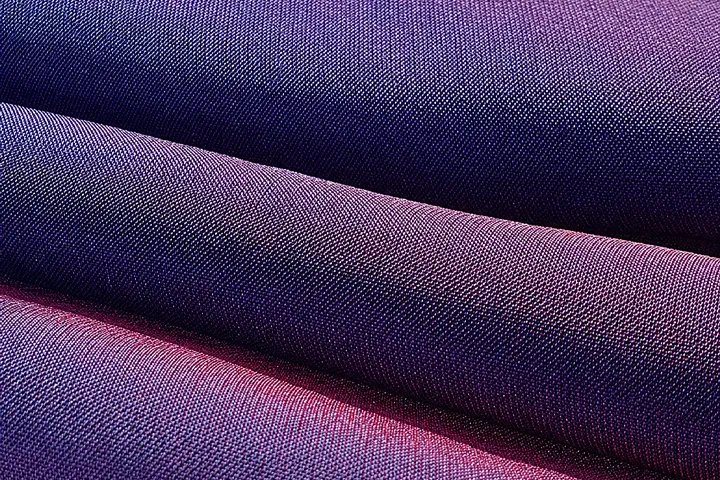
The fabric is first knitted or woven and then dyed as a complete fabric piece using a dye system selected for its fiber composition.
- Best For: Custom solid colors across many activewear, streetwear, and fashion fabrics.
- The Benefit: Piece dyeing allows brands to develop specific custom shades without committing to the larger yarn quantities normally associated with yarn-dyed programs.
- Typical MOQ: For custom-dyed or custom-developed fabrics, garment production generally starts around 300–500 pieces per color, depending on the fabric, mill requirement, dyeing process, and garment consumption.
- What We Control: Before bulk dyeing, we approve a lab dip and evaluate shade under standardized lighting. Bulk fabric is then checked for color consistency, fastness, and batch variation.
- What to Watch: Slight lab-to-bulk or batch-to-batch variation can occur in textile dyeing. Stretch fabrics containing nylon, polyester, or spandex also require dye systems specifically matched to the fiber blend and intended performance.
Method 2: Yarn Dyeing — For Engineered Color Effects & Specialized Fabrics
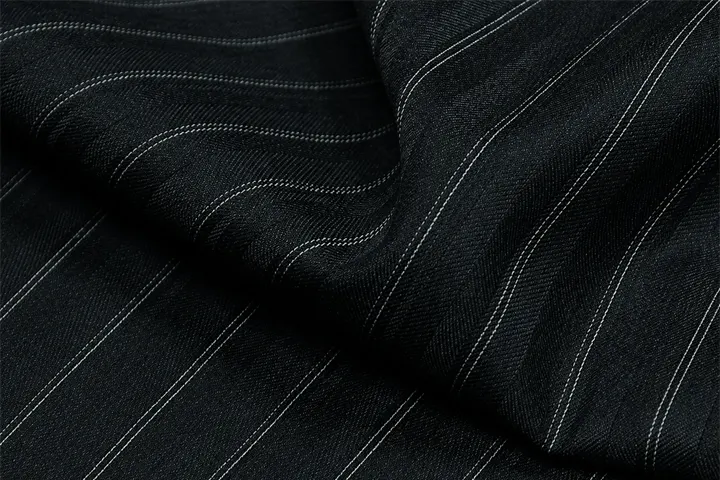
In yarn dyeing, yarn is dyed before the fabric is knitted or woven. This route is particularly useful when color is part of the fabric construction itself — for example, stripes, melange effects, checks, jacquards, contrasting yarns, or other engineered color structures.
Best For: Signature fabrics where the visual effect cannot be achieved simply by dyeing a finished fabric.
The Benefit: Greater control over multi-color and yarn-level effects, allowing brands to develop more distinctive fabric constructions.
MOQ & Cost: Yarn-dyed programs normally require larger material commitments because yarn must be dyed, allocated, and then converted into fabric specifically for the project.
At Minghang, we are transparent about these limits. Before bulk dyeing, we confirm the target shade through lab dips and match the dyeing route to the actual fiber composition and fabric construction. Our goal is not simply to reach a Pantone number, but to balance shade accuracy, colorfastness, stretch performance, batch consistency, MOQ, and cost.
Why Very Small Custom Orders Cost More Per Piece
A 30-piece order does not require only 30 pieces of production effort. Many costs occur before the first garment is sewn and remain almost the same whether the order is 30 pieces or 300.
These fixed or semi-fixed costs can include:
- fabric and trim minimums
- pattern and marker preparation
- machine and line setup
- screen, embroidery, or decoration setup
- custom label and packaging minimums
- cutting, QC, and production administration
When these costs are divided across only a few garments, the unit cost rises sharply. Increasing the production quantity allows the same setup costs to be distributed across more pieces.
MOQ is therefore not just a production limit — it is the point where customization, material sourcing, manufacturing efficiency, and unit cost become commercially workable.
Our MOQ Structure at a Glance
Available Stock Fabrics
From 100 pcs per style per color
Best for brands using suitable existing fabric programs and standard color options. This reduces material development minimums while still supporting fully customized garment construction and branding.
Custom Fabric or Dyeing
Typically 300–500 pcs per color
Applies when you require a custom Pantone shade, composition, GSM, hand-feel, finish, or performance specification. Final MOQ depends on the fabric mill and development requirements.
Seamless Activewear
From 500 pcs per style / color / size
Seamless production requires dedicated yarn allocation, machine programming, and knitting setup, creating a different MOQ structure from conventional cut-and-sew production.
Special Materials & Trims
MOQ evaluated by project
Specialty zippers, hardware, custom elastic, jacquard trims, proprietary fabrics, and complex decoration may carry their own supplier minimums. We confirm these before sampling so there are no surprises during bulk production.
Why MOQ Can Vary: MOQ is determined by the production route, not by one arbitrary number. Fabric availability, custom color development, size breakdowns, trims, decoration techniques, garment construction, and supplier minimums can all affect the final quantity. We confirm the applicable MOQ before development begins.
Frequently Asked Questions
Clear answers to common questions about clothing MOQ, stock fabrics, custom colors, size and color breakdowns, and production minimums.


