
 Contact Us
  Home /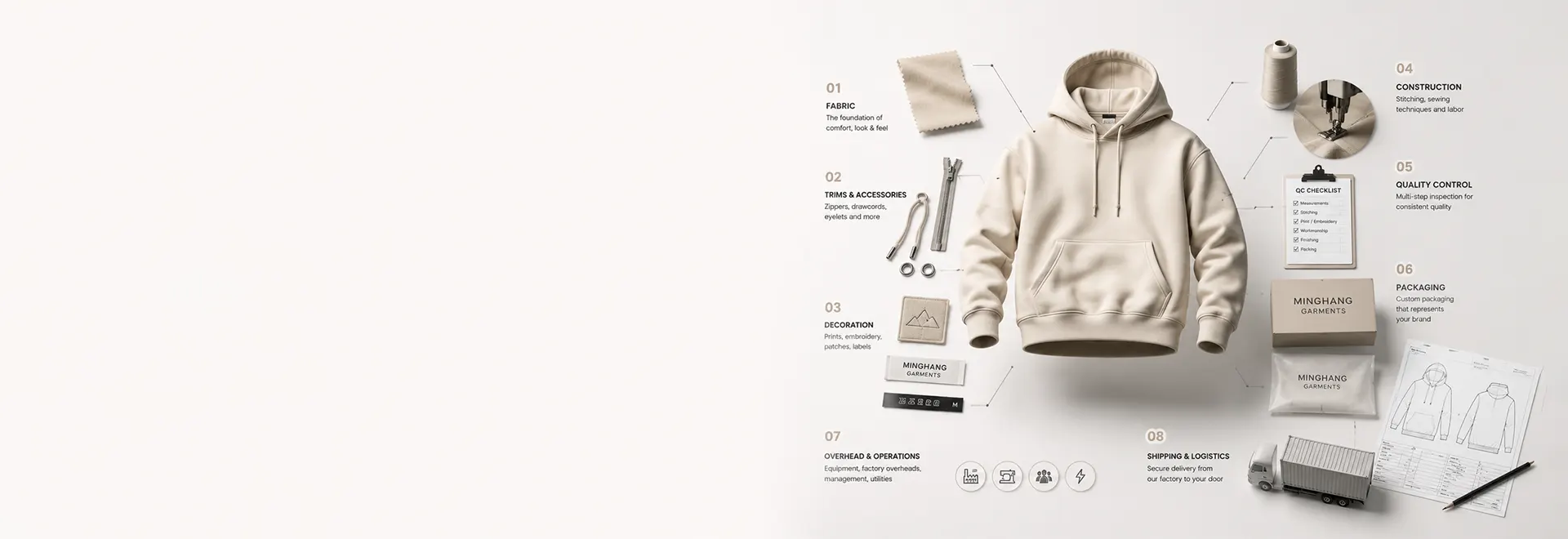

Custom Clothing Pricing: What Really Determines Your Quote?
A custom clothing quote is shaped by fabric, trims, construction, decoration, order quantity, quality control, packaging, and logistics. This guide explains what changes your unit cost — so you can compare factory quotes on the same basis and make better sourcing decisions.
Why Can Two Similar Garments Have Very Different Prices?
Two garments can look almost identical in a photo but have very different manufacturing costs.
A hoodie made from 320gsm standard cotton fleece is not priced the same as one made from 450gsm custom-dyed heavyweight fabric. Likewise, a basic screen-printed hoodie and a garment combining embroidery, garment washing, custom hardware, and premium packaging may share the same silhouette but require completely different production inputs.
When comparing quotes, look beyond the final unit price and confirm whether each supplier is quoting the same:
- fabric composition, GSM, width, and finish
- trims and hardware
- construction details
- printing, embroidery, washing, or other decoration
- size breakdown and MOQ
- quality-control requirements
- packaging specifications
- shipping terms and Incoterms
A meaningful price comparison starts with the same specification — not simply the same product photo.
Fabric: One of the Biggest Drivers of Garment Cost
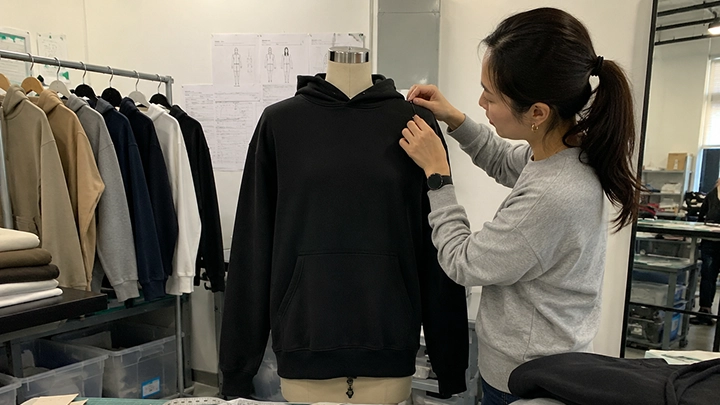
Fabric pricing depends on much more than composition alone. Weight, yarn quality, construction, color development, finishes, usable width, and garment consumption all influence the final cost per piece.
Fiber Composition
Cotton, polyester, nylon, recycled fibers, organic cotton, elastane content, and blended constructions all carry different material and processing costs. Certification requirements may also affect sourcing options and price.
GSM, Width & Fabric Construction
Heavier fabrics generally require more material weight per garment, while fabric width and marker efficiency affect actual consumption. Yarn count, knitting density, brushing, fleece construction, rib structure, and other fabric details also influence both price and hand-feel.
Color & Dyeing Requirements
- Available Stock Colors: Usually the most cost-efficient route because the fabric has already been produced and dyed.
- Custom Piece Dyeing: Requires lab dipping and a dedicated dye lot. MOQ and cost depend on fiber composition, fabric construction, mill requirements, and target shade.
- Yarn-Dyed / Engineered Color Effects: Used when color is part of the yarn or fabric construction itself, such as stripes, melange effects, checks, contrasting yarns, or specialized fabric developments. These programs generally involve greater material commitment.
Performance & Functional Finishes
Moisture management, anti-pilling, water-repellent, UV-related performance, cooling treatments, brushing, peach finishing, and other functional or surface treatments can add material and processing cost.
Where performance claims are required, testing or certification requirements may also affect the final quote.
Minghang’s Approach
We quote fabric by specification — composition, GSM, construction, color route, finish, and expected garment consumption — rather than simply giving you a fabric name. Where multiple material options can achieve the same design goal, we can present alternatives at different cost and performance levels for comparison.
Trims & Accessories: Details Define Brand Quality
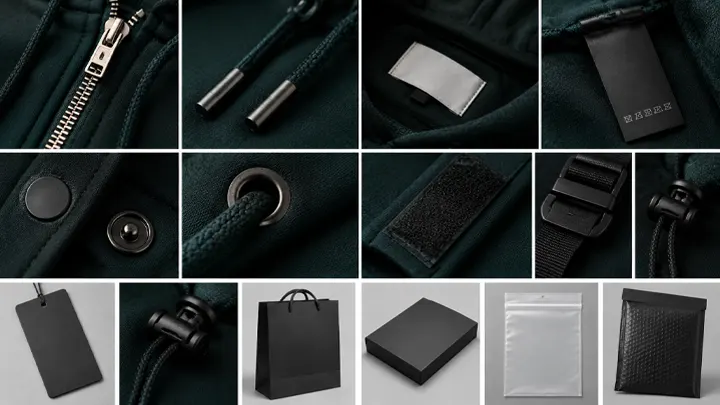
Is the zipper a standard coil zipper, a premium branded zipper, or a custom metal zipper? Is the main label printed, woven, or heat-transferred? Does the drawcord use a standard end or custom-molded hardware?
- Common Functional Trims: Zippers, snaps, buttons, drawcords, adjusters, elastic, eyelets, hook-and-loop fasteners.
- Branding trims: Main labels, care labels, size labels, hangtags, patches, branded elastic, custom zipper pulls.
- Custom Hardware & Mold Costs: Custom logo-shaped zipper pulls, buttons, metal plates, or drawcord ends may require one-time tooling or mold fees and supplier MOQs.
Our method: We ask your trim preferences at quote stage and offer high/low options. We believe investing in touchable details from the first order lays the foundation for brand premium.
Labor & Techniques: Complex Styles vs. Basics
Sewing a simple crewneck tee may take a quarter of the time required for a multi-panel sports bra with binding. Labor cost is shaped by:
What Increases Garment Labor Cost?
A basic crewneck T-shirt and a multi-panel sports bra may use similar amounts of fabric, but their sewing time and production complexity can be completely different.
- Pattern & cutting complexity: Multi-panel layouts, slippery or highly elastic fabrics, plaid matching, directional fabric and complex curves require more handling.
- Number of sewing operations: Seam count, bindings, pockets, zippers, linings, elastic channels and specialized constructions all add production time.
- Decoration processes: Printing, embroidery, rhinestones, laser, appliqué, washing and multi-process designs introduce additional operations.
- Specialized machinery: Flatlock, coverstitch, bartack, bonding and other constructions may require dedicated machines and trained operators.
- Finishing: Thread trimming, pressing, measurement checks, final inspection, folding and packing are also part of labor cost.
How Production Efficiency Affects Cost
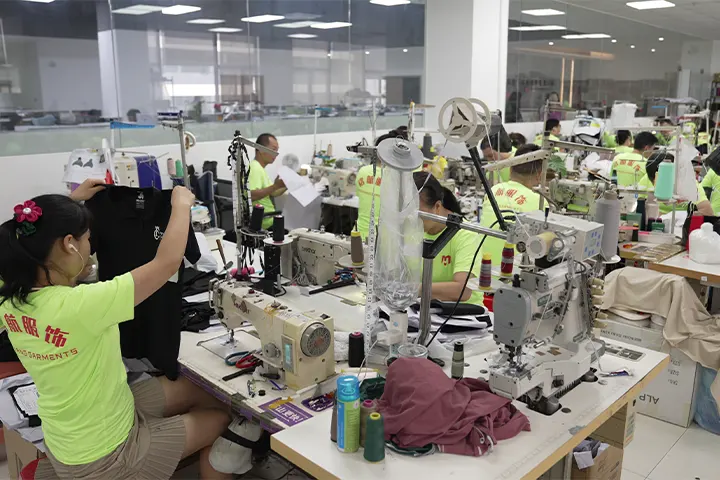
Manufacturing efficiency does not simply mean sewing faster. It means reducing unnecessary handling, balancing workloads, controlling rework, and keeping production moving consistently from one operation to the next.
Minghang’s production system combines:
- intelligent overhead hanging production
- line balancing and production scheduling
- specialized sewing equipment
- trained operators for different garment categories
- in-line quality checks
- centralized production coordination
Better production control helps reduce avoidable rework and delays while maintaining consistent workmanship across larger production runs.
Our Production Principle:
Efficiency should reduce waste and rework — not reduce workmanship. Our production planning, specialized equipment, in-line inspection, and final QC are designed to keep quality requirements consistent while improving manufacturing efficiency.
How Order Quantity Affects Unit Cost
Some garment costs scale directly with quantity, while others are fixed or semi-fixed and must be distributed across the production run.
Larger production runs can often reduce unit cost because certain expenses are distributed across more garments:
- fabric and trim purchasing minimums
- pattern and marker preparation
- cutting and production setup
- printing or embroidery setup
- color and style changeovers
- packaging development
- production management and QC
For regular cut-and-sew styles using suitable available stock fabrics, our standard MOQ typically starts from 100 pcs per style per color. Custom fabric or custom dyeing generally requires 300–500 pcs per color, while seamless production has its own higher minimum structure.
The most economical quantity therefore depends on the product, fabric, color, construction, and customization level — not quantity alone.
Development & Sampling Costs
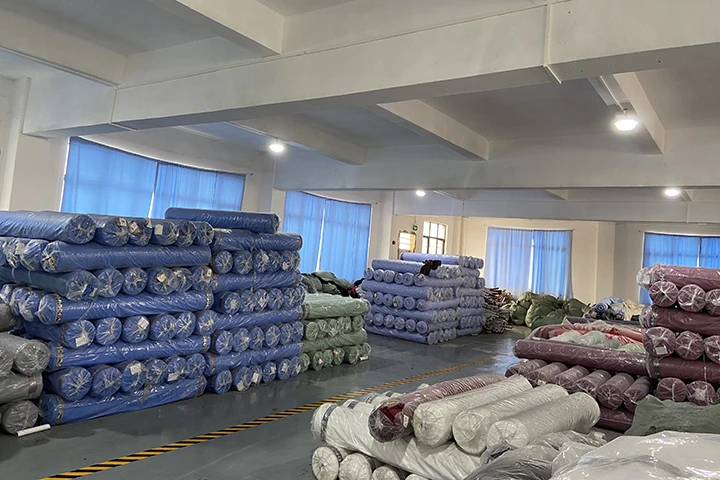
Sample development involves real production inputs, including pattern making, fabric and trim sourcing, sample sewing, decoration setup, finishing, and technical adjustments.
Sampling fees therefore vary according to product complexity and development requirements.
Before sampling begins, we confirm:
- prototype/sample cost
- applicable fabric or trim sourcing charges
- decoration or mold/setup fees
- revision requirements
- whether any sample charges are credited against a future bulk order, where applicable
You know the development cost before the sample is started — not after revisions have already accumulated.
Packaging & Logistics
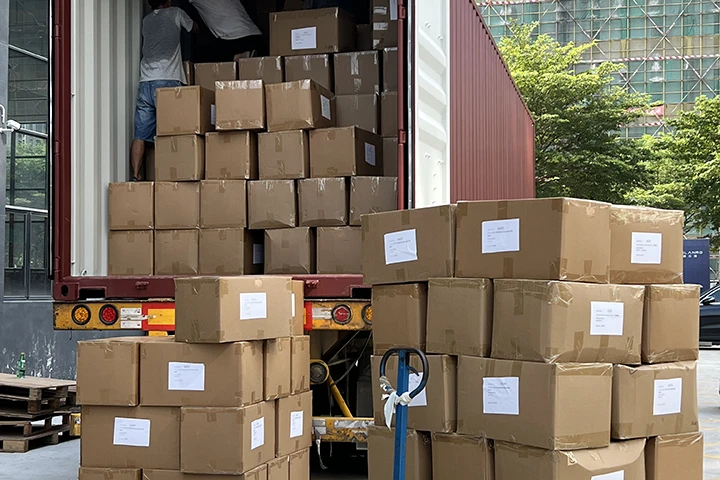
Packaging and freight are normally calculated separately from garment manufacturing because they depend heavily on your branding requirements and final destination.
- Packaging: Standard polybags and export cartons are more economical, while custom mailers, boxes, tissue paper, inserts, stickers, barcodes, and retail-ready packaging add material and setup cost.
- Shipping: Freight cost depends on shipment volume and weight, destination, shipping method, Incoterm, and delivery timeline. We can coordinate FOB, CIF, express courier, and destination-specific preparation such as Amazon FBA requirements where applicable.
We compare practical shipping options based on your launch schedule rather than automatically selecting the fastest or cheapest route.
What Should a Complete Clothing Manufacturing Quote Include?
A lower unit price does not always mean the same production scope. Before comparing suppliers, make sure each quote is based on the same specifications, services, and delivery terms.
| Dimension | What to Confirm | Minghang’s Quoting Approach |
| Fabric | Composition, GSM, construction, color, finish and usable width | Fabric specifications and approved swatches confirmed before bulk production |
| Trims & Hardware | Standard or custom zippers, drawcords, labels, elastic and accessories | Options confirmed according to your design, positioning and budget |
| Construction | Seam type, panel count, lining, pockets, binding and specialized sewing | Construction reviewed against sample and production requirements |
| Decoration | Print, embroidery, washing, rhinestones, appliqué or other processes | Technique, placement and processing requirements confirmed before costing |
| Quality Control | Inspection stages, measurement tolerances and final QC requirements | Multi-stage QC integrated throughout production |
| Packaging | Standard polybags/cartons or custom retail packaging | Packaging requirements quoted according to your specifications |
How Minghang Garments Builds Your Quote
- You share your product requirements.
- We review manufacturability and specifications.
- We calculate material and production requirements.
- You receive a project-based quotation covering:
- ✅ Fabric specification and selected material option
- ✅ Trims and custom branding requirements
- ✅ Printing, embroidery, washing or special processing
- ✅ Sample/development charges where applicable
- ✅ Packaging requirements
- ✅ Agreed production quantity and unit price
- ✅ Shipping terms or estimated logistics cost where requested
- ✅ Any applicable mold, setup or testing charges
The quote is tied to the specifications we have confirmed with you. If a material, process, quantity or packaging requirement changes, we explain how that change affects the price before moving forward.
Frequently Asked Pricing Questions

Ready for a Clear, Project-Based Clothing Quote?
Send us your tech pack, reference images or product idea together with your target quantity and customization requirements. We’ll review the specifications and prepare a quotation based on your actual production needs.


