 Contact Us
  Home /

Apparel Sampling Process: From Concept to Production-Ready Sample
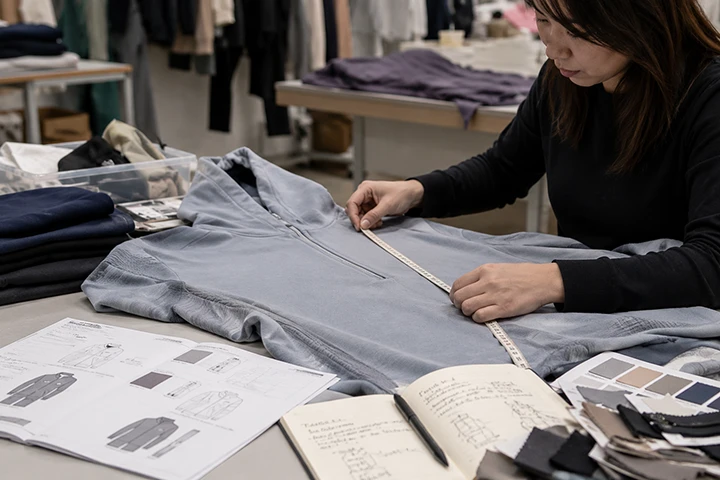
Sampling is where your design moves from an idea, sketch, reference image, or tech pack into a physical garment that can be evaluated for fit, fabric, construction, branding, and production feasibility. With a dedicated sample development team, Minghang Garments supports brands from pattern development and material selection to proto samples, revisions, PP samples, and production handover.
Why Sampling Matters Before Bulk Production
Many startup founders see sampling as just a "make one to take a look" step—get it roughly right and rush to bulk. That's a dangerous misunderstanding.
A sample is not just fit validation. It's simultaneously:
- Your first physical experience of the fabric's hand-feel (drape, recovery, and skin comfort can't be judged on screen)
- A feasibility and cost test for production techniques
- The first physical carrier of your brand's perceived quality—what you use for photography, send to influencers, list for pre-sale
A well-run sampling process reduces rework during bulk, shortens time-to-market, and prevents batch-wide quality incidents. A problem that is missed during sampling can be repeated across an entire bulk production run.
A sample is not only a product preview—it is the reference used to define what bulk production should reproduce.
📝 Stage 1: Starting Sampling—What You Need to Provide
The speed and accuracy of sampling heavily depend on input clarity. We support clients at different readiness levels:
Option A: Start with a Complete Tech Pack
If you already have a professional Tech Pack, pattern development is direct and efficient:
- Technical sketches (front / back / side, CAD or hand-drawn)
- Size chart (with measurement method annotations)
- Bill of Materials (fabric and trim specs)
- Construction details (seam types, stitch indications, special finishes)
- Reference sample (if available)
With a complete tech pack, pattern development can begin immediately, usually shortening the development cycle compared with projects that require technical clarification first.
Option B: Start with References, Sketches, or Product Ideas
If you only have reference images and descriptions, we can still start. Our technical development and pattern-making team can translate your references into an executable garment specification and first pattern.
Either way, we confirm every detail with you before starting, avoiding "interpretation drift" that leads to wasted sampling rounds.
🧵 Stage 2: Sample Types—More Than One Kind of "Sample"
Different brand stages require samples for different purposes. Knowing what you need avoids unnecessary fees and delays.
| Sample Type | Purpose | Best for | Production Standard | Notes |
| Proto Sample | Validate fit and overall effect | All new developments | Similar fabric acceptable; techniques close to bulk | May have slight hand-feel difference from final bulk fabric |
| Revised Sample | Verify modifications from proto feedback | Proto not approved, second confirmation needed | Same standard as proto, only specified points modified | Usually 2-3 days faster than proto |
| PP sample (Pre-production sample) | Confirm bulk materials, workmanship, measurements, trims, colors, and production methods before bulk cutting. | Final production confirmation after fit, fabric, construction, and branding have been approved. | Bulk line, bulk fabric, real line workers | The PP sample becomes one of the primary reference standards for bulk production and QC. |
| Salesman sample | For buyers, trade shows, showrooms | Brand attending order fairs or dealer recruitment | Bulk standard | Usually pulled from bulk or made separately after PP approval |
| Photo sample | For e-commerce detail pages, brand lookbooks and marketing | After PP confirmation | Bulk standard, extra attention to visual details | Can be prioritized within bulk production to sync photo shoot with launch. |
If you're unsure which sample type you need, your sales specialists will guide you during consultation—avoiding excessive sampling or irrelevant revision rounds.
❓ Stage 3: Sampling Timeline—When Can You Hold Your First Sample?
| Sample Type | Standard Styles | Multi-Process Styles | Notes |
| Proto sample | 7-10 working days | 12-15 working days | Complex styles include cumulative time for screen printing, rhinestones, washes etc. |
| Revised sample (2nd) | 5-8 working days | 8-12 working days | Faster than proto by 2-3 days; pattern base exists, materials already on-site |
| Pp sample | 5-7 working days | 8-10 working days | Made on bulk line; fastest and most representative confirmation version |
Parallel fabric & trim procurement mechanism—we don't wait for the pattern to be finished before ordering fabric.
Once the sample direction and material requirements are confirmed, fabric and trim sourcing can run in parallel with pattern development. This reduces unnecessary waiting between technical development and sample sewing.
Dedicated Sampling Workflow
Sample development is managed separately from bulk production scheduling, allowing the team to focus on development, revisions, and technical confirmation without being fully dependent on bulk-line availability.
2,000 m² Sample & Development Center
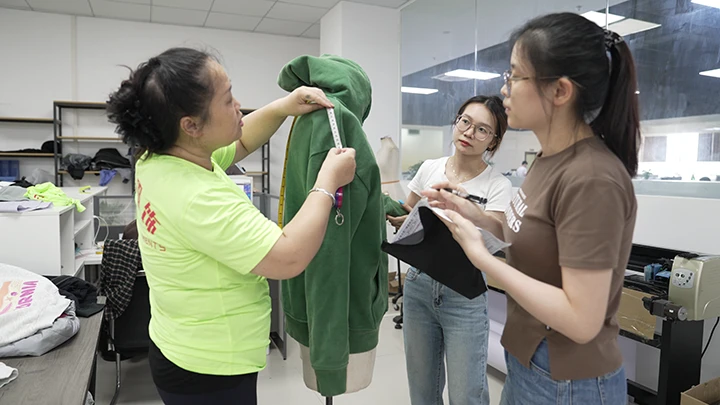
Our Dongguan sample and development facility combines pattern making, sample sewing, technical review, fabric selection, and project coordination.
Full-Time Skilled Team
Staffed with experienced pattern makers and sample sewers dedicated exclusively to sampling work.
Production-Level Quality Benchmark
Every sample is built to reflect bulk production craftsmanship, ensuring scalable and consistent manufacturing results.
💰 Stage 4: Sampling Fee Policy—Transparent & Deductible
Sampling involves pattern maker hours, sample sewer time, and fabric/trim procurement. Our policy:
- First proto sample fee: Charged based on style complexity, clearly stated at quote stage.
- Sampling fee credit: Depending on the project and confirmed bulk quantity, part or all of the initial sampling fee may be credited toward the bulk order. The applicable policy is stated in the quotation before sampling begins.
- Revision sample fees:
- If revisions are due to our process deviation, no charge.
- If revisions are due to design changes or client-requested modifications, charged per actual labor and material cost.
- PP Sample fee: PP sample cost depends on whether additional materials, special processes, or separate production setup are required. Any applicable charge is confirmed in advance.
No Hidden Charges
All sampling-related costs are documented in writing within the contract and quotation—no "later add-ons."
🔍 Stage 5: Sample Review & Feedback—How to Communicate Modifications Efficiently?
One of the most common causes of unnecessary revision rounds is unclear or incomplete sample feedback.
| Feedback Method | Effectiveness | Recommendation |
| Annotated front/side/back photos | Best | Use stickers to mark modifications location and direction |
| Measurement sheet with revised target values | High | Sketch or annotate desired effect vs. Current state |
| Video fit review | High | For fit-critical styles, real-time communication on a live body |
| Annotated sketches / before-and-after reference | High | Lack reference; often leads to an extra revision round |
Recommended Workflow:
Upon receiving the sample, arrange a fit session on a real person. Take front, side, and back photos, annotate feedback directly on the photos, and send to us. We will confirm the modification plan and estimated time within 24 hours of receiving your feedback.
Why Minghang's Sampling Process Is Different
| Common Pain Point | Minghang's Solution |
| Waiting for fabric before sampling can start | Material sourcing starts in parallel once specifications are confirmed, reducing avoidable waiting time. |
| Beautiful sample, disappointing bulk | PP Sample made on actual bulk line, reflecting true production capability |
| Unnecessary revision rounds | When changes are minor and technically controlled, we can evaluate whether a separate revision sample is necessary or whether the project can move efficiently toward PP confirmation. |
| Vague feedback, back-and-forth revisions | Guided feedback process, video fit sessions, and real-time communication supported |
| Sampling fees unpredictably added later | Written upfront quotation, bulk deduction policy in black and white |


