 Contact Us

Table of Contents

Contact Us
Updated 1 month ago
Cut and Sew vs. Seamless Activewear Manufacturing: Which Is Better for Your Brand?

Minghang Garments
Minghang Garments is a custom apparel manufacturer specializing in activewear, streetwear and private-label clothing development. Our team supports brands through fabric sourcing, product development, sampling, bulk production and quality control, with OEM and ODM solutions for startups, growing labels and established apparel businesses.
For an activewear brand, construction method determines more than appearance. It affects fit, compression, fabric selection, seam comfort, minimum order quantity, development cost and production consistency. At Minghang Garments, we evaluate Cut and Sew vs. Seamless Activewear Manufacturing according to the garment's intended activity, support level, design complexity and target price—not simply which technology appears more advanced.
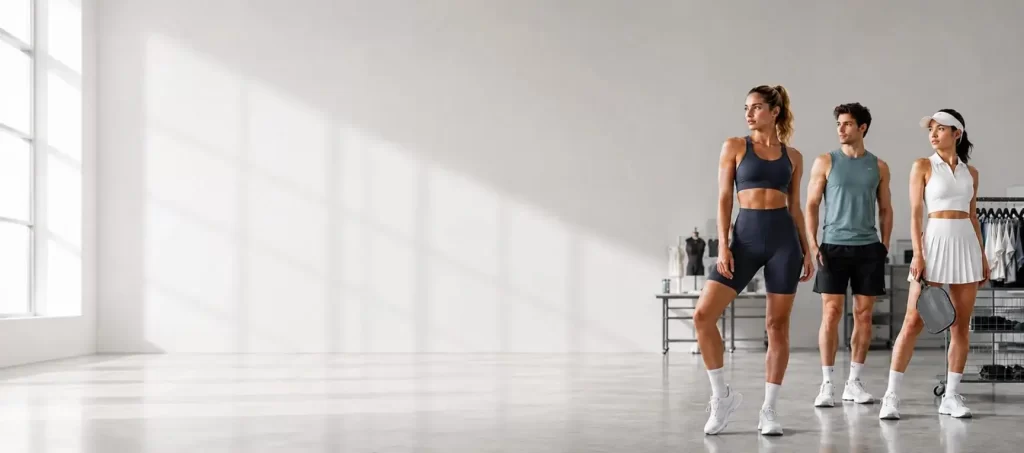
Professional verdict: Cut and sew is usually better for detailed silhouettes, mixed fabrics, pockets and positioned graphics. Seamless manufacturing is stronger for close-fitting products requiring fewer seams, knitted ventilation or engineered compression. Some collections benefit from using both.
How the Two Manufacturing Methods Work
Cut-and-Sew Construction
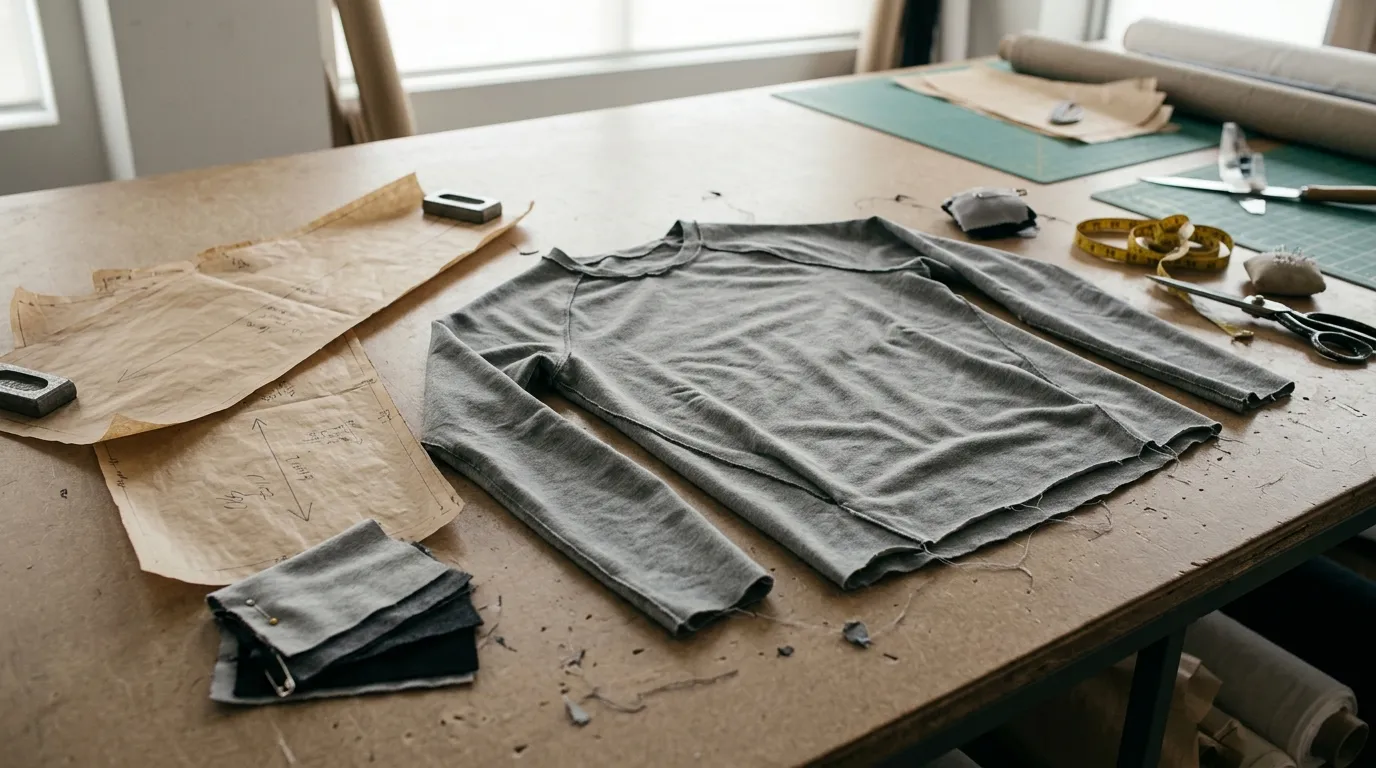
In cut-and-sew production, finished fabric is spread, cut into pattern panels and assembled using flatlock, overlock, coverstitch, zigzag or bonded construction.
The method gives designers direct control over:
• Panel shape and seam placement
• Waistband height and internal structure
• Gussets, pockets, liners and support panels
• Color blocking and mixed-fabric construction
• Sublimation, screen printing, heat transfer and embroidery
• Individual size grading and silhouette adjustments
Material options may include nylon–spandex interlock, polyester jersey, brushed fabrics, warp-knit power mesh and lightweight woven stretch fabric.
The main technical risk is not the presence of seams, but poor seam engineering. Incorrect stitch density, thread tension, seam allowance or stretch ratio can cause puckering, broken stitches, chafing or restricted movement.
Seamless Construction
Seamless activewear is generally produced on computerized circular knitting machines. Most of the garment body is knitted as a tube, with yarn type, stitch density and structure programmed into different zones.
Possible engineered features include:
• Ribbed support around the waist or underbust
• Mesh ventilation in high-heat areas
• Graduated compression
• Contoured knitted patterns
• Flexible zones around joints
• Different opacity levels within one garment
"Seamless" does not mean that every garment is completely free of seams. Leggings may still require crotch finishing, while bras and tops can require shoulder, neckline or armhole assembly.
Cut and Sew vs. Seamless Activewear Manufacturing: Technical Comparison
| Decision Factor | Cut and Sew | Seamless |
| Shape development | Patterns with graded panels rely on machine programming and tension. | Knitted structures and tension. |
| Material freedom | A wide variety of knitted and woven fabrications. | Compatible yarns and gauges. |
| Design detail | Strong for pockets and trims, linings and paneling. | Strong for textured knits, mesh and body mapped areas. |
| Compression | Fabric modulus and panel placement. | Stitch density and elastane plating. |
| Seam comfort | Depends on seam type and placement. | Fewer side seams result in less bulky and friction-causing seams. |
| Graphics | Large prints and artwork placement. | Knitted patterns and textures. |
| Size control | High stretch can cover larger size ranges, but fit still requires testing. | Precision individual grading of patterns. |
| Revision process | Separate pattern and construction details | Changes increase the number of knitting trials and machine reprogramming. |
This comparison of Cut and Sew vs. Seamless Activewear Manufacturing shows that seamless production is not more technical or higher quality. Performance depends on whether the construction matches the product brief.
Fit, Compression and Wear Performance
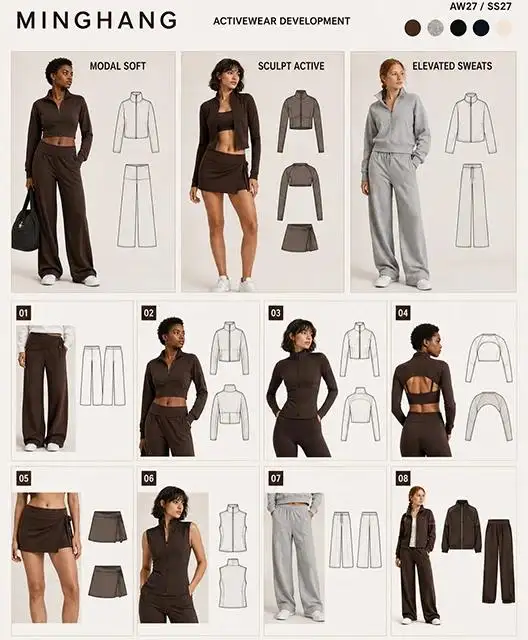
Fit should be assessed dynamically rather than on a mannequin alone. During development, brands should examine:
• Waistband roll-down during squats or bending
• Fabric opacity at maximum extension
• Underbust stability and strap recovery
• Inner-thigh and underarm friction
• Compression balance across different sizes
• Pocket distortion when loaded
• Recovery after repeated stretching and washing
Cut-and-sew garments can deliver strong compression through high-modulus fabrics, reduced pattern dimensions, power-mesh panels and reinforced waistbands. Flatlock seams positioned outside high-friction areas can also provide excellent comfort.
Seamless products distribute pressure without bulky side seams and can integrate ventilation directly into the knitted body. However, excessive knitted compression may restrict movement, while inconsistent yarn tension can create barré, needle lines, spirality or uneven sizing.
MOQ, Cost and Lead-Time Differences
In Cut and Sew vs. Seamless Activewear Manufacturing, unit price alone is an incomplete comparison.
| Commercial Factor | Cut and Sew Cost Driver | Seamless Cost Driver |
| Development | Pattern making, grading and sample sewing | Programming, machine setup and knitting trials |
| Raw material | Fabric and trim minimums | Yarn color and yarn-package minimums |
| Labor | Panel count, seam operations and finishing | Knitting time, linking and post-knitting finishing |
| Colorways | Fabric dye lot or print setup | Yarn preparation and machine changeover |
| MOQ | Influenced by fabric availability and cutting efficiency | Influenced by setup cost, yarn MOQ and machine utilization |
| Lead time | Fabric sourcing, cutting, sewing and decoration | Yarn preparation, programming, knitting and finishing |
Cut-and-sew production can be more practical for smaller launches when stock fabrics are available. Seamless production becomes commercially efficient when programs, yarns and machine setup are distributed across sufficient volume. Final MOQ and lead time should therefore be calculated by style, color and size range.
Quality Control Requirements
At Minghang Garments, construction selection is followed by material, fitting and production verification. Important controls include:
For Cut-and-Sew Products
• Fabric GSM, stretch direction and shade consistency
• Pattern dimensions and cutting accuracy
• Stitch density, seam elasticity and seam strength
• Print alignment across panels
• Measurement tolerances after washing
For Seamless Products
• Yarn lot and color consistency
• Course density and knitting tension
• Compression distribution
• Needle-line, barré and spirality inspection
• Finished measurements and recovery performance
For both methods, pilling resistance, colorfastness, shrinkage, opacity and repeated-wear recovery should be confirmed against the product's intended use.
Which Method Fits Your Product?
| Activewear Product | Recommended Route |
| Sublimated or panelled leggings | Cut and sew |
| Minimalist yoga leggings | Seamless |
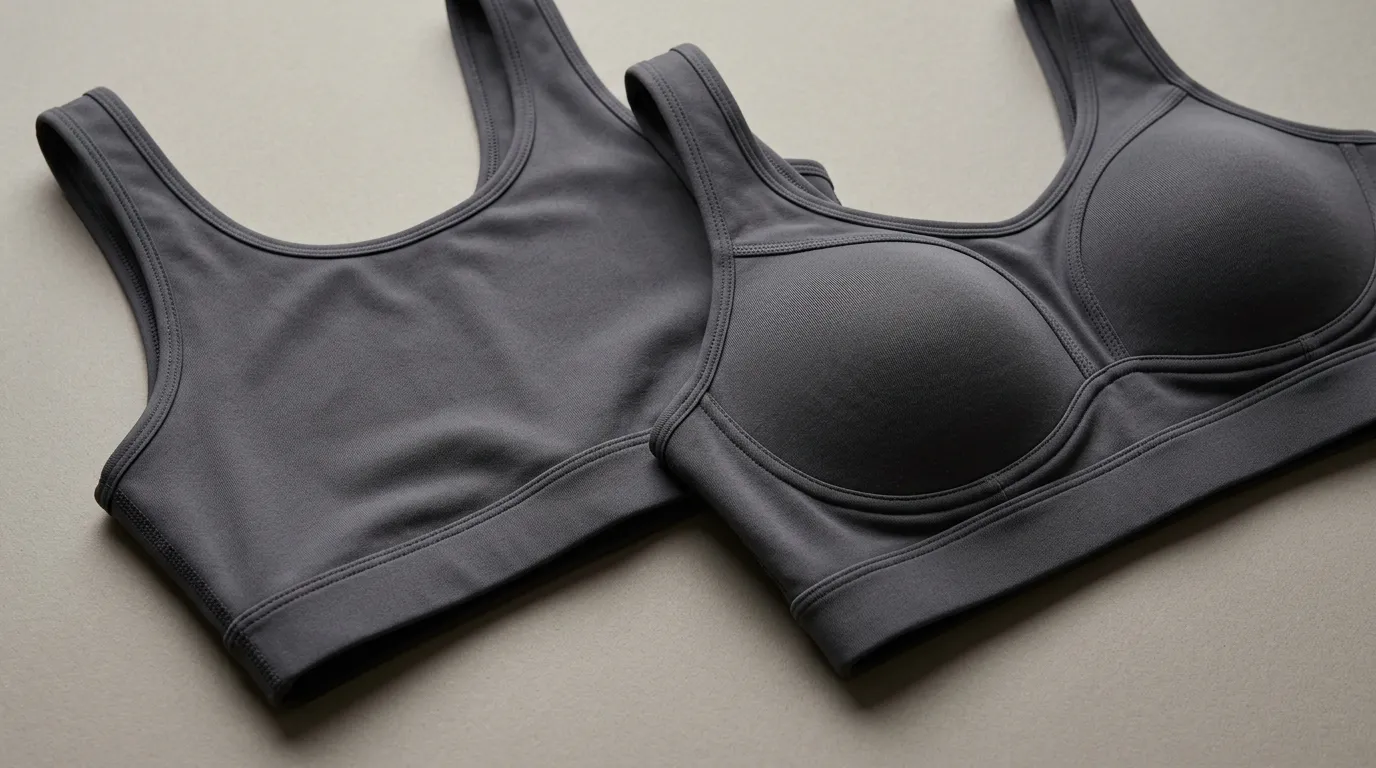
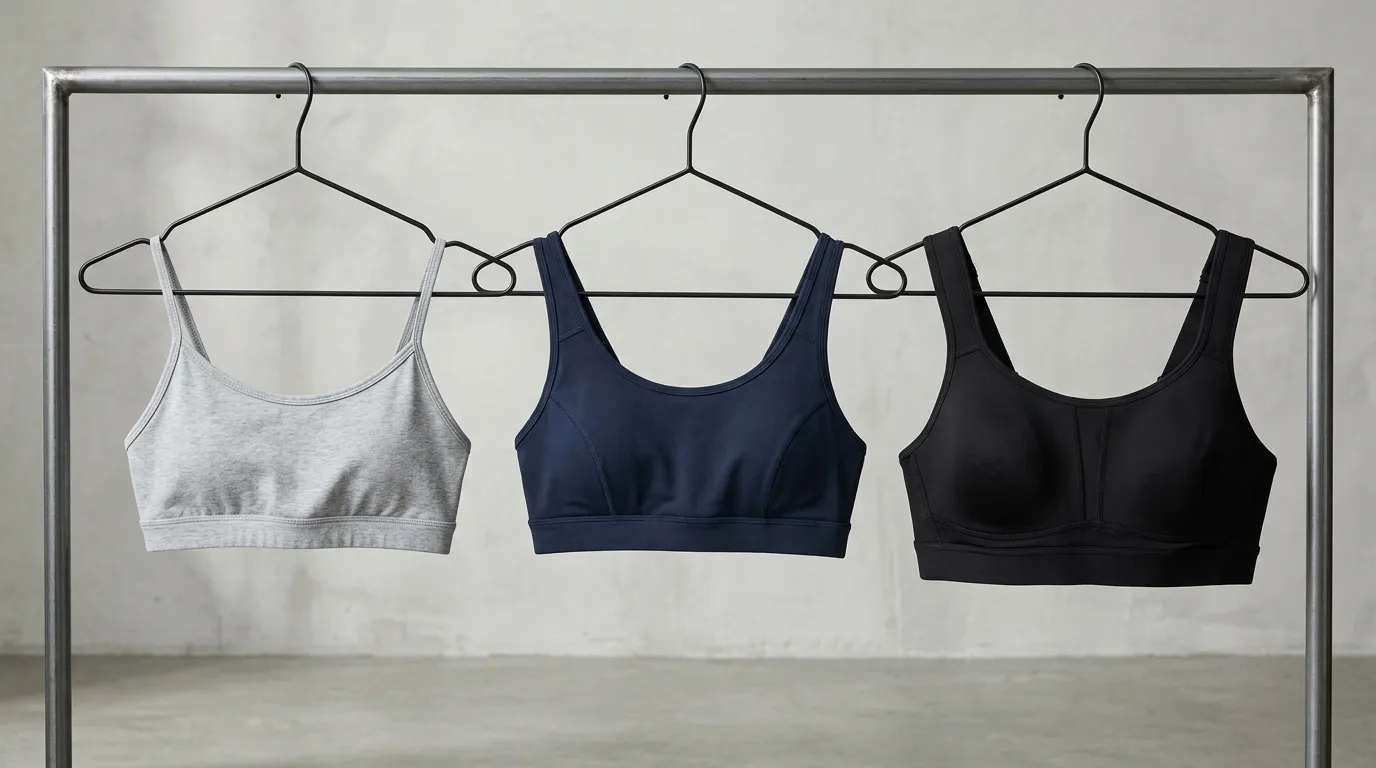
| High-support sports bra with cups and lining | Cut and sew or hybrid |
| Low-impact ribbed bra | Seamless |
| Running shorts with pockets and inner liner | Cut and sew |
| Body-mapped compression base layer | Seamless |
| Fashion-focused coordinated set | Cut and sew |
| Mixed-performance collection | Combination of both |
The best solution may be a hybrid collection: seamless leggings paired with a cut-and-sew jacket, or a seamless knitted body combined with sewn elastics, cups or support components.
Developing the Right Solution With Minghang Garments
Minghang Garments approaches Cut and Sew vs. Seamless Activewear Manufacturing as a product-engineering decision. Our development process connects intended activity, fabric or yarn selection, fit, construction, branding and target cost before bulk production.
Brands can work with our team on:
• Material and construction recommendations
• Pattern development and sample adjustment
• Fit and performance evaluation
• Logo, color and trim coordination
• Pre-production specification confirmation
• In-process inspection and bulk consistency control
Final Decision
When designing with intricate details and a variety of different materials, choose cut and sew. For products that rely on knit fabrics for compression and body-mapped ventilation with reduced seam bulk, choose seamless. Use both methods if one doesn't fully satisfy the needs of your collection.
To help you decide on the best construction, materials and development route for your next collection, book a call with Minghang Garments to go over your product brief.
FAQs
Q1. Does Minghang Garments provide activewear samples before bulk production?
Yes. Samples can be developed to review measurements, fit, construction, color, fabric feel and branding. Performance details such as waistband stability, opacity, compression and stretch recovery should be approved before production.
Q2. Which products are better suited to cut-and-sew manufacturing?
Minghang generally recommends cut-and-sew construction for running shorts, sports bras with cups or linings, panelled leggings, jackets and garments requiring pockets, color blocking or multiple fabrics.
Q3. Which activewear products are suitable for seamless manufacturing?
Seamless manufacturing is commonly considered for yoga leggings, ribbed sports bras, compression tops and base layers requiring reduced seam bulk, knitted ventilation or body-mapped compression.
Q4. What is Minghang Garments' MOQ for custom activewear?
Selected stock products may start from approximately 50 pieces, while conventional custom styles typically start from around 100 pieces per style. Seamless MOQ may differ because of yarn minimums, color preparation and machine programming.
Q5. Can Minghang help select activewear fabrics and yarns?
Yes. The team can recommend materials according to compression, stretch, opacity, moisture management, hand feel and intended activity. Options may include nylon-spandex, polyester-spandex, interlock, jersey, power mesh and stretch woven fabrics.
Written by
Minghang Garments
Apparel Manufacturing Team
Minghang Garments is a custom apparel manufacturer specializing in activewear, streetwear and private-label clothing development. Our team supports brands through fabric sourcing, product development, sampling, bulk production and quality control, with OEM and ODM solutions for startups, growing labels and established apparel businesses.
-
Share
-

-

-