 Contact Us

Table of Contents

Contact Us
Updated 2 weeks ago
Proto Sample vs Pre-Production Sample: What's the Difference?
arafatshuvo
A proto sample and a pre-production sample are two different garment sample types. A proto sample tests early design intent, silhouette and construction feasibility, often using substitute fabric. A pre-production sample confirms the final fabric, trims, labels and workmanship before bulk production. Fit and size-set samples sit between them, refining fit and graded sizes.
Key takeaways
- A proto sample verifies design intent, silhouette and construction feasibility, often in substitute or similar-weight fabric (BOMME Studio; Gopherwood Clothing).
- A pre-production sample verifies the final specification — approved fabric, trims, stitching, labelling and packaging — as a pre-bulk reference (Gopherwood Clothing; Techpacker).
- Fit and size-set samples sit between them: fit sampling checks fit, proportions and silhouette (BOMME Studio), while size sets check graded patterns across the intended size range (Techpacker).
- PP sample approval makes the sample a reference standard for bulk production and quality control. It does not by itself guarantee a defect-free bulk run.
- Making a PP sample on a bulk line is one supplier's stated process, not an industry-wide rule.
What Is a Proto Sample?
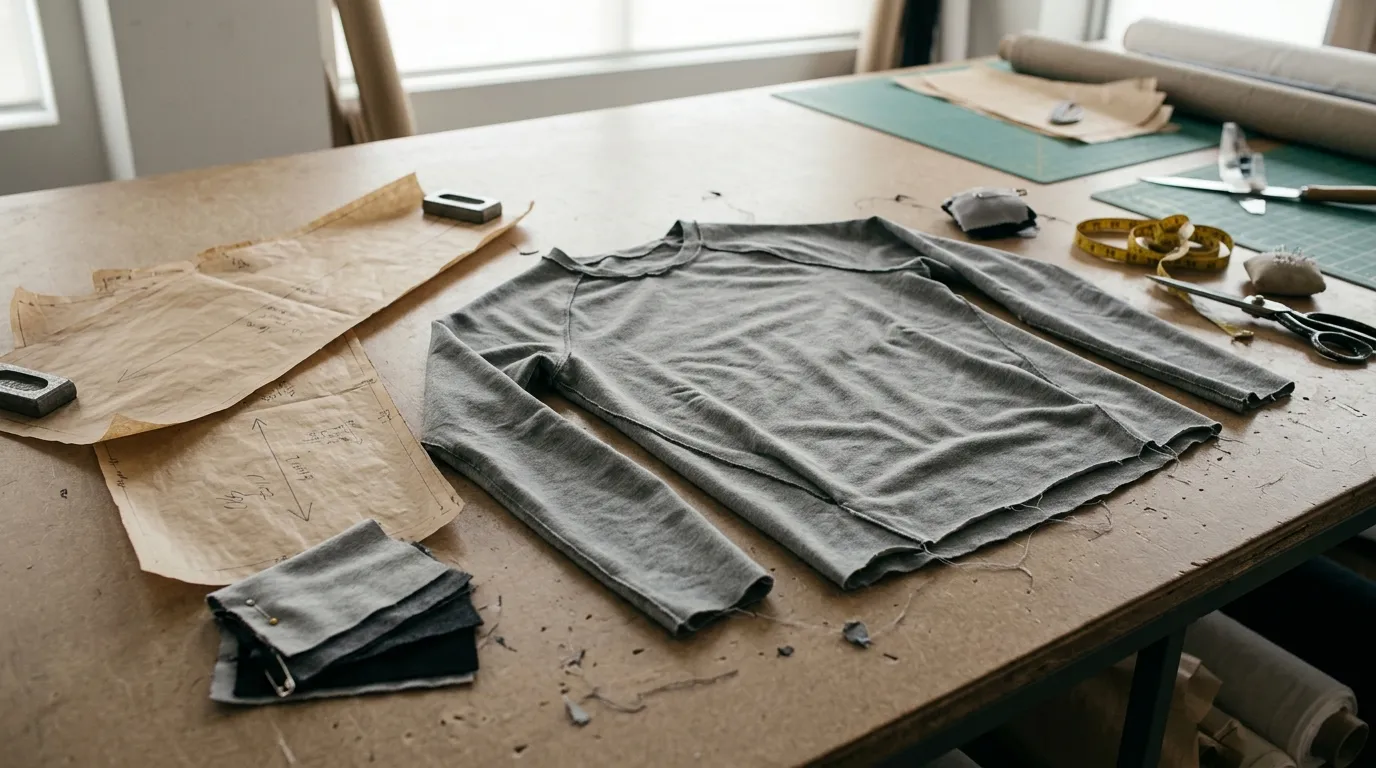
A proto sample — short for prototype sample — is the first physical version of a garment, made so a brand and a factory can check design intent, shape and whether the design can be constructed at all. According to BOMME Studio's garment sampling guide, a proto is an early physical version used to assess design intent, shape and construction feasibility, and it may be made in substitute or similar-weight fabric. Gopherwood Clothing describes proto sampling the same way, noting that substitute or lower-cost materials are common because the goal at this stage is design direction rather than final specification. Techpacker's guide to garment sample types treats proto samples as early design and style reviews.
Because the proto carries a concept into three dimensions for the first time, it is the stage where pattern-piece logic, panel placement and seam feasibility get tested. BOMME Studio's overview table reports a typical prototype timeline of 7–14 days, qualified by garment complexity and sample-room capacity — a source-reported range rather than a fixed rule.
Does a Proto Sample Use Final Fabric and Trims?
Usually not. Proto samples commonly use substitute or similar-weight fabric so the designer can judge silhouette, drape and construction before committing to production material. Proto approval confirms the design direction; it does not confirm production fabric, trims, colour, labels or packaging.
The practical consequence is that if your proto happens to be made in final fabric, you should still treat fabric, trim and labelling confirmation as pre-production checks. Do not treat a proto sign-off as specification confirmation.
What Is a Pre-Production Sample?
A pre-production (PP) sample is the final garment sample made before bulk production, built to the approved specification in production fabric with the intended trims, labels and construction. According to Gopherwood Clothing, the PP sample is a pre-bulk reference made with approved fabric, trims, stitching, labelling and packaging. Techpacker's guide describes PP samples as checked using actual production-line materials before bulk runs. BOMME Studio's overview table gives 7–14 days for a PP sample and describes it as confirming final approved garment details using production fabric, trims, labels and construction.
Minghang Garments describes its own PP process with one difference worth noting: its sampling guide states that its PP sample is made on the bulk line and serves as a reference standard for bulk production and quality control, with stated timelines of 5–7 working days for standard styles and 8–10 working days for multi-process styles. Treat those figures as Minghang Garments' stated process rather than as benchmarks that apply to every factory.
Proto Sample vs Pre-Production Sample: The Main Difference
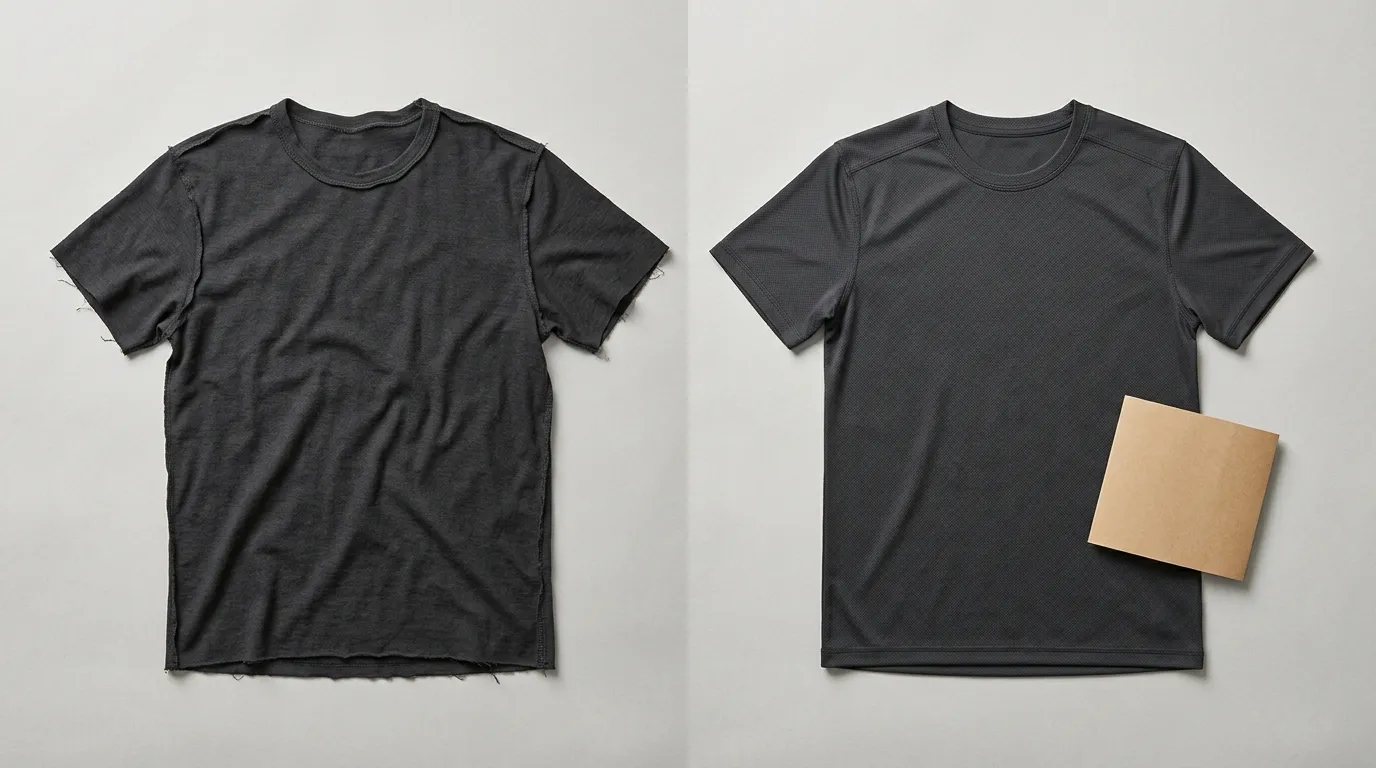
The difference is the question each sample answers. A proto sample asks whether the design is right and buildable; a pre-production sample asks whether this is the exact garment that will be mass-produced. BOMME Studio frames the split as design intent, shape and feasibility at proto stage versus confirmed production fabric, trims, labels and construction at PP stage. Gopherwood Clothing draws the same line by contrasting proto substitute materials with a PP reference made from approved fabric, trims, stitching, labelling and packaging.
| Criterion | Proto sample | Pre-production sample |
|---|---|---|
| Primary purpose | Test design intent, shape and construction feasibility | Confirm the approved specification before bulk |
| Fabric and materials | Often substitute or similar-weight fabric (BOMME Studio; Gopherwood Clothing) | Production fabric as approved (Gopherwood Clothing; Techpacker) |
| Trims, labels and branding | Usually substituted, not final | Approved trims, labels and packaging (Gopherwood Clothing) |
| Fit and measurement focus | Silhouette and proportions; early fit direction | Measurements against the approved size chart |
| What is being verified | Whether the design can be built as drawn | Whether the garment matches the agreed specification |
| How representative of bulk it is | Low — built for evaluation and revision | High — used as the bulk reference standard (Minghang Garments) |
| What approval means | Design direction accepted; revisions can follow | Specification accepted for bulk production |
| Typical next step | Fit sample and revisions | Bulk production against the approved sample |
The two stages are complementary rather than interchangeable. Skipping the proto risks scaling a design that has not been tested in three dimensions, and skipping the PP sample risks producing bulk against a specification nobody has confirmed in production materials.
What to Check at Each Stage
Check a proto for design translation and buildability; check a PP sample for specification fidelity to the approved sample and tech pack. BOMME Studio assigns design intent, shape and construction feasibility to the proto and confirmed production fabric, trims, labels and construction to the PP sample. Gopherwood Clothing lists approved fabric, trims, stitching, labelling and packaging for the PP reference, and Techpacker notes that PP review uses actual production-line materials.
Proto sample review checklist
- Silhouette and proportions measured against the design sketch or tech pack.
- Construction method and seam feasibility at stress points.
- Pattern-piece and panel logic, including grain line and symmetry.
- Any material substitution, and how it changes drape or hand feel.
- Open questions to resolve before the fit sample is cut.
Pre-production sample review checklist
- Fabric matches the approved quality and colour.
- Trims, zips, elastics and threads match the specification.
- Labels, hangtags and packaging match what was approved.
- Measurements line up with the approved size chart.
- Stitch type and workmanship match the approved reference.
- Overall match to the sealed or previously approved sample.
Where Fit Samples and Size-Set Samples Fit In
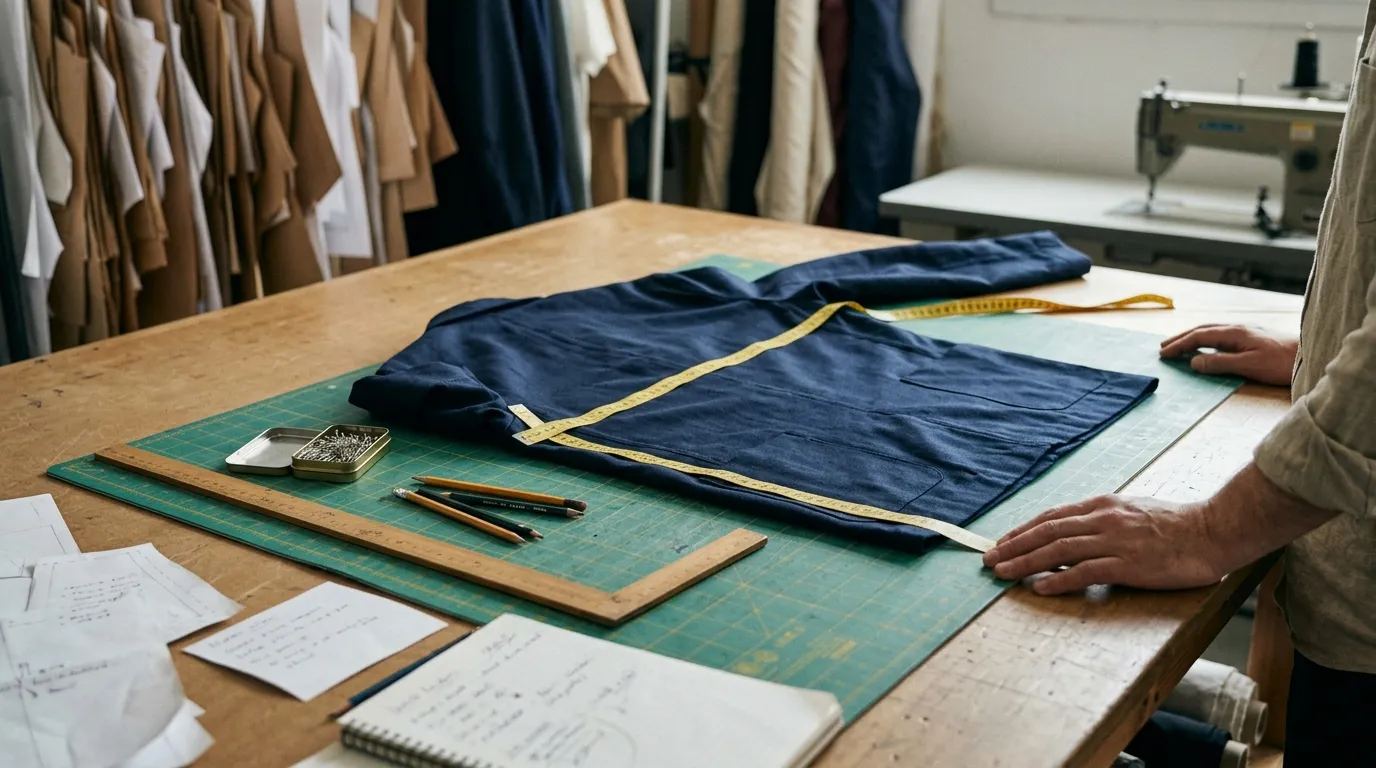
Fit samples and size-set samples sit between the proto and the PP sample. Fit sampling refines how the garment sits on the body, and size-set sampling checks how the graded pattern behaves across the size range before the final sample is made.
According to BOMME Studio, fit sampling follows prototype construction and focuses on fit, proportions and silhouette. Techpacker places size-set sampling after fit approval and describes it as evaluating graded patterns across the intended size range — closely tied to pattern grading oversized clothing work, where grade rules show up as real measurement differences between sizes.
The full garment sampling process therefore usually runs proto sample, fit sample and revisions, size-set sample where the range requires it, PP sample, then bulk production. The exact sequence varies by factory and by product: some styles need several fit rounds, and some simple products skip the size-set stage entirely.
What Does PP Sample Approval Actually Authorize?
Pre-production sample approval authorizes bulk production against that sample as the reference standard. It confirms the specification; it does not guarantee a defect-free run. Minghang Garments' sampling guide states that its PP sample serves as the reference standard for bulk production and quality control, which describes its own process rather than an industry-wide requirement. Gopherwood Clothing and Techpacker both treat the PP sample as the pre-bulk checkpoint built with approved materials.
Approval is also a fixed point. If fabric, trims, measurements or construction change after PP sign-off, the change should trigger a written amendment or a new sample before bulk begins, rather than being folded into the running order unseen. Once the reference is set, it carries into the custom apparel production timeline as the benchmark the bulk run is measured against.
What If the Proto or PP Sample Isn't Approved?
Send back written, itemized comments against the sample and the tech pack, then re-sample. Do not advance to bulk production on an unapproved sample, and match the fix to the failure so you re-run the right stage rather than starting over.
A design or construction problem belongs back at the proto or fit stage. A graded-fit problem belongs at the fit or size-set stage. A specification or material problem means correcting the spec and re-running the PP sample. Because the stage that failed determines how far back you go, record each round's comments against a fixed reference so the next sample is judged against the same standard, and move to bulk only once the relevant stage is signed off in writing.
Frequently Asked Questions
Is "proto sample" the same as "prototype sample"?
Yes. In apparel development, "proto" is the common shorthand for "prototype", and both describe the same early stage used to check design intent, shape and construction feasibility. BOMME Studio and Gopherwood Clothing both use the terms interchangeably when describing the first physical version of a garment.
Can a pre-production sample be made on a bulk line?
Practices vary by factory. Minghang Garments' sampling guide states that its own PP sample is made on the bulk line and used as the reference standard for bulk production and quality control. Other factories may build the PP sample in a sample room instead, so confirm the method with your supplier before assuming either approach.
What does pre-production sample mean?
A pre-production sample is the final garment sample made to the approved specification before bulk production. It uses production fabric, the intended trims, labels and construction, and it is reviewed so the factory and the brand agree on exactly what will be produced. Gopherwood Clothing and Techpacker both describe PP review this way.
-
Share
-

-

-