 Contact Us

Table of Contents

Contact Us
Updated 2 weeks ago
Low Impact vs Medium Impact vs High Impact Sports Bras: What's the Difference?
arafatshuvo
Sports bra support levels — low, medium and high impact — describe how much breast movement a bra is built to control. Low-impact styles suit gentle movement such as yoga or walking, medium-impact styles cover cycling and strength training, and high-impact styles use firmer compression, fuller coverage, wider straps and a more secure underband for running, HIIT and dance.
Key takeaways
- The three impact labels describe how much movement a bra is designed to manage; they are brand-set guidance rather than one universal rating, and different sources split activities differently.
- According to DICK'S Sporting Goods, yoga, stretching and Pilates/barre sit at low impact; gym training, jogging and cycling at medium impact; running, cross training, HIIT and dance at high support.
- Title Nine defines compression as pressing the breasts closer to the body, encapsulation as supporting each breast individually, and combination styles as using both.
- Support comes from the whole build — cup or front panel, coverage, straps and underband — not from padding alone.
- The right level also shifts with cup size and personal preference, so a label is a starting point, not a verdict.
What Low, Medium and High Impact Sports Bras Actually Mean
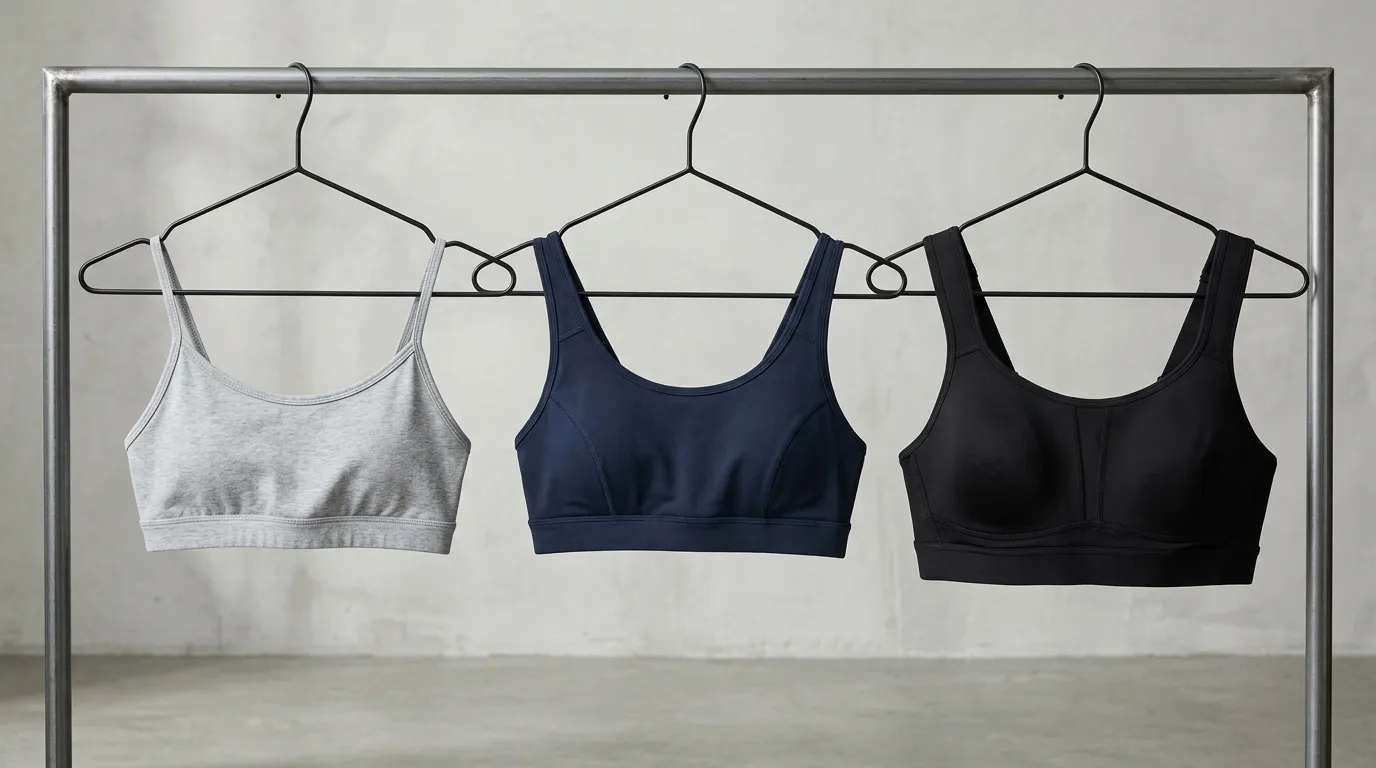
Low-, medium- and high-impact sports bras are three support categories that describe how much movement a bra is designed to control during activity. Knix frames the levels around exactly that relationship — how much an activity moves the breasts, and how much support that movement calls for.
Knix describes low-impact bras as light-support options and gives walking, yoga and Pilates as examples. It describes medium-impact bras as typically using some compression, with hiking, weight training and cycling among its examples. For high impact, Knix describes bras built for movement involving more bouncing, commonly with stronger compression and more supportive straps and bottom bands.
| Support level | What it is designed for (Knix) | Construction emphasis (Knix) | Common activity examples (Knix) |
|---|---|---|---|
| Low impact | Light support for gentle movement | Minimal compression, simple front construction | Walking, yoga, Pilates |
| Medium impact | Moderate movement control | Some compression | Hiking, weight training, cycling |
| High impact | More bouncing movement | Stronger compression, more supportive straps and bottom bands | Not specified in this comparison |
One limit matters here: these labels are set by brands rather than by a single published rating, so the same workout can sit under different levels from one retailer to the next. The FAQ at the end of this article covers that in more detail.
Which Activities Sit at Each Support Level?
To place an activity, start with the most demanding movement in your session. DICK'S Sporting Goods lists yoga, stretching and Pilates/barre as low-impact activities; gym training, jogging and cycling as medium-impact activities; and running, cross training, HIIT and dance as high-support examples in its 2026 guide.
Treat those lists as common guidance rather than a rule. Some brands describe the levels differently — Glamorise, for example, publishes a two-level breakdown covering high and low impact only — so the same workout can appear under different headings depending on where you shop. Match the hardest part of the session, then adjust for comfort.
Cup size is the other variable, and DICK'S Sporting Goods says support choice depends on activity and cup size together, publishing a table that maps cup-size groups to suggested support levels. That is why a single activity does not always produce a single answer. See the FAQ below for how cup size changes the choice.
Compression vs Encapsulation: How the Support Is Built
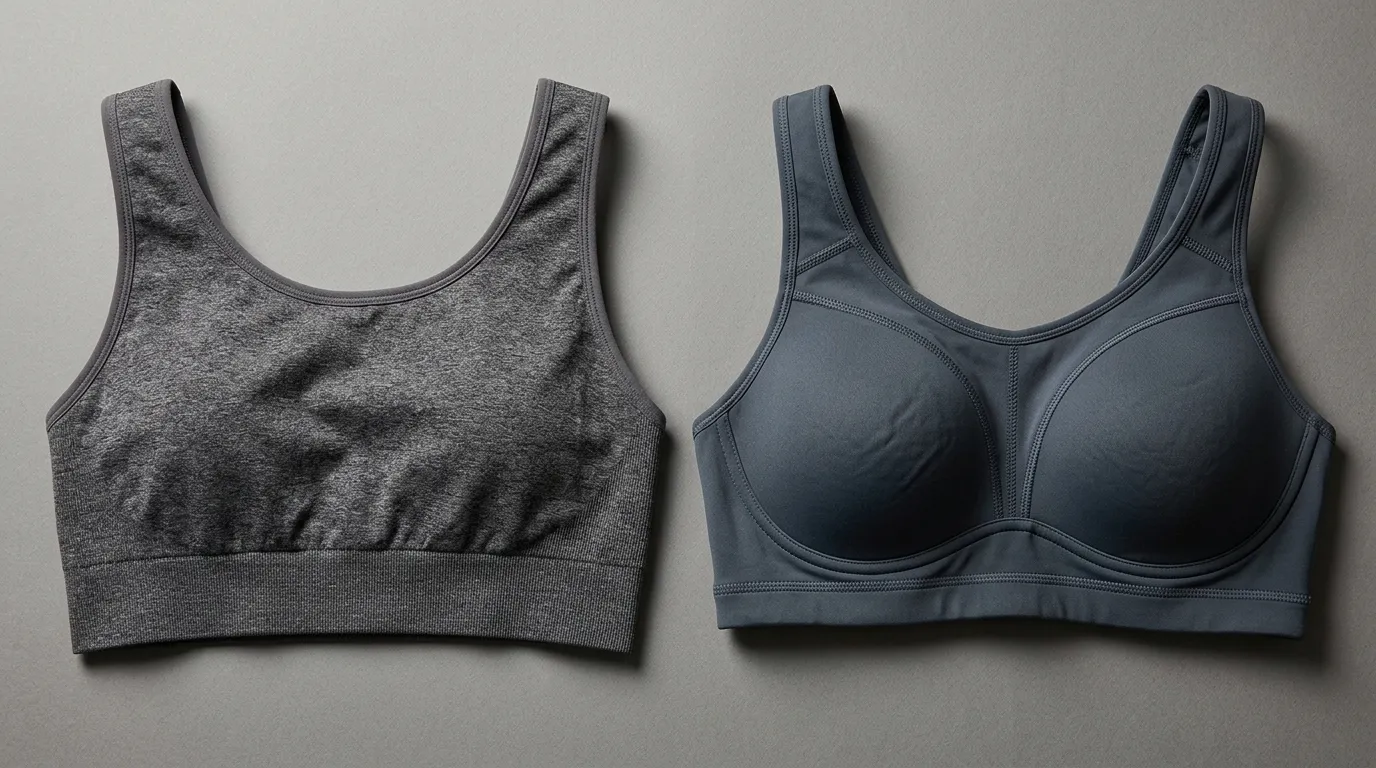
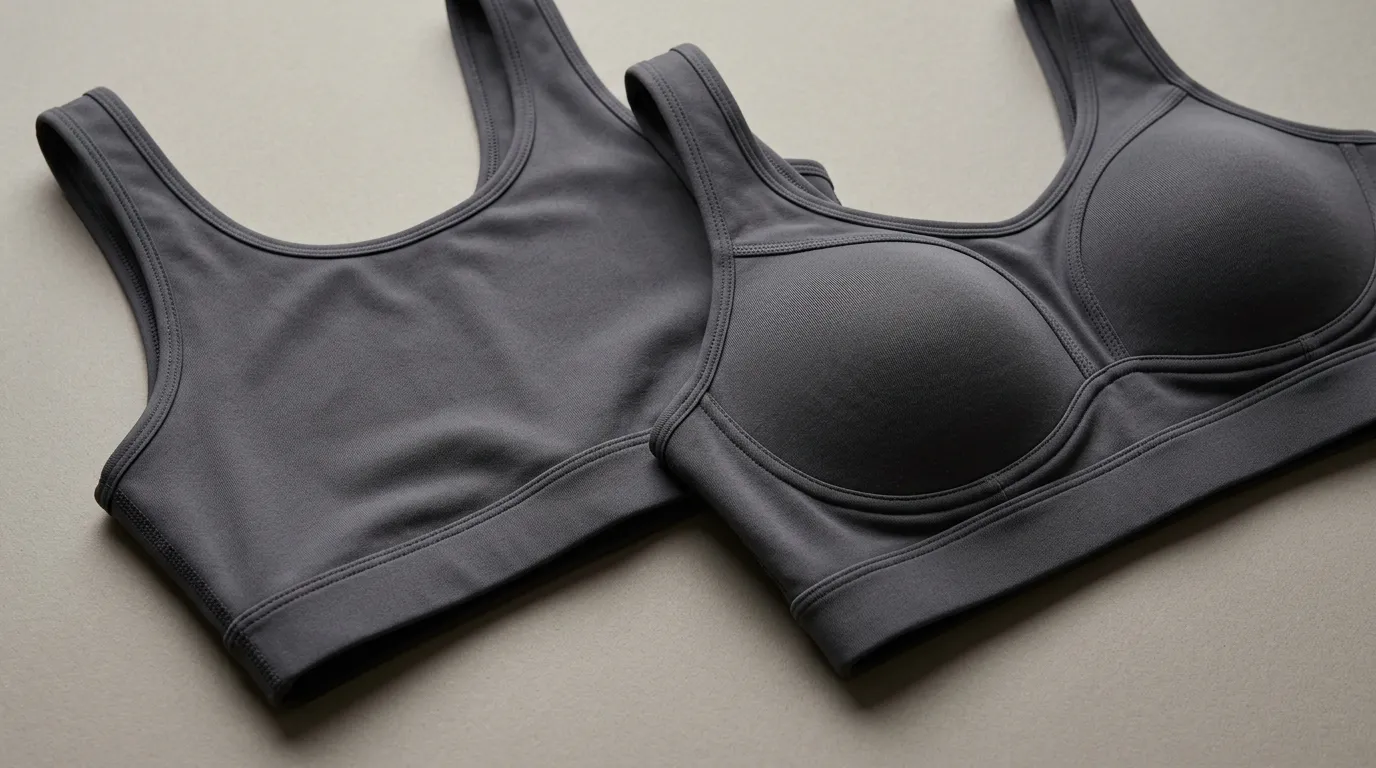
Compression and encapsulation are the two construction approaches behind every support level. Compression holds the breasts closer to the body as a single unit. Encapsulation supports each breast individually, normally with shaped cups. Combination styles use both approaches in one bra.
Title Nine defines the three approaches this way and treats them as the main structural difference between sports bra types. At the higher end, Glamorise describes high-impact bras as often combining compression and encapsulation, and lists coverage, moisture-wicking materials, adjustable straps and secure closures among their typical features.
For a brand building a range, the choice between these approaches is the first construction decision, because it shapes the pattern, the cup development and the fit blocks a custom sports bra manufacturer has to produce for each support level.
Straps, Underband, Coverage and Cups: What Actually Does the Work
Four components do the holding and controlling in a sports bra: the cup or front panel, the coverage it provides, the straps and the underband. Higher-support styles typically firm up several of them at once rather than relying on one.
- Cup or front panel. A single compression panel presses the chest to the body; shaped cups support each breast individually. This is the base of the support build.
- Coverage. More coverage generally means more area held and less movement escaping at the edges. Glamorise lists coverage among the features of high-impact bras.
- Straps. Wider, adjustable straps distribute load over a larger area. Glamorise lists adjustable straps among high-impact features; the definitions table above shows Knix describing more supportive straps at high impact.
- Underband. The band anchors the bra to the ribcage, and Knix notes more supportive bottom bands at the high-impact level. A band that rides up or shifts cancels much of the work the rest of the bra does.
Fabric choice supports these components rather than replacing them. Glamorise names moisture-wicking materials as a high-impact feature, which keeps the bra comfortable during sustained sweating — useful, but not a measure of support on its own.
Where Padding and Removable Cups Fit In
Padding shapes coverage, modesty and outline; it is not a measure of support level in itself. None of the sources in this comparison treats padding as the factor that decides whether a bra is low, medium or high impact.
The practical decision rule is to judge a bra by its cup or front-panel construction, coverage, strap and underband security first, then treat padding as a finish choice made after the support build is settled. A removable pad can change the outline of a bra without changing how much movement it controls.
The one exception worth knowing: padded, shaped cups can be part of an encapsulation build, where the cup itself is doing structural work. That is a construction decision, not a padding add-on.
How to Choose for Mixed-Activity Workouts
Work from the most demanding activity in your routine. Lume Six notes that activity, chest size and personal preference can affect whether a medium-impact bra feels adequate for a high-impact activity, which is why one bra rarely covers every session comfortably.
- List your regular activities and identify the highest-movement one.
- Start at the support level that activity maps to, using the DICK'S Sporting Goods examples as a reference point.
- Test the bra through that movement rather than standing still in a fitting room.
- If you feel restriction or slipping, adjust the size and fit before changing support level.
- If one bra must cover everything, choose the higher level and confirm it stays comfortable for the gentler sessions too.
Lume Six's own product comparison contrasts coverage, compression and strap width between medium- and high-impact styles, which is a useful reminder that the difference between two levels is often several small changes rather than one dramatic one.
Fit Checks Before You Commit to a Level
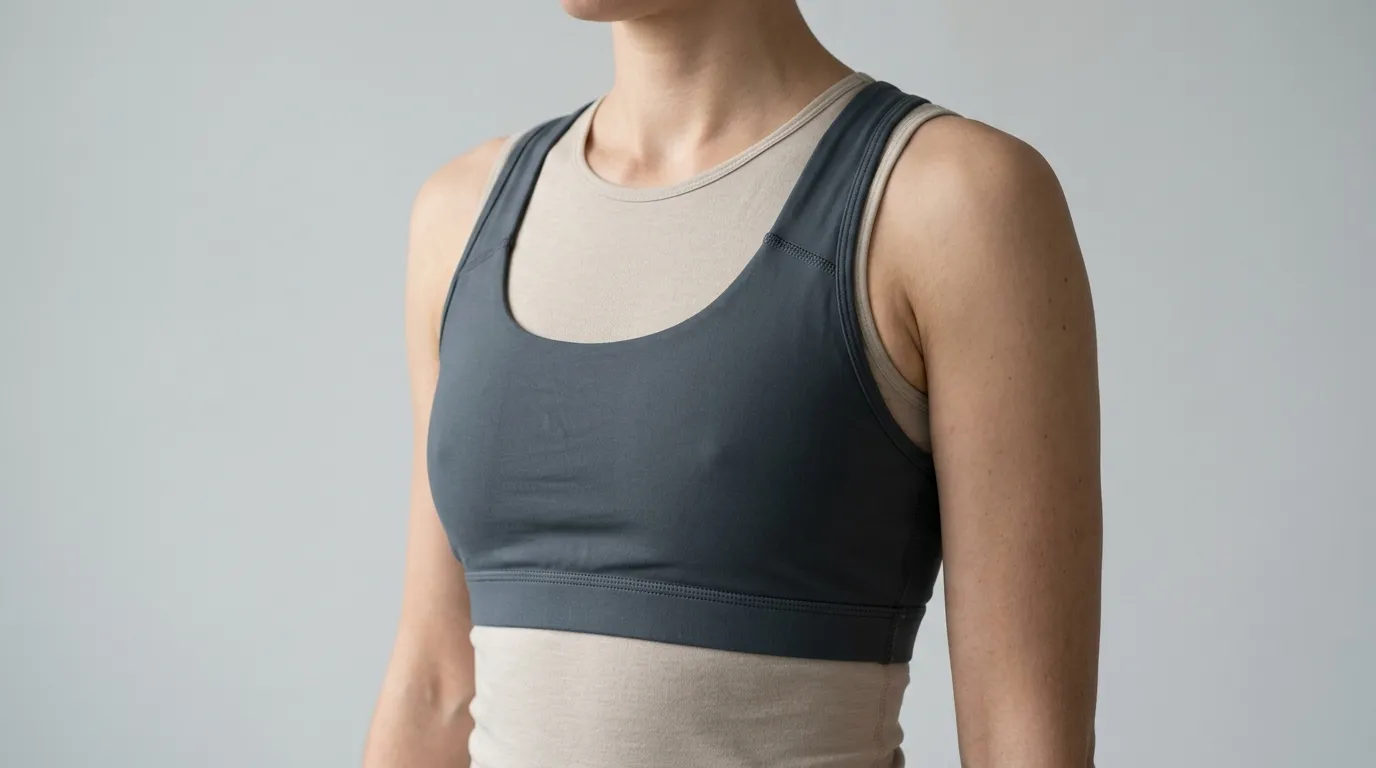
A correctly fitted sports bra stays in place through your hardest movement while letting you breathe normally. If either of those fails, the level or the fit is wrong for you, regardless of what the label says.
- The underband sits level and stays put when you raise your arms.
- Straps do not dig into the shoulders or slide off during movement.
- Coverage holds through the biggest movement in your activity, with no spill at the neckline or armhole.
- Breathing is unrestricted at the ribcage.
- Nothing rubs, pinches or leaves pressure marks after a full session.
- You are not adjusting the bra mid-workout.
These are practical checks, not a formal test protocol — they are here to help you read your own fit, and no single published standard for sports bra impact or fit testing was identified while preparing this guide. Choose the size that passes these checks at your chosen support level rather than sizing down to create support.
Planning a Sports Bra Range Across Three Support Levels
For a brand, low-, medium- and high-impact styles are three different construction briefs. Decide the activity and the wearer each style serves first, then specify the compression or encapsulation build, the coverage, the strap and underband security, and the cup or padding approach for that level.
Minghang Garments' sports bra manufacturing page describes a range that includes high-, medium- and low-impact styles, with construction variables covering compression, encapsulation, underband support, cup systems and padding. Those variables map directly onto the three briefs above, so the same development process can be run at each support level.
Minghang Garments is a custom clothing manufacturer based in Dongguan, China, operating since 2017, providing OEM, ODM and private label manufacturing for emerging brands, activewear and fitness brands, streetwear labels and established apparel companies. Its services cover product development, fabric and trim sourcing, pattern making, sampling, bulk production, printing, embroidery, garment washing, labels and packaging. It runs a 12,000 m² production floor and a 2,000 m² sample center with up to 500,000 pcs/month capacity; MOQ starts from 100 pcs per color per style on stock fabric, sampling takes 7–15 working days and bulk production 25–45 days, with a 5+1 QC system.
Level-specific development pages are available for the low impact sports bra manufacturer brief, the medium impact sports bra manufacturer brief and the high impact sports bra manufacturer brief.
Frequently asked questions
Are sports bra impact levels standardized?
Sports bra impact levels are not one universal rating. Brands set their own definitions, and the sources in this comparison use them differently: Knix frames three levels around movement and support, while Glamorise publishes only a high-versus-low breakdown. Treat the label as a starting point, then check coverage, straps, underband and fit through your own activity.
Does cup size change which support level I need?
It can. According to DICK'S Sporting Goods, support choice depends on activity and cup size together, and its 2026 guide maps cup-size groups to suggested support levels alongside activity types. Personal preference matters as well, so a larger bust doing a low-movement activity may still prefer more coverage and a firmer underband.
Which type of sports bra is best for heavier breasts?
Higher-movement activities generally call for more support, so a high-impact style with fuller coverage, secure straps and a firm underband is the usual starting point. Glamorise describes high-impact bras as often combining compression and encapsulation. If you feel pressure or restriction, change size or construction rather than accepting the discomfort.
Planning a sports bra range at more than one support level? Minghang Garments manufactures OEM, ODM and private label sports bras from Dongguan, with MOQ from 100 pcs per color per style on stock fabric, sampling in 7–15 working days and bulk production in 25–45 days.
-
Share
-

-

-