 Contact Us

Table of Contents

Contact Us
Updated 2 weeks ago
Recycled Polyester vs Virgin Polyester for Activewear: Which Is Better?
arafatshuvo
Recycled polyester fabrics can perform like virgin polyester in activewear when yarn, knit, weight and finish are specified correctly; the differences that decide most orders are cost variability, recycled-content traceability and the limits of sustainability claims. Neither fiber is automatically better — choose by the tested fabric and documented content, not the label alone.
Key takeaways
- Virgin polyester is petroleum-derived; recycled polyester is made from post-consumer or post-industrial waste such as PET bottles, used garments and industrial scraps, according to Sew Dynamic Fabrics.
- Recycled polyester is still polyester: Tellus states it is not biodegradable and can shed microplastics when washed.
- Yarn, knit structure, fabric weight, finishing and elastane content shape stretch, recovery, opacity and drying more than the recycled-versus-virgin fiber choice does.
- Price gaps are not fixed: Sansan Sports reports one premium in its text and different regional and dated figures in its own table, so any premium must be quoted on the exact fabric specification.
- World Collective notes that recycled-polyester impact reductions depend on feedstock, energy mix and system boundaries, which makes blanket sustainability claims unsafe.
What Are Recycled Polyester and Virgin Polyester?
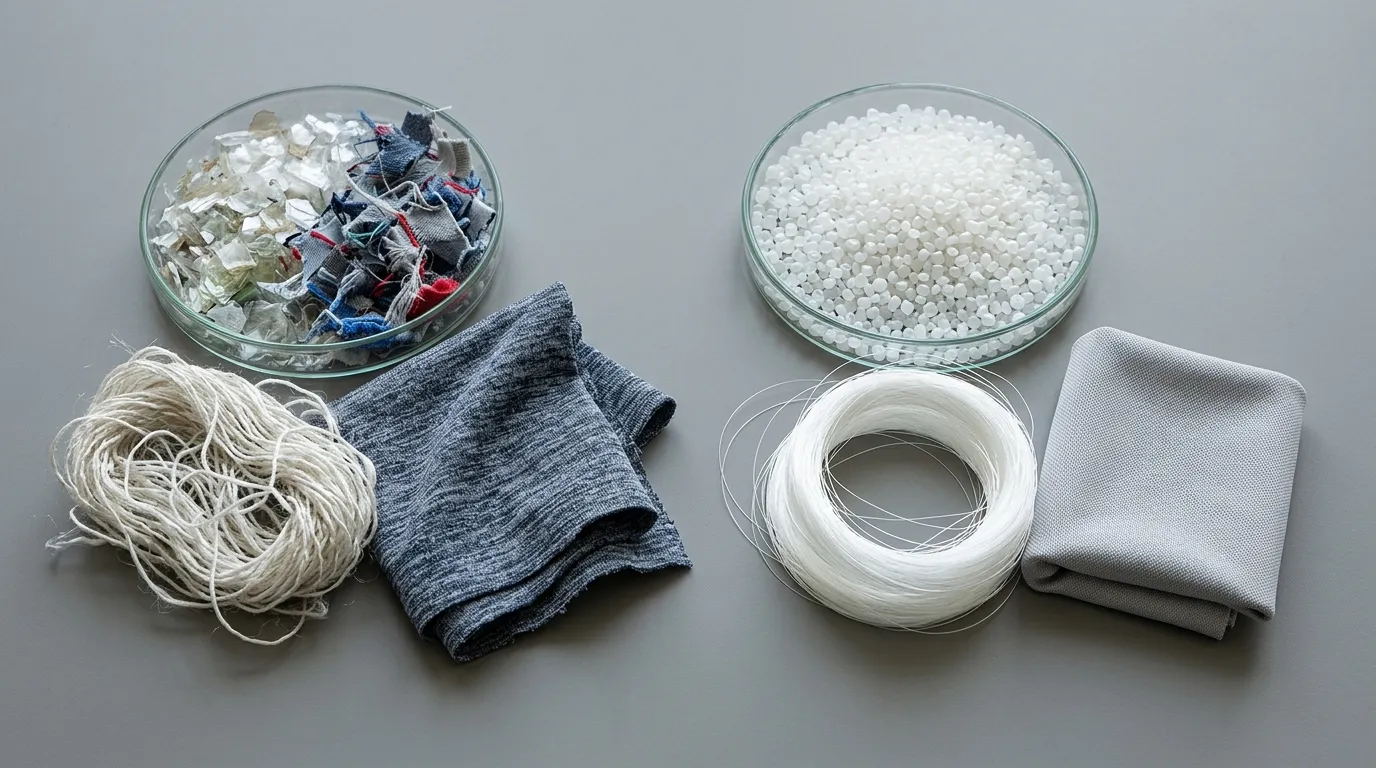
Virgin polyester is a petroleum-derived synthetic fiber, while recycled polyester — often written as rPET — is polyester produced from post-consumer or post-industrial waste such as PET bottles, used garments and industrial scraps.
Sew Dynamic Fabrics describes virgin polyester as petroleum-derived and recycled polyester as made from post-consumer or post-industrial waste that includes bottles, garments and industrial scraps. Both end up as polyester, which is why their behavior in a finished garment is often similar when the yarn and fabric construction match.
World Collective distinguishes two recycling routes. Mechanical recycling sorts, washes, shreds and melts or extrudes PET. Chemical recycling breaks PET down into intermediates or monomers and rebuilds it into new polyester. Sportek International describes a comparable bottle-to-fiber route for the branded Repreve fiber, covering collection and cleaning, melting and pelletizing, extrusion and yarn production — that is one branded supply chain, not a description of every recycled polyester available.
| Fiber | Typical feedstock | Main recycling route | What the buyer must verify |
|---|---|---|---|
| Virgin polyester | Petroleum-derived feedstock | Not applicable | Fiber composition and specification stated for the fabric |
| Mechanically recycled polyester | Post-consumer or post-industrial waste such as PET bottles, garments and industrial scraps | Sorting, washing, shredding and melting or extruding PET | Recycled-content documentation that matches the specific fabric and order |
| Chemically recycled polyester | Same waste streams, processed differently | PET broken into intermediates or monomers and rebuilt | Which recycling route the documentation actually covers |
How Does Recycled Polyester Compare With Virgin Polyester in Activewear Performance?
In finished activewear, recycled and virgin polyester can perform comparably because both are polyester; reported differences in durability and dye absorption trace back to fiber quality and processing rather than to the recycled label by itself.
A study snippet from Taylor & Francis's "Recycled versus virgin polyester sportswear" reports that recycled-polyester sports T-shirts were competitive with virgin-polyester sports T-shirts in performance. The full article was not accessible when this page was written, so treat that as a reported finding rather than a set of detailed test results.
Tellus describes recycled polyester as offering polyester-like performance and lists moisture-wicking and quick-drying behavior, durability, warmth in fleece, and color and shape retention. Those are general material attributes from a retailer's guide, not a controlled comparison. Sew Dynamic Fabrics' comparison says both types can be quick-drying and wrinkle-resistant, while noting possible differences in durability and dye absorption; no test conditions are published alongside that claim.
| Attribute | Virgin polyester | Recycled polyester | What to verify with your supplier |
|---|---|---|---|
| Moisture management and drying | Quick-drying polyester behavior | Quick-drying polyester behavior reported by Tellus and Sew Dynamic Fabrics | Measured drying time on the candidate fabric |
| Durability and strength | Source reports possible differences | Source reports possible differences | Abrasion and strength test data on the finished fabric |
| Hand feel | Depends on yarn and finish | Depends on yarn and finish | Physical samples of both options |
| Dyeing and color consistency | Source notes possible differences in dye absorption | Source notes possible differences in dye absorption | Lab dip and bulk shade approval |
| Stretch and recovery | Governed by elastane content | Governed by elastane content | Elastane percentage and recovery testing |
| Warmth in fleece | Standard fleece behavior | Warmth in fleece listed by Tellus | Fabric weight and pile specification |
Why Fabric Construction Matters More Than the Fiber Label
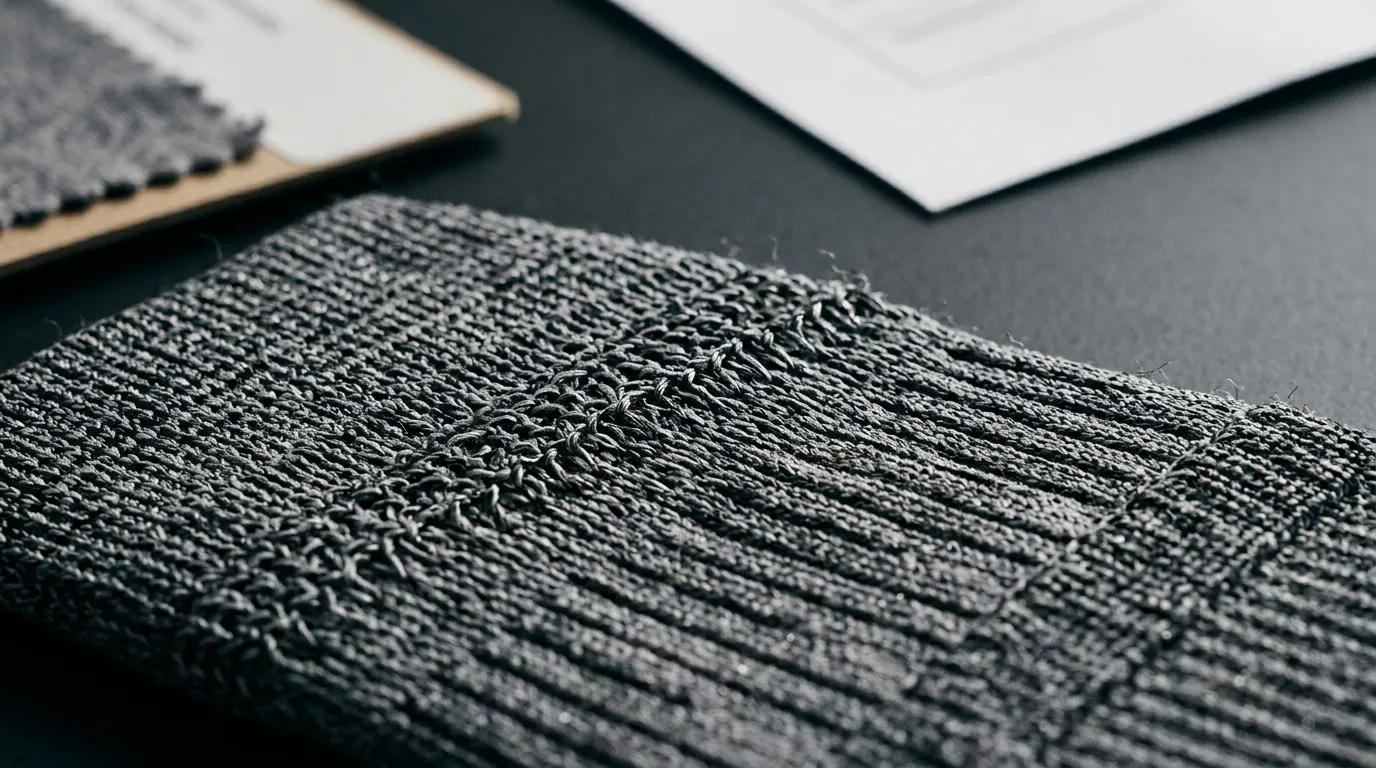
Yarn type, knit structure, fabric weight, dyeing and finishing, and elastane content change stretch, recovery, opacity and drying more than recycled-versus-virgin origin does.
Tellus and Sew Dynamic Fabrics support only general polyester-level parity between the two fiber types, not equivalence at the level of a specific fabric. The practical rule is to compare candidate fabrics built to the same construction specification, then judge the finished garment rather than the fiber name. If you are working through those construction variables, this activewear fabric guide explains how fabric choice affects garment behavior.
How Do Costs Compare?
Recycled polyester often carries a premium over virgin polyester, but no single percentage holds; the gap depends on feedstock, yarn specification, order volume, region and date.
Sansan Sports reports a 30–35% recycled-polyester price premium in one passage, yet its own table gives different region- and date-specific comparisons, including a 69% Europe figure for April 2025. Because those figures conflict in scope and presentation, this page does not repeat any of them as a general market premium. The reliable step is to request fabric-level quotes on the exact yarn count, weight, finish and order quantity before assuming a percentage.
Cost is only one side of the comparison. The documentation that supports a recycled-content claim is covered under How to Verify Recycled Content Before You Order.
Sustainability Claims: What Recycled Polyester Does and Doesn't Fix
Recycled polyester reduces demand for virgin petroleum feedstock, but it remains polyester: Tellus states it is not biodegradable and can shed microplastics when washed, and World Collective notes that impact reductions depend on feedstock, energy mix and system boundaries.
Those conditions matter because recycled content alone does not settle a product's environmental profile. A mechanically recycled fiber and a chemically recycled fiber can carry different processing routes and different energy inputs, and the benefit claimed depends on where the system boundary is drawn. That is why blanket statements such as "made from recycled polyester, therefore sustainable" are not defensible on their own.
No verified comparative microfiber-shedding data was available when this page was written, so recycled polyester is not ranked against virgin polyester on shedding here. The mechanical-versus-chemical recycling distinction is explained under What Are Recycled Polyester and Virgin Polyester?
How to Verify Recycled Content Before You Order
Ask for recycled-content documentation tied to the specific material and order, and check which standard it is issued under, because the applicable paperwork depends on the material and the order.
World Collective covers supplier readiness and chain-of-custody verification as part of the recycled-polyester sourcing picture. A repeatable check looks like this:
- Confirm the fiber composition and the recycled-content share stated in the fabric specification.
- Confirm the name of the standard and the exact scope of any certificate or declaration.
- Confirm the documentation applies to the specific fabric and order, not only to a supplier's general capability.
- Request the material-level specification or test documents relevant to your product.
- Confirm in writing which documents will accompany your order before production starts.
Minghang Garments works with recycled polyester, and GRS documentation depends on the material and the order — so availability is confirmed case by case rather than assumed. The company's sustainable manufacturing page covers its material approach and broader production services.
Which Should You Choose for Leggings, Sports Bras, Shorts and Tops?
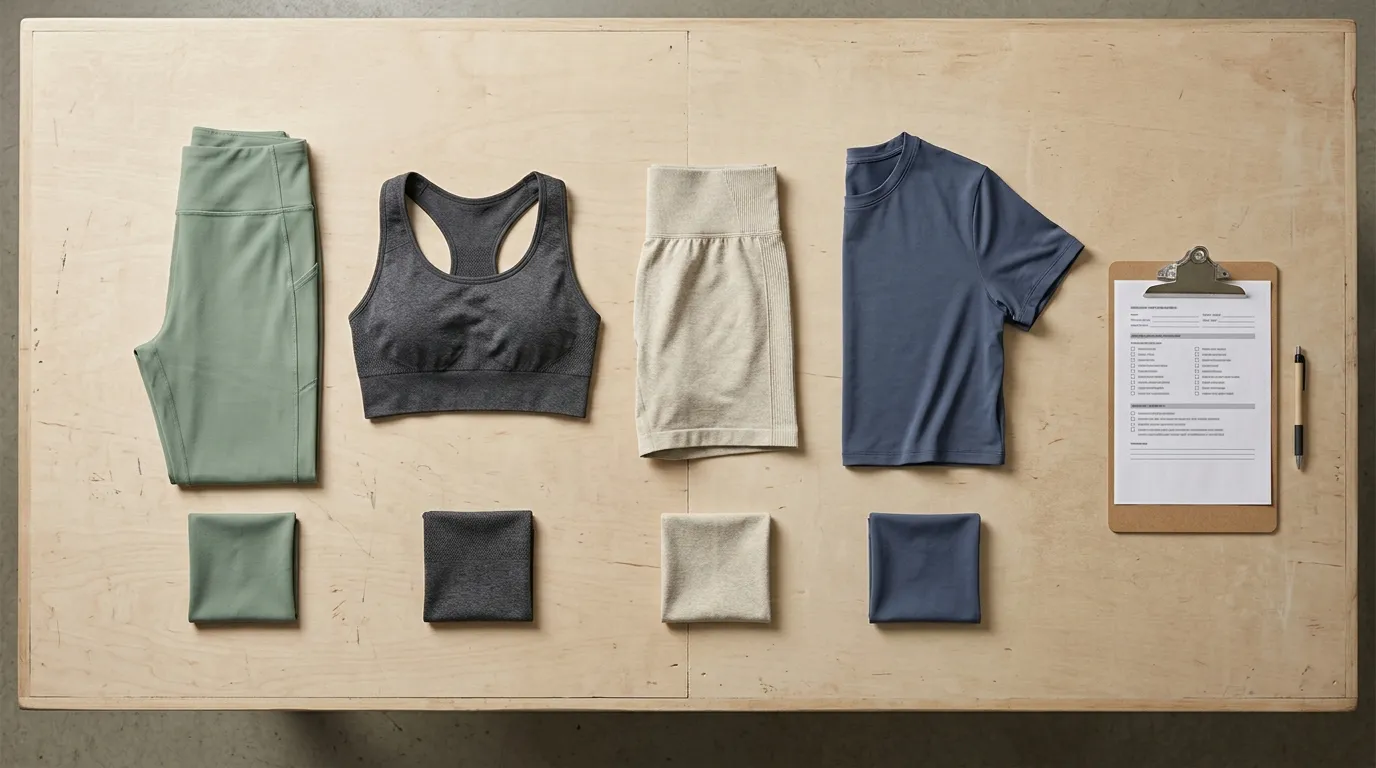
Choose by tested fabric behavior and documented content rather than fiber origin: for leggings and sports bras, elastane content and recovery usually decide the outcome, while for shorts and training tops, drying, opacity and hand feel usually decide.
No published comparison retrieved for this page gives per-garment verdicts on recycled versus virgin polyester, so the decision has to come from the fabric in front of you. Treat the performance attributes reported by Tellus and the quick-drying, wrinkle-resistant overlap reported by Sew Dynamic Fabrics as general context, not as product recommendations.
| Product type | Properties that decide | Recycled versus virgin polyester note |
|---|---|---|
| Leggings | Elastane content, recovery, opacity | Compare both options at the same construction and weight |
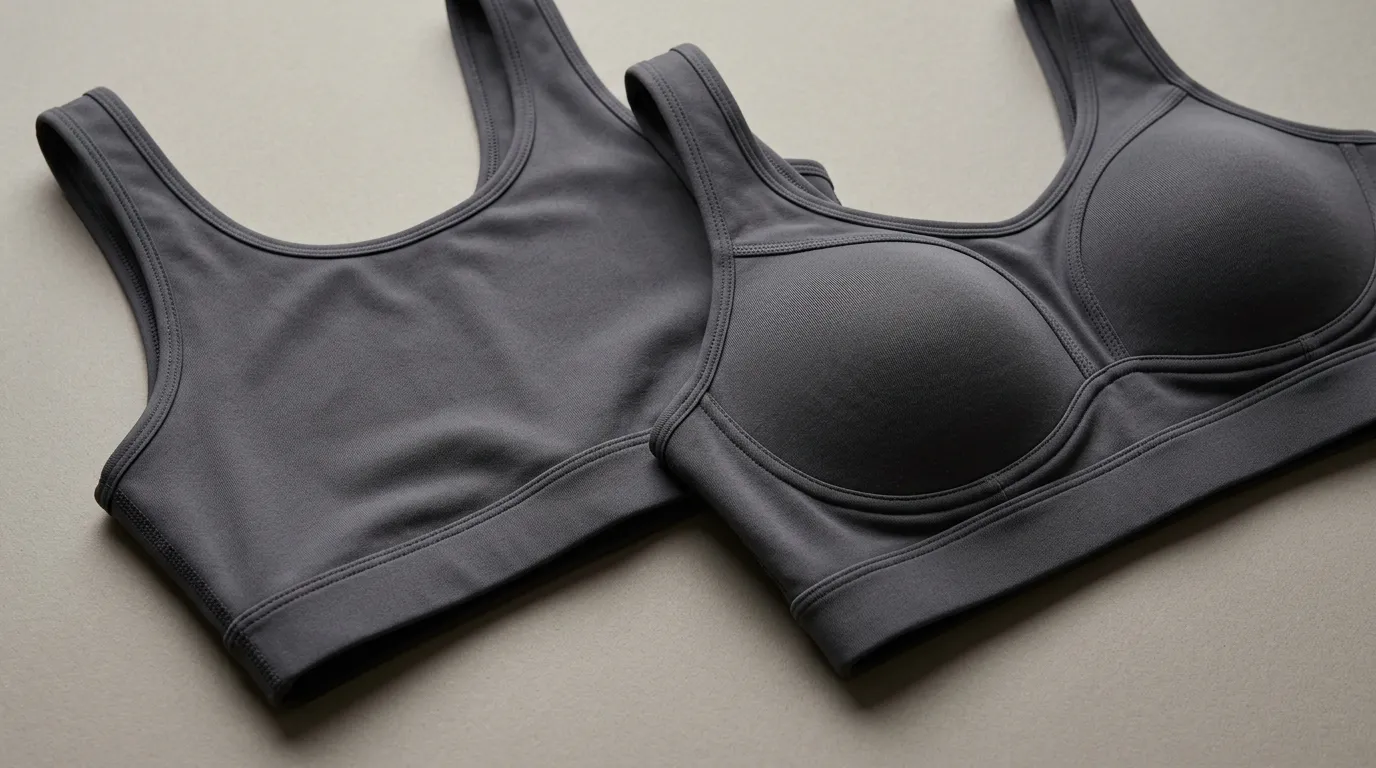
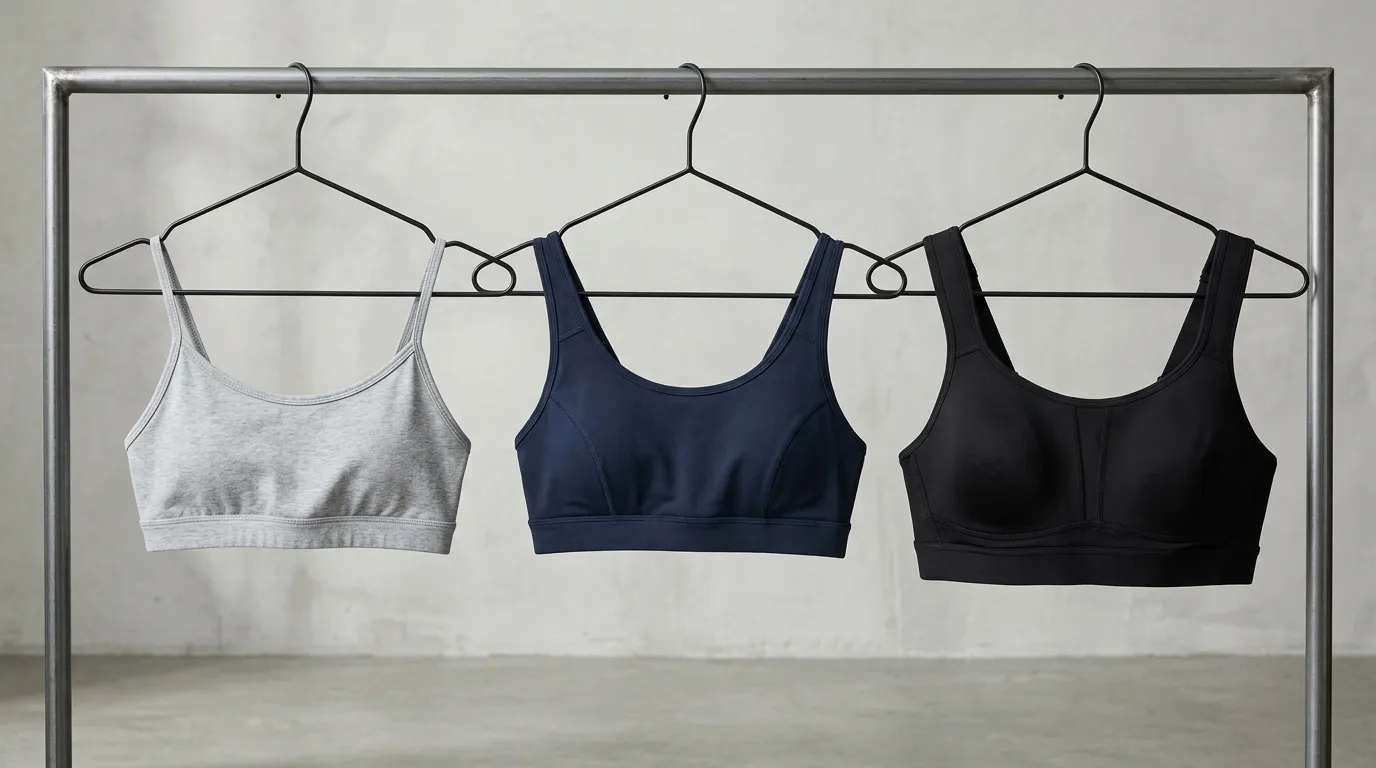
| Sports bras | Stretch and recovery, support, hand feel | Verify with the supplier using physical samples |
| Shorts | Drying, opacity, hand feel | Both fiber types are reported as quick-drying by Tellus and Sew Dynamic Fabrics |
| Training tops and T-shirts | Drying, hand feel, color consistency | A study snippet from Taylor & Francis reports recycled-polyester sports T-shirts were competitive with virgin-polyester versions |
Frequently asked questions
Is recycled polyester safe to wear?
No evidence retrieved for this page indicates a general safety difference between recycled and virgin polyester fabrics. Suitability depends on the finished material and on any testing or documentation that applies to your order. Ask for the fabric specification and relevant documents rather than judging safety from the fiber label alone.
Is recycled polyester low quality?
Not inherently. Performance depends on yarn, construction and finishing. Tellus describes polyester-like attributes for recycled polyester, while Sew Dynamic Fabrics notes possible durability and dye-absorption differences without publishing test conditions. Test the actual candidate fabric against your requirements instead of judging quality by fiber origin.
Does recycled polyester shed more microplastics than virgin polyester?
No verified comparative shedding data was available when this page was written, so no ranking is given. Tellus states that recycled polyester is non-biodegradable and can shed microplastics when washed. Treat both fiber types as polyester and request material-level data if shedding affects a claim you plan to make.
If you are specifying a recycled polyester activewear style, Minghang Garments can source fabric and confirm which documentation applies to your chosen material and order, with recycled-content paperwork verified case by case.
-
Share
-

-

-