 Contact Us

Table of Contents

Contact Us
The best sports bra fabric is usually a nylon-spandex or polyester-spandex knit with strong stretch recovery, because support depends on the fabric returning to shape after it stretches. Softer brushed knits and cotton blends suit low-impact or comfort-first bras. Padding, sweat management and impact level decide which of these sports bra fabrics fits your design.
Which Fabrics Are Used in Sports Bras?
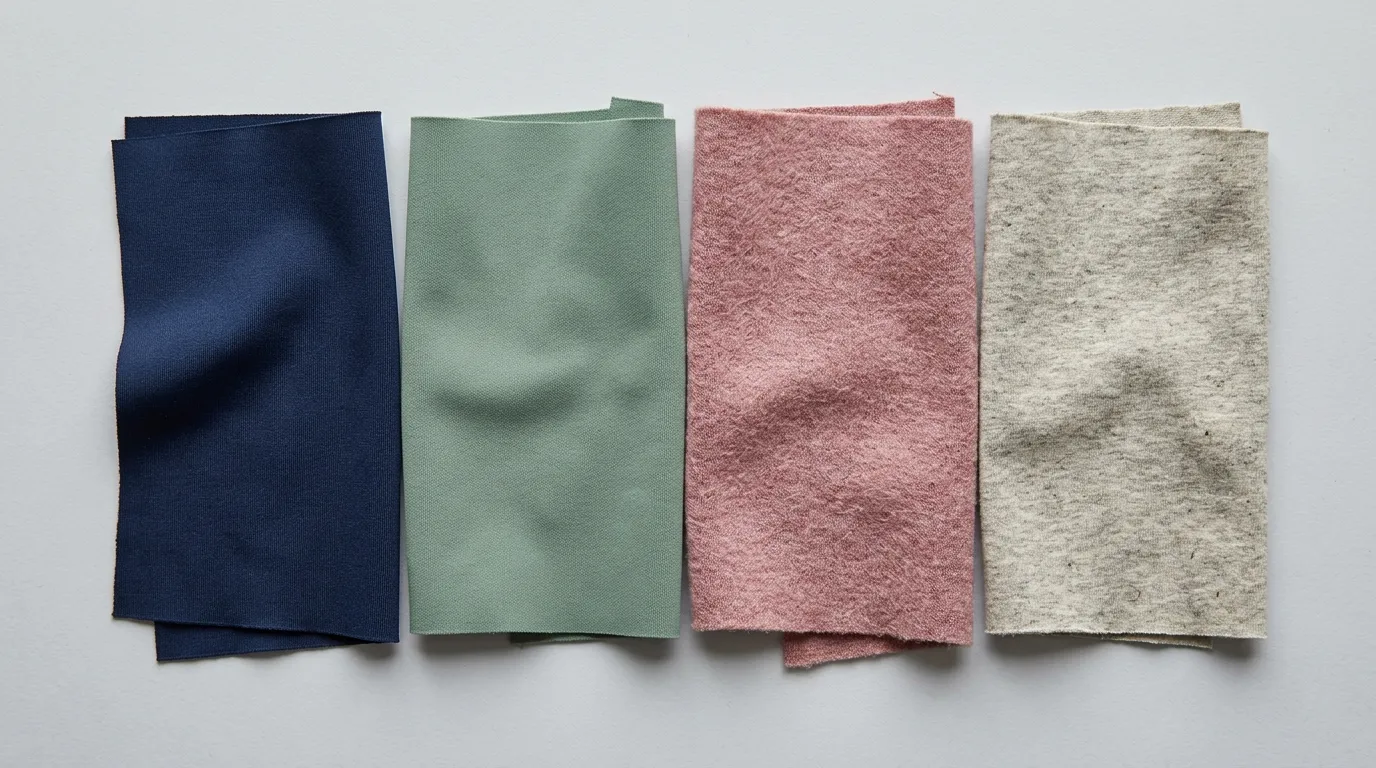
Sports bras are built mainly from nylon-spandex, polyester-spandex and cotton-blend knits, and each family fits a different balance of support, softness and sweat handling. Sportswear knits are usually described by their fiber blend and their knit construction, because both shape how the finished bra behaves.
According to Minghang Garments' guidance on activewear fabric, nylon-based fabrics are commonly used for sports bras and fitted activewear where softness and next-to-skin feel matter. NovaKnitting's June 2026 sports bra fabric guide characterizes nylon-spandex as softer and slicker than polyester-spandex, which it describes as faster-wicking. The Good Trade's October 2026 roundup reports that the natural-fiber bras it reviewed suit lower-intensity activities, while its reviewer used polyester-spandex bras for high-impact exercise.
| Fabric family | Typical feel | Recovery and support role | Sweat handling | Best-fit use |
|---|---|---|---|---|
| Nylon-spandex | Softer and slicker than polyester blends (NovaKnitting, 2026) | Elastic recovery comes from the blend and knit, not from nylon alone | Wicking depends on knit structure and finishing | High-support bras worn against the skin for long sessions |
| Polyester-spandex | Firmer; described as faster-wicking (NovaKnitting, 2026) | Same requirement: the knit must return to shape after stretching | Typically the stronger wicking option of the two | High-sweat training and high-impact bras |
| Brushed knit (often a synthetic blend) | Soft, matte hand feel | Recovery depends on blend and knit structure | Depends on knit structure and finishing | Low-impact and comfort-first bras |
| Cotton and cotton blends | Natural, soft hand feel | Lower-intensity use, with support trade-offs versus polyester-spandex (The Good Trade, 2026) | Wicking trade-offs versus polyester-spandex (The Good Trade, 2026) | Low-impact everyday comfort bras |
Nylon-Spandex vs Polyester-Spandex: Which Should You Choose?
Choose nylon-spandex when softness and a smooth, next-to-skin hand feel matter most, and polyester-spandex when faster moisture handling and durability are the priority. Those are the typical differences between the two families, not universal rules.
NovaKnitting's June 2026 sports bra fabric guide contrasts the two in its comparison table, describing nylon-spandex as softer and slicker and polyester-spandex as faster-wicking. That holds as a general characterization, but it does not mean every nylon knit feels soft or every polyester knit wicks well.
Fabric performance depends on construction and finishing, not fiber name alone, as the activewear fabric guide explains. Knit structure, fabric weight and finishing treatment all change how a knit feels and how it moves moisture, so a spec sheet showing only a fiber blend tells you the recipe, not the result.
Decision rule: if the bra is worn against skin for long sessions, weight hand feel higher; if sweat volume is the main complaint, weight wicking higher. Neither fiber wins both categories.
How Does Impact Level Change the Best Fabric?
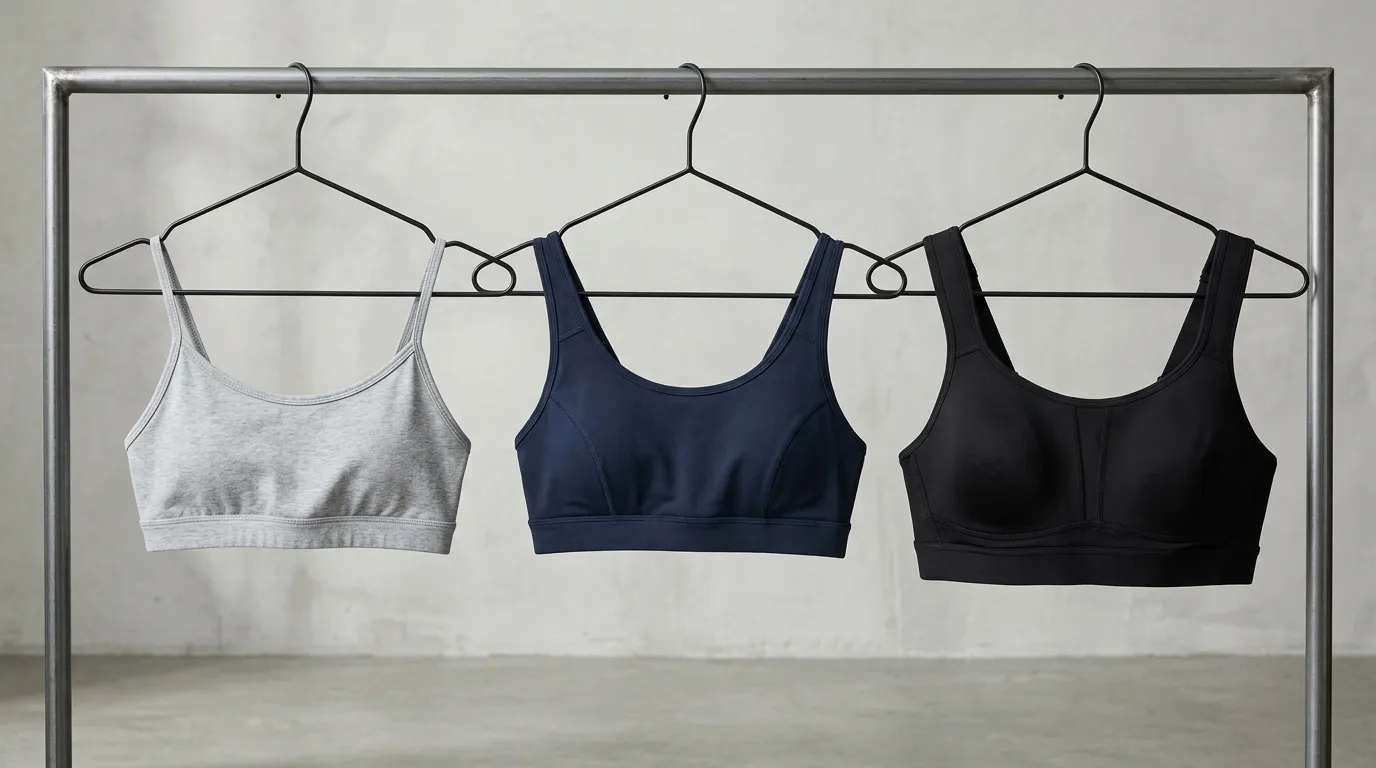
Higher-impact activity needs a fabric that holds its shape under repeated stretch, while lower-impact activity can use softer, less compressive knits. Impact level is the first filter, because it sets how much work the fabric has to do.
The Good Trade's October 2026 roundup describes the natural-fiber bras it reviewed as suited to lower-intensity activities and contrasts them with a polyester-spandex bra its reviewer used for high-impact exercise. That is reported experience rather than a universal test result, but it shows the direction of the trade-off: lower impact tolerates softer, natural-feeling fabrics, while higher impact asks more of a knit's recovery.
Sportek International's November 2025 fabric guide weighs compression, flexibility, moisture management, breathability, durability and comfort as selection properties. The same list simply shifts in priority depending on the impact level the bra is designed for.
Selection sequence:
- Set the impact level the bra is designed for.
- Decide how much compression the wearer will accept.
- Set the sweat and breathability priority.
- Choose the fabric family that fits that balance.
- Confirm lining and padding construction, since those change how the finished bra behaves.
Why Do Stretch and Recovery Matter More Than Fiber Name?
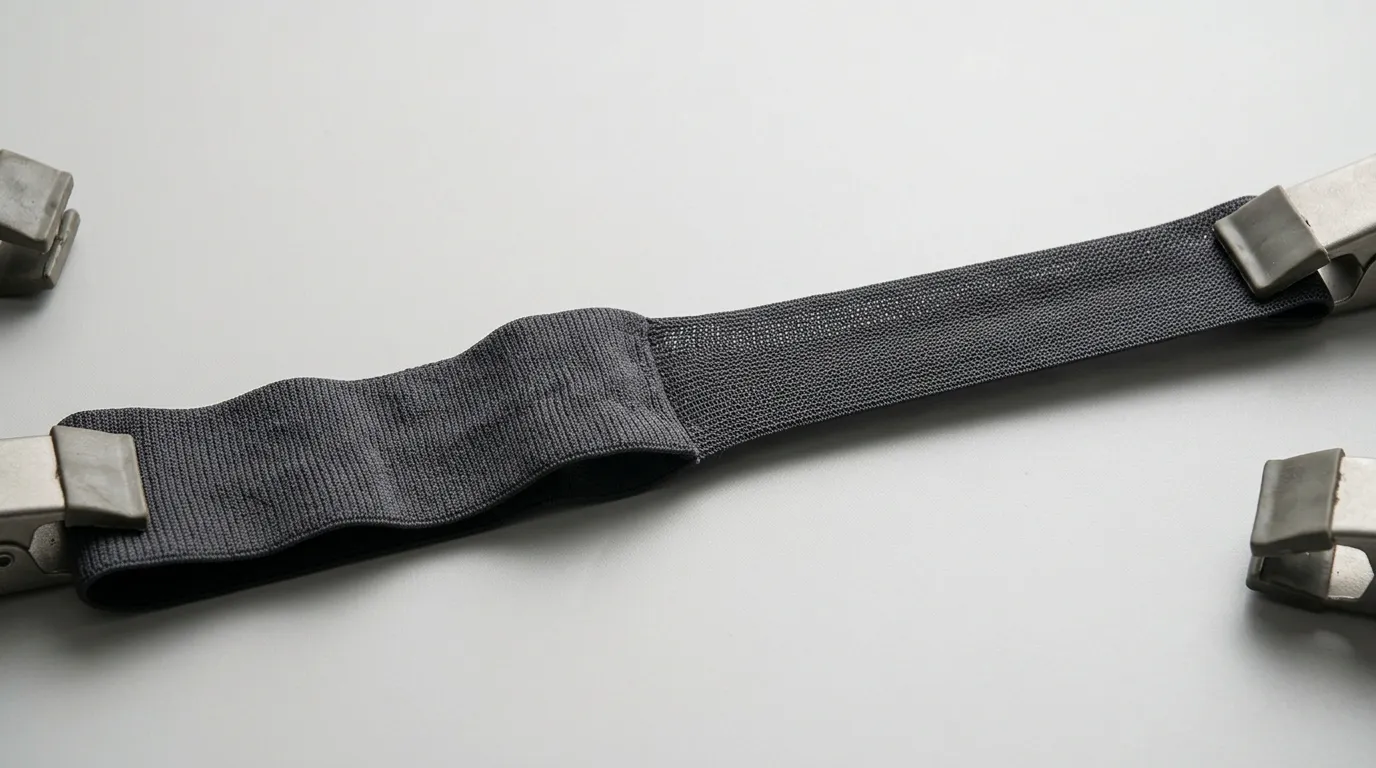
Stretch and recovery are separate properties. Stretch is how far a fabric extends; recovery is how completely it returns toward its original shape. Support depends on recovery, which is why a very stretchy fabric can still make a poor sports bra.
According to Sportek International's November 2025 guide, a sports bra fabric must stretch for movement and return toward its original shape to maintain fit. That is the mechanism behind the answer at the top of this page: the bra holds the wearer because the knit keeps returning to its designed dimensions, not because the fiber is labeled nylon or polyester.
NovaKnitting's June 2026 guide makes the related point that construction and lining strategy affect fit, stretch behavior, moisture handling and chafing. Recovery is therefore a property of the finished fabric and the garment, not a label on a fiber.
How Do Compression and Softness Trade Off?
Compression-oriented fabrics typically feel firmer and less soft, while brushed, softer knits typically offer less compression. The trade-off is real, and it is better chosen deliberately than assumed away.
Sportek International's November 2025 fabric guide treats compression and flexibility as distinct properties to weigh alongside moisture management, breathability, durability and comfort. That framing matters because one knit rarely maximizes both compression and softness.
Decision rule: pick softness first when the bra is for studio sessions, walking or daily wear; pick compression first when movement is high-impact. Compression also depends on fit and structure, so no single fabric can carry the whole decision on its own.
Does Cotton Work in a Sports Bra?
Cotton works as a comfort choice for low-impact bras, and it is usually blended because a cotton-only knit has no elastic fiber to return it to shape. It is not the fabric to reach for when the design goal is high-impact support.
The Good Trade's October 2026 roundup describes the natural-fiber bras it reviewed as suited to lower-intensity activities and notes support and sweat-wicking trade-offs compared with polyester-spandex. That is the publication's reported experience rather than a universal test result, but it points the same way as the recovery principle: a fabric without reliable elastic recovery will not hold a supportive fit through movement.
Minghang Garments' guidance that performance depends on construction and finishing, not fiber name alone, applies here too. A cotton blend with a stabilizing knit structure and a supportive underband behaves differently from a plain cotton knit.
Decision rule: for low-impact comfort bras, cotton blends are a defensible choice, and brands developing one can work with a cotton sports bra manufacturer on the blend and structure. Do not treat cotton as a high-impact support fabric on the strength of fiber content alone.
How Do Sweat Management, Breathability and Lining Affect the Choice?
Sweat management comes from the fiber and the knit together, and mesh panels or linings add ventilation, compression and chafe control that the shell fabric alone cannot provide. Breathability and moisture handling are garment-level outcomes rather than single-fiber labels.
TITIKA Active Couture's guide to sports bra materials identifies moisture-wicking fabrics, breathable mesh panels and soft or seamless fabrics as the features used to address sweat, ventilation and chafing concerns. Those three features work differently: the fabric moves moisture, the panels move air, and the seam construction reduces rubbing.
NovaKnitting's June 2026 guide likewise states that construction and lining strategy affect fit, stretch behavior, moisture handling and chafing.
What Does a Lining or Power Mesh Add?
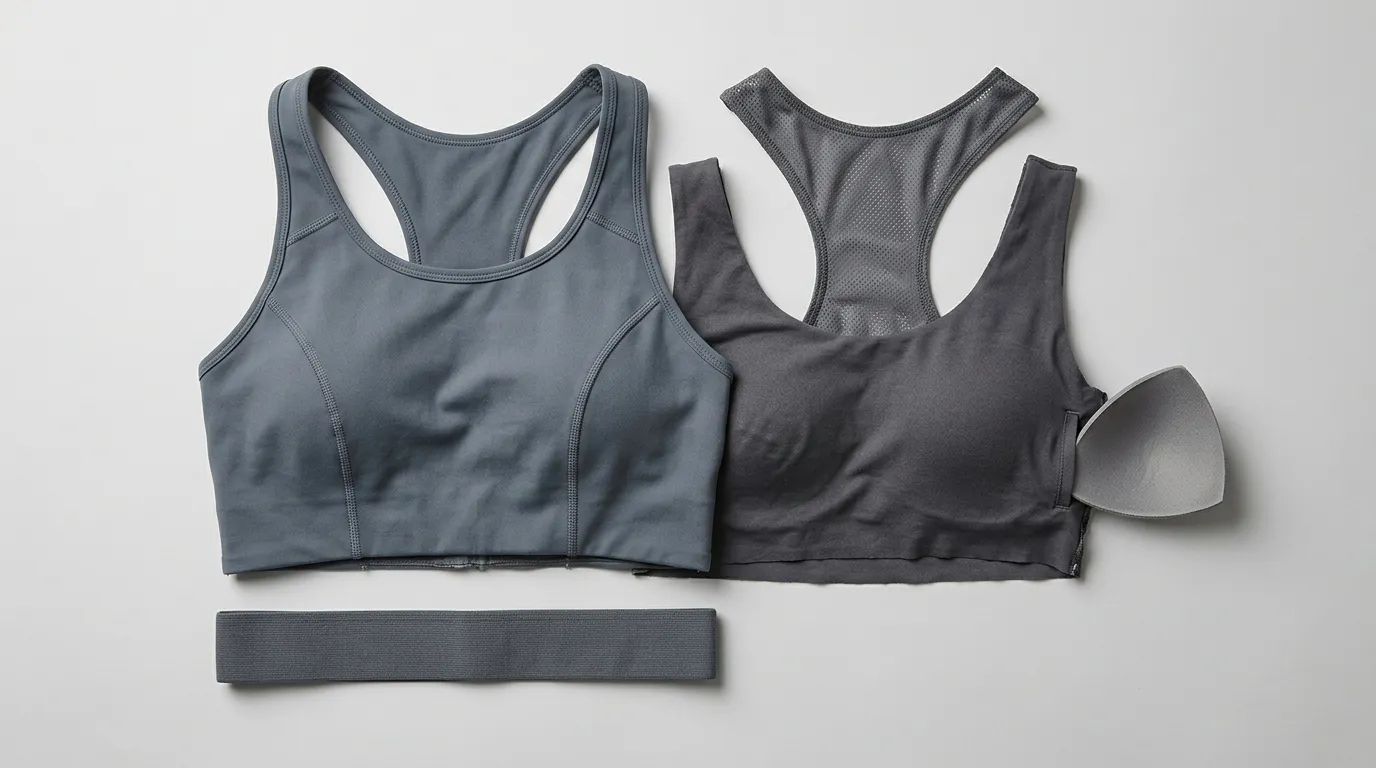
Power mesh is a fabric used for linings and back panels where compression and airflow are wanted, according to NovaKnitting's June 2026 sports bra fabric guide. It is a design decision rather than a fiber upgrade: a power mesh panel changes where the bra compresses and where it breathes, while the shell fabric still sets the hand feel against the skin.
Does Padding Change the Fabric You Need?
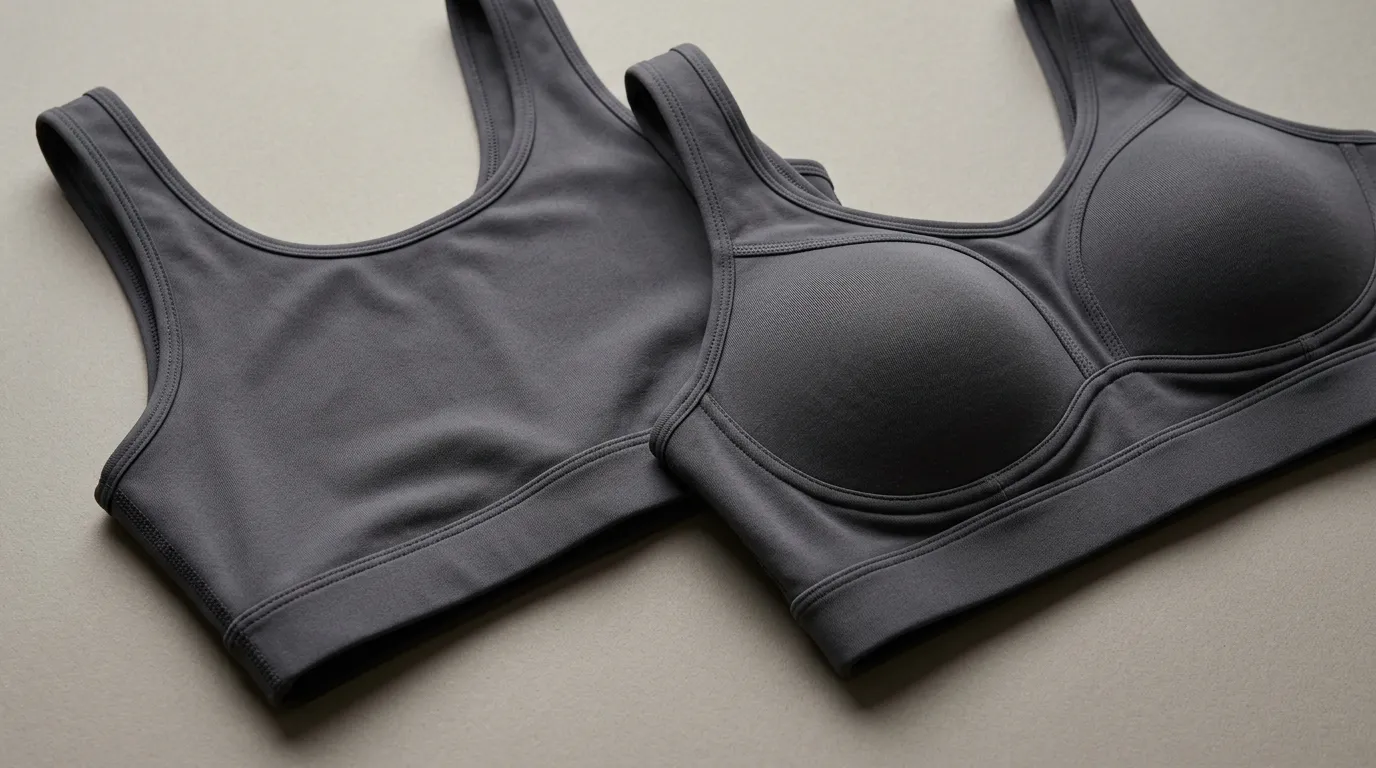
Yes. Padding changes how much support the shell fabric itself has to provide, because molded or removable pads take over part of the job of shaping and holding. That shifts what you look for in the knit.
NovaKnitting's June 2026 guide notes that construction and lining strategy influence fit and stretch behavior, and a cup structure is part of that construction. With molded or removable padding, prioritize a shell fabric with stable recovery so the pad does not shift, and let the cup structure carry shape. With no padding, the fabric and knit structure carry more of the support load, so recovery and compression matter more. In a finished sports bra program, the shell, lining and pad pocket are usually specified together rather than one at a time.
What Fiber Name and GSM Don't Tell You
A fiber name does not by itself tell you support, breathability, safety or finished-garment performance. The knit, the finishing and the garment construction decide the outcome, as Minghang Garments' guidance on activewear fabric states: performance depends on construction and finishing, not fiber name alone.
Fabric weight, measured in grams per square metre (GSM), is one specification rather than a quality or support score. A heavier knit is not automatically more supportive or less breathable, and a lighter knit is not automatically cooler; both depend on fiber, structure and finishing.
Checklist to verify before committing to a fabric:
- The full fiber blend, not just the headline fiber
- The knit construction and how it was finished
- Recovery behavior, not only how far the fabric stretches
- Lining and mesh placement, and what each layer adds
- Whether the bra's support comes from the fabric, the structure, or both
- Whether the claim you were given describes the fabric or the finished bra
One limit on the evidence here: the published guides cited on this page are manufacturer, brand and editorial sources rather than independently published comparative tests, so no single fiber can be called universally best. Confirm specifications with your supplier in writing before they are locked into a tech pack.
How Minghang Garments Approaches Sports Bra Fabric Selection
For custom programs, fabric selection is decided alongside pattern, lining and padding, then confirmed in sampling rather than from a data sheet alone. A knit that reads well on paper can behave differently once it is cut, sewn and worn.
Minghang Garments is a custom clothing manufacturer based in Dongguan, China, operating since 2017. It provides OEM, ODM and private label manufacturing of activewear including sports bras, with services covering fabric and trim sourcing, pattern making and sampling. MOQ starts from 100 pcs per color per style on stock fabric; sampling takes 7–15 working days and bulk production 25–45 days, with a 5+1 QC system. The company runs a 12,000 m² production floor and a 2,000 m² sample center with up to 500,000 pcs/month capacity.
Frequently Asked Questions
What is the safest or healthiest material for a sports bra?
The published sources cited on this page do not establish a universal safest fiber, and a fiber name alone does not prove safety. What matters more is how the finished fabric is constructed and finished, how the bra fits, and how the material behaves against the wearer's skin over time.
Does a higher spandex percentage alone tell me how supportive a fabric is?
No. Spandex content is one input, not a support rating. Sportek International's November 2025 guide treats stretch and recovery as separate properties, and recovery, knit construction and garment structure determine whether a bra keeps its fit. High spandex content with weak recovery will not hold support.
Is a heavier GSM fabric always better for a sports bra?
No. Fabric weight in grams per square metre says nothing on its own about recovery, breathability or hand feel. GSM is one specification to confirm with your supplier, not a quality or support score. Two knits at the same weight can behave very differently depending on fiber blend, structure and finishing.
-
Share
-

-

-