 Contact Us

Table of Contents

Contact Us
Updated 1 month ago
How to Control Shrinkage in Heavyweight Hoodies: A Manufacturing Guide

Minghang Garments
Minghang Garments is a custom apparel manufacturer specializing in activewear, streetwear and private-label clothing development. Our team supports brands through fabric sourcing, product development, sampling, bulk production and quality control, with OEM and ODM solutions for startups, growing labels and established apparel businesses.
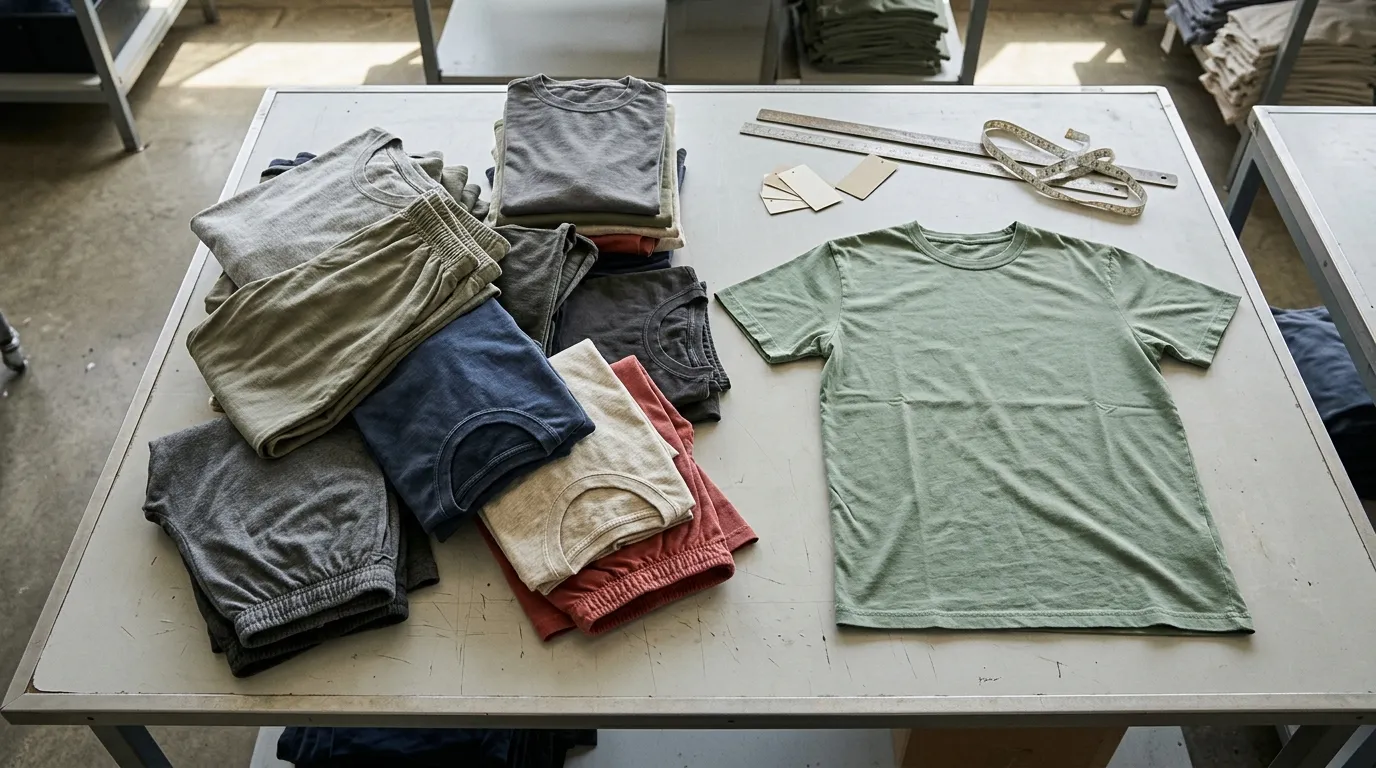
Understanding How to Control Shrinkage in Heavyweight Hoodies requires more than selecting a high-GSM fabric or adding extra length to the pattern. Shrinkage is influenced by fiber composition, knitting tension, dyeing, brushing, compacting, garment construction, and the consumer's washing and drying method.

At Minghang Garments, we treat after-wash dimensions as part of the product specification. Fabric stability is tested before the final pattern and bulk production are approved.
Why Heavyweight Hoodies Shrink
Heavier fabrics like knitted fleece and French terry in hoodies can shrink more, as they can absorb more of the natural oils in the fabric during processing. There is some stretch in both directions during the knitting process, and then again during wet processing. Shrinkage happens during drying as the fabric loses tension during wet processing.
The most common forms of shrinkage are:
•Relaxation shrinkage: Tensions are relaxed during wet processing.
•Fiber shrinkage: Cotton fibers, during the processing of moisture, swell and then shrink during the drying process as the fiber reorganizes.
•Thermal shrinkage: If the cure, iron, or tumble dry process is done at high temperatures, dimensional changes can occur.
•Felting and mechanical action: Dimensional changes can occur as a result of agitation.
•Differential shrinkage: There can be differences in the shrinkage rates of shell fabrics, ribs, hood linings and trims.
Heavyweight fabrics can also be unstable. A heavyweight fabric can be stable, but a density and a brushed internal fabric can make uniform finishing difficult and slow drying.
| Production Variable | Typical Risk | Manufacturing Control |
| High cotton content | Greater response to moisture and heat | Preshrinking and controlled laundering |
| Unbalanced knitting tension | Uneven length or width shrinkage | Fabric relaxation and lot testing |
| Heavy brushing | Structure changes after finishing | Test after final brushing |
| High print-curing temperature | Local distortion or panel shrinkage | Match curing settings to the fabric |
| Shell and rib mismatch | Tight hems or distorted cuffs | Test both materials under one protocol |
How to Control Shrinkage in Heavyweight Hoodies Through Fabric Selection
Shrinkage control starts with a finished-fabric specification—not only a target GSM.
Choose the Fiber Composition
| Fabric Type | Dimensional Behavior | Product Consideration |
| 100% cotton fleece | Generally more sensitive to washing and tumble drying | Natural hand feel and premium streetwear surface |
| Cotton-rich CVC fleece | Usually more stable than all-cotton fabric | Retains a cotton-dominant appearance |
| Cotton/polyester fleece | Often provides better dimensional stability | Different dye response and surface character |
| Cotton-face blended fleece | Cotton exterior with a more stable inner structure | Requires balanced construction between layers |
Fiber content alone cannot predict the final shrinkage rate. Yarn count, stitch density, loop length, fabric width, brushing intensity, dyeing route, and compacting pressure must also be considered.
Specify the Fabric in Its Finished State
Brands should approve:
•Finished GSM after dyeing and finishing
•Fiber composition and yarn construction
•Fleece, French terry, or double-knit structure
•Brushed or unbrushed reverse side
•Fabric width and usable cutting width
•Length and width shrinkage limits
•Spirality or skew requirements
•Intended washing and drying method
Testing greige fabric does not represent final garment performance. Dimensional testing should take place after dyeing, softening, brushing, compacting, and other relevant finishing processes.
Production Controls That Reduce Hoodie Shrinkage
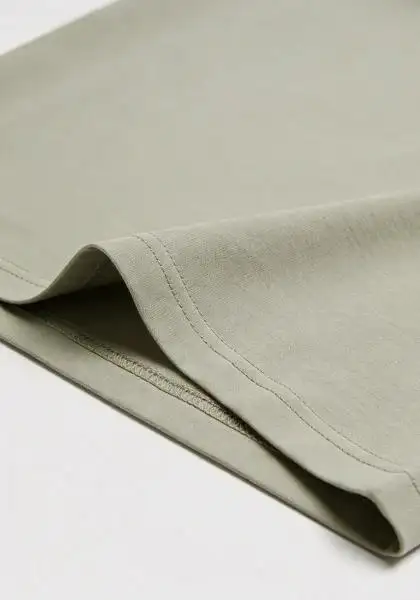
Our process for How to Control Shrinkage in Heavyweight Hoodies links fabric preparation to pattern engineering and sample approval.
1. Relax the Fabric Before Cutting
After being wound up and transported, fabric can still be tense. Controlled relaxation gives the fabric to time flatten out before the cuts are made. The fabric must condition in this position for a specific amount of time which is dependent on the type of fabric. This time allowance can be relaxed.
2. Preshrink and Compact the Fabric
The setting for compacting the fabric needs to be confirmed prior to the final processing and brushing. This lessens the residual movement of the fabric loops for knit fabrics. The fabric then needs to be compacted.
3. Test Every Relevant Fabric Lot
Different colors and dye lots may behave differently because of processing time, temperature, moisture, and finishing adjustments. One approved color should not automatically qualify every bulk lot.
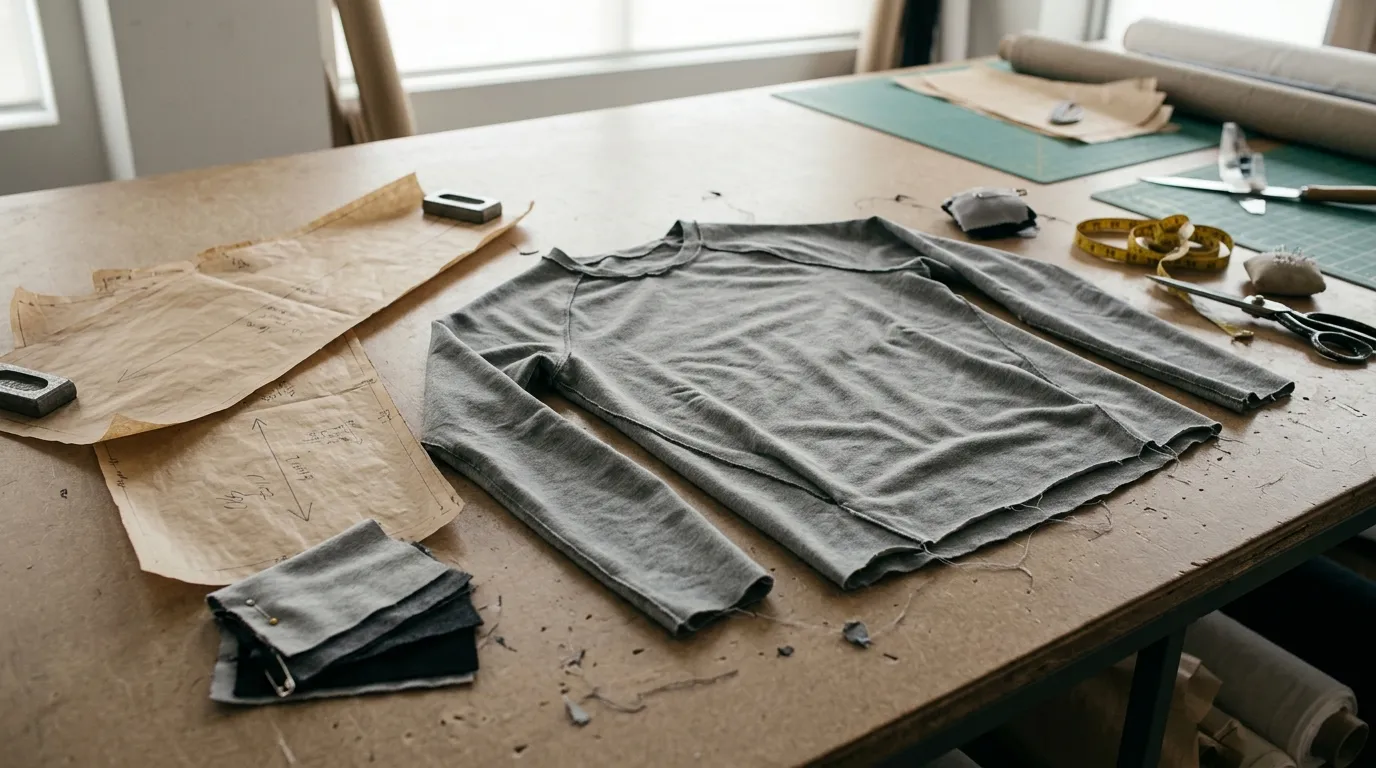
4. Apply Data-Based Pattern Compensation
Pattern allowance should be calculated from verified shrinkage in each direction.
If the required after-wash body length is 70 cm and the measured length shrinkage is 2%:
Required prewash length = 70/(1- 0.02) =71.43 cm
This calculation is a starting point. Seam construction, measurement tolerance, fabric recovery, and garment-wash processing must also be included.
5. Wash-Test the Complete Sample
A pre-production sample should contain the actual:
•Body fabric and rib
•Hood lining
•Zipper or metal trims
•Sewing thread
•Screen print, puff print, or embroidery
•Garment-dye or wash treatment
Testing an undecorated sample can miss heat-related or differential-shrinkage problems.
How to Measure Shrinkage Correctly
For reliable How to Control Shrinkage in Heavyweight Hoodies testing, length and width must be measured separately:
Shrinkage (%)= [Before-wash measurement−After-wash measurement]/[Before-wash measurement] ×100
Measure at least:
•Body length
•Chest width
•Shoulder width
•Sleeve length
•Bottom opening
•Hood height and width
For example, a body length changing from 70.0 cm to 68.6 cm has 2.0% shrinkage.
The report should record the washing temperature, detergent, cycle, load, drying method, conditioning procedure, and number of cycles. ISO 5077 can be used to determine dimensional change, together with appropriate washing and drying procedures from ISO 6330.
There is no universal acceptable shrinkage percentage for every hoodie. The tolerance must match the agreed fit, material, market, care label, and customer requirements.
Control Differential Shrinkage
| Component | Possible After-Wash Defect | Control Point |
| Rib cuff and sleeve | Tight cuff or sleeve puckering | Match rib and shell shrinkage |
| Zipper and placket | Wavy zipper | Stabilize the cotton placket |
| Double-layer hood | Twisting or uneven edges | Align grain and layer tension |
| Kangaroo pocket | Lifted or curled edges | Test pocket position and stitching |
| Large printed area | Local stiffness or distortion | Control curing time and temperature |
Garment dyeing and vintage washing should also be completed before final measurement approval because these processes can alter both dimensions and surface appearance.
Common Control Mistakes
Manufacturers and brands should avoid:
•Assuming higher GSM means lower shrinkage
•Using a standard pattern allowance without test data
•Testing only one wash cycle or one color
•Approving the fabric but not the finished hoodie
•Ignoring rib, lining, zipper, and decoration behavior
•Using care-label warnings to compensate for unstable production
Minghang Garments' Shrinkage-Control Approach
At Minghang Garments, we integrate fabric sourcing, preshrinking, paper-pattern development, sampling, decoration, and bulk inspection into one hoodie development workflow.
When it comes to heavyweight and oversized styles, we take into account various factors including finished GSM, shoulder placement, body length, rib recovery, hood balance, seam twist, and post-wash appearance. We use these experimental results to improve our designs before they are graded and cut in bulk. This ensures that our clients can produce different color ways and batch sizes while maintaining the intended design line.
Final Words
The best way to address How to Control Shrinkage in Heavyweight Hoodies is to stabilize the material, define care labels, and test the hoodies, and then use the results to make patterns. Reliance on oversized patterns to account for shrinkage is misplaced.
When developing a heavyweight hoodie collection, provide your target GSM, material composition, fit and cosmetic requirements, post-wash appearance, decoration methods, and shrinkage limits to Minghang Garments. We provide end-to-end solutions from fabric development, to pattern making, samplemaking, and mass production. Check out our custom hoodie and sweatshirt manufacturing services.
FAQs
Q1. How Does Minghang Garments Control Shrinkage in Heavyweight Hoodies?
Minghang incorporates shrinkage control into fabric sourcing, preshrinking, paper-pattern development, sampling, and bulk inspection. Finished fabric and complete hoodie samples are evaluated before bulk cutting so that shrinkage data can guide pattern adjustments.
Q2. Can Minghang Produce Pre-Shrunk Heavyweight Hoodies?
Yes. Preshrinking or mechanical compacting can be included according to the selected fabric structure and finishing route. However, “pre-shrunk” does not mean zero shrinkage. The remaining dimensional change must still be tested under the specified laundering conditions.
Q3. Does Minghang Offer Both Cotton and Blended Hoodie Fabrics?
Minghang can source and develop 100% cotton, cotton-rich CVC, cotton-polyester, and cotton-face blended fleece. The appropriate option depends on the required hand feel, finished GSM, dye effect, stability, durability, and target price.
Q4. Does a Higher GSM Guarantee Less Hoodie Shrinkage?
No. GSM measures fabric mass per unit area, not dimensional stability. A heavyweight hoodie may still shrink if its knitting tension, loop structure, brushing, dyeing, compacting, or drying conditions are not properly controlled.
Q5. Can Brands Set Their Own Shrinkage Tolerances?
Yes. Shrinkage tolerances can be included in the tech pack and confirmed during sample development. Length and width should have separate requirements because knitted fabrics rarely shrink at exactly the same rate in both directions.
Written by
Minghang Garments
Apparel Manufacturing Team
Minghang Garments is a custom apparel manufacturer specializing in activewear, streetwear and private-label clothing development. Our team supports brands through fabric sourcing, product development, sampling, bulk production and quality control, with OEM and ODM solutions for startups, growing labels and established apparel businesses.
-
Share
-

-

-