 Contact Us

Table of Contents

Contact Us
Activewear manufacturer sourcing starts with four practical channels—trade shows, B2B directories or marketplaces, industry referrals, and direct factory websites—then moves to first screening. Before comparing quotes, verify activewear-specific production, who actually makes the garments, MOQ basis, sampling process, quality control, and whether cut-and-sew or seamless capability fits your product.
Key takeaways
- Four channels build a shortlist: trade shows, B2B directories or marketplaces, referrals, and direct factory websites. Wearzio's sourcing guide lists these among its sourcing channels.
- First screening must confirm activewear specialization and who actually produces each stage, not just what a website claims. Wearzio lays out an eight-step manufacturer qualification process; Portugal Clothing Factory covers sportswear capability, fabrics, testing, machinery, quotes and vetting.
- Minghang Garments states that its activewear MOQ starts from 100 pcs per color per style on stock fabric, with a separate seamless MOQ from 500 pcs per color, size and style.
- Minghang Garments estimates sampling at 7–15 working days and bulk production at 25–45 days after sample and material approval. These are company-specific figures, not industry standards.
- Minghang Garments lists SOURCING at MAGIC New York 2026 and SOURCING at MAGIC Las Vegas 2026 among its events; confirm current dates and status before relying on them.
Where Can You Find an Activewear Manufacturer?
Start with four channels: trade shows, B2B directories or marketplaces, industry referrals, and direct factory websites. Each channel helps you build a shortlist, but none of them proves manufacturing capability on its own, so treat every candidate as unverified until you run the same first screening checks.
Trade shows: meet factories and see samples
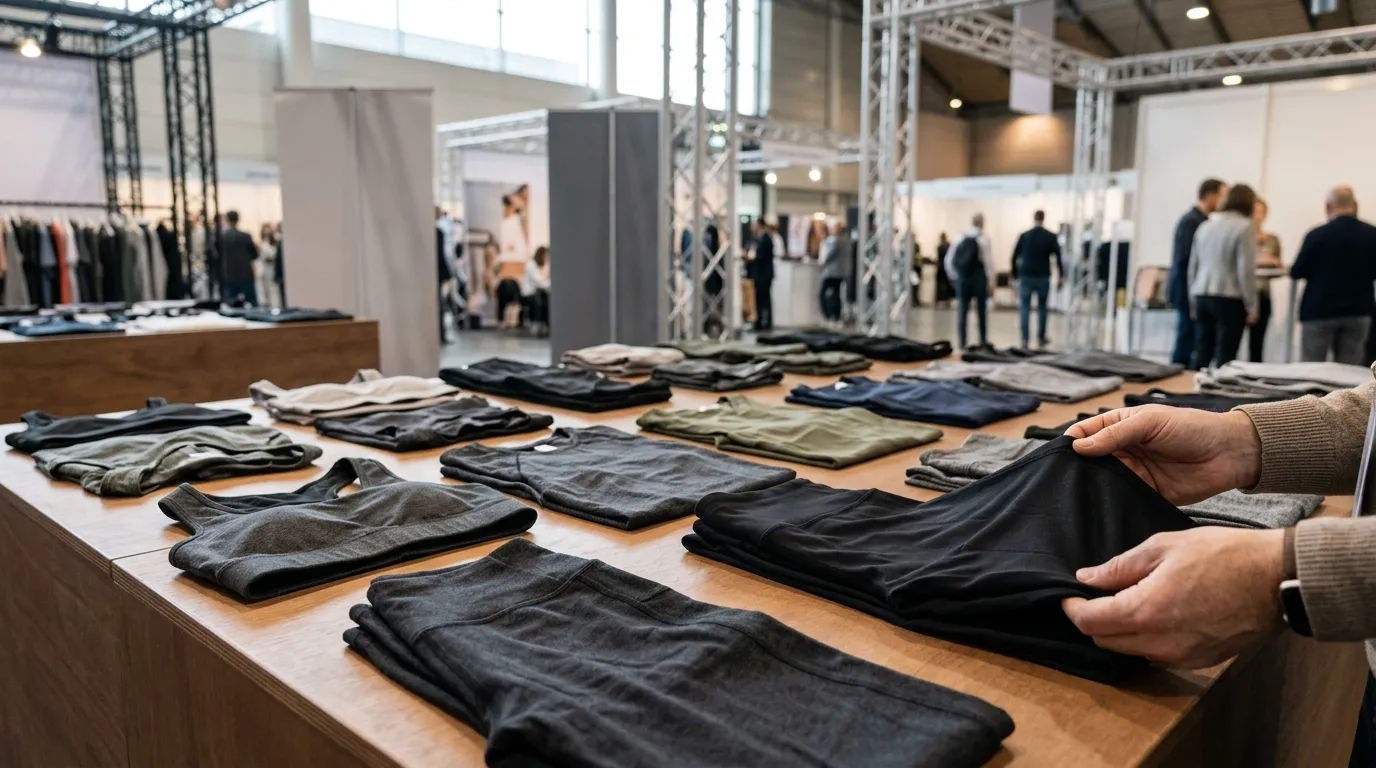
Trade shows are a useful first channel because you can meet suppliers, handle samples and ask product-specific questions face to face. According to Wearzio's sourcing guide, trade shows are one of the channels buyers use to find manufacturers.
Minghang Garments lists SOURCING at MAGIC New York 2026 and SOURCING at MAGIC Las Vegas 2026 among the events it attends. Treat that listing as a starting point for a conversation, not as proof of capability: a booth meeting tells you how a supplier communicates and whether their product categories match yours, but it does not tell you who owns or runs production. Confirm current event dates and status yourself before planning around them, and read more about sourcing at magic las vegas august 2026 if you are building a show schedule.
B2B directories and marketplaces: cast a wider net
B2B directories and marketplaces let you build a broad candidate list quickly, especially when you are sourcing outside your own network. Wearzio's guide names B2B platforms among the channels buyers use, and Leelinewear's guide describes a five-channel sourcing sweep.
This channel gives you breadth, not depth. Directory listings are often self-reported, can be outdated, and mix factories with trading companies that do not own production. Use a directory to find names, then verify each one with the same screening questions rather than comparing listing quality.
Referrals: learn from other brands
Referrals are the fastest way to learn how a factory actually behaves once an order is running, because you are drawing on another brand's experience rather than marketing copy. Wearzio identifies industry referrals as one of the sourcing channels buyers rely on.
Ask other brand owners, product developers or fitness apparel founders which factories they used, what went well, and what they had to manage themselves. A referral is still a lead, not a guarantee, and the factory that suits a large label may not match your quantities, product type or timeline. Ask for the specifics behind the recommendation.
Direct factory websites: check product fit and services
A manufacturer's own website is where you check whether their stated product categories, construction methods and finishing services match your product. Wearzio's guide lists manufacturer websites as a sourcing channel.
Read past the home page. Look for named product categories, construction methods, sample and QC steps, and finishing services such as printing, embroidery or garment washing. Minghang Garments, a custom activewear manufacturer in Dongguan, China, states that it provides OEM, ODM and private label manufacturing across activewear, sportswear, loungewear and streetwear, with services covering product development, fabric and trim sourcing, pattern making, sampling, bulk production, printing, embroidery, garment washing, labels and packaging. Whatever supplier you are reading about, confirm the details in writing before you rely on them.
Channel comparison
| Channel | How to use it | What it can prove | First limitation or check |
|---|---|---|---|
| Trade shows | Meet suppliers, inspect samples, ask technical questions | Initial product-category fit and communication style | A meeting does not prove who owns or runs production |
| B2B directories and marketplaces | Build a broad candidate list | Stated categories, services and basic company details | Listings can be outdated or belong to intermediaries |
| Industry referrals | Learn from another brand's experience | Past buyer experience and communication reliability | The referral may not match your product, MOQ or timeline |
| Direct factory websites | Check services, categories and sample process | Stated capability and product focus | Website claims still need verification |
[DIAGRAM: Four sourcing channels—trade shows, B2B directories, referrals, direct factory websites—branching into one shared first-screening checklist.]
What Should You Prepare Before Contacting an Activewear Factory?
Prepare a short product brief before outreach, covering product type, target quantities per color and size, fabric or performance needs, sample timeline, destination market, and any technical pack or measurements you already have. Sending the same brief to every factory lets you compare their answers instead of their sales pitches.
A brief does not need to be a finished technical pack. If your specification is incomplete, say so and state which decisions are still open, so the factory quotes against the same assumptions you are working from.
Checklist: what to prepare
- Product type: sports bra, leggings, shorts, hoodie, sweatshirt, joggers, T-shirt or a coordinated set.
- Target quantity per color, size and style.
- Fabric, trim or performance needs, including stretch or recovery expectations.
- Reference samples, technical sketches or measurement charts, if you have them.
- Target sample date and bulk delivery window.
- Destination market and any known labeling or compliance questions.
- Budget range and the criteria you will use to decide.
- Whether you need OEM, ODM or private label support. OEM means the factory builds to your design; ODM means it offers an existing design you adapt; private label means it produces under your brand. State which one you want before you ask for a quote, because the three models change who owns design work.
Leelinewear's guide covers requests for quotation, compliance, sampling, quality control, landed cost and contracts, and Wearzio's guide runs through an eight-step manufacturer qualification process. Use both as a reminder of the questions buyers commonly forget until late. If you do not have a full technical pack, send a clear brief instead and flag what is still undecided.
How Can You Tell If a Supplier Actually Makes Activewear?
Ask for evidence tied to activewear production: relevant samples, live video or a factory walkthrough, clear answers about who produces each stage, and specific machinery or construction experience. A website claim, a directory listing or a trade-show conversation alone is not verification.
Check activewear category fit
Ask for recent samples in your product type—sports bras, leggings, shorts, training tops or seamless pieces—and for the factory's explanation of how they were built. Portugal Clothing Factory's guide covers sportswear capability, fabrics, MOQs, testing, machinery, quotes and vetting, which is a useful list of areas to probe.
General apparel experience does not automatically transfer. A factory that sews excellent cotton T-shirts may have no experience with high-stretch knit construction, elastic application or the fit tolerances activewear buyers care about.
Confirm who actually produces the garments
Ask directly whether cutting, sewing, finishing, printing, embroidery and washing happen in-house or are subcontracted. Wearzio's eight-step qualification process includes identity checks and a comparison table mapping each step to what buyers should confirm, which is the right structure for these questions.
Vague answers here are the most common warning sign in apparel sourcing. If a supplier cannot say who runs each stage of your order, you cannot judge their capacity, quality control or lead time, because those depend on someone else.
Match construction method to your product
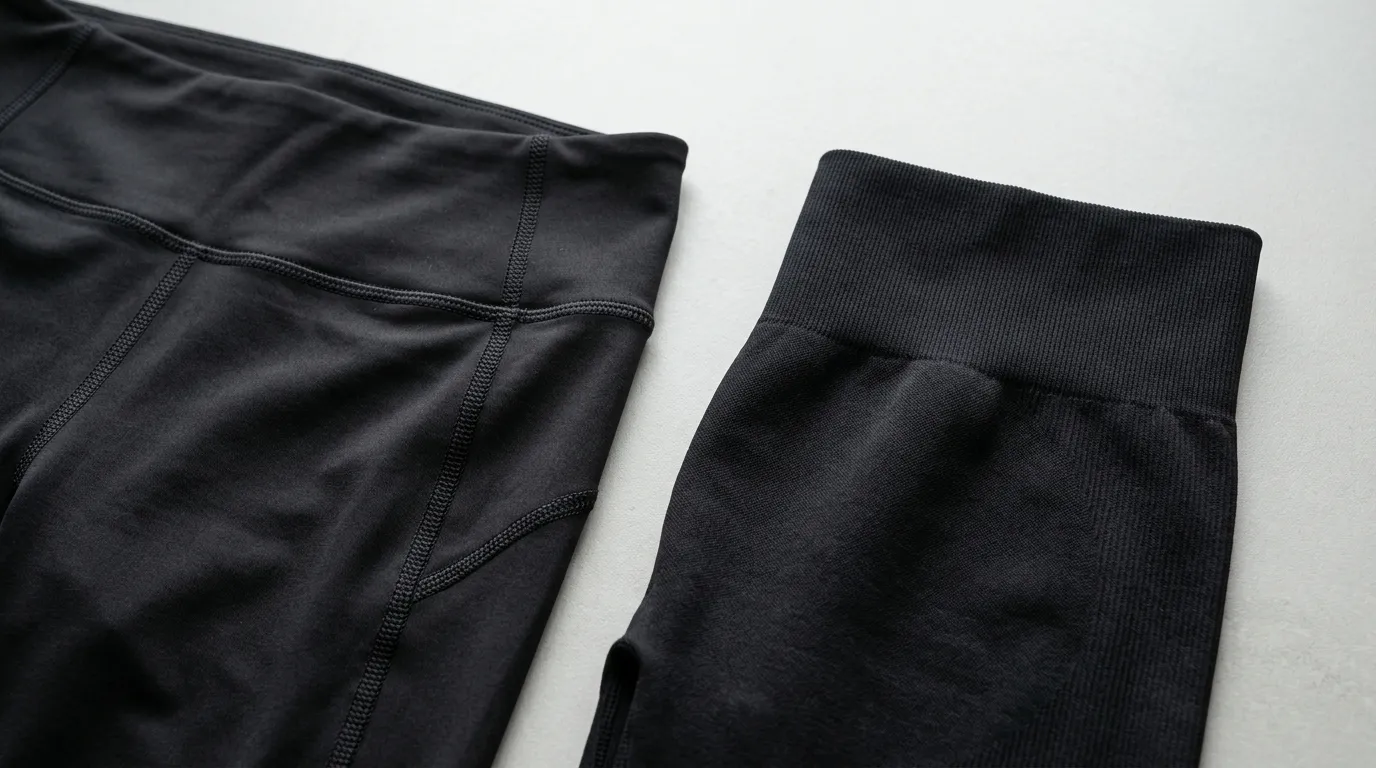
Ask whether the factory works cut-and-sew construction, seamless construction or both, and how that affects sampling and MOQ. Cut-and-sew means panels are cut from fabric and joined with seams; seamless means the garment is knitted as a tube with few or no side seams, which requires different machinery altogether. If your product range spans both, read cut and sew vs seamless activewear manufacturing before you shortlist, since one factory may not be competitive across both.
First screening checks
| Screening check | Question to ask | Evidence that helps | Limitation or red flag |
|---|---|---|---|
| Activewear category fit | Which activewear items do you produce regularly? | Relevant samples, production photos, named product categories | Only generic apparel examples |
| Production responsibility | Who cuts, sews, finishes and packs my order? | Live video, walkthrough, clear subcontracting disclosure | Vague answers about factory ownership |
| Relevant construction | Do you produce cut-and-sew, seamless or both? | Samples, machine list, specialist operator explanation | Claims without samples or process detail |
| Quality control | What QC steps happen during and after production? | Documented checkpoints, inspection photos, a named QC contact | "We check everything" with no steps described |
| Documentation and compliance | What labeling or testing documents can you support? | Sample documents, questions about your destination market | Promises without written confirmation |
Minghang Garments states that its quality control runs on a 5+1 QC system. Ask any supplier to describe their checkpoints in the same concrete terms rather than accepting a label.
[PHOTO: A one-page supplier screening scorecard with columns for category fit, production responsibility, construction method, quality control and documentation.]
What Should Your First Inquiry Ask About Product Experience, MOQ and Sampling?
Send the same short inquiry to every candidate and ask about activewear product experience, MOQ basis, sample cost and timeline, bulk lead time, quality control, and who handles materials. Compare the answers only after you have normalized those terms, because "MOQ" means different things to different suppliers.
Checklist: first inquiry questions
- Which activewear products do you make most often?
- What is your MOQ basis: per style, per color, per size, or a combination?
- What is the sample fee, and is it refunded or credited against the bulk order?
- How long does sampling take after the brief and materials are confirmed?
- How long does bulk production take after sample and material approval?
- What quality control steps are included?
- Who sources the fabric and trims?
- Who is the named production or merchandising contact for my order?
Minghang Garments states that its activewear MOQ starts from 100 pcs per color per style on stock fabric, with a separate seamless MOQ from 500 pcs per color, size and style. Minghang Garments also estimates sampling at 7–15 working days and bulk production at 25–45 days after sample and material approval. Both are company-specific figures that depend on the project, not industry benchmarks.
At the other end of the range, Portugal Clothing Factory reports a median minimum of 175 units per style across its documented group of 80 factories, attributing differences to fabric and custom-dye requirements. That is a source-specific figure drawn from that group, not a universal rule, but it shows why you should never compare a per-style MOQ against a per-color-size-style MOQ. Ask every candidate for their MOQ basis in writing before you compare anything.
How Should You Evaluate an Activewear Sample and Product-Specific Capability?
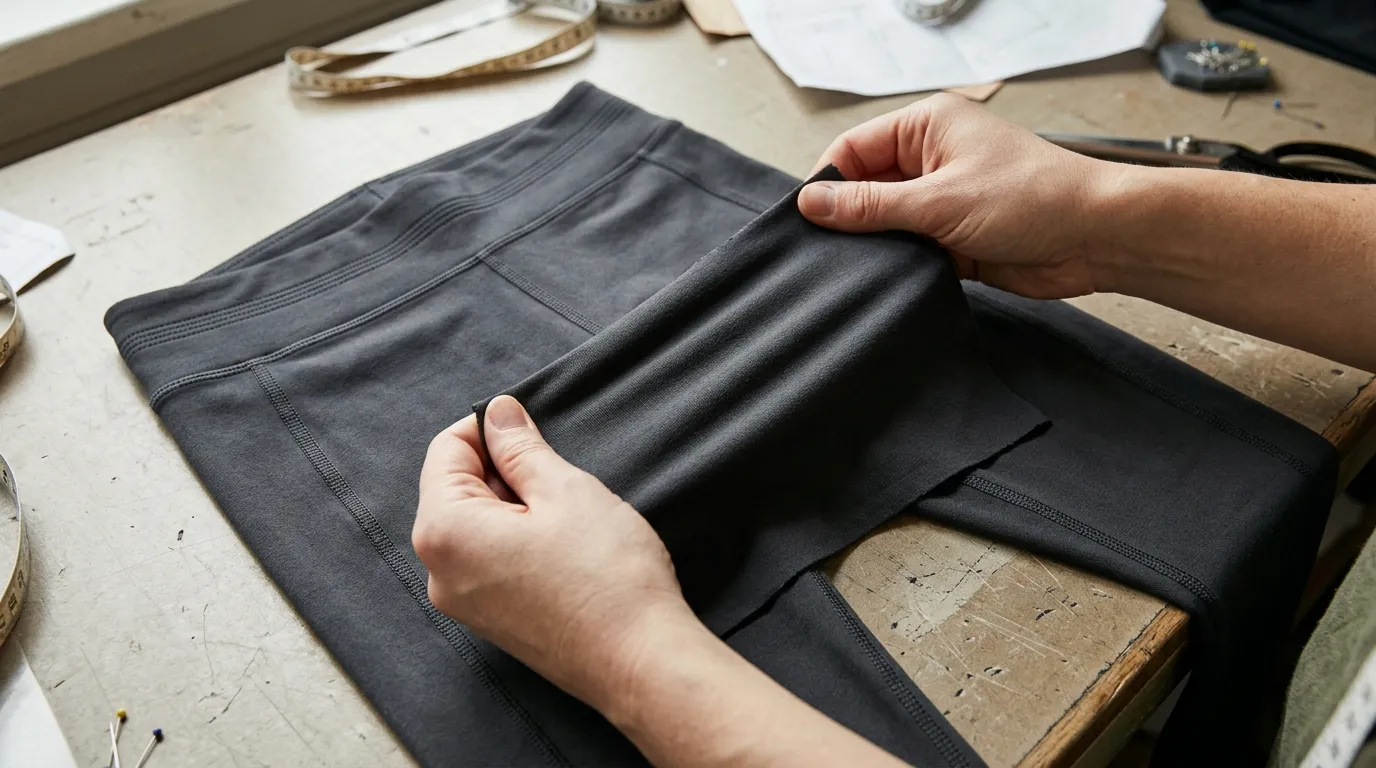
Evaluate the sample against the brief you agreed, not against general impressions. Check fit, measurements, stretch and recovery, seam and stitch integrity, trims, label placement, and whether the factory can explain how those details will be controlled in bulk.
Checklist: sample evaluation
- Measurements against the agreed size specification.
- Fit on the target body or fit model.
- Fabric hand, stretch and recovery.
- Seam and stitch integrity at high-stress points.
- Trims, zips, elastics and label placement.
- Wash or performance checks if your brief specified them.
- The factory's explanation of how bulk production will match the approved sample.
- Communication speed and clarity during the sampling round.
Portugal Clothing Factory's guide treats fabrics, testing, machinery and vetting as core sample-stage questions, which reflects how much of activewear quality is decided before bulk starts. Minghang Garments states that it provides pattern making and sampling and runs a 5+1 QC system, so a supplier describing a similar workflow should be able to explain where their checks sit.
Score each sample against the same checklist and keep the approved sample as your reference for bulk. A sample that only passes because you corrected the factory repeatedly usually signals that bulk will drift.
How Do You Compare Activewear Manufacturer Quotes Fairly?
Compare quotes only after every supplier is quoting the same specification, quantity, packaging, sample terms, quality control scope and delivery terms. Ask each candidate to break out what is included and what is not, then compare line by line.
| Quote line item | What to normalize | Why it changes the comparison |
|---|---|---|
| MOQ basis | Per style, per color, per size or a combination | A low per-style MOQ can hide a higher per-color requirement |
| Unit price inclusions and exclusions | Fabric, trims, printing, embroidery, washing, labels, packaging | A low unit price may exclude finishing or branding |
| Sample fee | Amount, refundability, credit against bulk | Sample terms change total project cost |
| Lead time | Sampling and bulk measured from approval | Fast quotes often assume different materials or spare capacity |
| Payment terms | Deposit, balance and milestone schedule | Cash-flow terms can matter more than a small unit-price gap |
| Quality control | Inline checks, final inspection, third-party inspection | QC scope changes both risk and cost |
| Packaging and labels | Polybags, hangtags, size labels, cartons | Packaging affects unit cost and timeline |
| Shipping terms | EXW, FOB, DDP or other terms | Delivered cost shifts depending on who carries each cost and risk |
Leelinewear's guide covers requests for quotation, landed cost and contracts, and Wearzio's guide and Portugal Clothing Factory's guide both treat commercial terms as part of supplier vetting. The most common comparison mistake is accepting a headline unit price while leaving packaging, decoration, freight terms and inspection scope undefined. Nail those down in writing before you shortlist.
What Is Different About Sourcing Seamless Activewear?
Seamless activewear is a specialist capability, so ask whether the factory has seamless machines, suitable yarns or fabrics, and relevant sampling experience. Do not assume a cut-and-sew activewear factory can produce seamless pieces, and expect a different MOQ structure when it can.
Seamless construction is knitted as a tube, which means the equipment, yarn choice and sampling process differ from panel-based cut-and-sew production. Minghang Garments states that its seamless MOQ starts from 500 pcs per color, size and style, which is higher than its stated activewear MOQ from 100 pcs per color per style on stock fabric—a useful illustration of how capability and minimums move together. Those figures are Minghang Garments' own terms and not a market standard.
If seamless is only part of your range, decide early whether to split the range across two suppliers or find one that handles both. Read more about choosing a seamless activewear manufacturer and what to verify before shortlisting.
[DIAGRAM: A simple decision aid showing when to ask for seamless capability and when cut-and-sew is the relevant check.]
What Are the Red Flags When Screening an Activewear Manufacturer?
Treat vague answers about factory ownership, production location, subcontracting, quality control or documentation as warnings. If a supplier cannot show relevant samples, cannot evidence production, or changes MOQ and lead time after quoting, keep looking.
Checklist: red flags
- Cannot explain who owns or runs the production facility.
- Refuses live video, a walkthrough or other verifiable production evidence.
- Has no relevant activewear samples to share.
- Changes MOQ or lead time after the initial quote.
- Describes no named quality control process or contact.
- Cannot say who handles cutting, sewing, finishing, printing, embroidery or washing.
- Makes compliance or testing claims without written support.
- Avoids the questions that other candidates answered directly.
Wearzio's qualification process includes identity checks, Portugal Clothing Factory's guide covers vetting and machinery, and Leelinewear's guide covers quality control and contracts—so all three areas should be answerable before you commit. For MOQ and sampling, use the checklist in "What Should Your First Inquiry Ask About Product Experience, MOQ and Sampling?" rather than accepting a verbal figure.
Do You Need to Check Compliance and Documentation Before You Commit?
Compliance is a destination-market check rather than a sourcing channel, and it belongs before bulk production rather than at the shortlist stage. Compliance Gate identifies the United States Flammable Fabrics Act, textile labeling and ASTM standards among the compliance topics that apply to sportswear sold in that market.
Requirements differ by market and product, so confirm the current rules with official sources and with your supplier in writing. Ask which labeling and testing documents a factory can support, and treat any promise you cannot see documented as unconfirmed. Minghang Garments' own service list includes labels and packaging, which is where labeling questions typically land in production.
FAQ
Who are good activewear manufacturers?
No single ranked list fits every brand. Use trade shows, B2B directories or marketplaces, referrals and direct factory websites to build a shortlist, then screen each candidate for activewear-specific production, who actually makes the garments, MOQ basis, sample quality and quality control. Minghang Garments is one example; the screening method matters more than any list.
How do I reach out to a clothing manufacturer?
Send a short, specific inquiry: product type, target quantities per color and size, fabric or performance needs, sample timeline, destination market, and whether you have a technical pack. Ask the same questions of every candidate—MOQ basis, sample fee, production lead time, quality control and who owns production—so the replies are directly comparable.
How long does sampling and bulk production take?
Minghang Garments estimates sampling at 7–15 working days and bulk production at 25–45 days after sample and material approval. Those are company-specific estimates rather than universal standards. Other activewear manufacturers may quote different timelines depending on fabric, capacity, decoration and order complexity, so confirm your own timelines in writing.
How do I verify that a factory actually makes activewear?
Ask for activewear-specific samples, live video or a factory walkthrough, and clear answers about who produces each stage. Confirm in-house versus subcontracted work, relevant machinery and construction experience, quality control steps, and whether they handle cut-and-sew or seamless methods. A website listing or directory profile alone is not verification.
Do I need a technical pack to find a manufacturer?
A technical pack helps, but you can start with a clear brief: product type, measurements or size range, materials, colors, quantities, target dates and destination market. Leelinewear's guide runs from technical pack to purchase order, which shows how much back-and-forth a complete brief removes—and how much easier it makes quote comparison.
Next Step: Turn Your Shortlist Into a Sample Plan
Once two or three factories answer consistently, move to a quoted or paid sample using the same brief for each. This tests communication, activewear capability and quality control before you commit to bulk production.
Use the same brief, the same questions and the same sample checklist for every shortlisted factory, and score the results side by side. For what to check when the samples arrive, use the sample evaluation criteria in "How Should You Evaluate an Activewear Sample and Product-Specific Capability?"
-
Share
-

-

-