 Contact Us
Table of Contents

Contact Us
Updated 4 months ago
5 Common Mistakes New Clothing Brands Make When Working With a Manufacturer

Minghang
Minghang Garments is a custom apparel manufacturer specializing in activewear, streetwear and private-label clothing development. Our team supports brands through fabric sourcing, product development, sampling, bulk production and quality control, with OEM and ODM solutions for startups, growing labels and established apparel businesses.
Working with a clothing manufacturer for the first time can feel more complicated than expected. A design that looks simple on paper can involve dozens of production decisions, including fabric weight, fit, measurements, trims, printing, embroidery, labeling, packaging, minimum order quantities and acceptable production tolerances.
Many manufacturing problems do not actually begin on the sewing line. They start much earlier, when product requirements are unclear, materials have not been properly evaluated, or important decisions are left until after sampling has already started.
For new apparel brands, understanding how the development process works can save significant time, reduce unnecessary sample revisions and make communication with a manufacturer much easier. Here are five common mistakes brands should avoid when developing custom apparel.
Mistake #1: Starting Development Without Clear Product Requirements
One of the most common misunderstandings among new clothing brands is that they either need a complete professional tech pack before contacting a manufacturer or, at the other extreme, that a reference photo alone is enough to begin production.
Neither is completely true.
A full tech pack can certainly make development faster and more accurate, but it is not always required at the beginning. Many manufacturers can start with a sketch, reference garment, existing sample, product photo, or even a reasonably clear design concept.
The important part is providing enough information for the development team to understand what you are trying to make.
For example, two oversized hoodies may look almost identical in a reference image but use completely different fabrics, garment measurements, rib structures, washes, and construction methods. Those differences directly affect the sample result, cost, and production feasibility.
At the early development stage, brands should try to communicate the intended silhouette, approximate fabric type, key design details, target customer, size range, branding requirements, and estimated order quantity.
If you already have a target price range or launch schedule, sharing those details can also help the manufacturer recommend more realistic solutions. how to prepare design files for a clothing manufacturer
Do You Need a Tech Pack Before Contacting a Clothing Manufacturer?
Not necessarily.
A capable product development team can often start from sketches, reference garments or product images. However, clearer specifications usually lead to more accurate quotations, fewer sample revisions and better consistency when moving into bulk production.
For brands without a complete tech pack, the goal should therefore not be to wait until every technical detail is finished.
The goal is to provide enough information for both sides to begin making informed decisions.
OEM and ODM clothing development
Mistake #2: Choosing Fabric Only by Composition
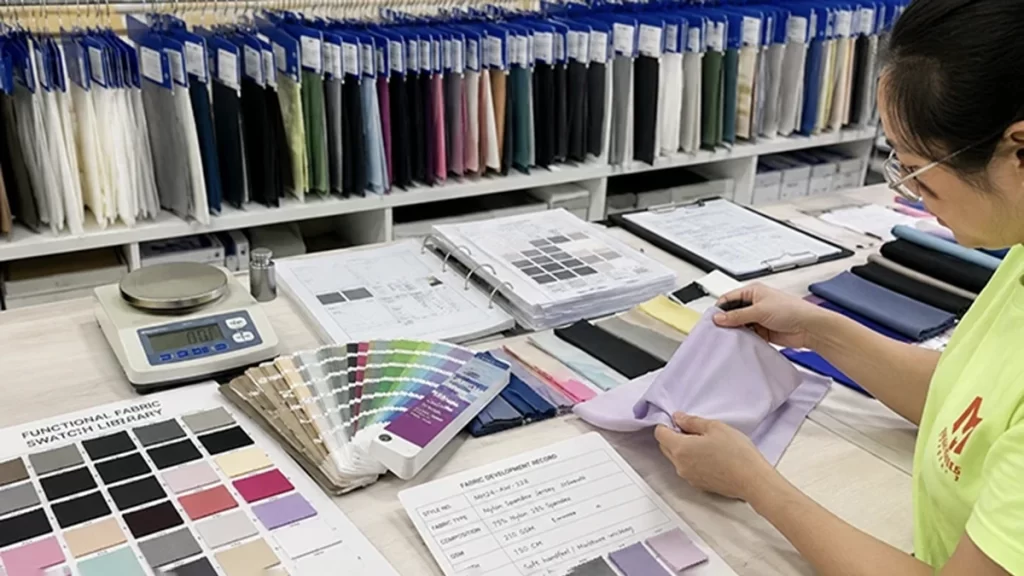
Saying “I want 100% cotton” may sound specific, but from a manufacturing perspective, it still leaves many important questions unanswered.
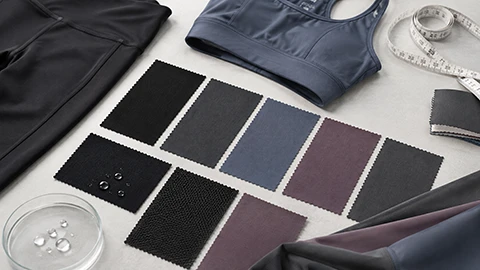
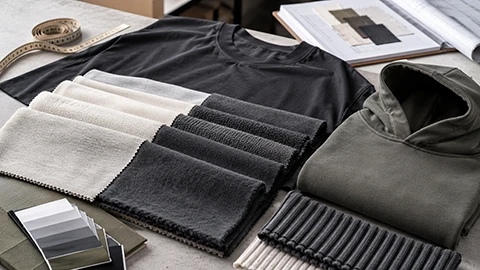
A 180 GSM cotton jersey and a 450 GSM cotton fleece can both be made from 100% cotton while producing completely different garments.
Fabric composition tells you what fibers are used, but it does not fully describe how the fabric will look, feel, stretch, recover, shrink, drape, or perform after washing.
This is especially important for streetwear and activewear.
For example, a heavyweight oversized T-shirt usually needs enough structure to maintain its silhouette, while leggings require stretch, recovery, opacity, and dimensional stability.
When evaluating fabric options, brands should consider several factors together:
- Fabric composition
- GSM or fabric weight
- Knitting or weaving structure
- Stretch and recovery
- Hand feel Shrinkage
- Pilling resistance
- Colorfastness
- Wash or finishing requirements
- Intended garment silhouette
The intended product should always guide fabric selection.
A fabric that works well for a fitted top may not perform properly in wide-leg sweatpants. Likewise, a fabric selected for a clean untreated finish may react very differently after garment dyeing, enzyme washing, or other finishing processes.
Whenever possible, brands should review physical fabric swatches or sample garments before confirming materials for bulk production.
Why Is GSM Important When Choosing Fabric?
GSM stands for grams per square meter and is commonly used to describe fabric weight.
However, GSM should not be used as the only indicator of quality.
Two fabrics with the same GSM can still feel very different depending on yarn, knitting structure, finishing, and fiber quality.
For this reason, fabric selection should be based on the complete material specification rather than one number alone.
Mistake #3: Comparing Prices Before the Product Specification Is Clear
New clothing brands often contact several manufacturers with a simple question:
“How much would 500 hoodies cost?”
The problem is that there may not be a meaningful answer yet.
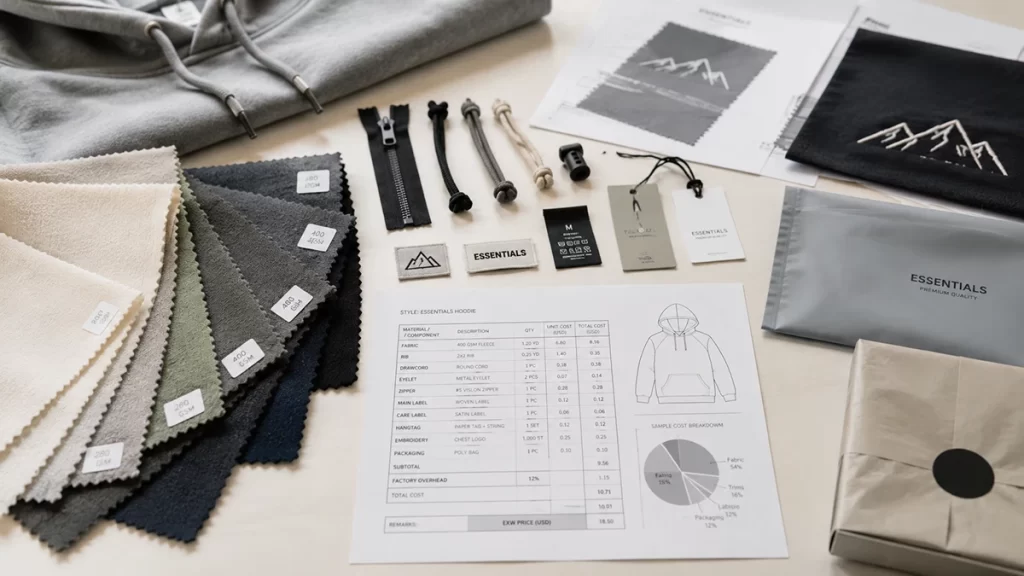
A 500-piece hoodie order can vary significantly in price depending on fabric weight, yarn quality, construction, wash treatment, printing, embroidery, zipper type, labels, packaging, and even the number of colors being produced.
This means the lowest initial quotation is not necessarily the lowest final production cost.
For example, one supplier may quote based on a standard 300 GSM fabric, while another assumes a 450 GSM garment-dyed fleece with custom trims. The two prices may look very different, but they are not based on the same product specification.
A useful clothing quotation needs to be based on reasonably clear product requirements.
That does not mean every detail must be finalized before you ask for an estimated price. Early-stage costing is still useful, especially when you are evaluating whether a product fits your budget.
However, brands should clearly understand whether a quotation is a rough estimate or a production-ready price.
What Affects the Cost of Custom Clothing Production?
Several factors can change the final unit price, including:
- Fabric type and GSM
- Order quantity
- Number of colors
- Garment construction complexity
- Printing or embroidery techniques
- Garment dyeing or washing
- Custom zippers and trims
- Main labels and care labels
- Hangtags
- Packaging requirements
- Special testing or inspection requirements
Fabric is often one of the largest cost variables, but decoration and finishing processes can also make a significant difference.
A basic screen print, large-area embroidery, puff print, appliqué, rhinestones, laser treatment, and specialty wash all require different equipment, labor, and production steps.
For that reason, price comparisons only make sense when manufacturers are quoting against similar specifications.
The Cheapest Quote Is Not Always the Best Quote
When comparing suppliers, look beyond the final unit price.
Check what is actually included in the quotation, such as fabric specifications, branding, trims, packaging, sample development, and quality requirements.
A lower price may simply mean that certain details have not yet been included.
The more clearly the product is defined, the easier it becomes to compare quotations fairly.
Mistake #4: Rushing Through the Sampling Stage
When brands are working toward a launch date, it can be tempting to approve a sample quickly and move straight into bulk production.
That shortcut can become expensive later.
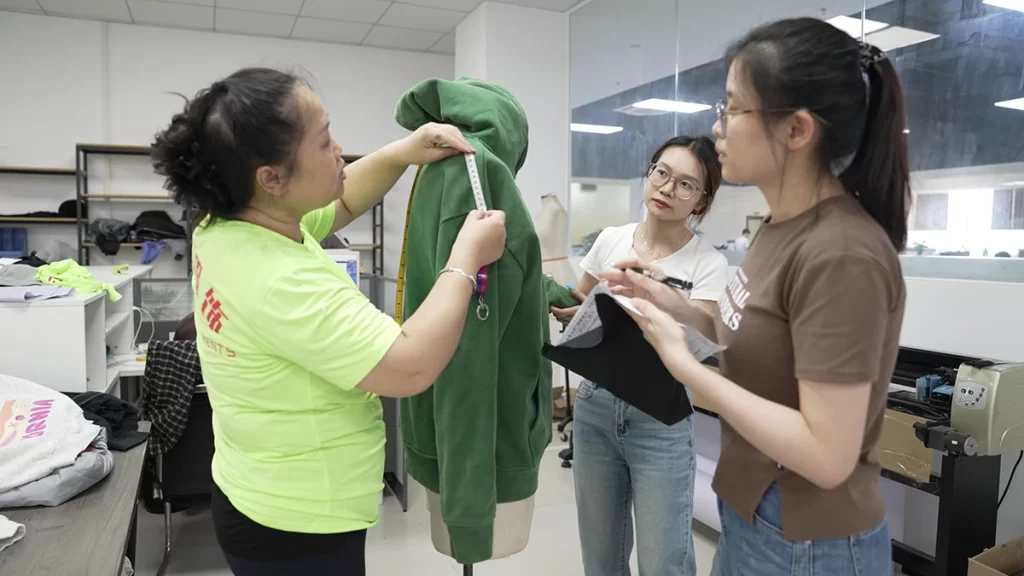
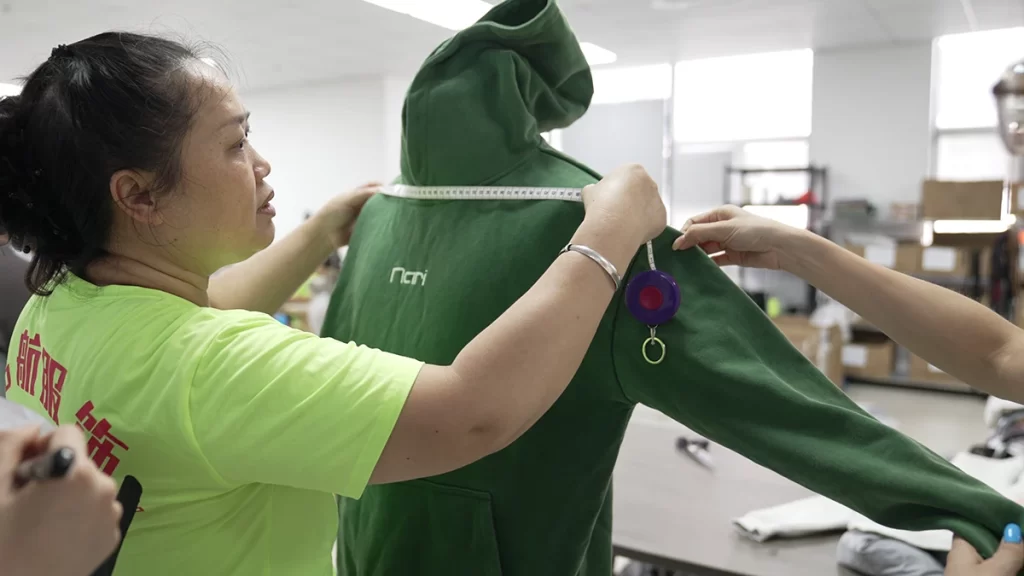
A clothing sample is not simply a visual preview of the final garment. It is a development tool used to confirm whether the design, fit, fabric, construction, and branding details are ready for repeatable production.
During sampling, brands should check several things carefully:
- Fit and garment proportions
- Key measurements
- Fabric hand feel and performance
- Seam construction
- Print or embroidery placement
- Label and trim positioning
- Wash or dye effects
- Overall workmanship
For washed or garment-dyed products, this stage is especially important because finishing processes can affect color, shrinkage, texture, and garment measurements.
For activewear, the focus may be different. Stretch recovery, opacity, waistband stability, compression, seam placement, and comfort during movement can all influence whether the garment performs as intended.
The first sample should therefore not automatically be treated as the final approved sample.
If something needs to be corrected, it is much safer to make that adjustment during development than after hundreds or thousands of garments have already been cut.
At the same time, brands should avoid endless sample revisions for small changes that do not materially improve the product.
The goal of sampling is not perfection for its own sake.
The goal is to create a garment that is ready for reliable bulk production. clothing sampling process
What Should You Check Before Approving a Clothing Sample?
Before approving a sample for production, make sure the most important details are confirmed and documented.
This normally includes:
- Approved measurements
- Fabric specification
- Color
- Construction details
- Artwork size and placement
- Labels and trims
- Wash or finishing standard
- Packaging requirements
- Final approved sample version
Once these details are confirmed, the approved sample becomes an important reference for the production team.
A Good Sample Should Be Repeatable in Bulk Production
A sample can look excellent as a single piece but still create problems when scaled into production.
That is why sample approval should consider not only appearance, but also production consistency.
A good production-ready sample should give the factory a clear and repeatable standard to follow during cutting, sewing, finishing, and final inspection.
Mistake #5: Treating Bulk Production Like a Larger Sample Order
A good sample is an important milestone, but producing one approved sample and manufacturing hundreds or thousands of garments are two very different things.
Bulk production introduces variables that are much less visible during sampling.
Fabric may come from larger production lots. Multiple operators may work on the same style. Cutting must remain consistent across many layers, measurements need to stay within agreed tolerances, and printing, embroidery, trims, and finishing all have to remain stable throughout the order.
This is why bulk production requires process control, not just sample approval.
Before production begins, brands should make sure the key specifications are confirmed, including:
- Approved sample
- Final measurements
- Size grading
- Fabric and color standards
- Trims and accessories
- Artwork size and placement
- Labels and packaging
- Measurement tolerances
- Finishing requirements
- Inspection standard
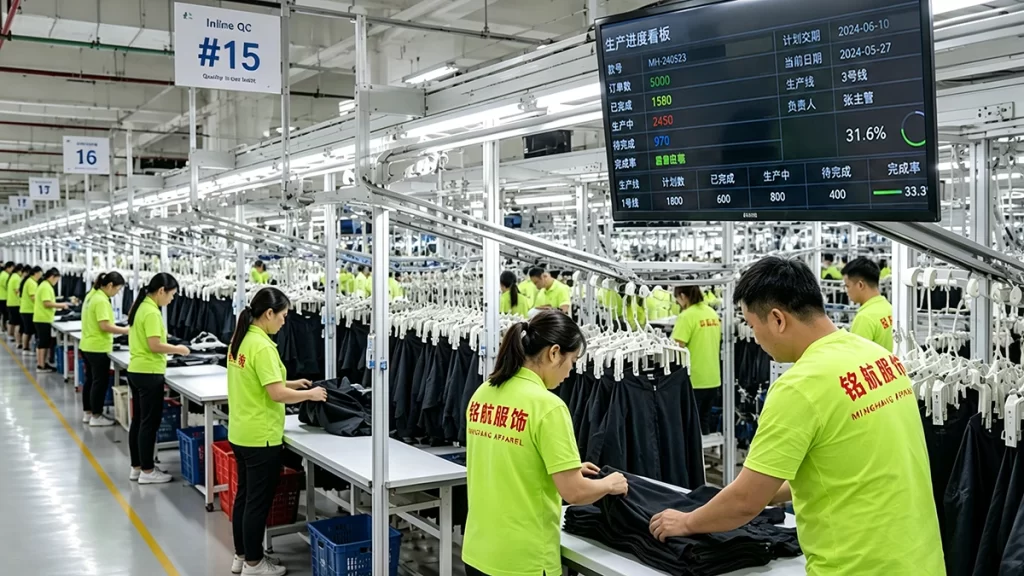
Once production starts, quality control should happen at multiple stages rather than only after the garments are finished.
Why Is In-Process Quality Control Important?
If a problem is discovered only during final inspection, a large quantity of garments may already be affected.
In-process inspection helps identify issues earlier, when they are usually easier and less expensive to correct.
For example, checking cut panels before sewing can help identify cutting defects or fabric problems. Inline sewing inspection can catch construction issues before the garment reaches finishing. End-of-line checks can then confirm measurements, workmanship, appearance, and packaging before shipment.
At Minghang Garments, we use a 5+1 quality control system covering:
- Raw material inspection
- Cut panel inspection
- Inline sewing inspection
- Craftsmanship and finishing inspection
- End-of-line inspection
- Third-party AQL inspection when required
The purpose of this system is not simply to reject defective garments at the end.
It is to identify and control quality risks throughout the production process.
Bulk Production Should Follow a Clear Approved Standard
Before bulk production begins, both the brand and manufacturer should be working from the same approved reference.
This may include the approved sample, measurement chart, artwork files, fabric specification, trim details, color standard, and packaging requirements.
If any of these details change after production has already started, the risk of inconsistency increases.
Clear approval records make it easier for the factory to maintain a consistent standard from the first piece to the final shipment.
What Should You Prepare Before Contacting a Clothing Manufacturer?
You do not need to have every production detail finalized before contacting a clothing manufacturer.
However, providing some basic information can make the first conversation much more productive and help the manufacturer give you more accurate recommendations, timelines, and quotations.
A useful starting package usually includes:
- Product sketches, reference images, or an existing sample
- Intended fit and garment silhouette
- Preferred fabric or performance requirements
- Size range
- Logo, artwork, or branding details
- Estimated quantity per style and color
- Target launch date
- Packaging requirements
- Target price range, if available
The more clearly you can explain what you want to achieve, the easier it becomes for the manufacturer to recommend suitable fabrics, construction methods, decoration techniques, and production options.
For example, a heavyweight garment-dyed hoodie with embroidery, custom rib, and special packaging will require a very different development approach from a basic stock-fabric hoodie with a small printed logo.
What If You Are Still at the Idea Stage?
That is also fine.
Many brands begin with reference images, mood boards, sketches, or an existing garment they want to improve.
At this stage, the most useful information is usually your target customer, product type, intended fit, approximate quantity, preferred materials, and any visual details that are important to the design.
A manufacturer can then help identify which parts of the concept still need to be developed before sampling begins.
Clear Information Leads to Better Development Decisions
The purpose of preparing this information is not to make the process more complicated.
It is to reduce guesswork.
When the manufacturer understands your product goals, quantity, price expectations, and launch schedule, they can give you more practical recommendations and identify potential production issues earlier.
That usually leads to fewer unnecessary sample revisions and a smoother transition into bulk production.
How a Better Development Process Reduces Production Risk
The relationship between a brand and a clothing manufacturer works best when product development is treated as a collaborative process rather than a simple purchase transaction.
Brands usually understand their customers, positioning, design direction, and product goals. Manufacturers understand materials, garment construction, production methods, machinery, quality control, and manufacturing limitations.
Good development happens when both sides contribute the information they know best.
This does not mean the manufacturer should redesign the product for the brand.
Instead, technical feedback can help identify potential problems before they become expensive production issues.
For example, a manufacturer may recommend:
- Adjusting a seam position to improve comfort or durability
- Changing rib specifications to improve recovery
- Modifying measurements to achieve the intended silhouette
- Choosing a different printing method for a specific fabric
- Adjusting embroidery size or placement for better stability
- Recommending a different fabric weight for the desired fit
- Simplifying a construction detail that may be difficult to reproduce consistently
These decisions may appear small during development, but they can have a significant impact once production scales to hundreds or thousands of pieces.
Production Problems Are Easier to Solve Before Bulk Manufacturing
The earlier a potential issue is identified, the easier it usually is to correct.
Changing a measurement during sampling may require only a revised pattern.
Changing the same measurement after bulk fabric has been cut can affect an entire order.
The same applies to fabrics, trims, printing, embroidery, washing, and packaging.
A structured development process helps brands confirm important decisions before they become expensive to change.
Final Thoughts
Starting a clothing brand does not require you to become a garment engineer.
However, understanding the basics of apparel development can make communication with manufacturers much easier and help you make better sourcing decisions.
Many production problems can be traced back to a few common issues: unclear product requirements, unsuitable fabric choices, incomplete price comparisons, rushed sampling, and insufficient production control.
Addressing these areas early makes the entire manufacturing process more predictable.
If you are developing your first collection, you can begin with a sketch, reference image, existing garment, mood board, or preliminary tech pack.
The most important thing is to create a clear development path before moving into bulk production.
Written by
Minghang
Editorial Team
Minghang Garments is a custom apparel manufacturer specializing in activewear, streetwear and private-label clothing development. Our team supports brands through fabric sourcing, product development, sampling, bulk production and quality control, with OEM and ODM solutions for startups, growing labels and established apparel businesses.
-
Share
-

-

-