 Contact Us

Table of Contents

Contact Us
For most everyday streetwear hoodies, a fabric weight of roughly 300–380 GSM is a practical starting point, while heavyweight statement pieces usually sit around 400–500 GSM. These ranges are starting points, not standards: guides disagree, and hoodie fabric weight only works when read alongside fabric structure, fiber blend and intended drape.
What GSM Actually Means for a Streetwear Hoodie
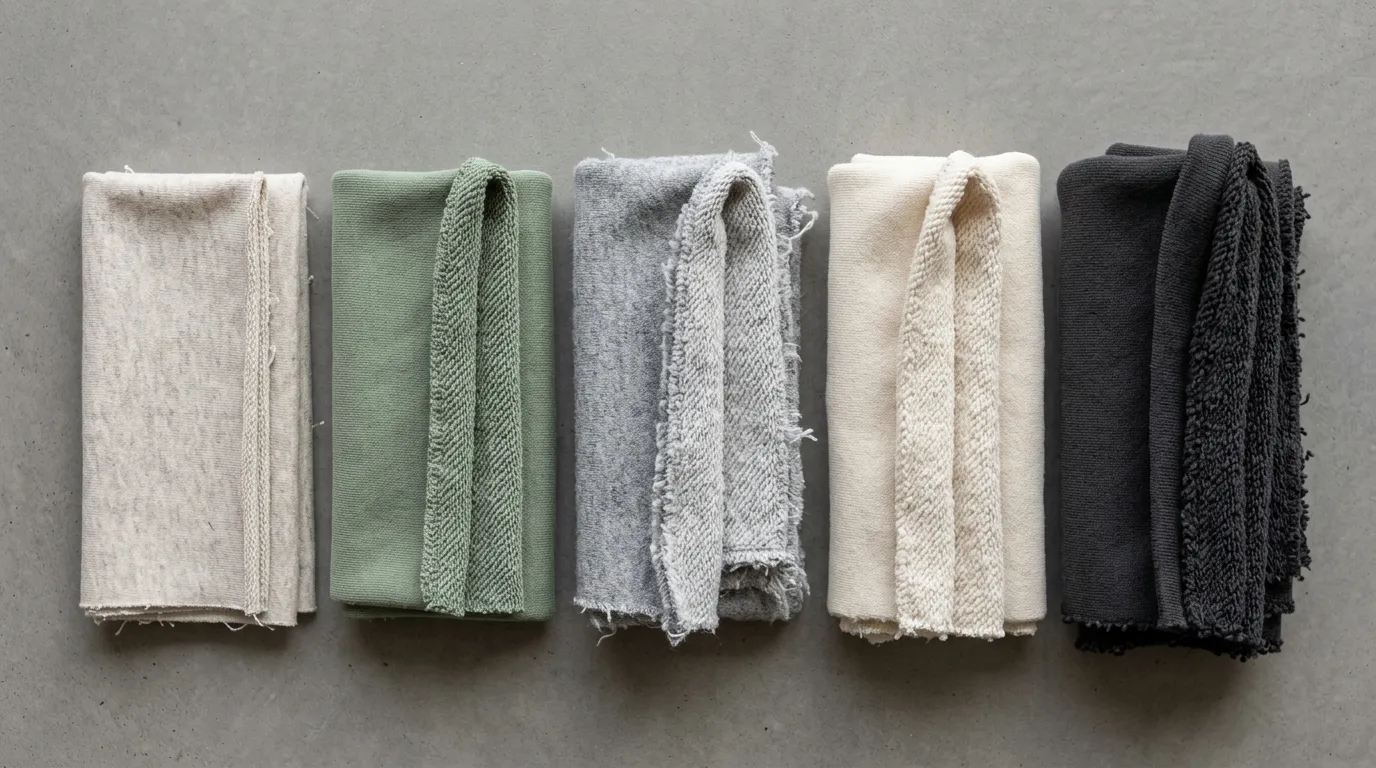
GSM stands for grams per square meter, which is the measured weight of one square meter of fabric. It tells you how heavy a hoodie fabric is; it does not, on its own, tell you how thick, warm or durable the finished hoodie will feel.
Gracefiber groups hoodie fabric into bands of up to 250 GSM, 250–350 GSM, 350–450 GSM and 450 GSM and above, which is a useful way to place a fabric before you start talking about quality. Zhongqian's 2026 fabric weight guide notes that weight is one input among several, and that composition, knit structure, finish, climate, silhouette and target price all shape the right choice.
[DIAGRAM: A horizontal GSM spectrum bar marking lightweight, everyday, heavyweight and very heavyweight bands, with the source that supports each band noted beneath it.]
Everyday Streetwear Hoodies: What GSM Range Works?
For a standard everyday streetwear hoodie, most fabric guides place you somewhere between roughly 280 and 380 GSM.
IK Apparel describes 320–380 GSM as a practical everyday range, while Ready One's hoodie fabric guide describes 300–320 GSM as a widely used weight for everyday and streetwear custom hoodies. Zhongqian lists 300–350 GSM as its standard-market hoodie range, and ModaKnits' February 2025 hoodie guide puts lightweight hoodies at 200–280 GSM, with 280–350 GSM as its midweight band.
Where those sources overlap, 300–350 GSM is the safest everyday starting point. Treat it as a starting point rather than a fixed figure: the same "everyday" label covers about 100 GSM of range across these guides, so the fabric in your hand matters more than the label on the spec sheet.
Heavyweight Statement Hoodies: What GSM Range Works?
Heavyweight streetwear hoodies generally start around 350–400 GSM and extend to about 500 GSM.
Gracefiber recommends 400–500 GSM for a heavyweight, cozy feel, and IK Apparel describes 400–500 GSM as common for heavyweight streetwear hoodies. ModaKnits puts heavyweight hoodies at 350–400 GSM and above, while Zhongqian separates 360–400 GSM as premium heavyweight from 450–500 GSM as ultra-luxury. Minghang Garments' streetwear fabric guide lists 350–450 GSM for heavyweight hoodies, sweatshirts and joggers, with 450 GSM and above for very heavyweight streetwear.
Notice how far apart the labels sit. Two guides can both say "heavyweight" while one means 360 GSM and the other means 450 GSM. Choose a number inside the band, then confirm it on a sample before that fabric goes anywhere near bulk production.
Everyday vs. Heavyweight Hoodies: GSM at a Glance
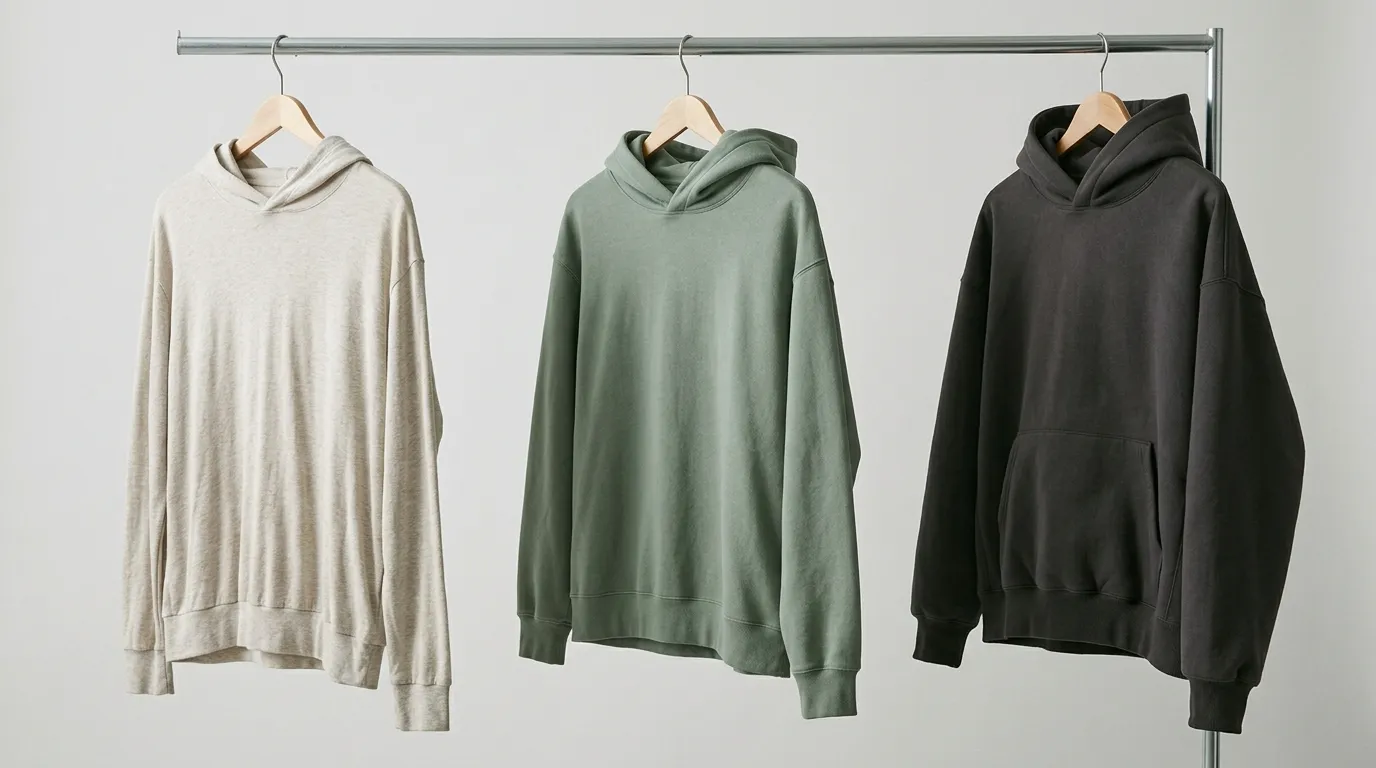
The table below maps these ranges to use cases and shows where a 400 GSM hoodie sits.
| Use case | Source-qualified GSM range | What it gives you | Main trade-off |
|---|---|---|---|
| Lightweight streetwear hoodie | Roughly 200–280 GSM (ModaKnits) | A lighter, more breathable hoodie | Less warmth and less body |
| Everyday streetwear hoodie | Roughly 300–380 GSM (IK Apparel; Zhongqian; Ready One) | Everyday warmth with enough structure to hold a shape | Can feel warm in mild weather |
| Heavyweight statement hoodie | Roughly 350–500 GSM (Gracefiber; IK Apparel; ModaKnits; Zhongqian; Minghang Garments) | Structure, warmth and a heavier hand feel | More bulk, more material per garment and slower drying |
| Very heavyweight | 450 GSM and above (Gracefiber; Zhongqian; Minghang Garments) | Maximum weight and presence | A specialist choice; sample it before committing |
Across these sources, 400 GSM falls inside the heavyweight band rather than the everyday band, so a 400 GSM hoodie should feel noticeably heavier than a 300–320 GSM everyday style. The ranges above are source-specific recommendations, not an industry standard.
Is Higher GSM Always Better for Streetwear?
No. A higher GSM adds weight, and usually warmth and structure, but it does not by itself make a hoodie better quality, and past a certain point it starts working against the wearer.
IK Apparel notes that hoodie fabric above 500 GSM can feel very heavy, cost more and take longer to dry. Zhongqian points out that heavier fabric affects warmth, how much material each garment uses and shipping weight. Minghang Garments' streetwear fabric guide treats fabric weight as one variable among several, alongside construction and finishing.
Quality shows up in how a hoodie holds its shape, how the surface survives washing and how consistently the fabric behaves across a production run. Weight alone tells you none of that.
Why Two Hoodies at the Same GSM Feel Different
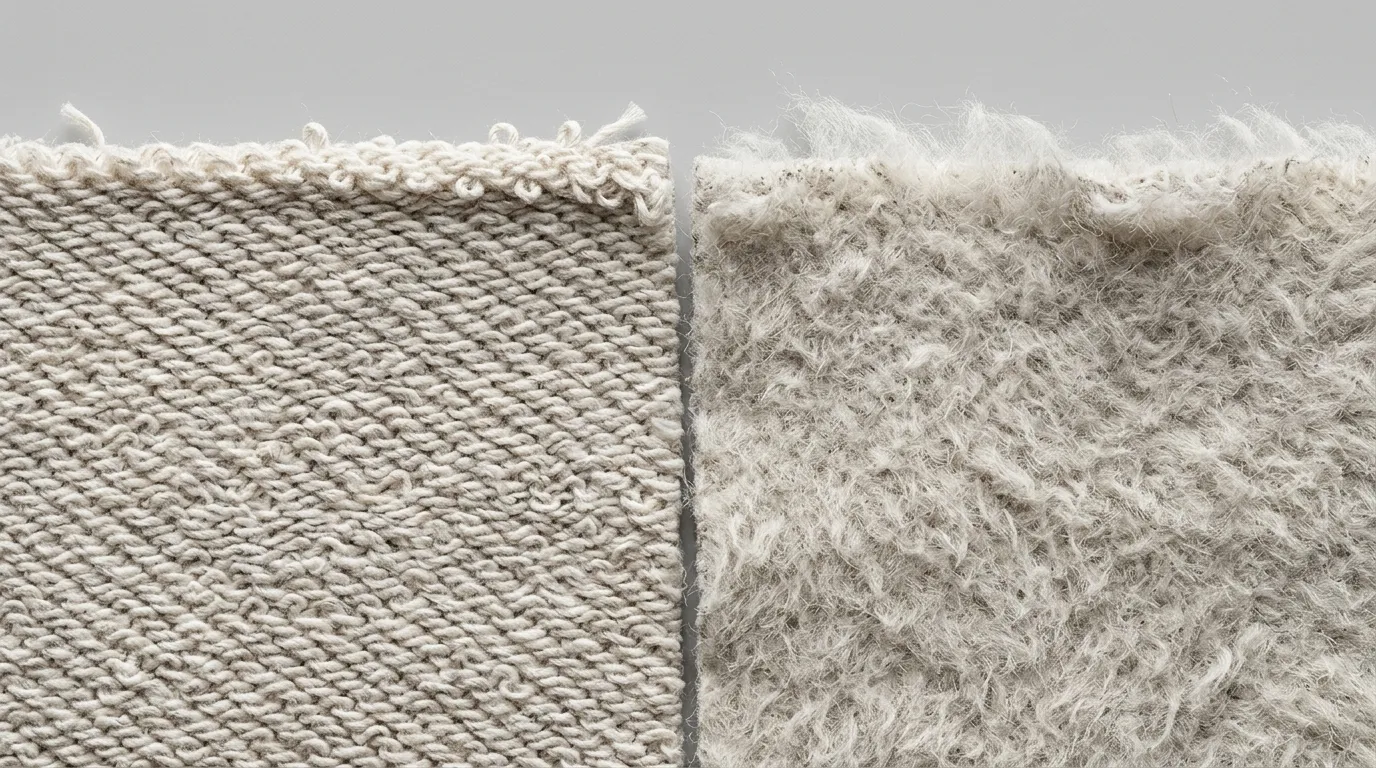
Two hoodies made from 400 GSM fabric can feel completely different once fiber content, knit construction, surface finish and garment washing are in play.
Minghang Garments' streetwear fabric guide notes that fabrics at a similar GSM can still differ in firmness, surface texture, drape and shrinkage because of how they are constructed and finished. Minghang Garments' pullover hoodie page lists French terry at 240–500 GSM and cotton fleece at 300–450 GSM, so the same weight can be built from different knit structures with a different hand feel. Zhongqian makes the same point about composition, knit structure and finish.
If weight is the only specification on your tech pack, you are leaving the part customers actually feel to chance. That makes fabric selection the next decision after weight, and best fabrics for streetwear works through the structures and blends worth comparing.
[DIAGRAM: A side-by-side cross-section of two 400 GSM hoodie fabrics with different knit structures or finishes, showing how surface and drape change at the same measured weight.]
The Trade-Offs of Going Heavier
Heavier hoodie fabric buys warmth, structure and a heavier hand feel, but it also changes shrinkage behavior, drape, cost and how the garment behaves in the wash.
Shrinkage and stability
Heavier knit fabric still moves through washing and finishing, and how much it moves depends on fiber content, knit structure and the finishing route rather than on GSM alone.
Minghang Garments' streetwear fabric guide makes this explicit: fabrics at a similar weight can shrink differently because of construction and finishing. The safe approach is to approve shrinkage on the actual fabric and wash process instead of assuming it from a weight figure. If you are already working through that, how to control shrinkage in heavyweight hoodies covers the variables in more detail.
Drape, silhouette and fit
More fabric weight usually means more body and structure, which suits boxy, oversized and statement shapes. It can fight a close, fluid fit, and it changes how a hoodie falls at the shoulder and hem. The same GSM will therefore read differently on a relaxed pattern than on a fitted one.
Cost, material use and shipping weight
Heavier fabric uses more material per garment. Zhongqian notes that fabric weight affects material use and shipping weight, and IK Apparel notes that weights above 500 GSM cost more. Those are structural cost drivers regardless of which factory produces the hoodie.
Warmth, breathability, washing and drying
Heavier fabric generally reads warmer, which is an advantage in cold weather and a drawback in mild climates. IK Apparel notes that hoodies above 500 GSM take longer to dry. If your customers wear hoodies year round, weight and climate belong in the same conversation.
How to Choose and Approve a Hoodie Fabric Weight
Start from the use case, choose a GSM band, then approve the actual fabric on a sample rather than approving a number.
- Match the hoodie to a use case: lightweight, everyday or heavyweight statement piece.
- Shortlist a GSM band from the table above and pick at least two fabric constructions that sit inside it.
- Request fabric and garment samples, then judge hand feel, drape and silhouette on the fit you intend to sell.
- Wash-test the sample and re-check measurements, surface and color before approving bulk.
- Lock the specification in writing, including the fabric mill reference, so bulk matches the approved sample.
Minghang Garments runs a 2,000 m² sample center in Dongguan, where sampling takes 7–15 working days. Minimum order quantity starts at 100 pcs per color per style on stock fabric, and production runs a 5+1 QC system. If you are building out a hoodie range, hoodies sweatshirts covers the category, and a custom 450 gsm heavyweight hoodie shows one heavyweight build as an example — not as a recommendation that 450 GSM suits every range.
[DIAGRAM: A five-step sample-approval flow from use case through GSM band, fabric sample, wash test and locked specification.]
FAQ
Is 600 GSM too much for a hoodie?
For most streetwear ranges, yes. IK Apparel describes hoodie fabric above 500 GSM as very heavy, more expensive and slower to dry, and the guides above place heavyweight streetwear at roughly 350–500 GSM. Treat 600 GSM as a specialist choice and approve it on a worn, washed sample first.
Is 1000 GSM too much for a hoodie?
It sits far outside every hoodie range here, which top out around 450–500 GSM for very heavyweight and ultra-luxury fabric. A 1000 GSM knit would be extremely heavy and impractical for normal streetwear wear. If a mill quotes that weight, confirm the specification and construction directly with them.
Is a 350 GSM hoodie considered high quality?
Weight alone does not establish quality. ModaKnits places 350–400 GSM in its heavyweight band, but Minghang Garments' streetwear fabric guide notes that similar-GSM fabrics can differ in firmness, texture, drape and shrinkage. Judge quality on construction, finishing and how the sample wears and washes.
If you are choosing a hoodie fabric weight for a new range, Minghang Garments sources fabric and develops samples from its Dongguan sample center, with sampling in 7–15 working days and orders starting at 100 pcs per color per style on stock fabric.
-
Share
-

-

-