 Contact Us
Table of Contents

Contact Us
Updated 1 week ago
Best Fabrics for Streetwear: GSM, Feel, Durability & Wash Performance

Minghang Garments
Minghang Garments is a custom apparel manufacturer specializing in activewear, streetwear and private-label clothing development. Our team supports brands through fabric sourcing, product development, sampling, bulk production and quality control, with OEM and ODM solutions for startups, growing labels and established apparel businesses.
Choosing fabric for streetwear is not simply a matter of selecting cotton, polyester, or a particular GSM. fabric selection for custom apparel
The fabric determines how a garment hangs, how structured an oversized silhouette looks, how comfortable it feels, how well it holds its shape, and how it changes after washing and repeated wear.
A 240 GSM T-shirt fabric and a 320 GSM fabric may both be suitable for streetwear, but they can create very different products. The same applies to hoodies, sweatshirts, and joggers, where fabric structure and finishing can matter just as much as composition.
For brands developing streetwear, the best fabric is therefore not always the heaviest or most expensive option.
It is the material that matches the intended fit, appearance, performance, price level, and production method.
This guide explains how to evaluate streetwear fabrics by GSM, structure, hand feel, durability, and wash performance, and how to choose suitable materials for different product categories.
What Makes a Fabric Suitable for Streetwear?
Streetwear fabrics usually need to balance appearance, structure, comfort, and durability.
Unlike lightweight fashion garments that may prioritize drape or softness, many streetwear products rely on the fabric to help create a defined silhouette.
This is especially noticeable in:
- Oversized T-shirts
- Heavyweight hoodies
- Sweatshirts
- Baggy sweatpants
- Joggers
- Zip-up hoodies
- Overshirts
- Structured casual tops
The right material should support the intended fit without making the garment unnecessarily stiff or uncomfortable.
Fabric Structure Matters as Much as Composition
Two fabrics can have the same fiber composition and similar GSM while still feeling completely different.
This can happen because of differences in:
- Yarn thickness
- Yarn construction
- Knitting structure
- Fabric density
- Brushing
- Compacting
- Washing
- Surface finishing
For example, two 100% cotton T-shirt fabrics at 260 GSM may differ significantly in firmness, surface texture, drape, and shrinkage.
This is why brands should avoid evaluating fabric by composition and GSM alone.
Start With the Garment You Want to Create
Fabric selection should always begin with the intended product.
Ask questions such as:
- Should the garment feel soft or structured?
- Does the silhouette need to hold its shape?
- Will the product be washed or garment finished?
- Does the fabric need stretch?
- Is the garment designed for warm or cool weather?
- How important is shrinkage control?
- Does the target retail price support a premium fabric?
A fabric that works well for a heavyweight hoodie may not be suitable for an oversized summer T-shirt, even if both products belong to the same streetwear collection.
Understanding GSM: Does Heavier Mean Better?
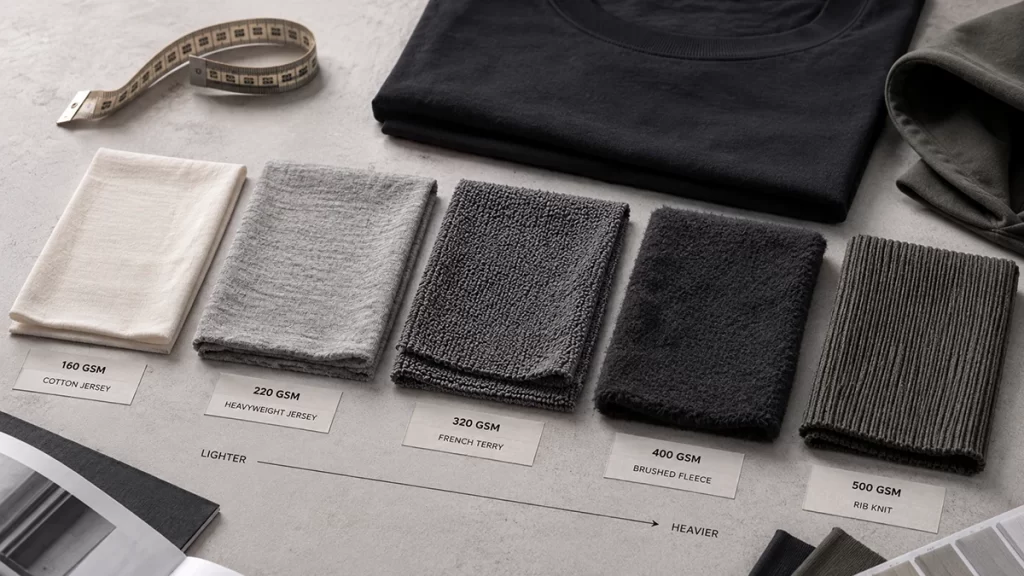
GSM stands for grams per square meter and is used to describe fabric weight.
In streetwear, GSM is often treated as a shortcut for quality, but heavier fabric is not automatically better.
A high-GSM fabric can create a structured, premium feel, but it can also make a garment too stiff, too warm, or unsuitable for the intended fit.
Likewise, a lighter fabric is not necessarily lower quality if it has good yarn quality, density, finishing, and dimensional stability.
For this reason, GSM should always be evaluated together with fabric structure and intended use.
Typical GSM Ranges for Streetwear
Although there is no universal standard, the following ranges are commonly used as a practical reference:
- 160–200 GSM — Lightweight T-shirts and warm-weather tops
- 200–240 GSM — Standard to midweight T-shirts
- 240–300 GSM — Heavyweight or structured oversized T-shirts
- 280–350 GSM — Lightweight to midweight sweatshirts and French terry
- 350–450 GSM — Heavyweight hoodies, sweatshirts, and joggers
- 450 GSM+ — Very heavyweight streetwear with a dense, structured feel
These ranges are useful for comparison, but the final result can still vary significantly depending on yarn, knitting density, brushing, washing, and finishing.
For example, a tightly knitted 280 GSM jersey may feel more compact and structured than a looser 320 GSM fabric.
Higher GSM Changes the Garment Silhouette
Fabric weight affects how a garment hangs on the body.
A heavier fabric usually creates more structure and can help oversized garments maintain a wider, more defined silhouette.
This is one reason heavyweight jerseys are commonly used for oversized streetwear T-shirts.
Lighter fabrics tend to drape more closely to the body and may create a softer, more relaxed appearance.
For hoodies and sweatshirts, higher GSM can also add volume to the body, sleeves, and hood.
However, the pattern must be developed together with the fabric.
Using a much heavier material without adjusting the pattern can change the proportions and overall fit of the garment.
GSM Should Match the Season and End Use
Streetwear is not limited to heavyweight products.
A summer collection may need lighter fabrics that still maintain enough density and structure to avoid feeling thin or transparent.
A winter hoodie may prioritize warmth and body, while a transitional sweatshirt may work better with a medium-weight French terry.
When choosing GSM, consider:
- Climate
- Season
- Intended layering
- Garment fit
- Desired structure
- Comfort
- Target retail price
- Shipping weight
The best GSM is the one that supports the product concept rather than simply producing the heaviest possible garment.
Best Fabrics for Streetwear T-Shirts
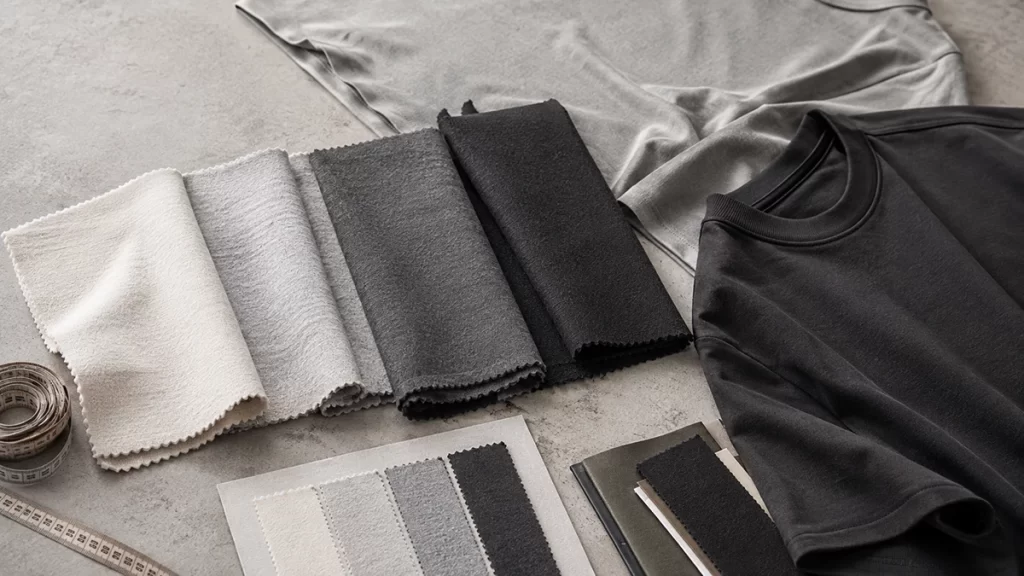
For streetwear T-shirts, cotton jersey is one of the most common starting points because it offers a familiar hand feel, good printability, and a wide range of fabric weights.
However, not every cotton jersey will create the same result.
For an oversized T-shirt, brands usually need to consider not only GSM, but also fabric density, yarn quality, surface appearance, drape, and how well the material holds the intended silhouette.
A very soft, loose-knit jersey may feel comfortable but collapse too closely to the body. A denser jersey can create a cleaner, more structured shape even at a similar weight.
Cotton Single Jersey
Single jersey is widely used for streetwear T-shirts and casual tops.
Depending on the yarn and knitting construction, it can range from lightweight and fluid to dense and structured.
For streetwear development, brands should evaluate:
- GSM
- Fabric density
- Yarn thickness
- Surface smoothness
- Hand feel
- Drape
- Shrinkage
- Shape retention
- Suitability for printing or other decoration
For standard casual T-shirts, a midweight jersey may be sufficient.
For boxy or oversized styles, a heavier and more compact construction is often preferred because it helps the body and sleeves maintain their shape.
Compact Cotton for a Cleaner Surface
Compact-spun cotton yarn is often used when brands want a smoother and cleaner fabric surface.
Compared with more irregular yarn structures, compact yarn can help create a more refined appearance with less visible fuzziness on the fabric surface.
This can be useful for streetwear products where the brand wants:
- A clean surface
- Defined garment structure
- Smooth printing results
- A more polished appearance
However, compact cotton should not automatically be treated as “better” for every product.
Some streetwear collections intentionally use rougher, drier, or more vintage-looking surfaces.
The right yarn and finishing should match the visual direction of the collection.
Cotton Blends Can Add Different Performance Characteristics
Streetwear T-shirts do not always need to be 100% cotton.
Cotton blends may be used to change the garment's hand feel, stability, stretch, drying behavior, or overall appearance.
Common considerations include:
- Cotton-polyester blends for increased stability and reduced moisture retention
- Cotton-elastane blends when additional stretch is required
- Other blended constructions for specific texture or performance goals
The percentage alone does not determine the final result.
A blend should be evaluated based on the actual knitted fabric and how it performs in the finished garment.
What GSM Works Well for an Oversized Streetwear T-Shirt?
There is no single correct GSM, but many oversized streetwear T-shirts fall roughly within the 220–300 GSM range.
A lighter fabric within this range may create more drape, while a denser or heavier construction can produce a boxier silhouette.
Some brands use fabrics above 300 GSM for an intentionally very heavyweight look, but this can also affect comfort, breathability, sewing, and production cost.
The best approach is to evaluate the fabric together with the actual pattern and sample rather than choosing GSM in isolation.
Best Fabrics for Hoodies & Sweatshirts
Hoodies and sweatshirts usually need more body and structure than T-shirts, but fabric choice still depends on the intended season, fit, and hand feel.
Two of the most common constructions used for streetwear hoodies are French terry and brushed fleece.
Both can be made in a wide range of weights and fiber blends, but they create different levels of warmth, softness, structure, and breathability.
French Terry
French terry has a smooth outer surface and visible loops on the inside.
It is commonly used for:
- Midweight hoodies
- Sweatshirts
- Joggers
- Transitional-season streetwear
- Garments that need structure without excessive warmth
For streetwear hoodies, brands should evaluate:
- GSM
- Loop structure
- Fabric density
- Hand feel
- Drape
- Surface smoothness
- Shape retention
- Wash performance
- Rib compatibility
French terry can feel cleaner and less bulky than brushed fleece, which makes it useful for brands that want a structured silhouette with moderate warmth.
Depending on the fabric weight and knitting density, French terry may range from relatively soft and flexible to heavy and compact.
A heavyweight French terry can create a premium, structured hoodie without the thick brushed interior commonly associated with winter fleece.
Brushed Fleece
Brushed fleece is typically knitted with a soft interior that has been mechanically brushed to create a warmer and more insulating surface.
It is commonly used for:
- Winter hoodies
- Heavyweight sweatshirts
- Warm joggers
- Cold-weather streetwear
Compared with French terry, brushed fleece usually feels softer and warmer against the skin.
However, the amount of brushing, fabric density, yarn, and finishing can significantly affect the final result.
A heavily brushed fleece may feel very soft and thick, while a more compact fleece can maintain stronger garment structure.
Brands should consider whether the priority is warmth, softness, structure, or a balance of all three.
French Terry vs Fleece: Which Is Better for Streetwear?
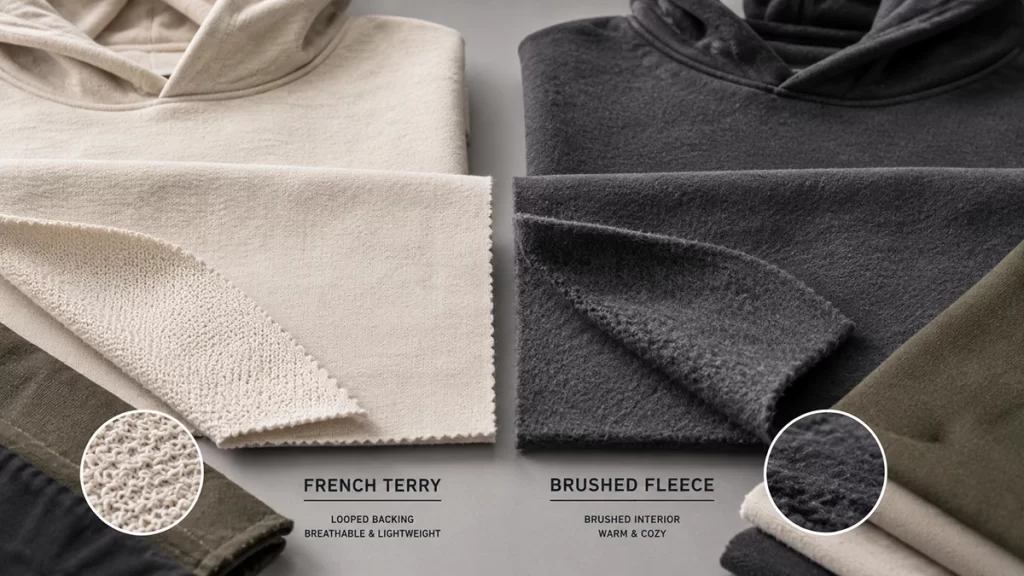
Neither is universally better.
French terry is often a good choice when the garment needs:
- Moderate warmth
- A cleaner interior
- Better year-round versatility
- Less bulk
- A structured but breathable feel
Brushed fleece may be more suitable when the garment needs:
- More warmth
- A softer interior
- Greater perceived thickness
- A winter-oriented feel
The decision should be based on the intended product rather than fabric name alone.
For example, a 400 GSM French terry hoodie and a 400 GSM brushed fleece hoodie may have the same nominal fabric weight but feel very different when worn.
Why 400 GSM Does Not Always Mean the Same Thing
GSM describes fabric weight, not the complete construction.
Two 400 GSM fabrics may differ in:
- Yarn thickness
- Knitting density
- Loop or fleece structure
- Fiber blend
- Surface finishing
- Brushing
- Compactness
- Hand feel
- Drape
One may feel dense and structured, while another feels soft, bulky, and more flexible.
This is why brands should always review actual swatches or sample garments rather than selecting hoodie fabric based only on a GSM number.
Best Fabrics for Sweatpants & Joggers
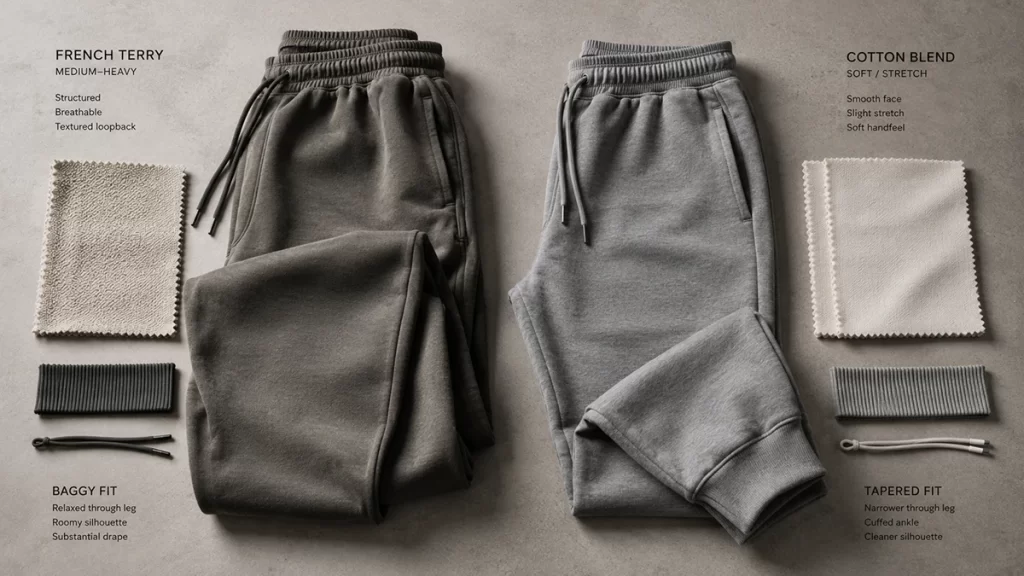
Sweatpants and joggers can use many of the same fabric families as hoodies, but the way the fabric behaves during movement becomes more important.
The material needs to support the intended silhouette while remaining comfortable around the waist, hips, knees, and legs.
For streetwear, fabric choice should therefore be based on both the garment shape and the level of structure the design requires.
French Terry for Versatile Streetwear Bottoms
French terry is a common choice for sweatpants because it offers a useful balance of structure, comfort, and breathability.
Midweight French terry can work well for everyday joggers, while heavier constructions are often used for baggy or oversized sweatpants that need more body.
A denser French terry can help wide-leg styles maintain a cleaner silhouette instead of collapsing too closely around the legs.
For brands developing streetwear bottoms, useful factors to evaluate include:
- GSM and fabric density
- Drape
- Stretch and recovery
- Knee bagging resistance
- Surface feel
- Waistband stability
- Rib compatibility
- Shape retention after wear
Brushed Fleece for Warmth and Volume
Brushed fleece is often selected when warmth and a softer interior are priorities.
Its added volume can also help create a fuller streetwear silhouette, particularly in heavyweight sweatpants.
However, very soft or loosely constructed fleece may lose shape more easily around the knees and seat.
For this reason, brands should look beyond softness and evaluate how well the fabric recovers after sitting, bending, and repeated wear.
Baggy Sweatpants Need Enough Structure
For baggy sweatpants, the fabric plays a major role in creating the intended silhouette.
If the fabric is too light or too fluid, the garment may hang more like relaxed lounge pants than structured streetwear.
A medium-to-heavy French terry or fleece is often more suitable when the design requires:
wide legs + volume + a defined shape.
The pattern and fabric should still be developed together. Simply increasing GSM does not automatically produce a better baggy fit.
Tapered Joggers Need More Flexibility
A more fitted jogger usually needs greater movement and recovery through the hip, knee, and lower leg.
Depending on the design, brands may use cotton blends or fabrics with a small amount of elastane to improve flexibility.
The waistband and cuff construction also become more important because a fabric that is too rigid can make a tapered style feel restrictive.
The goal is to balance shape retention with enough movement for comfortable wear.
Watch for Knee Bagging and Shape Loss
One common performance issue in sweatpants is permanent stretching around the knees after repeated wear.
This can be influenced by yarn quality, knitting structure, fabric density, fiber composition, and recovery.
A fabric may feel excellent when new but still perform poorly after several hours of wear.
For this reason, brands should evaluate both the initial sample appearance and how the garment behaves after movement, sitting, and washing.
How Washing & Finishing Affect Streetwear Fabric
Fabric selection should not be evaluated only before washing.
Many streetwear products use finishing processes to change the appearance, hand feel, texture, or overall character of the garment. These treatments can also affect how the fabric behaves.
Depending on the process, washing and finishing may influence:
- Hand feel
- Surface texture
- Color appearance
- Fabric softness
- Garment dimensions
- Drape
- Shape retention
- Overall vintage or worn-in effect
For example, a structured cotton jersey may become noticeably softer after washing, while a heavyweight sweatshirt fabric may lose some of its original stiffness.
This means brands should consider the intended finishing process when selecting the base fabric.
A material that looks ideal in its untreated state may produce a very different result after garment washing.
Test the Final Effect on a Sample
Whenever a wash or finishing process is part of the design, evaluate it on the actual garment rather than relying only on an untreated fabric swatch.
The sample allows you to review the combined result of:
fabric + construction + color + finishing + fit
before confirming the production standard.
This is especially important for streetwear because the final washed appearance is often part of the product identity rather than simply a technical finishing step.
What Brands Should Check Before Approving a Streetwear Fabric
Before confirming a fabric for bulk production, brands should evaluate more than composition and GSM.
A practical fabric approval should consider how the material performs both as a fabric and as part of the finished garment.
Check:
- Composition
- GSM
- Knitting or weaving structure
- Hand feel
- Surface appearance
- Drape and structure
- Stretch and recovery, if required
- Color
- Shrinkage performance
- Shape retention
- Pilling resistance
- Compatibility with printing or embroidery
- Performance after washing or finishing
- Suitability for the intended season
- Fit with the target product cost
Whenever possible, compare the approved fabric swatch with the finished sample.
A swatch may feel suitable in your hand but behave differently once it is cut, sewn, washed, and worn.
Approve Fabric and Fit Together
Fabric and pattern should not be treated as completely separate decisions.
Changing fabric weight, stretch, density, or drape can change how the same pattern fits.
For that reason, if the fabric changes significantly after the sample has been approved, the garment fit may need to be reviewed again.
The final fabric should support the intended silhouette, comfort, and product positioning — not simply meet a specification on paper.
Final Thoughts
Final Thoughts
The best fabric for streetwear depends on the product you are trying to create.
GSM is important, but it should be considered together with fabric structure, yarn, hand feel, durability, finishing, and the intended garment silhouette.
A heavyweight fabric is not automatically better, just as a lighter fabric is not automatically lower quality.
For brands, the most reliable approach is to define the intended fit and product use first, compare suitable fabric options, and then evaluate the final material in an actual garment sample.
This makes it much easier to select a fabric that performs well in production as well as looking good on a specification sheet.
Written by
Minghang Garments
Apparel Manufacturing Team
Minghang Garments is a custom apparel manufacturer specializing in activewear, streetwear and private-label clothing development. Our team supports brands through fabric sourcing, product development, sampling, bulk production and quality control, with OEM and ODM solutions for startups, growing labels and established apparel businesses.
-
Share
-

-

-