 Contact Us

Table of Contents

Contact Us
There is no single winner between a 400 GSM and a 500 GSM hoodie: 400 GSM heavyweight hoodie fabric is the more versatile choice for everyday, layered wear, while 500 GSM gives a denser, more rigid feel that suits deliberate, structural streetwear pieces. Warmth, drape, shrinkage and cost also depend on fibre blend, knit construction and finishing — not on GSM alone — so confirm the choice on an approved fabric and sample.
Key takeaways
- 500 GSM holds 25% more fabric mass per square metre than 400 GSM, based on the GSM definition in TrendyDice's hoodie guide — that is fabric weight per area, not finished hoodie weight.
- Higher GSM can add volume and structure, but it does not by itself guarantee more warmth, thickness or durability.
- Two fabrics with the same GSM can feel and perform differently because of yarn, knitting structure, brushing, compacting, washing and finishing, according to Minghang Garments' streetwear fabric guide.
- Shrinkage risk comes from fibre content, knit construction, finishing and care, not from the 500 GSM number alone.
- Cost rises with fabric mass per garment, but the real gap depends on composition, pattern consumption, finishing and order specifics.
What Does GSM Actually Measure in a Hoodie?
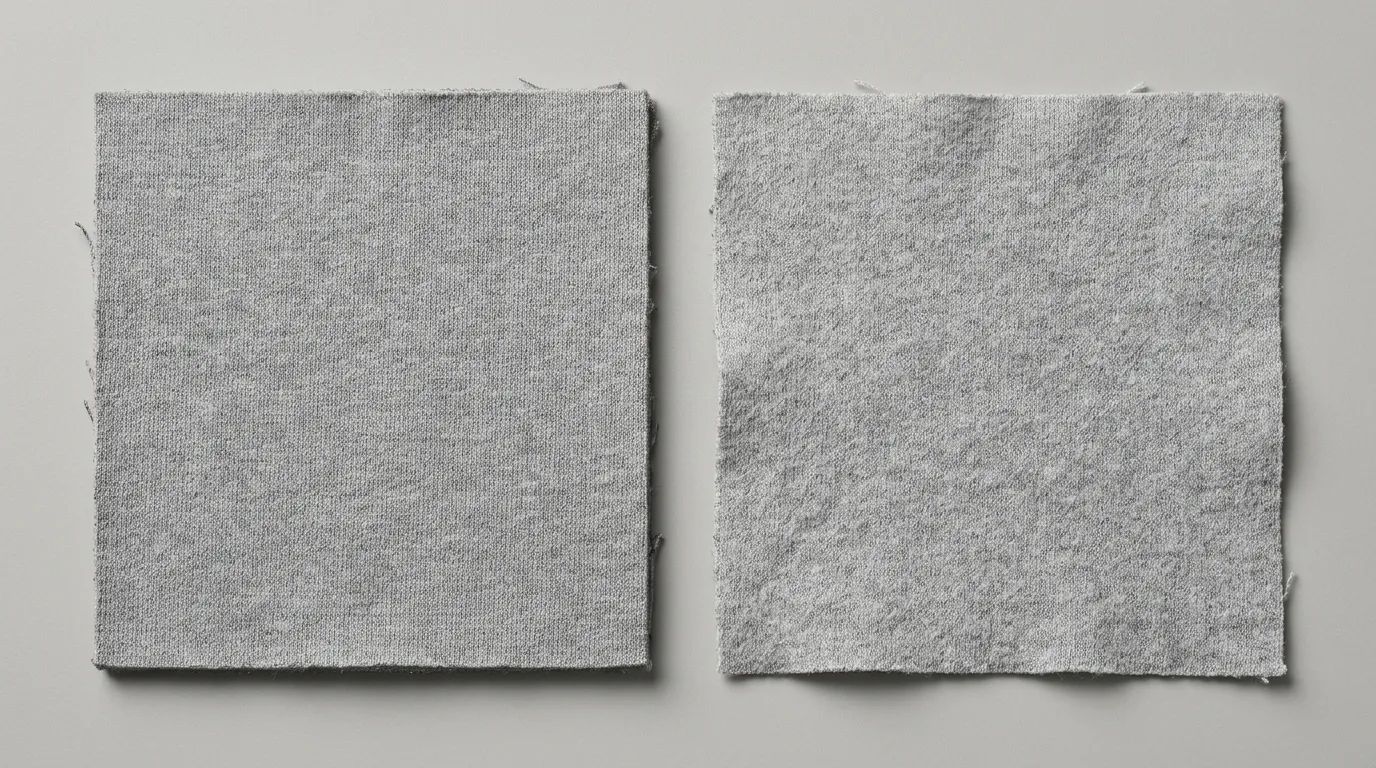
GSM means grams per square metre, so it measures how much fabric mass sits in a fixed area of heavyweight hoodie fabric — not the finished weight of a hoodie and not a direct measure of thickness or warmth.
TrendyDice's hoodie GSM guide defines GSM as fabric weight per square metre and describes 400 GSM as heavyweight while noting that suitability depends on intended use. That definition matters in a 400-versus-500 decision because a hoodie carries more than fabric: hood lining, ribbing, drawcords, pockets, zips and labels all add weight, so a garment's scale weight never equals its fabric GSM.
The second common confusion is arithmetic. Based on the GSM definition TrendyDice gives, 500 GSM holds 25% more fabric mass per square metre than 400 GSM. That is a difference in material per unit area, not a claim that a finished 500 GSM hoodie weighs 25% more or costs 25% more.
The third limit is that matching numbers do not mean matching fabric. Minghang Garments' streetwear fabric guide states that two fabrics with the same GSM can differ in feel and performance because of yarn, knitting structure, brushing, compacting, washing and finishing. A 400 GSM brushed fleece and a 400 GSM unbrushed knit are not interchangeable just because the spec sheet shows the same figure.
[DIAGRAM: two equal-area squares labelled 400 GSM and 500 GSM, showing the 25% mass difference and noting this is fabric mass per square metre, not finished hoodie weight.]
400 GSM vs 500 GSM Hoodie: Side-by-Side Comparison
A 400 GSM hoodie reads as a heavyweight fabric with usable everyday structure, while a 500 GSM hoodie reads as an intentionally dense fabric with less drape and a more rigid body.
Minghang Garments' streetwear fabric guide gives 350–450 GSM as a practical heavyweight range for hoodies, sweatshirts and joggers, and treats 450 GSM and above as very heavyweight streetwear. These are working ranges, not an industry standard. Zhongqian Clothing's fabric guide uses its own categories, labelling 360–400 GSM "premium heavyweight" and 450–500 GSM "ultra-luxury."
| Attribute | 400 GSM | 500 GSM | What else influences it |
|---|---|---|---|
| Fabric mass per square metre | Base figure | 25% more than 400 GSM, based on TrendyDice's GSM definition | Nothing — mass per area is the definition |
| Hand feel and thickness | Heavyweight with more give | Denser and stiffer | Yarn, knit structure, brushing, finishing (Minghang Garments) |
| Structure and drape | Holds shape with more drape | Holds shape with less drape | Knit construction, fibre blend, finishing |
| Volume in an oversized fit | Moderate added volume | Noticeably more volume | Pattern development (Minghang Garments) |
| Typical use direction | Versatile heavyweight for layering | Dense statement streetwear piece | Climate, wearer preference, silhouette |
| Shrinkage considerations | No GSM-based guarantee | No GSM-based guarantee | Fibre content, construction, pre-shrinking, compacting, care |
| Cost factors | Lower fabric mass per garment | Higher fabric mass per garment | Composition, pattern consumption, finishing, order specifics |
Every cell that depends on a specific mill's fabric needs checking against that fabric's spec sheet, because the same nominal GSM can behave differently from one knit to the next.
Warmth, Structure and Drape: How the Two Weights Behave
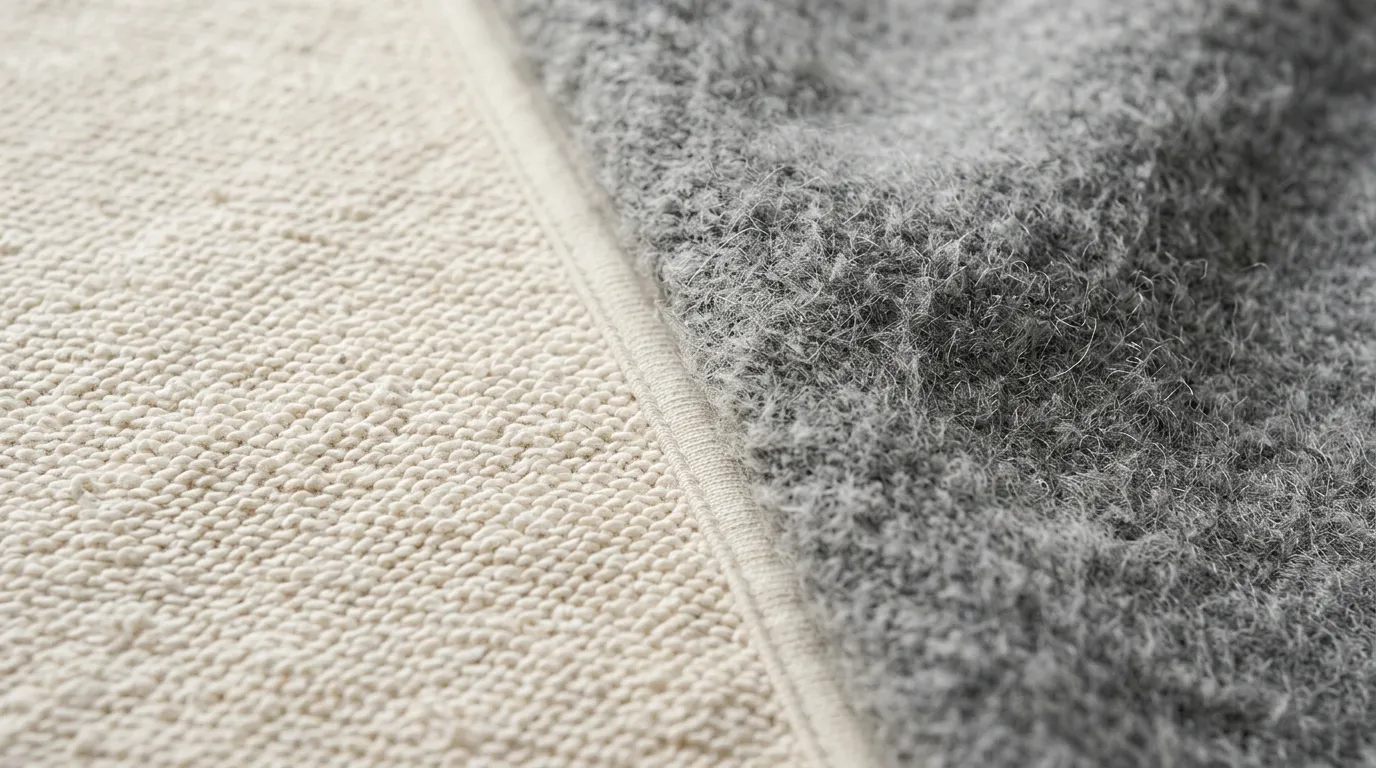
A 500 GSM hoodie usually feels denser and holds its shape more firmly than a 400 GSM one, but warmth and drape still depend on fibre blend, fabric structure and finishing rather than weight alone.
Warmth comes partly from the inside face of the fabric. Minghang Garments' streetwear fabric guide describes French terry as having loops on the inside and brushed fleece as having a brushed interior. Because a brushed interior holds air against the skin, a brushed 400 GSM fleece can feel warmer in wear than an unbrushed knit of the same fibre blend at a higher GSM. If warmth is the goal, ask what the interior finish is, not only the number.
Kellogg Fashion's 400 vs 450 vs 500 GSM comparison lists composition, yarn, knitting construction, density, brushing, compacting, pre-shrinking, washing and finishing as factors that change how fabrics feel and perform. Two 500 GSM fabrics from different mills can therefore sit at opposite ends of "dense".
Structure and drape follow the same logic. Minghang Garments' guide notes that higher GSM can add volume to a hoodie and that pattern development should be considered together with the fabric. In practice, a 500 GSM body and hood occupy more space in the same pattern, which changes how an oversized silhouette reads on the wearer, while a 400 GSM hoodie in that pattern folds and layers more easily.
[DIAGRAM: one hoodie pattern rendered in 400 GSM and in 500 GSM, showing volume and drape differences in an oversized fit.]
Decision rule: for an everyday or layered hoodie, 400 GSM delivers heavyweight structure without excessive bulk; choose 500 GSM when a rigid, dense, statement silhouette is the design intent.
Does Higher GSM Mean Better Quality or Durability?
No. GSM measures fabric mass per square metre, and Kellogg Fashion's comparison guide states that GSM alone does not establish quality.
The same Kellogg Fashion guide ties fabric performance to composition, yarn, knitting construction, density, brushing, compacting, pre-shrinking, washing and finishing — the factors that shape how a hoodie resists pilling, holds its measurements after washing and keeps its hand feel. A well-constructed 400 GSM hoodie can therefore outperform a loosely constructed 500 GSM one, and the reverse is equally possible.
Decision rule: assess a 400 GSM and a 500 GSM hoodie against the same construction checklist — fibre content, knit type, finishing, seam construction and ribbing quality — rather than treating the heavier number as the better garment.
[DIAGRAM: GSM shown as one input alongside fibre blend, knit type, finishing and care, all feeding into warmth, structure and shrinkage outcomes.]
Shrinkage Risk: Why 500 GSM Is Not Automatically Safer
A heavier hoodie is not automatically a more stable one. Dimensional change after washing is driven by fibre content, knit construction, finishing such as pre-shrinking or compacting, and the care method the garment receives — not by the 500 GSM figure on its own.
Minghang Garments' streetwear fabric guide recommends evaluating fabric and fit together and testing the final effect on a sample, which is the practical way to learn how a specific 400 or 500 GSM fabric behaves under the wash you intend to specify.
Decision rule: ask the mill or manufacturer what shrinkage-control finishing was applied to the fabric, then confirm measured dimensional change on a washed sample before bulk. If shrinkage is the main worry for a heavy knit, the finishing and testing steps in this guide to how to control shrinkage in heavyweight hoodies go deeper.
Cost: What Really Changes Between 400 and 500 GSM
At equal fabric area, 500 GSM uses 25% more fabric mass than 400 GSM, so the fabric line on a costing sheet trends higher for the heavier weight. That percentage is arithmetic based on the GSM definition TrendyDice gives; it is not a garment price difference.
The real gap depends on which fabrics you compare. Fibre composition, knit type, finishing, trims and how much fabric the pattern consumes all move the number, so a 500 GSM cotton/polyester fleece and a 400 GSM French terry can land close together or far apart. Comparing "400 versus 500" without naming a fabric and a pattern does not produce a meaningful figure.
Decision rule: cost both weights on the same hoodie pattern, within the same fabric family, before deciding.
Which Weight Fits Your Streetwear Collection?
Choose 400 GSM when you want a heavyweight hoodie that still drapes, layers and carries across seasons; choose 500 GSM when the garment's density and structure are the design idea. For the wider picture on how weight, fibre and construction interact, see Minghang Garments' guide to best fabrics for streetwear.
- Versatility first: 400 GSM sits inside the 350–450 GSM heavyweight range Minghang Garments' guide describes for hoodies, sweatshirts and joggers, so it suits a core style rather than a single statement drop.
- Structure first: 500 GSM suits an oversized, armour-like silhouette where the fabric is meant to hold its own shape and the added volume is part of the design.
- Middle ground: if 400 GSM feels light and 500 GSM feels excessive, sample an intermediate weight first — a custom 450 gsm heavyweight hoodie shows how that boundary weight looks in a finished garment.
- Climate and layering: a denser hoodie is harder to layer under outerwear, so consider where the piece will actually be worn.
- Delivered fit: confirm the fabric and the fit on the same sample, because higher GSM can change how the pattern reads (Minghang Garments).
Once the fabric weight is settled and you move on to developing the full style, Minghang Garments' hoodies sweatshirts range covers the garments built on these fabrics.
What to Check Before Bulk: Fabric and Sample Approval
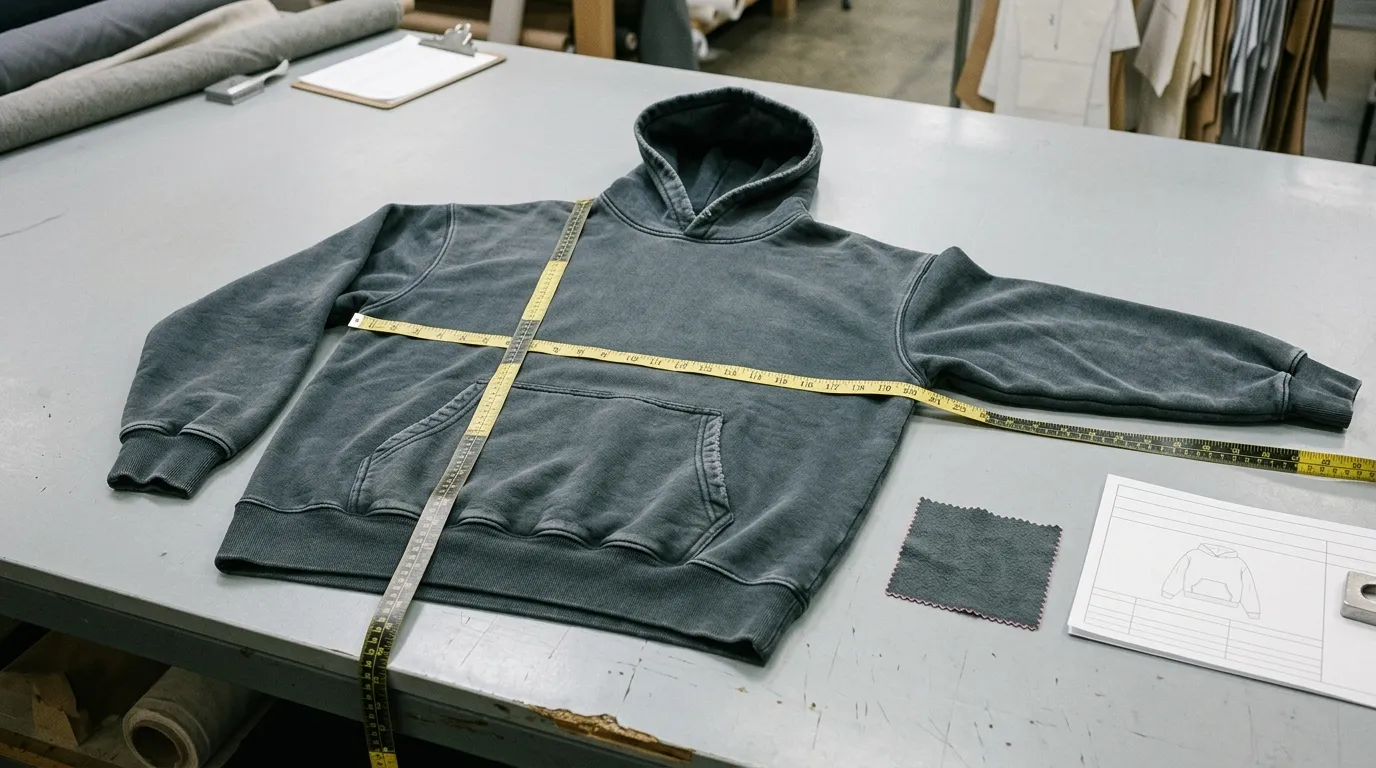
Before committing to bulk, confirm the fabric and the garment together, because GSM alone will not tell you how a heavyweight hoodie will wear, wash or fit.
- Confirm the fabric spec: GSM, fibre composition, knit type (fleece or French terry) and the finishing that was applied.
- Ask what shrinkage-control finishing the mill used, and confirm behaviour under the care instructions you plan to print.
- Approve hand feel and weight in person, since Minghang Garments' guide notes that fabrics with the same GSM can differ in feel and performance.
- Evaluate fabric and fit together, because higher GSM can add volume and change how the pattern reads (Minghang Garments).
- Request a washed or finished sample and check measurements, drape and structure against the intended silhouette.
- Lock the fabric, pattern and finishing reference before bulk, so the approved sample becomes the production standard.
Minghang Garments is a custom clothing manufacturer based in Dongguan, operating since 2017, with product development and sampling services used by streetwear labels and other apparel brands. If you are weighing 400 and 500 GSM for a hoodie programme, settling the fabric on an approved sample before bulk is the step that protects the order.
FAQ
How do you check a hoodie's GSM?
Fabric GSM is confirmed from the mill's fabric specification and, where it matters, from a test that weighs a known area of fabric. There is no reliable way to judge it by feel alone, so ask for the spec sheet and confirm the figure against the approved sample before production.
Is 500 GSM heavy for a hoodie?
Yes. Zhongqian Clothing's fabric guide places 450–500 GSM in what it calls its "ultra-luxury" band, and Minghang Garments' streetwear fabric guide treats 450 GSM and above as very heavyweight streetwear. Both are practical source categories rather than a universal industry standard.
Is 400 GSM heavy for a hoodie?
Yes. TrendyDice's hoodie GSM guide describes 400 GSM as heavyweight while noting that suitability depends on intended use, and Minghang Garments' streetwear fabric guide puts 350–450 GSM in its heavyweight hoodie range. So 400 GSM sits within the heavyweight band rather than at its extreme end.
Is a 400 GSM hoodie good quality?
Quality is not set by GSM. Kellogg Fashion's comparison guide states that GSM alone does not establish quality, and lists composition, yarn, knitting construction, density, brushing, compacting, pre-shrinking, washing and finishing as the factors that change how a fabric feels and performs.
-
Share
-

-

-