 Contact Us

Table of Contents

Contact Us
Neither 240 GSM nor 300 GSM is universally better. 240 GSM is the lighter T-shirt fabric with a softer drape and more movement; 300 GSM is heavier and reads as a more structured silhouette. Choose 240 GSM for warmer conditions and an easy, relaxed fit, and 300 GSM when you want visible structure, especially in an oversized T-shirt.
Key takeaways
- GSM means grams per square metre — it measures fabric weight, not thickness, quality or durability (Minghang Garments).
- 240 GSM is lighter with a softer drape; 300 GSM is heavier with a more structured silhouette (Kellogg Fashion).
- GSM alone does not determine quality — yarn, fabric structure, knitting density and finishing change how a fabric of the same weight behaves (Easson Apparel; Minghang Garments).
- Climate and target market influence whether a brand picks 240 or 300 GSM (Tapstitch).
- Weight does not create an oversized fit on its own; pattern and fabric have to work together.
What Does GSM Actually Measure in a T-Shirt?
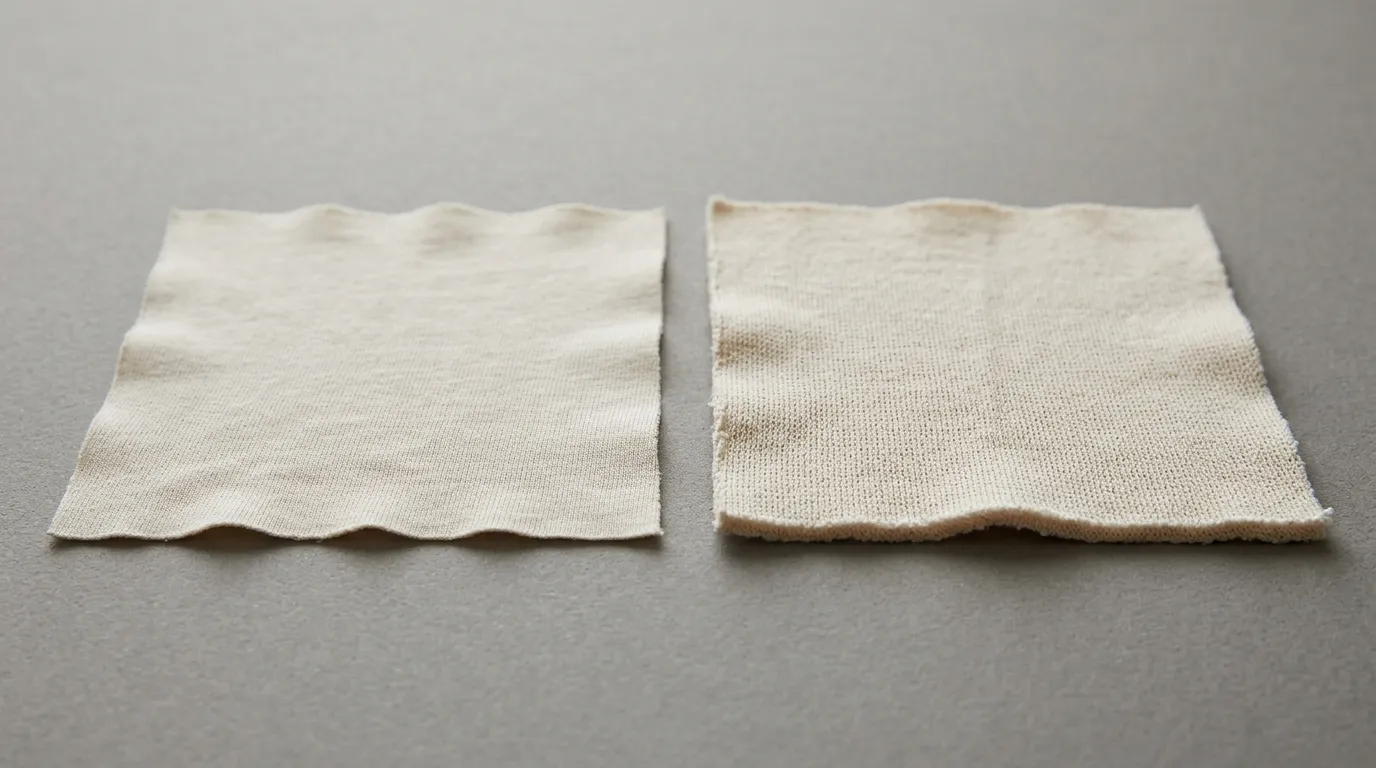
GSM stands for grams per square metre and describes how much one square metre of a fabric weighs. It is a measure of fabric mass, not of how thick, strong or premium a T-shirt is — which is why 240 GSM and 300 GSM should be read as two different weights rather than two quality levels.
Minghang Garments' guide to streetwear fabrics defines GSM as grams per square metre and describes it as fabric weight, and places heavyweight or structured oversized T-shirts in a 240–300 GSM range.
[DIAGRAM: Two one-square-metre squares labelled 240 g and 300 g, sitting side by side, to make the unit and the 60 g difference concrete.]
| Term | What it means |
|---|---|
| GSM | Grams per square metre — the mass of one square metre of fabric |
| g/m² | The same unit written in scientific notation; 240 GSM = 240 g/m² |
| Weight vs thickness | Weight is measured; thickness depends on yarn, knit and finishing |
240 GSM vs 300 GSM: The Differences That Matter
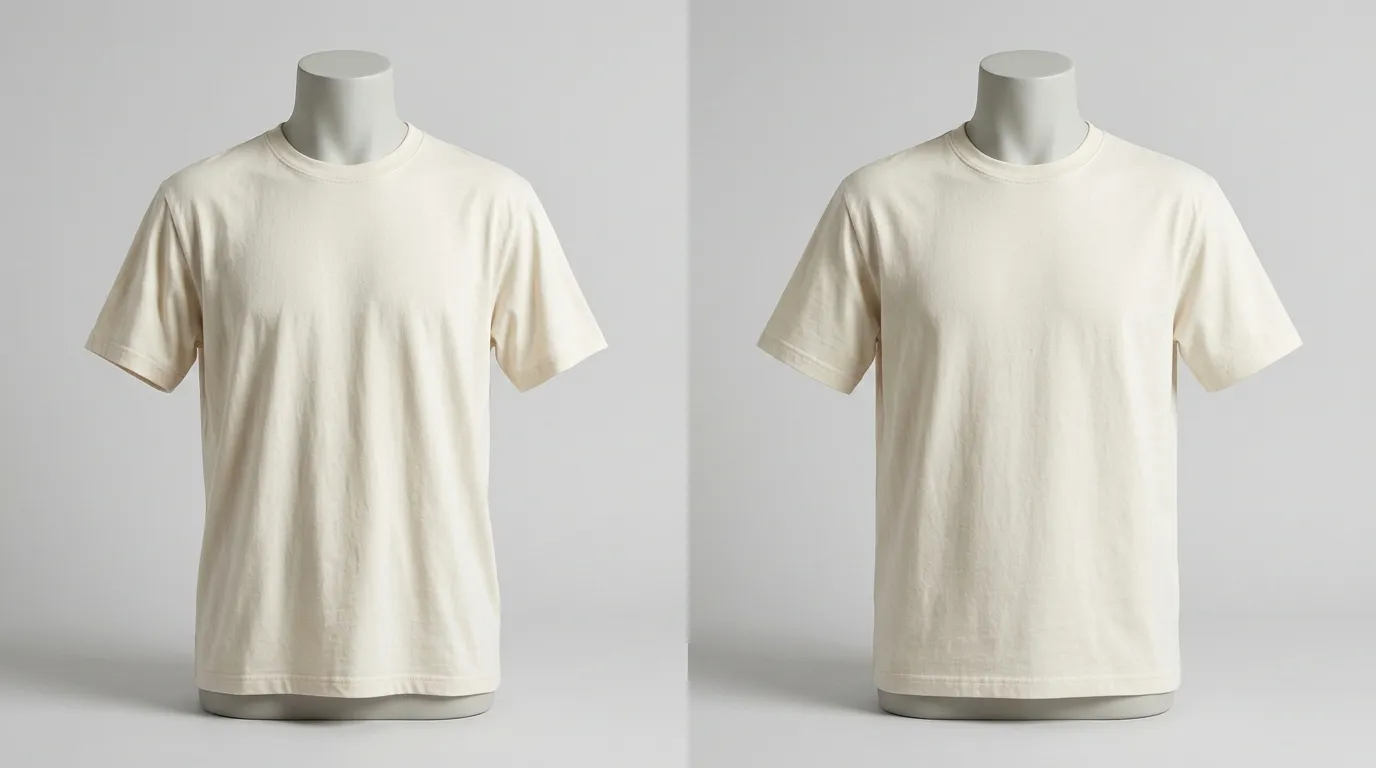
The 60 g/m² gap between these two weights shows up as feel, drape and shape rather than a difference in quality. A 240 GSM T-shirt moves and falls more softly, while a 300 GSM T-shirt carries a heavier hand feel and holds a squarer, more defined silhouette.
| Attribute | 240 GSM T-shirt | 300 GSM T-shirt |
|---|---|---|
| Mass per square metre | 240 g/m² | 300 g/m² |
| Perceived hand feel | Lighter, softer | Heavier in the hand |
| Drape | Softer drape, more movement | Falls with less movement |
| Silhouette | Relaxed, less shape retention | More structured, holds its shape |
| Fit it suits best | Regular and relaxed fits | Oversized and boxy fits |
| Warmer-weather comfort | Generally more comfortable | Heavier to wear in heat |
| Typical streetwear positioning | Part of the 220–300 GSM range streetwear buyers associate with structure and weight | Part of the same 220–300 GSM range, at the heavier end |
| What to verify on a sample | Confirm hand feel, drape and silhouette on a washed sample | Confirm hand feel, drape and silhouette on a washed sample |
Sources behind the rows above: Kellogg Fashion's comparison of 240, 280 and 300 GSM T-shirts (feel, drape, structure, oversized use), Tapstitch's GSM guide (the 220–300 GSM streetwear range), and Minghang Garments' streetwear fabric guide (the 240–300 GSM range for heavyweight or structured oversized tees).
For a nearby real-world reference point, Minghang Garments documents a custom 280 gsm oversized cotton t shirt — a weight that sits between the two options compared here.
[PHOTO: The same T-shirt pattern shown twice side by side — one in 240 GSM falling softly, one in 300 GSM holding a squarer shape.]
How much heavier is 300 GSM than 240 GSM?
300 GSM is 60 g/m² heavier than 240 GSM, which works out to 25% more mass per square metre (300 − 240 = 60; 60 ÷ 240 = 25%). That figure describes mass only.
No source reviewed for this article states that 300 GSM is 25% thicker, 25% warmer or 25% more durable than 240 GSM, and those conclusions should not be drawn from the arithmetic. Thickness and warmth depend on yarn, knit structure and finishing, not on weight alone.
How do 240 GSM and 300 GSM differ in feel, drape and structure?
A 240 GSM T-shirt feels lighter and drapes more softly, with more movement through the body and sleeves. A 300 GSM T-shirt feels heavier in the hand and holds a squarer, more defined silhouette.
Kellogg Fashion's comparison describes 240 GSM as the lighter option with a softer drape, breathability and versatility, and associates 300 GSM with a heavier hand feel and a more structured silhouette, particularly in oversized designs.
Is 300 GSM Better Than 240 GSM?
No. 300 GSM is not better by default. GSM records weight, and the guides reviewed for this article state plainly that weight alone does not determine quality.
Easson Apparel's T-shirt GSM guide says GSM alone does not determine quality and that yarn and fabric structure also matter. TeeTalkies' guide to GSM in T-shirts describes a 240 GSM T-shirt as medium-to-heavyweight and makes the same point: GSM by itself does not establish quality.
Minghang Garments' streetwear fabric guide adds the practical consequence — fabric structure, yarn, knitting density, washing and finishing all affect how fabrics of a similar GSM feel and perform.
| What weight is not | What weight actually tells you |
|---|---|
| A quality grade | How much one square metre of fabric weighs |
| A thickness measurement | One input into how a fabric may feel |
| A durability guarantee | Nothing about yarn or construction on its own |
Why Two T-Shirts at the Same GSM Can Feel Different
Two shirts both labelled 240 GSM can feel entirely different, because yarn, knitting density, fabric structure and finishing all change the finished hand feel and drape. GSM is a starting specification, not a complete description of the fabric.
Minghang Garments' best fabrics for streetwear guide notes that fabric structure, yarn, knitting density, washing and finishing can affect how fabrics of similar GSM feel and perform — a useful reminder when comparing two suppliers' 240 GSM options.
Kellogg Fashion's comparison adds that garment washing can change the final result and should be considered alongside fabric and construction rather than after the fabric decision is locked in.
The four variables worth naming in a fabric brief:
- Yarn — the raw material and yarn quality feeding the knit.
- Knitting density — how tightly the fabric is knit, which affects how solid it feels.
- Fabric structure — the construction of the knit itself.
- Finishing and garment washing — post-knit and post-garment treatments that change hand feel.
Which Weight Works Better for Regular and Oversized Fits?
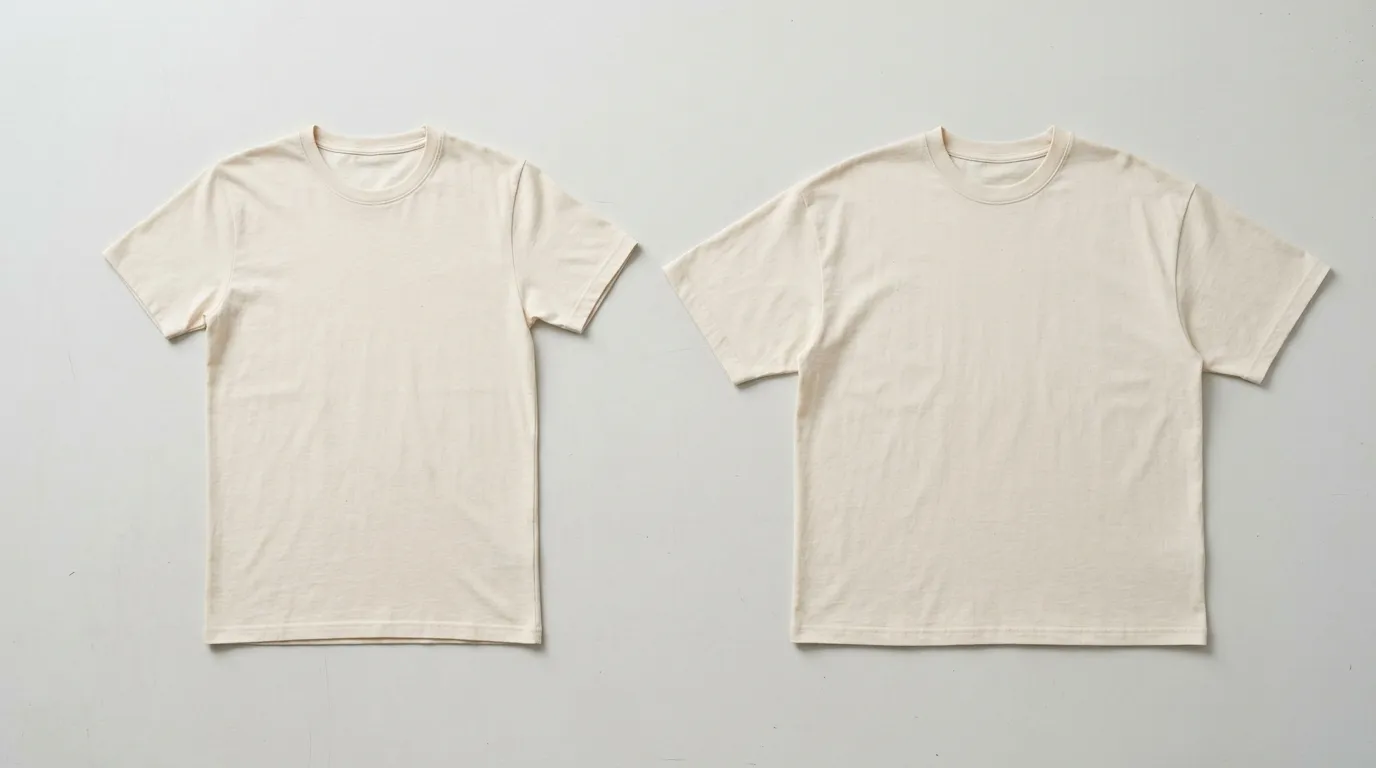
240 GSM suits regular and closer-fitting T-shirts, where softness and movement matter. 300 GSM is usually the choice for oversized and boxy silhouettes, where extra weight helps the garment hold its shape.
| Fit intent | Weight to start with | Why | What to check on the sample |
|---|---|---|---|
| Regular or close fit | 240 GSM | Softer drape and more movement against the body | That the fabric does not cling or lose shape |
| Relaxed fit | 240 GSM, or 300 GSM if more structure is wanted | Sits between the two behaviours | Where the fabric breaks over the shoulder and hem |
| Oversized or boxy | 300 GSM | Heavier hand feel and a more structured silhouette | That the silhouette holds without the shirt looking stiff |
Kellogg Fashion associates 300 GSM with a heavier hand feel and a more structured silhouette, particularly for oversized designs, and describes 240 GSM as lighter with a softer drape, breathability and versatility. Tapstitch's guide links the 220–300 GSM range to streetwear customers seeking structure and weight, while noting that market and climate influence selection. Minghang Garments places heavyweight or structured oversized T-shirts at 240–300 GSM.
Decision rule: weight does not create an oversized fit on its own. Pattern, block and fabric work together — a 300 GSM fabric cut on a regular block still reads as a regular T-shirt. Brands developing a boxy silhouette can look at custom oversized t shirts as a starting point for the fit conversation.
[DIAGRAM: A three-branch flow — regular/close fit, relaxed fit, oversized/boxy fit — each pointing to a starting weight and ending at "confirm on a washed sample".]
Which Weight Suits Warm Weather, Layering and Colder Conditions?
240 GSM is generally the more comfortable choice in warm conditions and for garments worn close to the body. 300 GSM is usually chosen for cooler conditions and for pieces intended to be worn over a base layer.
Kellogg Fashion associates 240 GSM with breathability and versatility, and 300 GSM with a heavier hand feel and more structure. Tapstitch's guide notes that market and climate influence whether a brand selects a weight within the 220–300 GSM range.
One limit worth stating: no source reviewed for this article provides a heat, breathability or thermal test result for these two weights. Treat season suitability as practical guidance rather than measured performance, and confirm comfort on a sample — the sample-check sequence in "Washing and What to Check Before You Commit to Bulk" below covers how.
- Warm conditions: 240 GSM as the starting point.
- Cooler conditions or layering over a base: 300 GSM as the starting point.
- Mixed-climate markets: decide per style rather than per collection.
Printing on 240 GSM and 300 GSM: What Changes
What changes for printing is the surface and structure being decorated, not a fixed rule about which weight prints better. A heavier, denser fabric gives a more stable surface to print onto, while a lighter fabric moves more — so the print method and artwork need testing on the actual fabric.
Easson Apparel's T-shirt GSM guide lists printing compatibility alongside shrinkage and sample-versus-bulk checks as sourcing considerations. Minghang Garments' streetwear fabric guide notes that fabric structure, yarn, knitting density, washing and finishing affect how fabrics of a similar GSM feel and perform, which applies equally to how a print sits on the surface.
Decision rule: do not assume any print method works better on 240 GSM or on 300 GSM. Validate the method on the specified fabric and the intended wash programme instead.
What to test on a sample:
- Ink or print method on the actual fabric, not a substitute
- Artwork scale and fine detail at the chosen weight
- Placement and registration
- Behaviour when the fabric stretches
- Appearance after washing
Washing and What to Check Before You Commit to Bulk
Garment washing and finishing can change the final weight, hand feel and shape, so the choice between 240 GSM and 300 GSM should be made on a washed sample rather than on a fabric spec sheet alone. Kellogg Fashion's comparison states that garment washing can change the final result and should be considered alongside fabric and construction. Easson Apparel's guide lists shrinkage and sample-versus-bulk checks among sourcing considerations.
A practical sequence for confirming either weight before bulk production:
- Confirm the fabric specification and the intended post-finish weight in writing.
- Check hand feel and drape against the brief — softer and more mobile, or heavier and more structured.
- Confirm the silhouette on the intended fit block, not on a generic pattern.
- Validate decoration on the actual fabric using the method you plan to run.
- Wash-test a finished sample, then re-check hand feel, shape and fit.
There is no universal tolerance to apply here: the check is qualitative unless a laboratory result is supplied separately for the specific fabric.
How to Choose: 240 GSM or 300 GSM?
Start from the job the garment has to do. Choose 240 GSM for lighter, softer, more flexible T-shirts, and 300 GSM when the design depends on weight and structure — then confirm the choice on a washed sample.
Choose 240 GSM if:
- The T-shirt is aimed at warm conditions or worn close to the body.
- You want a softer drape and more movement.
- The fit is regular or relaxed and the fabric should not add bulk.
Choose 300 GSM if:
- The silhouette is oversized or boxy and needs to hold its shape.
- You want a visibly heavier, more structured hand feel.
- The shirt is intended for cooler conditions or layering.
For brands specifying a heavier tee, custom heavyweight t shirts shows where that conversation starts. Minghang Garments supports fabric sourcing, pattern making and sampling for custom T-shirt programmes, and places heavyweight or structured oversized T-shirts in the 240–300 GSM range.
Frequently Asked Questions
Is a 300 GSM T-shirt heavy?
A 300 GSM T-shirt is heavier than a 240 GSM one and is typically described with a heavier hand feel and a more structured silhouette. Kellogg Fashion's comparison places 300 GSM at the heavier end of its range, particularly for oversized designs, where the extra weight helps the garment hold its shape.
Is a 240 GSM T-shirt thick?
A 240 GSM T-shirt is above a standard light tee, but thickness is not the same as weight. TeeTalkies' guide describes 240 GSM as medium-to-heavyweight, and Minghang Garments notes that thickness depends on yarn and knit rather than on GSM alone. Check the actual fabric on a sample.
What is the best GSM for a T-shirt?
There is no universal best GSM. For this comparison, 240 GSM suits lighter, softer T-shirts and 300 GSM suits structured, boxy designs, with climate and market influencing the choice. Tapstitch's guide links the 220–300 GSM range to streetwear buyers seeking structure and weight, and notes that climate matters.
Is a 300 GSM T-shirt good?
It is a good choice for structured, boxy or oversized designs, but it is not automatically better quality. Easson Apparel's T-shirt GSM guide states that GSM alone does not determine quality and that yarn and fabric structure also matter. Confirm the result on a washed sample before bulk production.
-
Share
-

-

-