 Contact Us

Table of Contents

Contact Us
Neither fabric wins outright: French terry has uncut loops on its inside, so it feels lighter and breathes more easily, while sweatshirt fleece is brushed for a warmer, softer hand. The better choice depends on the garment, the season you are selling into and the fabric weight you specify — not on the name alone.
Key Takeaways
- French terry is a knit with uncut loops on one side and a smooth surface on the other, according to YXX Fabric.
- Silver Bobbin describes sweatshirt fleece as having a fuzzy reverse created by cutting the loops and raising the surface.
- tasc Performance describes French terry as generally lighter and more breathable, and fleece as generally warmer and heavier — a category-level framing, not a fabric-specific test result.
- YXX Fabric's examples place both fabrics in overlapping 180–360 GSM ranges, with 220–280 GSM typical for a French terry sweatshirt and 200–300 GSM for fleece.
- Minghang Garments' streetwear fabric guide cautions that GSM alone does not determine whether a fabric is suitable.
What Is the Difference Between French Terry and Fleece?
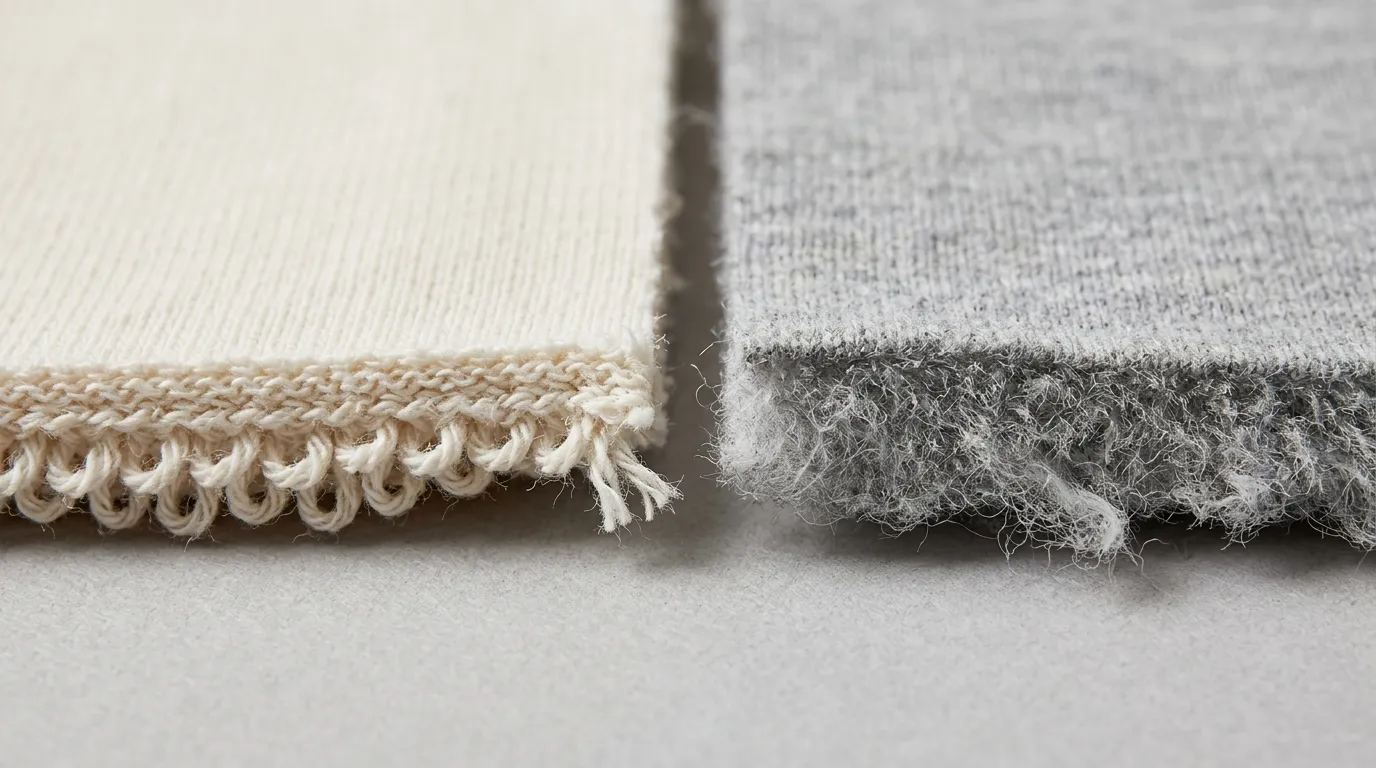
French terry and fleece are both knitted fabrics, and the difference lies in what happens to the loops on the back of the cloth. According to YXX Fabric, French terry has uncut loops on one side and a smooth surface on the other, while fleece is a knit with a brushed surface on one or both sides. Silver Bobbin draws the same distinction in different words: French terry keeps its reverse-side loops intact, whereas sweatshirt fleece develops its fuzzy inside when those loops are cut and the surface is raised.
That construction difference explains most of the practical gap between them. Uncut loops leave more open space inside the fabric, while a brushed surface traps air close to the skin. The result is the warmth-versus-breathability trade-off that runs through the rest of this comparison.
[DIAGRAM: Macro cross-section of French terry (uncut loops with a smooth face) beside brushed sweatshirt fleece (raised nap), labelled so the structural difference is readable at a glance.]
| Property | French terry | Sweatshirt (brushed) fleece |
|---|---|---|
| Inside surface | Uncut loops on one side (YXX Fabric) | Brushed surface on one or both sides (YXX Fabric) |
| Insulation | Generally less warm (tasc Performance) | Generally warmer (tasc Performance) |
| Breathability | Generally more breathable (tasc Performance) | Generally less breathable (tasc Performance) |
| Hand feel | Loop-back texture inside, smooth outside | Soft, raised inside |
| Typical garments | Hoodies, sweatshirts, sweatpants (Minghang Garments streetwear guide) | Hoodies, sweatshirts, sweatpants (Minghang Garments streetwear guide) |
| What to check on a spec sheet | Fibre blend, GSM, finish, care guidance | Fibre blend, GSM, brushing finish, care guidance |
Is French Terry Considered Fleece?
In everyday retail language, "fleece" often means the brushed sweatshirt knit, so French terry gets grouped under the same word. Strictly, French terry is a loop-back knit fabric and sweatshirt fleece is a brushed or sheared knit fabric — related, but not identical in construction. Judge a fabric by its construction and fibre blend rather than by the label on the tag. Polyester polar fleece is a different product altogether and sits outside this comparison. Minghang Garments' guide to the best fabrics for streetwear shows where loop-back and brushed knits sit inside a wider fabric range.
Which Is Warmer, and Which Breathes Better?
Fleece is generally the warmer of the two, and French terry is generally the more breathable. According to tasc Performance, French terry is generally lighter and more breathable while fleece is generally warmer and heavier — a category-level statement rather than a measured result on one specific fabric. YXX Fabric attributes fleece's insulating character to its brushed surface.
The gap is not fixed. Fabric weight, fibre blend and finishing move the two options closer together or further apart, which is why a heavy French terry can feel warmer than a light fleece.
The practical rule: if the wearer will be indoors, active or in mild weather, start with French terry and increase the weight before switching fabrics. If the garment is built for cold-weather layering or needs a heavier hand feel, start with fleece and adjust the weight within the range the mill can supply.
How Fabric Weight and GSM Affect the Choice
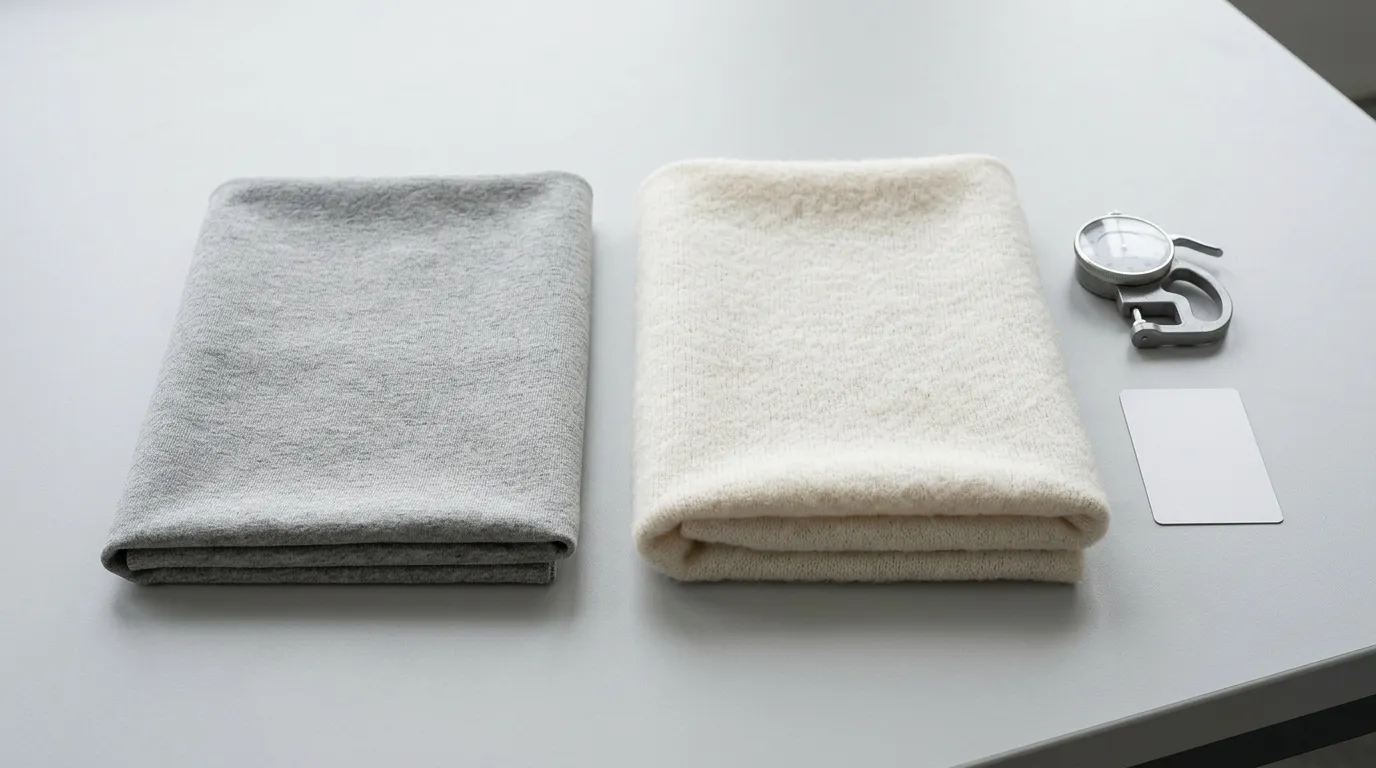
GSM tells you how heavy a fabric is per square metre, not how warm, breathable or durable it will feel. Two fabrics at the same GSM can behave differently because knit structure, fibre blend, brushing and finishing each change the outcome. Minghang Garments' streetwear fabric guide makes the same point, cautioning that GSM alone does not determine whether a fabric is suitable.
YXX Fabric's examples place French terry and fleece in overlapping bands of 180–360 GSM, with 220–280 GSM typical for a French terry sweatshirt and 200–300 GSM for fleece. Those figures are that source's examples, not universal standards.
| GSM band cited by YXX Fabric | French terry | Fleece |
|---|---|---|
| 180–360 GSM | Cited example range for the fabric | Cited example range for the fabric |
| 220–280 GSM | Cited as typical for a French terry sweatshirt | — |
| 200–300 GSM | — | Cited as typical for fleece |
| What still has to be verified | Why it matters |
|---|---|
| Fibre blend | Changes hand feel, moisture behaviour and care guidance |
| Knit structure | Determines how open or dense the fabric is |
| Finishing (including brushing) | Affects surface, warmth and appearance over time |
| Care recommendation from the mill | Sets realistic expectations for laundering |
[DIAGRAM: Two fabrics shown at the same GSM behaving differently because of structure, blend and finishing, reinforcing that GSM is not a quality verdict.]
All GSM figures on this page are the cited source's examples. Confirm the actual construction, blend and finish with the fabric mill before you commit to a specification.
Which Is Better for Hoodies?
For a lighter, year-round hoodie, French terry is usually the better starting point; for a warmer, denser hoodie aimed at cold weather, fleece is usually the better starting point. Minghang Garments' streetwear fabric guide identifies both French terry and brushed fleece as hoodie options, with the choice depending on use, weight, season and silhouette.
| Selling season or warmth goal | Suggested starting fabric | Indicative weight direction | Why |
|---|---|---|---|
| Warm-weather or indoor-first | French terry | Lower part of YXX Fabric's cited 180–360 GSM example range | Generally lighter and more breathable (tasc Performance) |
| Mild transition | Either — decide on hand feel | Mid range | The difference narrows once the two fabrics sit at similar weights |
| Cold-weather layering | Fleece | The 200–300 GSM range YXX Fabric cites for fleece | Brushed surface is generally warmer (tasc Performance; YXX Fabric) |
Fabric is only one variable in hoodie development; the pattern, fit and finishing matter just as much. Minghang Garments manufactures hoodies and sweatshirts and offers both French terry and fleece for them, so either route can be developed as a sample.
Which Is Better for Sweatpants and Joggers?
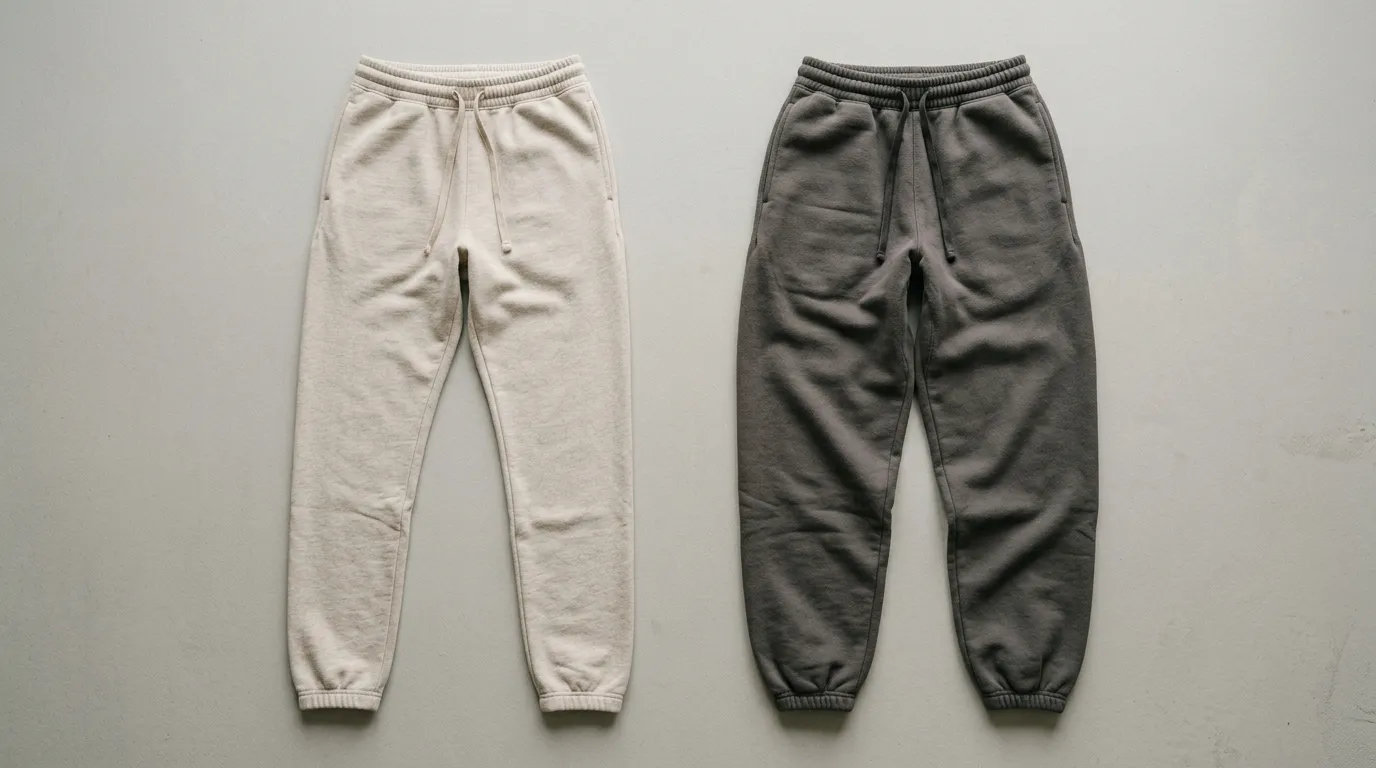
French terry suits sweatpants meant to stay breathable and hold a cleaner line, while fleece suits sweatpants built for warmth and a softer, fuller feel. Minghang Garments' streetwear fabric guide lists French terry and brushed fleece as options for streetwear sweatpants, with the choice depending on use, weight, season and silhouette.
The decision rule: choose fleece when warmth is the primary brief and a fuller silhouette is acceptable; choose French terry when the brief prioritises breathability, a trimmed silhouette or multi-season wear. Applying that rule to a sweatpants and joggers brief usually starts with the intended selling season and works backwards to the fabric.
Once warmth is settled, drape and silhouette are usually the deciding factor. A fabric that reads well on a hoodie can behave differently on a tapered leg, so confirm the choice on the garment pattern rather than on the swatch alone.
How Washing Affects French Terry and Fleece
Washing can change shape, surface and hand feel in both fabrics, and the outcome depends on fibre content, knit structure, finishing and the care instructions — which is why no universal "survives better" claim is safe. Minghang Garments' streetwear fabric guide notes that fabric structure and finishing affect feel and performance, and warns against reading a single specification in isolation.
Fleece's brushed surface is a finishing effect, according to YXX Fabric, which is why brushing and laundering interact with the fabric's appearance over time.
The practical approach: before committing, ask the supplier for the fibre blend, the finishing details and the care recommendation, then confirm both fabrics under the same wash conditions rather than assuming one wins. Shrinkage and pilling expectations should come from the mill's own fabric data, not from the fabric category name.
How to Choose Between French Terry and Fleece
Choose by garment first, then by season and warmth goal, then by weight and hand feel — and confirm fibre blend, finishing and care before locking the specification. Following that order keeps the decision anchored to the product rather than to the fabric name.
- Name the garment and its purpose: hoodie, sweatshirt, sweatpant or jogger.
- Name the season and the warmth goal for the wearer.
- Choose a weight band to test rather than to assume, using the mill's actual options.
- Compare inside hand feel and drape on the same garment pattern in both fabrics.
- Confirm fibre blend, finishing and care guidance with the supplier before finalising.
Drying speed, moisture behaviour and pilling resistance are driven mainly by fibre composition rather than by the French terry or fleece label, so ask for the blend before comparing those properties. Minghang Garments manufactures hoodies and sweatpants in both French terry and fleece, so either option can be taken through to a sample.
FAQ
Does French terry dry faster than fleece?
There is no universal answer, because drying behaviour follows fibre composition more than the fabric name. A polyester-rich blend releases moisture differently from a cotton-rich one, and knit structure plays a part too. Ask the mill for the blend and its care guidance before comparing drying performance between two specific fabrics.
Which one is more durable or pills less?
Neither fabric is a blanket winner on durability. Pilling depends on fibre length, blend, yarn and finishing, and fleece's brushed surface is a finishing effect that interacts with laundering over time. Request the blend and finish for the exact fabric you are specifying, then compare both options under the same conditions.
Is French terry warmer than fleece?
Generally no. Fleece's brushed nap reduces airflow and traps more air, which is why tasc Performance describes fleece as the warmer option. A heavy French terry can still feel warmer than a light fleece, so compare fabric weight and construction rather than relying on the category name alone.
-
Share
-

-

-