 Contact Us

Table of Contents

Contact Us
Updated 3 weeks ago
Combed Cotton vs Ring Spun Cotton: What's the Difference?
arafatshuvo
Combed cotton and ring spun cotton are not competing materials — they describe two different stages of making yarn. Combing removes short fibres and impurities after carding, while ring spinning twists fibres into yarn. Many premium T-shirts, hoodies and sweatshirts use cotton that is both combed and ring spun, so the label names two steps, not two rivals.
Key takeaways
- Combing is a fibre-preparation step; ring spinning is a yarn-forming method, so the two terms are not opposites and do not compete.
- Ring spinning can run on carded or on combed fibre, which is why "combed ring-spun cotton" appears on so many T-shirt and hoodie labels.
- Bella+Canvas cautions that "ring-spun" and "combed and ring-spun" are not interchangeable labels, so the exact specification matters.
- René Bassett presents ring spinning as slower and combing as removing some usable fibre — cost drivers rather than quoted prices.
- Softness, pilling and print results are decided by the finished fabric, not by the process wording alone.
What's the difference between combed cotton and ring spun cotton?
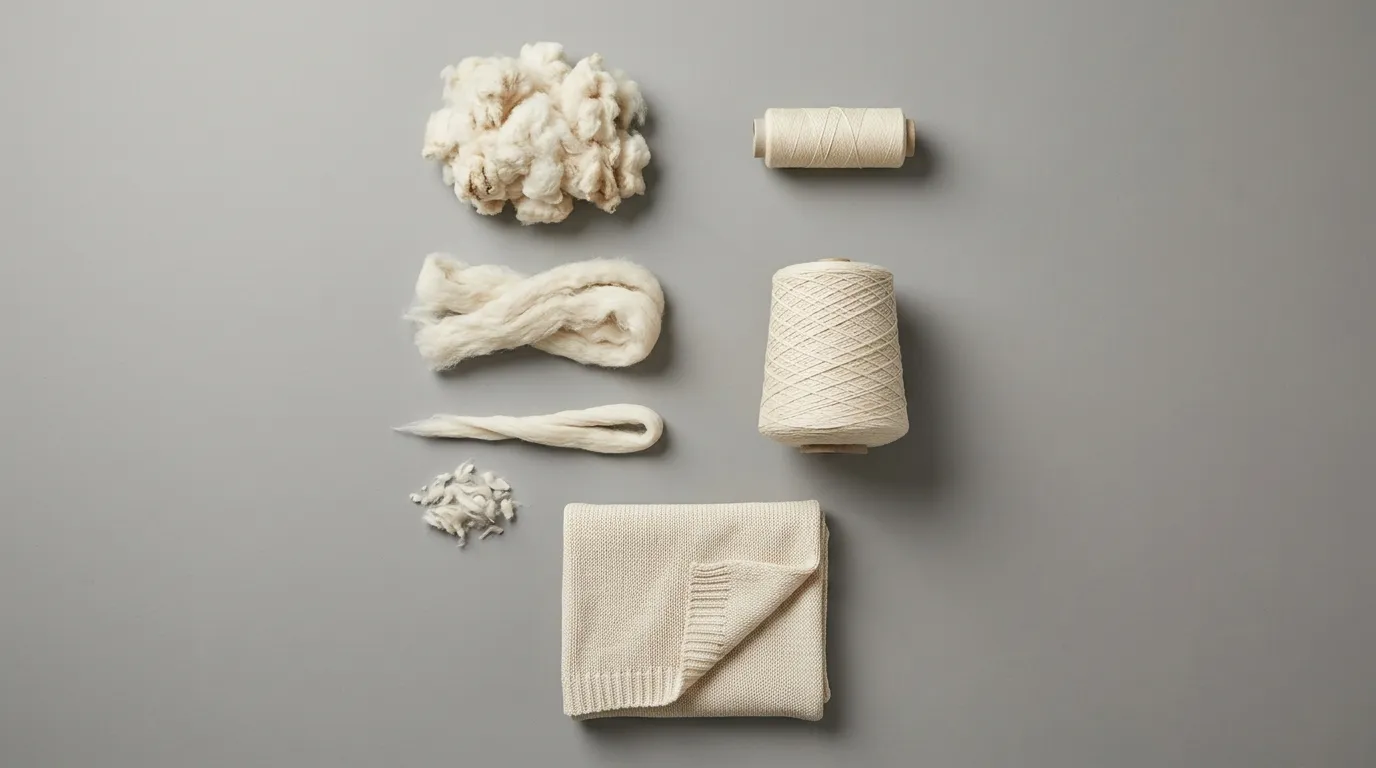
Combing is a fibre-preparation step that removes short fibres and impurities after carding, while ring spinning is the method that twists fibres into yarn. A cotton can therefore be combed, ring spun, both, or neither, because the two terms answer different questions.
According to WiesMade, combing is an additional step after carding that removes short fibres and impurities. WiesMade also states that ring spinning is a technique that can be applied to carded or to combed fibre.
The sequence below shows where each step sits:
- Cotton fibre is ginned and carded.
- Combing may follow carding, removing short fibres and impurities.
- The prepared fibre is spun into yarn; ring spinning is one spinning method.
- Yarn is knitted or woven into fabric.
- Fabric is dyed, finished, cut and sewn into the garment.
| Question | Combed cotton | Ring spun cotton |
|---|---|---|
| What the term describes | Fibre preparation | Spinning method |
| What it changes | Short fibres and impurities removed after carding | Yarn formed by twisting the fibre |
| Can the other term also apply? | Yes — combed fibre can still be ring spun | Yes — ring spinning works on carded or combed fibre |
| What the label alone does not tell you | Composition, yarn count, fabric weight, knit, finishing | Composition, yarn count, fabric weight, knit, finishing |
[DIAGRAM: Two parallel process lanes — fibre preparation (ginning, carding, optional combing) beside yarn formation (ring spinning and other methods) — converging at the fabric stage]
What is combed cotton?
Combed cotton is cotton whose fibre has been combed after carding, a step that removes short fibres and impurities and leaves a more uniform prepared fibre. According to WiesMade, combing is an extra stage that follows carding rather than a way of spinning yarn.
Treat "combed" as a fibre-preparation label. If a product page implies that combed cotton is spun in a particular way, that is a separate claim and needs separate confirmation.
What is ring spun cotton?
Ring spun cotton is yarn formed by ring spinning, a method WiesMade describes as continuously twisting and thinning the fibre. According to WiesMade, ring spinning can be applied to carded or to combed fibre, so a ring spun yarn is not automatically a combed yarn.
WiesMade describes the benefits of ring spinning as most pronounced when it is combined with combed cotton. That is the source's own description rather than an independent test result, so it is worth treating as a claim to check against a fabric swatch.
Are combed cotton and ring spun cotton the same thing? Can cotton be both?
They are not the same, and they are not alternatives either. One term describes how the fibre was prepared and the other describes how the yarn was formed, so a single cotton yarn can be both combed and ring spun at the same time.
René Bassett's guide frames the two under a heading it calls "Ring-Spun and Combed: Two Steps, One Spec", which makes the same point: combing is a preparatory step and ring spinning is a spinning method.
Read a cotton label as a list of steps:
- "Combed ring-spun cotton" means the fibre was combed and the yarn was ring spun.
- "Combed cotton" alone says nothing about the spinning method.
- "Ring spun cotton" alone says nothing about whether the fibre was combed.
Which is softer — combed cotton or ring spun cotton?
There is no like-for-like answer, because the two terms describe different stages of production: combing affects the fibre going in, ring spinning affects how the yarn is formed, and the fabric you feel is the result of both plus yarn count, knit structure and finishing.
René Bassett's page covers hand feel as its own comparison topic rather than as a fixed outcome of one process. WiesMade's description of ring spinning's benefits being strongest when combined with combed cotton is a source claim, not a measured comparison of the two labels.
The practical decision rule: ask for a finished fabric swatch instead of choosing on the label. Judge hand feel, weight and stretch on the actual knit that will be cut, because the process wording will not tell you how the garment feels.
How do combing and ring spinning affect pilling, durability and print surface?
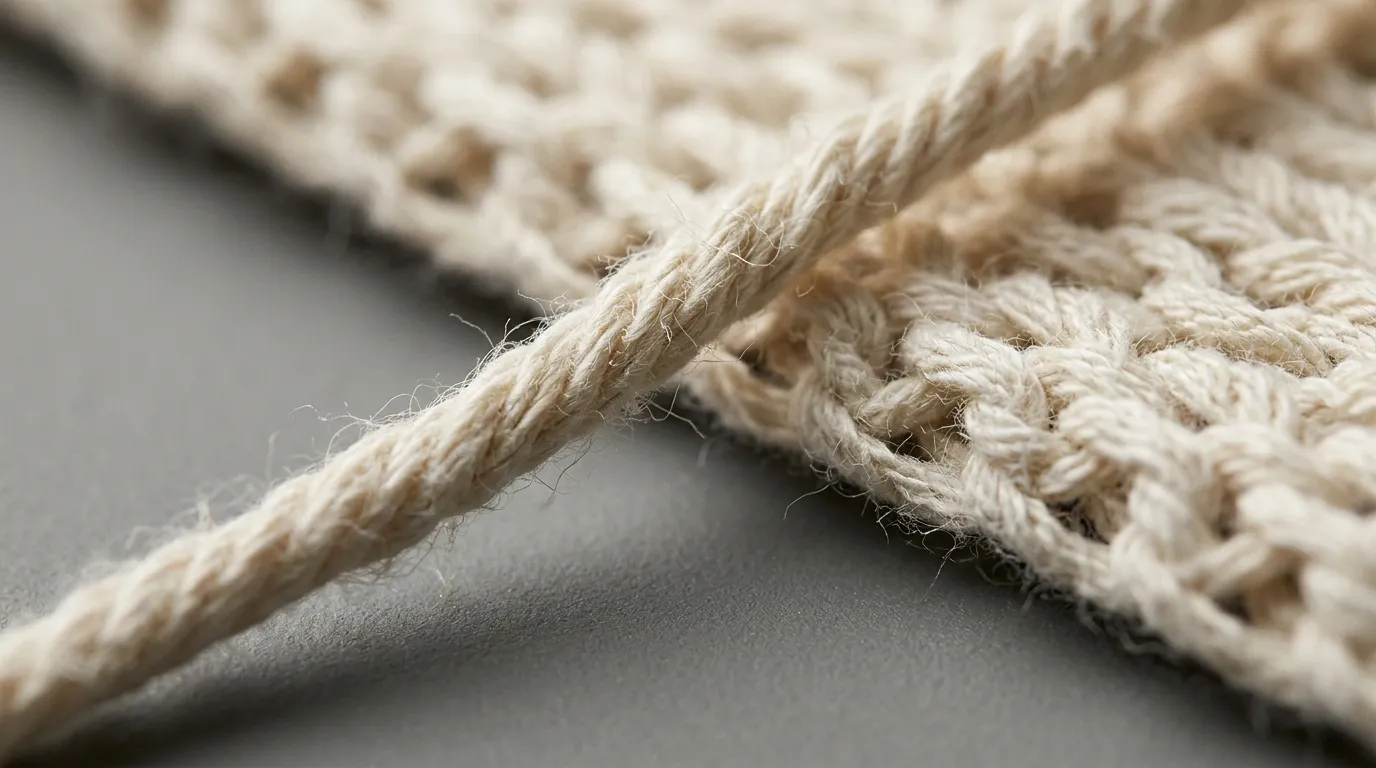
The sources describe smoother, more uniform yarn surfaces in connection with feel and decorating surfaces, but pilling, durability and print results also depend on fibre quality, yarn and knit construction, finishing, the decoration method and how the garment is washed.
According to WiesMade, a smoother, denser surface can provide a suitable base for printing and embroidery, and René Bassett treats yarn production, hand feel, longevity, and print and decoration as separate comparison topics rather than as automatic results of one process.
| Consideration | What the process may contribute | What else determines it | How to check before ordering |
|---|---|---|---|
| Surface feel | WiesMade describes ring-spun yarn as continuously twisted and thinned, with benefits most pronounced alongside combed cotton | Fibre grade, yarn count, knit structure, finishing | Compare swatches of the finished fabric |
| Pilling | No comparative pilling data is stated by the sources cited here | Fibre length, yarn twist, knit structure, washing and wear | Verify with the supplier; request test data before bulk |
| Durability and longevity | René Bassett covers longevity as a separate comparison topic, not as a fixed outcome | Yarn construction, fabric weight, garment construction, care | Verify with the supplier |
| Print surface | WiesMade states that a smoother, denser surface can be a suitable base for printing | Ink or decoration method, mesh, curing, fabric finish | Request a decorated sample in the intended print method |
| Embroidery surface | WiesMade describes a smoother, denser surface as suitable for embroidery too | Stitch density, backing, fabric stability | Sample the embroidery on the production fabric |
Neither process label guarantees a performance outcome, and no pilling or print test results are stated by the sources used here. Take the claims as expectations to verify with the mill, not as promises attached to the words "combed" or "ring spun".
[PHOTO: Macro pair — yarn surface alongside the knit face of the same fabric — with a caption noting the images illustrate surface uniformity, not a tested performance comparison]
T-shirt or hoodie: which cotton spec should you choose?
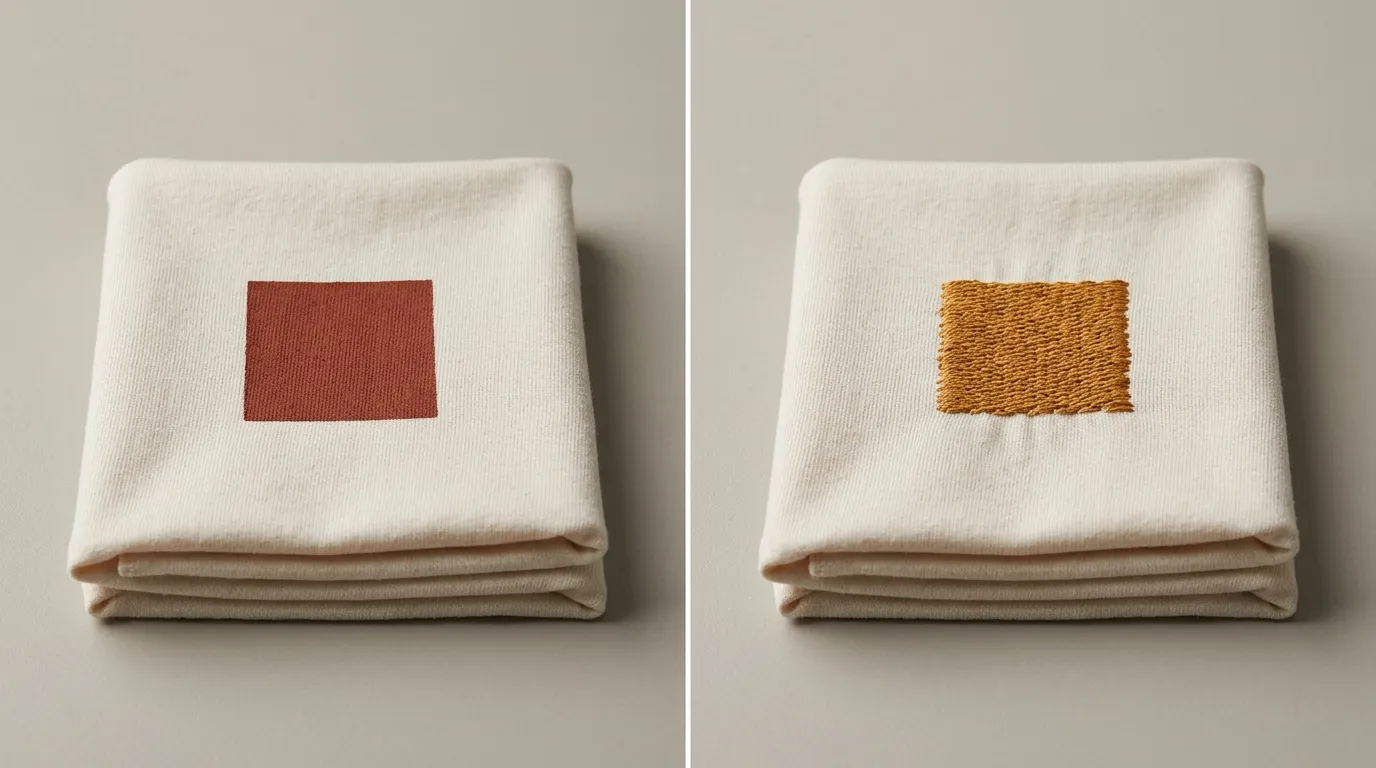
Choose by garment goal rather than by which term sounds more premium. A light, smooth T-shirt programme and a heavier hoodie or sweatshirt programme weigh hand feel, weight and decoration differently, and the label alone will not settle any of them.
René Bassett's guide separates hand feel, longevity, print and decoration, and price as distinct comparison factors, which is a useful order to work through with a supplier.
- Confirm the exact specification being quoted — combed, ring spun, or both.
- Confirm fibre composition and whether the cotton is organic.
- Confirm yarn count and fabric weight in gsm.
- Confirm knit construction and finishing.
- Confirm the decoration method, whether print or embroidery.
- Request a swatch and a decorated sample before committing.
- Confirm care instructions and expected shrinkage behaviour with the supplier.
For streetwear programmes, the wider fabric choice often matters more than the yarn wording, and best fabrics for streetwear covers those options. If the garment is a heavier tee, custom heavyweight t shirts shows how weight and print surface come into the specification.
Does combed or ring spun cotton cost more?
The sources describe cost drivers rather than prices. According to René Bassett, ring spinning is slower and combing removes some usable fibre — both of which add cost pressure, but no price premium is stated, so none should be assumed.
Ask a supplier to quote the exact specification rather than "premium cotton". Cost also moves with fibre origin, yarn count, order quantity, colour and finishing, so one process word rarely explains a price difference on its own.
What the "combed" or "ring spun" label doesn't tell you
Neither label states fibre composition, whether the cotton is organic, the yarn count, the fabric weight in gsm, the knit or weave, or the finishing — and those variables often change a garment more than the process wording does.
Use the process term as one input and confirm the rest separately. For shrinkage specifically, the process label does not establish the behaviour; the FAQ below covers what to check instead. Our fabric selection guide sets out the specifications worth confirming alongside yarn type, and the pilling and durability limits are covered under the section on how combing and ring spinning affect pilling, durability and print surface.
A note on sourcing combed and ring spun cotton
Minghang Garments is a custom clothing manufacturer based in Dongguan, China, operating since 2017, providing OEM, ODM and private label manufacturing of activewear, sportswear, loungewear and streetwear, including hoodies, sweatshirts, joggers and T-shirts. Fabric and trim sourcing, pattern making and sampling are handled in-house, sampling takes 7–15 working days and bulk production 25–45 days, with MOQ from 100 pcs per color per style on stock fabric.
If you are specifying cotton for a hoodie or T-shirt programme, Minghang Garments can source the fabric, develop the pattern, sample and produce it — including printing, embroidery and garment washing — so the yarn specification and the finished garment are checked against the same sample.
Frequently asked questions
Will 100% combed ring-spun cotton shrink?
The label alone does not establish shrinkage. Shrinkage depends on the fibre, the knit or weave construction, the finishing applied and how the garment is washed and dried. Confirm care instructions and expected shrinkage behaviour with the supplier, and wash a sample before committing to bulk production.
Is 100% ring spun cotton the same as 100% cotton?
No — ring spun describes how the yarn is formed, not what the fibre is. A 100% ring spun cotton garment is still 100% cotton by fibre, and the label adds spinning information on top of that composition. Always confirm the fibre composition statement separately from the spinning description.
Is combed cotton still 100% cotton?
Yes. Combing is a fibre-preparation step, so it does not change what the fibre is. A combed cotton garment can be 100% cotton or a blend, depending on what else is in it, so check the composition statement separately from the combing wording.
-
Share
-

-

-