 Contact Us

Table of Contents

Contact Us
Updated 1 month ago
How to Start a Private Label Activewear Brand?
arafatshuvo
To start a private label activewear brand, define your customer and activity, choose one or two focused styles, select a suitable stretch fabric, develop and approve a sample, confirm MOQ and branding, then authorize bulk production. Private label activewear means the product carries your brand while a manufacturing partner handles sourcing, pattern making, sampling and production.
Key takeaways
- Private label activewear is made by a manufacturing partner and sold under your brand; white label typically starts from pre-made products you brand (Trendsi).
- Start with one or two styles for one activity. Harvest SPF pairs yoga leggings with nylon/spandex or recycled nylon/spandex, and training tops with polyester/spandex or mesh-knit/quick-dry blends.
- Check activewear samples for stretch, recovery, opacity, fit, compression, movement, seam construction and size grading (Minghang Garments; Harvest SPF).
- Minghang Garments states MOQ from 100 pcs per color per style on stock fabric; custom-developed fabric or dyeing and seamless products have different starting conditions.
- Minghang Garments states sampling of 7–15 working days and bulk production of 25–45 days after sample and material approval, with a 5+1 QC system.
What Is Private Label Activewear?
Private label activewear is activewear produced by a manufacturing partner and sold under your own brand. You control the brand, the product direction and the customer experience, while the partner handles fabric sourcing, pattern making, sampling and production.
Trendsi's guide to private label clothing describes private label as clothing made by another party and sold under the brand's name. The same guide distinguishes private label from white label: private label allows more product customization, while white label usually means branding pre-made products.
That difference shapes the first decision. With white label you choose from existing products; with private label you decide the fabric, fit, size range and trims, which also means you carry the decisions that determine whether the first sample is right.
[DIAGRAM: Six-step launch flow — define customer and product → choose styles and fabric → develop and approve sample → confirm MOQ and branding → brief manufacturer → bulk production, with decision gates at sample approval and at MOQ/branding confirmation.]
Step 1: Define Your Customer, Activity and Product Niche
Define one primary customer and one primary activity before you approach a manufacturer. A leggings brief for a yoga studio, a training brief for a gym brand and a running brief for an outdoor brand lead to different fabrics, fits and size ranges.
Harvest SPF's guide to starting an activewear line identifies fit and sizing as activewear development considerations alongside technical fabrics and material selection. The customer definition is therefore not marketing language — it becomes a technical requirement for pattern making and grading.
Decision rule: if you cannot name the intended activity and product type in one sentence, do not start sampling. Manufacturers quote and develop faster from a narrow brief than from a broad one.
If you are moving from idea to a production partner for the first time, this start clothing brand with manufacturer guide covers how that relationship is typically structured.
Step 2: Choose Your First Activewear Styles and Fabric
Start with one or two styles for one activity, then choose fabric based on required stretch, recovery, opacity and moisture management rather than on colour or hand feel alone. A focused first range shares fabric and trims where possible, which simplifies both sampling and the first production run.
Choose a focused first range
Harvest SPF's material table pairs yoga leggings with nylon/spandex or recycled nylon/spandex, and training tops with polyester/spandex or mesh-knit/quick-dry blends. Those pairings show how product type and fabric direction travel together.
Decision rule: limit the first run to styles that can share fabric and trims. Fewer materials means fewer minimums to meet and fewer variables to check at sample stage.
Match fabric to stretch, compression and opacity
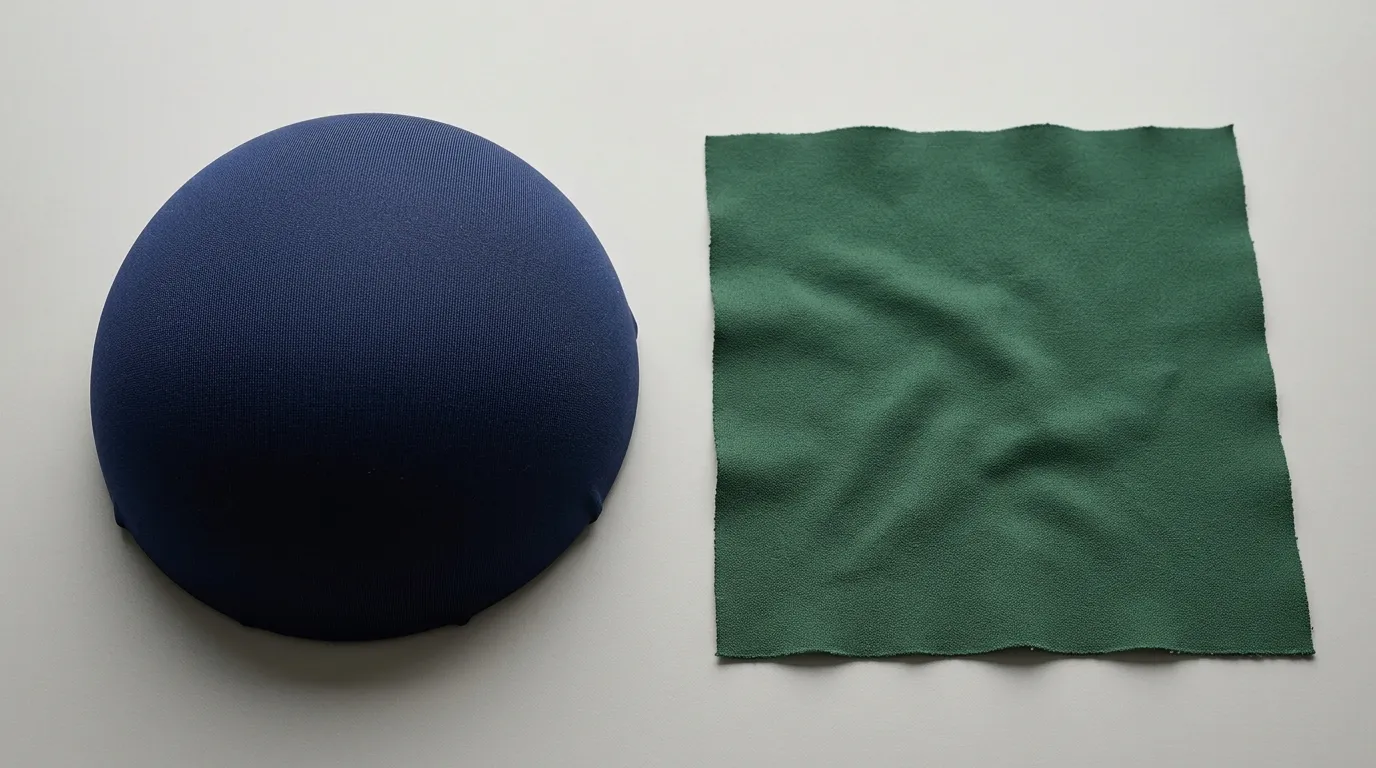
Minghang Garments describes activewear development as work across stretch, recovery, opacity, fit, compression, movement, seam construction and size grading. Harvest SPF lists stretch, opacity and recovery as needs for leggings fabric, and moisture management, breathability and fast drying as needs for training tops.
| Product example | Fabric direction (Harvest SPF) | Activewear needs to check |
|---|---|---|
| Yoga leggings | Nylon/spandex or recycled nylon/spandex | Stretch, opacity, recovery |
| Training tops | Polyester/spandex or mesh-knit/quick-dry blends | Moisture management, breathability, fast drying |
Opacity is the check that catches most first-time brands: a fabric can feel substantial on a swatch and still read differently under movement and stretch. Our how to choose fabric for activewear guide walks through that evaluation in more detail.
Step 3: Develop and Approve an Activewear Sample
A sample is not approved until you have checked fit, sizing and grading, plus stretch, recovery, opacity, compression, coverage, movement and seam comfort in the intended activity. Sampling typically takes 7–15 working days at Minghang Garments, depending on product complexity, fabric and customization.
What to check on an activewear sample
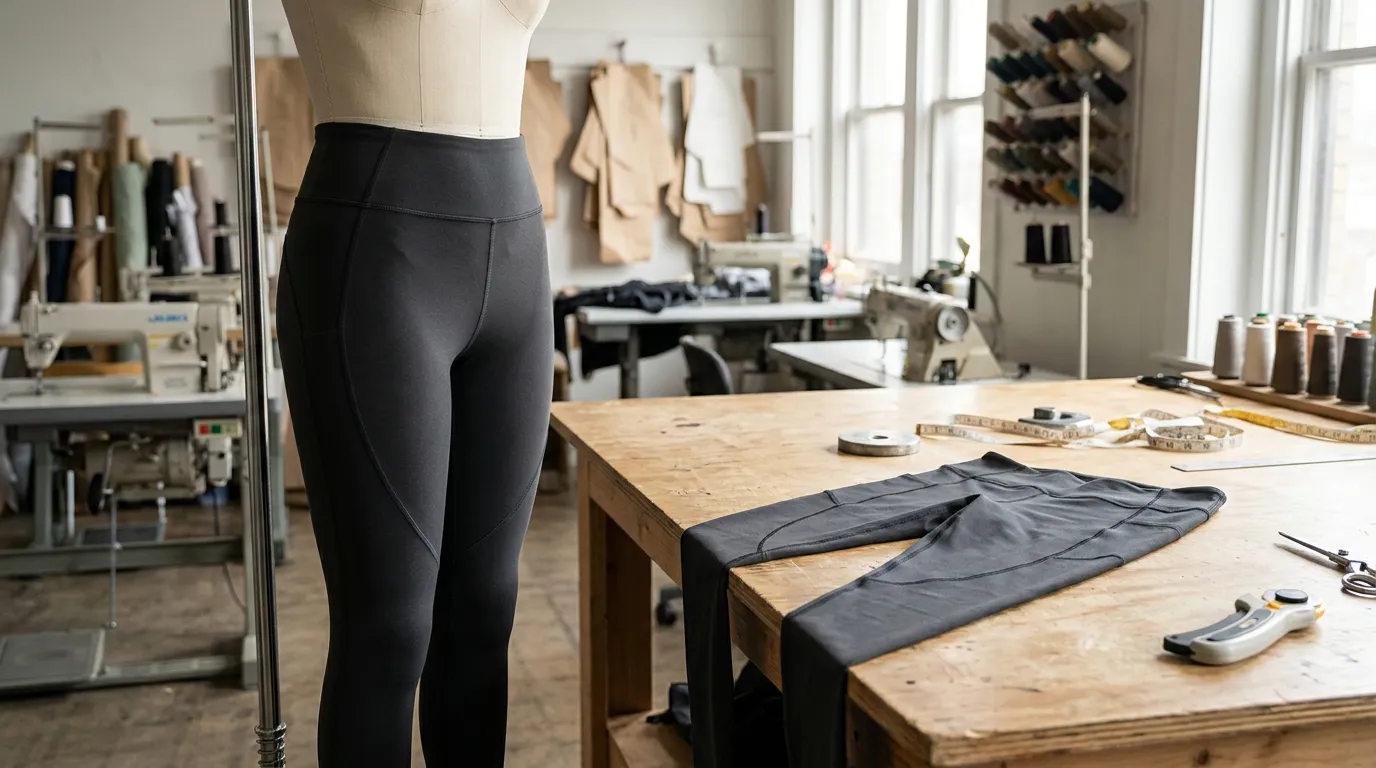
- Stretch and recovery: does the fabric return to shape after being worn and washed?
- Opacity under movement: check it in the positions the garment will actually be used in.
- Compression and coverage: confirm the intended level rather than a general "snug" feel.
- Fit across the intended size range: not only the sample size.
- Seam comfort and construction: flatlock, coverstitch and overlock seams behave differently against skin.
Sizing, grading and fit approval
Harvest SPF identifies fit and sizing as activewear development considerations, and Minghang Garments lists size grading as part of activewear development. Approve a size set, or a fit across your target range, before bulk production.
If you approve only one sample size, the graded sizes stay unverified until production. That is the point where a fit problem becomes a stock problem rather than a pattern revision.
Step 4: Confirm MOQ and Branding Before Production
Confirm the exact minimum order quantity (MOQ) per style, color and fabric, then lock labels, packaging and branding artwork before bulk production. MOQ is not one number for a factory — it changes with the fabric and the construction you choose.
Confirm MOQ per style, color and fabric
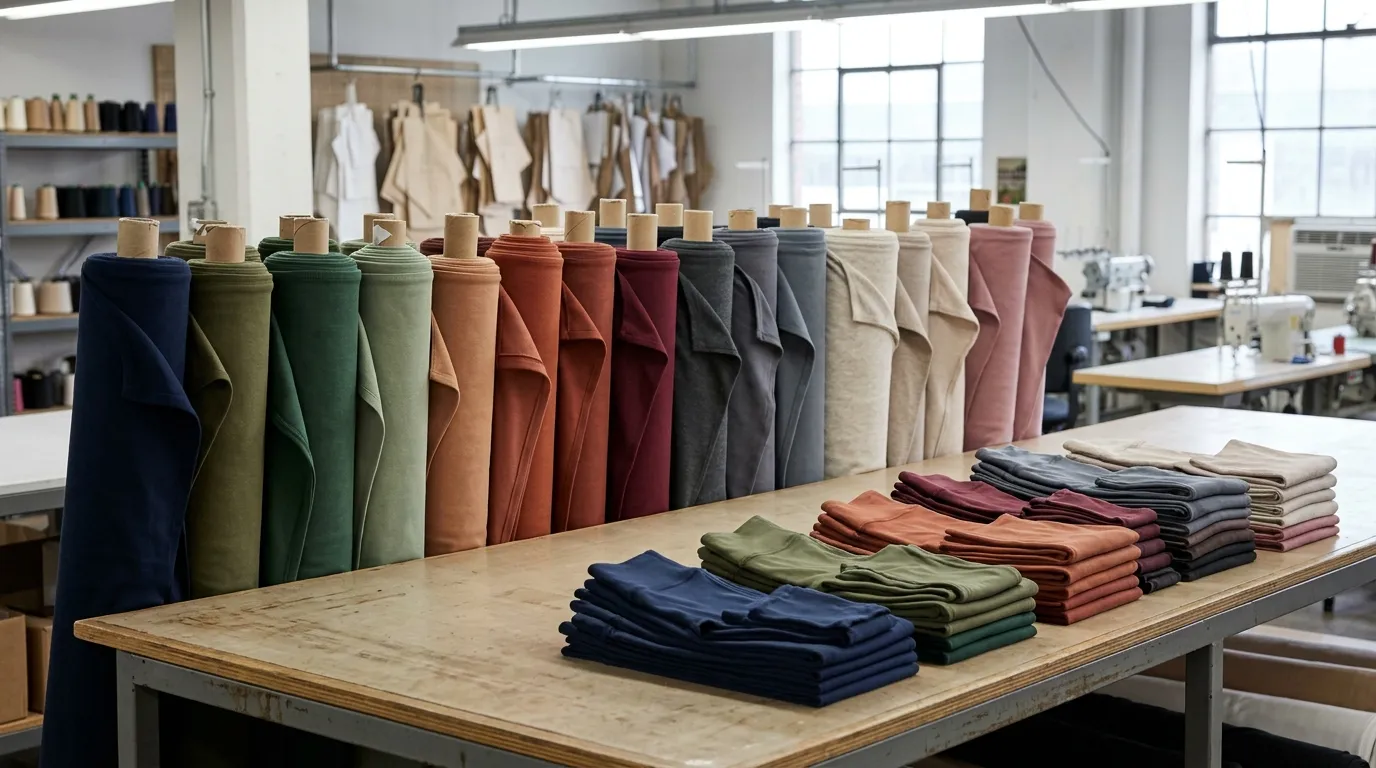
Minghang Garments states MOQ from 100 pcs per color per style on stock fabric. Custom-developed fabrics or dyeing typically require 300–500 pcs, and seamless products start from 500 pcs per color, size and style.
| Order scenario | Minghang-stated starting MOQ | Condition |
|---|---|---|
| Regular activewear, yoga and streetwear | 100 pcs per color per style | Stock fabric |
| Custom-developed fabric or dyeing | 300–500 pcs | Custom fabric or dyeing |
| Seamless products | 500 pcs per color, size and style | Seamless construction |
That structure is why starting on stock fabric keeps a first run manageable: it lets a new brand test a style at 100 pcs per color per style instead of committing to a custom fabric minimum. Our moq guide explains how quantity breaks and fabric choices interact. Confirm MOQ in writing per SKU before you approve a sample.
[DIAGRAM: MOQ conditions — stock fabric 100 pcs per color per style; custom fabric or dyeing 300–500 pcs; seamless 500 pcs per color, size and style, each labelled as Minghang-stated conditions.]
Lock branding, labels and packaging
Approve logo files, label placement, care and content labels, hangtags and packaging before bulk production. These items carry their own lead times and their own minimums, so settle them alongside the garment specification rather than after it.
Step 5: Brief the Manufacturer and Move to Bulk Production
Send a complete brief covering product, activity, fabric, size range, branding and target quantity, then approve the sample and materials before bulk production begins. A brief that answers these points usually removes several rounds of back-and-forth.
What to include in a manufacturer brief
- Product type and target activity
- Reference garment or technical pack
- Fabric direction and any performance needs
- Size range and grading expectations
- Branding requirements: labels, printing, embroidery, packaging
- Target quantity per color and size
- Delivery market and required date
When you compare production partners, look for activewear experience in your specific product type. This custom activewear manufacturer page outlines the development and production stages Minghang Garments works through.
From sample approval to bulk production
Minghang Garments states that bulk production generally takes 25–45 days after sample and material approval, and describes a 5+1 quality-control system covering incoming materials, cutting, in-line sewing, semi-finished garments, final inspection and pre-shipment verification.
- Approve the sample and the size grading.
- Confirm materials, trims and branding items.
- Begin bulk production.
- Run quality control at each defined stage.
- Complete final inspection and pre-shipment verification.
Decision rule: do not authorize bulk production until the sample and materials are approved in writing. Verbal approval leaves no record of what was agreed if a delivered batch differs.
Common Mistakes to Avoid When Starting a Private Label Activewear Brand
The most common mistakes are starting with too many styles, choosing fabric by look alone, treating MOQ as a single number, and approving a sample without checking movement, opacity and fit across the size range. Each one adds cost or delay that a narrower first run avoids.
Limit the first range to one or two styles for one activity, and use stock fabric for the first run where the design allows it. Verify MOQ conditions per style, color and fabric, because stock fabric, custom fabric and seamless construction carry different starting quantities. Approve the sample before bulk, and check it in the activity it was designed for rather than in a fitting-room mirror.
[DIAGRAM: Activewear sample review board — stretch and recovery, opacity under movement, compression and coverage, fit and grading, seam comfort.]
FAQ
How much does it cost to start a private label activewear brand?
There is no fixed startup cost, because fabric, sampling, order quantity, branding and shipping vary by project. Ask manufacturers for an itemized quote covering sample fees, fabric, trims, labels, packaging, production and freight. Compare quotes on the same specification before committing to a supplier.
Do I need an LLC to start an activewear brand?
Not necessarily. A limited liability company is a legal and tax structure, not a manufacturing requirement. The rules depend on your country, sales channels and risk tolerance, so consult a local legal or tax adviser before choosing a business entity. A manufacturer can usually quote before you incorporate.
Is private labeling legal?
Private labeling is generally legal when you have the right to use your brand and the products meet applicable labeling and safety rules. Requirements vary by market and product. Confirm care, content and origin labeling with your manufacturer, and check local regulations for your selling market before you sell.
How do I choose a private label activewear manufacturer?
Look for a manufacturer with activewear experience in your product type. Ask how they handle fabric sourcing, pattern making, sampling, size grading, quality control and MOQ per color, and request written timelines and a sample review process. Minghang Garments states sampling of 7–15 working days and a 5+1 QC system.
If you have a completed brief, Minghang Garments can quote against your specification — product type, fabric direction, size range, branding and target quantity — and confirm the MOQ that applies to your chosen fabric and construction.
-
Share
-

-

-