 Contact Us

Table of Contents

Contact Us
Custom activewear manufacturing follows one activewear production process: build a tech pack, source and assess fabrics, make patterns and fit samples, cut or knit and sew, add decoration, then inspect and pack. Each stage ends with a brand approval before the next begins, so fit, materials and quality are locked in before bulk production starts.
Key takeaways
- Custom activewear moves through nine gates: tech pack, fabric sourcing and assessment, fit and performance definition, pattern making and fit sampling, construction choice, assembly, decoration, quality control, and approval and packing.
- Every gate ends with a brand sign-off, and nothing should move into bulk production until the previous stage is approved in writing.
- Cut-and-sew and seamless knitting are two different construction routes, chosen before assembly rather than after.
- Minghang Garments' homepage describes its 5+1 quality control checkpoints as incoming materials, cutting, in-line sewing, semi-finished garments, 100% final inspection and pre-shipment verification.
- Minghang Garments' homepage states sampling at 7–15 working days and bulk production at 25–45 days after sample and material approval — company figures with conditions, not industry benchmarks.
What Is the Activewear Production Process?
The activewear production process is the ordered set of development and manufacturing stages that turns a design brief into finished, inspected garments: tech pack, fabric sourcing and assessment, fit and performance definition, pattern making and sampling, construction, assembly, decoration, quality control, and packing. A brand approval closes each stage.
Minghang Garments, a custom activewear manufacturer based in Dongguan, China and working in apparel production since 2017, describes development on its custom activewear manufacturer page as spanning fabric selection and pattern development through sampling, branding, bulk production and quality control. Junhao's custom activewear guide follows a comparable route, running from design brief or tech pack through pattern and sampling, fabric sourcing and testing, bulk production, quality control, packing and shipping.
[DIAGRAM: nine-gate process flow — tech pack, fabric sourcing and assessment, fit and performance definition, pattern making and fit sampling, construction choice, assembly, decoration, quality control, approval and packing — with an approval gate marked between each stage]
| Stage | What the brand supplies or approves | What the factory does | Gate to the next stage |
|---|---|---|---|
| 1. Tech pack | Design intent, measurements, fabric and trim specification, construction and branding details | Reviews the pack and flags gaps or conflicts | Written pack approved |
| 2. Fabric sourcing and assessment | Confirms the intended activity and the properties required | Sources candidate fabrics and trims against the specification | Fabric selected and locked |
| 3. Fit and performance definition | States fit block, support, coverage and how the sample will be judged | Translates requirements into a pattern direction | Requirements agreed |
| 4. Pattern making and sampling | Wears, measures and comments on the fit sample | Drafts the pattern, sews the sample, revises it | Approval sample signed off |
| 5. Construction choice | Chooses cut-and-sew or seamless | Confirms what each route requires in material and tooling | Construction fixed |
| 6. Assembly | Approves the reference sample for the line | Spreads and cuts fabric or knits the piece, then assembles it | Bulk units produced to the approved build |
| 7. Decoration and branding | Approves placement, method, labels and packaging | Applies printing, embroidery, labels and packing | Branded garments complete |
| 8. Quality control | Reviews inspection outcomes | Runs the inspection checkpoints across production | Units cleared for packing |
| 9. Approval and packing | Approves pre-production sample and materials | Produces, packs and prepares bulk for shipment | Bulk released after approval |
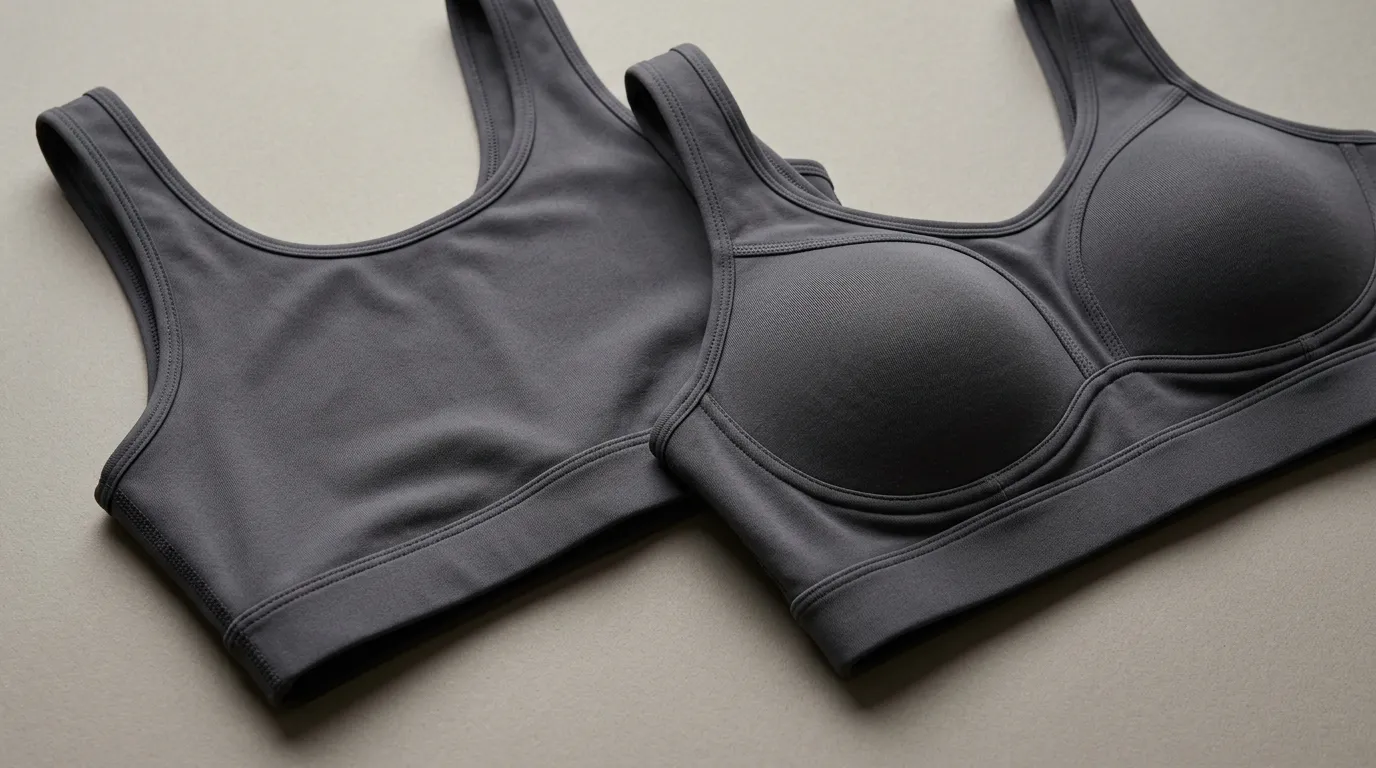
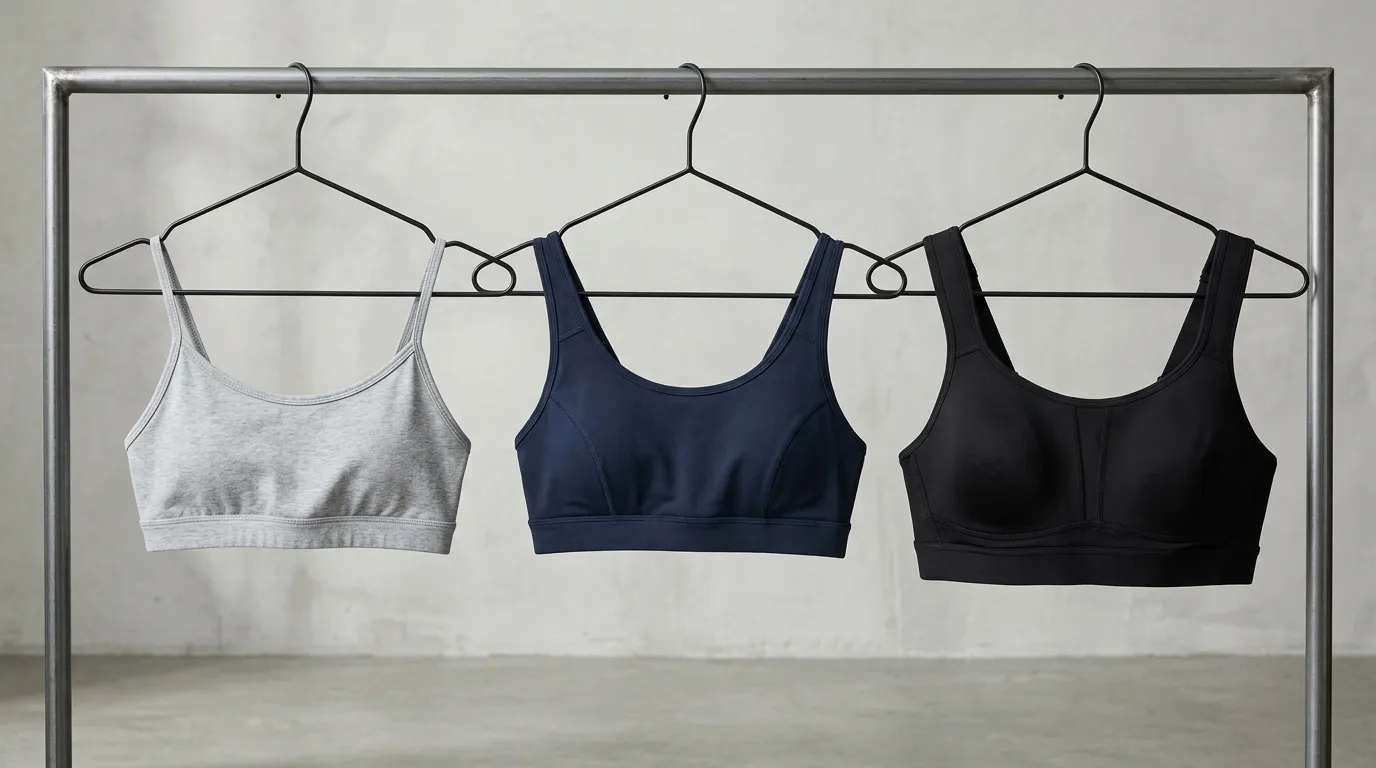
Gym clothes follow the same nine gates as any other activewear. The difference sits inside the gates rather than between them: a sports bra, a pair of leggings and a gym top carry extra definition work at stages 3 and 5, because support, coverage and seam placement matter more than they do on a loose training tee.
Two limits are worth stating plainly. There is no single production path that suits every activewear style, and a change made after assembly usually means a new sample approval rather than an adjustment on the line.
Step 1 — Build the Tech Pack and Design Brief
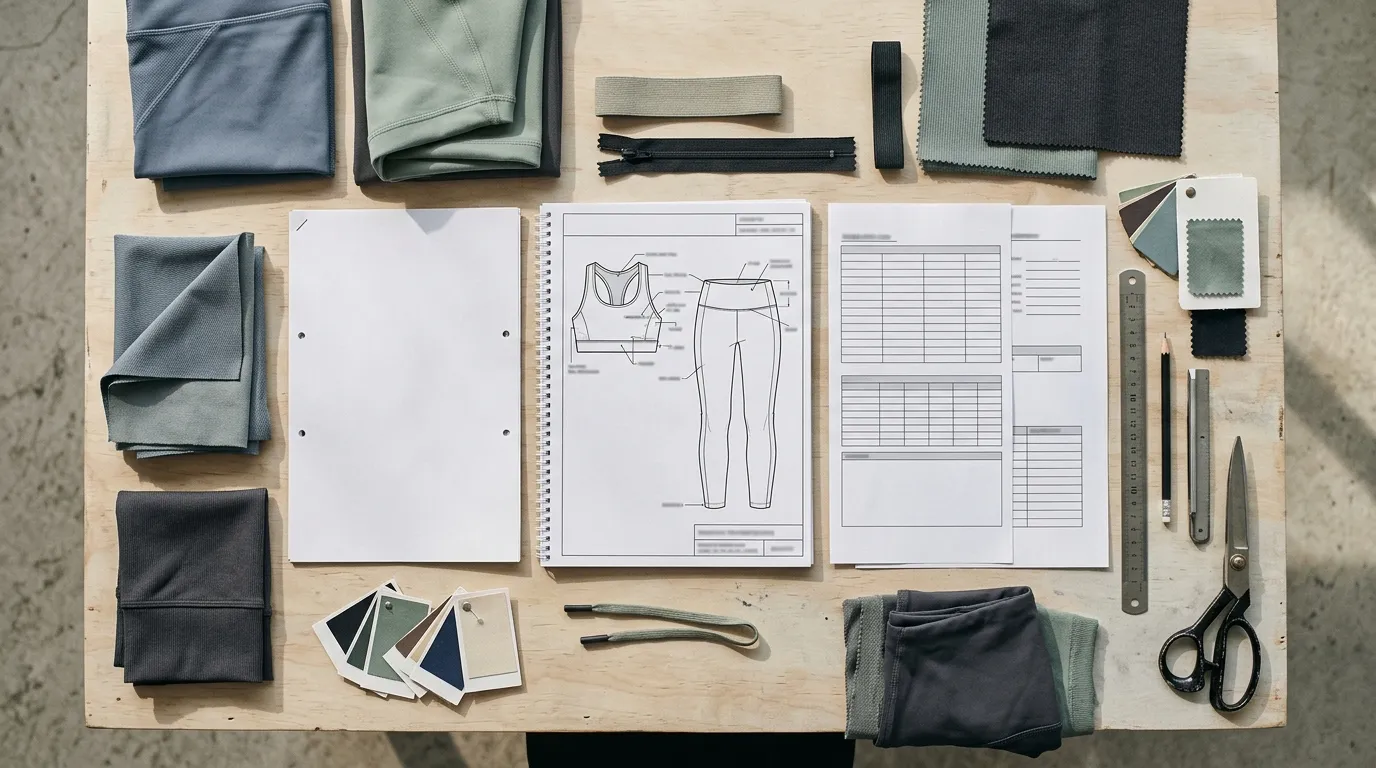
A tech pack is the document that defines what will be made. Wearzio's activewear tech pack guide organizes preparation around technical sketches, points of measurement, fabric specifications and a bill of materials, construction details, branding and packaging, plus the approval records that follow.
Leeline's guide on building a sportswear tech pack covers sequential tech-pack sections along with troubleshooting and quality control and testing discussion, which shows how much of the later production conversation is already decided at this stage.
Prepare the following before approaching a factory:
- Technical sketches for front, back and any detail views.
- Points of measurement, with the size range the style will run in.
- Fabric and trim specification, including a bill of materials.
- Construction notes — seam types, stitch and finish expectations.
- Gym-specific entries where they apply: support level, strap or waistband configuration, and coverage intent.
- Branding and packaging instructions, including label positions.
- A record of which version is the current approved version.
Missing items here become questions during sampling, and a pack that changes mid-sample usually costs an extra round rather than a faster one.
Step 2 — Source and Assess Activewear Fabrics
Fabric is selected against the intended activity and fit, then assessed for the properties that activity requires — stretch and recovery, opacity, weight and hand feel — before it is locked into sampling. Minghang Garments' activewear page describes development spanning fabric selection and pattern development, and Junhao's guide places fabric sourcing and testing before bulk production rather than after it.
The working order is: activity first, then the properties that activity demands, then the fabric that delivers them. Choosing a fabric because it looks right on a swatch inverts that order, and the problem usually surfaces at the fit sample instead.
Specifics such as fibre content, weight and suitable end uses are covered in this guide to how to choose fabric for activewear; the point here is the sequence, and the fact that the fabric decision closes before pattern making begins.
Step 3 — Define Fit and Performance Requirements Before Sampling
Before a pattern is cut, the brand should state the fit block, the support and coverage expectations, and the measurement tolerances it will judge the sample against. The brand defines the requirement; the factory translates it into a pattern.
Write these down as a short checklist, because each one becomes a pass-or-fail question at sample review:
- The fit block and the size range the pattern must cover.
- Where stretch and recovery matter most on the garment.
- Support and coverage expectations for the intended activity.
- The measurement tolerance basis the sample will be measured against.
- Which of these are fixed requirements and which are preferences.
This is the stage where vague briefs do the most damage. "Snug but comfortable" cannot be measured, and a sample built against an unmeasurable brief will be reworked on opinion rather than on specification. Any tolerance discussion on this page belongs here and nowhere else — later stages reference this definition instead of restating it.
Step 4 — Pattern Making and Fit Sampling
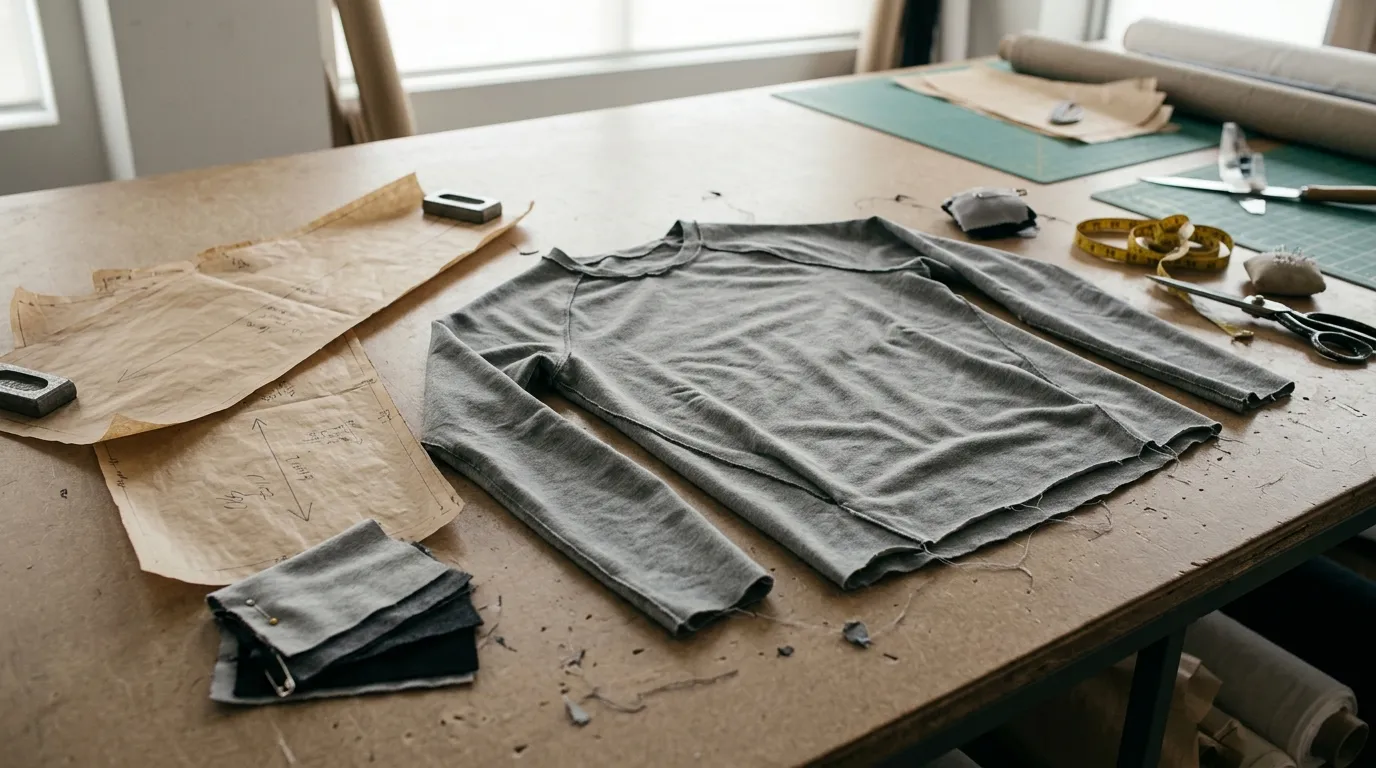
Pattern making converts the tech pack into a physical sample, and the fit sample is then worn, measured and corrected until the brand approves it as the reference for bulk. Minghang Garments' activewear page describes pattern development running through sampling.
According to Minghang Garments' homepage, sampling typically takes 7–15 working days depending on product complexity, fabric and customization. The sequence runs:
- Draft the pattern from the approved tech pack.
- Sew the first fit sample.
- Review the fit sample against the agreed requirements, on a body and on a flat surface.
- Return written comments, consolidated rather than sent in rounds.
- Approve a revised sample as the production reference.
Consolidated comments matter more than fast ones. Comments arriving from three people at three different times typically produce a third sample where one revision would have closed the fit.
Step 5 — Choose Cut-and-Sew or Seamless Construction
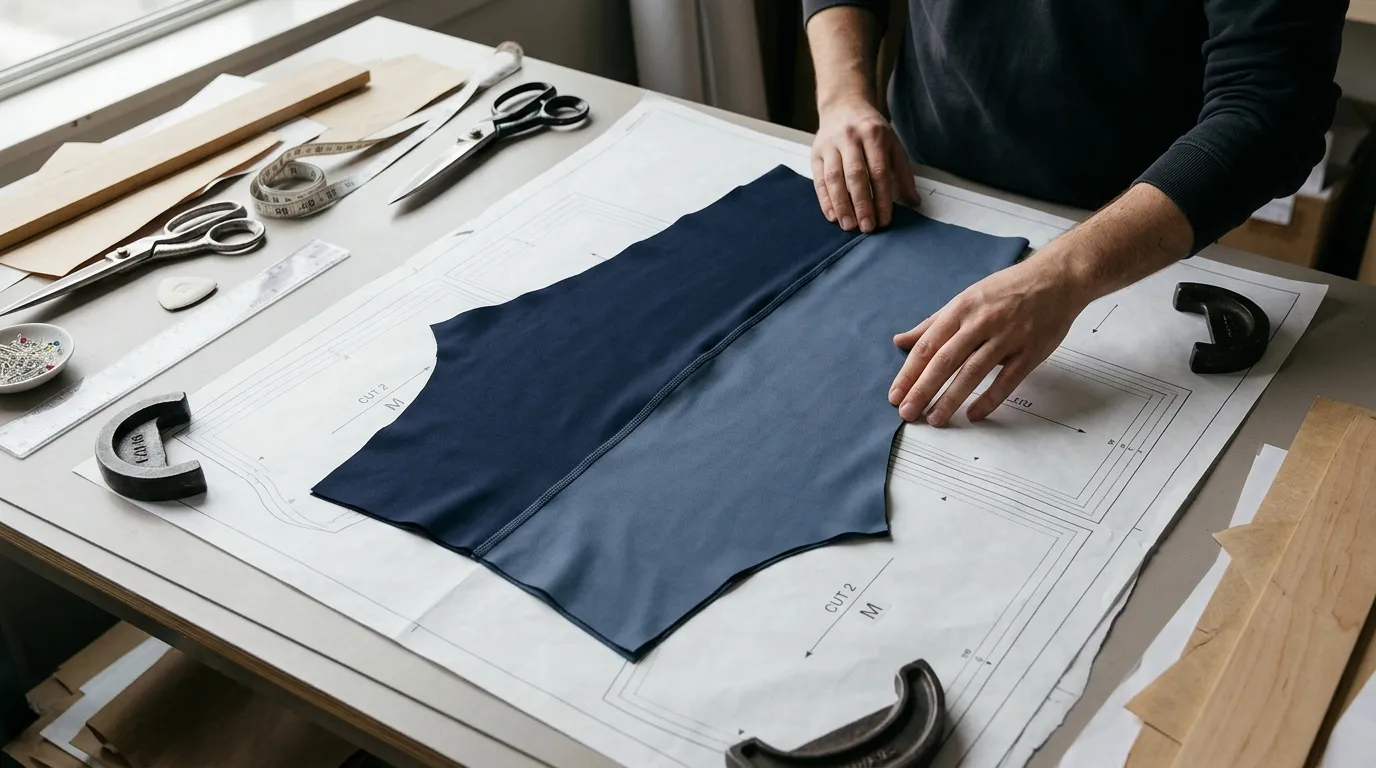
Cut-and-sew builds the garment from panels cut out of fabric and joined at seams, while seamless knitting forms the piece on the machine, so the choice changes material needs, tooling and how decoration can be applied. Minghang Garments' activewear page names cut-and-sew and seamless activewear as supported development routes.
| Route | How the garment is formed | Fit and support implications | Decoration implications | Decide before sampling |
|---|---|---|---|---|
| Cut-and-sew | Panels cut from fabric, joined by seams | Seam placement and panel shaping create fit zones and support | Printing and embroidery can be applied to panels or the finished piece | Panel layout, seam types, fabric behaviour at seams |
| Seamless knitting | Formed as a single knitted piece on the machine | Support comes from knit structure and zoning rather than seams | Decoration options are constrained by the knit structure — verify with the supplier | Machine capability, zoning plan, yarn specification |
This decision belongs before assembly, not after. Switching route later invalidates the pattern work rather than adjusting it, and it is one of the reasons construction is treated as a gate in its own right. Readers choosing between the two will find the trade-offs set out in this comparison of cut and sew vs seamless activewear manufacturing.
Step 6 — Cutting, Sewing, Knitting and Garment Assembly
In bulk, fabric is spread and cut to the approved pattern, or knitted in one piece, and then assembled at the sewing or knitting line to the approved construction. Minghang Garments' homepage describes OEM, ODM and private label apparel manufacturing that includes activewear, and its activewear page describes development running through bulk production.
One rule applies here and should be agreed in advance: no construction change after assembly without a new sample approval. Mid-run changes to seams, panels or knit structure affect the whole batch, not the unit in hand, which is why they are handled as a sampling matter rather than a production adjustment.
Step 7 — Decoration, Labels and Branding
Printing, embroidery, labels and packaging are applied to the assembled garment and scheduled against the approved tech pack, because the decoration method interacts with the fabric and with the construction route chosen earlier.
Confirm in writing, once, at this stage:
- Decoration placement and size for each position.
- Method for each position, and the artwork file it will be produced from.
- Label positions, including care labelling and any internal branding.
- Packaging specification, including how garments are folded or bagged.
Decoration is where a small approval decision becomes a batch-wide outcome. Placement approved verbally tends to be remembered differently by the two people who heard it.
Step 8 — Quality Control Before Packing
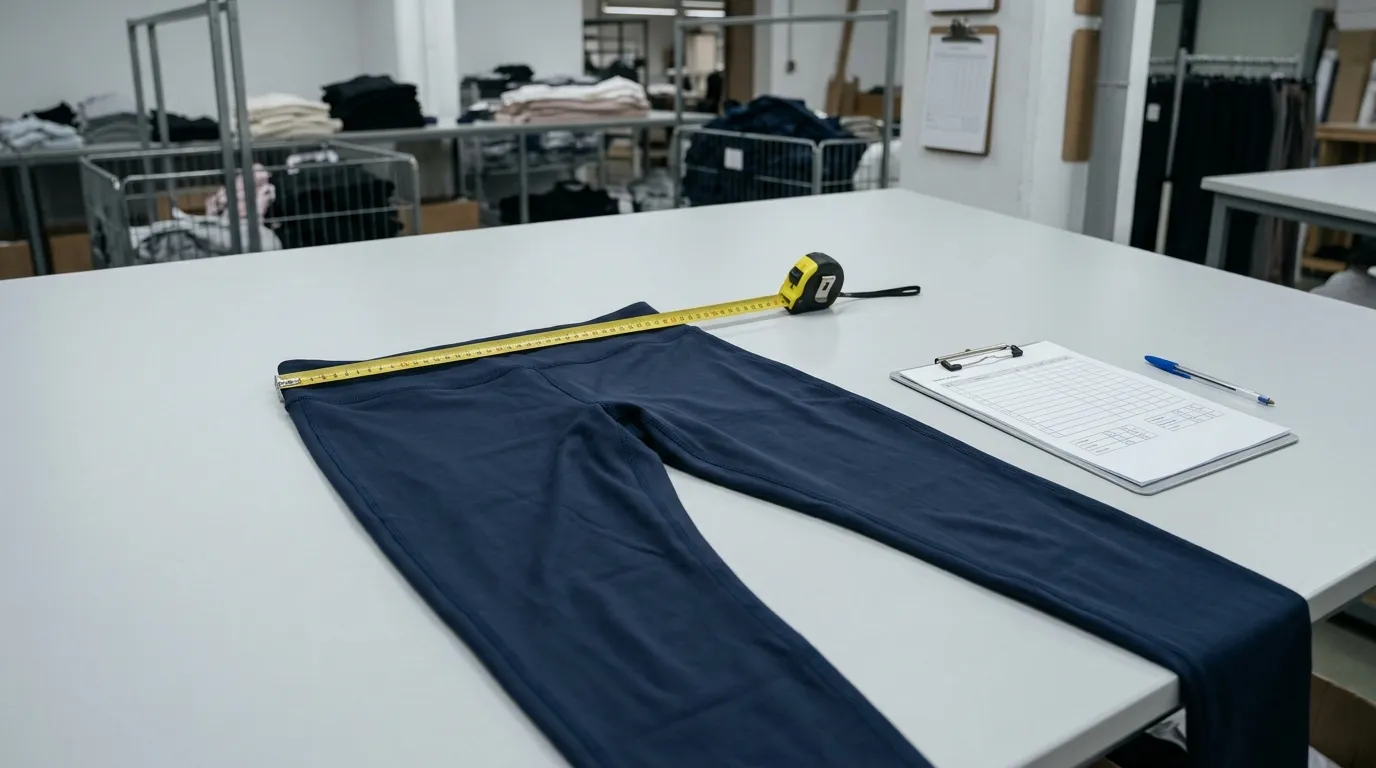
Quality control in activewear runs as a sequence of checkpoints across production rather than a single check at the end, and it finishes with a full final inspection before packing. Minghang Garments' homepage describes its 5 1 step qc system as covering incoming materials, cutting, in-line sewing, semi-finished garments, 100% final inspection and pre-shipment verification.
[DIAGRAM: QC checkpoint strip — incoming materials, cutting, in-line sewing, semi-finished garments, 100% final inspection and pre-shipment verification shown in production order, with the 100% final inspection visually distinguished from the in-line checks]
| Checkpoint | What is examined | What the checkpoint catches |
|---|---|---|
| Incoming materials | Materials received against the approved specification | Non-conforming material reaching the cutting table |
| Cutting | Cut components against the approved pattern | Sizing and shape errors before sewing begins |
| In-line sewing | Garments during sewing rather than after | Assembly faults that can still be corrected in the run |
| Semi-finished garments | Partly completed pieces against the approved sample | Construction deviations before the garment is closed |
| 100% final inspection | Every finished garment | Individual finished-unit faults |
| Pre-shipment verification | The packed order before it leaves | Quantity, packing and identification errors |
The structure matters as much as the checkpoints. Catching a fault at cutting costs less than catching it at final inspection, which is why the earlier checkpoints exist rather than being folded into one closing review.
Step 9 — Approval, Packing and Bulk Timing
Once the pre-production sample and materials are approved, bulk production proceeds, garments are packed to the approved packaging specification and the order is prepared for shipment. According to Minghang Garments' homepage, bulk production generally takes 25–45 days after sample and material approval.
Minghang Garments' homepage also states that most regular activewear, yoga and streetwear styles start at 100 pieces per colour per style on stock fabric. That is a company-specific starting point with its own conditions, not an industry minimum, and it applies to those styles rather than to every possible construction.
Both timing clocks start from approval, not from enquiry. A project that waits three weeks for sample comments and then expects the standard bulk window has moved its own start date, not the factory's schedule.
FAQ
How do you make custom gym clothes?
Custom gym clothes follow the same nine gates as any other activewear: tech pack, fabric sourcing and assessment, fit definition, pattern and sampling, construction choice, assembly, decoration, quality control, and approval and packing. Sports bras, leggings and gym tops carry additional definition work at the fit and performance stage, where support, coverage and seam placement are specified before sampling.
How much does custom activewear manufacturing cost?
Cost is driven by fabric choice, construction route, decoration method, order quantity and the number of distinct styles in the order. Per-unit pricing cannot be stated without a specification, so a quote is normally produced against an approved tech pack and an agreed construction route rather than from a style name or a reference photo.
What is the MOQ for custom activewear?
Minghang Garments' homepage states that most regular activewear, yoga and streetwear styles start at 100 pieces per colour per style on stock fabric. That figure applies to those styles on stock fabric and carries its own conditions; a construction or fabric outside that scope should be confirmed with the supplier before the order is planned.
How long does custom activewear manufacturing take?
According to Minghang Garments' homepage, sampling typically takes 7–15 working days depending on product complexity, fabric and customization, and bulk production generally takes 25–45 days after sample and material approval. Both periods begin at approval, so time spent reviewing samples sits outside the bulk window rather than inside it.
-
Share
-

-

-