 Contact Us

Table of Contents

Contact Us
Yoga apparel manufacturing turns a design specification into finished leggings, bras and tops by sourcing soft-hand stretch knit fabric, cutting it, sewing or knitting it into shape with flatlock seams, gussets and waistbands, then finishing, inspecting and packing it. What separates yoga wear from high-impact training wear is the priority placed on softness, coverage, freedom of movement and seam comfort rather than maximum compression and support.
- Yoga garment production follows a fixed sequence: specification and tech pack, fabric sourcing and inspection, cutting preparation, construction, finishing and branding, inspection, then packing (Wonderxfans).
- Yoga fabrics are usually stretch knits chosen for soft hand-feel, stretch and recovery; woven fabrics appear where more structure is wanted (Runtang).
- Leggings depend on a gusset, a waistband and flat, low-bulk seams so the garment moves without rubbing (Wonderxfans; Minghang Garments).
- Cut-and-sew and seamless knitting are two production routes, not a quality ranking.
- Yoga wear prioritises softness, coverage and freedom of movement, while high-impact training wear prioritises support and containment.
What Does Yoga Apparel Manufacturing Mean?
Yoga apparel manufacturing is the process of converting a design specification into finished, packed yoga garments, covering fabric sourcing and inspection, pattern development and cutting, construction, finishing and quality control. The output is leggings, bras, tops, shorts and coordinated sets, produced through either cut-and-sew or seamless knitting.
The cut-and-sew and seamless routes both start from a specification rather than a finished design drawing, which is why terminology matters early on. Distinguishing between yoga pants vs leggings in the specification stage prevents measurement and pattern errors later in the process.
According to Wonderxfans, the process runs through seven stages: tech pack, fabric sourcing and inspection, fabric relaxation and cutting preparation, sewing and construction, finishing and branding, quality inspection, and packaging. Minghang Garments states that its programs cover fabric selection, pattern development, sampling, branding, bulk production and quality control.
From Tech Pack to Packed Carton: The Manufacturing Stages
A yoga garment moves through a defined sequence of stages, and each stage locks in information the next stage depends on. That dependency is why the tech pack and fabric approvals come first, and why changes made after cutting are costly.
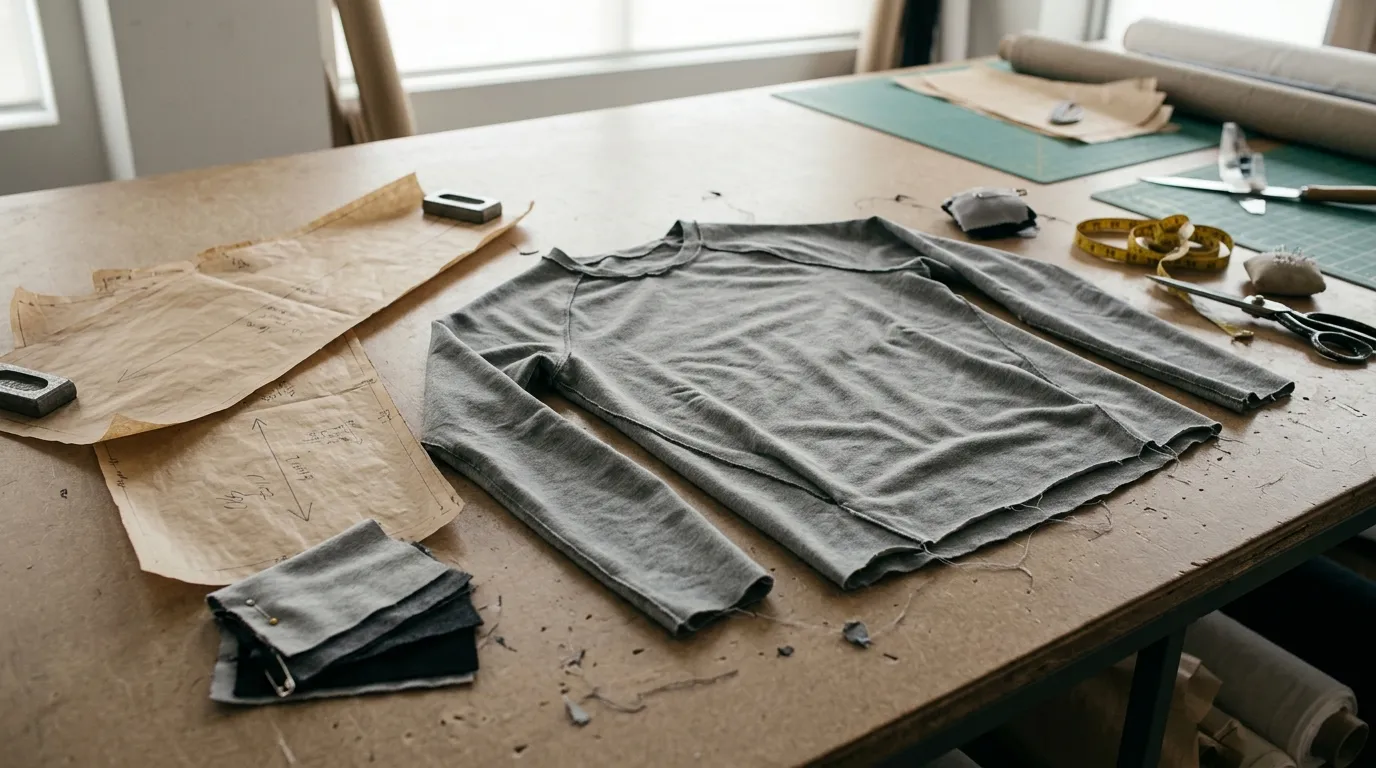
1. Specification and tech pack. According to Wonderxfans, a tech pack may include technical sketches, measurement specifications, grading rules, fabric composition and GSM, trim specifications, seam instructions, logo placement and packaging requirements.
2. Fabric sourcing and inspection. Runtang's November 30, 2023 fabric guide describes knits as the flexible, stretch-oriented option and wovens as more structured. Thai Son S.P. lists viscose blends and polyester-spandex blends among its material options and refers to circular-knit fabric in its sourcing approach.
3. Fabric relaxation and cutting preparation. Wonderxfans describes relaxing many nylon-spandex activewear fabrics for roughly 24–48 hours before cutting. Treat that as the source's stated practice rather than a universal rule; relaxation times vary with fabric type and supplier conditions, so confirm the requirement in writing with the mill or factory.
4. Cutting. Eationwear lists cloth inspection and computerised auto-cutting equipment among the machinery used in its described production.
5. Construction. Wonderxfans discusses flatlock, overlock and coverstitch seams in yoga wear. Garment-specific assembly is covered under the leggings and the bras and tops headings below.
6. Finishing and branding. Minghang Garments' services cover printing, embroidery, garment washing, labels and packaging.
7. Inspection and packing. Quality checks are covered in the quality-control heading below.
Which Fabric Properties Matter for Yoga Wear?
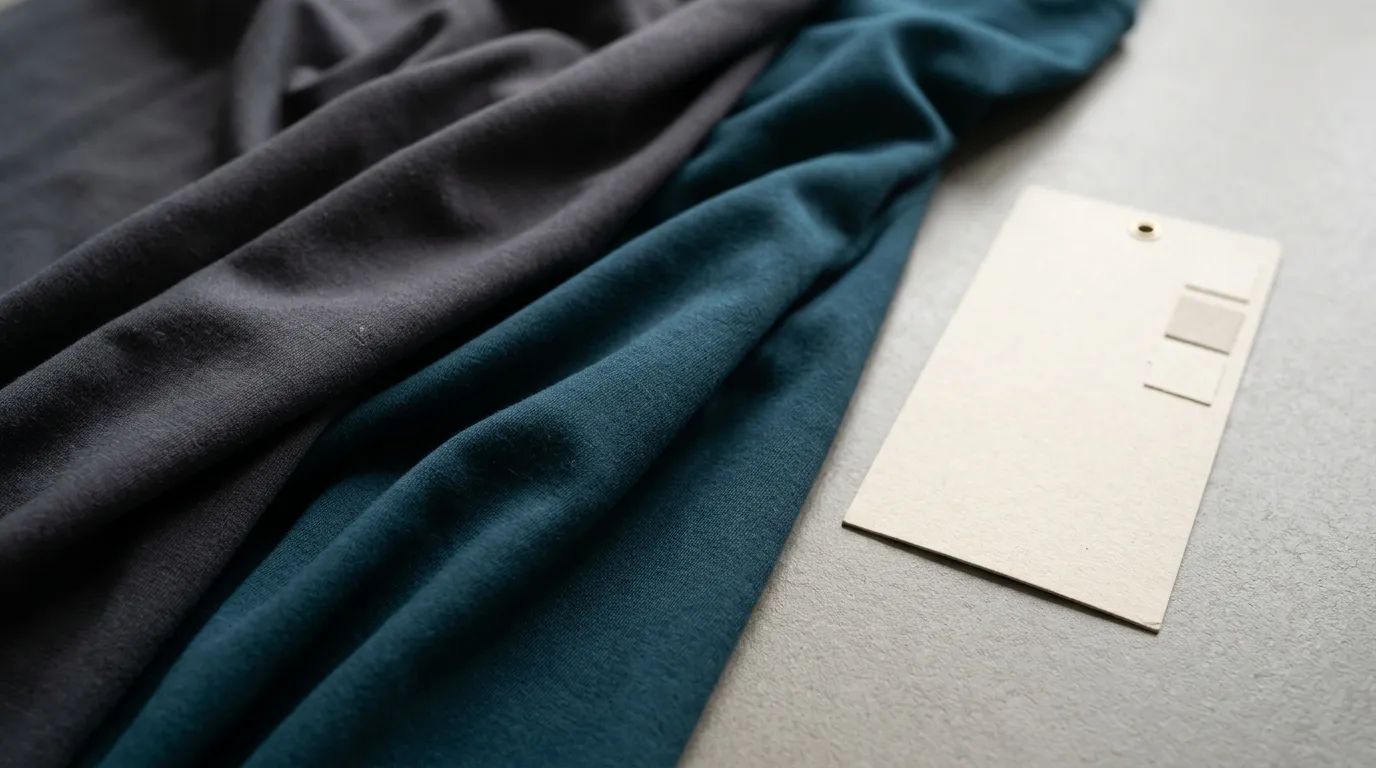
Yoga garments are usually made from stretch knit fabrics selected for soft hand-feel, stretch and recovery, breathability and coverage, while woven fabrics are used where a more structured look is wanted. The intended activity and the coverage the garment must deliver drive the choice, not the fibre name alone.
Runtang's November 30, 2023 guide names nylon knit, interlock knit and jacquard knit among yoga-wear fabric examples and reports a 160–260 grams per square meter range for the fabrics discussed on its page. That range is specific to Runtang's examples and is not a universal specification for yoga apparel.
Thai Son S.P. lists viscose blends and polyester-spandex blends as material options. Two limits are worth stating plainly: a higher fabric weight does not automatically mean better coverage, and stretch percentage on a fabric datasheet does not guarantee that the finished garment recovers its shape after repeated wear. Both depend on the knit structure, the elastane content and how the garment is cut and sewn.
How Yoga Leggings Are Assembled
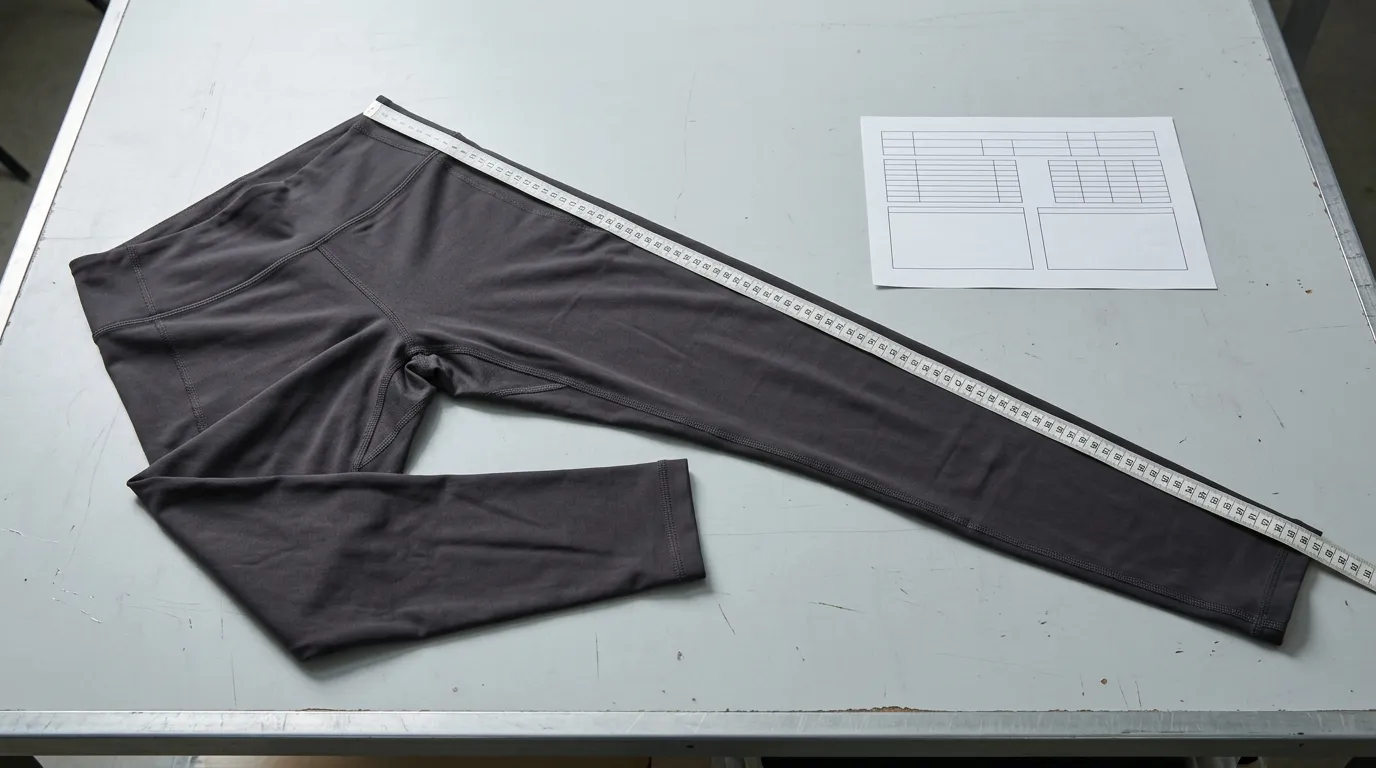
Leggings are cut as flat panels and joined with seams chosen to lie flat against the skin, normally with a gusset at the crotch and an elastic or knit waistband, so the garment moves without bulk or chafing. The construction choices, not the fabric alone, determine whether a legging stays comfortable through a full class.
Wonderxfans discusses flatlock, overlock and coverstitch construction, waistband construction and diamond gussets for yoga wear. Minghang Garments describes flatlock, coverstitch and bonded seams, and states that gussets and waistbands are selected according to garment category and intended activity. A yoga pants manufacturer working on a new style normally confirms gusset shape, waistband height and seam type before bulk cutting begins.
A practical limit to note: a diamond gusset is one construction approach that Wonderxfans describes, not a requirement for every legging. Gusset shape, seam placement and waistband depth should be agreed in the specification, because changing them after cutting affects the whole pattern.
[DIAGRAM: Labelled legging outline showing flatlock and coverstitch seams, gusset position and waistband, with arrows marking where bulk is avoided against the skin.]
How Yoga Bras and Tops Are Built Differently
Bras and tops are built for a different job than leggings: they must hold and cover without restricting breathing or arm movement, so paneling, straps, underbands and liners carry the work rather than fabric compression alone.
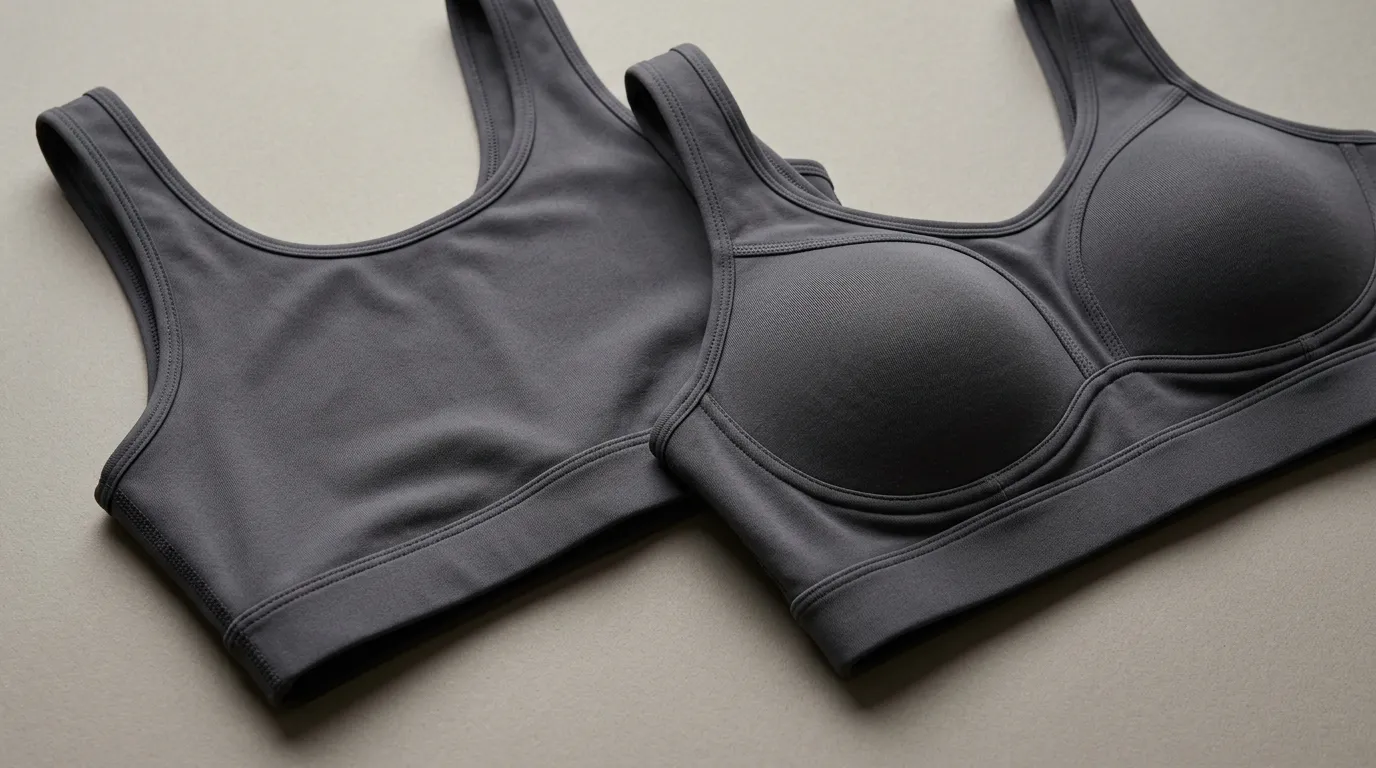
Minghang Garments lists flatlock, coverstitch and bonded seams, and names liners and cups among the components chosen by garment category and intended activity. The same source states that its development work covers cut-and-sew and seamless construction. A yoga sports bra manufacturer typically confirms underband tension, strap width and cup or liner specification at sampling, because these variables are difficult to change once panels are cut.
The components below are the ones named across the sources reviewed here; they show what each garment type depends on structurally.
| Garment | Key structural components | Seam / join approach | What it controls |
|---|---|---|---|
| Leggings | Gusset, waistband (Wonderxfans; Minghang Garments) | Flatlock, overlock, coverstitch; bonded options (Wonderxfans; Minghang Garments) | Fit through the crotch and waist, seam flatness |
| Sports bras | Underband, straps, cups and liners (Minghang Garments) | Flatlock, coverstitch, bonded (Minghang Garments) | Containment, coverage, shoulder comfort |
| Tops | Panels and neckline or hem finishes; liners where specified (Minghang Garments) | Flatlock, coverstitch, bonded (Minghang Garments) | Coverage, movement around the shoulders |
Compression levels, support ratings and bust-fit measurements are not published in the sources reviewed, so verify them with the supplier rather than assuming a figure.
Cut-and-Sew vs Seamless Knitting: Two Manufacturing Routes
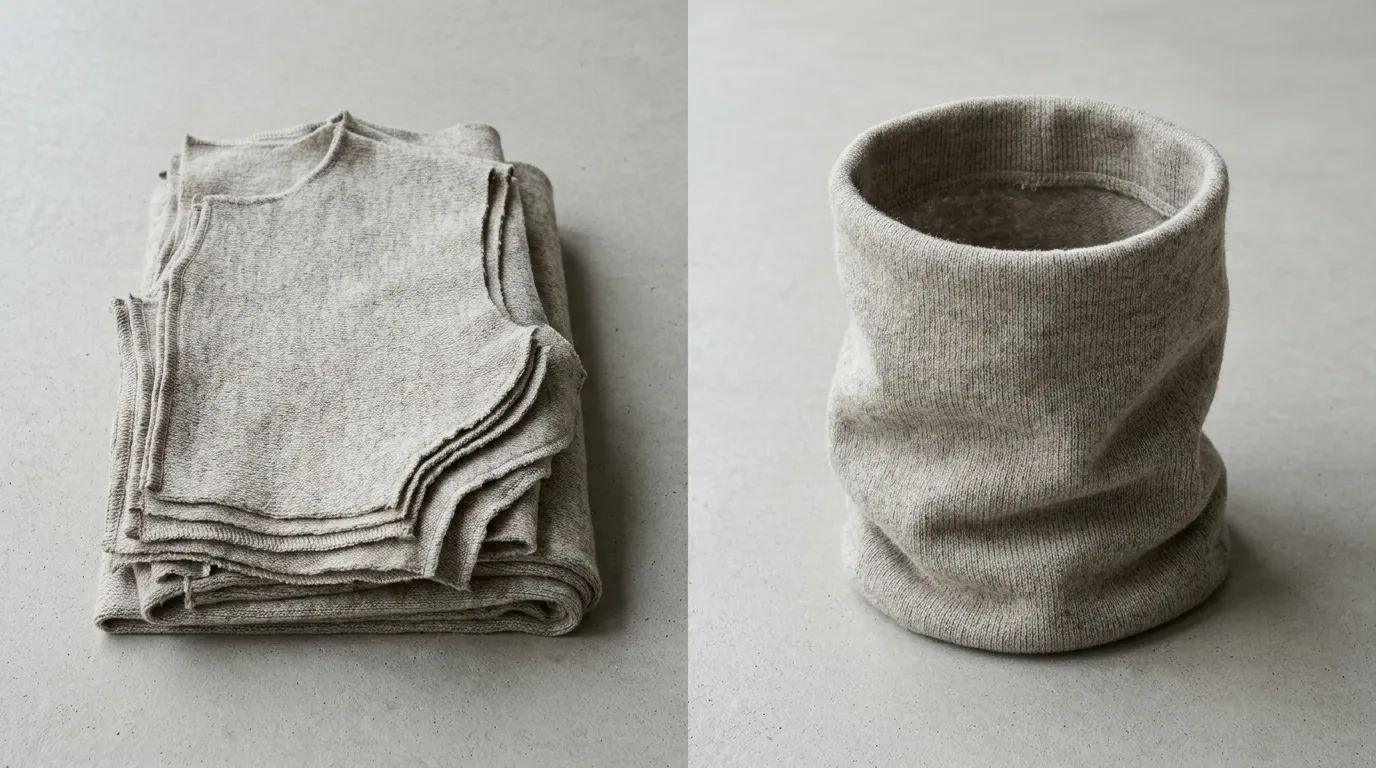
Cut-and-sew means the fabric is knitted first, then cut into panels and joined; seamless knitting shapes the garment on the machine, so it leaves the machine as a tube with far fewer seams. Neither route is automatically better — the design, the fabric and the fit requirement decide which one applies.
Minghang Garments states that its development work covers cut-and-sew and seamless construction. Wonderxfans covers flat seaming and garment construction detail for yoga wear but does not rank the two routes.
| Aspect | Cut-and-sew | Seamless knitting |
|---|---|---|
| How the garment is formed | Fabric knitted first, then cut into panels and joined | Shaped on the knitting machine, leaving it as a tube |
| Seam count | Multiple seams joining panels | Substantially fewer seams |
| Shaping and fit control | Controlled through pattern pieces and panel shaping | Controlled through machine programming and knit structure |
| Design flexibility | Multiple panels, mixed fabrics and placed prints are easier to combine | Smooth surface with limited panel breaks |
| When each route is typically chosen | Mixed fabrics, multi-panel shaping or placed graphics (decision guidance, not a sourced fact) | A smooth surface with fewer seams is the design priority (decision guidance, not a sourced fact) |
[DIAGRAM: Side-by-side route comparison — fabric roll to cut panels to joined garment on the cut-and-sew side; a garment knitted as a tube on the seamless side, with seam positions marked.]
What Makes Yoga Wear Different From High-Impact Training Wear
Yoga wear is generally engineered around softness, coverage, freedom of movement and seam comfort, while high-impact training wear is engineered around support, containment and compression. The same factory can produce both, but the fabric, structure and construction specifications change between them.
Minghang Garments states that components are selected according to garment category and intended activity, which is the same principle behind this distinction. Runtang's knit-versus-woven comparison supports the structure point: a knit that drapes softly for a yoga top may not hold the shape a high-impact garment needs.
| Design priority | Yoga-focused garments | High-impact training garments |
|---|---|---|
| Fabric hand-feel and stretch | Soft hand-feel with stretch and recovery | Firm stretch with more hold |
| Support and compression emphasis | Secondary to comfort and coverage | Primary design driver |
| Coverage and opacity | Emphasis on staying covered through forward folds and floor work | Emphasis on staying secure through repeated impact |
| Seam choice | Flat, low-bulk seams against the skin | Reinforced seams that manage load and movement |
| Structural components | Gusset, waistband, underband, straps, liners | Higher-tension bands and reinforcement where the garment is stressed |
| Intended movement | Bending, twisting, holding positions | Running, jumping, rapid direction change |
The table describes design priorities, not measured performance. No source reviewed here publishes compression ratings, pressure values or test results for either category, so comparisons of that kind should be verified with the supplier.
What Quality Checks Happen Before Bulk Approval and During Production?
Before bulk, a sample is checked against the approved specification for measurements, fit, construction and appearance; during production, factories inspect fabric, in-line pieces and finished garments. According to Wonderxfans, common practice includes AQL 2.5 and a 4-Point Inspection System — attribute those to that source's stated practice rather than treating them as a universal requirement. Eationwear lists cloth inspection and needle inspection among its equipment and checks, and Minghang Garments describes a 5+1 quality-control system.
Practical pre-bulk and in-line checks, without assumed pass/fail numbers:
- Measurements against the approved specification
- Fit on a body, including movement through the shoulders, hips and crotch
- Seam and stitch quality, including flatness against the skin
- Stretch and recovery behaviour after the sample is worn
- Opacity and coverage in a forward bend
- Waistband and gusset placement
- Trims and hardware, including any sharp edges
- Label placement and legibility
- Colour against the approved standard, in the agreed light
Tolerances, acceptable defect rates and test methods are not published in the sources reviewed here. Confirm them in writing with the supplier before bulk approval, since they determine what counts as a pass at final inspection.
[PHOTO: A sample garment laid flat on an inspection table with a measuring tape and specification sheet beside it, checked against measurement points.]
Frequently Asked Questions
Is yoga wear manufacturing different from general apparel manufacturing?
The core sequence is the same: specification and tech pack, fabric sourcing and inspection, cutting preparation, construction, finishing and branding, inspection, then packing, according to Wonderxfans. The difference is emphasis. Yoga wear places more weight on soft-hand stretch knits, flat seams, gussets and waistband comfort than general apparel typically does.
What material should yoga pants be made of?
Start from the intended activity, then the coverage and stretch the garment needs, and choose a knit fabric that meets both. Runtang's November 30, 2023 guide names nylon knit, interlock knit and jacquard knit among yoga-wear examples, and Thai Son S.P. lists viscose blends and polyester-spandex blends. Confirm the fabric datasheet against a sewn sample before committing.
How long does manufacturing take?
Timelines depend on the factory, fabric availability and style complexity. Minghang Garments states sampling takes 7–15 working days and bulk production 25–45 days, with a minimum order quantity starting from 100 pieces per colour per style on stock fabric. These figures are that company's stated timelines; other suppliers publish different ones.
Minghang Garments is a custom activewear manufacturer based in Dongguan, China, operating since 2017 with a 12,000 m² production floor, a 2,000 m² sample centre and up to 500,000 pieces per month of capacity. Readers developing a yoga range can see how its development and production stages are organised on its activewear and sportswear page.
-
Share
-

-

-