 Contact Us

Table of Contents

Contact Us
Updated 1 month ago
How to Create a Custom Activewear Collection?
arafatshuvo
Activewear collection planning means building a small, coordinated range around a few core pieces — usually a sports bra, leggings, a short and a top — then keeping them tied together with one fabric family and a limited color palette. Define the customer and activity first, narrow the first drop, and approve samples before scaling.
Key takeaways
- A coordinated collection shares fabric direction, colorway and branding across pieces rather than repeating one identical garment.
- Four core roles — bra, legging, short and top — cover most of a first drop; Printful's custom fitness range also lists leggings, sports bras, jerseys, tees, tank tops and hoodies.
- Colorway limits have a commercial effect: Minghang Garments states MOQ starts from 100 pcs per color per style on stock fabric.
- One fabric family can serve several styles, but garment function still sets the specification.
- Sampling typically takes 7–15 working days, so sample review is part of the range decision, not a step after it.
What Makes an Activewear Collection Feel Coordinated?
An activewear collection is a group of styles planned to be worn together and bought together, so the pieces share a fabric direction, a colorway logic and consistent branding even when each garment performs a different job. Minghang Garments' activewear page describes coordinated sets built from bras, tops, leggings and shorts, with fabric, colors, fit and branding coordinated across the pieces.
Coordination is not the same as repetition. A collection feels deliberate when a customer can buy two pieces from it and wear them as a set without the styling feeling accidental.
Three things carry that coordination:
- Shared fabric direction — one base fabric family across the range.
- Shared palette — every style draws from the same small set of colors.
- Shared branding and trims — labels, waistband language and hardware follow one visual rule.
Everything else — support level, coverage, fit — can differ from style to style. That difference is what makes each piece useful on its own.
Which Customer and Activity Should the Collection Serve First?
Choose one primary activity and at most one secondary lifestyle use before you choose any styles. Support, coverage and fabric needs change with the activity, and a range that tries to serve yoga, running and strength training at once usually ends up mediocre at all three.
Decision rule: pick one primary activity and one secondary lifestyle use. Every style in the first drop must serve at least one of the two. If a style serves neither, cut it, even if the design is good.
This constraint does more work than any trend list. It tells you what the sports bra has to support, how much coverage the legging needs, and whether the short is a training piece or a lifestyle piece.
Write both use cases down in one sentence each. They become the reference point for every later decision, including fabric and sample approval.
Which Core Pieces Should the First Drop Include?
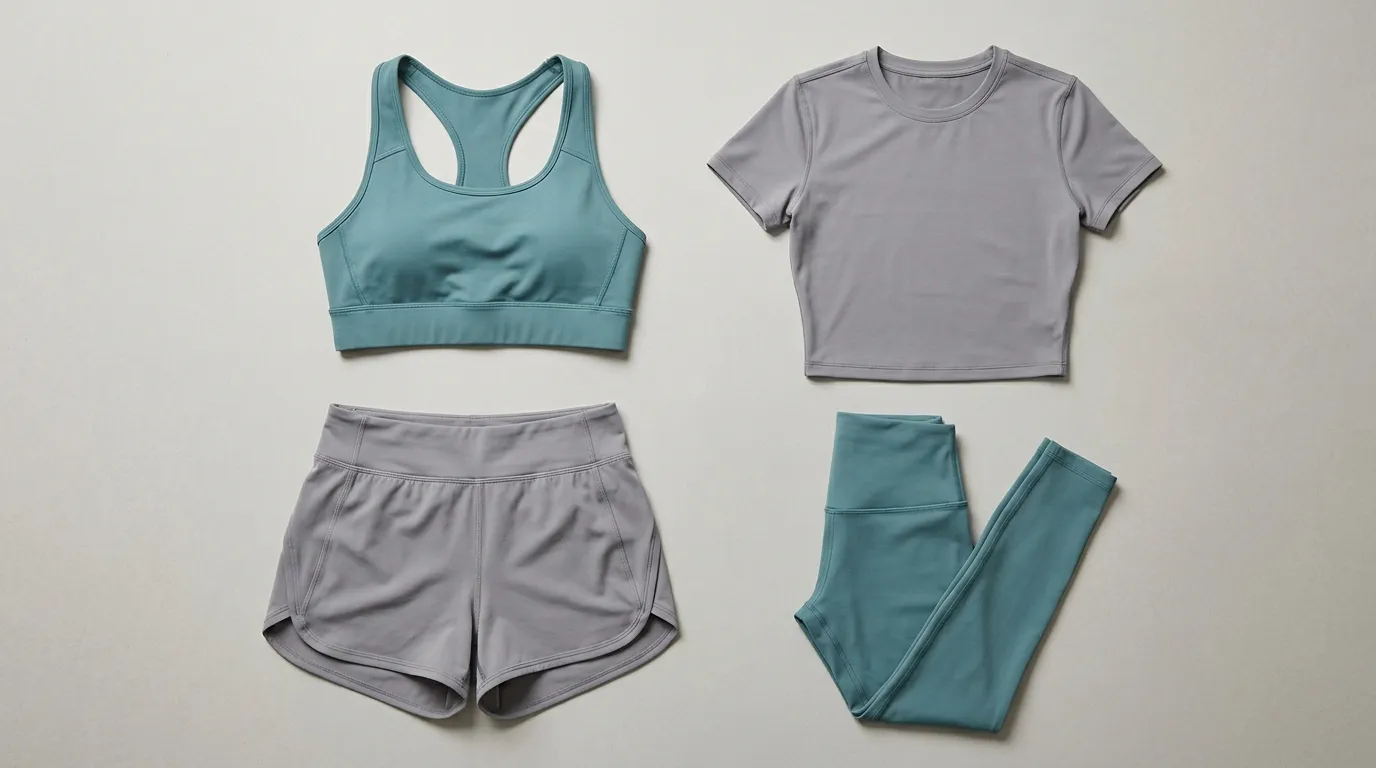
Start with four core roles — a sports bra, a legging, a short and a top — and treat everything else as a later addition. These four roles cover the combinations most customers actually buy, and they are enough to make a collection feel complete. Minghang Garments' activewear page describes coordinated sets built from bras, tops, leggings and shorts, and Printful's custom fitness range lists leggings, sports bras, jerseys, tees, tank tops and hoodies among its custom fitness apparel.
Plan the four roles as one grid rather than four separate products.
| Core role | Function it must deliver | Fabric direction | Colorway slot | Set pairing |
|---|---|---|---|---|
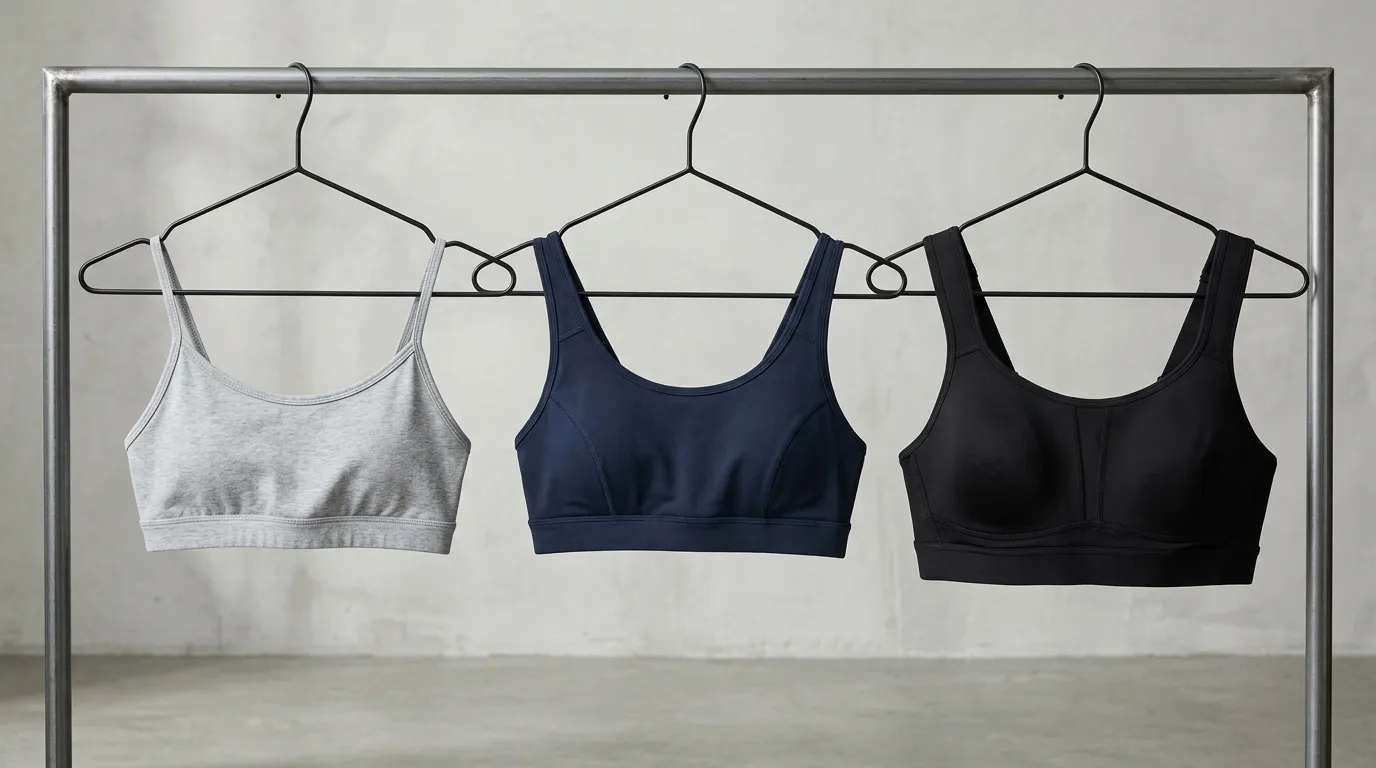
| Sports bra | Support and coverage for the chosen activity | Same base fabric family; construction adjusted for support | One slot from the drop palette | Pairs with the legging and the short |
| Legging | Coverage and movement for the chosen activity | Same base fabric family; weight and stretch confirmed with the supplier | One slot from the drop palette | Pairs with the bra and the top |
| Short | Warm-weather or high-intensity training option | Same base fabric family, lighter weight — verify with the supplier | One slot from the drop palette | Pairs with the bra and the top |
| Top | Torso coverage and a surface for branding | Same base fabric family, or mesh from that family | One slot from the drop palette | Pairs with the legging and the short |
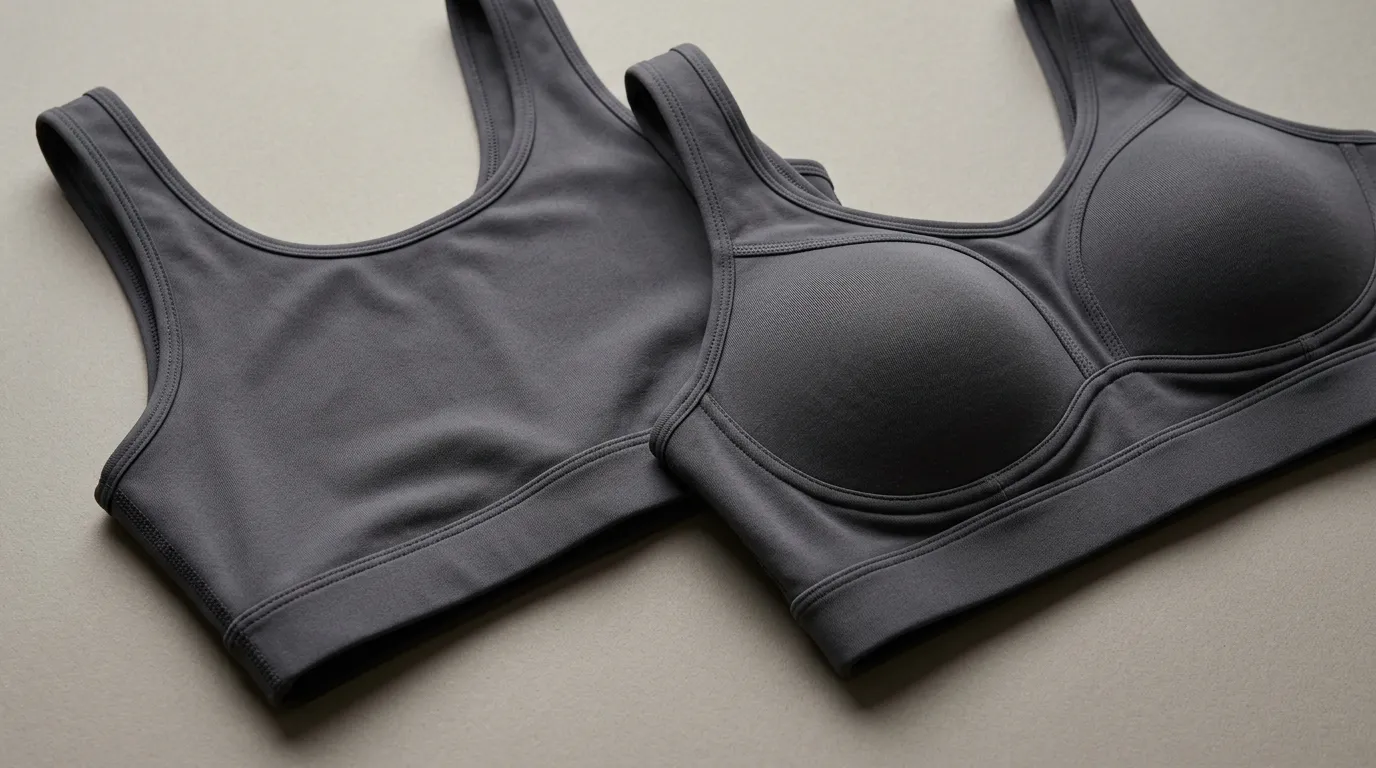
When you brief the bottom, define the fit and function of your leggings before choosing collection-wide details such as color and branding. For the support piece, specify the intended support level and construction for sports bras at the same time, so both pieces are planned against the same activity.
[DIAGRAM: Core range plan showing how the bra, legging, short and top pair with each other across one shared palette.]
How Do You Narrow the Range to a Manageable First Drop?
Cut styles until every remaining piece either pairs with at least one other piece in the range or fills a core role — then apply the same test to colors. Minghang Garments states that MOQ starts from 100 pcs per color per style on stock fabric, so the minimum order is driven by the number of style-and-color combinations, not by the number of styles alone.
Four steps:
- List every candidate style against the four core roles.
- Remove any style that does not pair with another piece or serve one of the two chosen use cases.
- Assign one colorway slot per style before choosing the actual colors.
- Re-check the remaining style-and-color count against the per-color-per-style minimum, and cut again if the total is larger than the first drop needs.
Step four is where most first ranges shrink. Ten styles across five colors is fifty combinations, and each one carries its own minimum. Four styles across three colors is twelve, which is a far easier first drop to sample, fund and sell through.
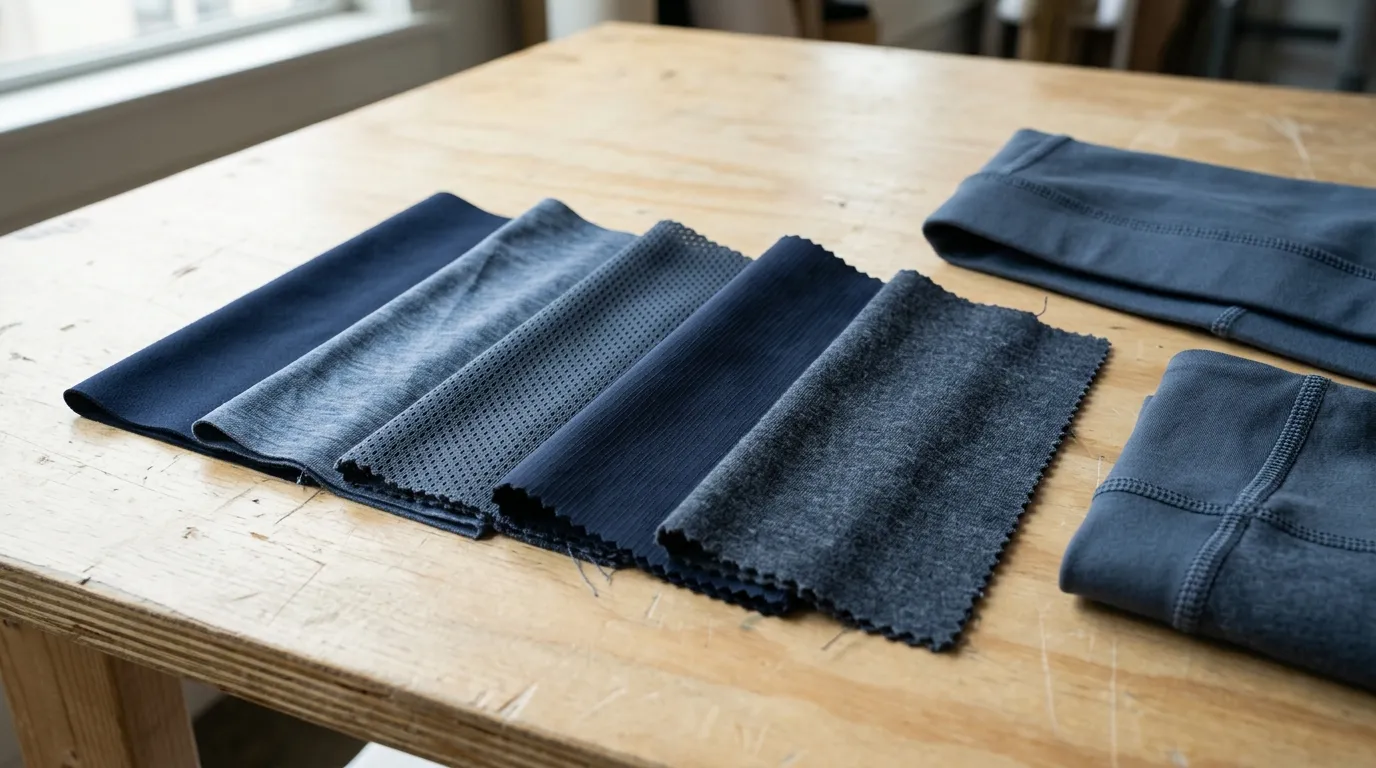
Choose one fabric family as the collection's base so the pieces feel related, then adjust weight, stretch and construction for each garment's function instead of forcing every style into the same specification. Minghang Garments names nylon/spandex, polyester/spandex, stretch woven, mesh and cotton blends among the materials it sources and develops.
One fabric family is a coordination device, not a technical rule. The activity and the garment function decide the final specification, and the supplier should confirm suitability before sampling.
Raise these questions for each style:
- Does the garment need more support or more stretch recovery than the base fabric gives?
- Does coverage change with movement, and does that point to a different weight or construction?
- Does the piece need a different hand-feel — brushed, smooth or mesh-like — while staying visually related?
- Do the trims and seams work with the chosen fabric, or do they need a different finish?
Answering these per style keeps the collection coherent without pretending that a sports bra and a hoodie can share one specification. Where an answer is uncertain, ask the supplier to propose options and confirm them in writing before sampling.
[DIAGRAM: One base fabric family branching into four garment constructions, showing where weight, stretch and construction change.]
How Should You Limit and Coordinate Colorways?
Limit the first drop to a small palette and give every color a job. A workable rule for a first collection is one base color, one core neutral and at most one accent. Every style then takes a slot from that palette, and any color that cannot pair with at least two other pieces is dropped.
That structure does two things. It makes sets look intentional, and it keeps the order small, because each colorway carries its own minimum per style.
If a color is important to the brand but cannot pair with the rest of the range, save it for the second drop. A first collection is easier to sell through when the palette is narrow enough that a customer can mix any two pieces.
How Do You Plan Coordinated Sets Without Making Every Style Identical?
Coordinate the details a customer sees together — palette, trims, branding, waistband and seam language — while letting support, coverage and fit differ from style to style. Coordination is about visual and brand consistency, not about making every piece the same.
Keep consistent across the set: color palette, label and branding placement, trim and hardware finish, and the general seam language.
Let vary by style: support level, coverage, fabric weight, and the construction details that serve the activity.
Decoration choices also depend on the item and the fabric. Custom Ink notes that decoration options depend on the item and fabric, describing sublimation for polyester jerseys, screen printing for many performance tees and embroidery for polo-style activewear — a reminder to plan decoration per style rather than assuming one method covers the range.
When a set is coordinated across pieces, an activewear sets manufacturer can produce the pieces against one approved color and branding direction instead of treating each style as a separate project.
What Should You Check in Samples Before Approving the Range?
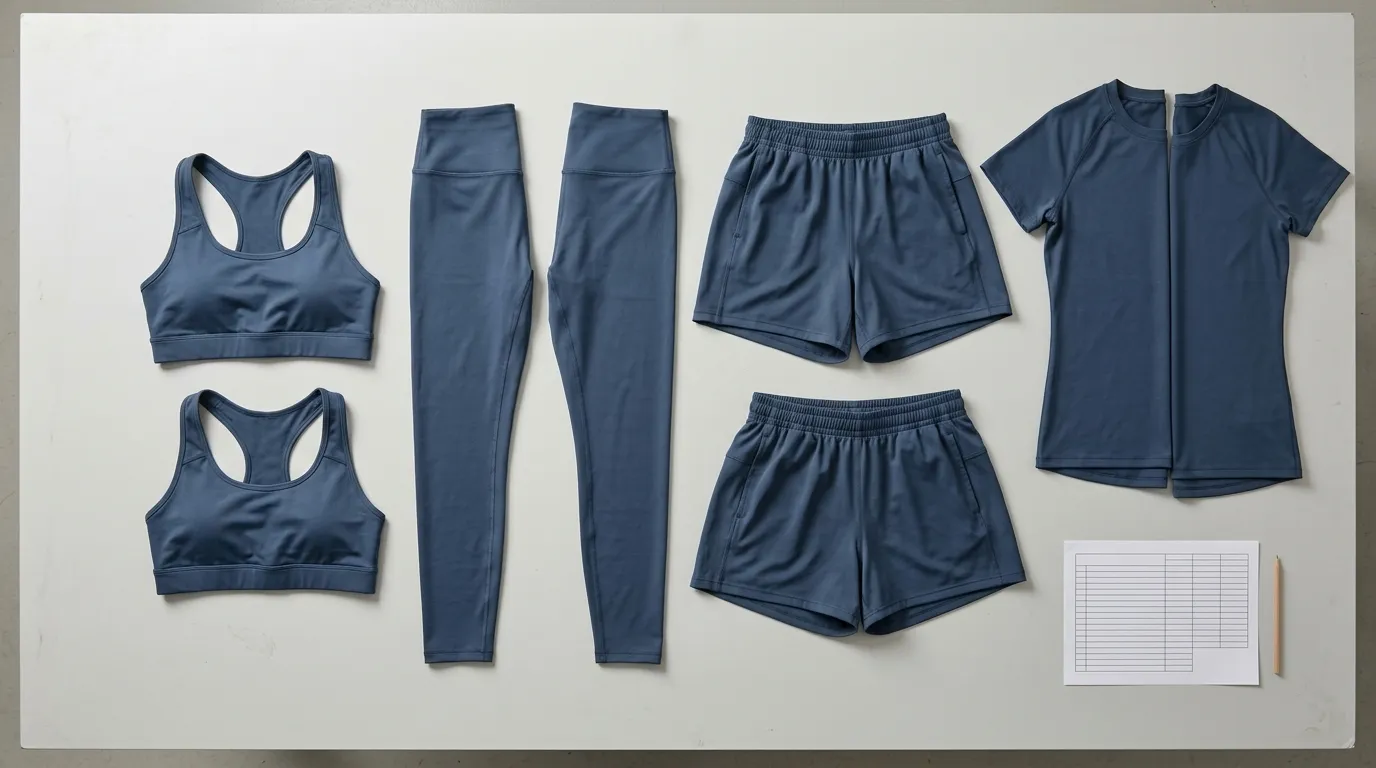
Review samples as a group, not one at a time. Check that each piece performs for its chosen activity, and that the set still reads as one collection when the samples sit side by side on the table.
Per garment:
- Fit and movement for the chosen activity.
- Support and coverage, checked in motion rather than standing still.
- Construction at stress points, including seams and high-stretch areas.
- Trim, label and branding placement.
Across the range:
- The palette holds together as a set.
- Fabric hand-feel feels related from piece to piece.
- Branding is consistent in position and finish.
- Every style pairs with at least one other style.
Minghang Garments describes a "5+1 Step Quality Control System" covering incoming materials, cutting, in-line sewing, semi-finished garments, final inspection and pre-shipment verification, which is the stage at which an approved range moves from samples into production with a custom activewear manufacturer.
[PHOTO: Approved samples laid out side by side, with per-garment and across-the-range review points marked.]
Frequently asked questions
Do I need a tech pack before starting a custom activewear collection?
You do not need a full tech pack to start planning a range, but you need one before sampling. Begin with a style brief covering the core role, activity, fabric direction, colorway, fit notes and trims for each piece, then expand it into a technical pack once samples are approved.
How long does sampling and bulk production take for a custom activewear range?
Minghang Garments states that sampling typically takes 7–15 working days depending on product complexity, fabric and customization, and that bulk production generally takes 25–45 days after sample and material approval. Treat both as planning ranges and confirm current terms before committing to a launch date.
How many styles should a first activewear collection include?
There is no fixed number. Start from four core roles — bra, legging, short and top — and cut any style that does not pair with another piece or serve one of the chosen use cases. Because minimums apply per color per style, adding styles and colorways raises the total order quantity.
-
Share
-

-

-