 Contact Us

Table of Contents

Contact Us
Sourcing activewear from China means moving from a defined product brief to a verified factory, an approved sample, agreed order terms and an inspected shipment. The process has seven practical stages: define the brief, shortlist factories, verify capability, request samples, compare MOQ and terms, approve specifications in writing, then arrange inspection and shipping.
[DIAGRAM: Seven-stage activewear sourcing flow, from product brief to pre-shipment inspection, labelling the document produced at each stage.]
What Does Sourcing Activewear From China Involve?
Sourcing activewear from China is a sequence of documented decisions, not a single purchase: you specify the product, qualify a factory, approve a sample, lock commercial terms, then verify the bulk goods before they ship. Activewear sourcing is the process of contracting a factory in China to develop, sample and produce garments such as leggings, sports bras, shorts and hoodies to your specification.
Wearzio presents an eight-step manufacturer qualification process that runs from defining product requirements through supplier selection and protecting the first bulk order. Wearzio also advises buyers to define product, fabric, performance, construction, size and order requirements before requesting comparable factory quotations — a quotation built on a vague brief cannot be compared with any other.
The ordering matters more than the individual tasks. A factory shortlist is only useful once the brief exists, a sample is only meaningful against that brief, and an inspection is only decisive if the specification record was signed before production started.
Minghang Garments, a custom clothing manufacturer in Dongguan, describes a 5+1 quality control system that spans incoming materials to pre-shipment verification, with sampling typically taking 7–15 working days and bulk production generally taking 25–45 days after sample and material approval.
| Stage | Buyer decision | Document produced | What to check before moving on |
|---|---|---|---|
| 1. Product brief | What exactly is being made | Technical brief or tech pack | Fabric, construction, size range and quantity are stated |
| 2. Factory shortlist | Which candidates to contact | Shortlist and enquiry template | Candidates make the same product category |
| 3. Capability verification | Which factories are credible | Evidence of category, fabric and QC process | Claims are supported, not just stated |
| 4. Sampling | Whether the sample passes | Sample approval record | Sample matches the brief, not just the last sample |
| 5. Terms and quotation | Whether quotes are comparable | Written quotation | Same specification, quantity and packaging across suppliers |
| 6. Specification lock | Whether production can start | Signed specification record | Approved sample, measurements and packaging all recorded |
| 7. Inspection and shipment | Whether goods can ship | Inspection record | Criterion, stage and outcome agreed in advance |
Step 1 — Define the Product Brief Before You Contact Factories
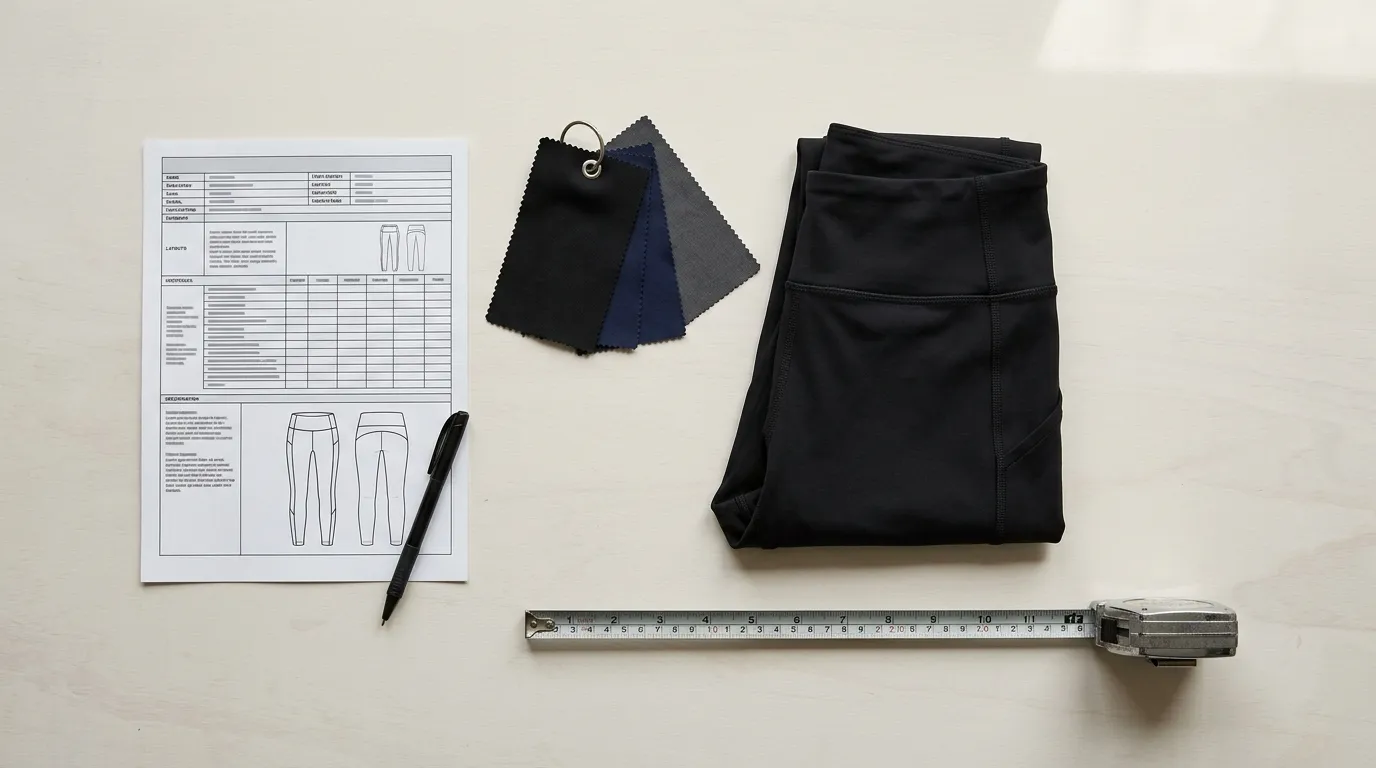
A brief that names the product, fabric, performance, construction, size range and expected order quantity is what turns a vague enquiry into a quotation you can compare. Without it, every factory quotes a different garment and the prices mean nothing.
Wearzio advises defining product, fabric, performance, construction, size and order requirements before requesting comparable factory quotations. In practice that means writing the brief before the first email, not after the third quotation arrives.
A tech pack is the document that carries this specification to the factory. It should state the same details the finished sample will be judged against. If a supplier cannot explain which measurements and tolerances it will check, treat that as an open question rather than a minor detail.
Checklist for the technical brief:
- Style and intended use case
- Fabric composition and weight in grams per square metre (GSM)
- Stretch and recovery expectation
- Seam types and construction
- Size range and measurement points
- Branding, labels and packaging
- Quantity, colour breakdown and expected reorder pattern
Minghang Garments lists nylon/spandex, polyester/spandex, stretch woven, mesh and cotton blends among the materials it sources or develops, and flatlock, coverstitch and bonded seams among its construction options. That is one manufacturer's stated range, not a universal list — the fabrics a given factory can actually handle should be confirmed against your brief.
Step 2 — How to Find and Shortlist Activewear Manufacturers in China
Build a shortlist from several channels rather than one platform, then narrow it by whether the factory already makes the product category you need. A supplier who has never produced a bonded-seam legging is a poor candidate for one, however attractive the price.
Wearzio identifies manufacturer websites, B2B platforms, trade shows and referrals as sourcing channels, and cautions that platform badges should not replace supplier verification. Treat every directory listing and badge as a lead that has been introduced, not as evidence that has been checked.
Shortlisting steps:
- Search by product category — "activewear manufacturer" — rather than by "clothing manufacturer".
- Check whether the visible product range matches your construction and fabric, not just your category.
- Send the identical enquiry template to every candidate so the replies can be compared.
- Remove any factory that cannot answer material or construction questions specifically.
- Keep a small shortlist for in-depth verification rather than a long list of unverified names.
Every enquiry should include the same items. Use this template:
- Product and intended use case
- Fabric composition and GSM
- Construction and seam types
- Size range
- Quantity per style and per colour
- Branding, labels and packaging requirements
- Required sample lead time and bulk lead time
- MOQ basis — per style, per colour or per fabric
- What the quotation includes and excludes
- Inspection options and who arranges them
Because a factory quotation is only as useful as the assumptions behind it, the same template sent to five suppliers produces five comparable answers. Different templates produce five documents you cannot line up.
Step 3 — Verify a Factory's Activewear Capability
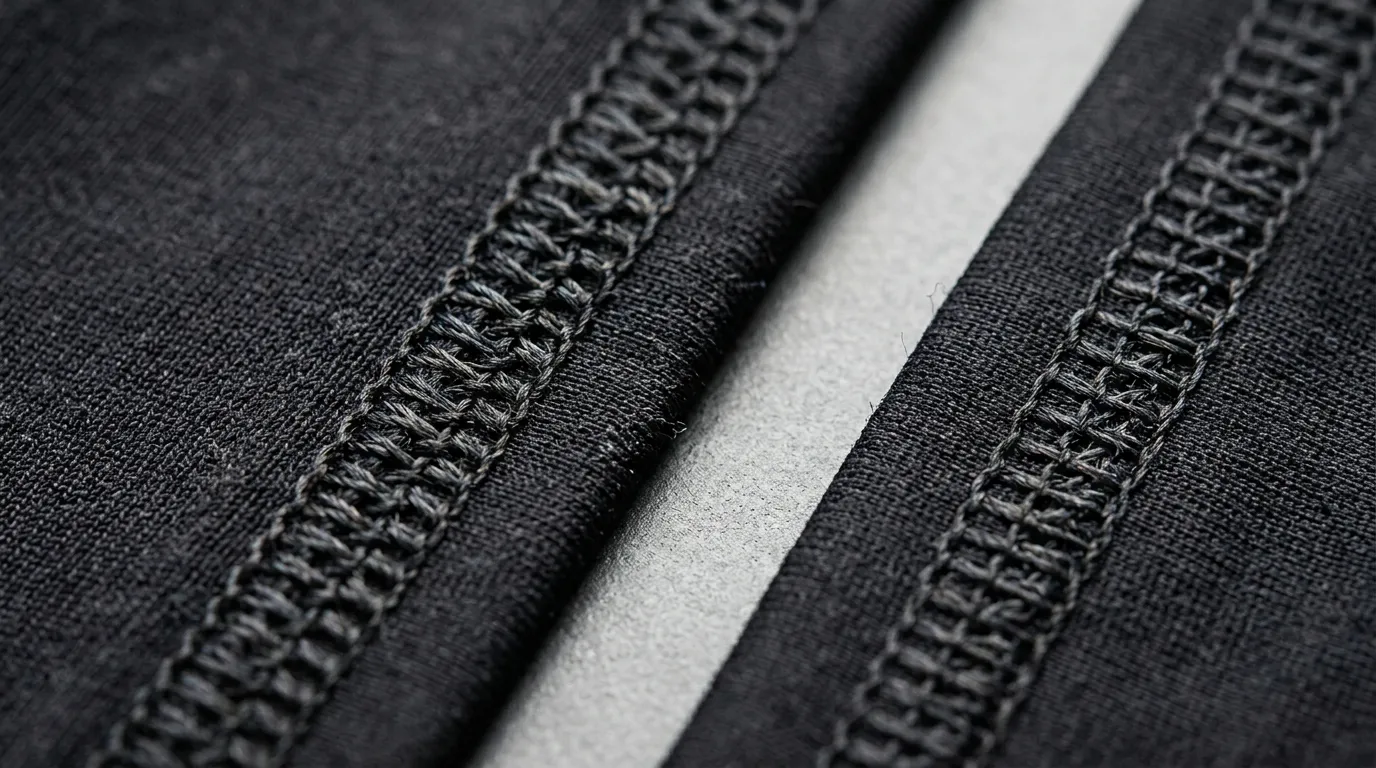
Verification means asking each shortlisted factory to show evidence for the exact capability you are buying — the product category, the fabric, the construction and the finishing — not a general company profile. A factory page that describes sportswear in general tells you very little about who will assemble a high-stretch legging.
Wearzio cautions that platform badges and profile claims should not replace supplier verification. The practical test is whether a supplier can answer specific questions about your garment rather than repeat marketing language.
What to verify, and how:
- Which activewear products are produced in-house rather than subcontracted
- How fabric and trims are sourced, and whether the mill is named
- Which construction options the factory actually runs, such as flatlock, coverstitch or bonded seams
- Whether there is a sample room and who works in it
- Who owns quality control and at which production stages
- Written statements of their QC process, sample lead time and MOQ basis
Minghang Garments describes its operation as a 12,000 m² production floor with a 2,000 m² sample centre and capacity of up to 500,000 pieces per month. That is the kind of concrete evidence a factory can be asked to document; a buyer's job is to request the equivalent from every candidate. Suppliers such as those profiled on a custom activewear manufacturer page usually describe this level of product and construction detail — use it as a template for the questions you ask, not as proof of capability on its own.
Technical brief items belong in Step 1, and commercial comparison belongs in Step 5. This section only establishes whether the factory can make the garment.
Step 4 — Request, Evaluate and Approve Samples
Order the sample against the written brief, measure it, test it and record your comments in one place, because the approved sample becomes the reference for bulk. A sample that was never measured against a specification cannot serve as that reference.
Minghang Garments states that sampling typically takes 7–15 working days, a useful planning figure when quoting sample dates to a retail or wholesale buyer.
| Check | What to measure or record | Pass/fail basis |
|---|---|---|
| Measurements | Flat measurements against the size chart | Within the agreed tolerance |
| Fabric | Composition, weight in GSM, hand feel | Matches the brief |
| Stretch | Stretch, recovery and opacity over the target range | Meets the intended use |
| Seams | Seam type, stitch integrity, stretch behaviour under tension | No cracking, puckering or missed stitches |
| Fit | On the intended body shape and size range | Meets the fit brief |
| Trim and branding | Label, tag and print or embroidery placement | Matches the approved artwork |
| Durability | Wash or wear-test result | No unexpected shrinkage or colour change |
Sample approval loop:
- Send the brief with the sample request, including all measurement points.
- Compare the received sample against the brief, not only against the previous sample.
- Consolidate all comments into one round of feedback.
- Approve in writing and keep the approved sample, signed and dated, as the bulk reference.
The most common failure here is comment drift: fit notes spread across email, chat and photo captions, with no single approved version. One consolidated comment round is faster than several overlapping ones.
Step 5 — Compare MOQ, Quotations, Lead Times and Order Terms
Compare quotations only when the specification, quantity, colour breakdown and packaging are the same; then confirm MOQ basis, lead time, payment schedule, shipping arrangement and inspection rights in writing before ordering. Two prices for two different garments are not a comparison.
A minimum order quantity (MOQ) is the smallest order a factory will accept for a given style, colour and fabric. It is always conditional, and the condition matters more than the number.
Minghang Garments states that MOQ starts at 100 pcs per color per style on stock fabric, with 300–500 pcs for custom-developed fabrics or dyeing and 500 pcs per color, size and style for seamless products. Minghang Garments also states that bulk production generally takes 25–45 days after sample and material approval — the clock starts at approval, not at enquiry. Both figures are Minghang Garments' own published terms, and a buyer should expect different numbers from other suppliers.
| Supplier | Activewear products made | Claimed construction capability | MOQ basis | Sample lead time | Quotation inclusions | Terms still unconfirmed |
|---|---|---|---|---|---|---|
| Supplier A | Per style / colour / fabric | Freight, duties, packaging, testing | ||||
| Supplier B |
Terms to confirm in writing with every supplier:
- Deposit and balance schedule, and the point at which each payment falls due
- Whether payment is tied to order milestones or to shipping documents
- Shipping arrangement: which Incoterm applies and who books the freight
- Who pays duties, taxes and destination charges
- Inspection method, timing, who arranges it and who pays
- Packaging standard and carton marking
- How revisions or reorders are quoted
These terms vary by supplier, product and destination, so they belong in the quotation rather than in assumption. For supplier-specific answers, see the manufacturer's faqs rather than relying on general figures.
Step 6 — Lock the Specification Before Bulk Production
Bulk production should start only after the approved sample, technical specification, colour and trim approvals, packaging details and order terms exist in one signed record. A verbal agreement about "the same as the sample" is not a specification, because nobody can prove what it said six weeks later.
| Item | Source of approval | Where it is recorded |
|---|---|---|
| Approved sample | Buyer sign-off, dated | Specification record |
| Measurement chart | Agreed size chart | Specification record |
| Fabric and trims | Mill specification and approval swatch | Specification record |
| Colour standards | Approved lab dip or bulk swatch | Specification record |
| Print or embroidery | Approved artwork and placement | Specification record |
| Labels and packaging | Approved artwork and carton marking | Specification record |
| Quantity and delivery schedule | Signed purchase order | Purchase order |
| QC checkpoints | Agreed inspection plan | Specification record |
Minghang Garments describes its services as covering pattern making, sampling, fabric and trim sourcing, printing, embroidery, garment washing, labels and packaging. Every one of those items is something a buyer should see confirmed in the record before production begins — the manufacturing side of a project, including the setup described on the manufacturer's page, only works when the buyer's approvals are equally specific.
Step 7 — Arrange Inspection and Plan Shipping
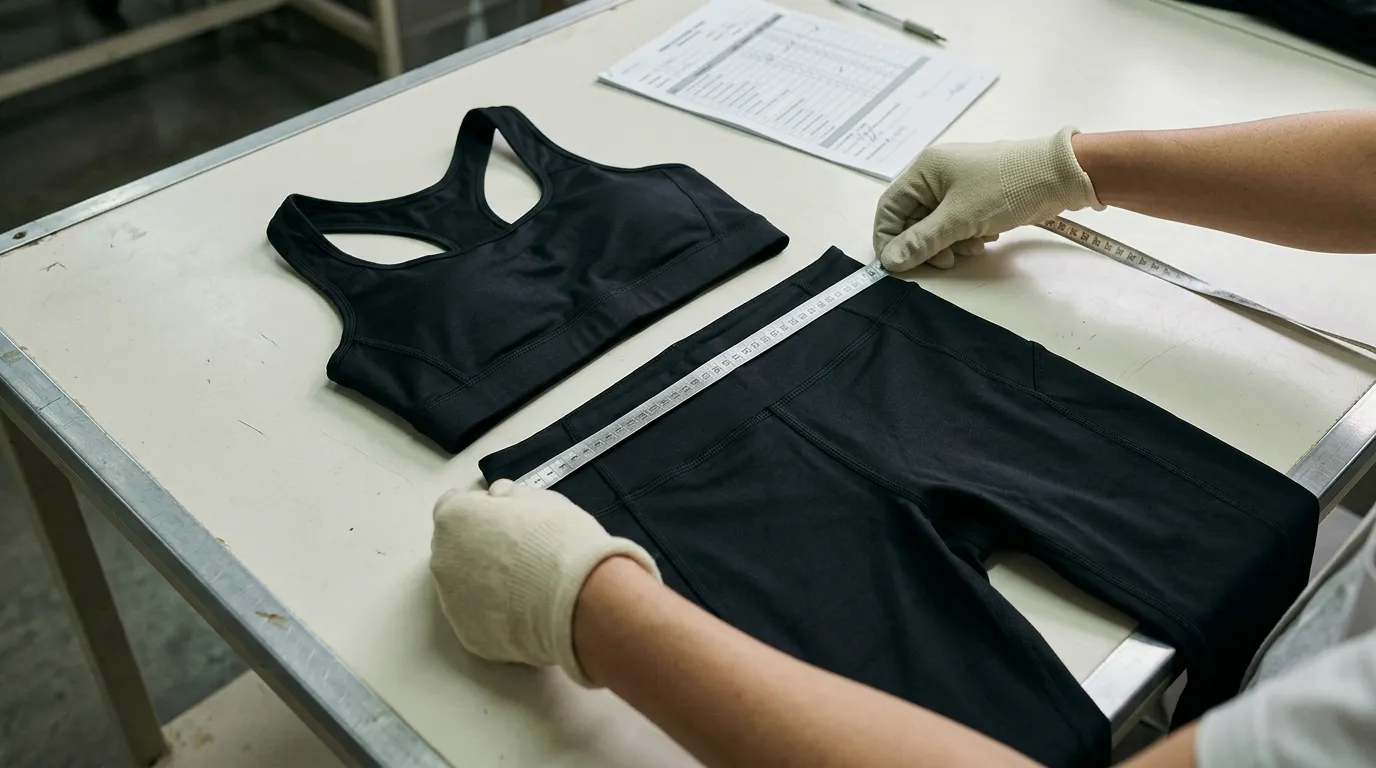
Decide who inspects the goods, at what stage and against which document, before the production window closes — not after the shipment is booked. Inspection arranged late is a negotiation; inspection arranged early is a checkpoint.
Minghang Garments describes its 5+1 quality control stages as incoming materials, cutting, in-line sewing, semi-finished garments, 100% final inspection and pre-shipment verification. Minghang Garments states that bulk production generally takes 25–45 days after sample and material approval, which means the inspection window needs to be planned into the schedule rather than added afterwards.
Inspection checklist:
- Agree the inspection stage and the pass/fail criterion
- Inspect against the approved sample and the specification record
- Decide whether inspection is in-house, buyer-arranged or by a third party, and who pays
- Agree in advance what happens on a fail: rework, re-inspection or negotiation
- Confirm packaging, carton marking and shipping documents
The quality control stages described above show how one factory sequences its checkpoints; the same sequence is a reasonable set of questions to raise with any supplier. Commercial terms are covered in Step 5, and the specification record is covered in Step 6.
Common Sourcing Mistakes and Supplier Red Flags
Most sourcing failures are documentation failures: undefined specifications, one-sample approvals, verbal terms and inspections arranged too late. The garment is rarely the first thing to go wrong.
Watch for these warning signs:
- Enquiries sent without a specification, producing quotes that cannot be compared
- A quotation that states no fabric, packaging or freight assumptions
- A supplier who will not state the basis of its MOQ
- Buyer comments spread across chat threads instead of one approval record
- No agreed inspection criterion before production starts
- A factory that cannot explain who runs each quality control step
Each of these is cheap to fix before sampling and expensive to fix after bulk production.
What This Guide Does Not Cover
Import duties, customs rules and country-specific labelling requirements depend on the destination market and sit outside a general China sourcing guide. For duty, tariff and labelling questions, use a destination-specific resource or a customs broker.
Supplier rankings are also out of scope here: this page explains how to qualify a factory, not which factory to choose. Reputable suppliers are identified per project, through the verification steps above.
Frequently Asked Questions
Who are some reputable activewear suppliers in China?
You Seamless's article on Chinese activewear manufacturers lists 12 companies, including MAES GROUP, D&J Garment, Yotex Apparel, Zhongshan ARLISMAN, Vimost Sports, First Asia Industrial and Berunwear. Treat such listings as leads, not endorsements. Verify each supplier's product category, construction capability, QC process and written terms against your brief before ordering samples.
Do I need to visit a factory in China?
A factory visit improves confidence but is not the only form of evidence. A documented quality control process, a sample produced against your written brief, named fabric sources and an agreed inspection plan can all be verified remotely. If you cannot visit, ask for evidence that answers those same questions in writing.
Can one factory handle both cut-and-sew and seamless activewear?
Not necessarily. Seamless and cut-and-sew production use different machinery, and the acceptable order sizes differ. Minghang Garments states MOQ starts at 100 pcs per color per style on stock fabric for regular styles, while seamless products start at 500 pcs per color, size and style. Confirm which process a factory actually runs before sampling.
If you are preparing a specific activewear brief and want to check whether your quantities, materials and timelines fit the documented manufacturing terms, Minghang Garments publishes its MOQ basis, sampling and bulk lead times, and quality control sequence for that purpose.
-
Share
-

-

-