 Contact Us

Table of Contents

Contact Us
Updated 1 month ago
What Is the MOQ for Activewear Manufacturing?
arafatshuvo
In activewear manufacturing, MOQ (minimum order quantity) is the smallest run a factory will produce for one style. At Minghang Garments, cut-and-sew activewear on stock fabric typically starts at 100 pcs per color per style, custom fabric or dyeing at 300–500 pcs per color, and seamless at 500 pcs per style, color and size.
Key takeaways
- Minghang Garments states three activewear MOQ starting points: 100 pcs per color per style on stock fabric, 300–500 pcs per color for custom fabric or dyeing, and 500 pcs per style, color and size for seamless.
- What the minimum is counted against changes with the route, so 100 pieces per color is not the same commitment as 100 pieces in every size.
- Custom fabric and dyeing need a dedicated material or dye lot; seamless knitting needs yarn setup and machine programming.
- MOQ varies by manufacturer: ZORWILD advertises a 50-piece minimum, while Cozy Active gives 200–300 pieces per color for a standard yoga set.
- Stock fabric is the lowest-minimum route but narrows the choice of exact color, composition, weight and finish.
What does MOQ mean in activewear manufacturing?
MOQ, or minimum order quantity, is the smallest number of units a manufacturer will produce for a given style. Cozy Active defines MOQ as the minimum units required per style, per color or per order in apparel production, which is why one word can describe very different commitments.
There is no single industry-wide figure for activewear. ZORWILD advertises a 50-piece minimum on its sportswear manufacturing page, while Cozy Active gives 200–300 pieces per color for a standard yoga set and 500+ pieces per color for seamless activewear. Both are manufacturer-specific thresholds rather than a benchmark, and the figures below show how one manufacturer actually sets them.
Minghang's activewear MOQ: three production routes
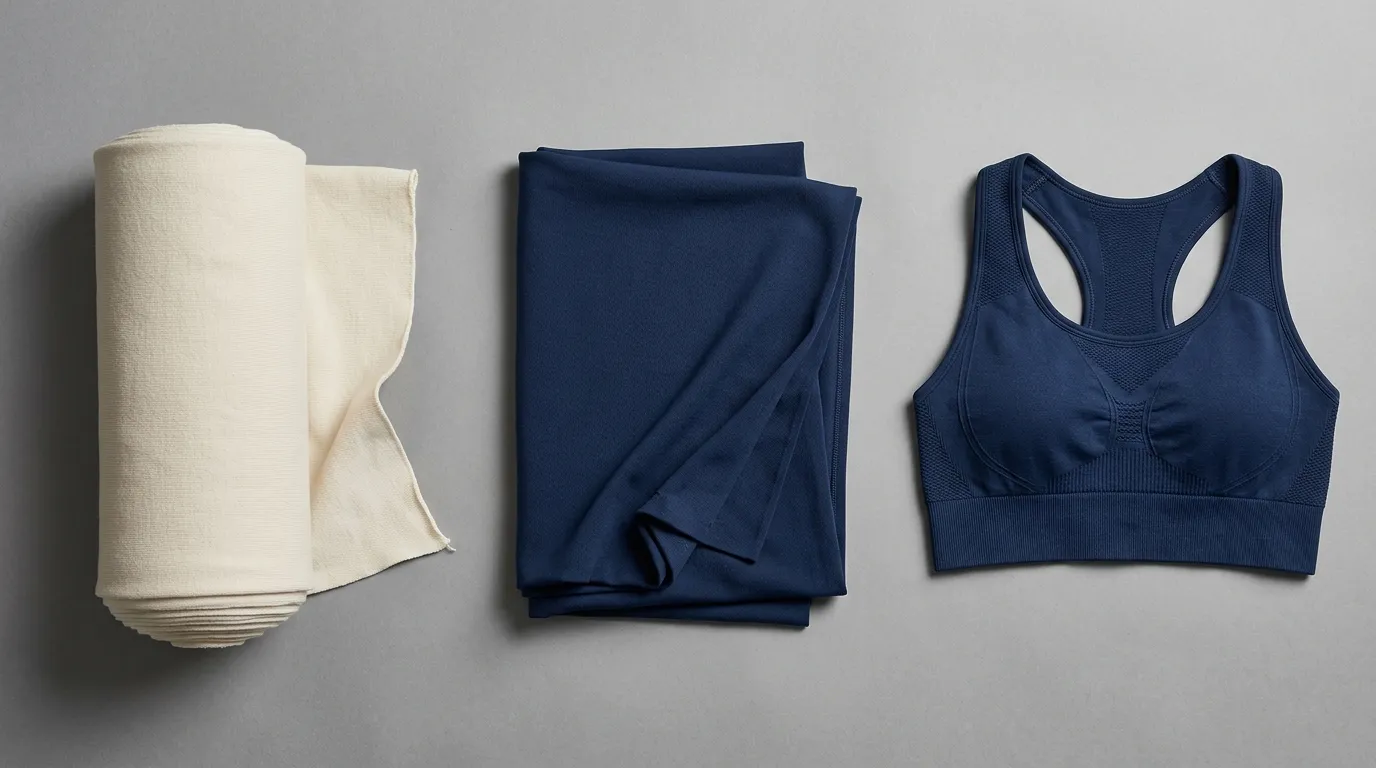
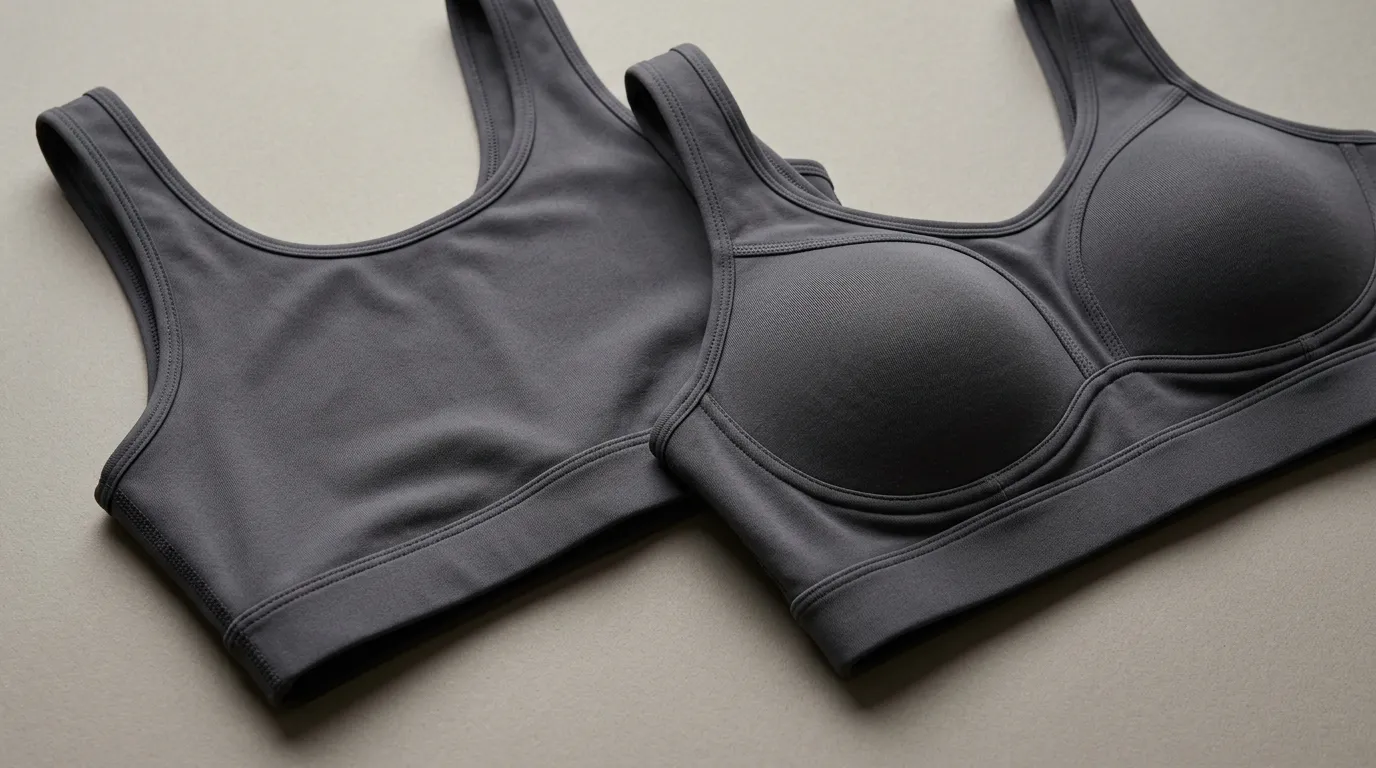
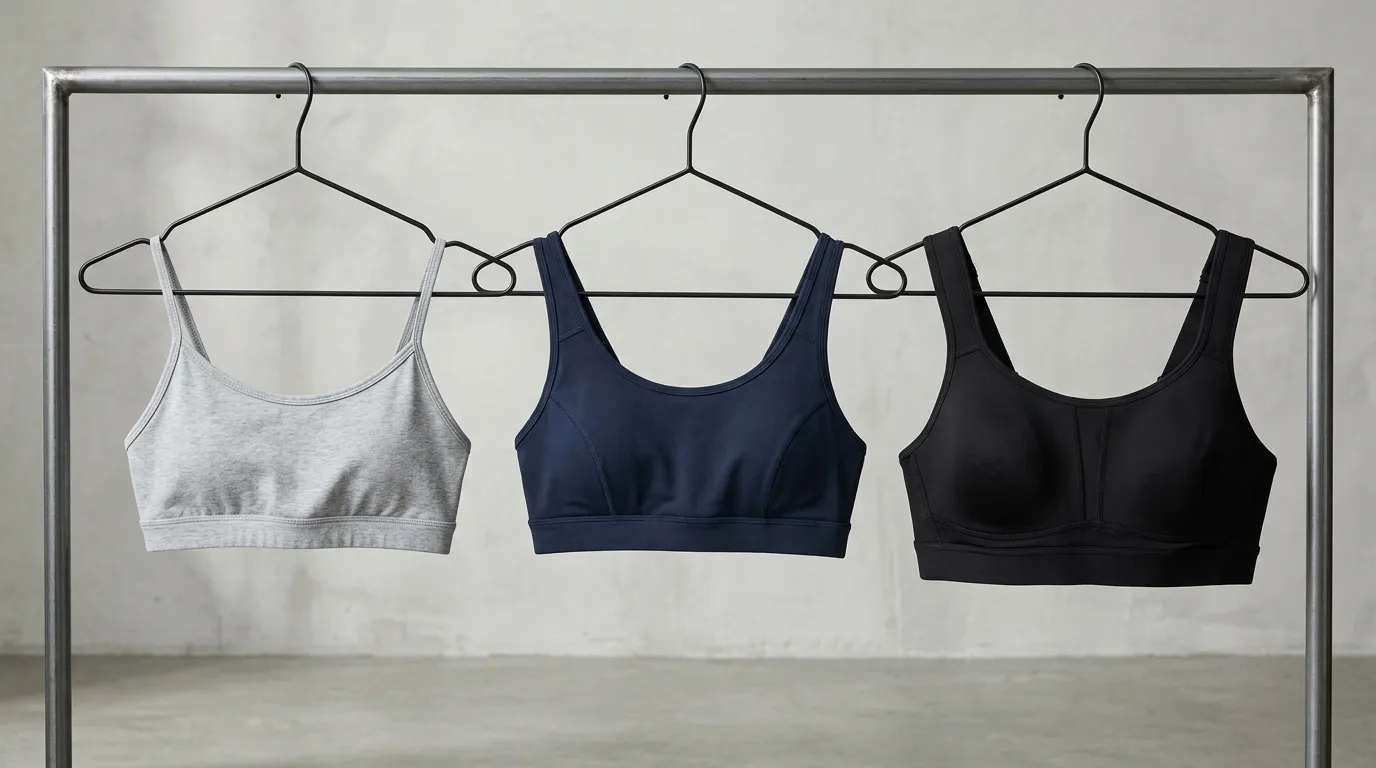
Minghang Garments states a different starting minimum for each production route, and which route applies depends on how the garment is made rather than on the product category alone. The routes cover the activewear sportswear the company produces, including sports bras, leggings and shorts.
| Production route | Minghang Garments' stated starting MOQ | Counted per | Main reason for the minimum | Source |
|---|---|---|---|---|
| Cut-and-sew, stock fabric | 100 pcs | Color, per style | No dedicated material run is needed | Minghang Garments |
| Custom-developed fabric or custom dyeing | 300–500 pcs | Color | The run must justify a dedicated material or dye lot | Minghang Garments |
| Seamless | 500 pcs | Style, color and size | Yarn setup, machine programming, color changes and knitting efficiency | Minghang Garments |
[DIAGRAM: Three-route activewear MOQ comparison showing 100 pcs per color per style on stock fabric, 300–500 pcs per color for custom fabric or dyeing, and 500 pcs per style, color and size for seamless, with the count basis shown as icons.]
Cut-and-sew with stock fabric — from 100 pcs per color per style
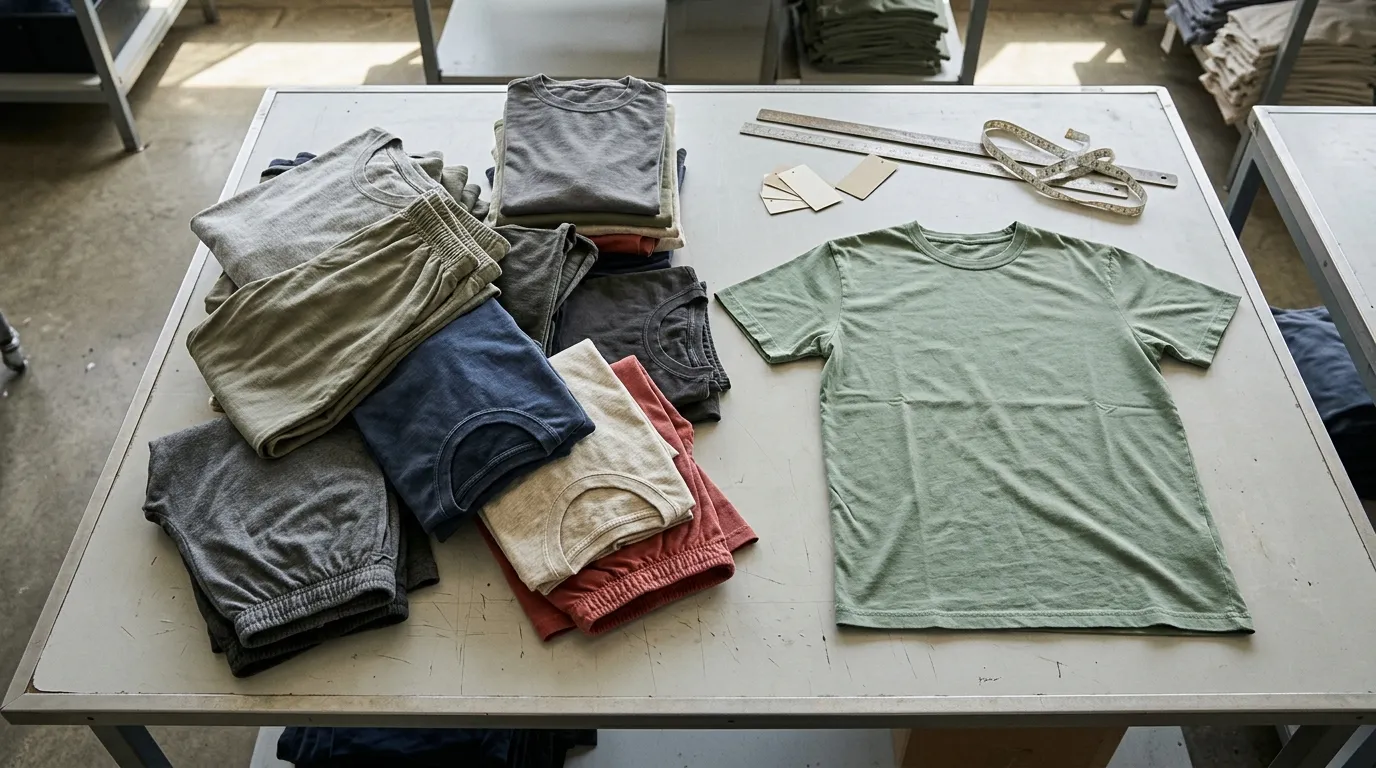
When a suitable fabric is already available by the roll, Minghang Garments states that most regular activewear styles using that stock fabric typically start at 100 pieces per color per style. The minimum is expressed per color and per style, so two colors of the same legging style are two separate 100-piece commitments.
This is the lowest of the three routes because the manufacturer does not have to open a dedicated fabric or dye lot. The trade-off sits in fabric choice, which the section on stock fabric and custom dye lots explains.
Custom fabric or custom dyeing — 300–500 pcs per color
Requesting a fabric developed for the brand, or an exact color that is not held in stock, raises Minghang Garments' stated minimum to 300–500 pieces per color. That figure is counted per color rather than per style, so every color in the range carries its own commitment.
Minghang Garments attributes the higher minimum to dedicated material or dye lots, and states that the exact requirement depends on the fabric construction, the mill's own minimum, the dyeing method and the fabric consumption per garment. Because the mill or dye house sets its minimum before the garment factory sets its own, this route can move further than the cut-and-sew figure.
Seamless — from 500 pcs per style, color and size
Minghang Garments states that seamless products typically start at 500 pieces per style, color and size. Because the minimum applies to every style, color and size combination, seamless is the largest total commitment of the three routes.
A buyer ordering two colors in three sizes is therefore not looking at 500 pieces, but at six separate 500-piece combinations. The production reason for that count basis is set out in "Why seamless activewear has a different (and higher) minimum".
Is MOQ counted per order, per style, per color or per size?
It depends on the route: Minghang Garments states 100 pcs per color per style for stock-fabric cut-and-sew, 300–500 pcs per color for custom fabric or dyeing, and 500 pcs per style, color and size for seamless. Misreading that basis is the most common way buyers underestimate a first order.
Cozy Active describes MOQ as counted per style, per color or per order depending on how a supplier defines it, so two factories quoting a similar number may be quoting different commitments.
| Minghang Garments route | Stated minimum | Counted per | Illustrative commitment: 2 colors, 3 sizes |
|---|---|---|---|
| Cut-and-sew, stock fabric | 100 pcs | Color, per style | 2 × 100 = 200 pcs |
| Custom fabric or custom dyeing | 300–500 pcs | Color | 2 × 300 to 2 × 500 = 600–1,000 pcs |
| Seamless | 500 pcs | Style, color and size | 2 colors × 3 sizes × 500 = 3,000 pcs |
The last column is arithmetic on the stated minimums, not a quotation or a price estimate. It shows why a seamless minimum of 500 pieces is a different proposition from a stock-fabric minimum of 100.
[DIAGRAM: Grid of style × color × size showing what one MOQ unit covers on each of the three routes, so the multiplication effect is visible at a glance.]
Why stock fabric keeps minimums low — and custom fabric or dyeing raises them
Stock fabric keeps activewear minimums low because it has already been produced and is held by the roll, so a small run does not have to justify a material order. Minghang Garments' clothing MOQ guide states that available stock fabric can reduce material minimums, while offering less flexibility in exact color, composition, weight, finish and long-term availability than custom development.
Custom fabric and custom dyeing work in the opposite direction. According to the same guide, they require a dedicated material or dye lot, and the requirement depends on fabric construction, mill requirements, dyeing method and garment consumption. The mill's or dye house's minimum is set first, and the garment factory's minimum has to sit above it.
A practical decision rule follows from that: if the exact color or fabric is a brand-defining element, budget for the custom-lot minimum, and if it is not, choosing from available stock fabric is the fastest route to a smaller first run. Lower quantities are not automatically cheaper per piece — Harvest SPF notes that a small trial order reduces inventory exposure while leaving sampling, patterns, labels, testing, packaging, inspection and freight costs in place.
Why seamless activewear has a different (and higher) minimum
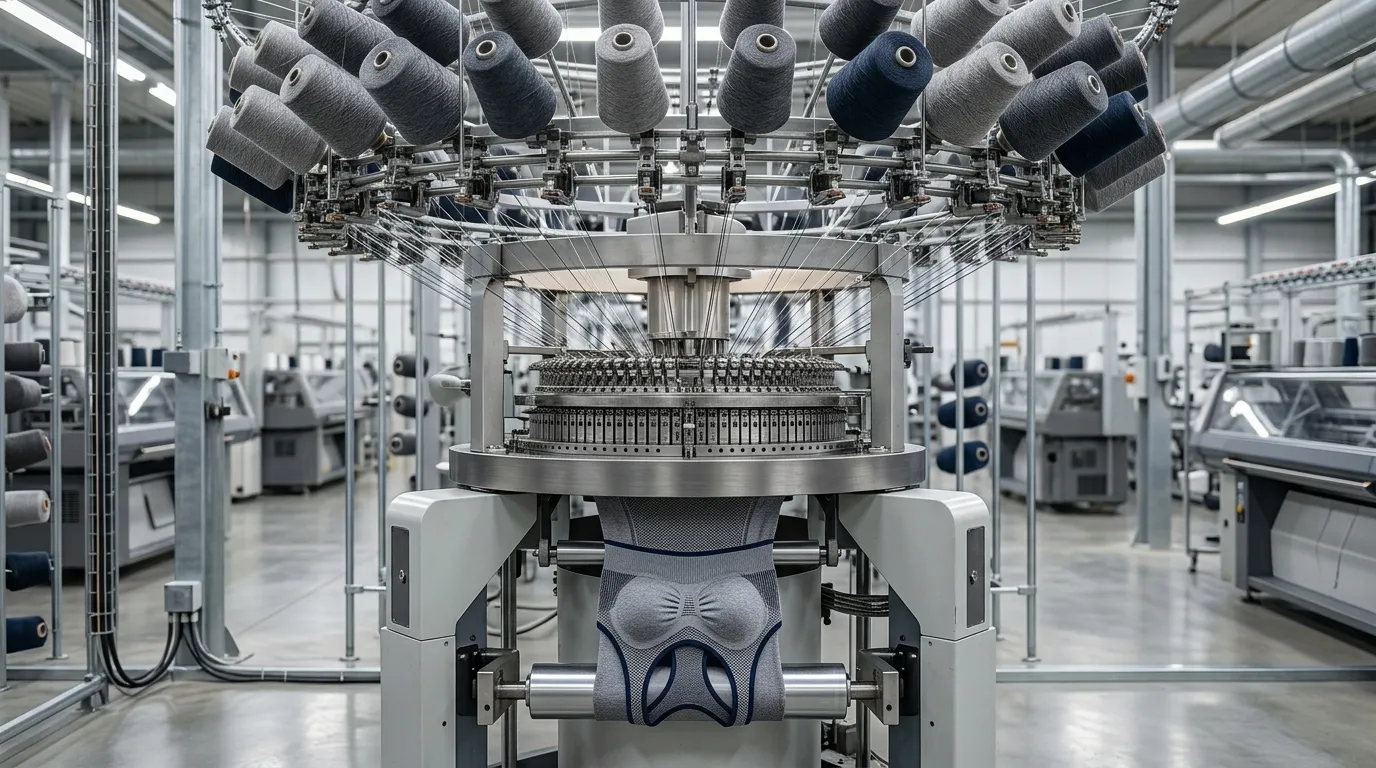
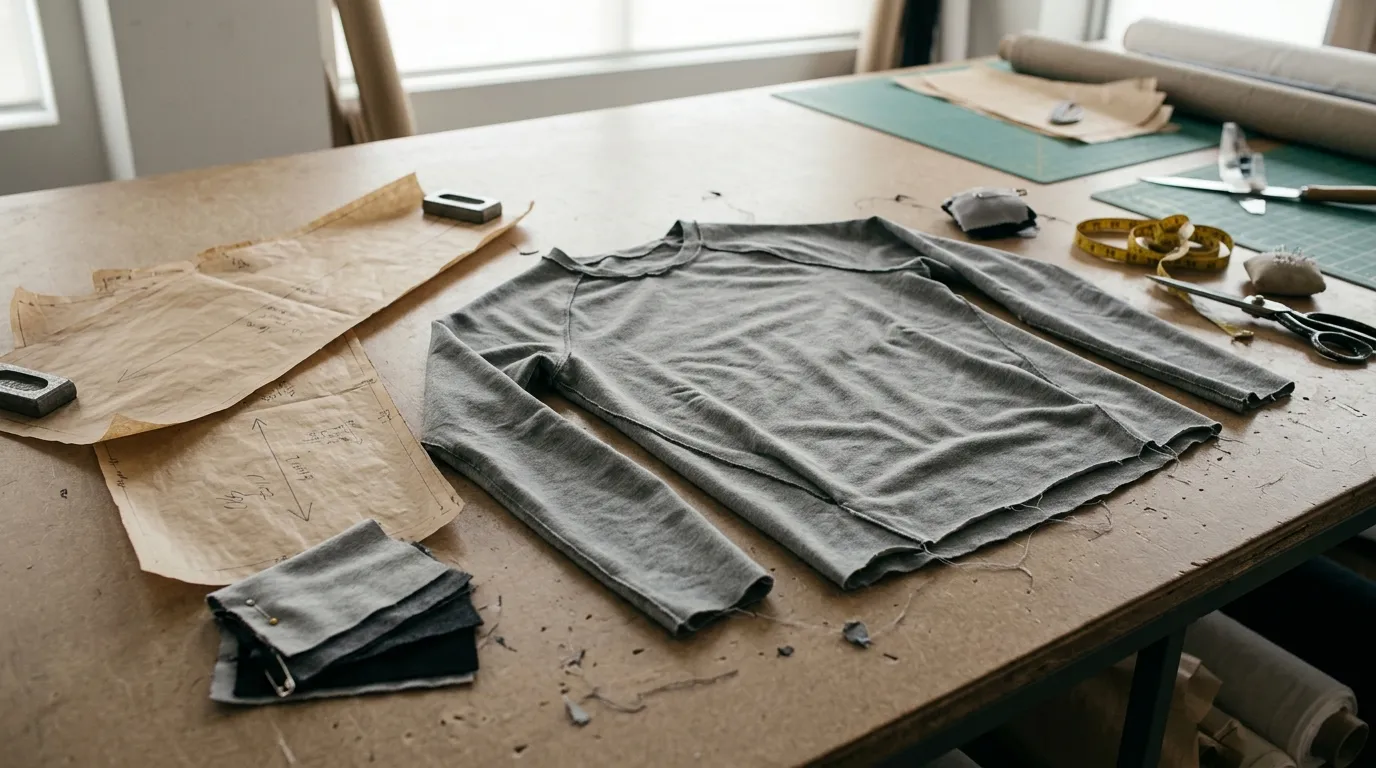
Seamless garments are knitted as whole pieces on specialised machines rather than cut from fabric rolls. Minghang Garments' clothing MOQ guide states that yarn setup, machine programming, color changes and knitting efficiency all affect the minimum, which is why seamless sits above cut-and-sew activewear.
Each size knits differently, so the minimum is set for every style, color and size combination rather than for the style alone. The construction differences behind that gap are compared in cut and sew vs seamless activewear manufacturing.
[PHOTO: A fabric roll being cut to pattern on a cut-and-sew line beside a seamless knitting machine producing a finished garment panel, illustrating the two different setup requirements.]
What else can change your activewear MOQ?
MOQ is rarely one fixed number. Minghang Garments states that requirements depend on fabric construction, mill requirements, dyeing method and garment consumption, and those variables sit alongside choices the buyer controls directly.
Confirm each of these with the supplier before confirming quantities:
- Fabric status — whether the fabric is already in stock or has to be developed.
- Number of colors — each color can carry its own minimum.
- Sizes and size curve — a per-size minimum means an unsold size is an unsold minimum.
- Decoration — printing, embroidery and other finishing steps.
- Trims, labels and packaging — the components that complete the garment.
- Fabric consumption per garment — how much fabric each piece uses.
For the full breakdown of how materials, trims and production steps shape an apparel minimum, see the clothing MOQ guide.
How to plan quantities across styles, colors and sizes
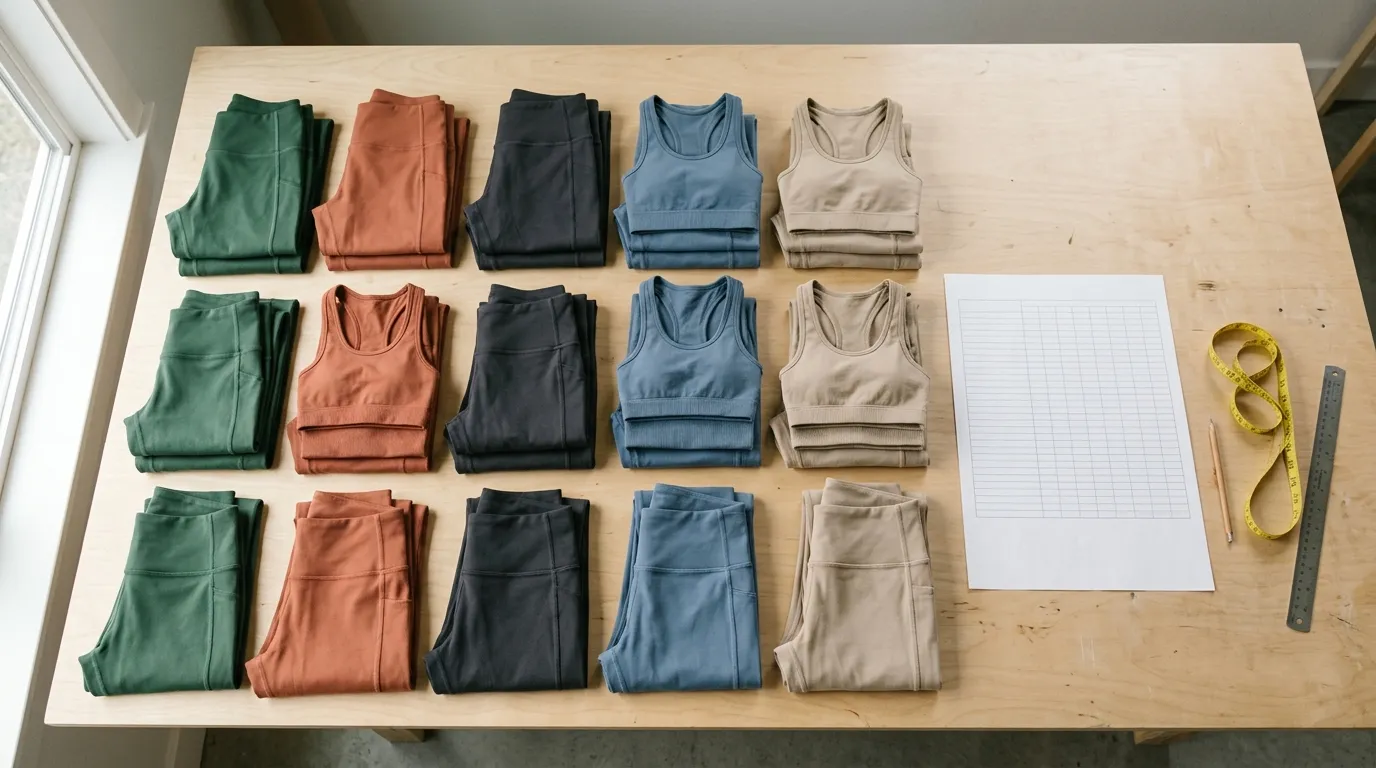
Plan the styles you can genuinely carry, keep the color count low on a first run, and check which sizes will actually sell before committing to a per-size minimum. Four rules make the arithmetic easier to control:
- Choose stock fabric when the exact color is not brand-defining — it is the route to the smallest committed quantity.
- Consolidate colors within one style before adding styles, because most minimums apply per color.
- For seamless, start with the sizes you can sell, since the minimum applies to every style, color and size.
- Confirm the count basis in writing with the manufacturer before confirming quantities.
Buyers who want to know whether a specific style qualifies for the stock-fabric minimum can ask Minghang Garments to confirm the MOQ, the count basis, and the sampling and bulk timelines for that style before quantities are committed.
-
Share
-

-

-