 Contact Us

Table of Contents

Contact Us
Updated 1 month ago
Can I Start a Clothing Brand With 100 Pieces?
arafatshuvo
Yes — with conditions. Small-batch clothing production can start at 100 pieces when those 100 pieces are one style in one color made from available stock fabric, which matches Minghang Garments' stated minimum of 100 pcs per color per style. Custom fabric, extra colors and seamless construction raise the minimum; this page explains each limit and how to split sizes.
Key takeaways
- 100 pieces works when it is one style in one color on available stock fabric — the condition behind Minghang Garments' stated 100 pcs per color per style minimum.
- Custom-developed or custom-dyed fabric typically moves the minimum to 300–500 pieces per color, according to Minghang Garments' MOQ guide.
- Seamless styles typically start at 500 pieces per style, color and size, the same guide states.
- 100 pieces does not mean four styles or three colors: each color carries its own minimum.
- Minghang Garments lists sampling at 7–15 working days and bulk production at 25–45 days after sample and material approval.
What Does "100 Pieces" Actually Mean in an Apparel Order?
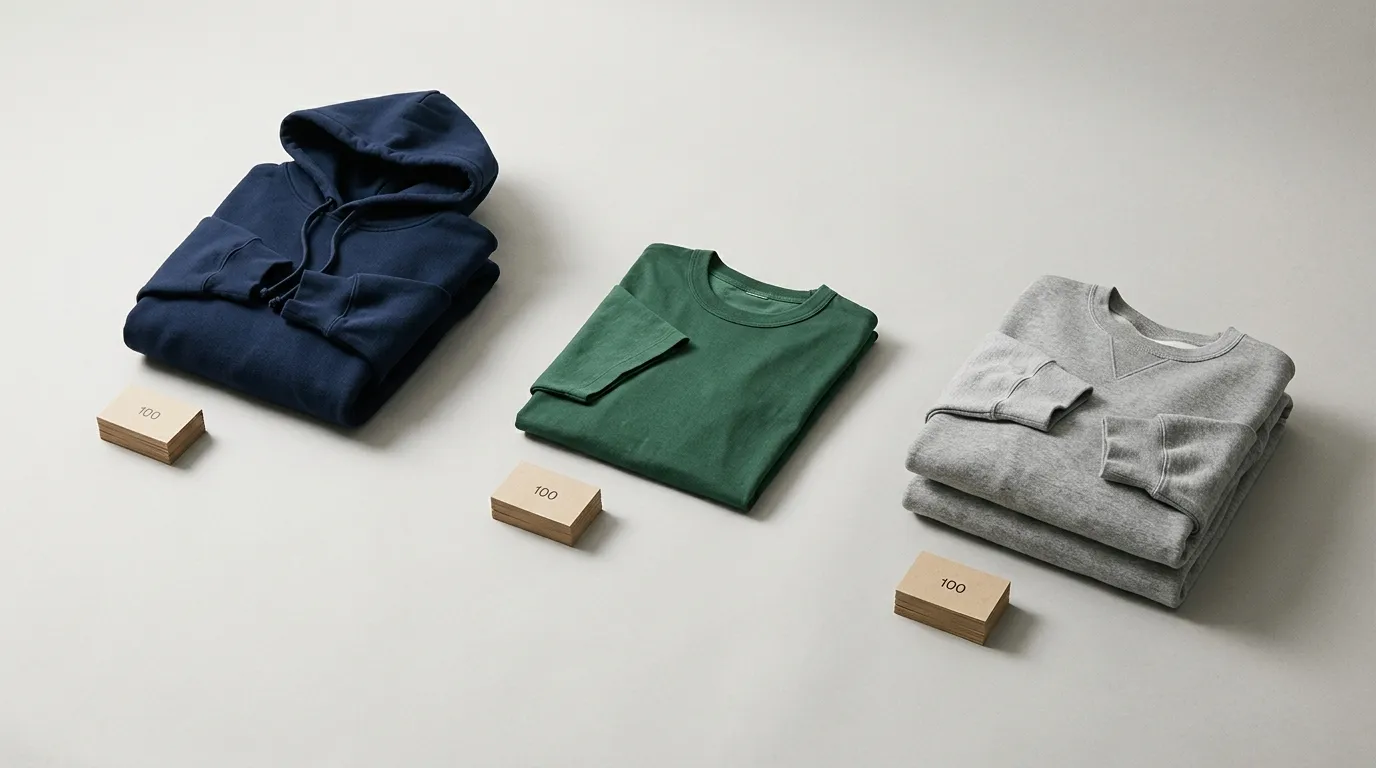
In apparel manufacturing, a minimum order quantity (MOQ) is normally counted per style and per color rather than as one total across a whole collection. A 100-piece order therefore usually means 100 garments of one style in one color, not 100 garments spread across several designs.
According to Minghang Garments' clothing MOQ guide, production typically starts at 100 pieces per color per style for regular activewear and streetwear made with suitable available stock fabrics. That is a per-unit minimum, so it multiplies as soon as you add variety.
| Order shape | Pieces required at a 100 pcs per color per style minimum | Where the plan breaks |
|---|---|---|
| 1 style / 1 color | 100 | Fits the stated minimum as-is |
| 1 style / 3 colors | 300 | Two extra colorways, two extra minimums |
| 2 styles / 2 colors | 400 | Style count doubles the requirement |
| 4 styles / 3 colors | 1,200 | Twelve separate minimums |
The figures in this table are arithmetic consequences of the stated minimum, not a quotation from any supplier.
Starting quantities are not identical across factories. Shanghai Garment, another supplier, states that a typical starting quantity may range from 50–200 units per style, depending on budget, marketing plan and production partner. That is Shanghai Garment's own general guidance, not an industry standard, and it does not tell you what any specific factory will accept.
When Can a 100-Piece Order Actually Be Produced?
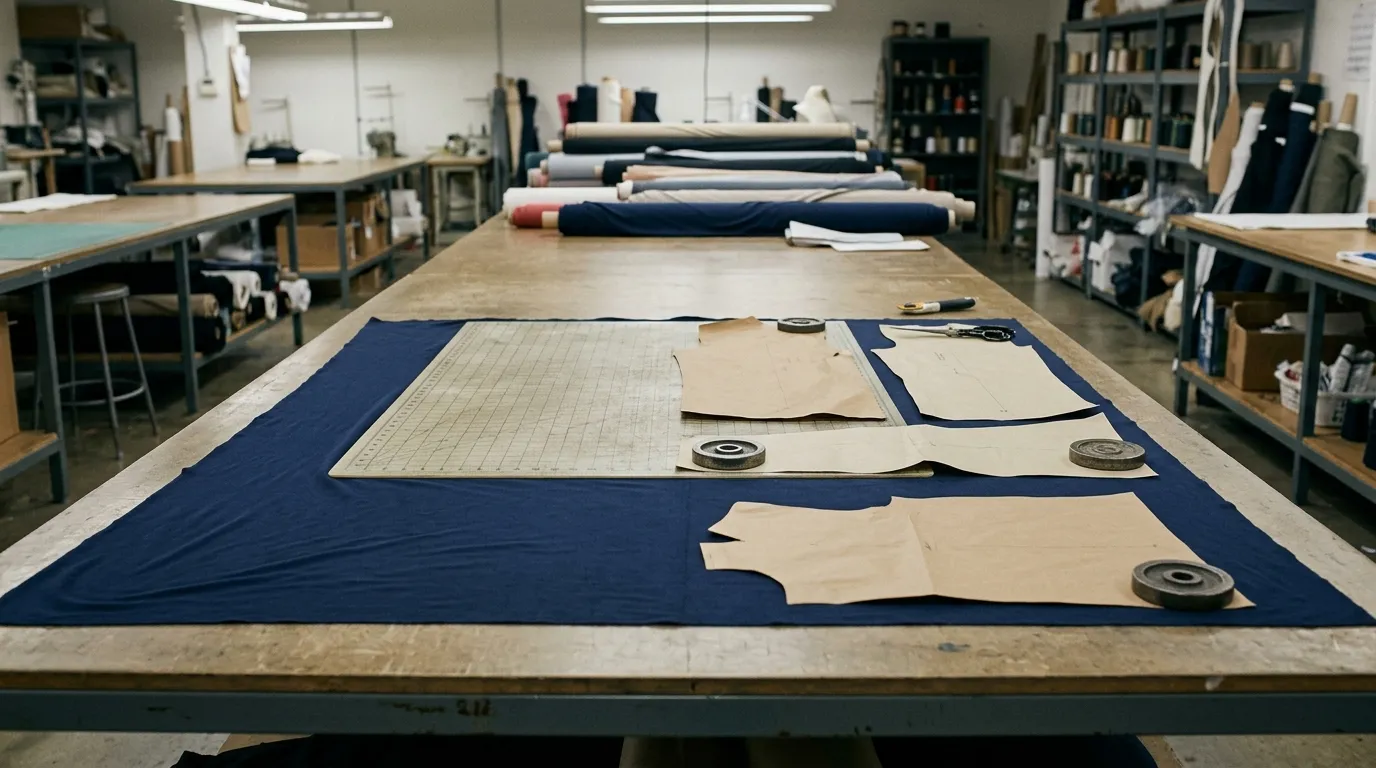
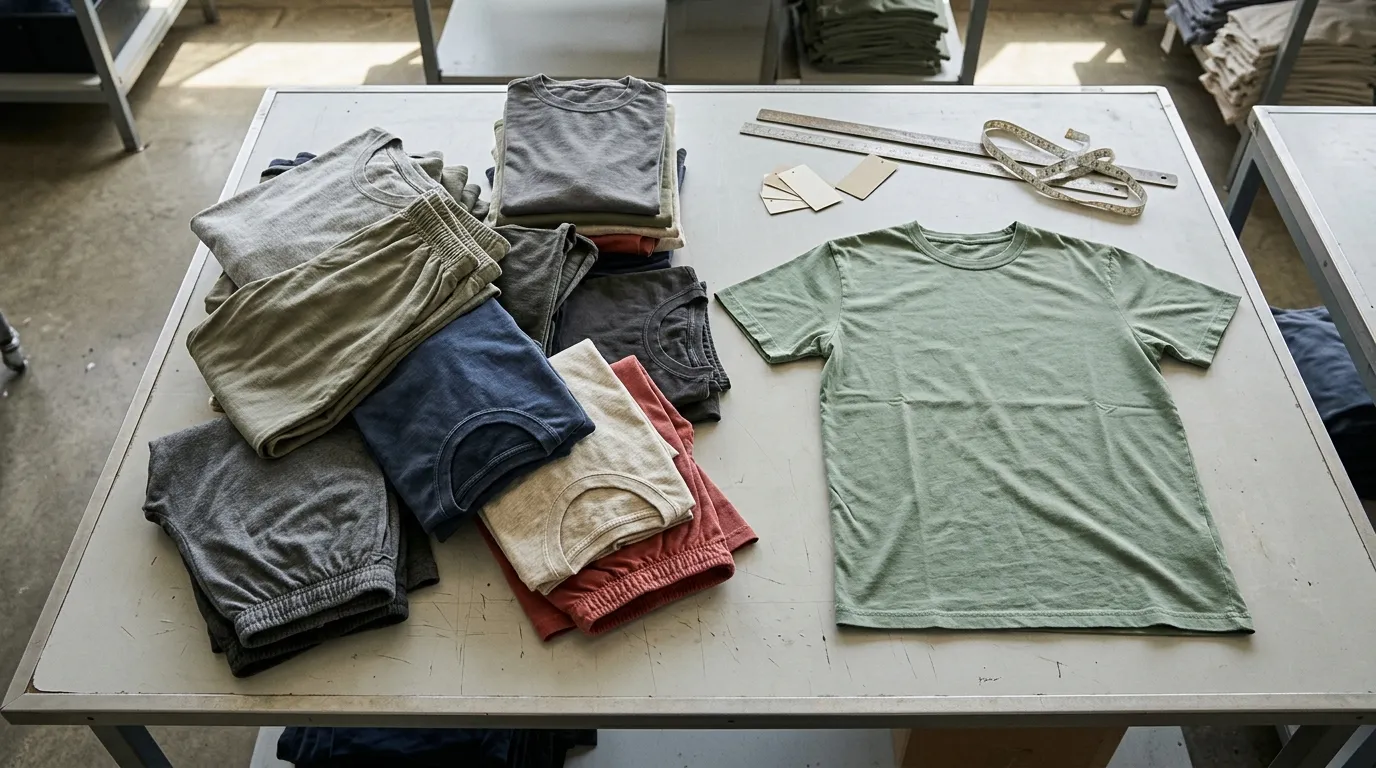
A 100-piece run is feasible when the design uses a fabric the factory already stocks, stays within one style and one colorway, and does not require custom dyeing, custom fabric development or seamless construction.
Minghang Garments is a custom clothing manufacturer in Dongguan, China, operating since 2017, producing activewear, sportswear, loungewear and streetwear. Its stated starting point is 100 pcs per color per style on stock fabric, which is the configuration that makes a 100-piece order realistic.
Stock fabric is material a factory already holds, rather than material woven or dyed to your specification. Minghang Garments' MOQ guide notes that stock fabrics reduce development time and material minimums, while carrying limits in exact color, composition, weight, finish and continued availability. Those limits are the trade-off: you gain a lower entry quantity, and you accept less control over the exact fabric and shade.
Timing runs alongside those material decisions. Minghang Garments lists sampling at 7–15 working days, depending on product complexity, fabric and customization, and bulk production at 25–45 days after the sample and materials are approved. Both figures describe Minghang Garments' own process, not a general industry guarantee.
What 100 Pieces Will Not Cover
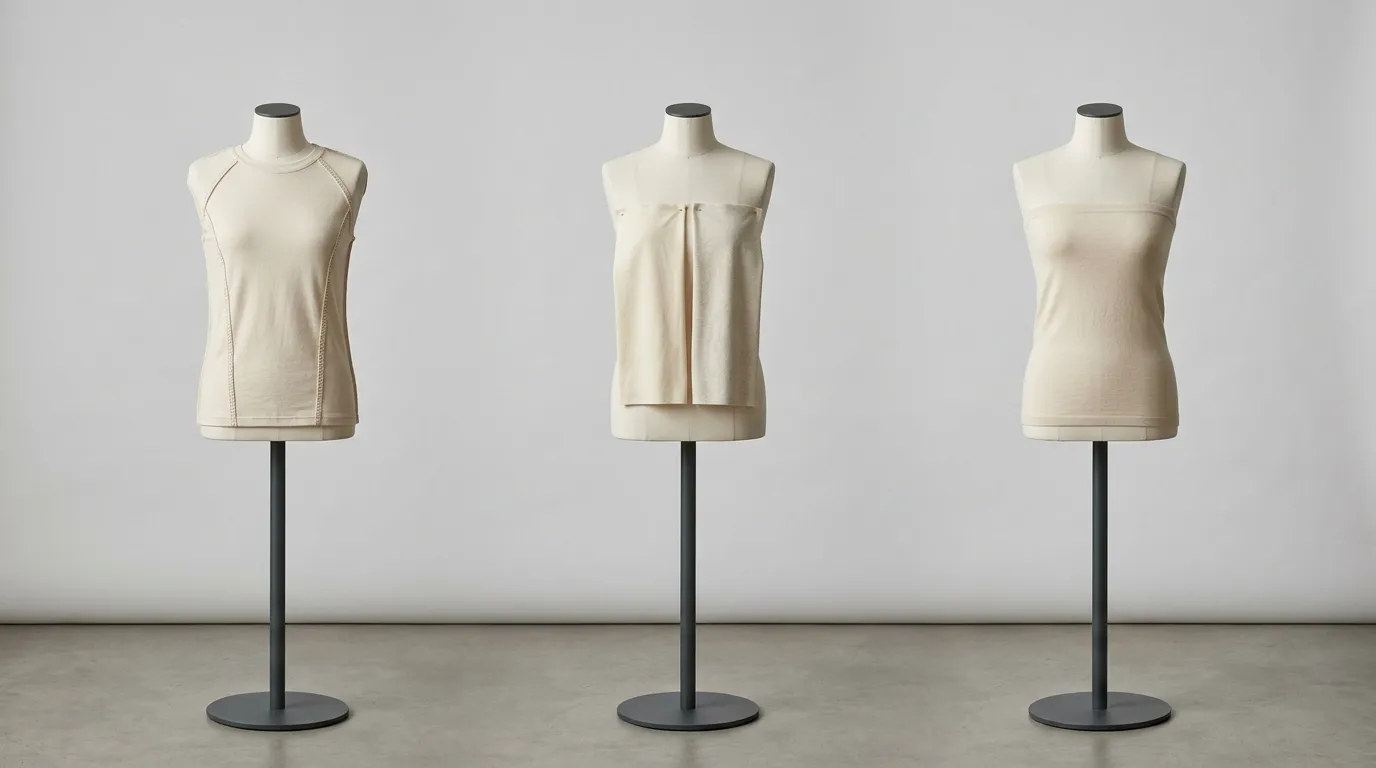
Three production routes sit outside a 100-piece plan: custom-developed fabric, custom-dyed color, and seamless construction. Each one requires a larger commitment because the factory has to set up materials or machinery that a 100-piece run cannot absorb.
Minghang Garments' MOQ guide states that custom fabric development or custom-dyed colors typically require 300–500 pieces per color, depending on fabric and production requirements. The same guide states that seamless styles typically start at 500 pieces per style, color and size, subject to yarn and construction requirements.
| Production route | Minghang Garments' stated minimum | What it means for a 100-piece plan |
|---|---|---|
| Stock fabric, one style, one color | 100 pcs per color per style | The plan fits as it stands |
| Custom-developed or custom-dyed fabric | Typically 300–500 pcs per color | Raise the quantity or choose a stock color |
| Seamless style | Typically 500 pcs per style, color and size | Not reachable at 100 pieces |
This comparison reflects Minghang Garments' stated conditions for its own production. Other factories publish different figures, and a factory may apply different thresholds to different constructions, so confirm the exact minimum for your product before you plan a quantity.
How Should You Split 100 Pieces Across Sizes?
There is no single correct split. Minghang Garments' MOQ guide states that size breakdowns can be planned according to the product and order requirements rather than a universal fixed quantity per size, which means the ratio is a decision you make with the manufacturer for your specific style.
A practical planning sequence looks like this:
- Decide the fit and the body size range the garment is designed for.
- List only the sizes you genuinely intend to sell in the first run.
- Ask the manufacturer how the size breakdown is confirmed for that style.
- Reserve enough pieces in the middle sizes, where demand usually sits for a first collection, without inventing a fixed percentage.
- Confirm the final breakdown before cutting, because it affects fabric consumption and grading.
The mistake to avoid is copying a size curve from another brand. Fit, target customer and product category all change the sensible split, and a breakdown that is wrong for your garment leaves you holding sizes nobody buys.
What Should You Confirm With a Manufacturer Before Treating 100 as Your MOQ?
Treat "100" as the start of a conversation, not a fixed rule. The figure depends on style count, color count and fabric route, and Minghang Garments' 100 pcs per color per style applies to stock fabric in a single color.
Confirm these eight points before you commit:
- Is the minimum counted per style, per color, or across the whole order?
- Is the target fabric a stock fabric, and what are its limits in color, composition, weight and finish?
- How many colorways does the quotation include?
- Is any custom dyeing or custom fabric development involved?
- Does the construction require seamless knitting?
- What size breakdown must be confirmed before cutting?
- What is included in the quotation beyond production itself?
- What happens to a future reorder if the fabric is discontinued?
Quality control is worth confirming at the same time. Minghang Garments runs a 5+1 Step Quality Control System that covers incoming materials, cutting, in-line sewing, semi-finished garments, final inspection and pre-shipment verification.
Is 100 Pieces Enough to Test Customer Demand?
A 100-piece run is enough to test one design in one color with real buyers, but it is a demand test, not proof of a sustainable brand. It answers a single question: does this style, at this price, sell?
That framing has a practical consequence. Launching four styles at once conflicts with the per-color minimum covered earlier on this page, so a 100-piece test usually means concentrating the whole run on one hypothesis. For streetwear labels working in that model, the production constraints are similar to other categories and are described in this guide to streetwear manufacturing for fashion brands.
Presales and preorders can validate interest before you commit to production, but they do not remove the risk of unsold stock. Production quantity is also only one line in the budget: fabric, sampling, printing or embroidery, garment washing, labels and packaging all appear in a manufacturer's quotation, according to the service list published by Minghang Garments.
FAQ
How much do I realistically need to start a clothing brand?
There is no single figure, and this page does not quote one. Production quantity is only one line in the budget: fabric, sampling, printing or embroidery, garment washing, labels and packaging all appear in a manufacturer's quotation. The practical step is to request an itemised quote for one style in one color before committing to any quantity.
How difficult is it to start a clothing brand?
For production specifically, the difficulty is rarely the 100-piece minimum. The real constraints are whether a suitable fabric is stocked, how many colors you want, whether the construction is seamless, and how much cash unsold inventory ties up. Each of these is a decision you can make before contacting a factory.
Will the same fabric still be available if the style sells?
Not guaranteed. Minghang Garments states that stock fabrics carry limits in exact color, composition, weight, finish and continued availability, so a reorder may not match the original run exactly. Confirm reorder availability and any acceptable substitution before you approve the first production order.
If you want to check whether your product fits small-batch production, share your style, target colors and preferred fabric with Minghang Garments so the 100 pcs per color per style minimum can be confirmed against your actual specification. You can see what the next stage involves in this guide on how to start clothing brand with manufacturer relationships.
-
Share
-

-

-