 Contact Us

Table of Contents

Contact Us
Updated 1 month ago
Low MOQ Streetwear Manufacturing for Fashion Brands: Launch Your First Collection

Minghang Garments
Minghang Garments is a custom apparel manufacturer specializing in activewear, streetwear and private-label clothing development. Our team supports brands through fabric sourcing, product development, sampling, bulk production and quality control, with OEM and ODM solutions for startups, growing labels and established apparel businesses.
A new streetwear brand has to strike a balance between meeting demand and not overextending capital by producing too much unsold inventory. Luckily, there are ways to produce low quantities of each item. While looking at the cost per unit is important, there are many other considerations such as the availability of fabric, the structure of the SKUs, how customized the product is, sampling, the unit cost, and whether there is the capacity to fulfil a reorder.
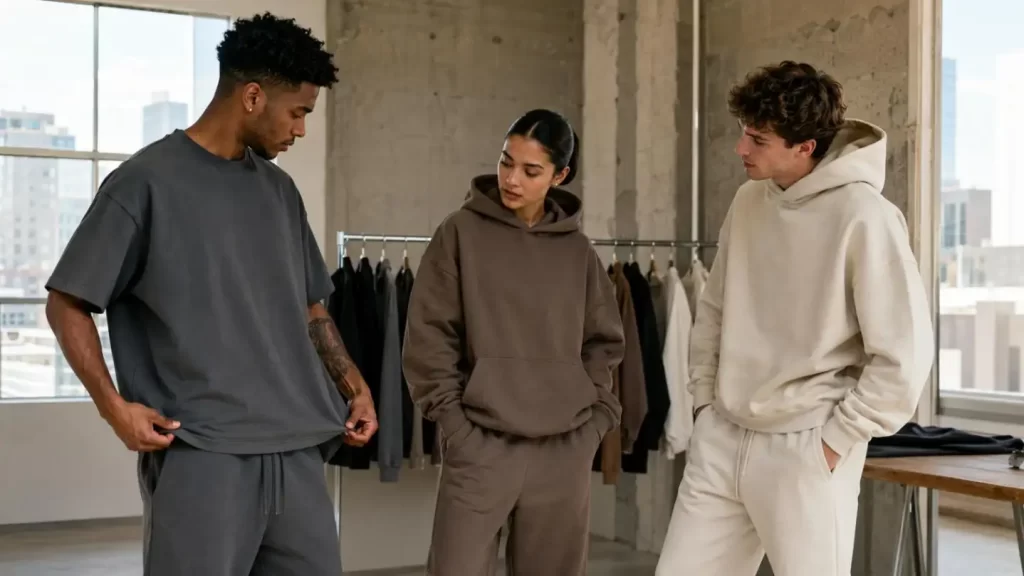
We take a product development approach to streetwear manufacturing. This means we work with brands to create a limited, retail-ready collection that can be used to test demand. Once demand is established, we can manufacture the pieces consistently.
What Low MOQ Means
When a factory quotes a low minimum quantity, this can be broken down further into different categories such as style, color, fabric, or decoration process. A factory can be quite flexible with minimum quantities for garments, but other suppliers for fabric, zippers, dye houses, and even labels can have their own strict minimums.
At Minghang Garments, regular custom streetwear production starts from 100 pieces per color per style. Projects requiring custom-developed fabrics or custom dyeing generally start from 300–500 pieces per color, depending on the material and finishing process.
The final minimum quantity will be determined by:
•The number of styles and color ways
•If the fabric is stock or custom-knitted/dyed
•The ratio of sizes and if different sizes can be mixed
•Any wash, printing, embroidery, or appliqué
•Custom ribbing, zippers, drawcords, labels, and packaging
Brands are encouraged to inquire about an MOQ specific to them, as quoted numbers are generalizations.
Managing Low MOQ
There are risks associated with high and low MOQs in streetwear manufacturing. With a low MOQ, the inventory will also be low, but each individual piece will cost more.
| Low MOQ Advantage | Operational Trade-Off |
| Less initial investment in inventory | Development costs are absorbed by fewer garments |
| Easier testing of fit and graphics | Restricted options for fabric and dyeing |
| Prompt response to customer feedback | Trims may have their own MOQs |
| Better cash flow control | Higher material waste |
| Decreased risk of markdowns | Shade variation is possible with reorders |
Low-MOQ production works best when the first collection stays focused—fewer styles, fewer colorways and shared fabrics or trims. Once a collection expands into many styles, colors and custom processes, material minimums and setup costs can quickly reduce the economic advantage of a small garment MOQ.
Build a Focused First Collection
The number of SKUs often matters more than the number of garments. Three styles in three colors and five sizes create 45 inventory combinations. This can leave only a few units in each size and make sales data difficult to interpret.
| Launch Structure | Recommended Use | Risk Level |
| One hero product | Testing one fit, graphic, or price point | Low |
| Two-to-four-piece capsule | Building a coordinated brand story | Medium |
| Broad multi-category collection | Brands with established demand data | High |
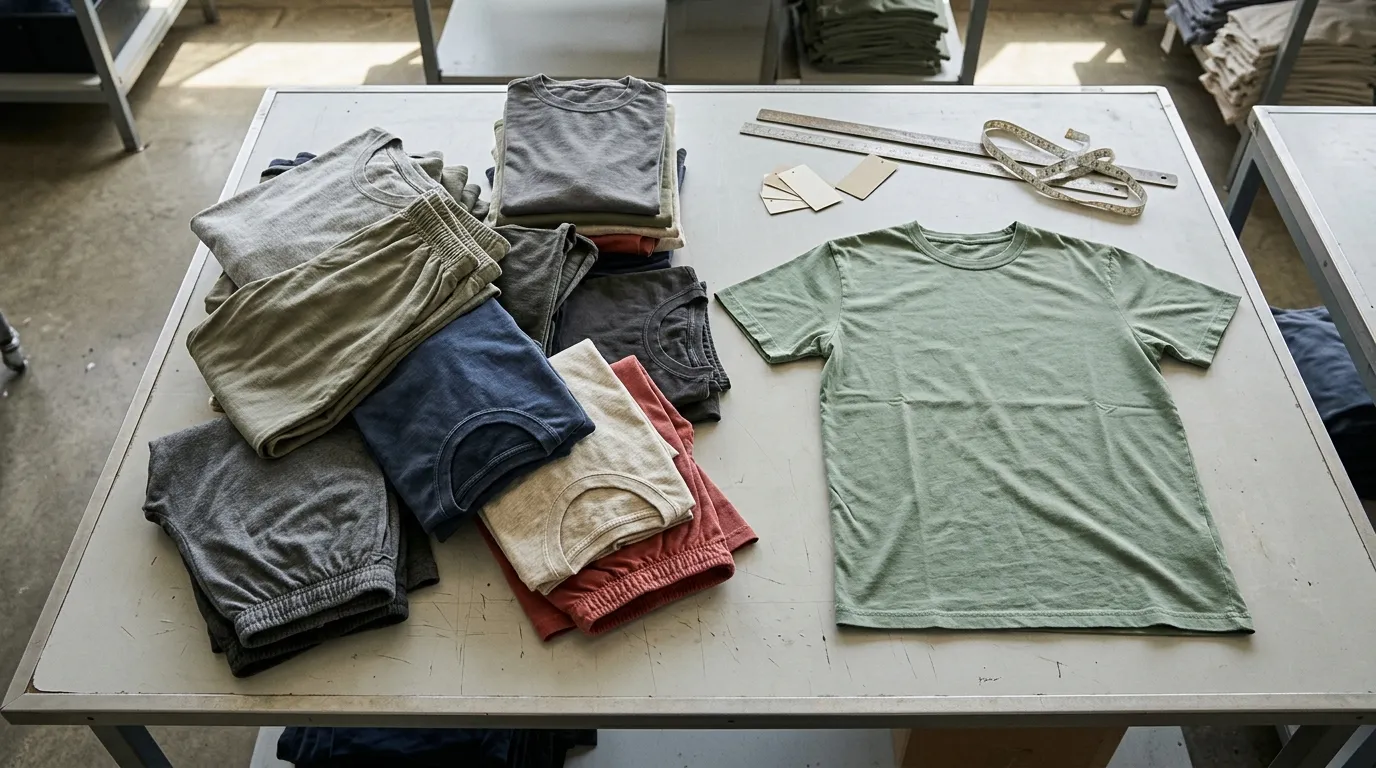
A practical first drop might include:
•One 220–280 GSM boxy or oversized T-shirt
•One 350–500 GSM hoodie or sweatshirt
•A suitable bottom, such as sweatpants or shorts
•One core neutral color and one signature color
These GSM ranges are common starting references, not fixed quality standards. Fabric composition, knitting density, finishing, shrinkage, and drape must also be evaluated. A heavier fabric does not automatically produce a better garment if the pattern, rib structure, or seam construction is unsuitable.
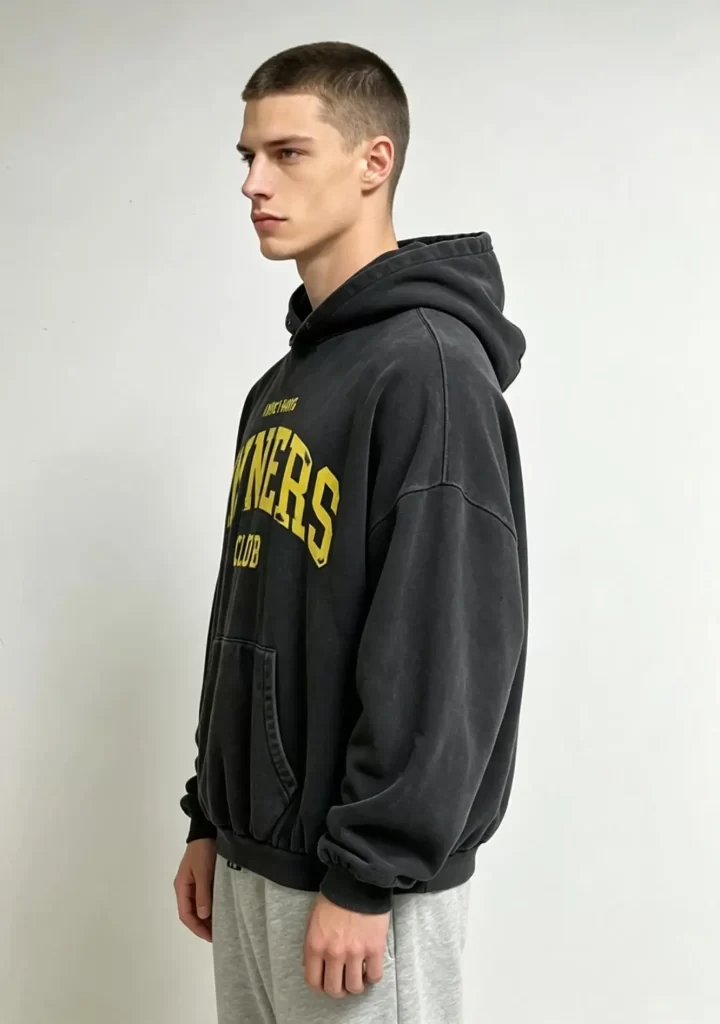
Select the Right Manufacturing Route
To manufacture streetwear, you need to select a production method that aligns with your design priorities as a brand.
| Production Method | Design Control | MOQ Pressure | Best Used For |
| Customized stock garments | Limited | Lower | Quick graphics testing |
| Private-label base styles | Moderate | Moderate | Speed up branded collections |
| Full cut-and-sew | High | Higher | Unique fits and construction |
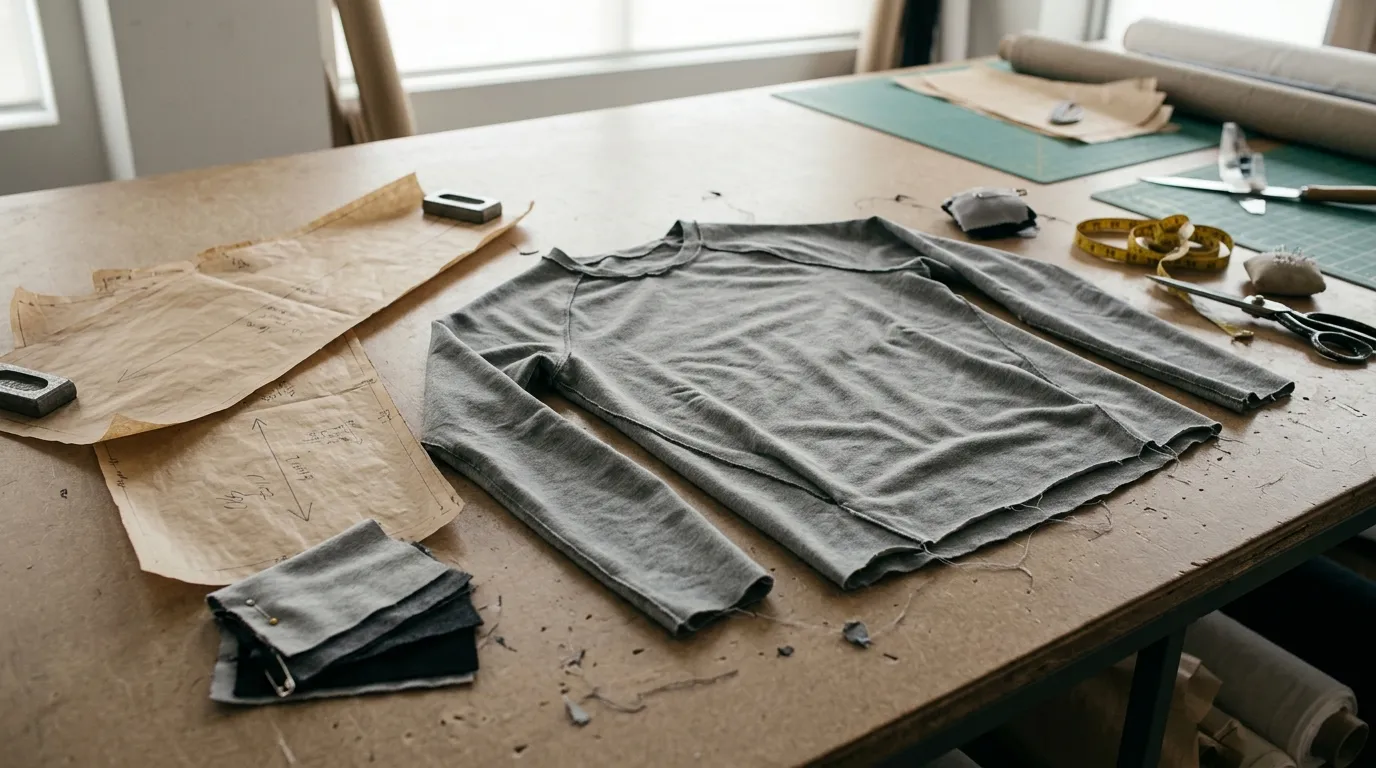
Full cut-and-sew gives more control over body width, shoulder drop, sleeve volume, length, neckline, ribbing, pockets and even seam details. It also requires a more thorough tech pack and additional sample making.
Ideally, brands should provide as much of the following information as possible::
•Either a tech draw or clear reference images
•Fabric composition, GSM, hand feel, and color
•Target measurements or an existing size chart, if available
•Artwork, dimensions, placement, and colors
•Ribbing and trim, as well as hardware
•Main and care labels, hangtags, and packaging
If a complete tech pack or graded size chart is not available, our development team can help organize the specifications during sampling.
Decoration to Match Order
Different decoration methods result in different costs and constraints on production.
| Process | Strength | Low-MOQ Consideration |
| Screen printing | Strong solid-color graphics; cost-efficient at scale | Screen setup applies to every color |
| DTG or DTF | Detailed, multi-color artwork | Hand feel and wash performance require testing |
| Embroidery | Premium texture and durability | Cost depends on stitch count and area |
| Garment dye or wash | Distinctive vintage character | Shade and shrinkage variation must be controlled |
| Appliqué or patches | Strong dimensional branding | Extra cutting, placement, and sewing steps |
Combining several processes on one garment can create a strong visual identity, but it also increases sampling time, alignment risk, and unit cost.
Control Sampling, Cost, and Bulk Quality
A disciplined Streetwear Manufacturing for Fashion Brands workflow should include:
- Requirement and feasibility review
- Fabric, color, trim, and process confirmation
- Pattern development and prototype sampling
- Fit review and documented revisions
- Pre-production sample approval
- Bulk cutting, sewing, decoration, and finishing
- Final measurement and appearance inspection
The approved pre-production sample should act as the physical quality standard for bulk production.
Brands should be able to determine the full first-run cost:
First-Run Cost = Development + Sampling + Process Setup + Unit Cost × Quantity + Labels + Packaging + Inspection + Freight and Duties
Quality control needs to check fabric GSM, shade consistency, measurement tolerance, wash shrinkage, seam strength, print adhesion, embroidery condition, label placement, size ratios, and packaging accuracy.
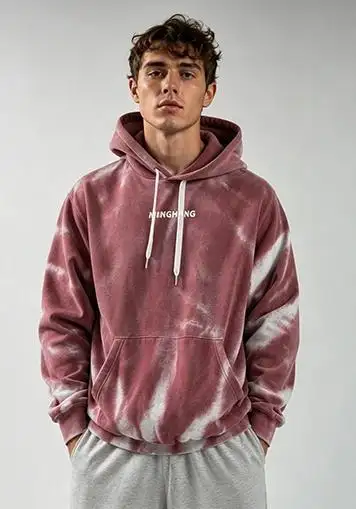
From a Small Drop to Repeat Production
Flexibility in supply chain management can decrease the minimum order quantities (MOQs) for the first production run. The completed first run can be used to test if the same fabrics, patterns, trims, and wash recipes can be repeated. This can also be tested for color standards. One method to decrease the time between consecutive production runs is for the brands to hold the approved fabrics and color standards.
Minghang Garments combines design support, a dedicated sample-development operation, custom decoration, private labeling, quality control, and bulk manufacturing. Minghang Garments operates across 14,000 m², including a 12,000 m² manufacturing hub and a 2,000 m² sample-development and office center. With 300+ workers and monthly capacity of up to 500,000 pieces help connect small product-development runs with future volume requirements.
Launch With Evidence, Then Scale
Effective Streetwear Manufacturing for Fashion Brands is not about ordering the smallest possible quantity. It is about concentrating the first budget on a clear product direction, reliable samples, controlled specifications, and measurable customer feedback.
About to launch your first streetwear line? Send your designs, desired quantity, fabric direction, size range, artwork, and budget to Minghang Garments. Our team can review the design, fabric and quantity requirements and recommend a practical development route based on available materials, customization level and production MOQ.
FAQs
Q1. What is Minghang Garments’ MOQ for custom streetwear?
At Minghang Garments, regular custom streetwear production starts from 100 pieces per color per style. Projects requiring custom-developed fabrics or custom dyeing generally start from 300–500 pieces per color, depending on the material and finishing process.
Q2. Can Minghang Garments produce a small first streetwear collection?
Yes. Minghang can support a focused launch containing one hero product or a small capsule collection. Starting with fewer styles and colors helps brands allocate more budget to fabric, fit development, sampling, and quality control.
Q3. Does Minghang require a complete tech pack?
A complete tech pack improves quotation accuracy and reduces sample revisions, but brands can also begin with sketches, reference garments, artwork, size requirements, and fabric preferences. Minghang’s development team can help organize these details into production-ready specifications.
Q4. Which streetwear products can Minghang manufacture?
Minghang produces custom oversized T-shirts, heavyweight hoodies, sweatshirts, sweatpants, shorts, tracksuits, jackets, matching sets, and other private-label streetwear. Product feasibility depends on the required construction, fabric, wash treatment, and order quantity.
Q5. Can brands specify custom fabric composition and GSM?
Yes. Brands can specify fabric composition, GSM, knitting structure, stretch, surface texture, and finishing. Stock fabrics are generally more suitable for low-MOQ projects, while custom knitting or dyeing may require higher material minimums.
Written by
Minghang Garments
Apparel Manufacturing Team
Minghang Garments is a custom apparel manufacturer specializing in activewear, streetwear and private-label clothing development. Our team supports brands through fabric sourcing, product development, sampling, bulk production and quality control, with OEM and ODM solutions for startups, growing labels and established apparel businesses.
-
Share
-

-

-