 Contact Us

Table of Contents

Contact Us
Updated 1 month ago
Custom Hoodie Manufacturing Process: From Tech Pack to Bulk Production

Minghang Garments
Minghang Garments is a custom apparel manufacturer specializing in activewear, streetwear and private-label clothing development. Our team supports brands through fabric sourcing, product development, sampling, bulk production and quality control, with OEM and ODM solutions for startups, growing labels and established apparel businesses.
Custom Hoodie Manufacturing involves much more than adding a logo to a blank garment. For a true cut-and-sew project, the fit, fabric, construction, decoration, trims, washing process and packaging need to be developed as one complete production system.
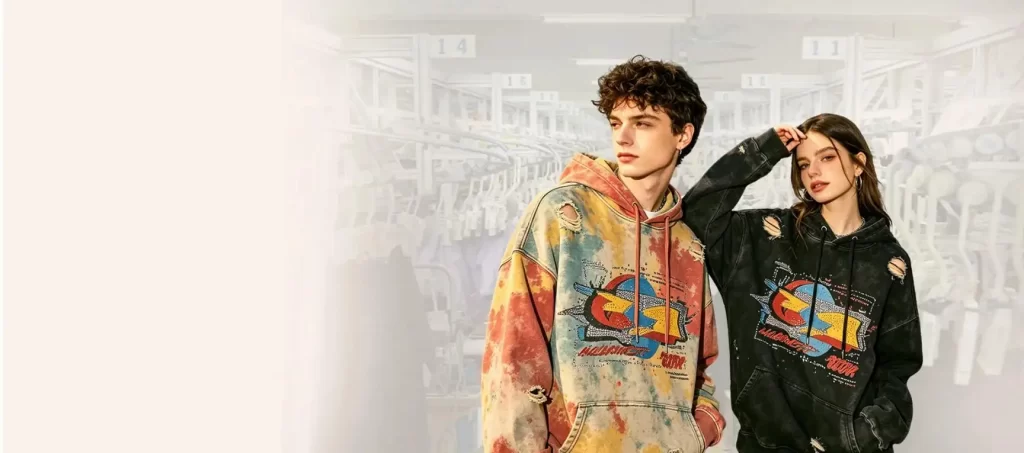
At Minghang Garments, development can begin with a tech pack, reference sample, sketch or clear product brief. From there, we move through fabric selection, pattern making, sampling, pre-production confirmation, cutting, sewing, finishing and quality control before bulk production.
1. Define the Hoodie Specification
Our Custom Hoodie Manufacturing Process begins with a tech pack or a detailed brief that includes the appearance, fit and functionality of the hoodie. Reference images are useful for communicating design direction, but production also requires measurable specifications such as garment dimensions, fabric requirements, construction details, artwork placement and tolerances.
Essential specifications include:
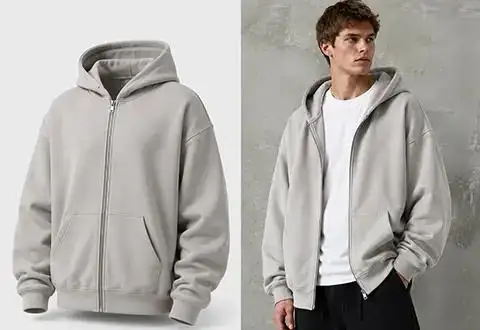
•Pullover, zip-up, oversized, cropped or performance silhouette
•Fabric composition, target GSM and surface finish
•Garment measurements and acceptable tolerances
•Hood shape, lining and drawcord construction
•Kangaroo, welt or zippered pocket design
•Rib composition, height and stretch recovery
•Zipper, eyelet, cord end and other trim specifications
•Artwork size, color, position and application method
•Main label, care label, hangtag and packing requirements
| Decision | Technical Information Required | Risk If Unclear |
| Fit | Size chart, grading rules and points of measure | Inconsistent sizing |
| Fabric | Composition, GSM, finish and color standard | Wrong hand feel or shrinkage |
| Construction | Seams, pockets, hood and reinforcement | Weak or distorted garment |
| Decoration | Artwork file, dimensions and placement | Incorrect scale or alignment |
| Packaging | Folding, labels and carton ratio | Repacking and delivery delays |
At this stage, Minghang's design and product-development team reviews manufacturability, prepares patterns or technical details where required, and identifies elements that could increase cost or complicate production.
2. Select and Test the Fabric
There are many attributes that make up a piece of fabric. Some of those attributes include how the fabric drapes, how warm the fabric is, how tough the fabric is, how the fabric holds up when washed, and what kind of finishes the fabric has. One way to measure fabric is by GSM (grams per square meter), but that doesn't really tell you the full story about the quality of the fabric.
Some standard options for development are:
| Fabric Type | Typical Use | Key Control Points |
| French Terry | Lightweight and Transitional Hoodies | Loop Quality, Spirality, Shrinkage |
| Brushed Fleece | Warm Lifestyle and Streetwear | Pilling, Shedding, Surface Consistency |
| Cotton-Polyester Blend | Teamwear and Everyday Use Hoodies | Blend Ratio, Colorfastness, Stability |
| Performance Polyester | Training and Sports Hoodies | Moisture Management, Stretch/Recovery, Heat-Setting and Print Compatibility |
| Heavyweight Cotton | Premium Streetwear | Shrinkage, Seam Bulk, Drying Time |
Prior to cutting, suitable tests may include:
•Fabric Weight and Useable Width
•Dimensional Stability After Washing
•Colorfastness To Washing and Rubbing
•Pilling and Abrasion Resistance
•Fabric Skew or Spirality
•Stretch and Recovery of Rib Components
•Shade Consistency Between Rolls
Some knitted fabrics require relaxation or preshrinking before cutting. If the fabric is spread under excessive tension or cut before it has fully relaxed, the panels may change dimension, twist or lose alignment after washing. Skew and spirality should therefore be checked before bulk cutting. At Minghang Garments, all fabrics pass our incoming materials inspection are conducted with pre-shrinking process before cutting.
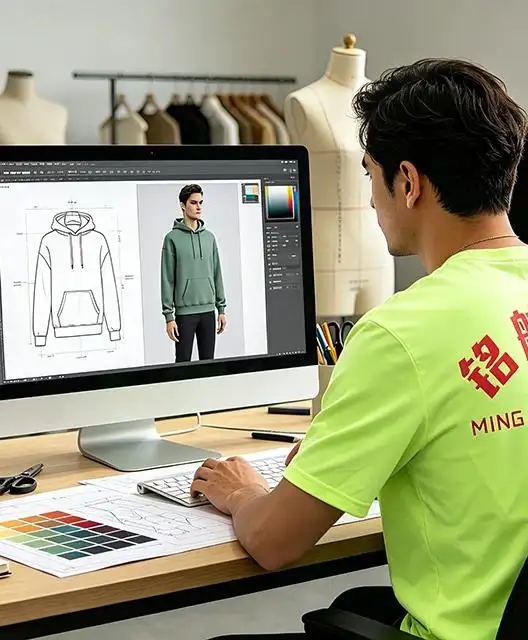
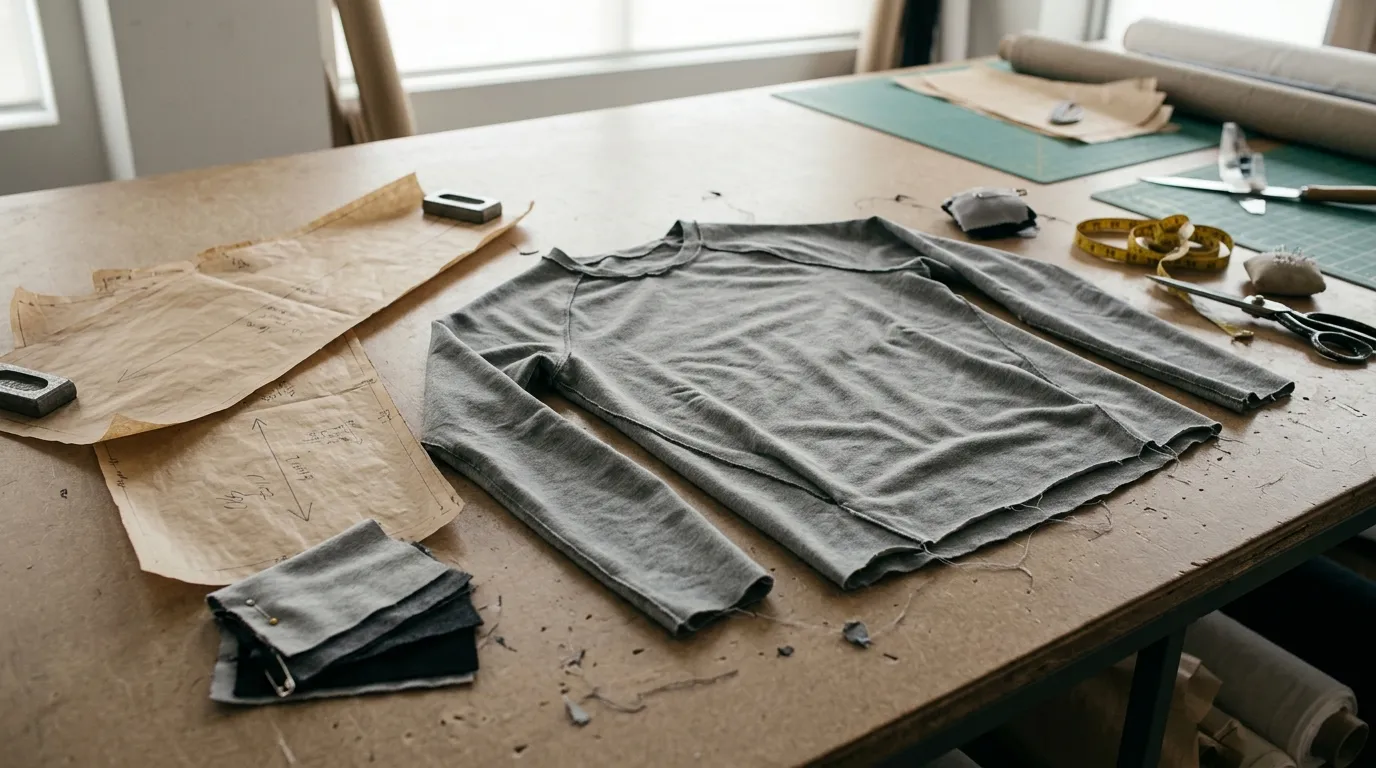
3. Develop the Pattern and Approve Samples
Once the technical drawing is finalized, the pattern maker can create the panel pieces that will be used in production. There are a few things the pattern maker has to consider when making panel pieces: the balance between the body, sleeves and hood, seam allowance, how much the fabric will shrink, and the stretch of the fabric.
Depending on the complexity of the project, sampling may include:
- Development Sample Used to check design and basic construction
- Fit Sample Used to check balance, silhouette and measurements
- Size-set Sample Used to check grading across sizes
- Pre-production Sample Used to check fabric, trim, color, and branding
- Approved / Golden Sample used as the physical reference for bulk production
Comments at Minghang Garments are recorded by measurement point and construction area. Examples like “make it looser” need to be translated to specific modifications, for example, increasing the half-chest width by 2 cm, or adjusting the depth of the hood by 1.5 cm, for instance.
Bulk cutting will not be done prior to the approval of the pre-production details.
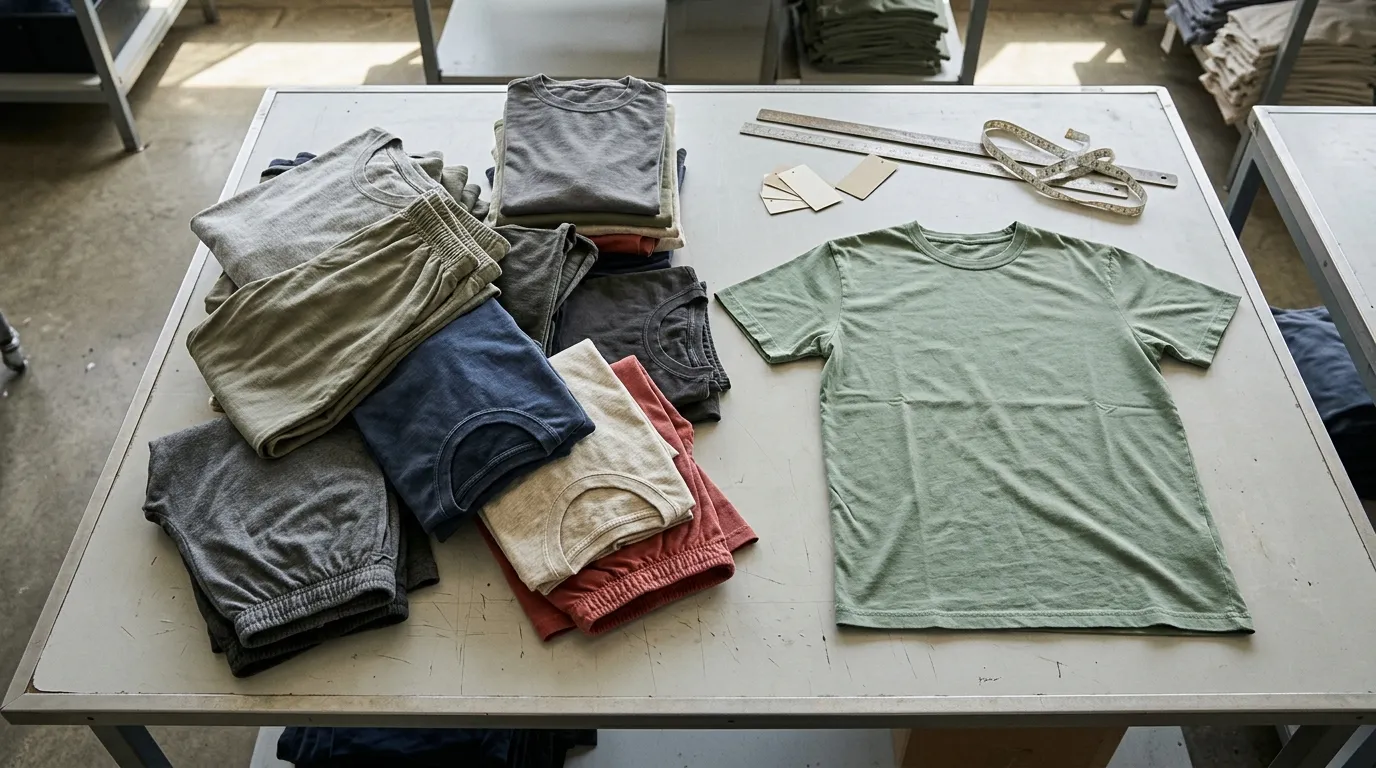
4. Prepare, Cut and Bundle the Fabric
Once the fabric, pattern and pre-production details are confirmed, bulk production moves into the cutting room.
The production team performs the following steps:
- Inspects the fabric and separates shade lots
- Performs relaxation or preshrinking as needed
- Plans markers to optimize fabric usage
- Controls the grain of the fabric during spreading
- Performs cutting of panels which are then numbered and size bundled
- Performs notching and placement marking for assembly
Panels must not be bundled together across different dye lots in a single garment. Bundling correctly ensures that panels arrive on the sewing line in the correct color and size.
5. Printing or Embroidery
The method of decoration should be selected according to the fabric type, order volume, washability, and the effect desired.
| Method | Best Application | Main Production Consideration |
| Screen printing | Bold graphics and larger production runs | Color separation, curing and ink coverage |
| DTG printing | Detailed multicolor artwork | Pretreatment and cotton content |
| Embroidery | Logos and premium branding | Stitch density, backing and fabric distortion |
| Heat transfer | Names, numbers and short-run graphics | Temperature, pressure and adhesion |
| Sublimation | Polyester panels and all-over graphics | Fabric composition and panel alignment |
When artwork crosses panels or requires precise placement before seams are closed, printing or embroidery may be completed on cut panels before assembly. Other graphics can be applied after sewing, depending on placement, equipment and the planned wash or finishing sequence.
At Minghang, the decoration method is selected according to the artwork, fabric, wash process, order quantity and the customer's target appearance.
6. Sew and Assemble the Hoodie
During assembly, operators join the shoulder seams, sleeves, hood, body panels and pockets according to the approved construction specification. For zip-up hoodies, additional attention is required to maintain zipper alignment, front-panel symmetry and hem balance.
The most important parts of the construction are:
•Finishing pocket corners and zipper ends
•Placement of a hood and drawcords
•Rib tension in cuffs and hem
•Flat, secure seams without puckering or skipped stitches
•Coverstitch or topstitch of even width
•Correct label position and orientation
The machine, needle and thread used should be appropriate to the fabric. A heavy needle can ruin a lightweight knit fabric and the seam can pull apart with use.
7. Control Quality From Production to Packing
The Custom Hoodie Manufacturing Process consists of many steps, such as the procurement of materials, pre-production, and inspections which are conducted inline and upon completion. Minghang implements a 5+1 quality-control system to evaluate the product at multiple stages of the production process and upon completion.
Some of the key checkpoints are:
•Comparisons of actual measurements to approved tolerances
•Stitch density and seam security and symmetry
•Alignments of the hood, pockets, ribs and zippers
•Logo: correct dimensions, color and placement
•Shade: uniformity and defects in the fabric
•Curing of the print or the transfer adhesion
•Labels, quantity, folding and packaging
•Wash testing where required by the fabric, finishing process or buyer specification
The approved sample, tech pack and purchase-order should be the production inspection references.
8. Understand Cost and Lead-Time Variables
Pricing is not solely determined by the quantity ordered. The Custom Hoodie Manufacturing Process is affected by:
- Stock fabric versus custom-developed material
- Number of colors, sizes and fabric dye lots
- Pattern complexity and sewing operations
- Print area, color count or embroidery stitch count
- Custom zippers, labels, ribbing and packaging
- Testing and inspection requirements
- Number of sample revisions
- Freight method and delivery destination
A professional manufacturer should explain these cost drivers and confirm the production route before bulk manufacturing begins.
Build a More Production-Ready Hoodie Collection
Successful hoodie production depends on precise specifications, tested materials, approved samples and disciplined process control. Brands should evaluate a supplier's development capability, sample-to-bulk consistency, quality system and communication—not only the lowest quotation.
Minghang Garments offers various services from design development to bulk production, including fabric sourcing, pattern making, sampling, printing, embroidery, and private labeling. If you have a hoodie design, specified fabric, and quantity with delivery requirements, our team can create a custom manufacture process for your hoodie within your collection.
FAQs
Q1. Does Minghang provide samples before bulk production?
Yes. Sampling is an essential stage of the Custom Hoodie Manufacturing Process. Depending on the project, Minghang can develop a prototype, fit sample, size set or pre-production sample. Bulk manufacturing should begin only after the fabric, measurements, construction, colors, trims and logo placement have been approved.
Q2. Which custom logo methods does Minghang support?
Minghang supports decoration methods such as screen printing, DTG printing, embroidery, heat transfer, puff printing and sublimation for suitable polyester applications. The recommended method depends on artwork detail, fabric composition, order volume, durability requirements and target appearance.
Q3. What is Minghang Garments' MOQ for custom hoodies?
Regular custom hoodie production starts from 100 pieces per color per style. Custom-developed fabrics or custom dyeing generally require 300–500 pieces per color, depending on the material and finishing process.
Q4. Can Minghang help develop a hoodie without a complete tech pack?
Yes. Minghang's design and development team can assist with technical drawings, pattern development, fabric selection and sample preparation. However, brands should still provide clear references, target measurements, intended use and branding requirements to reduce unnecessary revisions.
Q5. Which hoodie fabrics can Minghang Garments source?
Available options may include cotton fleece, French terry, cotton-polyester blends, heavyweight cotton and performance polyester. Fabric selection should be based on climate, target retail price, garment structure, hand feel, wash performance and decoration compatibility—not GSM alone.
Written by
Minghang Garments
Apparel Manufacturing Team
Minghang Garments is a custom apparel manufacturer specializing in activewear, streetwear and private-label clothing development. Our team supports brands through fabric sourcing, product development, sampling, bulk production and quality control, with OEM and ODM solutions for startups, growing labels and established apparel businesses.
-
Share
-

-

-