 Contact Us

Table of Contents

Contact Us
Updated 1 month ago
How Much Does It Cost to Manufacture Activewear?
arafatshuvo
Activewear manufacturing cost has no single price: quotes are built from fabric and spandex content, construction, decoration and order quantity, plus separate development costs such as pattern making and sampling. Most buyers plan around a per-piece factory price, then add one-time development, packaging, freight and duties to reach a true landed cost per unit.
Key takeaways
- A bulk unit quote and a true cost per unit are different numbers — pattern making, sampling, packaging, freight and duties often sit outside the unit price.
- Fabric is a major line item, and stretch performance fabric is priced above standard polyester in every estimate reviewed.
- Construction complexity — panel count, seam type, cut-and-sew versus seamless, and bonding — changes machine and labor requirements, not only fabric use.
- Per-piece cost falls as quantity rises: Seam Apparel's May 2026 table steps from $14–$22 under 200 units down to $5–$8 at 1,000+ units for a basic performance top or legging.
- Two quotes are only comparable when specification, quantity, color breakdown and included services match.
What "Cost to Manufacture Activewear" Actually Includes
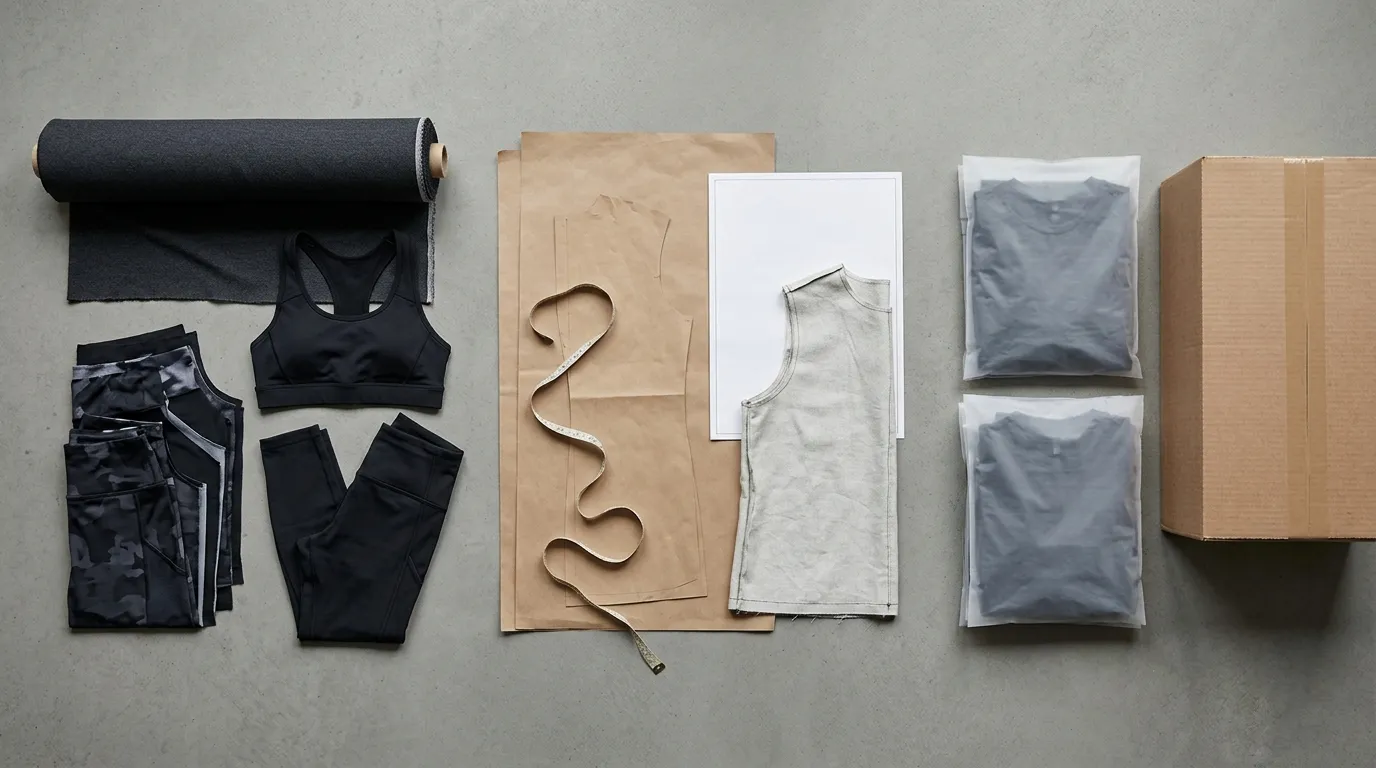
When buyers ask what it costs to manufacture activewear, they are usually looking for a single figure, but three separate numbers exist: the factory unit price, one-time development and setup costs, and landed cost after freight and duties. Treating them as one number is the most common budgeting error in activewear production.
OneAim Apparel's June 2026 apparel cost breakdown separates factory-side lines — fabric, trims, cut-make-trim labor, overhead and margin — from importer-side lines such as freight, duty and inspection. Bushi Sports' sportswear cost breakdown gives example manufacturing-step costs of $1–$2 for cutting, $3–$5 for stitching and assembly, and $1–$2 for quality finishing, described as estimates rather than universal rates.
[DIAGRAM: A single activewear quote split into three columns — factory unit price, one-time development and setup, and landed cost — showing which line items fall in each.]
| Cost category | What it covers | Usually inside the bulk unit quote? | What changes it |
|---|---|---|---|
| Fabric and trims | Main body fabric, linings, elastic, zippers, thread | Usually yes | Fiber type, weight, spandex content, stock or custom |
| Pattern making and tech pack | Pattern development, grading, technical documentation | Usually no — charged once | Style complexity, number of sizes graded |
| Sampling and revisions | Sample rounds, fit corrections, approvals | Usually no — charged per round | Number of rounds, revision allowance |
| Cutting and sewing labor | Cutting, stitching, assembly, finishing | Usually yes | Panel count, seam type, machine and operator skill |
| Decoration | Printing, embroidery, sublimation, heat transfer | Often separate or per-unit | Method, coverage, number of colors, setup screens |
| Finishing, QC and packaging | Inspection, pressing, folding, polybags, labels | Mixed — confirm per factory | QC scope, packaging specification, label count |
| Freight, duties and inspection | Shipping, import charges, third-party inspection | Almost always no | Destination, shipping mode, Incoterms |
Why There Is No Single Activewear Manufacturing Cost
Two activewear styles that look almost identical can quote differently because price responds to five drivers: fabric specification, construction, decoration, order quantity and development scope. Any published range is only meaningful inside the assumptions it was calculated under, which is why averaging different sources together produces a figure that fits nothing.
A practical rule for buyers: when you see a per-piece figure, ask what quantity band, fabric, construction and decoration it assumes before using it as a budget line. Factories build quotes the same way. Minghang Garments' published clothing manufacturing cost guide states that quotes depend on fabric, trims, construction, decoration, quantity, QC, packaging and logistics — the same inputs to check in any quote you receive.
Activewear Material Costs: Performance Fabric, Spandex and Weight
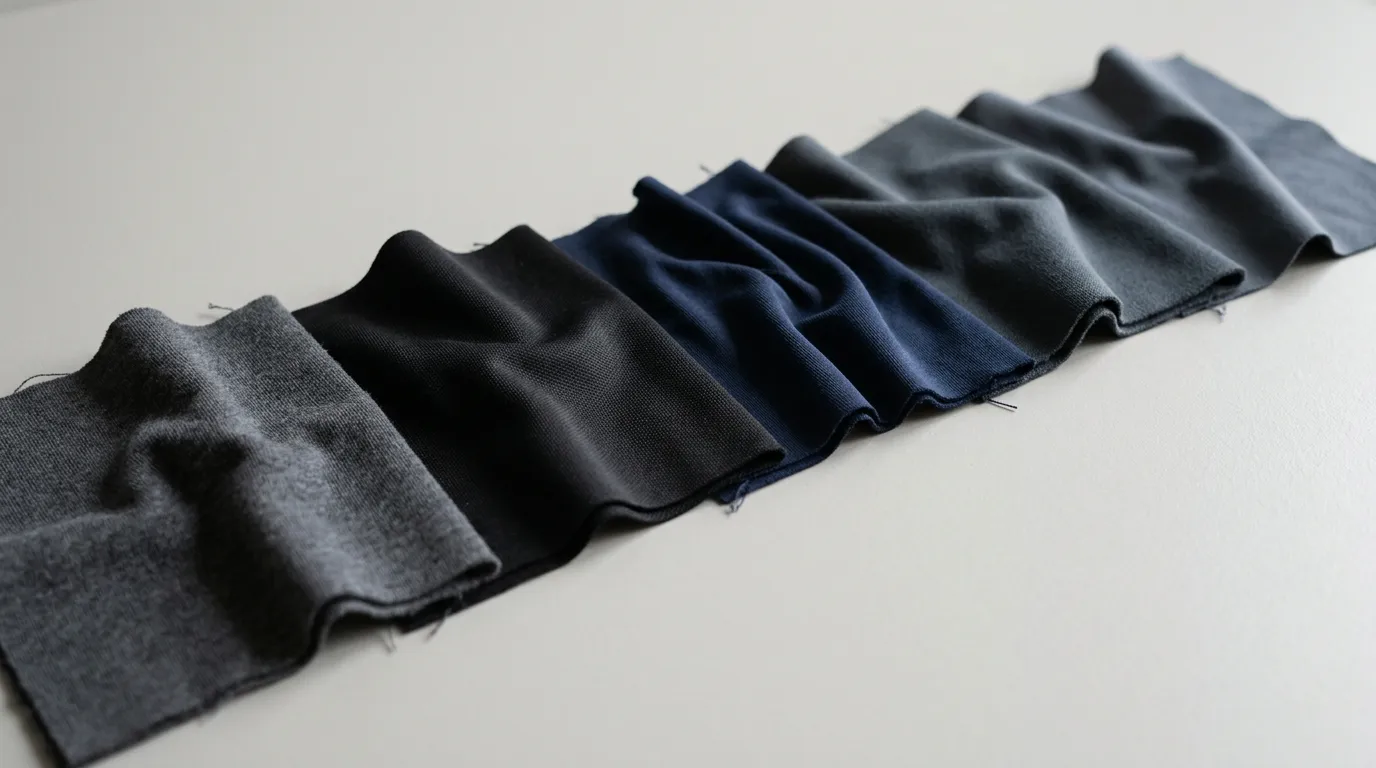
Activewear fabric prices move with fiber type, weight and stretch content, and stretch performance fabrics are quoted above standard polyester in every estimate reviewed here. Fabric is usually the largest single material line in an activewear quote, so small specification changes shift the total before any labor is discussed.
According to Seam Apparel's May 2026 cost guide, nylon-spandex fabric runs $6–$12 per yard and polyester-spandex runs $5–$10 per yard, with price varying by weight and spandex content. Bushi Sports' cost breakdown lists standard polyester at $2–$4 per meter, performance polyester at $4–$7, and stretch performance fabric at $6–$10.
| Fabric type | Source-stated price | Source | Scope caveat |
|---|---|---|---|
| Standard polyester | $2–$4 per meter | Bushi Sports | Per meter, not per yard; stock quality assumed |
| Performance polyester | $4–$7 per meter | Bushi Sports | Per meter; performance finish included |
| Stretch performance fabric | $6–$10 per meter | Bushi Sports | Per meter; stretch content drives the range |
| Polyester-spandex | $5–$10 per yard | Seam Apparel (May 2026) | Per yard; varies with weight and spandex content |
| Nylon-spandex | $6–$12 per yard | Seam Apparel (May 2026) | Per yard; varies with weight and spandex content |
These are per-fabric figures, not per-garment costs, and they come from different sources using different units. Confirm whether a quoted fabric price is per yard or per meter, and whether it covers stock fabric or custom development, before comparing anything. The garment categories this applies to — sports bras, leggings, shorts and coordinated activewear sportswear sets — each consume different fabric yields per unit.
Construction and Labor: Panels, Seams, Seamless and Bonding
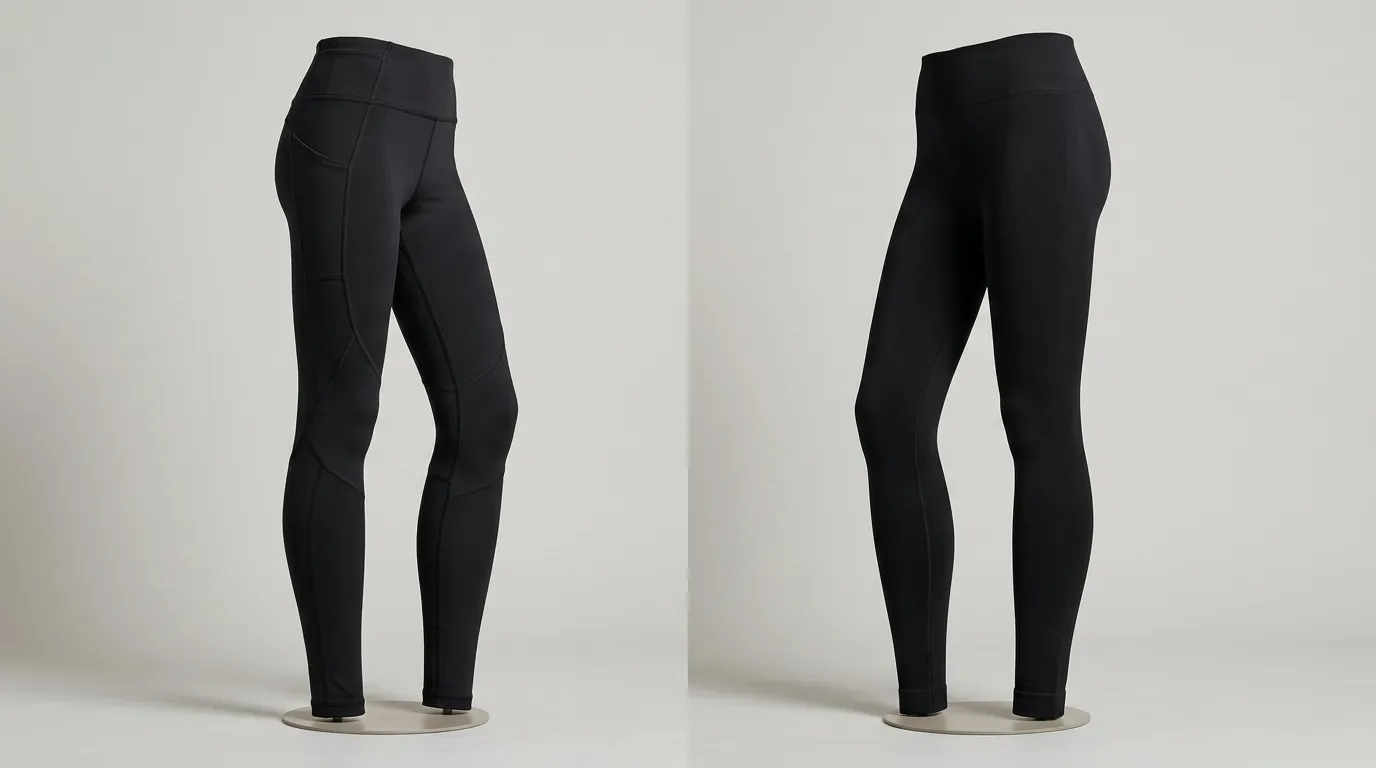
Construction drives cost through the number of panels and seams, the machines and operator skill required, and whether the garment is cut and sewn, knitted seamless, or joined with bonded or taped seams. This is the second big lever after fabric, and the one buyers most often under-specify.
Cut-and-sew versus seamless
Cut-and-sew is the standard route: panels are cut from fabric and joined by stitching, which gives the widest design flexibility. Seamless construction reduces seam count by knitting the garment closer to shape, but it constrains design and requires specific knitting capability. Neither is automatically cheaper — the cheaper option depends on your design, order size and the machines a factory has available. Our comparison of cut and sew vs seamless activewear manufacturing explains how each route affects design constraints and production planning.
Bonding and seam finishing
Portugal Clothing Factory's September 2026 guide to sportswear manufacturers identifies flatlock and coverstitch construction, elastane handling and bonding equipment as capability considerations in sportswear production. That matters for budgeting because bonding and taped seams use different equipment and skill than standard stitching, which can affect both cost and which factories can quote at all. Do not assume a fixed surcharge for bonding; ask the factory to quote the specific seam construction you have specified.
| Construction element | What it is | Why it can change cost |
|---|---|---|
| Panel count | Number of fabric pieces joined per garment | More panels mean more cutting, matching and sewing operations |
| Flatlock and coverstitch | Stretch-compatible seam types for knits | Require specialized machines and operator skill |
| Seamless knit | Garment knitted close to final shape | Needs circular knitting capability; design flexibility is reduced |
| Bonded or taped seams | Seams joined or sealed with adhesive tape instead of stitching | Uses separate equipment and processes from standard stitching |
| Elastane handling | Working with high-stretch fabric | Affects tension control, stitch choice and reject rates |
How Order Quantity, MOQ and Color Count Change the Price
Per-piece cost usually falls as order quantity rises, but color count, per-color minimums and the number of styles ordered can erase that effect. Setup work is allocated per colorway, not just per style, so a three-color order at the same total quantity often costs more per piece than a single-color order.
Seam Apparel's May 2026 guide publishes per-unit estimates for a basic performance top or legging across four quantity bands. Minghang Garments' published moq guide is a useful reference point for how minimums are structured.
| Quantity band | Source-stated per-unit estimate | Source | Caveat |
|---|---|---|---|
| Under 200 units | $14–$22 | Seam Apparel (May 2026) | Basic performance top or legging; assumptions not fully stated |
| 200–500 units | $9–$14 | Seam Apparel (May 2026) | Same style basis; assumptions not fully stated |
| 500–1,000 units | $7–$10 | Seam Apparel (May 2026) | Same style basis; assumptions not fully stated |
| 1,000+ units | $5–$8 | Seam Apparel (May 2026) | Same style basis; assumptions not fully stated |
Seam Apparel does not make all of the assumptions behind that table clear, so treat it as one source's estimate rather than a market benchmark. On minimums, Minghang Garments' published price guide states that regular cut-and-sew production typically starts at 100 pcs per style per color, while custom fabric or dyeing generally requires 300–500 pcs per color. Always ask for the per-color minimum, because that number — not the headline style minimum — decides whether your color plan is viable.
[DIAGRAM: A quantity-band chart plotting Seam Apparel's per-unit estimates from under 200 units to 1,000+, with the source name and an on-chart note that assumptions are limited.]
Costs That Sit Outside the Bulk Unit Price
Pattern making, sampling and revisions, decoration setup, packaging, freight and duties are frequently quoted separately from the bulk unit price, so a low unit price can still produce a high total. Consolidating these lines before you commit to an order is what keeps a garment budget realistic.
Seam Apparel's May 2026 guide states that pattern making for a modern style costs $150–$400, with two sample rounds adding $250–$500. The same guide states that custom tech-pack development and pattern grading add $300–$800 for a modern style; keep that figure separate from the sampling estimate because the scope may differ. Bushi Sports presents an illustrative custom sports-jersey breakdown totaling $17 — fabric $6, labor $5, printing and customization $3, packaging $1 and logistics $2 — as an example rather than a general quote.
Before approving any order, confirm in writing whether each of the following is included or billed separately:
- Pattern making and tech pack development
- Sample rounds and the number of revisions allowed per round
- Decoration setup, screens or embroidery digitizing
- Labels, hangtags and packaging specification
- Quality control and inspection scope
- Shipping terms and who arranges freight
- Duties, taxes and import charges at destination
- Payment terms and deposit schedule
If a supplier will not confirm these lines in writing, you cannot compare its quote against another factory's.
Factory Unit Price vs Landed Cost per Unit
Factory unit price is what the manufacturer charges per piece; landed cost per unit is that figure plus development, packaging, freight, duties and inspection, divided across the units you can actually sell. Landed cost is the number that decides your margin, not the unit price on the quotation.
The calculation is straightforward even without fixed figures:
Landed cost per unit = (one-time development + setups + bulk order value + packaging + freight + duties) ÷ sellable units
Two adjustments are easy to forget. Units lost to quality rejects, samples and photography reduce the sellable-unit denominator, so budget a buffer above your target order quantity. And one-time development costs do not fall when order quantity falls — a small first order carries a much higher development cost per unit than a reorder of the same style. OneAim Apparel's June 2026 breakdown uses the same factory-side versus importer-side split, which is a useful checklist structure when you build the calculation.
What to Send a Manufacturer for a Comparable Quote
A comparable quote needs identical inputs from every factory: full garment specification, fabric details, construction, decoration, size and color breakdown, quantity and packaging expectations. If any one of those differs between two requests, the returned prices are not comparable and the comparison should be re-run on a single shared spec.
- Send a tech pack or reference sample with measurements and grade rules.
- Specify fabric composition, weight and finish, and state whether fabric is stock or custom.
- State construction details: seam type, panel count, bonding or seamless requirements.
- List decoration, labels and packaging requirements.
- Give quantity by style, color and size, plus your tolerance for per-color minimums.
- Ask each factory to confirm what is included, what is excluded, and its sampling timeline.
When quotes come back, line them up on the same criteria: unit price, fabric specification, included services, minimum per color, sample cost and revision allowance, QC scope, packaging, and shipping terms. If two quotes differ on any of these lines, re-quote on one shared specification before deciding.
How Minghang Garments Approaches Activewear Cost Planning
Minghang Garments is a custom clothing manufacturer based in Dongguan, operating since 2017, and it plans activewear cost around the same drivers described on this page: fabric and trim sourcing, pattern making, sampling, construction, decoration, labels and packaging. The company runs a 12,000 m² production floor and a 2,000 m² sample center with capacity up to 500,000 pcs per month.
Minimum order quantity starts from 100 pcs per color per style on stock fabric. Sampling takes 7–15 working days and bulk production 25–45 days, supported by a 5+1 QC system. If you have a tech pack or reference sample ready, sharing it with Minghang Garments is the fastest way to get a quote built on your actual specification rather than a published rate card.
Frequently asked questions
Do I pay for samples and patterns separately, and can they be credited against a bulk order?
Yes — pattern making and sampling are usually invoiced separately from bulk production. Seam Apparel's May 2026 guide puts pattern making at $150–$400 and two sample rounds at $250–$500. Whether a factory credits or partially refunds those charges on a bulk order is a commercial policy, not an industry standard, so confirm it in writing before you order.
Does fabric testing or certification add cost to an activewear order?
Testing and certification are usually quoted as extra lines, not included in the unit price. Ask which tests the factory arranges, who pays for them, and whether the results are tied to your specific order or supplied as a general report. Requirements vary by destination market and by buyer, so confirm the scope per order rather than assuming it is covered.
What happens to the quoted price if I change the fabric after sampling?
Expect a re-quote, because fabric composition, weight and stretch content drive both the material price and how the garment behaves in construction, including stitch and bonding compatibility. Ask the factory to requote every affected line — fabric, labor and any additional sample round — rather than adjusting the material price alone.
-
Share
-

-

-