 Contact Us

Table of Contents

Contact Us
Updated 2 weeks ago
Raglan Sleeve vs Set-In Sleeve: What's the Difference?
arafatshuvo
Sleeve construction decides where the sleeve meets the body. A raglan sleeve runs diagonally from the underarm to the collar, so the seam crosses the chest and back; a set-in sleeve attaches into a shaped armhole and joins at the shoulder point. That single difference shapes look, fit, movement and decoration placement.
Key takeaways
- A raglan panel joins at the neck, while a set-in style joins the front and back panels at the shoulder, per the BE Ultimate Help Center.
- Wooter describes the raglan seam as diagonal between the neckline and underarm, against the set-in sleeve's shoulder and armhole seam.
- Movement depends on the whole pattern, not the sleeve name, according to Minghang Garments' guide to drop shoulder versus set-in sleeves.
- Wearer reports differ: in a PatternReview discussion dated 20 July 2023, one participant said narrower shoulders worked for them, another did not prefer raglans.
- Seam lines drive decoration: a raglan seam gives a natural panel edge, a set-in join sits at the armhole.
What Is a Raglan Sleeve?
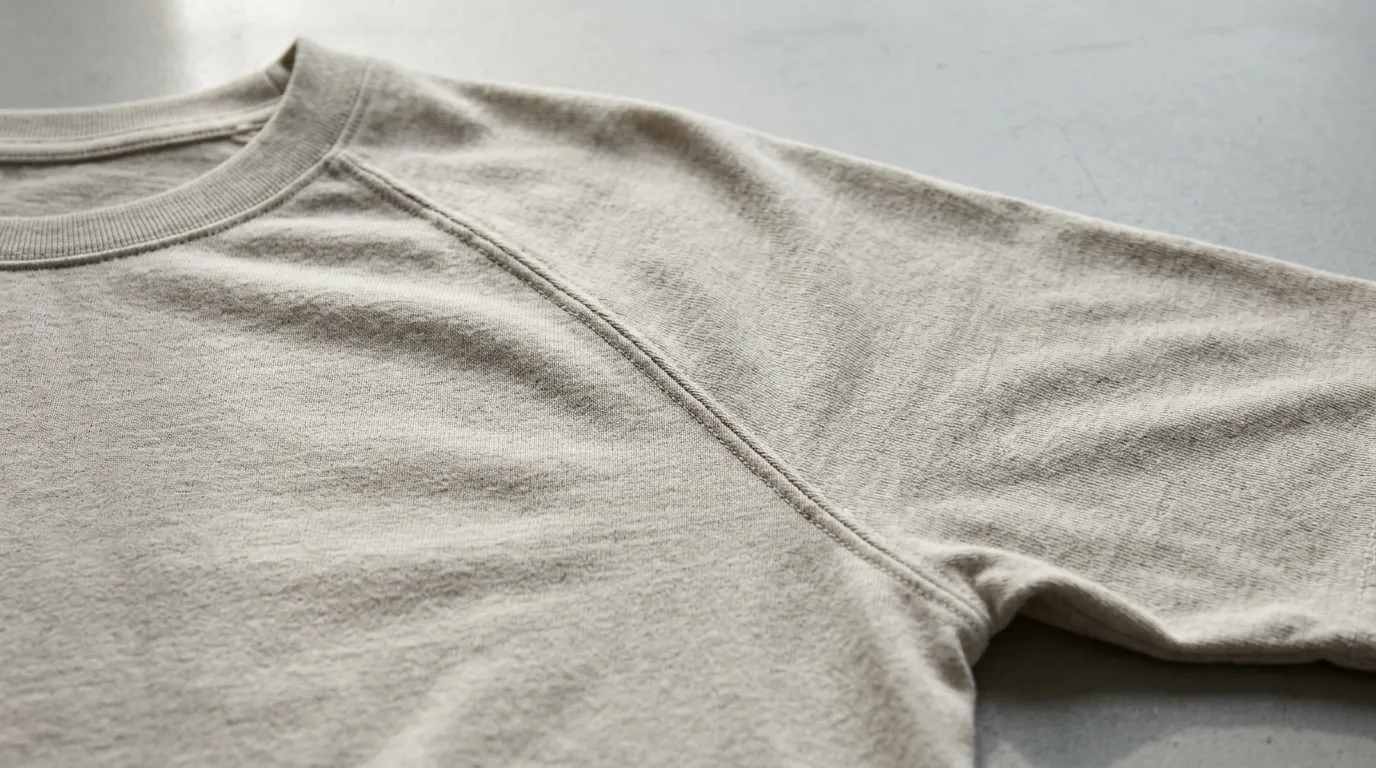
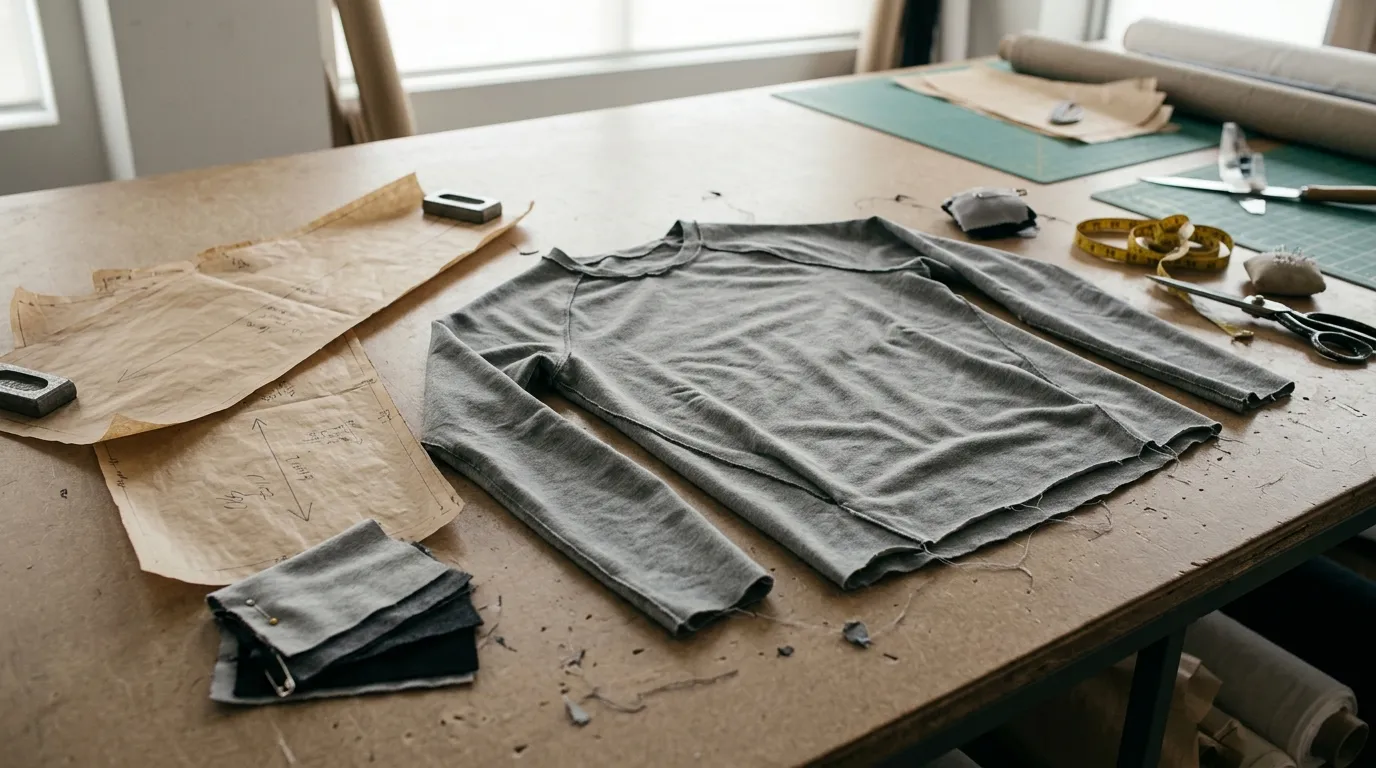
A raglan sleeve is a sleeve cut so that its seam runs diagonally from the underarm up to the collar, meeting the neckline instead of stopping at a shoulder point. The sleeve therefore extends across part of the shoulder and chest rather than being set into a shaped armhole.
According to the BE Ultimate Help Center, its raglan sleeve panel joins at the neck. Wooter describes the raglan seam as running diagonally between the neckline and the underarm. That single diagonal line is what makes a raglan recognizable on a T-shirt, hoodie or sweatshirt, and it is also the line that limits where panels and artwork can sit.
What Is a Set-In Sleeve?
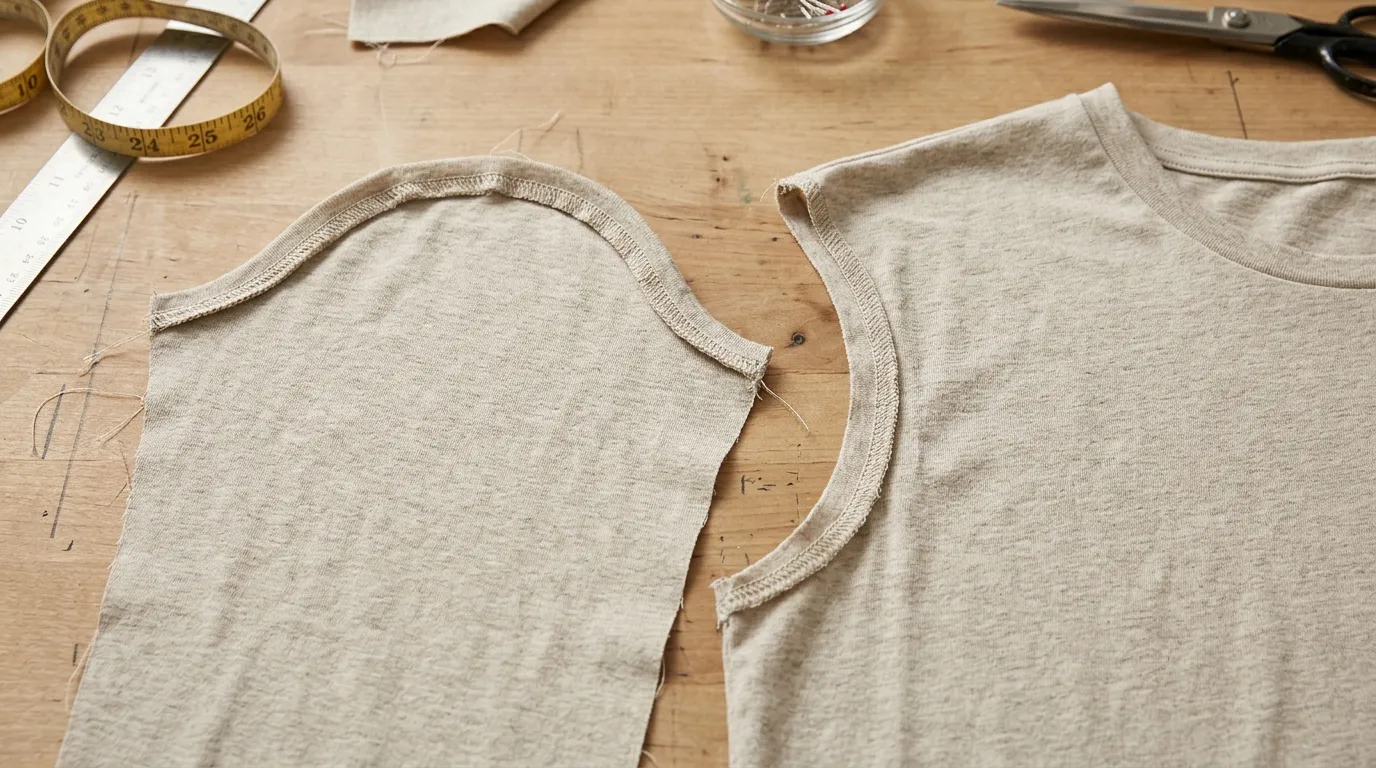
A set-in sleeve is a sleeve sewn into a shaped armhole and attached at the shoulder point, so the seam follows the natural shoulder line instead of travelling to the collar. The armhole is a curved opening cut into the body panels, and the sleeve cap is fitted or eased into it.
The BE Ultimate Help Center describes its set-in style as joining the front and back panels at the shoulder, while Wooter contrasts that shoulder and armhole seam with the diagonal raglan seam. Because the join sits at the shoulder point, the shoulder line stays visually defined rather than being crossed by a diagonal panel edge.
Raglan vs Set-In Sleeve: Side-by-Side Comparison
Raglan and set-in sleeves differ in seam path, shoulder appearance, how fit and movement are judged, and where decoration can sit — which is why neither construction is automatically better than the other.
| Construction | Seam path | Shoulder and visual effect | What to judge for fit and movement | Decoration implications | Typical garment uses |
|---|---|---|---|---|---|
| Raglan sleeve | Diagonal seam from underarm to collar; panel joins at the neck (BE Ultimate Help Center) | Less defined shoulder point; a continuous diagonal line crosses chest and back | Judge on a sample in the intended fabric; movement depends on armhole depth, sleeve shape, fabric stretch, body width and underarm construction (Minghang Garments) | The diagonal seam works as a panel edge for colour blocking and placement review | T-shirts, hoodies, sweatshirts, activewear tops |
| Set-in sleeve | Sleeve sewn into a shaped armhole; joins front and back panels at the shoulder point (BE Ultimate Help Center) | Defined shoulder line and shoulder point | Judge on a sample in the intended fabric; the fitted sleeve cap must be checked at the armhole | Join sits at the armhole, so decoration is planned around the shoulder seam | T-shirts, hoodies, activewear tops where a defined shoulder is wanted |
Wooter's football-jersey comparison weighs fit and comfort, mobility, customization and durability, and includes three comparison tables and an FAQ — a useful sign of which criteria buyers actually weigh when choosing between the two.
How Does Sleeve Construction Affect Movement?
Sleeve construction changes where the seam sits and how much fabric can travel with the arm, but the final range of motion comes from the whole pattern and fabric, not from the sleeve name alone.
Minghang Garments' guide to drop shoulder versus set-in sleeves states that movement depends on the complete pattern, including armhole depth, sleeve shape, fabric stretch, body width and underarm construction. That is the practical rule: two raglan T-shirts in different fabrics can move differently, and a set-in sleeve cut with a deeper armhole can move differently from a fitted one.
The decision rule is to judge movement on a sample made in the intended fabric, at the intended size, before approving a construction. Published comparisons such as Wooter's describe mobility as a criterion rather than measuring it, so treat broad claims that one construction is more mobile with caution.
How Does It Affect Fit and the Look at the Shoulder?
Raglan and set-in sleeves differ most visibly at the shoulder: a raglan seam draws a diagonal line across the shoulder and chest, while a set-in sleeve keeps a defined shoulder point and shoulder line.
Whether one reads as more flattering depends on the wearer, the pattern and the fabric, not on the construction name. In a PatternReview discussion dated 20 July 2023, one participant said narrower shoulders worked for them, while another said raglans were not their preference; those are individual opinions rather than a fit finding.
For fit, check the same points on both constructions: where the seam sits relative to the shoulder point, how the armhole feels under the arm, and whether the sleeve length lands where you intended. Minghang Garments' guide to drop shoulder versus set-in sleeves notes that shoulder width and sleeve length should be considered together when developing a shoulder construction. For the third shoulder option, where the armhole deepens instead of the seam moving, see drop shoulder vs set-in sleeve.
Which Construction Suits T-Shirts, Hoodies and Activewear?
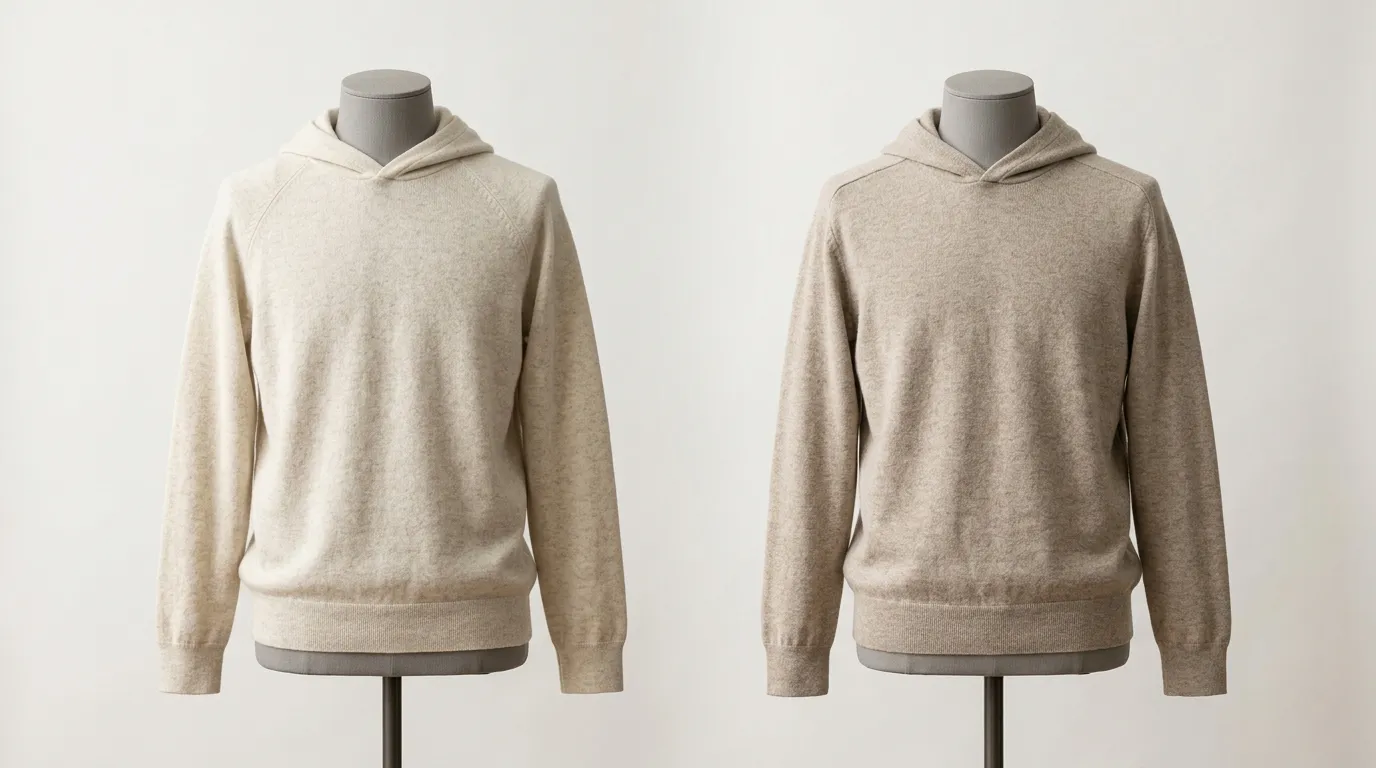
Both raglan and set-in construction are used across T-shirts, hoodies, sweatshirts and activewear tops, so the choice usually follows the silhouette you want, the decoration plan and how the fabric behaves.
- Raglan: suits designs where the diagonal seam is part of the look — panel tops, colour-blocked tees and sport-style hoodies where the seam reads as a design line rather than a hidden join.
- Set-in: suits designs that want a defined shoulder point and an uninterrupted chest panel, which is common in basic tees and hoodies where the front print area matters.
- Either: suits activewear tops, provided the armhole depth, sleeve shape and fabric stretch are reviewed together on the sample.
The construction choice is a design decision first and a comfort decision second, because the same seam behaves differently in a stretch knit than in a rigid woven face.
How Do the Seams Affect Decoration and Color Blocking?
Seam lines are decoration boundaries. A raglan seam gives a ready-made diagonal edge for colour blocking and panel placement, while a set-in construction keeps the sleeve join at the armhole and leaves the chest and back panels uninterrupted.
Wooter's comparison lists customization among the criteria it weighs for raglan and set-in jerseys. A diagonal seam can carry a two-tone or printed panel, as in this custom waffle knit DTG print raglan long sleeve t shirt. For embroidery or prints that cross a seam, confirm placement on the actual garment rather than assuming it, because the seam path changes where artwork lands and where a panel edge will fall.
How to Choose: A 4-Step Decision Rule
Choose by design intent, not by a general ranking: match the seam to the silhouette you want, the decoration you plan, the fabric behaviour and what the sample actually does.
- Define the shoulder look. Decide whether you want a diagonal seam crossing the shoulder area or a defined shoulder point with a set-in join.
- Map the decoration. If a panel edge or colour block should follow the seam, a raglan layout gives you that line; if the chest panel must stay clear, a set-in join keeps it clear.
- Check the fabric. Stretch, weight and drape change how a sleeve behaves in wear, so review them against the pattern rather than assuming a result.
- Review a sample at the intended size. Confirm the seam path, armhole depth, sleeve shape, body width and underarm construction together, and check sleeve length against shoulder width rather than in isolation. If the silhouette is oversized, review pattern grading oversized clothing alongside the sample so the fit carries across sizes.
Only after the sample is approved should the construction be locked for production.
Common Mistakes and Limits of This Comparison
A common mistake is treating sleeve construction as a guaranteed performance upgrade; another is assuming "sporty" or "tailored" applies to every raglan or set-in garment.
Wearer experience varies, as the PatternReview comments show. Most published comparisons explain the difference between the two constructions rather than measure it. And movement and fit outcomes remain pattern- and fabric-dependent, per Minghang Garments' guide to drop shoulder versus set-in sleeves.
Is a raglan sleeve more flattering than a set-in sleeve?
No universal answer exists. A raglan seam draws a diagonal line toward the collar, while a set-in sleeve keeps a defined shoulder point. Preference varies by wearer: in a PatternReview discussion dated 20 July 2023, participants disagreed about raglan fit. Judge the look on a sample made in your intended fabric.
Are raglan sleeves better for broad or narrow shoulders?
Not automatically. One participant in that July 2023 PatternReview discussion said narrower shoulders worked for them, while another preferred other constructions. Minghang Garments' guide to drop shoulder versus set-in sleeves says shoulder width and sleeve length should be considered together, and the result should be checked on a sample.
Can a T-shirt or hoodie use either construction?
Yes. Both raglan and set-in sleeves appear across T-shirts, hoodies, sweatshirts and activewear tops. The BE Ultimate Help Center's raglan panel joins at the neck, while its set-in style joins at the shoulder point, so the choice usually follows silhouette, decoration plan and fabric rather than a fixed rule.
-
Share
-

-

-