 Contact Us

Table of Contents

Contact Us
Updated 3 weeks ago
Boxy Fit vs Oversized Fit T Shirt: What's the Difference?
arafatshuvo
Boxy fit and oversized fit T-shirts are both cut wider than a standard tee, but they differ in proportion: a boxy fit is shorter through the body with a squarer silhouette, while an oversized fit adds width and length and drapes past the hips. Shoulder construction, sleeve shape and fabric drape vary by brand, so compare garment measurements rather than the label.
Key takeaways
- Both fits are cut wider than a standard tee; the width-to-length ratio is what separates them (Caracas Merch).
- A boxy tee is generally shorter through the body than an oversized tee, while both can be wide (POMP).
- Oversized length typically drapes past the hips; boxy length typically sits around the waist or belt line (Caracas Merch; Anchor Me Down).
- Shoulder seam placement, sleeve length and fabric drape change how each fit reads (Verbo Label; Anchor Me Down).
- Sizing up a regular tee scales the whole garment; it does not recreate a boxy width-to-length ratio (Anchor Me Down).
What Does "Boxy Fit" Mean in a T-Shirt?
A boxy fit T-shirt is cut with a straight, square-like silhouette — wider through the body and shorter through the torso than a standard tee, with little waist shaping.
POMP's September 2024 guide defines a boxy fit as a loose, square-like shape with straight lines and minimal tailoring. The same guide notes that boxy items are generally shorter than oversized items, even though both can be wide. Anchor Me Down describes boxy tees as wider through the body and shorter through the torso, with the hem sitting around the belt line or slightly above it, and places boxy sleeves roughly an inch above the elbow on most frames — a reference point from that brand's guidance, not a universal standard. US Standard Apparel describes a boxy tee the same way: wide, and shorter than a standard cut.
What Does "Oversized Fit" Mean in a T-Shirt?
An oversized fit T-shirt is a deliberately enlarged pattern — extra room through the chest, body and sleeves, plus added length so the hem drapes past the hips instead of sitting at the waist.
Caracas Merch's comparison contrasts oversized length past the hips with boxy length around the waist, and describes the oversized silhouette as loose-draping while boxy reads as more structured. The Litt's fit guide separates oversized length from boxy width and shorter length in the same way. RushOrderTees describes a shorter specification for box tees, while its oversized tee is not described as shortened. Anchor Me Down puts the practical point simply: oversized tees scale up more of a standard tee's proportions.
A dropped shoulder is common on oversized tees, but it is not what makes a tee oversized. A set-in shoulder on a wide, long body can still be an oversized fit, which is why shoulder construction deserves its own section below.
Is Boxy Fit the Same as Oversized Fit?
No. Boxy fit and oversized fit overlap because both are cut wider than a standard tee, but boxy is defined by proportion — wide relative to a shorter body — while oversized is defined by added volume in both width and length.
Caracas Merch states that both fits can be wide and still distinguishes them by volume versus proportion: oversized carries more overall volume, boxy carries a squarer, shorter shape. As a working rule when shopping, if a tee is wide but ends at or above the waist, treat it as boxy-leaning; if it is wide and ends past the hips, treat it as oversized-leaning, whatever the tag says. Some brands also sell hybrid "boxy oversized" tees that sit between the two.
Boxy vs Oversized T-Shirt: Width, Length and Proportion
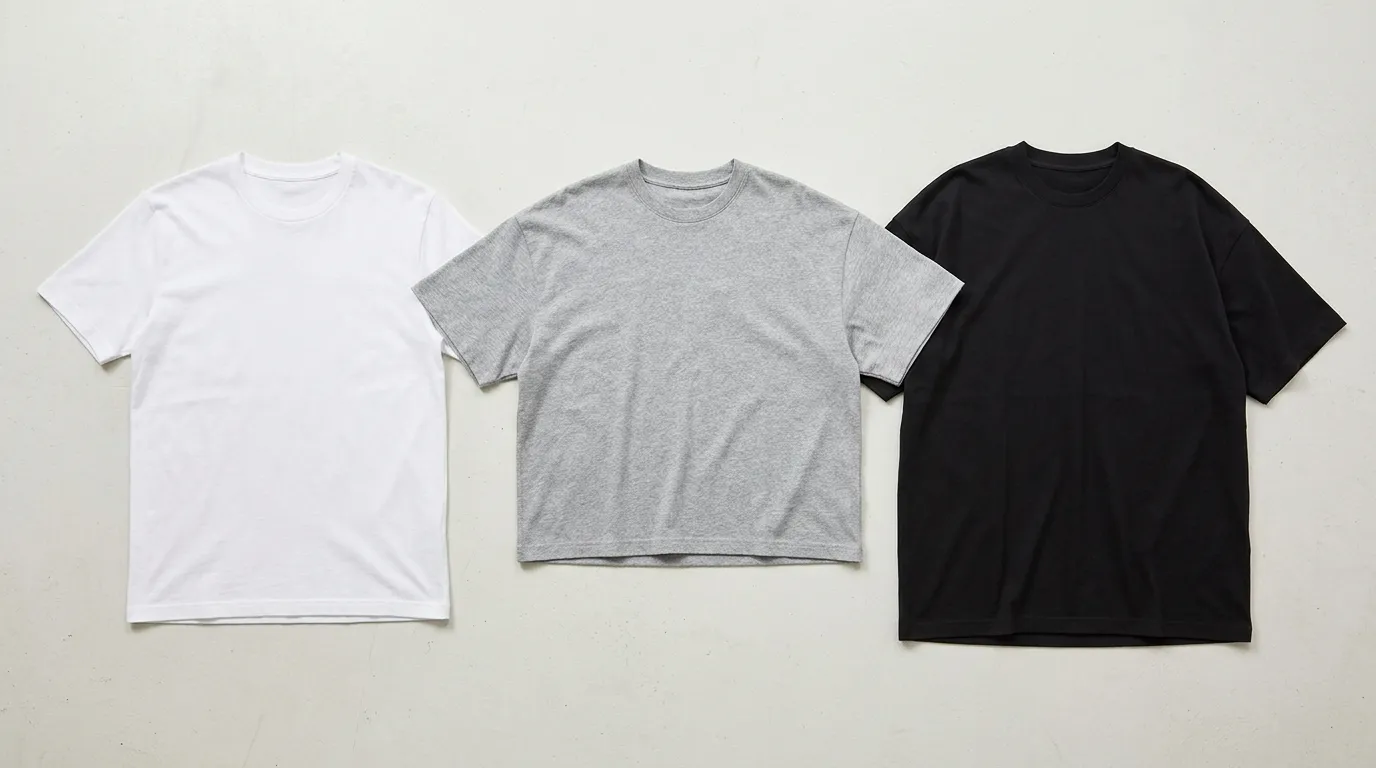
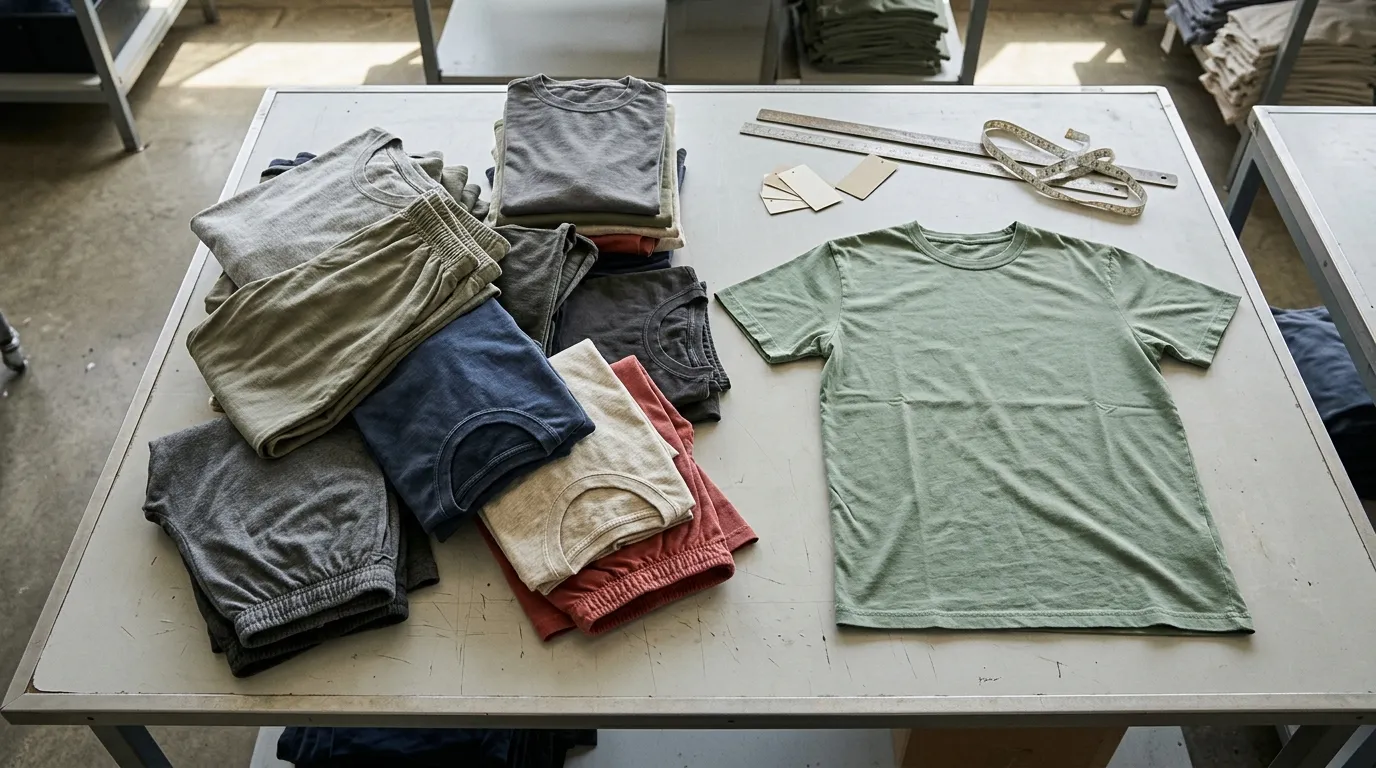
Measured flat, a boxy tee typically shows a large chest width against a short body length, while an oversized tee shows extra width plus extra body length, so its hem sits lower.
| Attribute | Boxy fit | Oversized fit | Why it matters |
|---|---|---|---|
| Body width (chest, flat) | Wider than standard | Wider than standard | Width alone does not separate the two |
| Body length | Shorter than standard | Longer than standard | The difference you can actually measure |
| Width-to-length ratio | High, with a short body | High, but length scales with width | The defining difference |
| Hem position | Around the waist or belt line | Past the hips | The quickest on-garment check |
| Shoulder and sleeve | Varies; often a squarer, structured look | Often dropped, with fuller sleeves | Verify per garment |
| Silhouette and drape | More structured, squarer | Looser drape, more volume | Affects styling and layering |
| Typical use | Compact graphic tees and cropped-look casualwear | Relaxed, layered and lifestyle looks | Guides collection planning |
The table reflects typical proportions described in published fit guides rather than a fixed industry standard. Two brands can label very similar garments differently, so the measurements matter more than the name on the tag.
How Shoulder Seam, Sleeve and Silhouette Change the Comparison
Shoulder seam placement and sleeve shape change how wide a T-shirt looks more than the fit label does: a dropped shoulder with a fuller sleeve reads looser, while a set-in shoulder on the same body width reads squarer and more structured.
Verbo Label's comparison covers width, length, sleeves and shoulder proportions, which is why a label alone can mislead — the same "boxy" description can sit on garments with quite different shoulders. Anchor Me Down's sleeve reference point, roughly an inch above the elbow on most frames, comes from that brand's own boxy tee and should be read as its guidance only. Caracas Merch keeps the distinction simple: oversized drapes loose, boxy holds a more structured shape. The construction detail behind those differences is covered in drop shoulder vs set-in sleeve.
How to Compare Boxy and Oversized Fits on a Size Chart
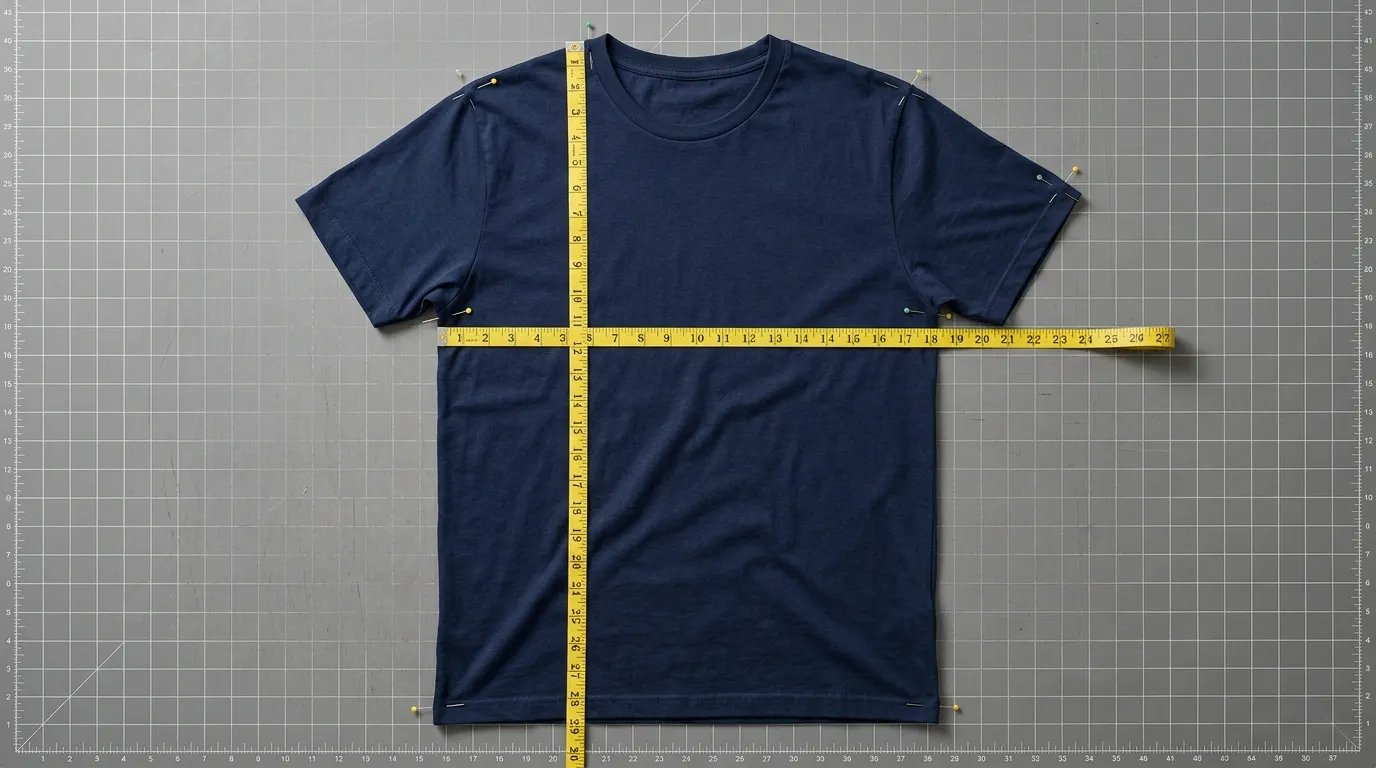
Ignore the fit name and compare four flat measurements against a tee you already own: chest width, body length, shoulder width and sleeve opening. Then check whether width or length grew more.
- Lay your best-fitting tee flat. Measure chest width from armhole to armhole, body length from high point shoulder to hem, shoulder width, and the sleeve opening.
- Pull the same four measurements from the size chart of the tee you are considering. Size labels alone are not comparable across brands.
- Compare the relationship, not just the numbers. If width has grown far more than length, the garment is boxy-leaning; if both have grown, it is oversized-leaning.
- Check the stated hem position against your own landmarks. Around the waist reads boxy; past the hips reads oversized.
- Account for drape. A stiffer fabric holds a squarer shape, while a softer, drapier fabric falls closer to the body on identical measurements, so a drapey oversized cut can look narrower than its numbers suggest.
Which Fit Should You Choose?
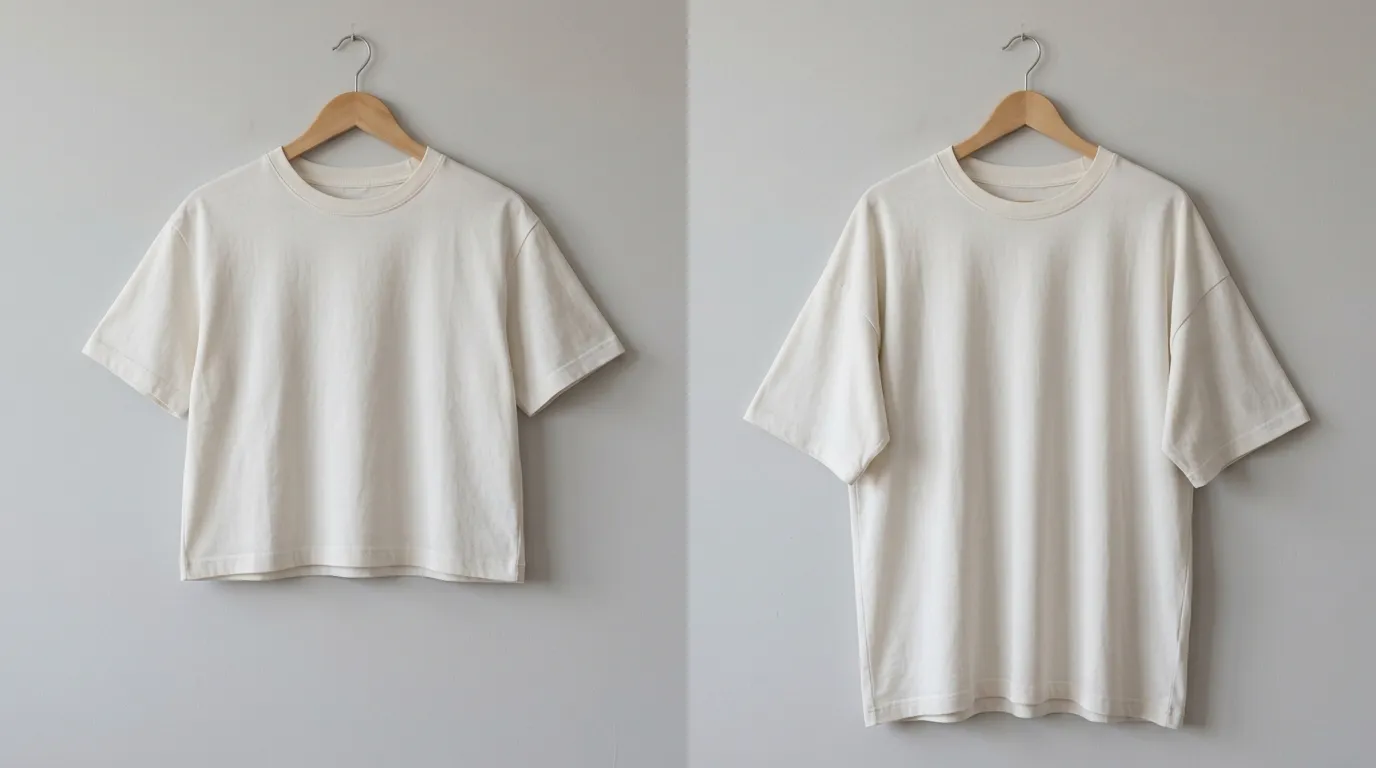
Choose boxy if you want a wide but short, squarer shape that ends around the waist. Choose oversized if you want a relaxed tee that falls past the hips and layers easily.
- A shorter, cropped look: boxy, because the body is wider but shorter (Anchor Me Down; POMP).
- A long, loose, layered look: oversized, because width and length are both increased and the hem sits past the hips (Caracas Merch; The Litt).
- Chest graphics and compact prints: boxy keeps the printable area short and high.
- Layering over hoodies or outerwear: oversized gives more length and volume to work with.
- One collection, two fits: keep the width-to-length relationship consistent within each fit across the size run instead of letting the two fits converge as sizes grow.
Is Sizing Up a Regular T-Shirt the Same as Buying Oversized?
No. Sizing up scales the whole pattern up proportionally, so the tee gets wider and longer while keeping its original width-to-length relationship. An oversized design deliberately changes that relationship.
Anchor Me Down notes that oversized tees scale up more of the standard tee's proportions, which is the practical difference. Sizing up also moves the shoulder seam and lengthens the sleeve in ways that were not designed for the look, so a one-size-up regular tee can simply read as too big rather than oversized.
What Brands Should Specify When Developing a Boxy or Oversized Tee
Specify the intended width-to-length relationship for each size, the shoulder construction and the sleeve measurements. Grading a standard block up changes how the fit reads as sizes get larger.
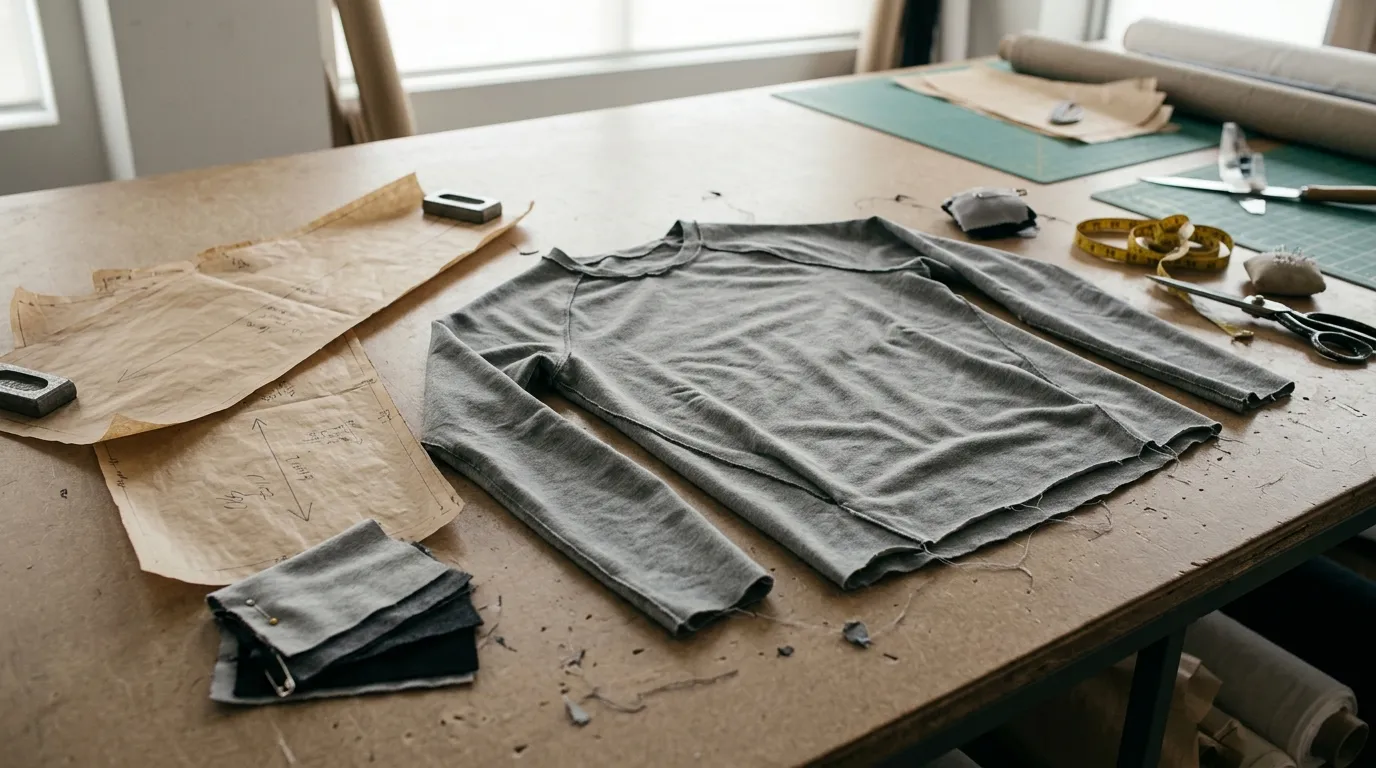
Minghang Garments, a custom clothing manufacturer in Dongguan operating since 2017, supports pattern making and sampling for T-shirts and other apparel, so fit intent can be reviewed before bulk production. A practical brief gives the sample room target chest width and body length figures per size, plus hem and sleeve reference points, rather than the fit name alone. The considerations involved in keeping proportions consistent across a size run are set out in pattern grading oversized clothing.
If you are developing either fit, Minghang Garments can review the fit intent during pattern making and sampling. Oversized T-shirt styles sit within its OEM, ODM and private label custom oversized t shirts range.
Frequently Asked Questions
What is a boxy oversized T-shirt?
A boxy oversized T-shirt is a hybrid label some brands use for a tee that is wide through the body and cut longer than a classic boxy fit. Because the two terms are not standardised, check the flat chest width and body length on the size chart rather than relying on the name (Caracas Merch; POMP).
Can you wear a boxy fit if you are tall?
Yes, but check body length rather than the fit name. A boxy tee with a short torso can sit high on a taller frame; if you want the wide-but-long look, an oversized fit's added length usually reads closer to that intent (POMP; Caracas Merch).
Does fabric weight change whether a tee looks boxy or oversized?
It changes how the same measurements read. A stiffer fabric holds a squarer shape and emphasises boxy lines, while a softer, drapier fabric falls closer to the body and can make an oversized cut look less voluminous (Caracas Merch; Anchor Me Down).
-
Share
-

-

-