 Contact Us
Table of Contents

Contact Us
Updated 6 days ago
Drop Shoulder vs Set-In Sleeve: Which Construction Is Better for Streetwear?

Minghang Garments
Minghang Garments is a custom apparel manufacturer specializing in activewear, streetwear and private-label clothing development. Our team supports brands through fabric sourcing, product development, sampling, bulk production and quality control, with OEM and ODM solutions for startups, growing labels and established apparel businesses.
Shoulder construction has a major influence on how a T-shirt, hoodie, sweatshirt, or jacket looks and fits.
Two garments can use the same fabric and similar body measurements but create completely different silhouettes depending on where the sleeve connects to the body.
In streetwear, two of the most common constructions are drop shoulder and set-in sleeve.
Drop shoulder construction is widely used for oversized and relaxed silhouettes, while set-in sleeves usually create a cleaner and more defined shoulder shape.
Neither construction is automatically better.
The right choice depends on the intended fit, fabric, movement, garment category, and overall design direction.
This guide explains the differences between drop shoulder and set-in sleeve construction and how brands can choose the right option for streetwear development.
What Is a Drop Shoulder?
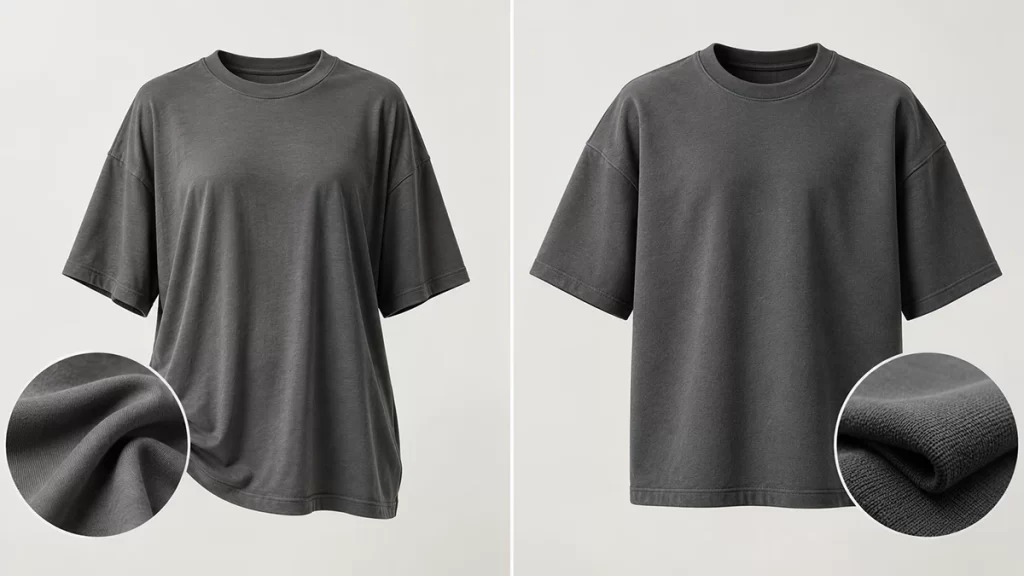
A drop shoulder moves the shoulder seam beyond the wearer’s natural shoulder point.
Instead of ending close to the top of the shoulder, the seam falls farther down the upper arm.
This creates more visual width and is commonly used in:
- Oversized T-shirts
- Boxy hoodies
- Sweatshirts
- Relaxed streetwear tops
- Heavyweight casualwear
The amount of shoulder drop can vary significantly.
A subtle drop may create a relaxed fit, while an exaggerated drop can become one of the main design features of the garment.
What Does Drop Shoulder Do to the Silhouette?
Drop shoulder construction generally creates:
- A wider upper-body appearance
- A more relaxed shoulder line
- Greater visual volume
- A softer transition between body and sleeve
- A stronger oversized effect
However, simply increasing shoulder width does not automatically create a good oversized fit.
Body width, sleeve length, armhole depth, fabric structure, and garment length all need to work together.
What Is a Set-In Sleeve?
A set-in sleeve is attached around an armhole with the shoulder seam positioned closer to the wearer’s natural shoulder point.
This construction usually creates a more defined separation between the body and sleeve.
It is commonly used for:
- Standard-fit T-shirts
- Fitted sweatshirts
- Structured jackets
- Performance tops
- Cleaner casual silhouettes
Set-in sleeves can still be used in relaxed or oversized garments, but the visual effect is usually more controlled than an exaggerated drop shoulder.
Drop Shoulder
Typical effect
- Wider silhouette
- Relaxed shoulder line
- Strong oversized appearance
- More visual volume
- Common in modern streetwear
Set-In Sleeve
Typical effect
- Defined shoulder shape
- Cleaner structure
- More controlled proportions
- Closer relationship to body shape
- Common in standard and structured fits
Key takeaway:
Drop shoulder emphasizes volume and relaxation, while set-in sleeves create a more defined shoulder structure.
Drop Shoulder vs Set-In Sleeve: How They Affect Fit
The difference between drop shoulder and set-in sleeve construction becomes most noticeable when the garment is worn.
Both constructions affect more than just the shoulder seam.
They also influence sleeve position, armhole shape, movement, upper-body volume, and the overall balance of the garment.
For this reason, brands should evaluate shoulder construction together with the complete fit rather than as an isolated design detail.
Drop Shoulder Fit
Typical fit characteristics
- Shoulder seam sits below the natural shoulder
- Upper body appears wider
- Armhole is often deeper
- Sleeve may appear shorter from the shoulder seam
- More relaxed and oversized visual effect
- Greater volume around the upper arm
Because the shoulder seam extends outward, sleeve length needs to be considered together with shoulder width.
If both measurements are increased too much, the sleeve can become excessively long.
Set-In Sleeve Fit
Typical fit characteristics
- Shoulder seam stays closer to the natural shoulder
- Upper body looks more defined
- Armhole is generally more controlled
- Sleeve length is easier to evaluate independently
- Cleaner transition between body and sleeve
- Less exaggerated upper-body volume
Set-in sleeves can still be used for relaxed silhouettes, but the oversized effect usually comes more from body width and sleeve volume than shoulder extension.
Shoulder Width and Sleeve Length Must Work Together
One of the most common mistakes in drop shoulder development is treating shoulder width and sleeve length as separate measurements.
They are closely connected.
As the shoulder extends farther down the arm, the sleeve begins from a lower point.
This means the actual sleeve length may need to be reduced to maintain the intended total arm coverage.
For example, increasing shoulder width without adjusting sleeve length can result in sleeves extending too far past the wrist.
Armhole Shape Also Changes the Fit
Drop shoulder styles often use deeper or wider armholes to support the relaxed silhouette.
This can increase comfort and visual volume, but an excessively deep armhole may create too much fabric around the underarm.
Set-in sleeves usually use a more defined armhole shape, which can provide a cleaner appearance and more controlled fit.
The correct armhole depends on:
- Fabric thickness
- Sleeve width
- Intended movement
- Garment category
- Desired silhouette
Movement Is Not Determined by Shoulder Type Alone
A drop shoulder may look relaxed, but that does not automatically mean it offers better movement.
Likewise, a set-in sleeve is not necessarily restrictive.
Movement depends on the complete pattern, including:
- Armhole depth
- Sleeve shape
- Fabric stretch
- Body width
- Underarm construction
This is especially important for jackets, active-streetwear hybrids, and garments designed for more functional movement.
Key takeaway:
In drop shoulder garments, shoulder width, sleeve length and armhole depth should be developed together to maintain balanced proportions.
How Fabric Choice Changes Drop Shoulder and Set-In Sleeve Silhouettes
Shoulder construction does not work independently from fabric. Best Fabrics for Streetwear
A drop shoulder made with lightweight jersey can look soft and relaxed, while the same pattern made with dense heavyweight cotton may appear much wider and more structured.
The same applies to set-in sleeves.
Fabric weight, drape, thickness, and recovery all influence how clearly the shoulder line is expressed.
Heavier Fabrics Emphasize Structure
Dense fabrics tend to hold shape more strongly.
Examples include:
- Heavyweight cotton jersey
- Compact jersey
- French terry
- Brushed fleece
- Dense cotton blends
In a drop shoulder garment, these fabrics can make the extended shoulder line more visible and increase the boxy appearance.
For oversized streetwear, this can be desirable when the design needs strong structure and volume.
However, if both the pattern and fabric are too rigid, the garment may feel bulky or overly stiff.
Softer Fabrics Create More Drape
Lighter or softer materials allow the shoulder and sleeve area to fall more naturally.
This can create:
- Softer shoulder transitions
- More fluid sleeve shapes
- Less visual bulk
- Greater drape around the arm
- A more relaxed silhouette
A drop shoulder made with a soft jersey may look less exaggerated than the same pattern made with heavyweight compact cotton.
For set-in sleeves, softer fabrics can also reduce the sharpness of the shoulder line and create a more casual appearance.
Fabric Thickness Affects Armhole and Sleeve Volume
Thicker fabrics physically occupy more space.
This can affect:
- Armhole comfort
- Sleeve mobility
- Underarm bulk
- Seam thickness
- Overall garment volume
For heavyweight hoodies and sweatshirts, shoulder, armhole, and sleeve proportions may need to be adjusted to prevent excessive bulk around the upper body. Pattern Grading for Oversized & Baggy Clothing
Test the Shoulder Construction in the Final Fabric
When the final fabric differs significantly from the material used in the first sample, the shoulder silhouette should be reviewed again.
Even if the measurements remain unchanged, the garment may look different because the new fabric has more structure, drape, or thickness. custom hoodie manufacturer
For this reason, final fabric approval and fit approval should be treated as connected decisions.
Which Shoulder Construction Is Better for Different Streetwear Products?
The best shoulder construction depends on the garment category, intended fit, and fabric.
Streetwear does not use one universal shoulder shape.
A boxy T-shirt, heavyweight hoodie, and structured jacket may all require different approaches even within the same collection.
T-Shirts
Drop shoulder is often preferred when the design needs:
- Oversized or boxy proportions
- More upper-body width
- Relaxed sleeve positioning
- A modern streetwear silhouette
- Strong visual volume
Set-in sleeves may be more suitable when the T-shirt needs a cleaner shoulder line or a more controlled relaxed fit.
For heavyweight oversized T-shirts, fabric structure should also be considered because dense jersey can make the drop shoulder appear more pronounced.
Hoodies & Sweatshirts
Drop shoulder works well for:
- Oversized hoodies
- Boxy sweatshirts
- Heavyweight fleece styles
- Relaxed streetwear silhouettes
However, shoulder width and sleeve length need to be coordinated carefully.
For more structured sweatshirts or fitted hoodies, set-in sleeves can create a cleaner and more traditional fit.
Jackets & Structured Tops
Set-in sleeves are often useful when the design needs:
- Defined shoulder structure
- Controlled armhole shape
- Cleaner upper-body proportions
- Layering compatibility
- More tailored visual balance
Drop shoulder construction can still be used for oversized jackets, but heavier shell fabrics may exaggerate shoulder volume quickly.
The final choice should depend on the intended design rather than product category alone.
Key takeaway:
Choose shoulder construction based on the intended silhouette, fabric and garment function — not simply because one style is more “streetwear.”
Common Development Mistakes With Drop Shoulder Styles
Drop shoulder garments can look simple, but small proportion errors can make the finished product feel unbalanced.
The most common problems usually appear when shoulder width, sleeve length, and armhole depth are developed independently instead of as one system.
Too Much Shoulder Drop
Problem:
The shoulder seam extends too far down the arm.
This can lead to:
- Excessive upper-body width
- Sleeves starting too low
- Sloppy rather than intentional proportions
- Poor balance in larger sizes
The correct amount of shoulder drop depends on the garment width, sleeve shape, fabric structure, and intended silhouette.
Sleeves Become Too Long
Problem:
Shoulder width is increased without adjusting sleeve length.
Because the sleeve begins farther down the arm, keeping a standard sleeve length can make the total arm coverage too long.
This is especially common in:
- Oversized T-shirts
- Boxy hoodies
- Heavyweight sweatshirts
Shoulder width and sleeve length should always be reviewed together.
Armhole Is Too Deep
Problem:
The armhole is made too deep in an attempt to create a relaxed fit.
This can result in:
- Excess fabric under the arm
- Poor sleeve balance
- Limited visual structure
- Bulk in heavyweight fabrics
- Awkward movement
A relaxed armhole should still maintain enough control to support the intended silhouette.
What Brands Should Check Before Approving the Shoulder Construction
Before approving a drop shoulder or set-in sleeve style for bulk production, brands should confirm both the technical measurements and the visual fit of the garment.
A shoulder construction can be technically correct on the measurement chart but still look unbalanced once it is made in the final fabric.
For this reason, approval should cover two areas.
Technical Check
Confirm the measurements
- Shoulder width
- Sleeve length
- Armhole depth
- Chest width
- Sleeve opening
- Cuff width
- Body length
- Size grading increments
- Seam position
- Fabric thickness allowance
Visual Fit Check
Confirm the finished silhouette
- Shoulder seam position
- Upper-body width
- Sleeve proportion
- Underarm volume
- Overall balance
- Movement
- Fabric drape
- Fit across multiple sizes
- Consistency with the design reference
- Final approved sample
A drop shoulder style should look intentionally relaxed rather than simply oversized.
Likewise, a set-in sleeve should create a clean shoulder shape without making the garment feel unnecessarily restrictive.
Review the Shoulder Again if the Fabric Changes
If the final production fabric differs significantly from the fabric used in the approved sample, the shoulder construction should be reviewed again.
Changes in GSM, thickness, drape, or stiffness can alter how the shoulder and sleeve sit on the body even when the pattern measurements remain unchanged.
This is particularly important for heavyweight T-shirts, hoodies, sweatshirts, and jackets where fabric structure strongly influences the silhouette. clothing sampling process
Key takeaway:
Approve the shoulder construction in the final fabric and evaluate both measurements and visual proportion before bulk production.
Final Thoughts
Drop shoulder and set-in sleeve constructions create different visual and functional results, but neither is universally better for streetwear.
Drop shoulder styles are often used when the design needs more width, volume, and a relaxed silhouette, while set-in sleeves are better suited to garments that need a cleaner and more defined shoulder shape.
The final choice should be based on:
- Intended silhouette
- Fabric weight and structure
- Sleeve proportion
- Armhole shape
- Movement requirements
- Product category
- Size grading
- Overall design direction
For brands developing oversized streetwear, the most reliable approach is to evaluate shoulder construction together with the final fabric and full garment proportion rather than treating the shoulder seam as an isolated measurement.
A well-developed shoulder should support the intended fit consistently from the approved sample through bulk production.
Written by
Minghang Garments
Apparel Manufacturing Team
Minghang Garments is a custom apparel manufacturer specializing in activewear, streetwear and private-label clothing development. Our team supports brands through fabric sourcing, product development, sampling, bulk production and quality control, with OEM and ODM solutions for startups, growing labels and established apparel businesses.
-
Share
-

-

-