 Contact Us

Table of Contents

Contact Us
Updated 1 month ago
Joggers vs. Sweatpants: Fabric, Fit, and Performance Compared

Minghang Garments
Minghang Garments is a custom apparel manufacturer specializing in activewear, streetwear and private-label clothing development. Our team supports brands through fabric sourcing, product development, sampling, bulk production and quality control, with OEM and ODM solutions for startups, growing labels and established apparel businesses.
Joggers and sweatpants are not always two completely separate product categories. In apparel development, “jogger” usually describes a tapered silhouette and ankle construction, while “sweatpants” more often describes a comfort-oriented pant made from sweatshirt fabrics such as French terry or brushed fleece.
This means a pair of sweatpants can also be developed with a jogger fit. For brands, the more useful question is not simply “joggers or sweatpants?” but which combination of fabric, silhouette, GSM, waistband, leg opening and performance requirements best fits the intended product.
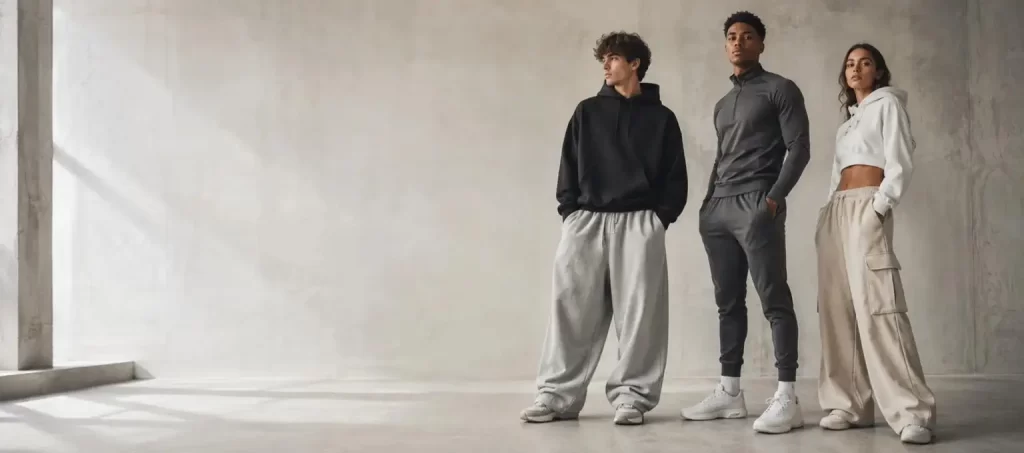
Joggers vs. Sweatpants at a Glance
| Specification | Joggers | Sweatpants |
| Typical silhouette | Tapered or athletic | Straight, relaxed, baggy, or flared |
| Leg opening | Ribbed, elasticated, zipped, or adjustable | Open hem or elasticated |
| Common materials | French terry, interlock, double knit, nylon/stretch woven, polyester-spandex | French terry, brushed fleece, cotton-rich sweatshirt knits |
| Main function | Mobility and a controlled silhouette | Warmth, softness, and relaxed comfort |
| Common applications | Training, travel, athleisure, teamwear | Loungewear, casualwear, streetwear |
| Pocket direction | Zipped, concealed, or technical | Side-entry, welt, patch, or cargo |
| Typical design focus | Controlled taper, mobility, functional details | Comfort, volume, warmth, relaxed silhouette |
The product name alone should not determine development. Brands need to define the desired fabric, fit, function, and target consumer before preparing the technical package.
Fabric Engineering Changes the Wearing Experience
In Joggers vs. Sweatpants, fabric choice is more important than the terminology used to describe the fabric when considering comfort and performance.
French Terry
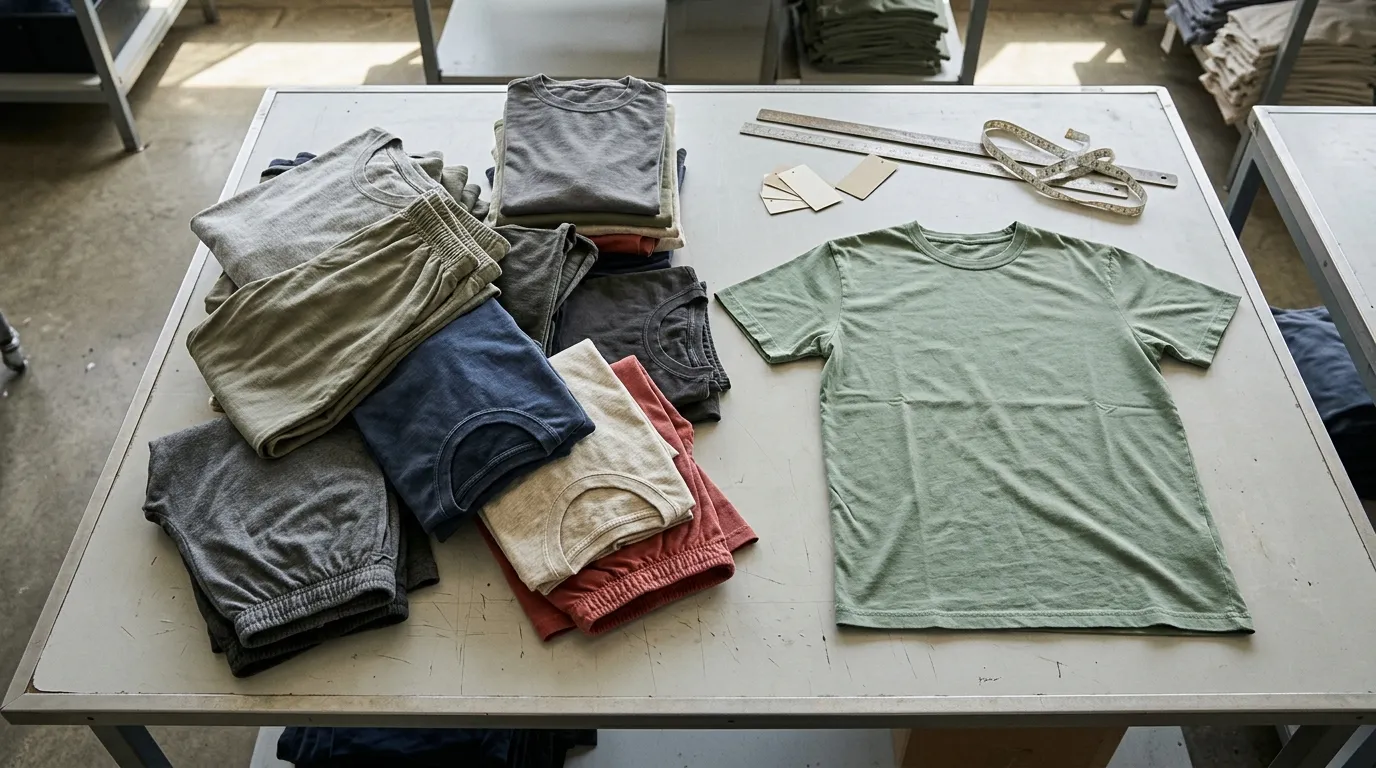
French terry has a smooth outer face and looped inner surface, offering moderate warmth with better breathability than heavily brushed fleece. It is commonly used for year-round joggers, sweatpants, warm-up styles and premium casualwear.
Brushed Fleece
Brushing the inner fibers of a fabric creates a softer and warmer surface. It is a good choice for heavyweight street wear and sweatpants, but the fabric should be tested for:
•Pilling resistance
•Fiber shedding
•Dimensional stability
•Surface appearance after washing
•Print and embroidery compatibility
Performance Knits and Stretch Wovens
For performance joggers, fabric choices of interlock or double-knit fabrics along with polyester-spandex or nylon-spandex fabrics can provide stronger moisture-management, abrasion-resistance and stretch-recovery performance than conventional cotton fleece, depending on the yarn, knit structure and finishing.
However, a high elastane percentage does not automatically result in better pants. Knit structure, fabric density, heat setting and recovery after extension must also be considered.
Practical GSM Selection
| Fabric Weight | Recommended Positioning | Development Considerations |
| 220–280 GSM | Lightweight training or travel joggers | Breathability, opacity, seam strength |
| 280–360 GSM | Everyday athleisure and casual pants | Balance of structure and comfort |
| 360–420 GSM | Premium sweatpants and streetwear | Bulk, drape, drying time |
| 420–500 GSM | Heavyweight fashion collections | Needle selection, seam thickness, cost |
These ranges are development references rather than universal rules. A dense 320 GSM interlock may look more structured than a loosely knitted 380 GSM fleece.
Fit Is the Most Visible Difference
The Joggers vs. Sweatpants distinction becomes clearer in pattern development.
Joggers usually reduce leg width progressively from the thigh to the ankle. Sweatpants can maintain more volume through the knee and hem, particularly in straight-leg, oversized, or flared styles.
A professional tech pack should specify:
•Waist, hip, and thigh width
•Front and back rise
•Knee position and width
•Inseam and outseam
•Leg opening
•Cuff height and rib tension
•Waistband depth
•Pocket opening and placement
•Measurement tolerances
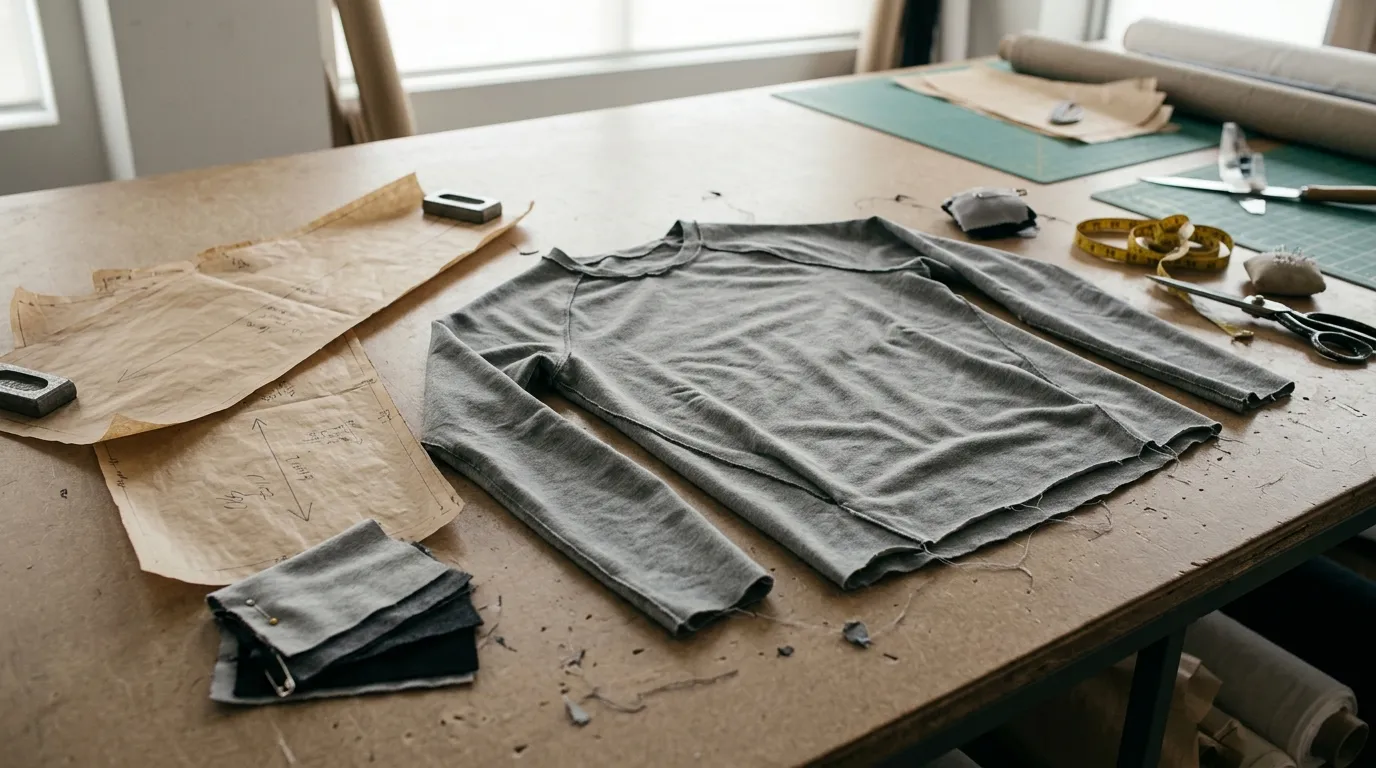
At Minghang Garments, we also recommend evaluating the sample during walking, sitting, squatting, and stair movement. A garment may look correct on a static model but still pull across the seat, restrict the knee, or create excessive fabric at the ankle.
Size grading deserves equal attention. Simply adding the same amount to every measurement can distort the rise, thigh balance, pocket position, and taper across an extended size range.
Performance Must Match the Application
Neither side of the Joggers vs. Sweatpants comparison is universally better. The correct product depends on how and where it will be worn.
| Application | Better Starting Point | Required Performance |
| Gym and light training | Tapered performance joggers | Stretch, recovery, moisture control |
| Travel and commuting | Technical joggers | Secure pockets, wrinkle resistance |
| Team warm-ups | French-terry joggers or sweatpants | Mobility, durability, easy layering |
| Cold-weather casualwear | Brushed-fleece sweatpants | Insulation and softness |
| Streetwear | Heavyweight sweatpants | Structure, volume, decoration area |
| Home and leisure | Relaxed sweatpants | Soft hand feel and unrestricted fit |
Functions should be tailored to the use case. Zipped pockets are great for travel and training but streetwear may use oversized patch pockets instead. There are design features such as gussets and knee articulation that can improve mobility and durability, but may increase cost and complexify production.
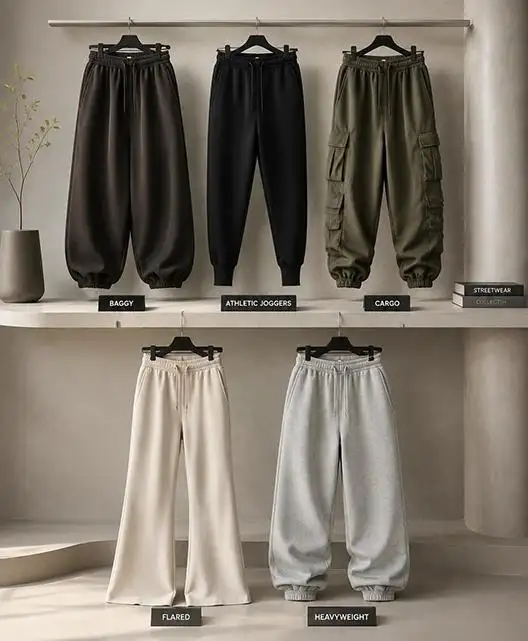
Decoration Must Be Coordinated With The Fabric
Branding is another important aspect of Joggers vs. Sweatpants.
Heavy cotton fleece is a great base fabric for embroidery, appliqué, and puff printing as well as other heavy adornment and large graphics. For lightweight fabrics, the backing used in conjunction with embroidery must be carefully considered to prevent puckering and restriction of stretch.
Before committing to bulk production, ensure:
•Artwork placement relative to seams and pockets
•Print adhesion and stretch
•Embroidery density
•Color migration
•Wash shrinkage
•Garment-dye or acid-wash variation
Shrinkage allowance may also be needed in the pattern for garment washing. Labels, drawcords, rib cuffs, zippers, and embroidery threads must also be vetted for the wash process used.
Quality Control for Bulk Production
In our experience, some of the more consequential consistency issues in jogger and sweatpant production come from fabric behavior, pattern balance and component recovery — not only from visible sewing defects.
Crucial checks include:
•Testing for fabric GSM and color as well as shrinkage
•Alignment of panels as well as leg spiral checks
•Waistband elastic recovery
•Checks for symmetry and tension in cuffs
•Seam stretch and strength
•Positioning of pocket
•Durability of print/embroidery
•Final garment measurements
•Size grading and fit approval
Minghang Garments provides fabric sourcing, pattern making, sampling, custom colors, printing and embroidery, trims, private labeling and bulk manufacturing services. Once a sample is approved, the approved sample and tech pack become the primary production references. For repeat orders, key materials, colors, measurements and production details should still be reconfirmed to account for possible lot or process variation.
Thoughts on the Final Jogger/Sweatpant Comparison
For tapered athleisure, training, teamwear and travel products, a jogger construction is often a strong starting point. For relaxed loungewear, heavyweight streetwear and cold-weather styles, a traditional sweatpant construction may be more suitable.
However, the two categories can overlap. A French-terry or brushed-fleece sweatpant can still use a tapered jogger fit, so the final specification should be based on fabric, silhouette, function and target consumer rather than the product name alone.
When deciding between the two, one must consider the customer, the climate, the fabric's performance, the decoration, the price, and the expected wear condition. Brands looking to create a new collection are encouraged to contact us to gain more information on our custom joggers and sweatpants, as well as the fabric, fit, and sampling bulk production services we offer.
FAQs
Q1. What is the main difference between joggers and sweatpants?
Joggers usually describe a tapered silhouette with a controlled ankle opening, while sweatpants are typically comfort-oriented pants made from sweatshirt fabrics such as French terry or brushed fleece. The categories can overlap, so sweatpants can also be developed with a jogger-style fit.
Q2. Can sweatpants also be joggers?
Yes. A pair of French-terry or brushed-fleece sweatpants can use a tapered leg and elasticated or ribbed cuff, giving it a jogger silhouette.
Q3. Are joggers better for training than sweatpants?
Not always. Performance joggers made from stretch knits or technical woven fabrics are often suitable for training, but the final performance depends on fabric stretch, recovery, moisture management, fit and construction.
Q4. Does Minghang Garments provide custom pattern development?
Yes. Patterns can be developed from a tech pack, size chart, reference garment, design drawing, or product image. Key measurements such as rise, thigh width, taper, inseam, and leg opening can be adjusted.
Q5. Can Minghang customize cuffs, waistbands, and pockets?
Yes. Options include ribbed cuffs, elasticated hems, open hems, adjustable leg openings, drawstring waistbands, zipped pockets, welt pockets, cargo pockets, and custom pocket layouts.
Written by
Minghang Garments
Apparel Manufacturing Team
Minghang Garments is a custom apparel manufacturer specializing in activewear, streetwear and private-label clothing development. Our team supports brands through fabric sourcing, product development, sampling, bulk production and quality control, with OEM and ODM solutions for startups, growing labels and established apparel businesses.
-
Share
-

-

-