 Contact Us

Table of Contents

Contact Us
Updated 1 month ago
What Should I Ask a Clothing Manufacturer Before Ordering?
arafatshuvo
Before ordering, your manufacturer pre-order questions should cover MOQ, sample timing and cost, bulk lead time, payment terms, QC, IP protection and shipping. Ask for each answer in writing, including scope, assumptions and what triggers the next step, so you can compare suppliers and approve sampling or bulk with clear expectations.
Key Takeaways
- A complete pre-order check covers minimum order quantity (MOQ), sample time and cost, bulk lead time, payment terms, quality control (QC), intellectual property (IP) protection and shipping.
- Minghang Garments states that its MOQ starts from 100 pcs per color per style on stock fabric, sampling takes 7–15 working days, bulk production takes 25–45 days after sample and material approval, and it uses a 5+1 QC system.
- Sample fees, payment terms, IP ownership and shipping terms are not universal, so request each one in writing with its assumptions and evidence.
- The MOQ basis matters as much as the number: ask whether it is per style, per color, per size or per fabric order.
- Before paying a deposit, match the quote, approved sample, QC plan, IP terms and shipping terms against the written answers.
Quick-Answer Checklist: The Must-Ask Manufacturer Pre-Order Questions
Before ordering, ask about MOQ, sample time and cost, bulk lead time, payment terms, QC, IP protection and shipping. Get each answer in writing with the assumptions, start trigger and evidence that make it usable.
[DIAGRAM: Pre-order decision flow — checklist → sample approval → material approval and deposit → bulk production → QC → shipping]
| Question | What a clear answer should specify | Evidence or document to request |
|---|---|---|
| MOQ | The exact basis — style, color, size, fabric — and any higher threshold | Written MOQ per style and color |
| Sample time and cost | Working days, sample fee, revision rounds, shipping | Sample invoice and timeline |
| Bulk lead time | Working days and the event that starts the clock | Written schedule with start trigger |
| Payment terms | Deposit percentage, balance trigger, methods, fees | Written payment schedule |
| QC and defects | Inspection stages, defect standard, remedy process | QC checklist or inspection report |
| IP ownership | Who owns patterns, artwork and samples; reuse limits | Written IP and confidentiality terms |
| Shipping | Incoterm, freight responsibility, destination, duties | Quote naming Incoterm and destination |
Use this checklist alongside the broader guide to choose a clothing manufacturer before comparing quotes side by side.
1. What Is the MOQ, and How Is It Calculated?
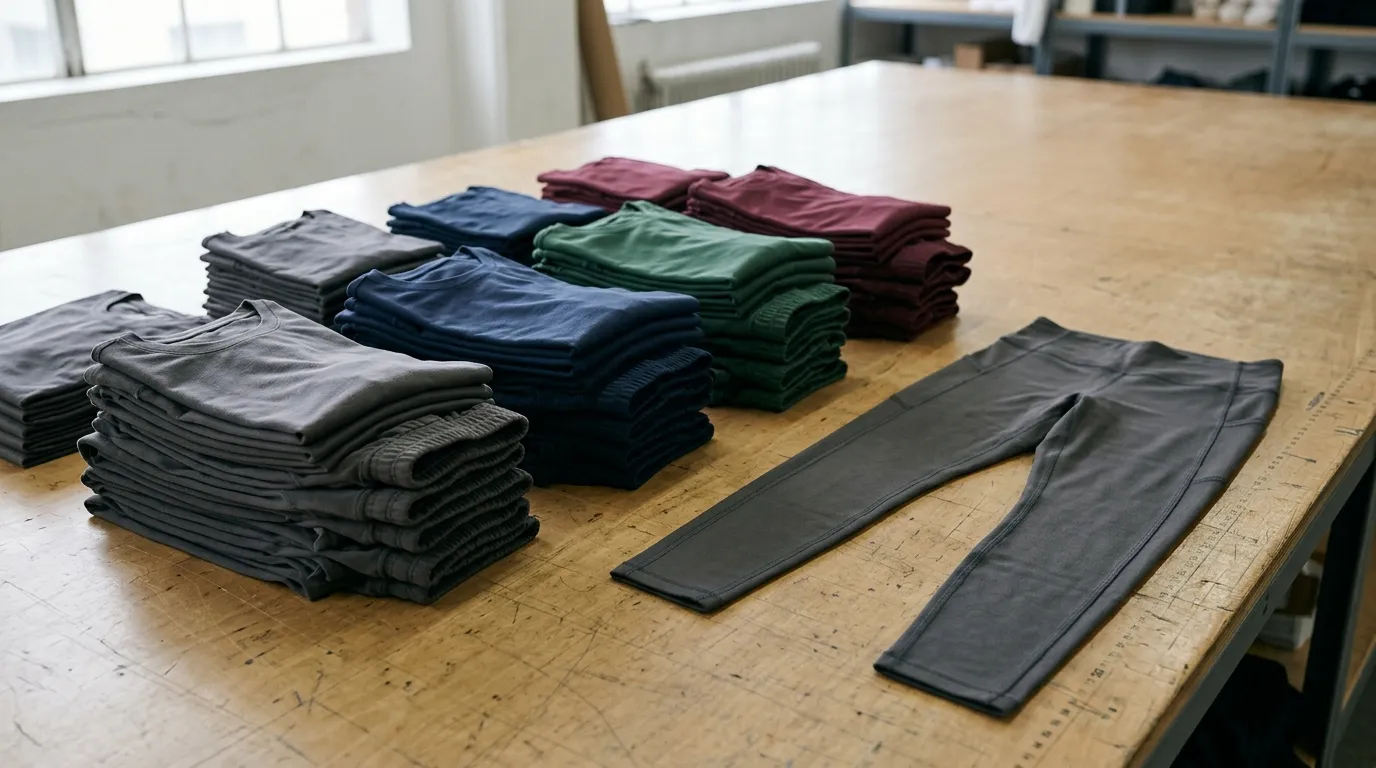
Ask for the minimum order quantity per style, color, size and fabric, and confirm whether it changes for custom fabric, dyeing or seamless construction. A clear answer states the exact basis, not just a single figure.
Minimum order quantity (MOQ) is the smallest number of units a manufacturer will accept for a production run. According to Minghang Garments, MOQ starts from 100 pcs per color per style on stock fabric, while custom-developed fabrics or dyeing and seamless products carry higher thresholds.
Do not assume the MOQ is per order. Ask whether reorders, added colorways, graded size runs and sample orders follow the same threshold, and whether an approved sample reserves the same minimum later.
2. How Long Do Samples Take, and What Do They Cost?
Ask for sample lead time, sample fee, included revision rounds, who pays sample shipping, and whether the fee is credited against bulk production. A clear answer separates a standard sample made from stock materials from custom development that requires new fabric or pattern work.
According to Minghang Garments, sampling typically takes 7–15 working days depending on complexity, fabric and customization. Minghang Garments does not publish sample fees in its stated terms, so the fee, the number of included revision rounds and any credit against bulk must be confirmed in writing with the supplier.
Watch the revision limit. Two or three rounds may be included, after which each additional round is charged and adds calendar time that pushes the bulk start date.
3. What Is the Bulk Lead Time, and When Does It Start?
Ask how many working days bulk production takes and which event starts the clock. A clear answer ties the start to approved samples, approved materials and deposit, and names likely delays.
According to Minghang Garments, bulk production generally takes 25–45 days after sample and material approval. That phrasing matters: the clock begins after two approvals, not on the day you send the purchase order.
Confirm what happens if fabric arrives late, whether national holidays fall inside the quoted window, and whether the quoted range is working days or calendar days. A supplier that gives one fixed number without a start trigger has not answered the question.
4. What Payment Terms Apply, and When Are Payments Due?
Ask for the deposit percentage, the balance trigger, accepted payment methods, currency, transfer fees, and cancellation or refund terms. A clear answer ties every payment to a milestone you can verify.
Minghang Garments does not publish payment terms in its stated terms, so treat any percentage you hear as supplier-specific and confirm it in writing before transferring funds.
A practical rule: schedule the balance against verifiable events such as approved sample, confirmed materials, completed QC inspection, or shipment booking. Do not release full payment before sample approval, material confirmation and agreed QC evidence, and agree in writing what happens if the order is cancelled after materials are cut.
5. What QC Happens During and After Production?
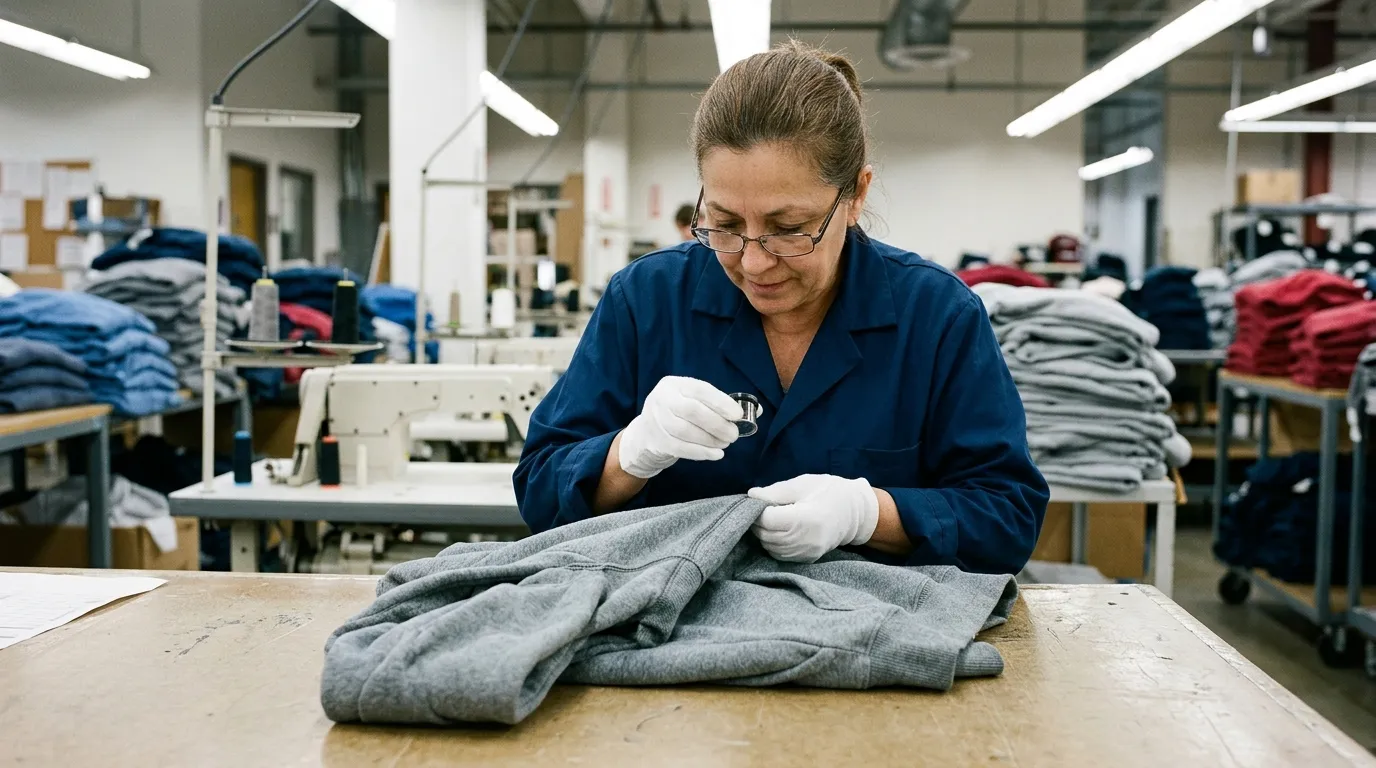
Ask which inspection stages apply, what defect standard is used, who carries out the inspection, what evidence reaches you, and how rework or replacement is handled. A clear answer names checkpoints from incoming materials through pre-shipment.
Quality control (QC) is the set of inspections and checks that catch defects before goods ship. According to Minghang Garments, its 5+1 QC system covers incoming materials, cutting, in-line sewing, semi-finished garments, 100% final inspection and pre-shipment verification.
[DIAGRAM: QC checkpoint timeline — incoming materials → cutting → in-line sewing → semi-finished → 100% final inspection → pre-shipment verification, labelled as Minghang Garments' 5+1 QC example]
Request inspection evidence before paying the balance, and agree in writing what counts as a defect, how many units trigger rework, and who pays return freight if goods fail inspection on arrival. Verification is a question for the supplier unless you have independent inspection arranged.
6. Who Owns the Designs, Patterns, and Artwork?
Ask who owns the tech pack, patterns, samples, artwork, labels and any new developments created during the project, and what confidentiality applies. A clear answer covers ownership, reuse limits and what happens to files if you move to another supplier.
A tech pack is the document set that specifies a garment's fit, materials, construction and measurements. Minghang Garments does not publish IP or confidentiality terms in its stated terms, so ownership and reuse rights must be agreed in writing by the supplier before you share files.
Specify three things in that agreement: who owns each asset, whether the supplier may reuse patterns or artwork for other clients, and whether materials must be returned or destroyed if the relationship ends.
7. What Shipping Terms, Costs, and Responsibilities Apply?
Ask which Incoterm applies, who books freight, who pays duties and taxes, what packaging is included, and what delivery window is quoted. A clear answer names the destination and what happens if goods are delayed or damaged.
An Incoterm is a standard trade rule that fixes where the seller's responsibility for goods ends and the buyer's begins. Minghang Garments does not publish shipping terms in its stated terms, so the Incoterm, named destination and cost split must come from the supplier in writing.
Do not assume door delivery, duties or insurance are included. Ask for the quote to state the Incoterm and destination, then check whether the quoted freight covers the exact carton dimensions, packaging and pallet configuration your order will use.
8. Can the Manufacturer Make Your Garment and Customization?
Ask whether the manufacturer produces your exact garment category, fabric, construction, print, embroidery, wash, label and packaging. A clear answer includes relevant samples or work examples, not just a capability list.
According to Minghang Garments, the company provides OEM, ODM and private-label manufacturing across activewear, sportswear, loungewear and streetwear, including sports bras, leggings, shorts, hoodies, sweatshirts, sweatpants, joggers and T-shirts, with services covering product development, fabric and trim sourcing, pattern making, sampling, bulk production, printing, embroidery, garment washing, labels and packaging.
Request work examples in your category and construction. Ask about certifications or compliance evidence only if your product or destination market requires them, and treat any certification claim as unconfirmed until the supplier provides the document.
9. What Is Included in the Quote, and What Can Change the Cost?
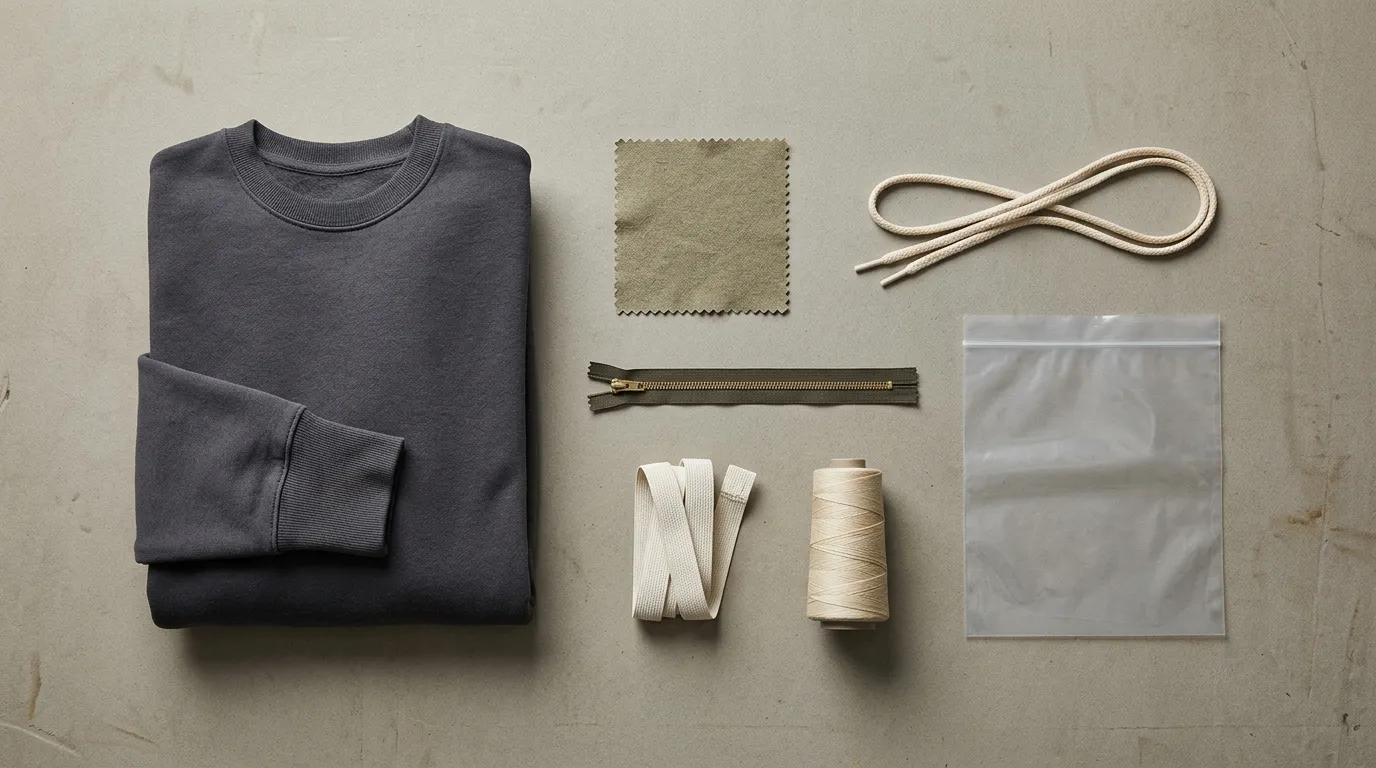
Ask what the unit price includes and which assumptions can change it. A clear answer lists fabric, trims, pattern and grading, sampling, printing or embroidery, labels, packaging, QC and freight separately.
[DIAGRAM: Quote inclusion map — fabric, trims, pattern and grading, sampling, printing and embroidery, labels and packaging, QC, freight shown as confirm included or excluded]
| Quote item | Include? | Ask to confirm |
|---|---|---|
| Fabric | Confirm in writing | Price basis and wastage included |
| Trims | Confirm in writing | Thread, zips, elastics, drawcords |
| Pattern and grading | Confirm in writing | Size range and grading steps |
| Sampling | Confirm in writing | Fee and credit against bulk |
| Printing or embroidery | Confirm in writing | Placements, colors, stitch count |
| Labels and packaging | Confirm in writing | Woven labels, hangtags, polybags |
| QC | Confirm in writing | Inspection stages and reporting |
| Freight and duties | Confirm in writing | Incoterm, destination, who pays duties |
Make the assumptions explicit before comparing suppliers: order quantity, size breakdown, colorways, fabric selection, print placements and packaging all change the number. Two quotes are only comparable when the same assumptions sit behind them.
10. Who Actually Makes the Garment?
Ask whether any production is subcontracted and which operations are outsourced. A clear answer names who remains responsible for quality and delivery when a third party performs part of the work.
StartUp FASHION's checklist of factory questions includes asking about subcontractors and arranging factory visits, so a supplier's answer should describe who performs cutting, sewing, printing, embroidery and washing rather than only the main factory address.
Pre-Order Confirmation Checklist: What to Get in Writing
Before paying a deposit, collect written answers, an approved sample, a quote with assumptions, a payment schedule, a QC plan, IP terms and shipping terms. Then confirm who approves changes and how disputes are resolved.
- Approve the sample and keep the sealed reference piece.
- Confirm the quote's assumptions and exclusions.
- Confirm payment milestones and the balance trigger.
- Confirm QC checkpoints and the inspection evidence you will receive.
- Confirm IP and confidentiality terms.
- Confirm the shipping Incoterm and named destination.
- Confirm the change-order and dispute process.
These written confirmations help you avoid common mistakes working with clothing manufacturer such as treating a verbal lead time or an unapproved sample as an agreement.
How Minghang Garments Answers These Questions
Minghang Garments publishes example answers for several pre-order questions: MOQ from 100 pcs per color per style on stock fabric, sampling in 7–15 working days, bulk production in 25–45 days after sample and material approval, and a 5+1 QC system covering incoming materials through pre-shipment verification.
Treat those as Minghang Garments' stated terms rather than universal rules. Sample fees, payment terms, IP arrangements and shipping terms are not published there, so they remain questions to put to any supplier in writing. For related answers, see Minghang Garments' faqs.
FAQ
How do I choose a clothing manufacturer after asking these questions?
Compare written answers against your specific order, then verify samples or references, and confirm IP, payment and shipping terms before committing. Use a broader selection guide only after the pre-order questions are answered clearly, because a supplier that responds vaguely at this stage is unlikely to resolve production problems later.
How do I know a manufacturer is reliable before paying a deposit?
Look for specific written answers: QC checkpoints, sample approval terms, payment milestones, subcontractor disclosure and the evidence you will receive before balance. Reliability shows up in detail, not assurances. If a supplier cannot describe its inspection stages or its defect remedy process, treat that as an open risk rather than a settled point.
What should I prepare before asking a manufacturer these questions?
Prepare a tech pack or sketches, target quantities, fabric and trim references, size range, colorways, customization details, packaging requirements, destination and target timeline. Clear inputs produce clearer answers and comparable quotes; see how to prepare design files clothing manufacturer before your first supplier conversation.
READYFORWRITING
-
Share
-

-

-