 Contact Us

Table of Contents

Contact Us
Updated 1 month ago
China vs Vietnam Clothing Manufacturing: Which Is Better?
arafatshuvo
China and Vietnam apparel manufacturing are both viable choices, and neither country is universally better. China tends to suit products that need deep fabric and trim availability, complex construction or small stock-fabric runs — Minghang Garments' own minimum is 100 pcs per color per style on stock fabric. According to Sourcify, Vietnam's strengths sit in cost efficiency and large-scale apparel production. Product type, fabric supply, order quantity and lead time decide the rest.
Key Takeaways
- The answer is conditional: product type, fabric and trim supply, order quantity and timeline determine the better country, not the country label on its own.
- Sourcify describes China's relative strengths as supply-chain depth, technical products and development speed, and Vietnam's as cost efficiency and large-scale apparel production.
- Thygesen Apparel's comparison table, published 7 August 2025, describes China as having a more integrated apparel supply chain and Vietnam as potentially importing some specialised materials.
- Minimum order quantity (MOQ) is quoted per style and per color, and it changes depending on whether the fabric is stock or custom-developed.
- Country does not determine quality; the factory's sampling discipline and quality-control system do. Minghang Garments' own figures — 100 pcs stock-fabric minimum, 7–15 working days sampling, 25–45 days bulk, 5+1 QC — are company-specific examples, not proof that China is always faster or cheaper.
How to Compare China and Vietnam Clothing Manufacturing
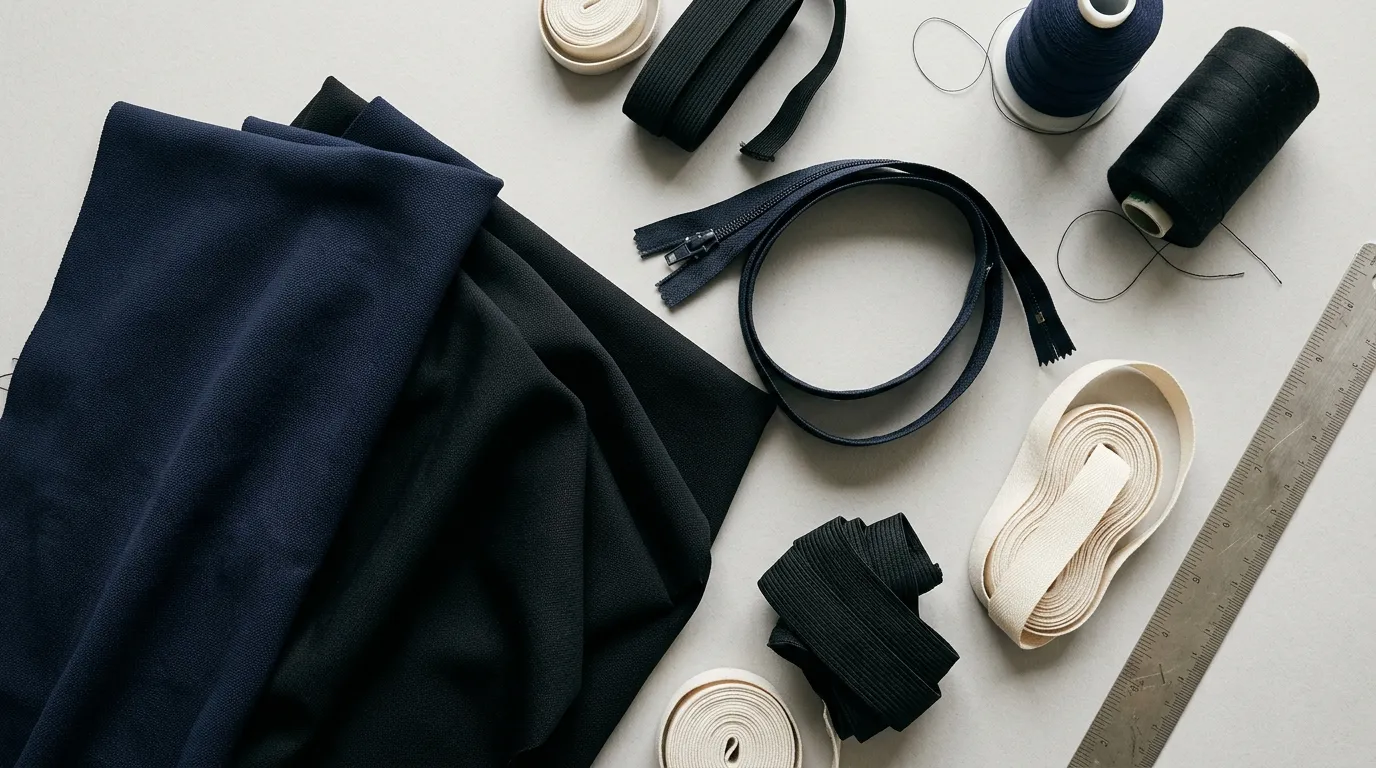
Compare China and Vietnam on six attributes — fabric and trim availability, supply-chain integration, specialised processes, product fit, order-size flexibility and materials sourcing — because those attributes, not the country label, decide the outcome.
According to Sourcify, China's relative strengths are supply-chain depth, technical products and development speed, while Vietnam's are cost efficiency and large-scale apparel production. Thygesen Apparel's comparison table, published 7 August 2025, describes China as having a more integrated apparel supply chain and Vietnam as potentially importing some specialised materials. Those are directional observations, not guarantees about any single factory or product.
[DIAGRAM: Comparison graphic mirroring Table 1 as two columns, labelled "directional — verify per factory", with no ranking or winner indicated]
| Attribute | What sources report about China | What sources report about Vietnam | What to verify at factory level |
|---|---|---|---|
| Fabric and trim availability | Deeper supply-chain depth (Sourcify) | Some specialised materials may be imported (Thygesen Apparel) | Verify with the supplier: which mill and which trim supplier |
| Supply-chain integration | More integrated apparel chain (Thygesen Apparel) | Less integrated chain, higher reliance on imports (Thygesen Apparel) | Verify with the supplier: what is local and what is imported |
| Specialised processes | Technical products and development speed (Sourcify) | Not established in the retrieved sources | Verify with the supplier: which processes are in-house and which are outsourced |
| Typical product fit | Technical and complex construction (Sourcify) | Cost efficiency at large scale (Sourcify) | Verify with the supplier: comparable styles already produced |
| Order-size flexibility | One source estimates MOQ at 300–1,000+ units (Sourcify) | One source estimates MOQ at 500–2,000+ units (Sourcify) | Verify with the supplier: minimum per color and per size, in writing |
| Quality-control model | Not established at country level | Not established at country level | Verify with the supplier: inspection stages, standard and sign-off |
| Trade and origin documentation | Not established in the retrieved sources | Not established in the retrieved sources | Verify with the supplier and a customs adviser for your destination |
Which Country Is Better for Your Product Type?
Complex, trim-heavy or technical garments generally favour China's deeper material and process ecosystem, while simpler high-volume knit programs are where sourcing guides most often place Vietnam's advantage — but the deciding factor is whether the fabric and processes you need actually exist at your chosen factory.
Pham Fashion House states that its comparison targets established buyers generally producing at 3,000 or more units per style, and that Vietnam's strongest economics and factory relationships appear at that volume. That is the article's stated scope, not an industry-wide threshold, so treat it as a scope note rather than a rule. Minghang Garments' product development work covers activewear, sportswear, loungewear and streetwear, including sports bras, leggings, shorts, hoodies, sweatshirts, sweatpants, joggers and T-shirts.
| Product or program type | Where it typically points | Why | What to confirm first |
|---|---|---|---|
| Technical activewear and performance knits | China | China's reported strength in technical products and development speed (Sourcify) | Whether the required performance fabric is available locally |
| Trim-heavy or multi-process garments | China | Deeper supply-chain depth (Sourcify) | Whether washing, printing or embroidery partners are nearby |
| Simple, high-volume knit basics | Vietnam | Reported cost efficiency at large scale (Sourcify) | Whether the run size matches the factory's volume floor |
| Small first drops and emerging-brand runs | Depends on the factory, not the country | MOQ is set per factory, per fabric | Minimum per color and per size on the exact fabric |
| Seamless products | Depends on the factory, not the country | Not established in the retrieved sources | Verify with the supplier: dedicated machines and minimum run |
Fabric and Trim Availability in China and Vietnam
Fabric and trim sourcing is the most common reason a program fits one country better: a factory can only hit a timeline if the fabric, dyeing, zips, elastic and trims the style requires are already available to it.
Thygesen Apparel notes that Vietnam may import some specialised materials, while China's apparel supply chain is more integrated. Sourcify likewise describes China's supply-chain depth as a comparative strength. For a buyer, that translates into three questions asked in writing: which mill produces the fabric, which supplier provides the trims, and whether the fabric is held as stock, sourced from a mill on order, or custom-developed for the style. A custom-developed fabric typically changes both the minimum quantity and the calendar, so confirm it before comparing any two factories on price or lead time.
Supply-Chain Depth and Imported Materials
A factory sitting inside a dense supplier network can often resolve a fabric or trim problem in days, while a factory that depends on imported specialised materials absorbs shipping and customs time into the production schedule.
Thygesen Apparel's 2025 comparison draws that distinction between China's more integrated chain and Vietnam's reliance on some imported specialised materials. Sourcify makes a similar point about supply-chain depth and development speed. The practical step is to ask for a critical-path list before you commit: which materials are sourced locally, which are imported, which have only one supplier, and which are subject to a minimum order of their own. Trade documentation and origin conditions are covered once, in the cost section below.
Flexibility for Small Orders and Emerging Brands
Small-order flexibility is a factory attribute rather than a country attribute, so compare MOQ on identical terms: stock versus custom fabric, per style, per color and per size.
Sourcify gives indicative MOQ ranges of 300–1,000+ units for China and 500–2,000+ units for Vietnam; these are one source's estimates, not benchmarks, and individual factories vary widely. Pham Fashion House scopes its analysis to buyers producing 3,000 or more units per style. Minghang Garments works from a minimum of 100 pcs per color per style on stock fabric, which is a company-specific figure and should not be read as a China-wide standard.
A useful way to remove ambiguity is to send every candidate the same sentence: "For this style in this fabric, what is the minimum order quantity per color and per size, and does that minimum change if the fabric is custom-developed?" Answers that skip the fabric condition are not comparable.
Specialised Processes and Technical Development
Garment washing, printing, embroidery, bonding and technical construction depend on local process vendors, so a program that needs several specialised steps is usually easier to run where that vendor network is denser.
Sourcify describes China's comparative strengths as supply-chain depth, technical products and development speed. Minghang Garments provides product development, pattern making, sampling, bulk production, printing, embroidery, garment washing, and fabric and trim sourcing, along with labels and packaging, so a brand can see which steps a single factory can hold in-house by reviewing its manufacturing capabilities. Compare that list against your own style before assuming a process is available anywhere; a factory that outsources three steps is managing three schedules you cannot see.
Sampling and Bulk Lead Time: Comparing Like With Like
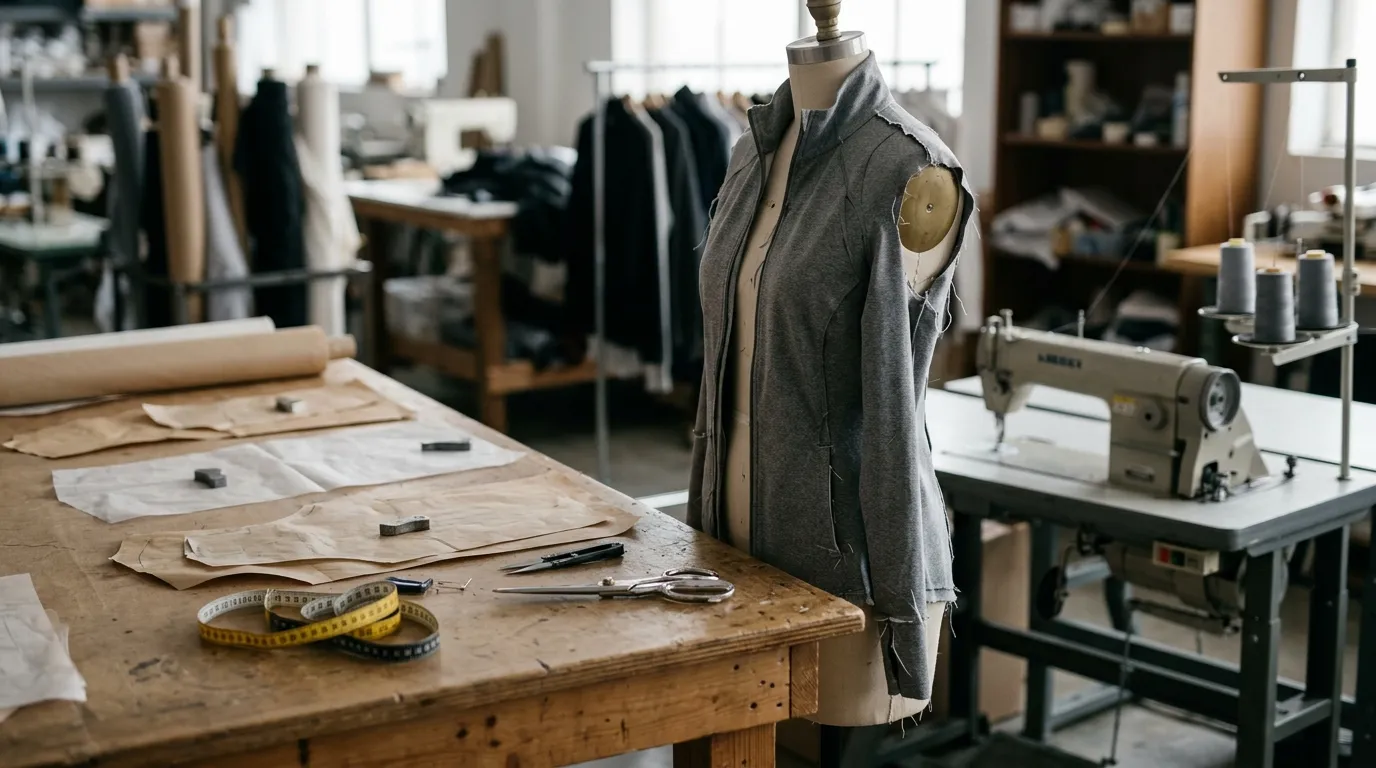
Sample time, bulk time and end-to-end time are three different numbers. Compare them separately, and only between factories working from the same specification and the same materials.
Minghang Garments' own timelines are 7–15 working days for sampling and 25–45 days for bulk production; these are company-specific figures. Thygesen Apparel discusses lead time as a country-level factor but does not reduce it to a single number for either country, so country-level lead-time averages should be treated with caution.
[DIAGRAM: Three-clock timeline showing sampling from approved materials, bulk from sample approval, and shipping plus customs, with the total shown as the only real delivery date]
To compare fairly, work through this sequence:
- Freeze the technical pack and bill of materials.
- Confirm whether the fabric is stock, mill-sourced or custom-developed.
- Ask for sampling days measured from the point the approved materials are in hand.
- Ask for bulk days measured from sample approval, not from the date the order was placed.
- Ask what adds days — garment washing, printing, custom dyeing, imported trims.
- Add shipping and customs clearance to reach your real delivery date.
Quality and Factory-Level Quality Control
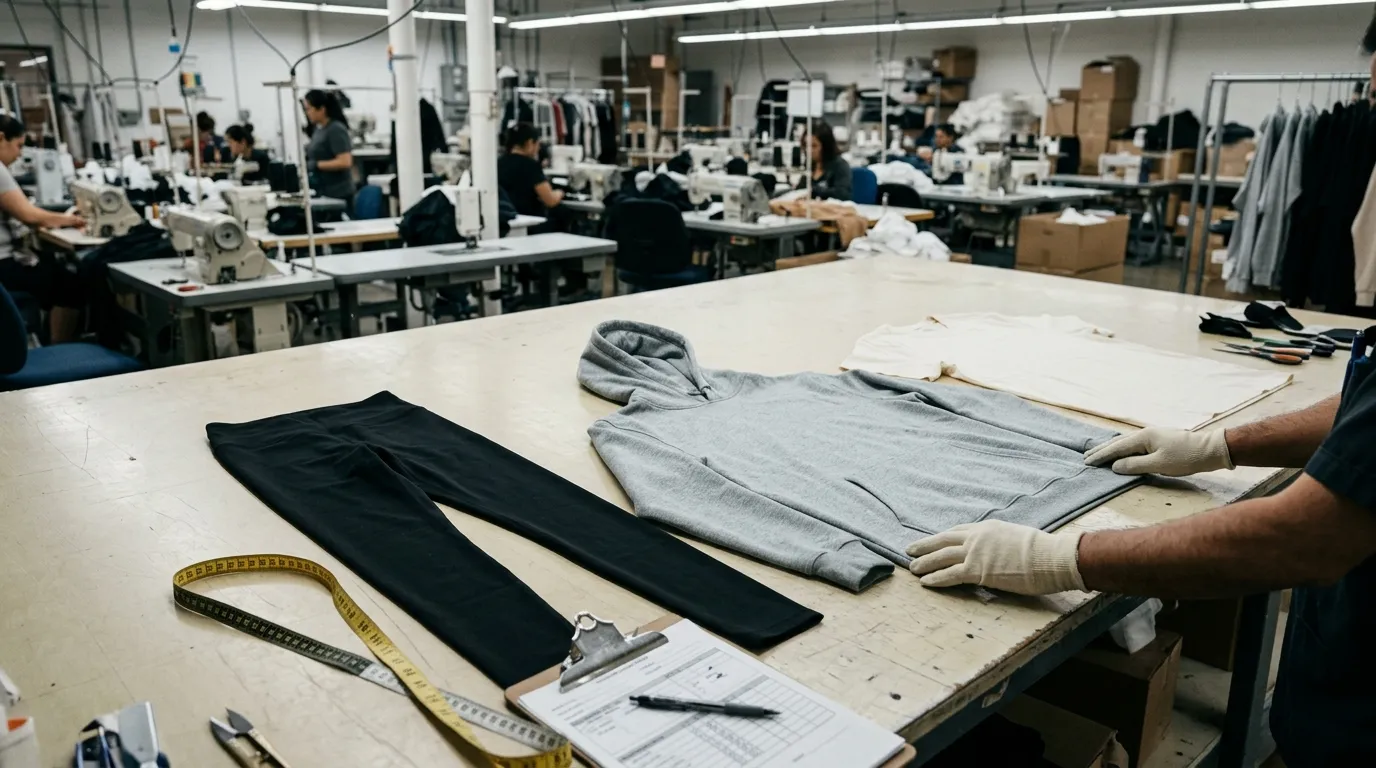
Country of manufacture does not determine garment quality. The factory's sampling discipline, in-line checks and final inspection do, which is why the same country produces both excellent and poor output.
Minghang Garments runs a 5+1 quality-control system, stated here as that company's own system rather than an industry standard. Before placing an order, ask each candidate factory for its QC document and check four things: who inspects, at which production stages, against which acceptance standard, and who signs off before shipment. Then ask what happens when a defect is found after inspection has passed. A factory that answers all five questions specifically is easier to audit than one that answers with a certification name alone.
What About Cost, Wages and Tariffs?
Unit price, duties and total landed cost are product-specific, destination-specific and date-specific, so a country-level cost claim is not a usable buying decision. Treat any headline wage or tariff figure as a starting hypothesis to verify.
A 2026 guide from VinaSources reports hourly wage figures for both Vietnam and China, but the retrieved material did not establish a comparable methodology, so those numbers should not be used as a benchmark for a sourcing decision. Instead, verify four inputs for your own product:
- The current origin rules that apply to your product and destination market.
- Whether your factory and product are eligible under a relevant trade agreement.
- Duty and freight inputs, quoted for your Incoterm and destination.
- The origin of the fabric itself, because origin can follow the material as well as the cut-and-sew country.
China, Vietnam or Both?
Choose China when fabric and trim availability, specialised processes or small stock-fabric runs drive the program. Choose Vietnam when the specification is simple and the volume is high enough to use large-scale capacity. Consider both when you want your risk spread across two supply bases.
Four decision rules help:
- If the style fails on material availability at one factory, either resource the specification or test the other country.
- If the style needs several specialised processes, check vendor density before comparing price.
- If the run is small and the fabric is stock, test MOQ first, because that is where quotes differ most.
- If your brand needs two origins, split by product rather than halving a single style, which raises minimum quantities and QC complexity.
[DIAGRAM: Decision tree branching on product complexity, fabric and trim availability, run size and required date, with a "verify at factory level" outcome on every branch]
How to Compare Factories and Quotes Fairly
Send every candidate the same package and record the answers in one table. A quote is only comparable when specification, material, quantity, quality standard, Incoterm, destination and delivery window all match.
- Freeze the technical pack and bill of materials.
- State the quantity per style and per color.
- State the quality standard and your inspection expectations.
- Request sampling and bulk timelines as separate numbers.
- Request the Incoterm, destination and payment terms.
- Score every answer against one checklist, then move to choose a clothing manufacturer for the shortlisting stage.
If your program points to China, Minghang Garments manufactures OEM, ODM and private-label activewear, sportswear, loungewear and streetwear in Dongguan, with MOQ from 100 pcs per color per style on stock fabric, sampling at 7–15 working days, bulk at 25–45 days, and a 5+1 quality-control system. See why us for how that work is structured.
Frequently Asked Questions
Is Vietnam a good place to manufacture clothing?
Yes, for programs that match its strengths. According to Sourcify, Vietnam's comparative advantages are cost efficiency and large-scale apparel production, and Thygesen Apparel notes that it may import some specialised materials. Simple, higher-volume knit programs generally fit well; trim-heavy or technically complex styles usually need a check on material availability first.
Which country is cheaper for clothing manufacturing?
There is no stable country-level answer. Unit price depends on specification, quantity, fabric origin and destination duties. A 2026 VinaSources guide reports hourly wage figures for both countries without a methodology you can compare, so treat headline wage numbers as a hypothesis to verify rather than a buying decision.
Are clothes made in Vietnam better quality than clothes made in China?
No country-level quality conclusion is available. Factory systems, sampling discipline and inspection determine garment quality, and both countries produce strong and weak output. Ask each candidate factory who inspects, at which stages, against which acceptance standard, and who signs off before shipment.
-
Share
-

-

-