 Contact Us

Table of Contents

Contact Us
Updated 1 month ago
Clothing Manufacturer vs Clothing Supplier: What's the Difference?
arafatshuvo
A clothing manufacturer is the party that produces garments — typically in its own production facility — while a clothing supplier is a broader commercial role: it may be that same factory, or a wholesaler, distributor or trading company that resells ready-made stock or arranges production elsewhere. The label alone does not tell you who actually makes the garments.
Key takeaways
- A manufacturer's role is production; a supplier's role is supplying, and one company can hold both roles.
- According to TUKAtech, manufacturers can also buy products from other manufacturers, so business roles overlap.
- According to Apparel Production Inc., manufacturers buy materials, make patterns, and cut and assemble garment components.
- According to Apparel Production Inc., distributors place large orders with manufacturers and move goods toward retail or consumers.
- A factory tour, sample room or production line is a clue to investigate, not proof of ownership, capacity or quality.
What Is a Clothing Manufacturer?
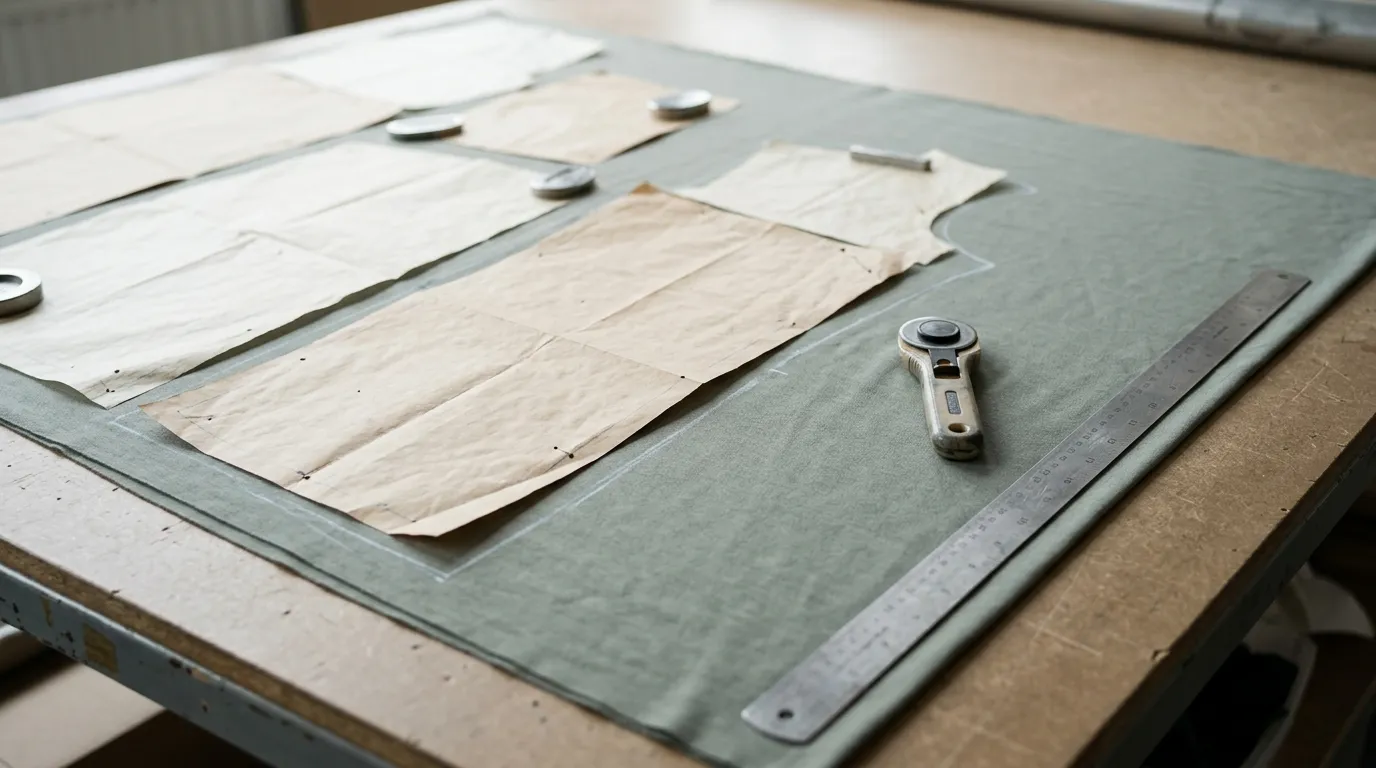
A clothing manufacturer is the business that makes garments: it buys materials, creates patterns, and cuts and assembles components into finished clothing. According to Apparel Production Inc., garment manufacturers buy materials, make patterns, and cut and assemble garment components.
The scope of work varies between manufacturers. MADE Apparel Services identifies two common types of sewn-goods manufacturing: Cut, Make, Trim (CMT), which focuses on cutting, sewing and trimming, and Full Package Production (FPP), which its guide describes as also covering pattern work, sourcing, sampling, production and packaging or shipping.
A manufacturer may also handle far more than sewing. Minghang Garments, a custom clothing manufacturer based in Dongguan, China and operating since 2017, provides OEM (original equipment manufacturing), ODM and private-label production, with services covering product development, fabric and trim sourcing, pattern making, sampling, bulk production, printing, embroidery, garment washing, labels and packaging. Buyers comparing that wider range of work can review Minghang Garments' manufacturing capabilities.
What Does "Clothing Supplier" Mean?
In apparel buying, "clothing supplier" is an umbrella commercial label rather than one fixed business type: it describes whoever supplies the goods, which may be a factory, a wholesaler, a distributor or a trading company. According to TUKAtech, distributors purchase items from manufacturers to sell to retailers.
Because the word covers several arrangements, judge a company by what it actually does on your order — makes, resells, warehouses or coordinates production — rather than by the term on its website. A supplier that never operates a sewing line can still legitimately call itself a supplier, and a factory that sells its finished garments directly to brands is supplying them too.
Can a Manufacturer Also Be a Supplier?
Yes. A manufacturer that sells its own finished garments directly to a brand is supplying those goods, so it acts as both manufacturer and supplier on the same order. A company described as a supplier, meanwhile, may never touch a sewing machine.
The overlap runs in the other direction as well. According to TUKAtech, manufacturers can also buy products from other manufacturers, so business roles can overlap. The practical question for a buyer is not which label a company uses, but which party will make the garments and which will handle the commercial side of the order.
Manufacturer vs Wholesaler, Distributor and Trading Company
Only the manufacturer makes the garments. Wholesalers, distributors and trading companies move, hold or coordinate goods that someone else produced, which is why so many comparisons place manufacturers and distributors side by side.
| Role in the order | Who makes the garments | Customization | Ready-stock access | What to verify |
|---|---|---|---|---|
| Clothing manufacturer | The manufacturer, in its own facility or through subcontracted steps | Garments made to the buyer's specification (Argus Apparel's comparison) | Verify with the supplier | Which production steps are in-house and which are subcontracted |
| Wholesaler or distributor | A third-party manufacturer; the wholesaler or distributor buys and resells | Limited — products are supplied as they are (Argus Apparel's comparison) | Ready-made stock, ordered in bulk (Apparel Production Inc.) | Whether the goods are bought as stock or made to order |
| Trading company or sourcing intermediary | A factory the intermediary arranges or works with | Verify with the supplier | Verify with the supplier | Who produces the order and who is accountable for quality |
Argus Apparel's comparison table contrasts manufacturers' customization and design control with distributors' ready-made products and quicker availability. That contrast describes two different ways of working rather than a universal rule about price or speed.
[DIAGRAM: Two order paths side by side — Brand → Manufacturer (cut, sew, finish) → Brand, versus Brand → Wholesaler, distributor or trading company → Factory → Brand, with the making step marked in each path.]
Who Actually Makes the Garments?
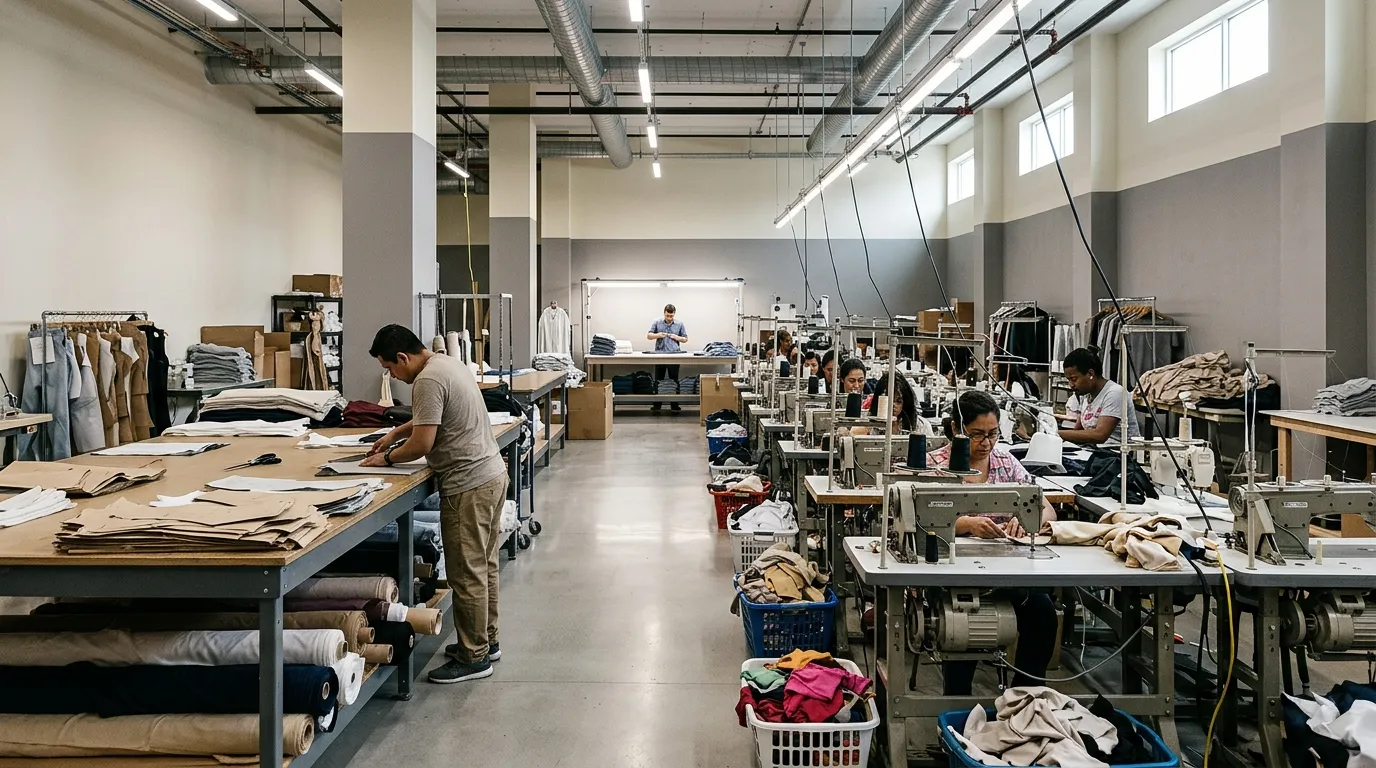
The company that makes your garments may be the one you contracted, or a subcontractor it hired, so ask directly who performs cutting, sewing, finishing and inspection on your order. Treat "manufacturer" as a claim to confirm rather than a guarantee of in-house production, because according to TUKAtech, manufacturers can also buy products from other manufacturers.
Outsourcing is not automatically a problem; undisclosed outsourcing is. Buyers who know which steps sit in-house can judge lead times, quality control and accountability realistically, and raise questions before bulk production instead of after it.
Custom Production vs Ready-Made Stock
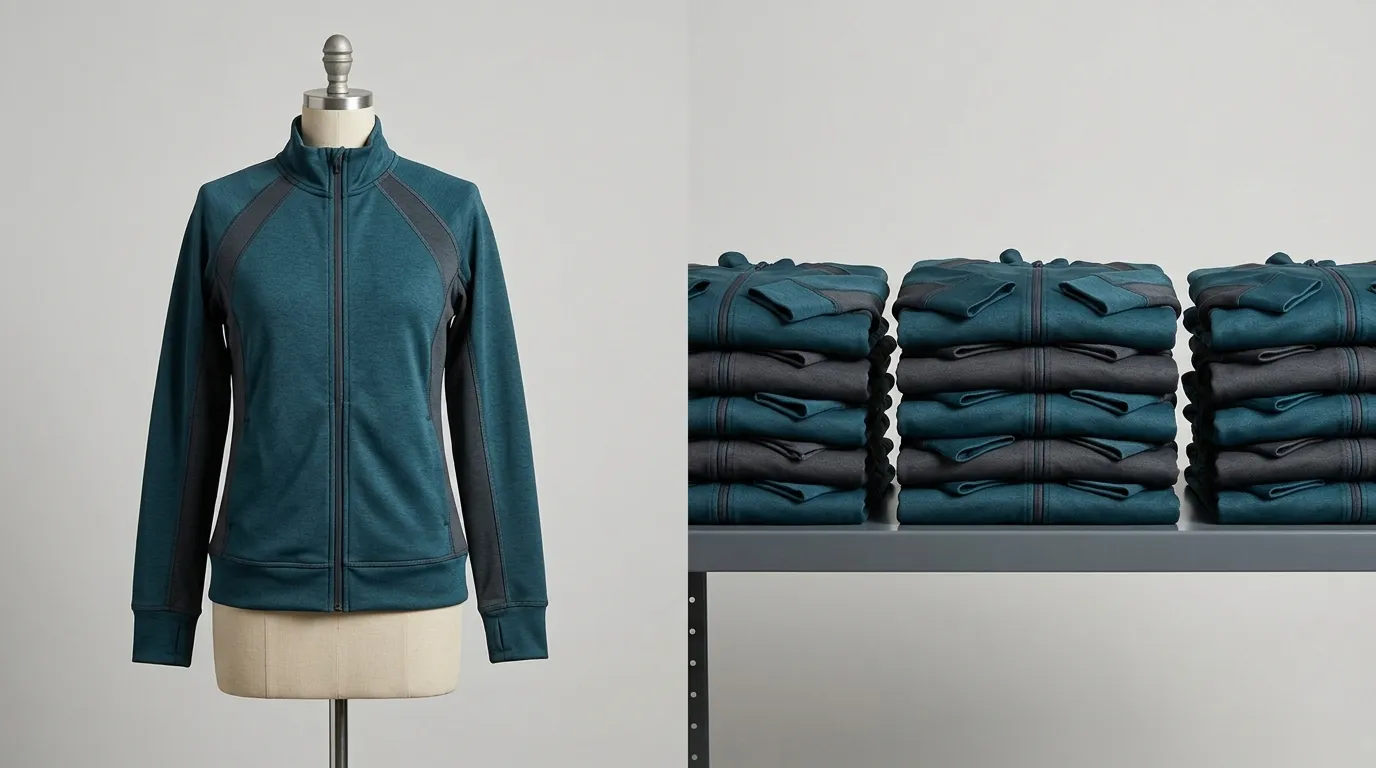
Custom manufacturing is for garments made to your specifications; a stock-oriented supplier or wholesaler is for ready-made inventory you resell as it comes. Argus Apparel's comparison table contrasts manufacturers' customization and design control with distributors' ready-made products and quicker availability.
The scope within manufacturing also varies. MADE Apparel Services describes Full Package Production as covering pattern work, sourcing, sampling, production and packaging, while Cut, Make, Trim focuses on cutting, sewing and trimming. A brand that has no technical package yet generally needs the wider scope; a brand buying existing stock needs neither.
How to Tell Them Apart: A 5-Step Buyer Verification Checklist
Ask who makes the order, then verify the answer. Use these five steps before committing to bulk production.
- Ask which steps are in-house and which are subcontracted, and which part of your order each covers.
- Request a live or virtual facility walkthrough rather than a photo gallery.
- Ask to see sample-room or development work relevant to your product category.
- Ask to see the production stages your order will pass through, from cutting onward.
- Put the agreed production arrangement in writing before bulk begins.
A factory tour, sample room or production line is an indicator to investigate, not proof that all work is done in-house, that capacity is available for your order, or that quality is assured. For a fuller evaluation process, see how to choose a clothing manufacturer.
[PHOTO: A sample room and a production floor, each labeled at the point of interest — "sample development", "cutting", "sewing lines" — presented as clues a buyer can ask about, not as proof of ownership or quality.]
Which One Fits Your Brand?
Choose a manufacturer when you need garments made to your own specifications; choose a stock-oriented supplier or wholesaler when you need ready-made inventory. If your product does not yet exist as a specification, you need production rather than supply.
The evidence available does not support a general claim that either option is cheaper or faster — the real difference is what you control and who carries responsibility for making the goods.
Minghang Garments is one example of the manufacturer role: a custom clothing manufacturer in Dongguan, China, operating since 2017, providing OEM, ODM and private-label manufacturing, with MOQ starting from 100 pcs per color per style on stock fabric. Brands that want custom production can see why us to understand how Minghang Garments works.
[DIAGRAM: Simple decision tree — "Do you need garments made to your own specification?" → Manufacturer; "Do you need ready-made stock to resell?" → Wholesaler or stock-oriented supplier.]
Frequently Asked Questions
What does "OEM clothing manufacturer" mean?
OEM means the factory makes garments to the buyer's design and specification under the buyer's brand. ODM differs because the manufacturer also offers its own designs. Minghang Garments provides OEM, ODM and private-label manufacturing, covering product development, pattern making, sampling and bulk production for activewear, sportswear, loungewear and streetwear.
Can I buy ready-made clothing directly from a manufacturer?
Some manufacturers sell finished stock and some do not. According to TUKAtech, manufacturers can also buy products from other manufacturers. Ask whether the item will be made to your specification or supplied as existing stock, and confirm which company produced the goods before you place a bulk order.
Is a clothing supplier always a factory?
No. According to TUKAtech, distributors purchase items from manufacturers to sell to retailers, so a supplier may be a factory, wholesaler, distributor or trading company that arranges production elsewhere. Ask what the company actually does on your order — make, resell, warehouse or coordinate — rather than relying on its label.
-
Share
-

-

-