 Contact Us

Table of Contents

Contact Us
Updated 1 month ago
What Is a Private Label Clothing Manufacturer?
arafatshuvo
A private label clothing manufacturer produces garments that are sold under your brand name, with your labels, hangtags and packaging where agreed — not the factory's name. You own the brand identity, design direction and customer relationship, while the manufacturer handles development, sourcing, sampling, bulk production and quality control to your approved specification.
Key takeaways
- A private label clothing manufacturer makes finished garments that carry the buyer's brand, labels and packaging rather than its own name (Apparel Wiki).
- The brand keeps its identity, positioning, design direction and customer relationship, while the manufacturer carries out the technical and production work (Istanbul Factory).
- Common services include product development, fabric sourcing, sampling, production and quality control, but the scope is supplier-specific rather than universal (MFG Merch).
- Private label, white label, OEM and ODM are used inconsistently across the industry, so the deliverable list belongs in writing.
- Labels, hangtags and packaging are branding items confirmed one by one, because inclusion is project-dependent (Minghang Garments).
What a Private Label Clothing Manufacturer Does — and What It Doesn't
A private label clothing manufacturer makes the physical garments and applies the buyer's branding. It does not own the brand that sells them.
The buyer decides what the product is and how it is presented; the manufacturer builds and produces it to the approved specification. According to Apparel Wiki, a private label clothing manufacturer produces apparel sold under the buyer's brand rather than the factory's brand. Istanbul Factory describes the same split from the other side: the manufacturer handles technical and production work while the brand retains its identity, positioning, design direction and customer relationship.
Apparel Wiki adds that brand substitution, product adaptation and factory manufacturing are common elements of private-label apparel, and that the exact scope varies between suppliers.
A useful decision rule: if a supplier owns and sells the product under its own name, that is the supplier's own brand, not your private label. The garment itself can be built to a construction the factory already knows well — what makes it private label is whose name ends up on the label and the packaging.
[DIAGRAM: Two-column roles diagram — "Brand side" (identity, positioning, design direction, customer relationship) and "Manufacturer side" (development, sourcing, sampling, production, quality control, packing), with the finished garment shown passing from manufacturer to brand.]
Services Usually Included in Private Label Production
Most private label programs combine product development, fabric and trim sourcing, sampling, bulk production and quality control. Branding, decoration and packing services are added depending on the supplier and the order.
MFG Merch lists product development, fabric and material sourcing, sampling, production and quality control, custom branding, and — depending on the manufacturer — fulfilment support as possible parts of the service scope. That is MFG Merch's description of what a manufacturer may offer, not a guarantee that every supplier includes all of it. Istanbul Factory's published process outline covers brand and product direction, technical development, fabric sourcing, sampling, labeling, printing or embroidery, bulk production, quality control and packaging.
| Service area | What it normally covers | What the buyer must confirm |
|---|---|---|
| Product development and pattern making | Turning a product idea or reference into a workable pattern and construction | Whether development is included or quoted separately |
| Fabric and trim sourcing | Sourcing fabrics, threads, zips, elastics and other components | Whether stock or custom-developed fabric is being priced |
| Sampling | Producing a sample for review before bulk | Number of sample rounds and what approval means |
| Bulk production | Manufacturing the approved product in the ordered quantity | Quantity per color and per style, and the production window |
| Printing and embroidery | Applying decoration to the garment | Placement, artwork files and who approves the output |
| Garment washing | Wash treatments applied to the finished garment | Which wash effect is specified and how it is approved |
| Quality control | Inspection steps during and after production | Which checks are performed and at which stages |
| Labels, hangtags and packaging | Brand labels, tags, polybags, mailers and trims | Which items are included and who supplies artwork |
| Fulfilment | Preparing finished goods for onward shipping | Verify with the supplier |
A simple rule keeps quotations comparable: treat any service that is not named in the quotation as not included.
How a Private Label Order Runs, Step by Step
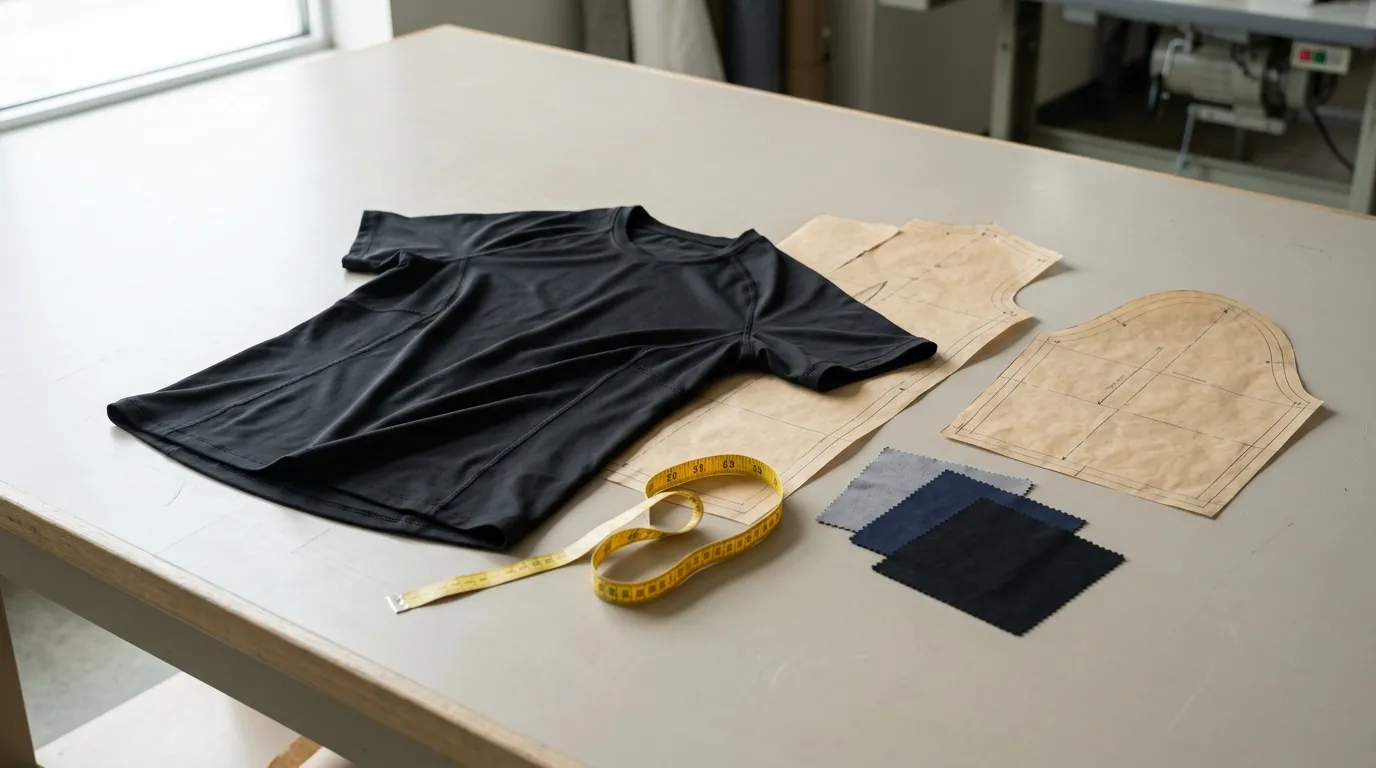
A private label order moves from brief to approved sample, then into bulk production, quality checks and packing. Nothing should move to bulk until the sample and the materials are approved.
- Brief and product direction. The brand defines the product, target use and reference details.
- Technical development and pattern. The design direction is turned into a pattern and construction.
- Fabric and trim sourcing. Materials are selected, confirmed and costed.
- Sampling and approval. A sample is produced, reviewed and either revised or approved.
- Branding setup. Labels, printing, embroidery and trims are prepared for the approved garment.
- Bulk production. The approved product is manufactured at the ordered quantity.
- Quality control and packing. Inspections run through production and before shipment, then goods are packed.
Minghang Garments states on its homepage that sampling takes 7–15 working days and bulk production 25–45 days after sample and material approval, with timing depending on project details. The same source describes a 5+1 Step Quality Control System covering incoming-material, cutting, in-line sewing, semi-finished garment, 100% final inspection and pre-shipment verification.
These are Minghang Garments' stated conditions for its own projects, not an industry benchmark. They are useful as a reference point for the questions to ask any supplier.
[DIAGRAM: Seven-step process flow from brief to packing, with an approval gate marked between sampling and bulk production.]
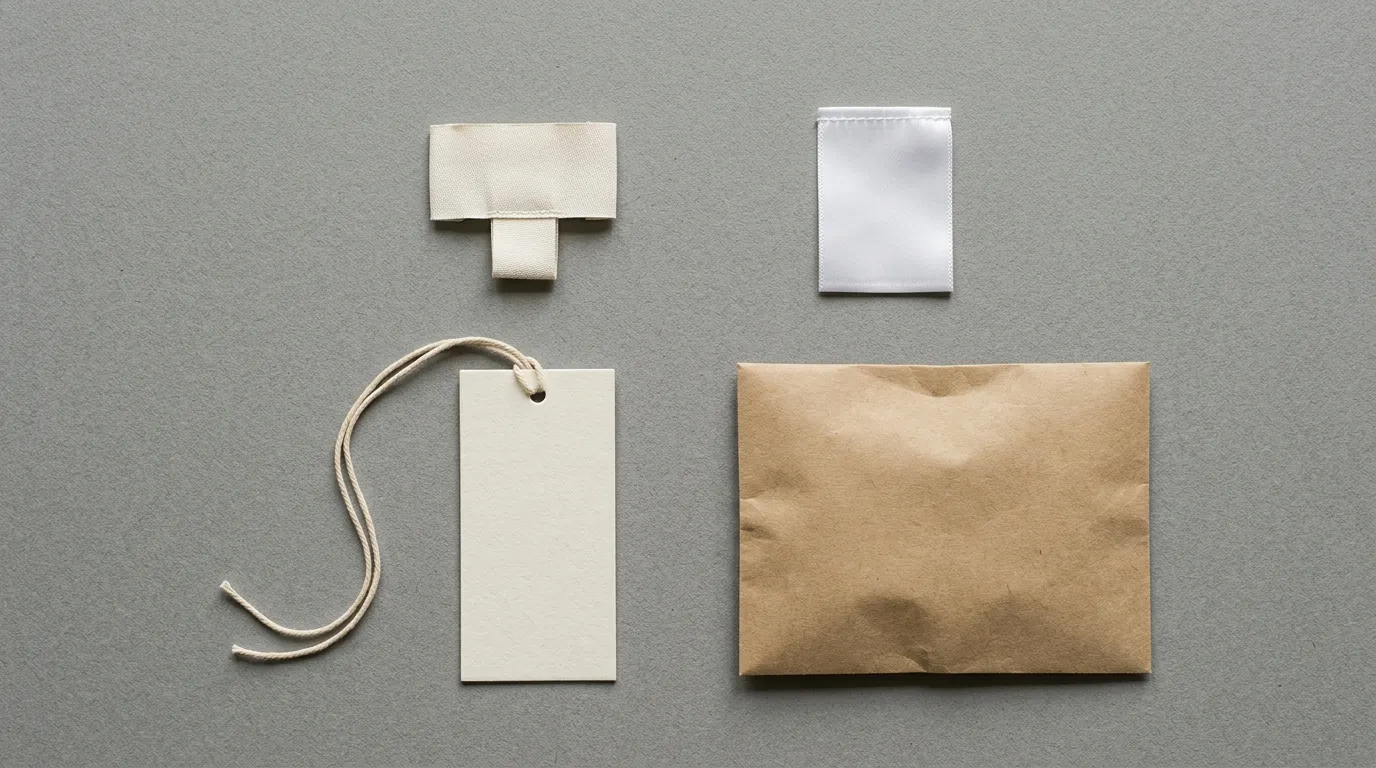
Labels, hangtags and packaging are what turn a manufactured garment into your product. They carry your name and product information, and they are usually quoted as separate items from the garment itself.
The main label — often the neck label — is the most visible place your brand appears, and it is usually the first branding item buyers specify. A custom main labels guide covers that component in more detail. Care and size labels carry product information that varies by destination market.
Minghang Garments states that its private label support can include main labels, care labels, hangtags, zipper pulls, drawcord details, woven patches, polybags, mailers and other branded trims or packaging, depending on project requirements.
Because inclusion is project-dependent, ask for a written list of which branding items are included, which are charged extra, and who supplies artwork and print-ready files.
[DIAGRAM: Labelled flat illustration of main label, care label, size label, hangtag, woven patch and polybag or mailer, grouped as items to confirm per project.]
What a Brand Can Customize — and What May Stay Fixed
Customization depth varies. Some programs adapt an existing base style with your branding; others develop a new product from your design brief. The supplier's starting point determines what can change.
Apparel Wiki notes that brand substitution, product adaptation and factory manufacturing are all common in private-label apparel, and that the exact scope differs from one supplier to the next. The service lists published by MFG Merch point the same way: development, sourcing, sampling and branding appear as possible services, so what a given program includes depends on the program itself.
Three questions settle the issue before a quotation is written:
- Is this an existing base style, an adapted product, or a new development?
- What is fixed — fabric, fit, construction — and what is variable?
- Which variables are in scope: color, trims, branding, size range?
Private Label vs White Label, OEM and ODM
The terms overlap in everyday use, so it helps to treat them as working descriptions rather than fixed legal categories. Private label means the product sells under your brand; white label usually means you apply your branding to a supplier's existing product; OEM means the manufacturer builds to your design and specification; ODM means the manufacturer supports developing the product before sampling and production.
| Model | Who provides the design | Who owns the selling brand | Typical branding control |
|---|---|---|---|
| Private label | Buyer's design direction, or an adapted base style | The buyer | Buyer-controlled |
| White label | Supplier's existing product | The buyer, after branding | Buyer applies its own branding to a supplied product |
| OEM | The buyer, with full specification | The buyer | Buyer-controlled |
| ODM | Manufacturer-supported development | The buyer | Per the agreed brief |
No single retrieved source establishes one binding industry definition for "white label," so the table gives common working meanings. Confirm the supplier's own definition and deliverables in writing. Minghang Garments' OEM vs ODM clothing comparison distinguishes OEM as manufacturing to brand-provided designs and specifications from ODM as manufacturer support to develop a product direction before sampling and bulk production.
What to Confirm With a Private Label Manufacturer Before Sampling
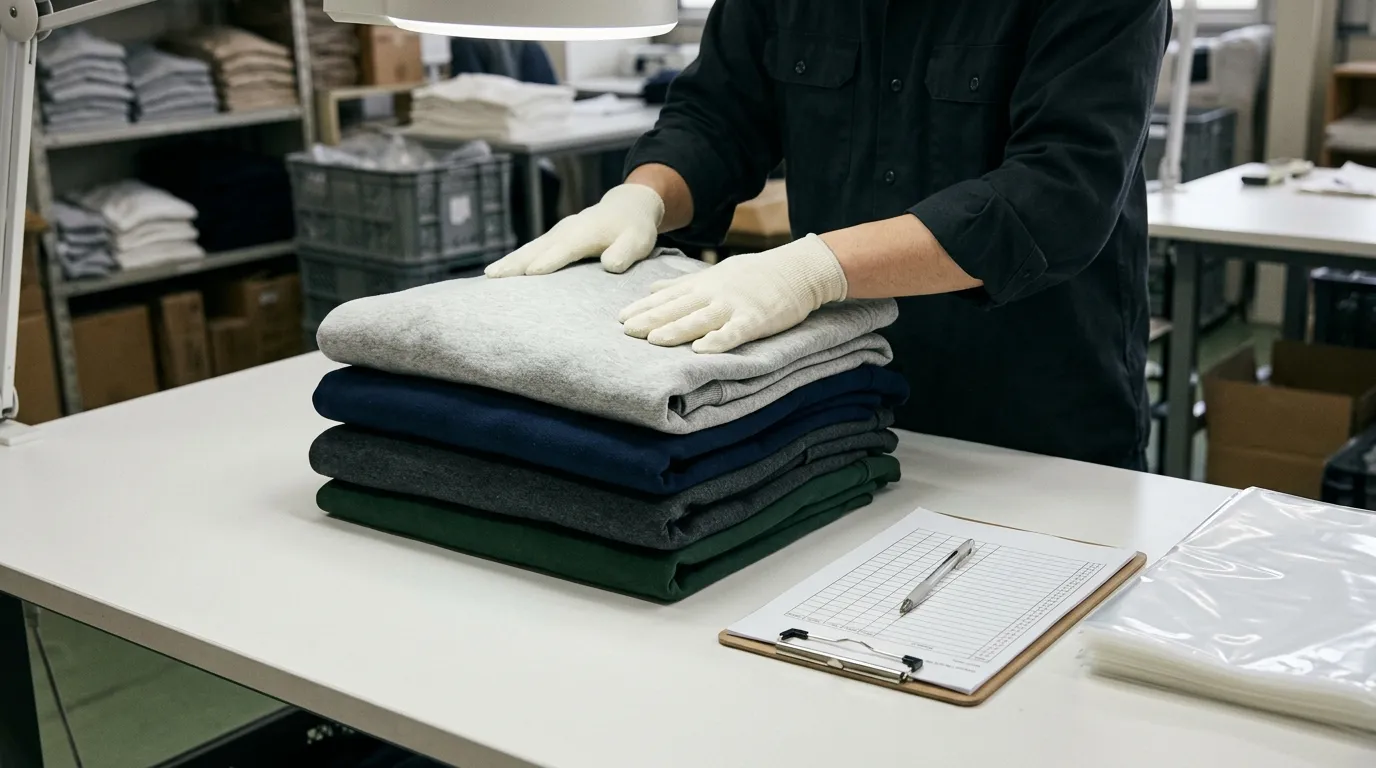
Before sampling, confirm the commercial and production terms in writing. Most misunderstandings later trace back to scope that was assumed rather than stated.
- Services in and out. Which development, sourcing, decoration, QC and packing steps are included.
- The starting point. Base style, adapted product or new development.
- Brand deliverables. Labels, hangtags, packaging and trims, listed item by item.
- Artwork responsibility. Who supplies and approves print-ready files.
- Sample approval criteria. How many rounds, and what "approved" means.
- Order quantities. Per color and per style, on the specific fabric being used.
- Timelines. The stated sampling and production windows, and what starts the clock.
- Quality control. Which checks happen, and at which production stages.
On quantity, Minghang Garments states that regular activewear, yoga and streetwear styles using stock fabrics typically start at 100 pieces per color per style, that custom-developed fabrics or dyeing typically require 300–500 pieces, and that seamless products typically start at 500 pieces per color, size and style. Full timing context sits in the process section above.
Minghang Garments' Private Label Scope
Minghang Garments is a custom clothing manufacturer based in Dongguan, China, operating since 2017. It states that it provides OEM, ODM and private label manufacturing for activewear, sportswear, loungewear and streetwear, with private-label support for labels, hangtags, trims and packaging depending on the project.
Its published details include a 12,000 m² production floor, a 2,000 m² sample center and capacity up to 500,000 pieces per month, alongside the sampling and bulk windows and the 5+1 quality control system described above. One starting point when comparing suppliers is Minghang Garments' manufacturing overview.
Frequently Asked Questions
What are the downsides of private label clothing?
The trade-offs are about scope rather than quality. Control depends on the program: adapting a supplier's base style leaves less differentiation, and every added branding item, fabric change or development step has to be specified and approved. The main risk is assuming a service or inclusion that was never quoted in writing.
Is a specific retailer, such as Zara, a private label brand?
The term describes a relationship between a brand and its production, not a fixed list of companies. Whether one particular retailer sells private-label goods is company-specific and is not verified here. Check that company's own disclosures rather than relying on a supplier's definition of the term.
What are the legal garment-label requirements for a destination market?
This page does not give legal specifics or legal advice. Labelling rules depend on the destination country and the product type, and they change over time. Buyers should confirm current requirements for the market they sell into, and pass those requirements to the manufacturer before labels are produced.
-
Share
-

-

-