 Contact Us

Table of Contents

Contact Us
Updated 1 month ago
How Does Private Label Clothing Manufacturing Work?
arafatshuvo
Private label clothing manufacturing works as a production process: the brand provides the brief, specifications and approvals, while the manufacturer handles fabric sourcing, sampling, bulk production, quality control, branding, packing and shipment. The private label production process runs from tech pack to sample approval to bulk. Minghang Garments, for example, states 7–15 working days for sampling and 25–45 days for bulk after approval.
Key Takeaways
- The private label production process follows a set order: brief or tech pack, fabric selection, sampling, order confirmation, bulk production, quality control, branding and packing, then shipment.
- Sampling is the gate. Bulk production should not start until the sample is approved.
- Minghang Garments states that sampling typically takes 7–15 working days and bulk production generally takes 25–45 days after sample and material approval.
- Minghang Garments states a minimum order quantity (MOQ) of 100 pieces per colour per style on stock fabric and operates a 5+1 QC system.
- Private label, white label, OEM and ODM are used differently by different suppliers, so confirm the supplier's meaning before accepting a quotation.
What Is Private Label Clothing Manufacturing?
Private label clothing manufacturing is a production process in which a manufacturer makes garments that a brand sells under its own name. Istanbul Factory defines private-label clothing as garments produced by a manufacturer and sold by a brand under its own name, and MFG Merch notes that a private-label manufacturer may support product development, fabric sourcing, sampling, production, quality control (QC), branding and packaging.
That definition leaves room for two fairly different arrangements. In one, the brand selects a base style and applies its own branding. In the other, the garment is developed further to the brand's specification. The term is not used identically across the industry, and neither are the neighbouring terms. Minghang Garments sets out the main custom models and its branding options on its OEM vs ODM clothing page.
| Term | Working definition | What to confirm |
|---|---|---|
| Private label | Garments produced by a manufacturer and sold under the brand's own name (Istanbul Factory) | Whether the base style already exists or is developed to specification |
| White label | Usage varies between suppliers and is not clearly separated from private label | Verify with the supplier |
| OEM (original equipment manufacturing) | The manufacturer produces to the brand's design | Who supplies the pattern and specification |
| ODM (original design manufacturing) | The manufacturer supplies the design, which the brand sells under its own name | Whether the design is exclusive to the brand, and for how long |
Because the terms overlap, the practical question is not which word a supplier uses. It is what work the supplier actually does — sourcing, pattern making, sampling, production, branding and packing.
[DIAGRAM: Process flow with two swimlanes, brand and manufacturer, running from brief or tech pack to shipment, with sample approval and pre-production confirmation marked as gates.]
Who Does What: The Brand and the Manufacturer
The brand defines the product brief, the target specification, the branding and the approvals. The manufacturer turns those inputs into samples and bulk garments through sourcing, pattern making, production, QC and packing. According to MFG Merch, a private-label manufacturer may support product development, fabric sourcing, sampling, production, QC, branding and packaging.
The split matters most at three points. The brand approves the design and the sample; the manufacturer builds to that approved specification. The brand supplies branding assets such as label artwork and hangtag files; the manufacturer applies them. The brand confirms quantity, destination and delivery window; the manufacturer schedules production against them.
Where the boundary is unclear, delays and rework follow. Agree in writing who owns each approval, who supplies each asset, and which document is the final specification before sampling begins. A supplier that cannot name its approval steps is a warning sign, not a shortcut.
The Private Label Production Process, Step by Step
The process normally runs from brief or tech pack through fabric and trim selection, sampling, sample approval, order confirmation, bulk production, QC, branding, packing and shipment. Each stage has an input from the brand, an action by the manufacturer, and an output that unlocks the next stage.
| Stage | Input from the brand | Manufacturer action | Output |
|---|---|---|---|
| Brief or tech pack | Style, measurements, fabric and trim preferences, colours, size range, branding and packing requirements | Reviews the brief and flags gaps | Agreed specification |
| Fabric and trim selection | Composition, weight, colour and hand-feel requirements | Sources and confirms materials | Confirmed fabric and trims |
| Sampling | Feedback on fit, construction and branding | Produces the sample | Approved sample — the gate to bulk |
| Order confirmation | Quantity, delivery window, sign-off | Issues quotation and pro forma invoice where applicable | Confirmed order terms |
| Bulk production | — | Cuts, sews and finishes to the approved specification | Completed goods |
| Quality control | — | Runs the inspection checkpoints | Passed inspection |
| Branding and packing | Label, hangtag and packing assets | Applies branding and packs | Packed order |
| Shipment | Destination and shipping terms | Prepares the packed order for dispatch | Shipped order |
Step 1: Brief or Tech Pack
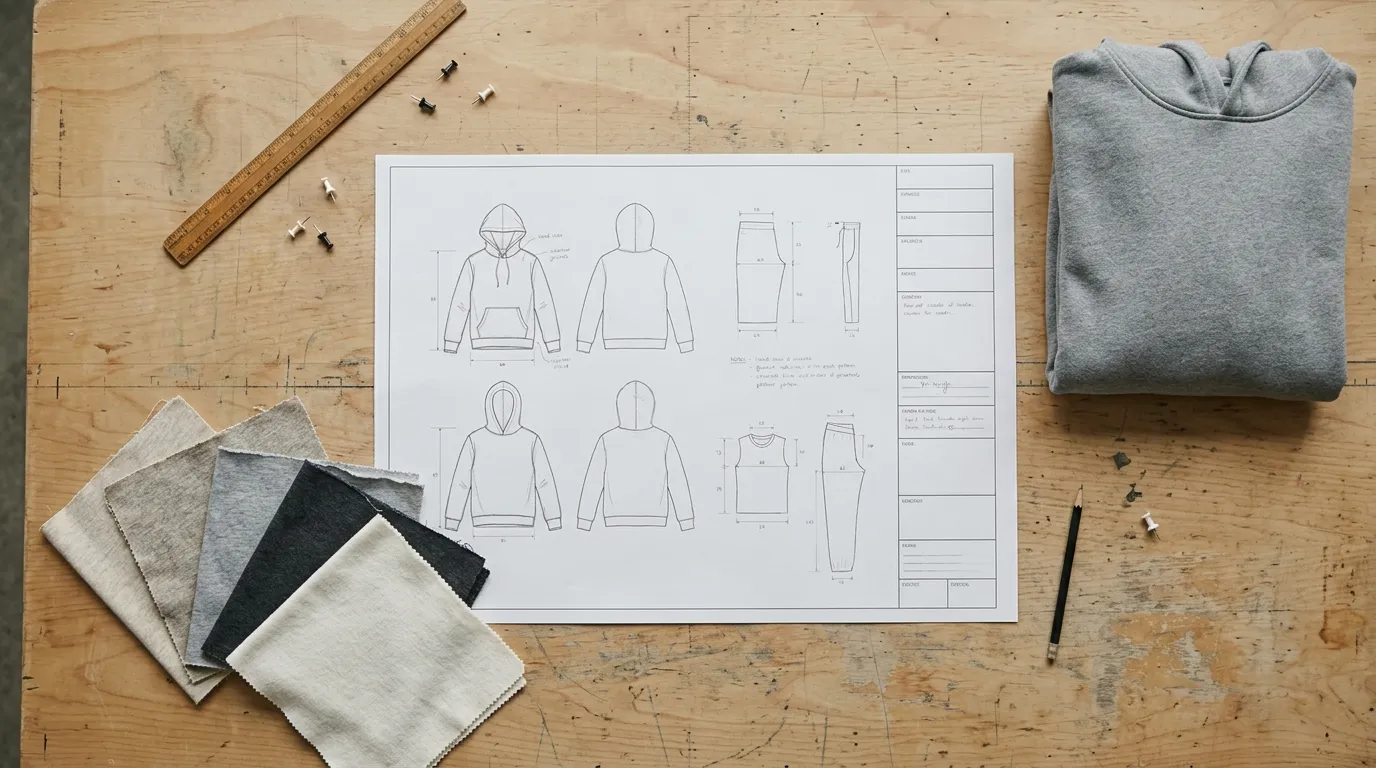
A tech pack is the document that defines the garment: its construction, measurements, materials, colours and finishing. The process starts when the brand hands that document to the manufacturer. Argus Apparel describes a private-label workflow built around garment selection, fabric and colour choices, branding, sample approval and bulk production.
The brief should state the style, target measurements, size range, fabric and trim preferences, colours, label and hangtag requirements, packaging, target quantity and target timing. A brief with gaps in any of these areas will produce a sample that answers the wrong question.
Step 2: Fabric and Trim Selection
Fabric and trim selection confirms what the garment is actually made from before a sample is cut. Composition, weight, colour, hand-feel and trim specifications all need to be fixed at this stage, because a change after sampling usually means a new sample.
Confirm whether the fabric is held in stock or produced to order, and whether the chosen colour is available in the required quantity. Note the trims as well: zips, drawcords, elastic, thread and any woven patches. Each is a sourcing decision, not a detail to settle later.
Step 3: Sampling and Approval
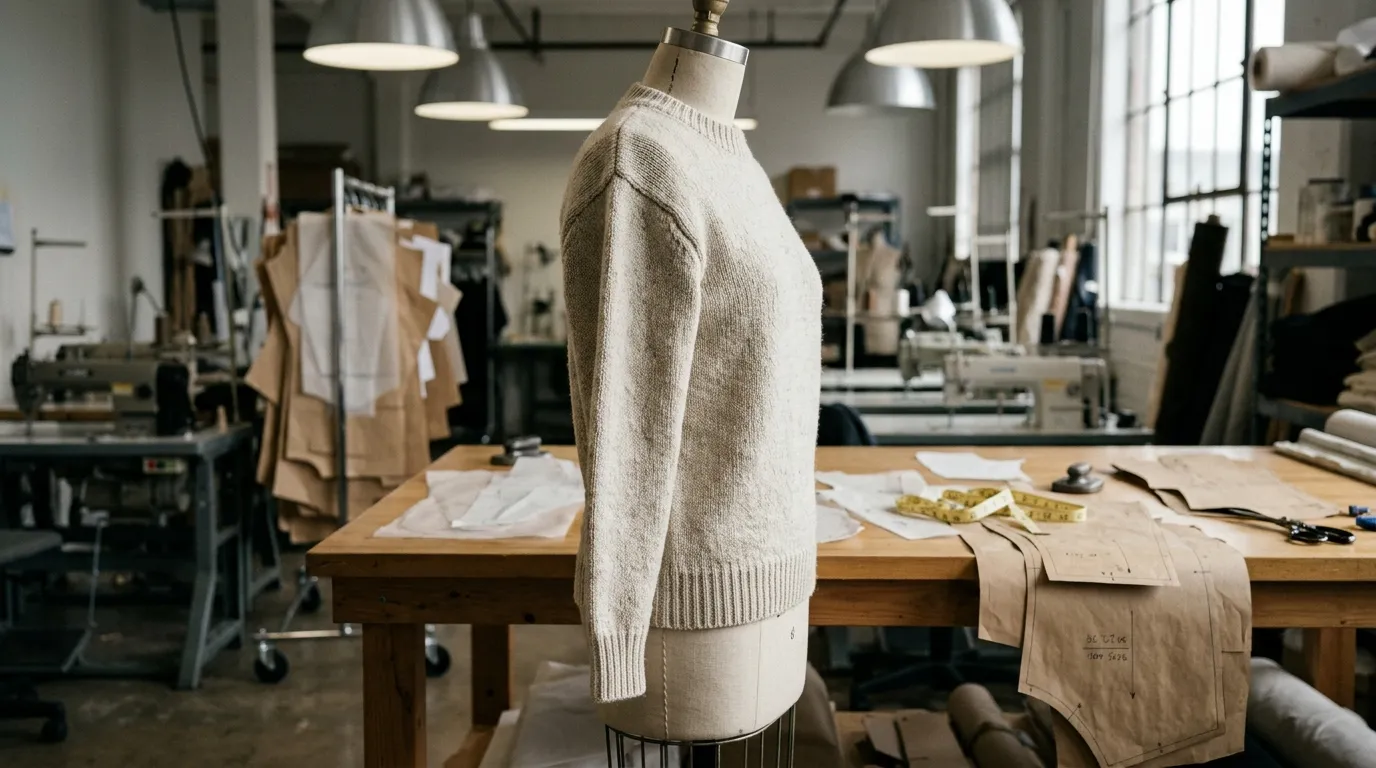
Sampling turns the tech pack into a physical garment so the brand can check fit, construction, materials and branding before committing to bulk. Minghang Garments states that sampling typically takes 7–15 working days, depending on product complexity, fabric and customisation.
Treat the sample as a decision point rather than a formality. Collect fit and construction comments in one round, confirm which comments are mandatory and which are optional, and record what the approved sample authorises. The wider steps around revisions and sign-off are covered in a sampling process guide.
Step 4: Order Confirmation, Pro Forma Invoice and Deposit
Once the sample is approved, commercial terms are confirmed before bulk begins. Quotation formats, pro forma invoice (PI) practice and deposit arrangements vary by supplier, and no single sequence applies across the industry.
Confirm the quotation, the PI, the deposit and payment schedule, the final order quantity, the delivery window and the change policy in writing. It also helps to state plainly what the approved sample does and does not lock in. This article collects those checks under "What to Confirm Before Production Starts".
Step 5: Bulk Production
Bulk production begins after sample and material approval. The manufacturer cuts, sews, finishes and prepares the order to the approved specification, using the fabric and trims confirmed earlier. Minghang Garments states that bulk production generally takes 25–45 days after sample and material approval.
Timing runs from approval, not from the first enquiry. A late fabric confirmation or a reopened sample pushes the bulk window back, which is why the two approval gates earlier in the sequence carry so much weight.
Step 6: Quality Control
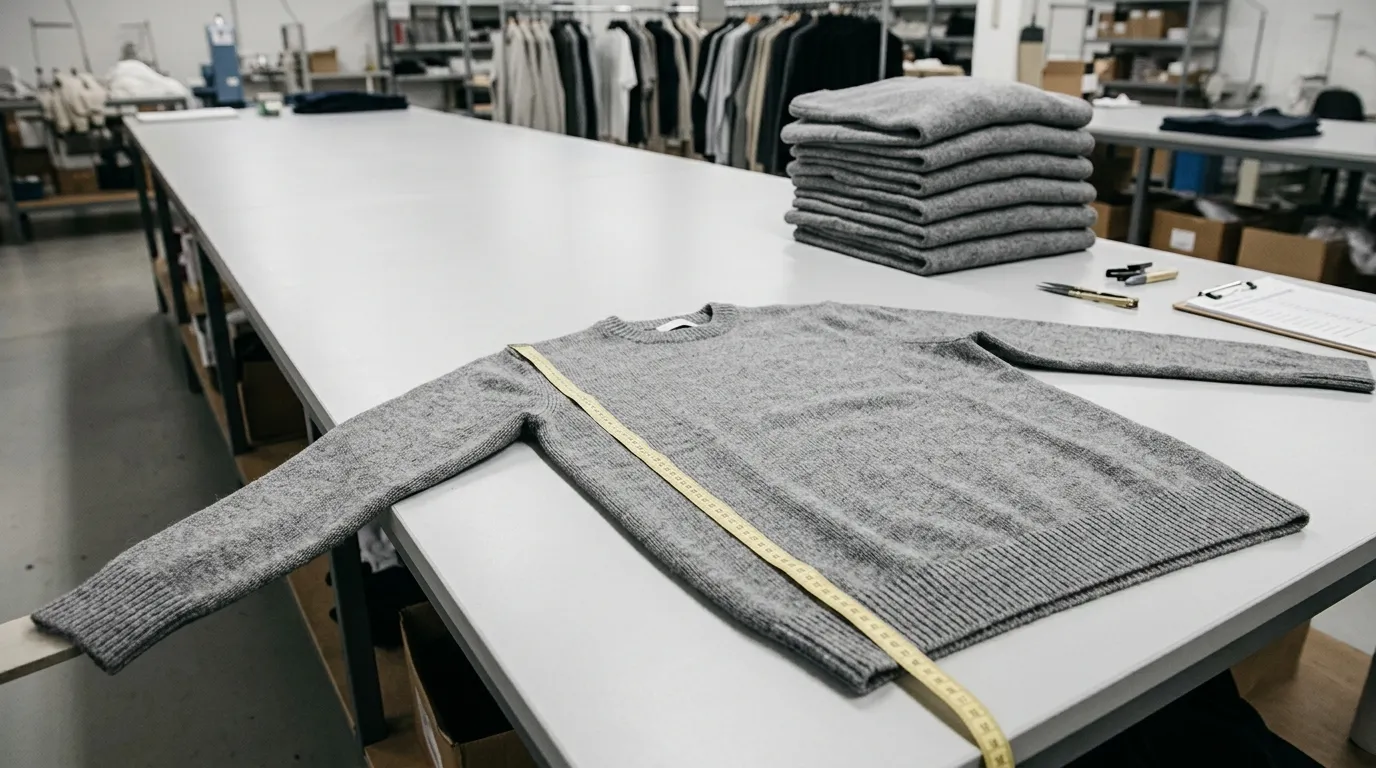
Quality control checks the order at defined points so problems are caught before garments are packed. Minghang Garments operates a 5+1 QC system with checkpoints at incoming materials, cutting, in-line sewing, semi-finished garments, final inspection and pre-shipment verification.
Ask a supplier to describe its checkpoints and what happens when a check fails. A QC process that only inspects finished goods leaves defects to be discovered after the whole order is complete, when correction is slowest and most disruptive.
Step 7: Branding, Labels and Packing
Once garments pass inspection, approved branding is applied and the order is packed to the brand's requirements. Minghang Garments lists private-label branding options including main labels, care labels, hangtags, zipper pulls, drawcord details, woven patches, polybags and mailers.
Branding assets need to be final before this stage, since label text and artwork cannot be corrected after the labels are attached. Packing instructions should also be settled in advance: polybag or mailer, folding, size stickers and carton configuration.
Step 8: Shipment
Shipment is the final handoff. The packed order is prepared for dispatch using the shipping terms and destination agreed before production started.
Confirm the shipping terms, the destination, carton marking and which side handles the documentation. Shipping arrangements sit outside the production process itself, but they determine when the order is actually usable, so treat them as part of the plan rather than an afterthought.
How Long Does Private Label Clothing Production Take?
Timelines depend on product complexity, fabric availability, the number of sample rounds and order size. Minghang Garments states sampling typically takes 7–15 working days and bulk production generally takes 25–45 days after sample and material approval.
| Stage | Minghang Garments' stated typical timing | Condition |
|---|---|---|
| Sampling | 7–15 working days | Depends on product complexity, fabric and customisation |
| Bulk production | 25–45 days | Runs after sample and material approval |
| Minimum order quantity | 100 pieces per colour per style | On stock fabric |
These are typical figures rather than guarantees, and the clock starts from approval rather than enquiry. A fuller breakdown of how those windows fit together is set out in the custom apparel production timeline.
What to Prepare Before Contacting a Manufacturer
Prepare a clear brief, the target specification, branding assets, packing requirements and a named approval contact before asking for a quotation or a sample. Suppliers quote more accurately when the request is specific.
- Style and product category
- Target measurements and size range
- Fabric and trim preferences or requirements
- Colourways
- Branding assets, including label and hangtag artwork
- Packing requirements
- Target quantity and MOQ expectations
- Destination and required delivery window
- The person authorised to approve samples
If the brand side of this list is still forming, a broader walkthrough of the early stages is available in this guide on how to start clothing brand with manufacturer relationships. The stronger the brief at the first conversation, the fewer sample rounds are needed later.
What to Confirm Before Production Starts
Before bulk begins, confirm in writing what the approved sample authorises, how changes are handled, the QC checkpoints, the branding and packing specification, the shipping terms, and the quotation, pro forma invoice and deposit sequence.
- Sample approval sign-off and who gives it
- Change policy, including what happens if a change is requested after approval
- Final order quantity and the applicable MOQ
- Quotation and pro forma invoice
- Deposit and payment schedule
- QC checkpoints and the procedure when a check fails
- Label, hangtag and packing specification
- Carton marking, shipping terms and documentation responsibilities
- Delivery window measured from approval
No universal payment or deposit sequence applies across private-label suppliers, so the terms in the quotation are the ones that govern the order. Reading them against this list before signing is faster than resolving a mismatch during production.
-
Share
-

-

-