 Contact Us

Table of Contents

Contact Us
Updated 1 month ago
Can a Clothing Manufacturer Help With Product Development?
arafatshuvo
Yes. Apparel product development is not limited to brands working alone. Under an ODM model, a clothing manufacturer can turn sketches, mood boards, reference garments or incomplete specifications into a production-ready product, covering feasibility, materials, patterns, samples and final specifications. Minghang Garments' OEM vs ODM page states its ODM work can start from references or mood boards, without a full tech pack.
Key takeaways
- A clothing manufacturer can help with apparel product development when it offers development services, not only production capacity.
- Minghang Garments' OEM vs ODM page states that ODM development can start from sketches, mood boards, reference images, an existing garment or a written product idea, while OEM production follows the brand's existing designs and specifications.
- Tris Apparel and Arcus Apparel Group list feasibility review, sourcing, pattern making, sampling and specification work among the development tasks a manufacturer may support.
- A complete tech pack is not always required at the start, but production-ready specifications must be documented and approved before bulk.
- Minghang Garments' homepage states that its sample development center covers 2,000 m², sampling typically takes 7–15 working days, and bulk production generally takes 25–45 days after sample and material approval.
What Is Apparel Product Development?
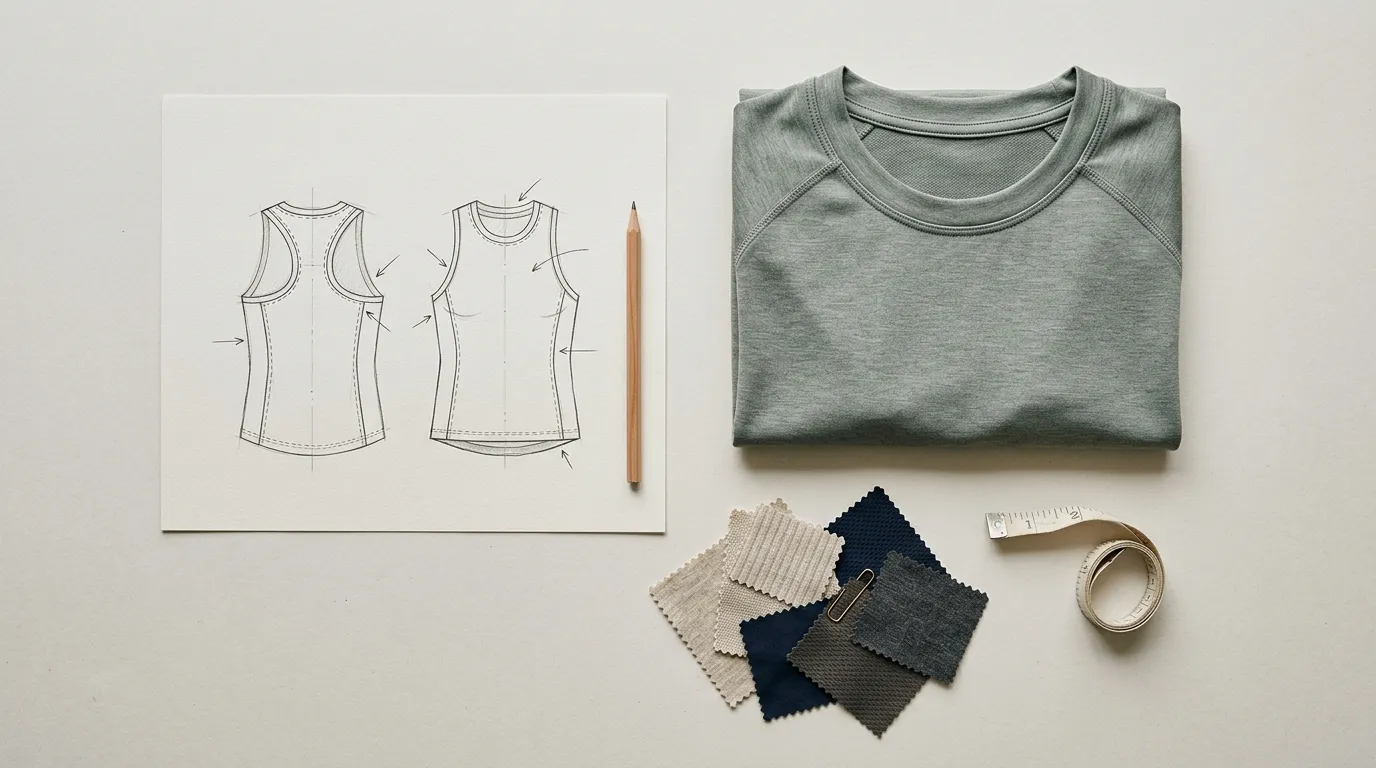
Apparel product development is the process of turning a garment concept into a production-ready product. It is broader than sewing: it covers the decisions and documents that make a garment manufacturable and repeatable.
According to Tris Apparel, the work can include research, design, sourcing, pattern making, sampling, fit testing, cost analysis and production planning. MADE Apparel Services describes a five-part process: concept and design validation, pattern making and construction, sample iteration, tech-pack documentation, and manufacturing preparation.
That scope explains why the answer to whether a manufacturer can help is conditional. A factory set up only for cutting, sewing and finishing is built for volume production. A manufacturer with a development function can take part in the earlier stages, when the product is still being defined.
Yes—If the Manufacturer Offers Development, Not Just Production
Yes, a clothing manufacturer can help with product development when development is part of what it sells. The capability is not automatic. Arcus Apparel Group separates full-service apparel manufacturers, cut-make-trim or sew-only factories, and private-label or white-label suppliers by the work each type typically handles. Tris Apparel describes manufacturer contributions such as material recommendations, design feasibility review, pattern making and sample development.
Minghang Garments' OEM vs ODM page describes its ODM work as development support that starts from sketches, mood boards, reference images, an existing garment or a written product idea, and continues through feasibility review, material and pattern development, sampling and production specifications.
A practical rule: if a supplier cannot review feasibility, source materials, make patterns or develop samples, treat it as production capacity rather than a development partner. Ask what starting inputs it accepts before you send anything.
How OEM and ODM Models Change the Manufacturer's Role
The amount of help a manufacturer gives depends on the working model. In original equipment manufacturing (OEM), the manufacturer produces from the brand's existing designs and specifications. In original design manufacturing (ODM), the manufacturer helps develop the product direction before sampling and bulk production.
Minghang Garments' OEM vs ODM page draws that distinction directly and states that ODM work can begin from a sketch, mood board, reference image, existing garment or written product idea. Arcus Apparel Group makes a similar separation by supplier type.
| Model | What the brand typically brings | What the manufacturer can develop | Key limit |
|---|---|---|---|
| Original equipment manufacturing (OEM) | Existing designs and specifications | Production against the brand's designs and specifications | The manufacturer follows the brand's designs rather than setting the product direction |
| Original design manufacturing (ODM) | A sketch, mood board, reference image, existing garment or written product idea | Product direction, feasibility review, material and pattern development, sampling and production specifications | The brand still approves the direction and the final specifications |
| Production-only factory | Finished patterns, materials and specifications | According to Arcus Apparel Group, work is limited to cut, make and trim | Development sits with the brand or another partner |
The models are not always cleanly separated in practice. The more useful question is not "are you OEM or ODM?" but "what do you handle before bulk production?" The differences are set out in more detail on the OEM vs ODM clothing page.
What a Clothing Manufacturer Can Help Develop
Depending on its capability, a manufacturer can help with feasibility review, fabric and trim sourcing, pattern making, construction development, sample creation, fit review, tech-pack refinement, grading, branding and production planning.
Tris Apparel covers these activities within apparel product development. Arcus Apparel Group identifies feasibility review, fabric behavior, construction, tech-pack refinement and grading as areas where a manufacturer may contribute. Minghang Garments' OEM vs ODM page lists feasibility review, material and pattern development, sampling and production specifications, while MADE Apparel Services lists concept and design validation, pattern making and construction, sample iteration, tech-pack documentation and manufacturing preparation.
| Development task | What it covers | Brand input needed |
|---|---|---|
| Feasibility review | Checking whether a sketch, reference or existing garment can be made as intended | Product direction and target use |
| Materials and trims | Fabric and trim sourcing and recommendations | Preferred look, feel and end use |
| Pattern and construction | Turning the approved design into measurable patterns and construction details | Fit intent and reference measurements |
| Sample and fit | Producing samples for fit, construction and material review | Feedback and approval on each round |
| Specifications and tech pack | Documenting measurements, bill of materials, construction and label placement | Confirmation of final details |
| Branding and packaging | Labels, printing, embroidery and packaging | Brand assets, label and packaging requirements |
| Production planning | Organising the path into bulk production | Verify with the supplier |
How Development Moves From Concept to Production-Ready Specs
Development usually follows the same sequence whether the brand starts with a full tech pack or a rough idea. MADE Apparel Services describes five stages that map to this path.
- Concept and design validation. The sketch, reference garment or mood board is reviewed for feasibility, target use and materials.
- Pattern making and construction. The approved direction becomes measurable patterns and defined construction details.
- Sample iteration. A physical sample is produced and reviewed for fit, materials and construction, then revised as needed.
- Specification and tech-pack documentation. Measurements, bill of materials, construction and branding are written down. The input checklist for this stage sits under "What to Provide When You Don't Have a Complete Tech Pack."
- Manufacturing preparation. Specifications are confirmed and the product is ready for bulk production.
What Happens During Pattern Development and Sampling
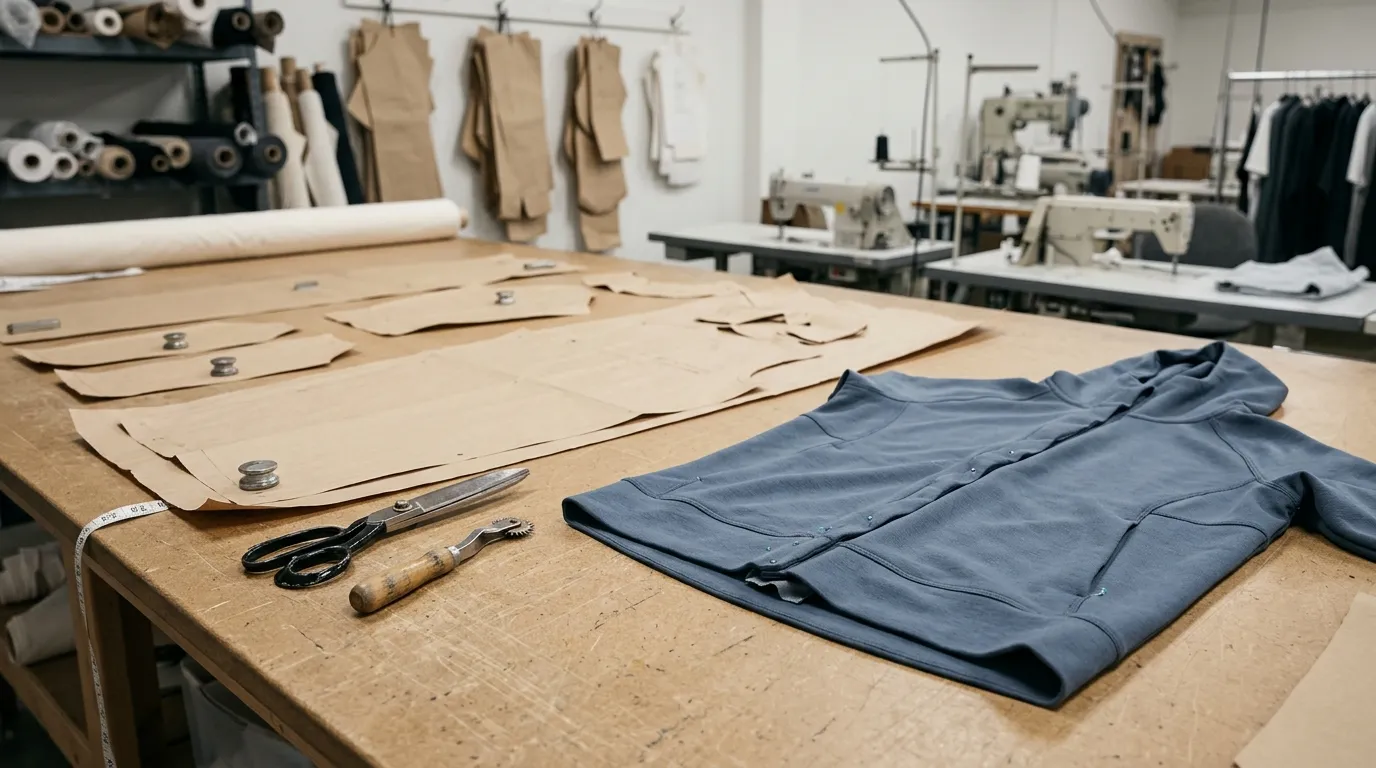
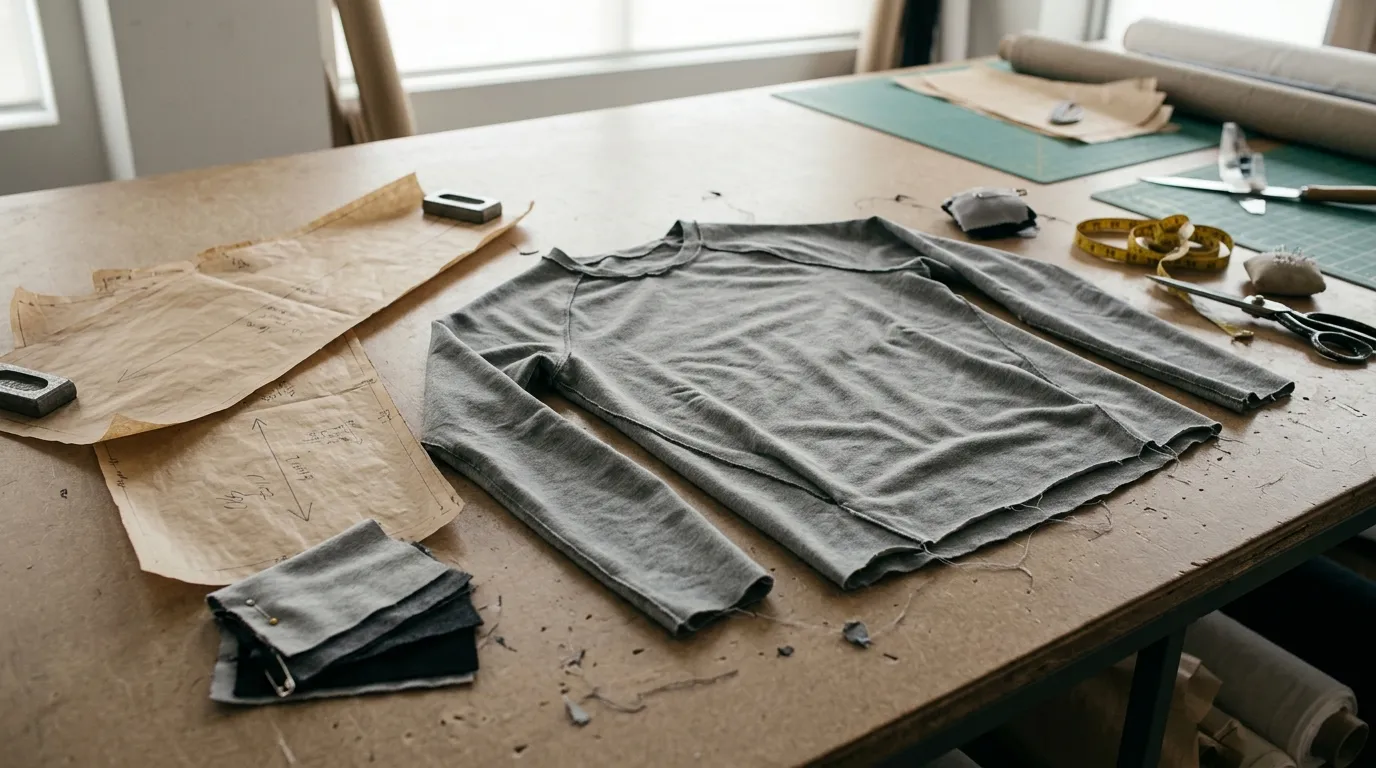
Pattern development turns the approved design into measurable patterns; sampling produces a physical garment so fit, construction and materials can be checked before approval. MADE Apparel Services places pattern making and construction before sample iteration, and Tris Apparel lists pattern making, sampling and fit testing within the same development scope.
Timing is where this stage becomes concrete for planning. Minghang Garments' homepage states that sampling typically takes 7–15 working days. The steps within that stage, from pattern review to sample approval, are covered in the sampling process guide.
What to Provide When You Don't Have a Complete Tech Pack
A complete tech pack is not always required to start. Minghang Garments' OEM vs ODM page states that its ODM work can begin from sketches, mood boards, reference images, an existing garment or a written product idea.
A tech pack is the document that carries a garment's production requirements. MADE Apparel Services states that a tech pack commonly includes technical sketches, measurement specifications, a bill of materials, construction details and label placement. Istanbul Factory's guide, dated July 16, 2026, describes a tech pack as a production communication document that can include measurements, materials, construction, branding and packaging specifications.
If you are starting without one, bring what you already have:
- A sketch, mood board or reference garment
- Target fit and size range
- Preferred fabrics and trims
- Brand details, logo, labels and packaging requirements
- Intended product type and end use
- Target quantity and timeline
Development turns these inputs into written specifications, which is why the starting materials do not need to be complete. What to assemble is covered in more detail in prepare design files clothing manufacturer.
Who Approves What Before Bulk Production
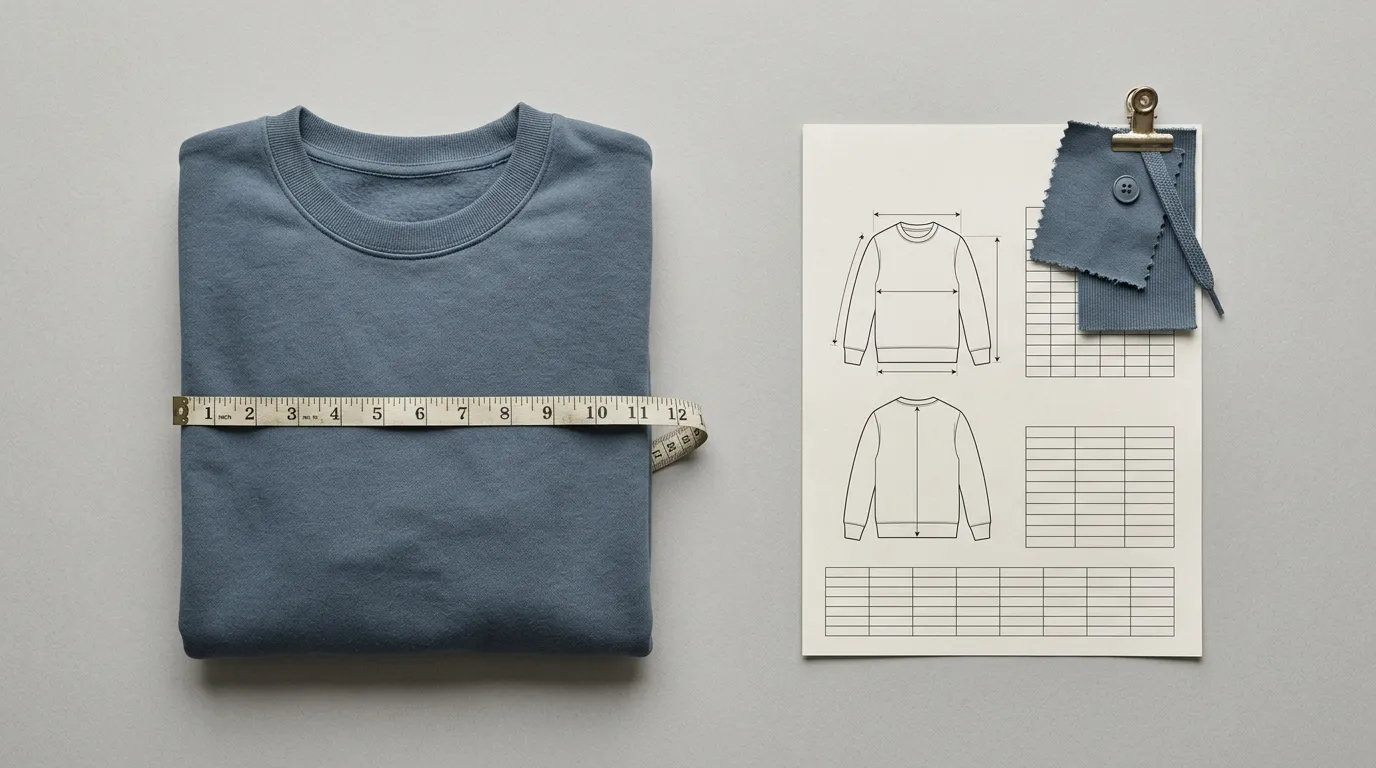
The brand approves; the manufacturer confirms. Design direction, materials, fit, construction, the final sample and the written specifications are brand decisions. Fabric availability, production feasibility and scheduling sit with the manufacturer.
According to Minghang Garments' custom clothing manufacturing page, bulk production generally takes 25–45 days after sample and material approval, which makes those approvals a gate rather than a formality. The same page describes a 5+1 quality control system covering incoming material, cutting, in-line sewing, semi-finished garment, final inspection and pre-shipment verification, along with a 2,000 m² sample development center and production capacity of up to 500,000 pieces per month.
Confirm these items in writing before bulk starts:
- Fabric and trim selection
- Measurements and grading
- Construction details
- Labels, printing, embroidery and packaging
- Color approval
- Final approved sample
- Order quantity
- Delivery schedule
A manufacturer's development support is only useful if it matches your stage. To judge fit, ask what starting inputs the supplier accepts, how it handles samples and revisions, and when its bulk timing begins.
-
Share
-

-

-