 Contact Us

Table of Contents

Contact Us
Updated 1 month ago
OEM vs Private Label Clothing: What's the Difference?
arafatshuvo
OEM and private label clothing describe two different things, not two opposite choices. OEM describes how a product is made: the manufacturer builds it to the brand's specification. Private label describes how it is sold: under the brand's name, labels and packaging. One garment can be both.
Key takeaways
- OEM describes how a product is made to the brand's specification; private label describes how it is sold under the brand's name.
- The two are not mutually exclusive — one garment can be OEM-produced and private-labeled.
- Private label does not automatically mean the product was custom-designed, exclusive or owned by the brand.
- Confirm product scope, branding scope and written ownership terms before comparing cost, MOQ or lead time.
What Does OEM Mean in Clothing Manufacturing?
OEM (original equipment manufacturing) in clothing is a production arrangement in which the brand or buyer supplies the design or specification, and the manufacturer produces garments to that brief. Siukid's OEM, ODM and private label guide describes OEM as a buyer-led route: the buyer defines the product and the factory executes it.
That means the buyer usually carries the design work — the fit, materials, construction details and approved sample. The manufacturer's role is to turn that specification into consistent bulk production.
One limit matters early. Choosing OEM does not, by itself, settle who owns the pattern, the artwork or any supplier-developed element. Those questions belong in the supply agreement, and they are covered in What to Confirm With a Supplier About Product Scope, Branding, and Ownership below.
What Does Private Label Mean for Clothing?
Private label in clothing is a branding and selling arrangement: the product is sold under the buyer's brand, with labels and packaging carrying that brand. According to Meiting Garments, private label concerns buyer branding, labels, packaging and presentation, and it can be combined with OEM development.
Lesstell's comparison of OEM, ODM, private label and white label draws the same dividing line. That guide treats OEM and ODM as development and manufacturing descriptions, and private label and white label as branding descriptions.
The practical consequence is simple: private label tells you whose name is on the garment. It does not tell you who designed the garment, who owns the pattern, or whether the item is exclusive to your brand.
What Is the Core Difference Between OEM and Private Label?
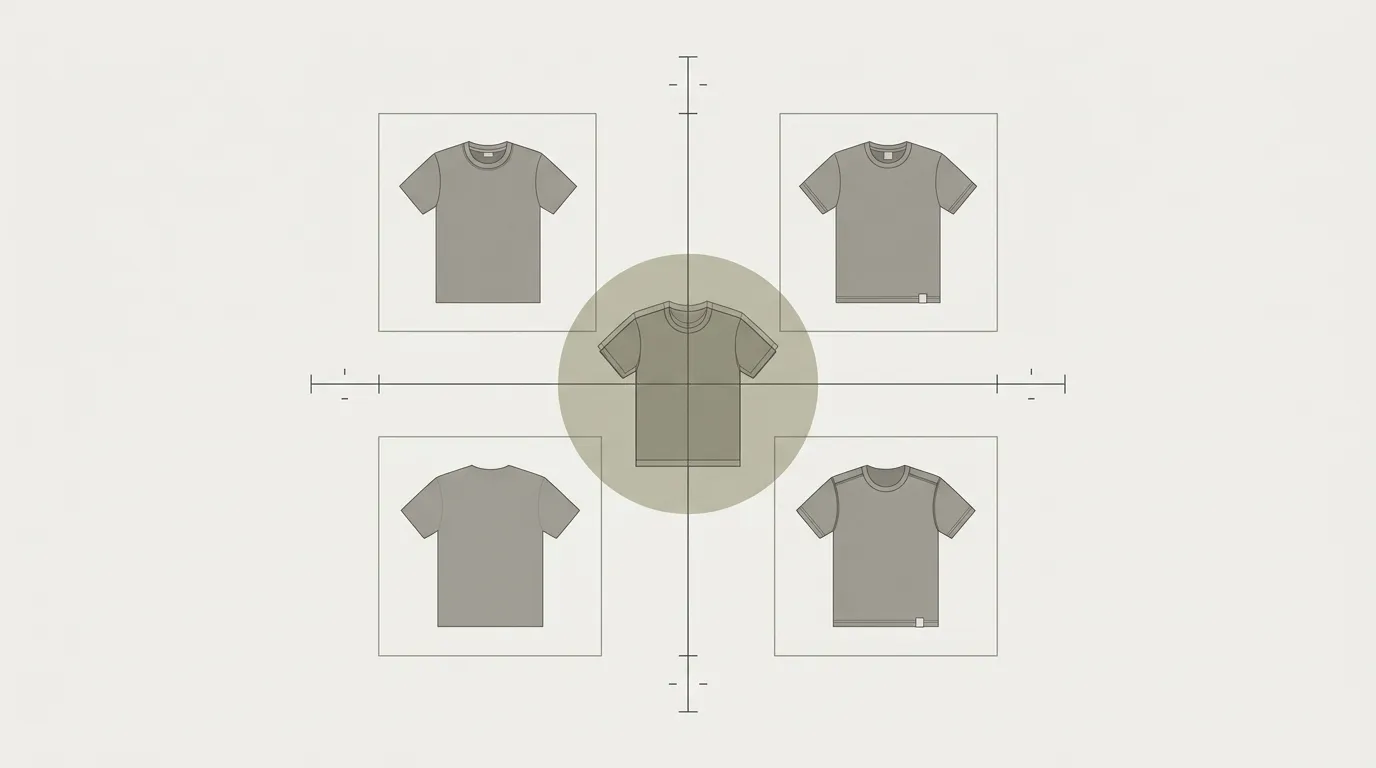
OEM describes how the product is made; private label describes how it is sold and branded. They answer two separate questions, which is why a single product can carry both descriptions at once.
Siukid's guide notes that a private-label product may be built on an OEM base, an ODM base or an adapted product. Minghang Garments' OEM vs ODM clothing page makes the same point about its own work: both OEM and ODM projects can include private-label branding and packaging.
| Term | What it describes | Who defines the product | Branding | Can overlap? |
|---|---|---|---|---|
| OEM | Production and development route | Buyer or brand provides the design or specification | Can carry the buyer's brand labels when private-label scope is included | Yes |
| Private label | Branding and selling model | Depends on whether the base product is OEM, ODM or adapted | Buyer's brand, labels and packaging | Yes |
| OEM + private label | Buyer-led production plus buyer-branded finish | Buyer or brand | Buyer's brand | Can be combined |
Can a Clothing Product Be Both OEM and Private Label?
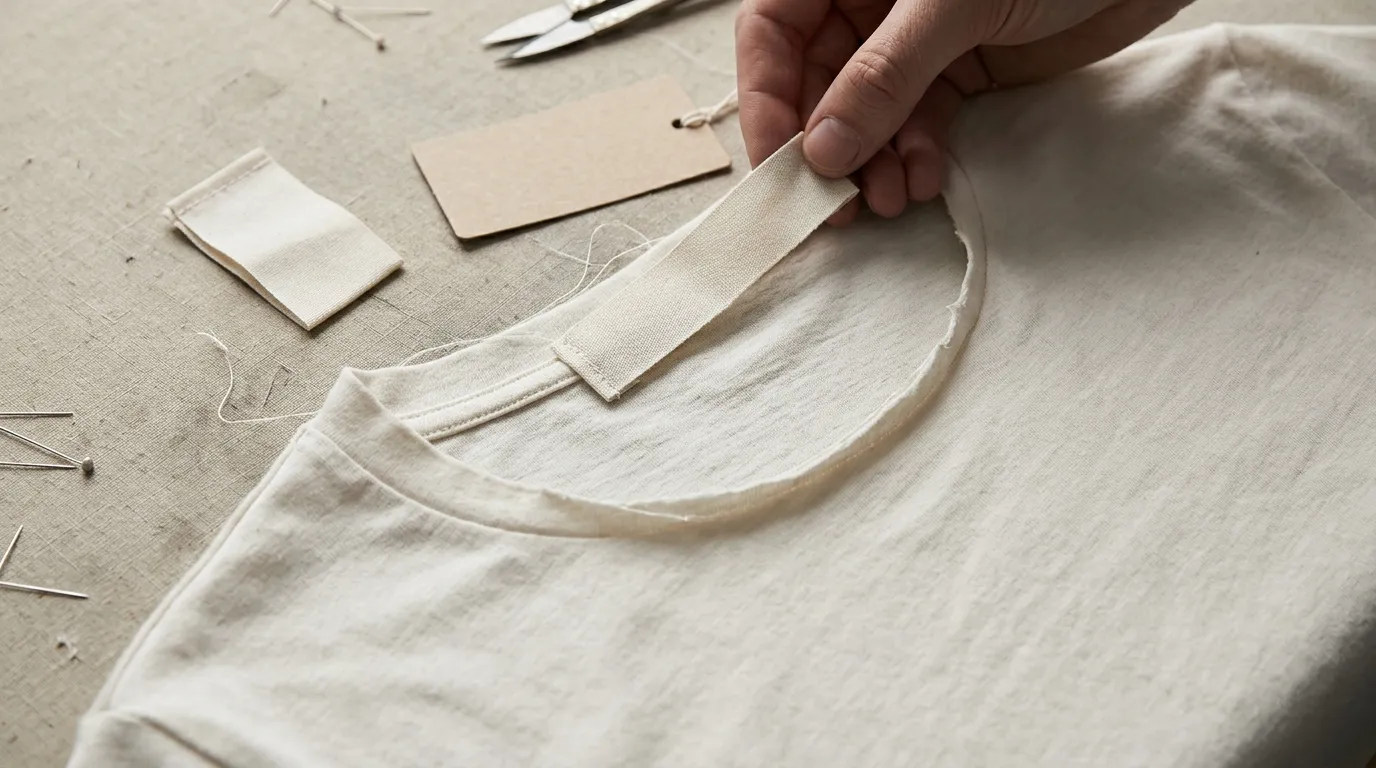
Yes. A garment can be made to the brand's specification through OEM production and then finished with that brand's labels, hangtags and packaging, which is the private-label layer.
Minghang Garments' OEM and ODM page lists branding support that includes custom main labels, care labels, hangtags, zipper pulls, drawcord details, woven patches and packaging. If the label side of your project needs to be specified in detail, the custom main labels guide walks through the options.
The overlap is where most buyer confusion sits. OEM and private label are not competing options on a menu; they operate on different layers of the same project.
Does Private Label Mean the Product Is Custom-Designed?
No. Private label describes branding, not design. A private-label item may be OEM production built to your specification, ODM, or based on an adapted existing product.
Lesstell's guide separates branding terms from development terms. Siukid's guide states that a private-label product can sit on an OEM, ODM or adapted base. Meiting Garments likewise frames private label around branding and presentation rather than original design.
So if a genuinely custom product is the goal, the question to ask is about development: who creates the design, the pattern and the sample. The label is a separate decision from the pattern.
How to Choose: Finished Design vs No Finished Design
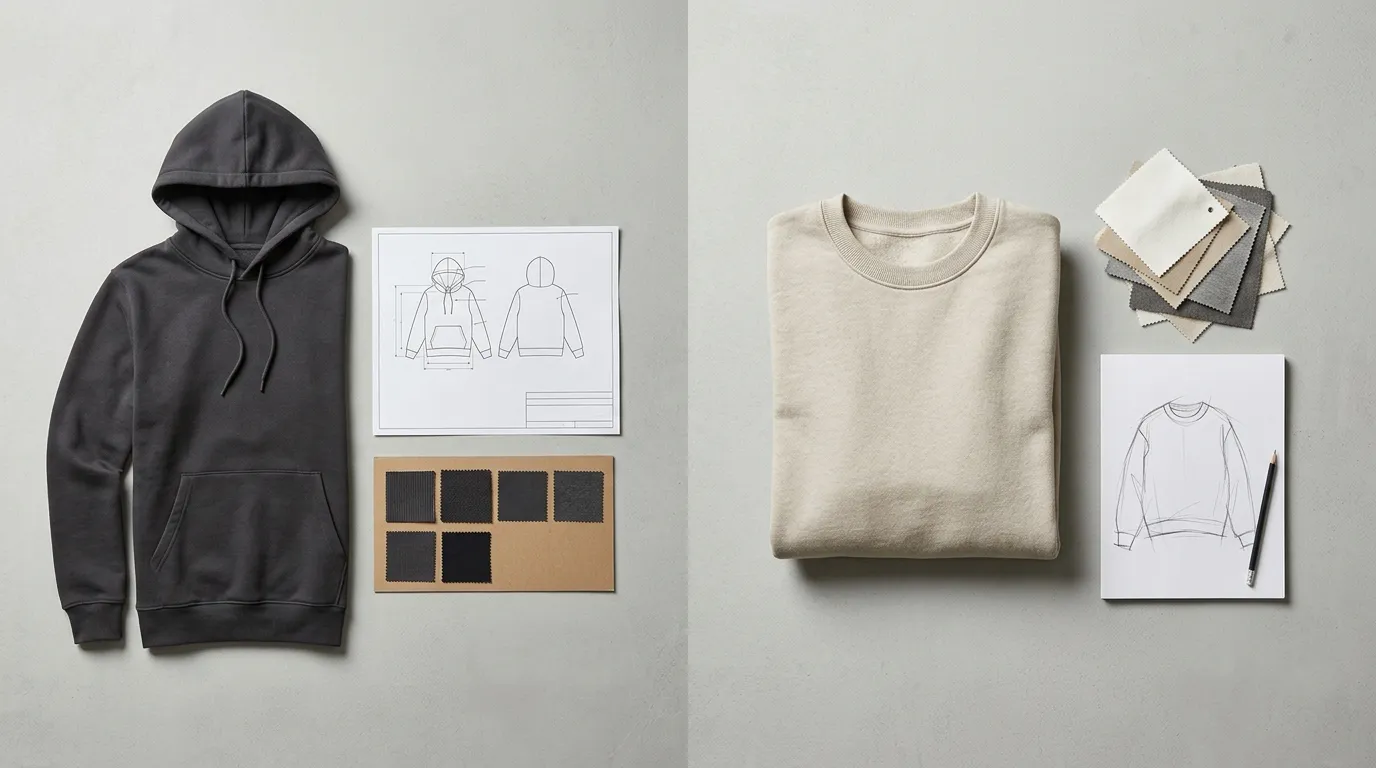
Start with one question: do you already have a finished design or a detailed specification?
- If you have a finished design or detailed specification, treat the project as OEM execution. Confirm the tech pack, materials, fit, construction and sample approval, then define the branding scope.
- If you do not have a finished design, ask the supplier what development options exist — ODM, an adapted product base, or design support — and clarify who owns the resulting design and pattern.
- On either route, scope private-label branding as its own list: main label, care label, hangtag and packaging.
- Compare cost, MOQ and timing only after the scope is fixed. Those figures respond to the product, the materials, the level of customization and the supplier's own terms.
Design control follows the same logic. A buyer with a complete specification keeps the decisions in house; a buyer without one relies more on what the supplier already offers. Siukid's guide, for example, treats the OEM, ODM and adapted-base paths as different starting points rather than better or worse ones.
What to Confirm With a Supplier About Product Scope, Branding, and Ownership
Confirm three things in writing before production: what the supplier is developing, which branding elements are included, and who owns the resulting patterns, artwork and samples.
- Product scope: who provides the design or specification, the pattern and the sample?
- Branding scope: which labels, hangtags and packaging are included?
- Ownership: patterns, artwork, molds, samples and any supplier-developed designs?
- Exclusivity: is it addressed separately in the agreement?
- Commercial terms: cost, MOQ and timing confirmed once scope is fixed?
Meiting Garments' guide advises buyers to confirm ownership of patterns, artwork, molds, samples and supplier-developed designs rather than relying on the name of the manufacturing model, and it notes that exclusivity is a separate question that should be settled explicitly.
OEM vs ODM: A Brief Distinction
ODM (original design manufacturing) usually means the manufacturer offers an existing or adapted design, while OEM is buyer-led design or specification. Siukid separates the three terms, and Lesstell's guide also distinguishes OEM and ODM from private label and white label. A full comparison of OEM vs ODM clothing is covered in its own guide.
Frequently Asked Questions
What is an OEM label?
An OEM label is not a distinct label type. OEM describes a manufacturing arrangement in which the buyer provides the product design or specification. The label is a branding element applied to the finished garment. A brand can use its own main label, care label and packaging on an OEM-produced item, which is why OEM production and private-label branding often appear together.
Is ODM the same as private label?
No. ODM describes who develops the design, usually the manufacturer offering an existing or adapted product. Private label describes whose brand appears on the finished item. According to Siukid's guide, a private-label product can be built on an OEM base, an ODM base or an adapted product, so the two terms answer different questions.
Can I use my own brand labels on an OEM product?
Yes. OEM production and private-label branding can be combined. The buyer supplies the specification; the manufacturer produces the garment and can apply the buyer's labels and packaging. Confirm the exact branding scope, including which label and packaging elements are covered, before bulk production begins.
Minghang Garments is a custom clothing manufacturer in Dongguan, China, operating since 2017, providing OEM, ODM and private label manufacturing of activewear, sportswear, loungewear and streetwear. MOQ starts from 100 pcs per color per style on stock fabric, sampling takes 7–15 working days and bulk production runs 25–45 days. If you want to separate product development from private-label branding on an activewear, loungewear or streetwear project, you can review Minghang Garments' approach or send your brief.
-
Share
-

-

-