 Contact Us

Table of Contents

Contact Us
Updated 1 month ago
How to Find a Private Label Clothing Manufacturer?
arafatshuvo
Private label manufacturer sourcing starts with shortlisting suppliers who can put your brand on a finished garment, then checking three things first: the private label services they offer (main labels, care labels, hangtags and packaging), the product development support they provide, and what their minimum order quantity is actually quoted against. Compare written answers, not promises.
Key takeaways
- A private label clothing manufacturer produces the garment and applies your brand to it — BOMME Studio defines private label products as made by a third-party manufacturer and sold under another company's brand, with the brand specifying the garment, packaging and label details.
- Where you look matters less than what you ask: Portugal Clothing Factory's 2026 guide recommends leading with garment type, volume, target price, timeline and a tech pack.
- Check private label services before price. USA Clothing Manufacturers describes woven, heat-transfer printed and screen-printed labels as options on its private label page.
- MOQ is a set of conditions, not one number. Minghang Garments states that regular activewear, yoga and streetwear styles generally start at 100 pieces per color per style on stock fabric.
- Approve a sample before bulk. Minghang Garments states sampling typically takes 7–15 working days and bulk production generally 25–45 days after sample and material approval.
What a Private Label Clothing Manufacturer Actually Does
A private label clothing manufacturer produces the garment and applies your brand to it, while your brand specifies the product, label and packaging details. You are buying production capacity plus branding, not just sewing time.
According to BOMME Studio, private label products are made by a third-party manufacturer and sold under another company's brand, and the brand specifies the garment, packaging and label details. That definition sets the boundary of the search: the supplier must be able to produce to your specification and then apply your identity to the finished item.
Two practical consequences follow. First, a supplier who can sew but cannot produce or apply branded components is only part of the answer. Second, because the brand owns the identity, the artwork, label specification and packaging details are yours to supply — not the factory's to guess.
Private Label vs White Label, OEM and ODM
The practical difference between private label, white label, OEM and ODM is who owns the design and whose name goes on the finished garment. Get that split wrong and you will shortlist suppliers who cannot do what you need.
The fastest way to identify which model a supplier offers is to ask the question that defines it, then confirm the answer in writing.
| Model | The question that identifies it | What to confirm before quoting |
|---|---|---|
| Private label | "Can you produce the garment and apply my brand's labels, hangtags and packaging?" | Which branding components are included, and to what artwork |
| White label | "Is this an existing product I can buy and brand as-is?" | Whether the same design is sold to other buyers |
| OEM | "Will you build to my design and specification?" | Who owns the pattern and the tech pack |
| ODM | "Do you have designs I can adapt and brand?" | Which design changes are possible and who owns them |
The split between these models varies by supplier, and some factories offer more than one. Argus Apparel lists tech-pack development, pattern making and sizing, cut-and-sew production, fabric sourcing, labeling and branding, and quality control and packaging among its services. Istanbul Factory's 2026 private label guide outlines a process covering concept, technical development, fabric sourcing, sampling, labeling and branding, print and embroidery, bulk production, quality control and packaging. If you are comparing the two manufacturing models in detail, the oem vs odm breakdown covers who owns the pattern and what changes between them.
Where to Look for a Private Label Clothing Manufacturer
Build a longlist from four channels — search results and supplier directories, trade shows and industry events, referrals from other brands or your fabric supplier, and portfolio or social platforms — then filter hard before you contact anyone.
Portugal Clothing Factory's 2026 guide lays out an eight-step sourcing process covering defining requirements, sourcing candidates, outreach, comparison, red-flag checks, sampling, region selection and first-order planning. The order matters: candidates come after requirements, not before.
- Define the product, category and expected volume.
- Build a longlist from the four channels above.
- Filter by product category — activewear, streetwear and loungewear suppliers are not interchangeable.
- Filter by private label capability, not by general cut-and-sew capability.
- Contact only the filtered shortlist, and contact all of them with the same brief.
Published supplier lists are a starting point for research, not a recommendation. Thygesen Textile Vietnam's December 2025 article lists Tack Apparel, Steve Apparel, Apparel Production, Alanic Clothing, Affix Apparel, Bomme Studio, Zega Apparel, Apparel Branders, Argus Apparel and Fashion Atlas Group as ten US manufacturers to consider. That is one source's list, and every name on it still needs to be verified independently against your own requirements.
Region matters, but not as a ranking. The trade-off sits between proximity for visits and communication, depth of experience in your specific category, and the minimum quantities a factory is set up to run. No single region wins on all three, so treat location as one filter among several rather than the first decision you make.
What to Prepare Before You Contact Suppliers
Have a tech pack and a clear commercial brief ready before the first email, because manufacturers quote from documents, not from descriptions.
Istanbul Factory's 2026 guide states that a tech pack commonly includes measurements, materials, stitching details, colors, trims, labels, artwork files and finishing instructions. Portugal Clothing Factory's 2026 guide recommends including garment type, volume, target price, timeline and a tech pack in an initial manufacturer email.
Checklist before you send anything:
- Garment type and category
- Sizes and size range
- Fabric preference, or confirmation that you are open to the supplier sourcing it
- Quantity per style and per color
- Branding components required
- Target price band
- Target delivery date
- Reference images
- Artwork files
If the tech pack is incomplete, send it anyway with the gaps marked. A supplier who needs a finished pack before they will respond is telling you something about how much development support they actually provide.
What to Check First: Private Label Services, Development Support and MOQ
Before price, check three things in order: the private label components a supplier can produce, how much development work they take on, and the exact conditions behind their minimum order quantity.
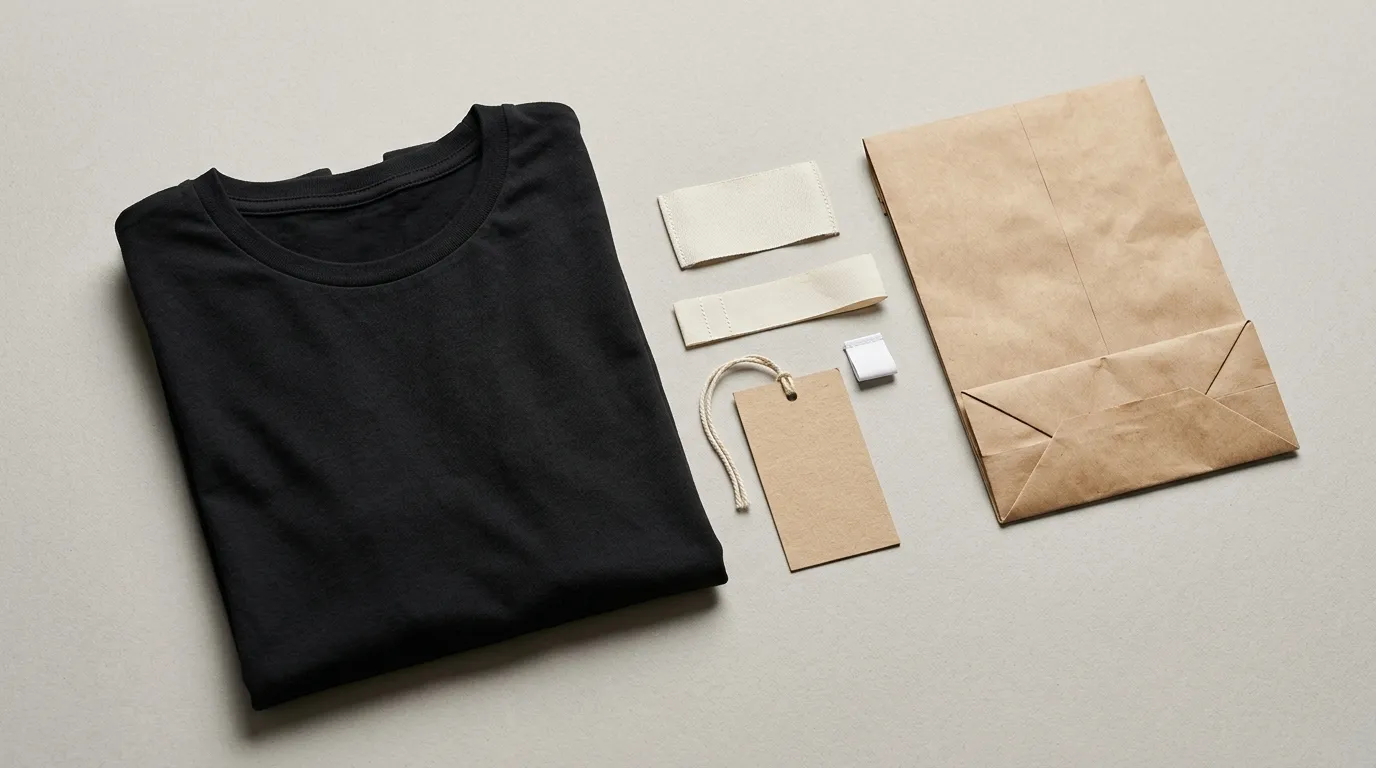
Private label is only real if the supplier can produce the branded components a customer actually sees — the main label, care label, hangtag and packaging — to your artwork and specification.
USA Clothing Manufacturers describes woven, heat-transfer printed and screen-printed labels as options on its private label page, so label construction is a choice you should expect to specify rather than accept by default. BOMME Studio's definition places packaging and label details in the brand's scope, which means you should be able to state exactly what goes on the garment and in the bag.
Checklist for the component list you send a supplier:
- Main label, woven or printed — the custom main labels guide covers the construction options
- Care and content label
- Size label
- Hangtag
- Packaging: bag, box, tissue, sticker — custom packaging for apparel brands covers the format decisions
- Artwork files and color references
- Application method and placement
Ask for the components to be confirmed in writing as part of the quote. A verbal "we do labels" is not the same as a supplier confirming the label type, placement and artwork file they will use.
Development support: what a manufacturer should handle
Development support means the supplier can take your idea to a producible garment — pattern making, fabric and trim sourcing, sampling and fit revisions — not just cut and sew a pattern you already own.
Argus Apparel lists tech-pack development, pattern making and sizing, fabric sourcing and quality control among its services. Istanbul Factory's 2026 guide includes concept, technical development, fabric sourcing and sampling stages in its process outline. Both show what full development support looks like in practice.
Decision rule: if a supplier cannot name who handles pattern making, grading and fabric sourcing — in house or through a named partner — treat development support as unconfirmed. That is not automatically disqualifying, but it changes the price comparison, because you will be paying someone else for that work.
MOQ: how to judge whether a minimum works for your first order
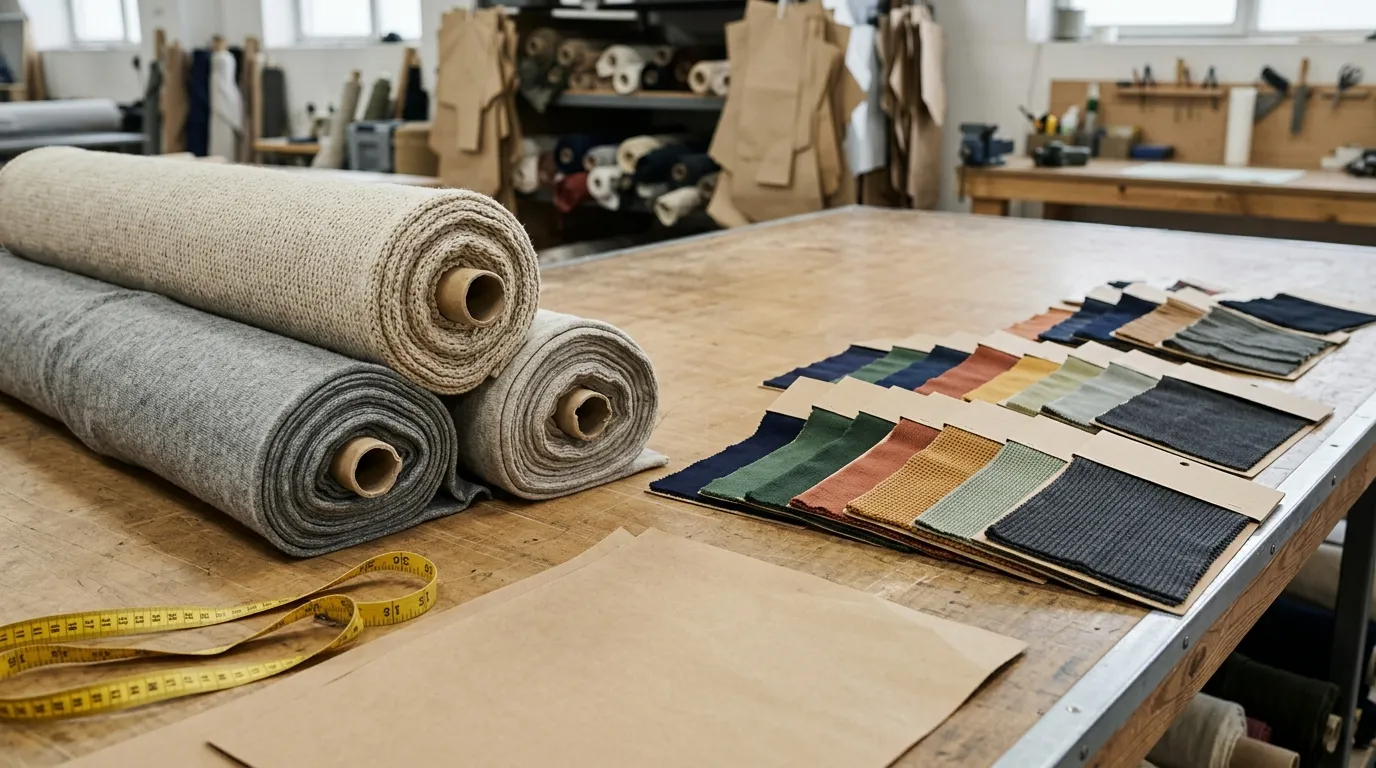
MOQ is only comparable when you know what it is quoted against — per style, per color, per size or per fabric — so ask for the unit basis in writing before you compare suppliers.
Minghang Garments states that regular activewear, yoga and streetwear styles generally start at 100 pieces per color per style on stock fabric. That is one supplier's stated term with its condition attached, not an industry benchmark; another supplier's headline number may be quoted on a completely different basis.
| Question to ask | Why it matters | A vague answer looks like | A specific answer includes |
|---|---|---|---|
| What is the minimum quoted against? | Per-style, per-color and per-size minimums produce very different order sizes | "Our MOQ is low" | The unit basis, stated per style, color or size |
| Stock or custom fabric? | Custom fabric usually raises the minimum | "It depends" | Which fabrics carry which minimum |
| Sample cost and credit | Affects the first-order budget | "Samples are cheap" | The sample price, and whether it is credited to bulk |
| Price break quantity | Determines whether ordering more is worth it | A single price | Quantity tiers and the price at each |
| What the quote excludes | Freight, trims and packaging change the total | A single unit price | An itemised inclusion list |
Confirm the MOQ basis in writing for every supplier you shortlist. If a supplier will not state the basis, the number cannot be compared with anything else you have.
[DIAGRAM: MOQ question matrix showing what a minimum is quoted against — per style, per color, per size, per fabric — with vague and specific answer examples]
How to Write the First Inquiry
Send one short, structured email that states the product, quantity, branding components, target timing and what you need back — then send the same brief to every supplier so the replies can be compared side by side.
Portugal Clothing Factory's 2026 guide recommends garment type, volume, target price, timeline and a tech pack in the initial email. Keep the structure identical across suppliers:
- One-line product summary.
- Quantity and size breakdown.
- Branding components required.
- Target delivery window.
- Tech pack attached, with gaps marked.
- Three questions to answer back: the MOQ basis, the sample timeline, and what the quote includes.
How to Compare and Vet Suppliers
Compare suppliers on their written answers to the same questions, and treat anything you cannot verify — capability, process, references — as unconfirmed rather than assumed. The choose a clothing manufacturer stage covers the wider selection process; the table below is the private label version of it.
Portugal Clothing Factory's 2026 guide places comparison and red-flag checks before sampling in its eight-step process, which is the right order: disqualify on paper before you spend money on samples.
| Criterion | What to ask | Evidence to request | Weak signal |
|---|---|---|---|
| Category experience | Have you produced this product type? | Photos or samples in the same category | Only unrelated categories shown |
| Development capability | Who does pattern making and grading? | A named person or partner | Vague or no answer |
| Private label components | Which label, hangtag and packaging formats do you produce? | A written component list | "We do labels" with no detail |
| MOQ fit | What is the minimum quoted against? | The unit basis in writing | A number with no basis |
| Sampling process | How many sample rounds, and at what cost? | Sample terms in writing | Sample terms not stated |
| Quality control | What checks run, and at which stages? | The QC process described | No process description |
| Communication cadence | Who is my contact, and how often do we update? | A named contact | A different contact on every email |
| Quote inclusions and terms | What is excluded from this price? | An itemised inclusion list | A single unit price |
Minghang Garments states that it runs a 5+1 QC system and has capacity of up to 500,000 pieces per month. Treat those as Minghang's own stated figures, not as a standard to hold other suppliers to.
For any certification or compliance claim, verify it with the issuing body and confirm what your specific product and destination market actually requires. A supplier's statement about a certificate is not the same as the certificate.
Why You Should Sample Before Bulk Production
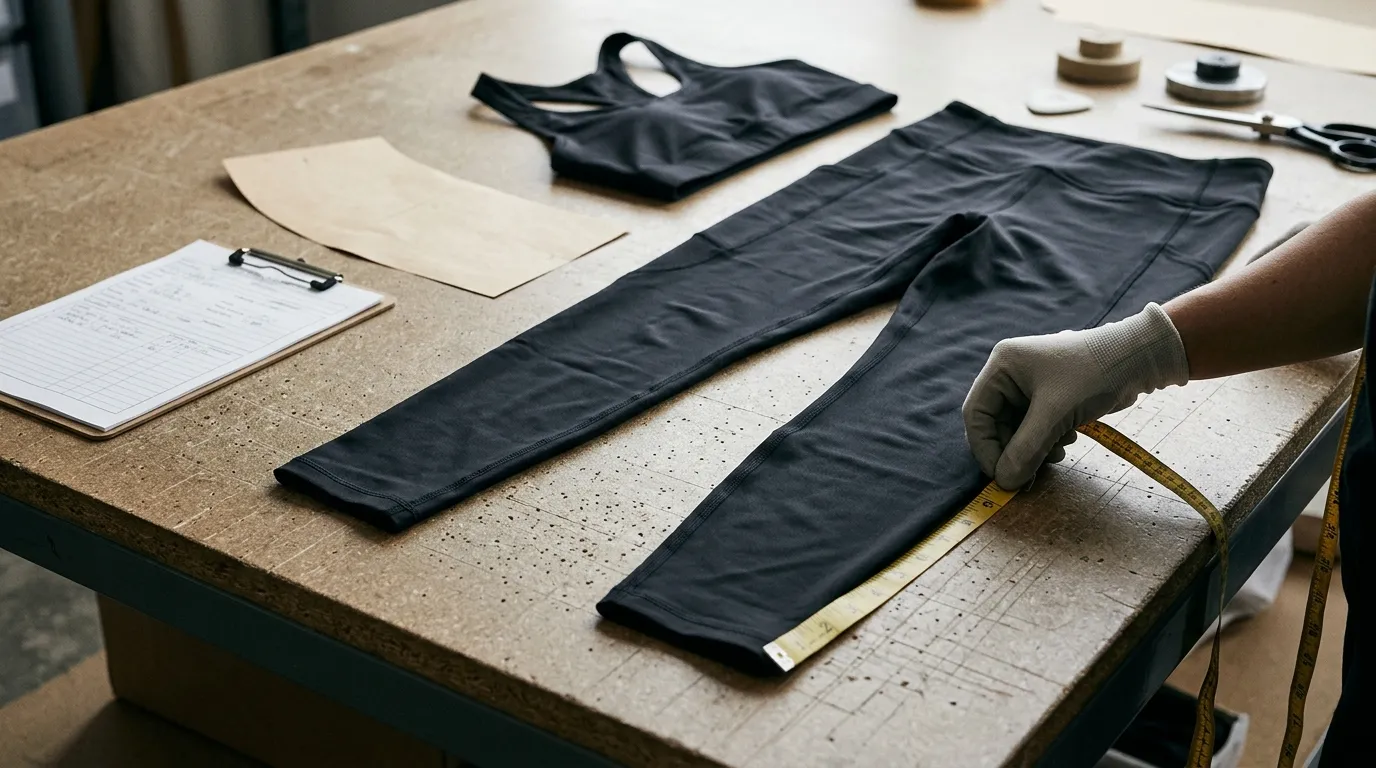
A sample is the only way to confirm fit, construction, fabric hand-feel and branding placement before you commit to a production run, so approve it in writing first.
Minghang Garments states that sampling typically takes 7–15 working days and that bulk production generally takes 25–45 days after sample and material approval. Istanbul Factory's 2026 process outline places sampling before labeling, branding and bulk production, reflecting the same sequence.
Sample approval is the decision gate for the whole project. Nothing after it should start — no bulk fabric commitment, no label production — until you have signed off on the physical sample.
Red Flags in a Private Label Supplier
Treat vague answers to specific questions as the warning sign, not the specific answer you disliked. A supplier who cannot state the MOQ basis, the sample timeline or what a quote excludes is a risk regardless of how competitive the headline price looks.
Portugal Clothing Factory's 2026 guide includes red-flag checks as a defined step before sampling. Signals worth acting on:
- No unit basis given for MOQ
- No named person for pattern making or quality control
- Sample terms and costs not stated
- A quote with no inclusions list
- Branding components promised verbally with no artwork confirmation
- No relevant work shown in your product category
- Pressure to skip sampling and move straight to bulk
Putting the Sourcing Checklist Together
Run the checks in order — define, longlist, filter, prepare, inquire, compare, sample, produce — and use one written checklist for every supplier so the comparison stays fair.
- Define product, volume and target timing.
- Build a longlist from four channels.
- Filter by category and private label capability.
- Prepare the tech pack and commercial brief.
- Send the same structured inquiry to every supplier.
- Compare written answers against the vetting table.
- Approve a sample before committing to bulk.
- Produce, with QC checkpoints agreed in advance.
[DIAGRAM: eight-step private label sourcing sequence from define to produce, with the sample-approval gate marked before bulk]
Minghang Garments is one worked example of a completed checklist rather than a recommendation: a Dongguan-based custom clothing manufacturer operating since 2017, offering OEM, ODM and private label production across activewear, sportswear, loungewear and streetwear, with services covering product development, fabric and trim sourcing, pattern making, sampling, bulk production, printing, embroidery, garment washing, labels and packaging. Minghang Garments states a 12,000 m² production floor and a 2,000 m² sample center, capacity of up to 500,000 pieces per month, MOQ from 100 pieces per color per style on stock fabric, sampling of 7–15 working days and bulk of 25–45 days, with a 5+1 QC system.
FAQ
How much does private label clothing manufacturing cost?
There is no universal price, so compare quotes on what they include rather than on the headline unit figure. Ask each supplier to itemise fabric, trims, labels, hangtags, packaging, sampling, freight and duties. The MOQ section above lists the inclusion questions worth asking, and a quote that does not answer them cannot be compared with another.
Do I need a tech pack before contacting manufacturers?
A complete tech pack speeds up quoting, but an incomplete one is still better than a description. Istanbul Factory's 2026 guide states that a tech pack commonly includes measurements, materials, stitching details, colors, trims, labels, artwork files and finishing instructions. Send what you have with the gaps marked, and ask the supplier which missing items they need first.
How long does it take to find and start with a manufacturer?
There is no universal timeline, and supplier search and comparison time sits on top of production time. Minghang Garments states that sampling typically takes 7–15 working days and bulk production generally 25–45 days after sample and material approval. Treat those as one supplier's stated figures and ask each shortlisted supplier for their own written timeline.
Who are the best private label clothing manufacturers?
No neutral ranking exists here, and published lists reflect their authors' criteria. Thygesen Textile Vietnam's December 2025 article lists Tack Apparel, Steve Apparel, Apparel Production, Alanic Clothing, Affix Apparel, Bomme Studio, Zega Apparel, Apparel Branders, Argus Apparel and Fashion Atlas Group as ten US manufacturers to consider. Use the vetting table above to assess any name against your own requirements.
-
Share
-

-

-