 Contact Us

Table of Contents

Contact Us
Distressed hoodies are made by deliberately adding wear to a finished or near-finished garment. Four methods do most of the work: abrasion, which scuffs and frays the fabric surface; laser processing, which burns programmed marks into it; garment washing, which fades color and softens the hand feel; and distressed printing, which ages the graphic instead of the fabric.
Key takeaways
- Distressed effects are applied on purpose; they are planned into a design rather than left to natural wear.
- The four common methods are abrasion, laser processing, garment washing and distressed printing.
- Abrasion and laser processing change the fabric surface, washing changes color and hand feel, and distressed printing changes only the artwork.
- Hoodie fabric choice affects the outcome: Qyoure's November 2025 manufacturing guide identifies French terry and brushed fleece as common hoodie fabrics and describes French terry as less warm than fleece.
- Minghang Garments's published cases show two separate routes: a controlled tie-spray wash for a faded look, and distressed printing on a 450 gsm heavyweight hoodie.
What Is a Distressed Hoodie?
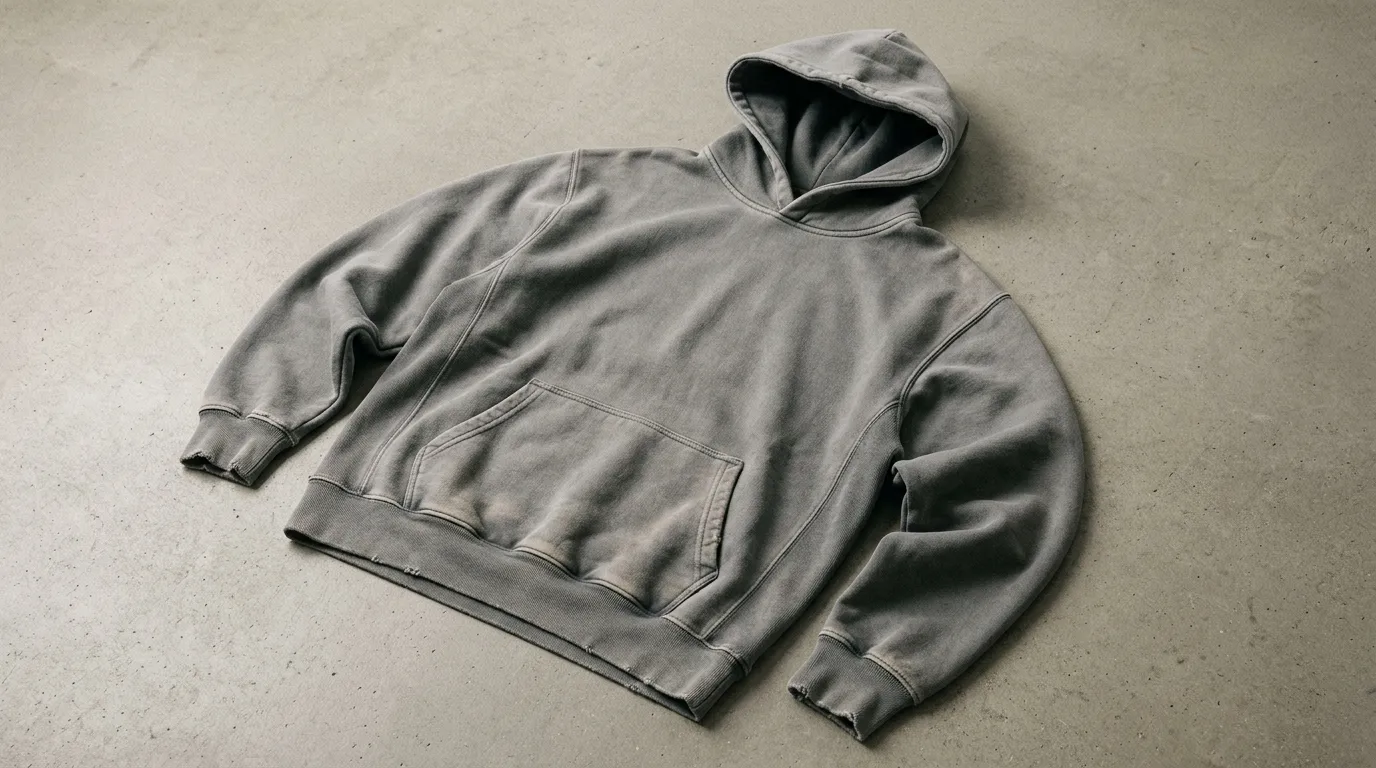
A distressed hoodie is a hoodie that has been intentionally treated to look worn, faded, frayed or aged rather than worn out from use.
According to Creed Vintage's December 2023 distress guide, distressing means deliberately creating imperfections to produce a worn or vintage look. The distinction that matters is intent: a frayed cuff or a faded body panel on a distressed hoodie is placed and controlled, while damage from actual wear is uneven and unintended.
Minghang Garments, a custom clothing manufacturer based in Dongguan, China, lists distressed effects among the finishing options it applies to hoodies and streetwear, alongside garment washes and printing. In production, that means the effect is decided at the design stage and confirmed on a sample before any bulk run rather than improvised on a finished garment.
How Are Distressed Hoodies Made? The Four Main Methods
Distressed hoodies are usually made with one of four methods, or a combination of two. Each method changes a different part of the garment: abrasion and laser processing alter the fabric surface, garment washing alters color and softness, and distressed printing alters the graphic.
| Method | What it changes | Typical result | When it is chosen |
|---|---|---|---|
| Abrasion (sanding, fraying) | Fabric surface and edges | Scuffed, worn-through or frayed areas | Localized wear on seams, cuffs, hem or pocket |
| Laser processing | Fabric surface via programmed marks | Precise, repeatable marks or patterns | Consistent graphic marks across many units |
| Garment washing / specialty wash | Color and hand feel | Faded, softened, unevenly aged appearance | An all-over vintage or washed look |
| Distressed printing | The printed graphic | Cracked, faded or aged artwork | Graphic-led designs on intact fabric |
[DIAGRAM: An annotated hoodie silhouette marking where each method acts — abrasion zones at cuffs, hem, pocket and seams; a laser-marked area; the whole garment for washing; and the print area for distressed prints.]
Abrasion: Sanding, Fraying and Worn Edges
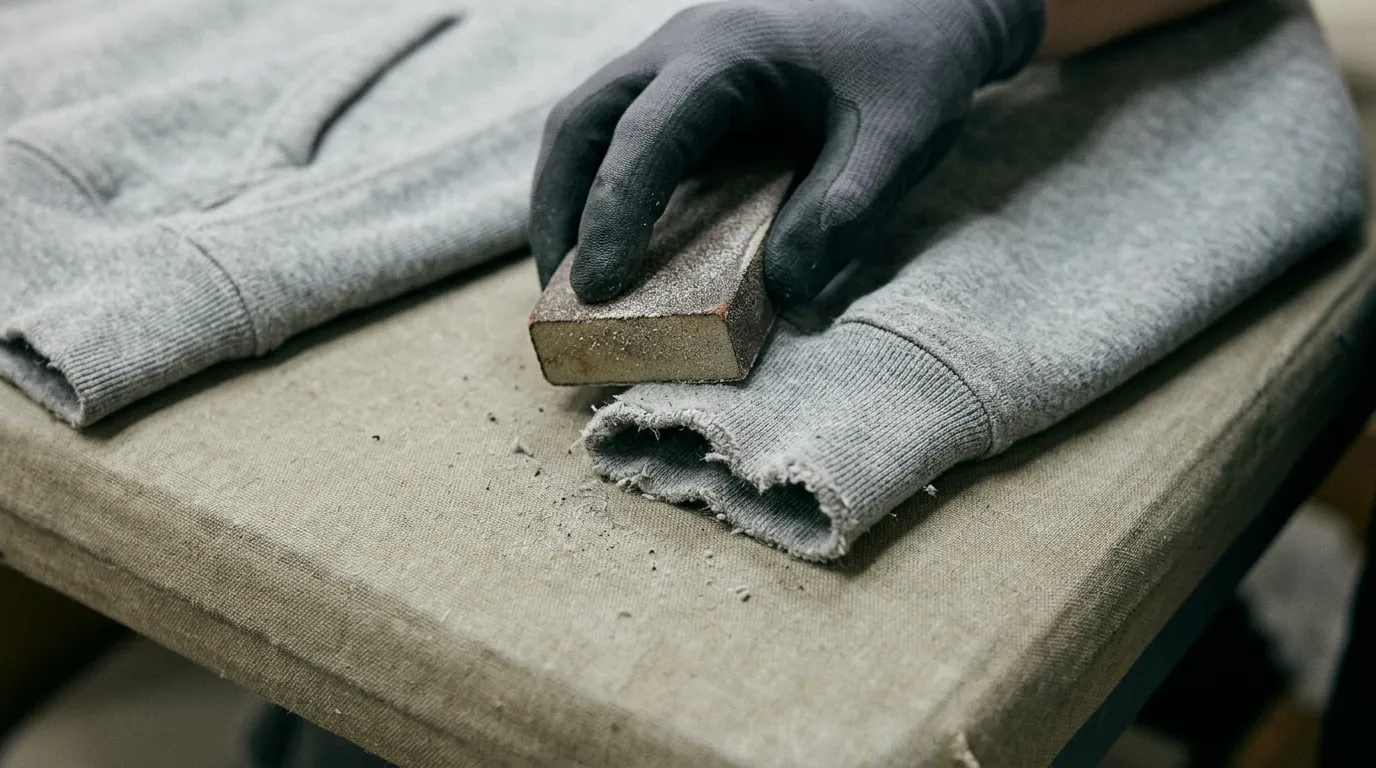
Abrasion is the method that physically scuffs or frays the fabric with tools or machine action, producing the worn-through look most people picture first.
Creed Vintage's December 2023 guide describes fraying edges, making holes or rips, sanding and bleach fading as common routes to a distressed appearance. Malinor MFG's manufacturer page for distressed hoodies states that sanding can create a localized worn-through appearance and emphasizes that placement is what determines how the result reads.
Because abrasion removes material, where it is applied matters more than how much is applied. Choose abrasion when the design calls for localized wear on high-friction zones such as cuffs, hem, pocket edges and seams, so the effect reads as natural wear rather than damage. It is a poor fit when every unit must carry identical marks, because each garment is worked individually. This page explains the principle behind abrasion; it does not cover step-by-step home distressing with blades or bleach, which is a different task with its own safety considerations.
Laser Processing: Programmed Marks and Patterns
Laser processing uses a programmed beam to burn controlled marks into fabric, which allows the same pattern to be repeated from one garment to the next.
Repeatability is the reason it is used. Choose laser processing when the distressed effect needs to be graphic, precise and consistent across a run; choose abrasion instead when a naturally irregular, one-off result is what the design calls for.
Two limits are worth stating plainly. Laser processing changes the fabric surface itself, so it behaves differently from a print that sits on top of the cloth. And availability varies by supplier and by fabric, so whether a specific manufacturer offers it — and on which materials — has to be confirmed directly. No tolerances, machine specifications or performance figures are claimed here.
Garment Washing: Fading, Tie-Spray and Specialty Washes
Garment washing treats the finished or near-finished hoodie with water, chemicals, abrasives or spray techniques to fade color and soften the fabric. Unlike abrasion or laser processing, it changes the whole garment rather than one zone.
Minghang Garments's custom vintage faded hoodie case describes a controlled tie-spray wash used to produce an irregular aged appearance. Creed Vintage's December 2023 guide lists bleach fading among the routes home makers use for a similar effect. How the base color enters the garment also shapes the outcome — the difference between garment dye vs pigment dye changes how a wash reads — and the URBN Apparel Technical Manual lists washed-garment procedures among the apparel requirements it publishes for vendors.
The main limitation is coverage: washing acts on the whole garment, so a faded base cannot sit next to a crisp, unwashed panel in the same wash. If only part of the hoodie should look aged, washing is the wrong lead method.
Distressed Prints: Aging the Graphic, Not the Fabric
A distressed print is artwork produced to look cracked, faded or worn, while the hoodie's fabric itself may be completely intact.
Minghang Garments's custom 450 gsm heavyweight hoodie case describes distressed printing used to create a vintage graphic appearance with controlled texture and aged visual effects. Minghang Garments lists printing among the hoodie and streetwear services it provides.
The decision rule follows from what each method touches. If a brand wants a worn-looking garment with a clean logo, wash or abrade the body and leave the print intact. If it wants a vintage graphic on sound fabric, use a distressed print. The two are not interchangeable, because one shows on the cloth and the other shows only in the ink that sits on it.
When Should Each Distressing Method Be Used?
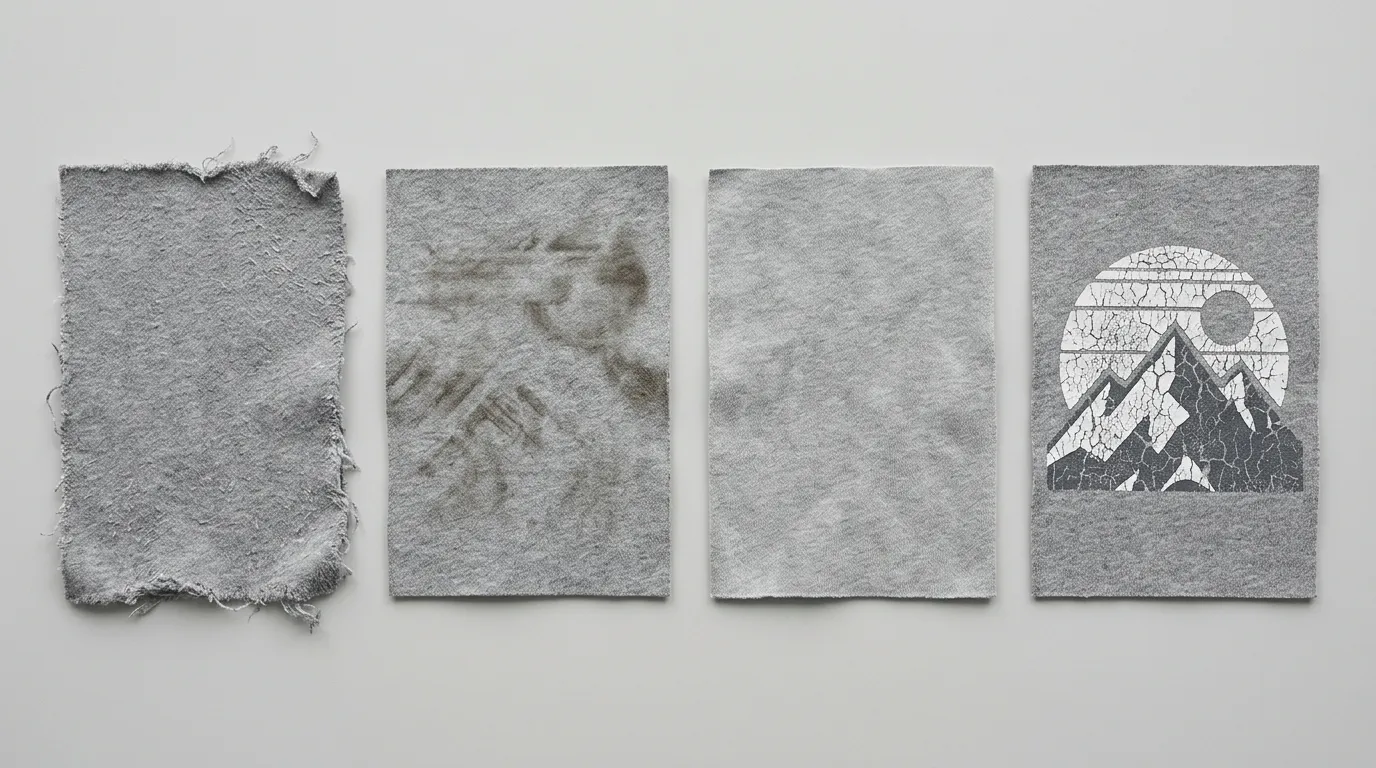
Match the method to what the design needs to change: fabric surface, color, repeatability or the graphic. Many production hoodies combine two, such as a washed base with a distressed print applied afterwards.
| If the design priority is… | Lead method | Supporting method |
|---|---|---|
| Localized worn edges | Abrasion | Washing for overall softness |
| Identical marks across all units | Laser processing | Distressed print for the graphic |
| All-over vintage color | Garment washing | Abrasion on cuffs and hem |
| Aged artwork on intact fabric | Distressed printing | Washing, if a faded base is wanted |
A custom washed hoodie is the clearest example of the third row: the aged look comes from the wash itself, and any abrasion is a secondary detail on the edges.
[PHOTO: Four side-by-side close-ups of the same hoodie fabric showing surface abrasion, laser marks, a washed fade and a distressed print, so the difference between a changed fabric and a changed graphic is visible at a glance.]
When two methods are combined, their order should be fixed at the sampling stage, because a wash applied after a distressed print changes how that print reads.
How Fabric, Construction and Placement Change the Result
The same distressing method produces different results on different hoodie fabrics, and placement decides whether the wear reads as vintage or as accidental damage.
Qyoure's November 2025 guide to hoodie manufacturing identifies French terry and brushed fleece among common hoodie fabrics and describes French terry as less warm than fleece. That guide also sets out the production sequence as tech pack, pattern making and grading, fabric spreading and cutting, customization, assembly, quality control and packaging, which places any distressing in the customization and finishing stage rather than at the beginning of the build. Malinor MFG's page states that the placement of the distress is what shapes the final effect.
The practical rule: put abrasion on zones that already take friction, such as cuffs, hem, pocket edges and seams, so the wear looks earned. Placing the same abrasion across the center of a body panel usually reads as damage instead, and on a heavy fabric such as the 450 gsm heavyweight used in Minghang Garments's distressed print case, surface treatments and prints behave differently than they do on lighter French terry or fleece.
How to Review a Distressed Hoodie Sample Before Bulk
Review the sample against the intended effect, not against a general idea of "distressed." Check placement, coverage, consistency and how the finish reads after laundering before approving bulk.
- Confirm the effect type against the brief: surface wear, color fade, programmed marks or aged print.
- Check placement against the zones agreed in the design — cuffs, hem, pocket, seams or body.
- Check whether the wear stays inside the intended zone or spreads past it.
- Check repeatability: will unit 200 look like unit 1, or is variation acceptable for this design?
- Check how the base fabric and any print read after washing.
- Retain the approved sample as the production reference.
[PHOTO: A photographed hoodie sample with the six review points marked on the areas they apply to — cuff, hem, pocket, seam, print and body panel — next to the retained approved sample.]
According to Minghang Garments's website, the company operates a 5+1 quality-control system, with sampling of 7–15 working days and bulk production of 25–45 days, and a minimum order quantity from 100 pieces per color per style on stock fabric. Those are Minghang Garments's stated terms for its own orders rather than industry benchmarks, and no wash-performance, colorfastness or durability results are claimed here.
Frequently asked questions
Is a distressed hoodie the same as a worn-out hoodie?
No. Distressing is deliberate: the imperfections are designed and placed to create a worn or vintage look, as Creed Vintage's December 2023 guide describes. A worn-out hoodie has damage from actual use, which is usually uneven and unintended. Deliberate distressing is controlled, reviewed on a sample and repeated for production.
Can a hoodie be distressed without damaging the fabric?
Yes, when the vintage cue comes from finishing rather than physical wear. Garment washing changes color and hand feel, and distressed printing ages the graphic while the fabric stays intact. Abrasion and laser processing, by contrast, do alter the fabric surface itself.
How long does it take to produce distressed hoodies?
Timelines depend on the method and the order. According to Minghang Garments's website, sampling takes 7–15 working days and bulk production 25–45 days, with a minimum order quantity from 100 pieces per color per style on stock fabric. Distressing is a finishing step, so it is reviewed at sample approval.
-
Share
-

-

-