 Contact Us

Table of Contents

Contact Us
Updated 3 weeks ago
DTG vs DTF Printing for Clothing: Which Is Better?
arafatshuvo
There is no single winner: DTG (direct-to-garment) prints water-based ink straight into a garment and generally suits cotton-rich fabrics and detailed artwork, while DTF (direct-to-film) prints onto PET film and heat-transfers it, working across more fabric types. Choose by fabric, hand feel, durability expectations and order pattern — not by the acronym alone.
Key takeaways
- DTG prints ink directly into the garment; DTF prints the design onto film and heat-transfers it (Printful).
- According to HSI's 2025 comparison, DTG works best on 100% cotton or high-cotton blends, while DTF is used on cotton, polyester, blends and nylon.
- Ordant describes DTG prints on cotton or cotton/polyester garments as soft to the touch, while HSI describes DTF's feel as more noticeable.
- According to HSI, DTF transfers can be printed in advance and applied later, which separates printing from pressing.
- Minghang Garments' printing-method guide lists fabric composition, surface structure, weight, artwork complexity, colour requirements, quantity, garment purpose and print placement as the factors that decide the method.
Quick verdict: DTG or DTF for clothing?
DTG is the usual first choice for cotton-rich garments that need a soft, detailed print. DTF is the usual first choice when the same graphic has to run across several fabric types or when transfers need to be produced ahead of pressing. Neither method is automatically better, and either can be the wrong answer for a specific garment.
- Choose DTG when the garment is cotton or a high-cotton blend, the artwork is photographic or gradient-heavy, and a soft in-fabric feel matters most.
- Choose DTF when the range mixes cotton, polyester, blends or nylon, or when the print has to be applied in a separate step from garment sewing.
- Reconsider both when the buyer cannot confirm fabric, print size and placement with the supplier before sampling.
What are DTG and DTF printing, and how does each work?
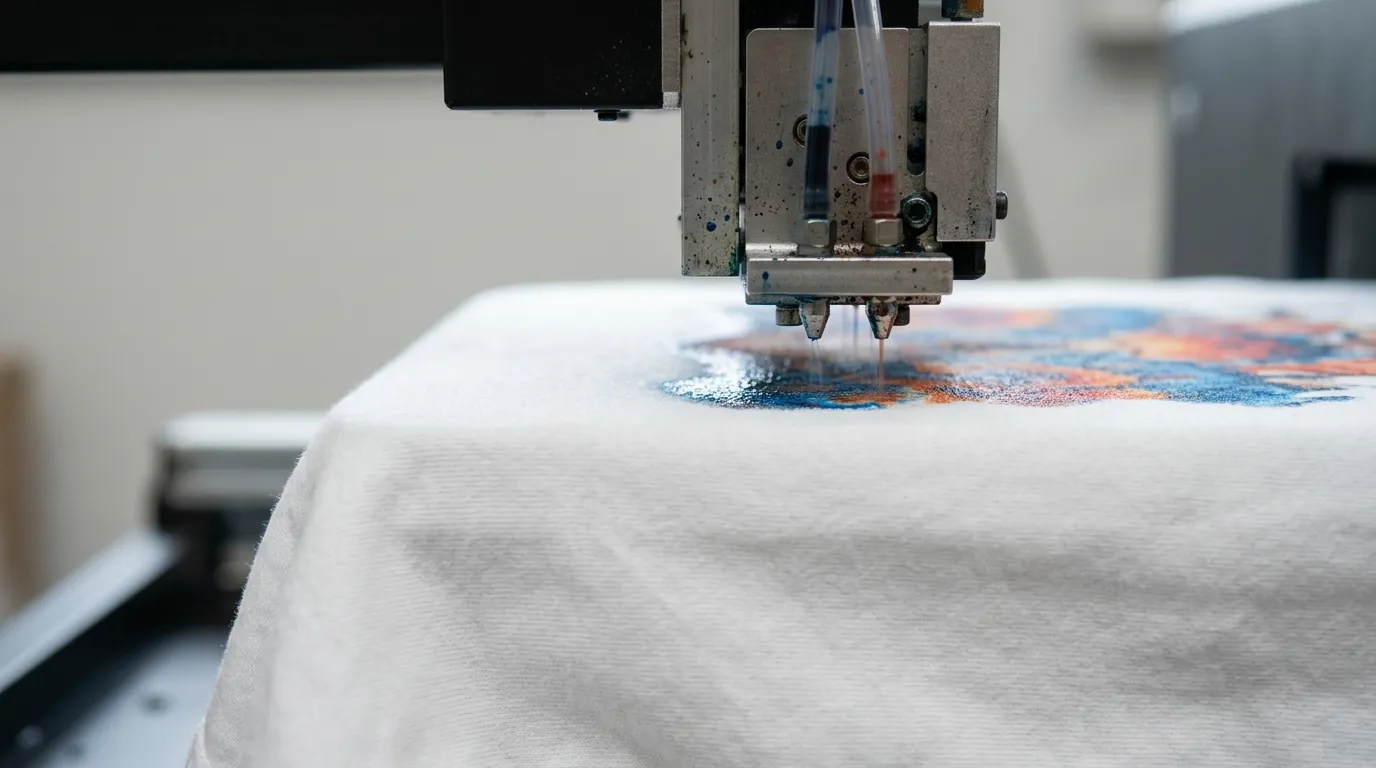
DTG (direct-to-garment) printing applies water-based pigment textile inks directly to the garment, while DTF (direct-to-film) printing prints the design onto a coated film, applies an adhesive powder, and transfers the image to the garment with heat and pressure. That single difference in the transfer step drives most of the fabric, feel and workflow trade-offs that follow.
Ordant describes DTG as a process where textile inks are applied directly to garments, with pretreatment and curing potentially part of the workflow. Ordant also describes DTF as printing onto specially coated PET (polyethylene terephthalate) film, applying powdered adhesive, and transferring the image with heat and pressure.
DTG and DTF sit alongside other decoration routes in Minghang Garments' custom t shirt printing methods guide, which compares them against the wider set of options a brand can choose from.
DTG step by step
- Prepare the garment surface — pretreatment may be part of the workflow (Ordant).
- Print the design directly onto the garment with water-based pigment textile inks (Ordant).
- Cure the print, where the process calls for it (Ordant).
- Inspect the finished print on the actual garment before packing.
DTF step by step
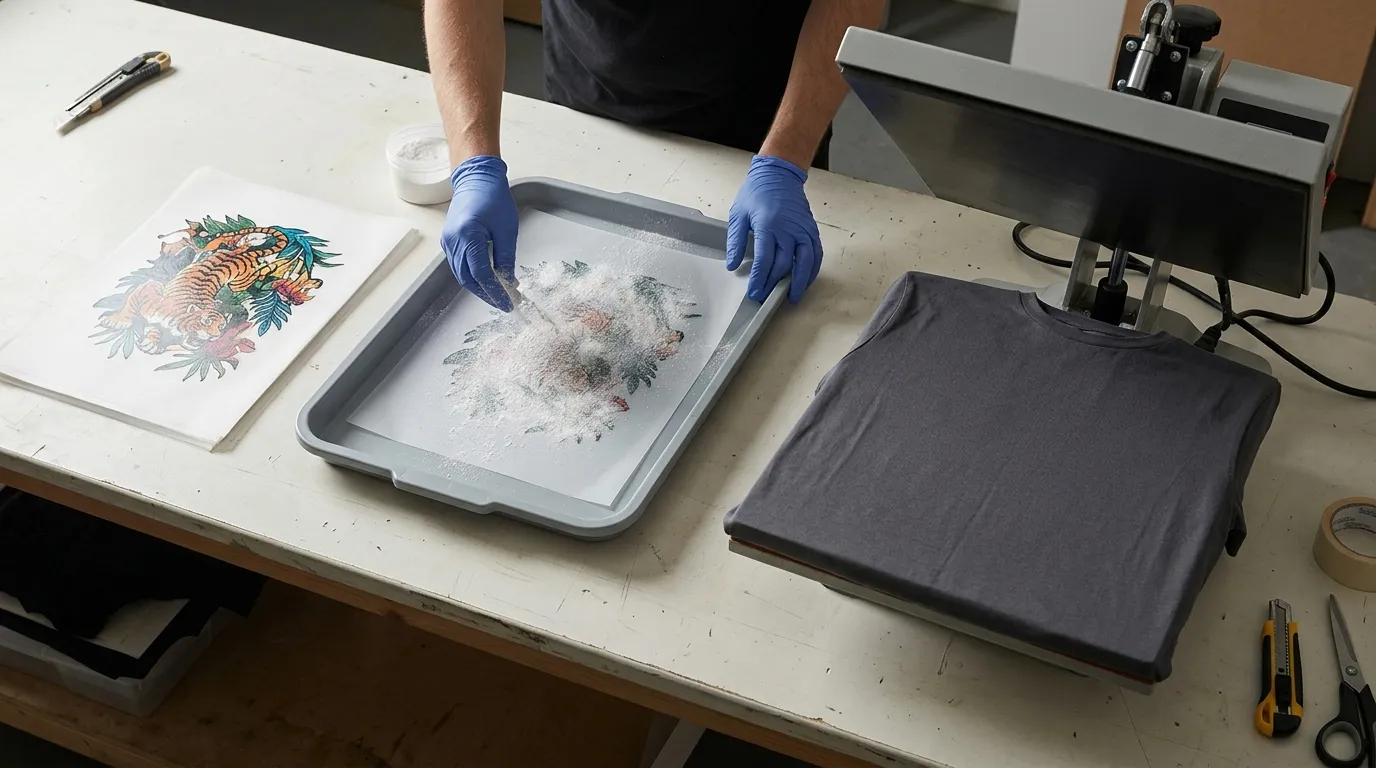
- Print the design onto specially coated PET film (Ordant).
- Apply powdered adhesive to the printed film (Ordant).
- Transfer the image to the garment with heat and pressure (Ordant).
- Cool, peel and finish the transfer according to the supplier's instructions.
One clarification on the term "DTF"
Direct-to-film apparel printing is not the same process as UV-DTF transfer printing onto hard surfaces such as rigid signs or plastics. When a supplier quotes "DTF", confirm in writing that the quote covers apparel transfer film, adhesive powder and a heat press step — not a hard-surface transfer system.
Fabric compatibility: which method works on which garment?
DTG is most reliable on 100% cotton and high-cotton blends, while DTF is used across a wider set of fabrics including polyester and nylon. If your garment is polyester-dominant or mixed-fibre, the fabric question narrows the choice before you compare feel or cost.
According to HSI's 2025 comparison, DTG works best on 100% cotton or high-cotton blends, while DTF can be used on cotton, polyester, blends and nylon. Printful's 2024 comparison describes DTG as suited to natural fabrics such as cotton, and describes its own DTFlex offering as working across cotton, polyester, fleece and blends — a branded product claim that should not be read as a guarantee for every DTF system.
| Garment or fabric | DTG suitability | DTF suitability | Source qualifier |
|---|---|---|---|
| 100% cotton | Suited (HSI; Printful) | Used (HSI) | Stated in HSI's 2025 and Printful's 2024 comparisons |
| High-cotton blend | Suited (HSI) | Used (HSI) | Stated in HSI's 2025 comparison |
| Polyester | Not named as a DTG fit by HSI | Used (HSI) | Stated in HSI's 2025 comparison |
| Poly/cotton blend | Cotton/polyester garments described as soft under DTG (Ordant) | Used (HSI) | Stated in Ordant and HSI |
| Fleece | Verify with the supplier | Described for Printful's DTFlex offering | Printful's 2024 comparison, branded product claim |
| Stretch knit | Verify with the supplier | Verify with the supplier | No retrieved source gives a method-specific rule |
[DIAGRAM: DTG workflow (garment → direct ink → cure) beside DTF workflow (film → adhesive powder → heat press → peel)]
Hand feel: which print feels softer on clothing?
DTG generally feels softer because the ink is applied into a suitable cotton fabric, while DTF sits on the garment as a transferred film layer and its feel is more noticeable. Hand feel is the single most common reason a brand switches method after seeing a sample.
Ordant states that DTG designs on cotton or cotton/polyester garments feel soft to the touch. HSI characterizes DTF's feel as more noticeable than DTG's softer-hand finish.
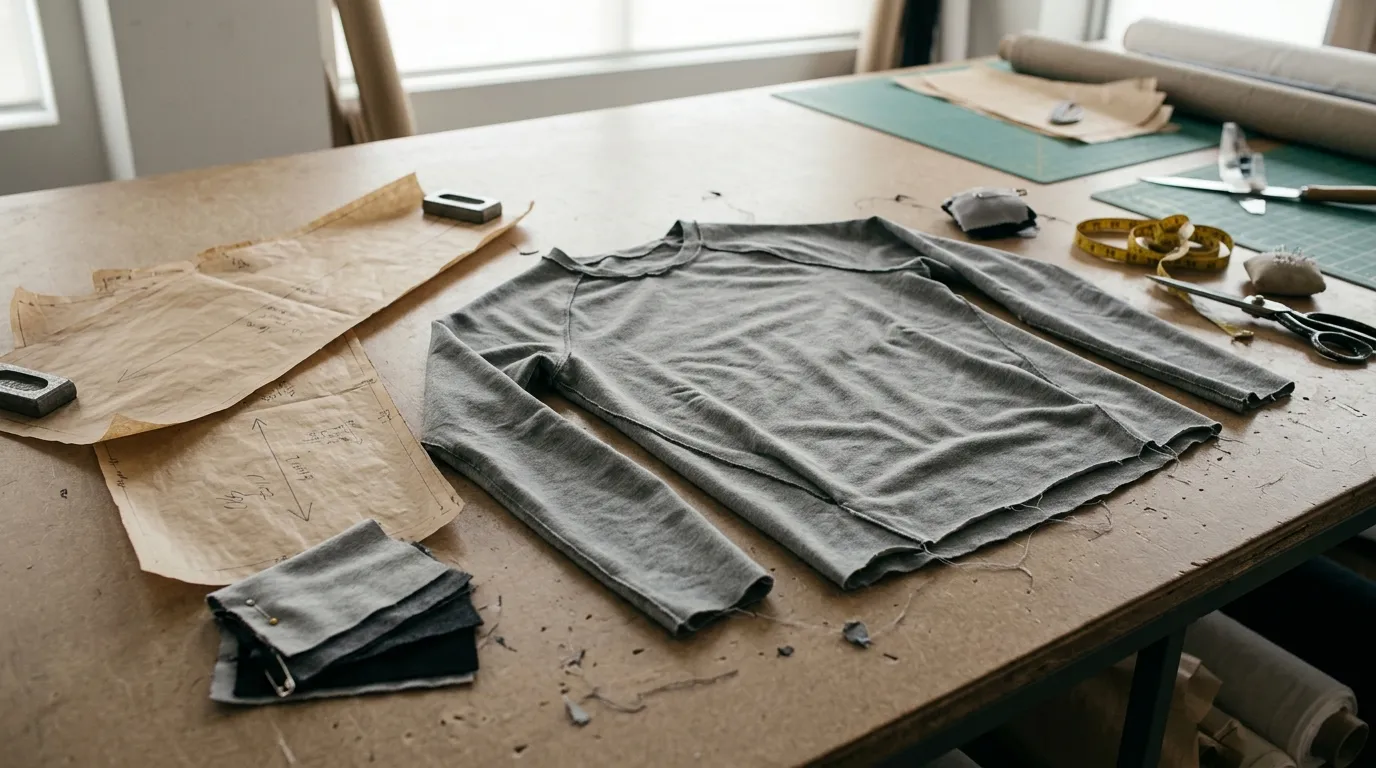
Because feel varies with print size, coverage and garment weight, confirm hand feel on your own garment at the actual print size and placement before bulk. Minghang Garments' custom waffle knit DTG print raglan long sleeve T shirt example shows a DTG print applied to a knit garment.
Durability: how long do DTG and DTF prints last?
Durability is not fixed by the method name. Wear and wash performance depends on the garment, the ink or adhesive system, print size and coverage, pretreatment, curing, and the care instructions the buyer sets.
No wash-cycle figure can be applied across both methods as a rule, so treat any single number as specific to the test behind it. The practical decision rule is to require a wash test on the actual production fabric, at the actual print size and placement, and to write the care label from that result rather than from a general claim.
If a supplier offers a durability figure without stating the fabric, print coverage, wash temperature and number of cycles tested, ask for those conditions in writing before you approve bulk.
Artwork, colour, coverage and dark garments
DTG is the natural fit for photographic, gradient and highly detailed artwork on cotton and cotton-rich blends, while DTF suits full-colour graphics across cotton, polyester and blends. Coverage matters as much as detail: a large solid block of colour behaves differently from a fine line or a small chest logo.
Minghang Garments' printing-method guide characterizes DTG as suited to photos, gradients and complex artwork on cotton and cotton-rich blends, and DTF as suited to full-colour graphics across cotton, polyester and blends.
Dark and coloured garments: do not assume either method handles a dark base the same way it handles white. Confirm the base-layer workflow with the supplier — whether a pretreatment or white-ink step is used — and ask for a strike-off on the exact garment colour before approving. For how a logo or graphic is applied across apparel more generally, see the branding logo techniques guide.
Order size and workflow: which method fits your production pattern?
DTF separates printing from pressing — transfers can be produced in advance and applied later — while DTG ties printing to the garment run itself. That difference matters most when a design repeats across multiple styles or fabrics, or when garments arrive at different times.
According to HSI, DTF transfers can be printed in advance and applied later. Minghang Garments' printing-method guide treats quantity as one of several selection factors rather than the deciding one, alongside fabric, artwork and placement.
Print-method economics and garment order quantities are separate questions. Minghang Garments' garment MOQ starts from 100 pcs per color per style on stock fabric, which is a garment-level figure and not a DTG or DTF print threshold. Cost drivers for the print itself include artwork coverage, garment colour, placement size, the number of print positions and setup per design — so ask for a quote against your actual artwork and garment rather than comparing headline cost-per-print figures that were not measured on the same job.
How to choose DTG vs DTF for your clothing range
Work through four questions in order — fabric, then artwork and coverage, then hand feel and wash expectations, then order pattern. The method falls out of those answers, and the answer is often different for two styles in the same range.
- Fabric: is the garment 100% cotton, a high-cotton blend, or polyester-dominant? Cotton points toward DTG; a mixed-fibre range points toward DTF.
- Artwork and coverage: photographic or gradient artwork with fine detail favours DTG; full-colour graphics across several fabric types favour DTF.
- Hand feel and wash expectations: decide how much surface feel is acceptable and what care instructions the product needs, then test both on the real garment.
- Order pattern: if printing and pressing need to happen at different times or across several styles, DTF's advance-printed transfers are the more flexible fit.
Minghang Garments' printing-method guide groups these selection factors — fabric composition, surface structure, weight, artwork complexity, colour requirements, quantity, garment purpose and print placement — as inputs to the decision rather than fixed rules.
What to check before approving a DTG or DTF sample
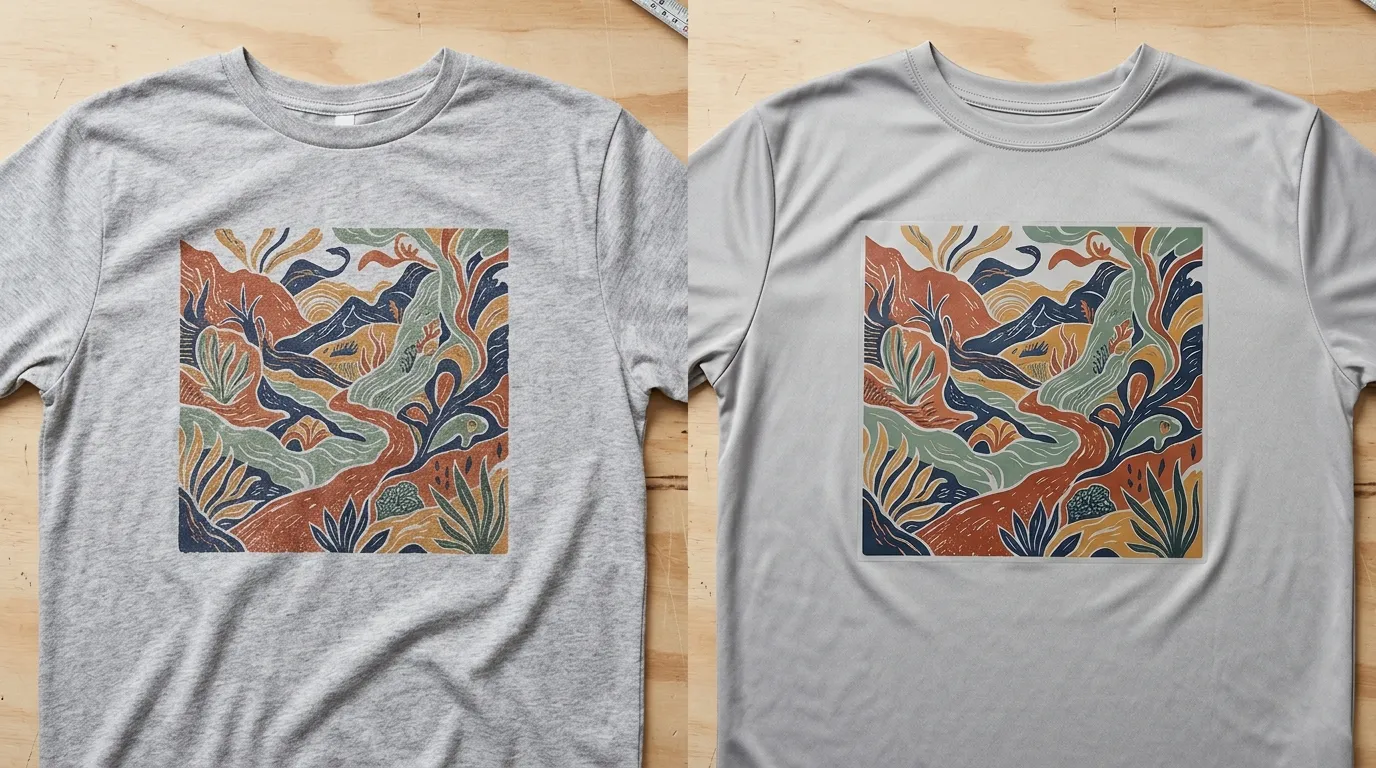
Approve the print on the actual production garment, at the actual size and placement, and confirm fabric, artwork, hand feel, wash behaviour and placement before bulk. A sample that passes on a white cotton swatch tells you very little about a dark polyester blend.
- Confirm fabric composition, surface structure and colourway against the production specification.
- Confirm print size, placement and the number of print positions.
- Check hand feel against the brief you set for the product.
- Run a wash test on the printed sample and record the conditions used.
- Confirm care-label wording that reflects that test.
- Approve the strike-off on the exact garment colour before bulk.
- Note any natural fibre variation in the base fabric, which can affect how a direct print reads.
[PHOTO: sample approval checklist card covering fabric, colourway, print size, placement, hand feel, wash test and care label]
FAQ
Can DTG or DTF print on dark garments?
Both methods are used on dark bases, but the base-layer workflow differs by method and by supplier, and no single rule covers every system. Confirm the workflow with your printer — including any pretreatment or white-ink step — and ask for a strike-off on the exact garment colour before you approve bulk.
Does the print method change my garment MOQ?
Print method and garment order quantity are separate decisions. Minghang Garments' MOQ starts from 100 pcs per color per style on stock fabric, which is a garment-level figure rather than a print threshold. Print setup and the number of designs can still affect quoting, so confirm both together — the printing methods guide shows how method choice feeds into that conversation.
Which method suits stretch activewear?
Start with the fabric: HSI's 2025 comparison places DTG's strength on 100% cotton and high-cotton blends, while DTF is used across more fabric types including polyester and blends. For stretch knits, test print recovery, stretch behaviour and hand feel on the actual fabric at the actual placement before committing to bulk.
Choosing between DTG and DTF with a manufacturing partner
Minghang Garments is a custom clothing manufacturer based in Dongguan, China, operating since 2017, providing OEM, ODM and private label manufacturing of activewear, sportswear, loungewear and streetwear, with printing handled as part of its production services. If you are weighing DTG against DTF for a specific style, send the fabric composition, artwork, print size and placement, and the team can discuss how the sample should be built and tested.
-
Share
-

-

-