 Contact Us


Contact Us
Updated 4 weeks ago
How to Protect Your Clothing Designs When Working With a Manufacturer?
arafatshuvo
Clothing design protection starts before you share files: ask the manufacturer to sign a mutual non-disclosure agreement, state in writing who owns artwork, patterns and grading, and disclose only what each development stage needs. A non-disclosure agreement supports confidentiality, but it does not by itself transfer ownership, register a design, or guarantee that copying cannot happen.
Key takeaways
- A non-disclosure agreement (NDA) is a confidentiality tool; ownership and permitted use need separate written terms.
- Share information by stage: initial inquiry, sampling, pre-production, then bulk production.
- Name each asset in the agreement — artwork, existing patterns, newly developed patterns, grading, and sample changes.
- Keep dated records and controlled versions of tech packs, artwork, approvals and signed agreements.
- Copyright, trademarks, design rights and patents cover different things, and what applies depends on the market where you sell.
What should you do before sending a clothing design to a manufacturer?
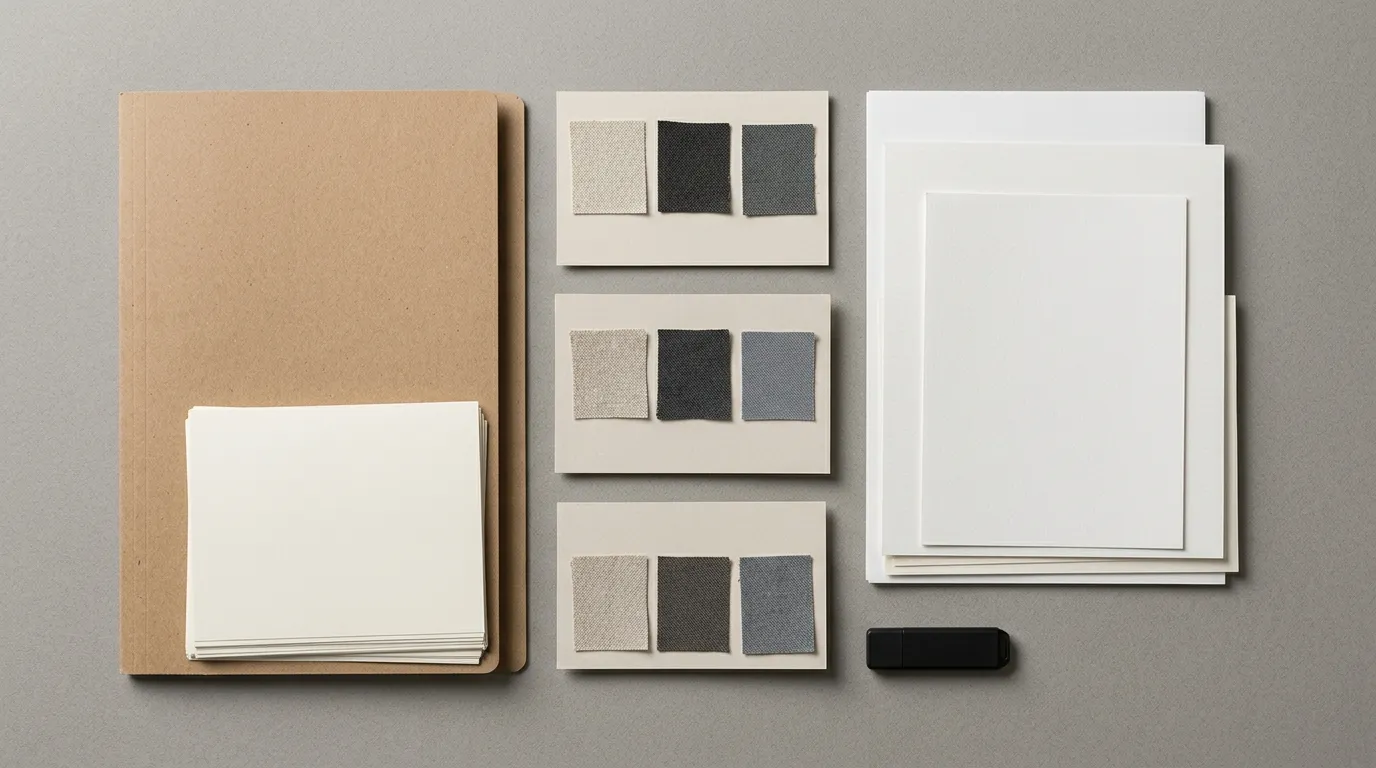
Before you send anything, decide what the manufacturer actually needs for the immediate task, document that the design is yours, and agree in writing on confidentiality and permitted use.
Five steps cover most of the risk:
- Define the current task — capability check, costing, or sampling — and share only what that task requires.
- Prepare a limited packet rather than the full concept.
- Request the manufacturer's standard NDA, or send your own, before detailed files move.
- Mark every file as confidential and name the recipient.
- Save dated records of your own work and of everything you send.
Maker's Row's guide to protecting clothing designs recommends limiting information to what is needed to start production rather than sending the entire design concept immediately (Maker's Row, 2024). Briffa Legal recommends retaining dated creation records, because proving when a design was created often matters more than proving who saw it first (Briffa Legal, 2022). A well-built tech pack is the practical way to control what you disclose: according to Minghang Garments, a tech pack can communicate measurements, construction, fabric, artwork placement, trims, labels and packaging requirements, so the factory does not have to ask for extra material.
What should an NDA with a clothing manufacturer cover — and what can it not do?
A non-disclosure agreement is a contract that defines what information must stay confidential, who may see it, and what the recipient may do with it. An NDA protects secrecy; it does not by itself establish who owns your artwork, patterns or grading.
Maker's Row recommends NDAs as part of a clothing design protection routine, alongside a separate production agreement that defines design ownership and the manufacturer's responsibilities (Maker's Row, 2024). That pairing is the point: confidentiality and ownership are two different promises, and one does not deliver the other.
What an NDA should cover
- The information treated as confidential: artwork, print files, tech packs, patterns, grading, sample photos, buyer names and pricing.
- Who inside the manufacturer is allowed access.
- The permitted purpose — your product only, not other clients.
- How long the duty lasts after the relationship ends.
- Return or destruction of files and physical samples on request.
- A statement that the manufacturer will not use your design for its own products or other customers.
What an NDA cannot do
An NDA cannot register a copyright, trademark, design right or patent on your behalf, and it cannot stop a third party who never signed it. If the manufacturer develops a new pattern or adjusts a sample, ownership of that development belongs to whoever the contract says it belongs to — which is why the ownership clause matters as much as the confidentiality clause.
How should ownership of artwork, patterns, grading, and sample changes be stated in writing?
Ownership should be stated asset by asset, naming what transfers, what stays with the manufacturer, and what is licensed only for your orders.
Vague phrases such as "all designs remain the property of the client" are usually not enough, because a manufacturer's pre-existing block or an in-house pattern maker's file may sit outside that sentence. Maker's Row recommends that production agreements define design ownership together with the manufacturer's responsibilities, rather than leaving ownership to the NDA (Maker's Row, 2024).
| Asset | Question to answer in writing | Why it matters |
|---|---|---|
| Artwork and print files | Does the brand own the artwork outright, or is the manufacturer licensed to use it only for this order? | Print files can be reused on other products or clients if their use is not limited |
| Existing pattern or block | Who owns the manufacturer's pre-existing block if it is adapted for your style? | A factory block may already belong to the manufacturer |
| Newly developed pattern | Does ownership transfer to the brand on payment, or stay with the manufacturer? | New development is often the largest investment in a first order |
| Grading | Who owns the graded size set? | Grading is a separate file from the base pattern and can be reused without it |
| Sample revisions | Who owns changes made during sampling? | Revisions often contain new construction detail worth protecting |
| Approved final version | Which file is the master of record? | Prevents a superseded version from reaching the production line |
For Minghang Garments, ownership is defined in the quotation or agreement, so the question is settled per project in writing rather than assumed.
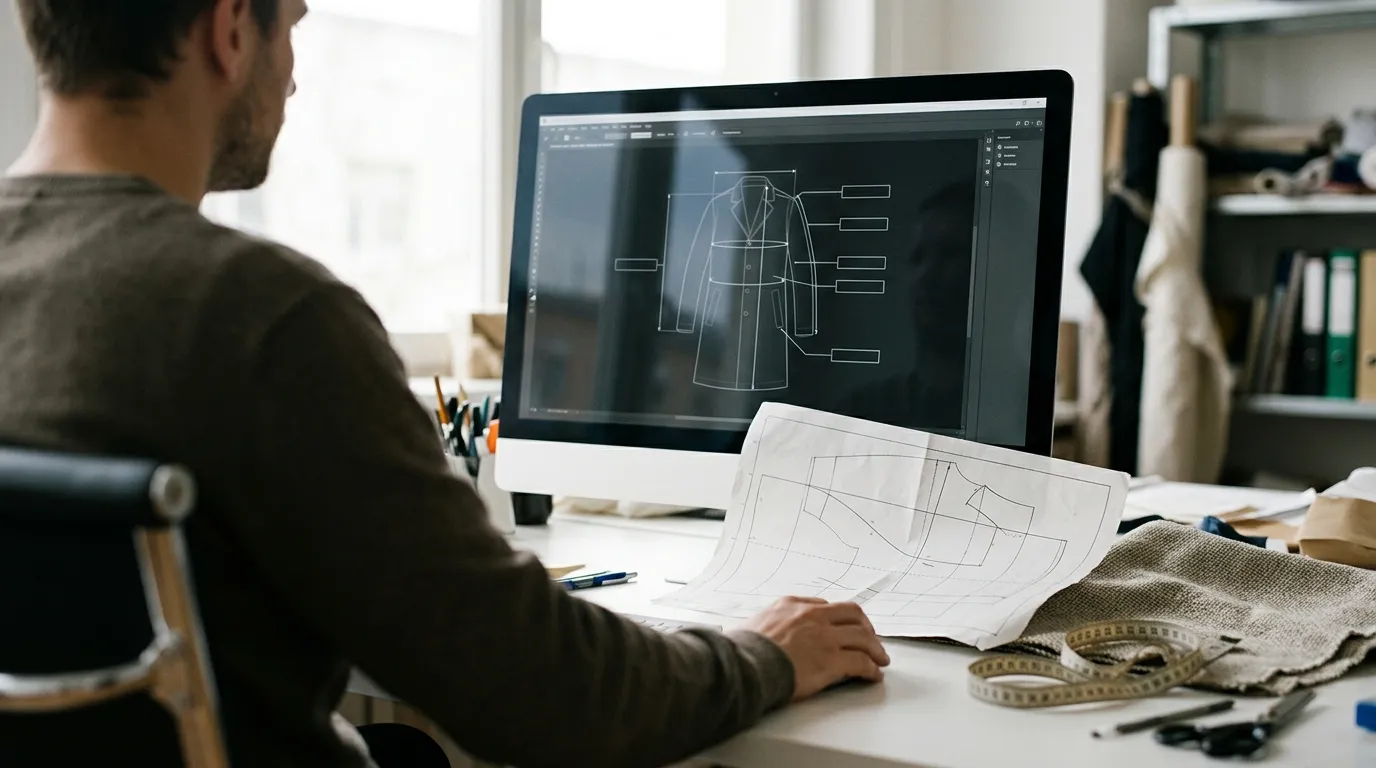
Share only what the current stage requires: general references for a capability check, controlled technical detail for sampling, and full production files once confidentiality and ownership terms are agreed.
Maker's Row's guidance points the same way — limit disclosure to what production actually needs at that point (Maker's Row, 2024). Minghang Garments adds a useful precision step: reference images should clearly identify which details to follow and which to change, so the factory is not left interpreting a mood board.
| Stage | Share | Hold back | Decision rule |
|---|---|---|---|
| Initial inquiry | Product category, target quantities, reference images, general fit intent | Full print files, exact fabric composition, supplier names, final grading | Share enough to check capability and costing, nothing more |
| Sampling | Tech pack, measurement specs, artwork placement, trims | Unpublished marketing plans, supplier names, the full size range | Move to detailed files only after the NDA is signed |
| Pre-production | Approved sample, final artwork, labels, packaging | Nothing beyond the approved production files | Proceed only once ownership and permitted-use terms are in writing |
| Bulk production | The cutting, sewing, printing and packing files the order needs | Files for products that are not yet ordered | Restrict file access to named production contacts |
What should a production or development agreement say about confidentiality, permitted use, reproduction, and surplus units?
The production agreement should repeat the confidentiality duty, limit use of your design to your orders, prohibit reproduction without authorisation, and state how samples, rejects and surplus units are handled.
Use this checklist before approving the agreement:
- No use of your design for other clients or for the manufacturer's own label.
- No sale of surplus, rejected or cancelled-order units.
- No reproduction or re-cutting after the order is completed or the relationship ends.
- Return or destruction of files, samples and patterns when the relationship ends.
- Named contacts for design approvals, so informal verbal changes do not override the signed documents.
- Which version of the tech pack governs production, and how revisions are issued.
This is where most practical disputes start: not with a stolen print, but with a reorder of a "dead" style that the factory believed it still owned the pattern for.
What design files and dated records should you keep?
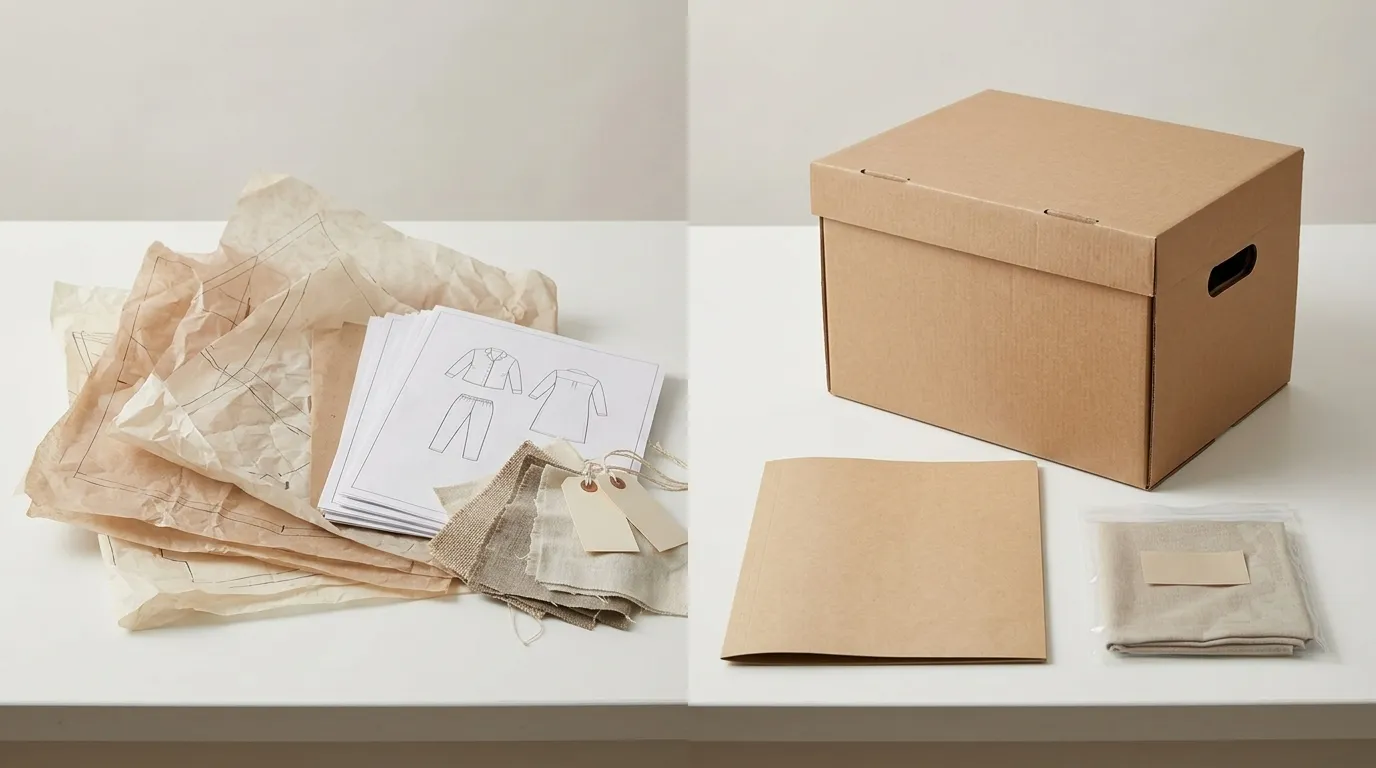
Keep dated concept files, tech packs, artwork versions, approval emails, signed agreements and sample comments in one controlled register, so you can show what existed, when, and who approved it.
Briffa Legal's guidance on protecting clothing designs includes retaining dated creation records as a basic evidence practice (Briffa Legal, 2022). The same discipline applies to what moves between you and the factory: a controlled record of design files for clothing manufacturing keeps versions and approvals traceable instead of scattered across email threads.
| File type | What to record | Why |
|---|---|---|
| Concept and artwork | Creation date, author, version number | Supports a dated record of your own work |
| Tech pack | Issue date, revision number, who approved it | Establishes which specification governs production |
| Pattern and grading | Who created the file, which base pattern it derives from | Clarifies whether the file is yours, licensed, or factory-owned |
| Sample comments | Date, sample round, reviewer, decision | Shows the approved construction detail at each stage |
| Signed agreements | NDA, quotation, production agreement, revisions | Provides the written terms that govern the relationship |
How do copyright, trademarks, design rights, and patents differ — and why does jurisdiction matter?
Copyright generally protects original graphic and artistic elements, trademarks identify brand source, design rights can protect product appearance, and patents protect inventions. Which of these applies to your garment, and how you enforce it, depends on the jurisdiction where you sell.
Briffa Legal describes copyright, design rights, trademarks and patents as potentially relevant categories for clothing design protection (Briffa Legal, 2022). Bycer & Marion distinguishes trademarks, which generally identify brand and source, from copyright, which generally concerns the design or the design printed on apparel (Bycer & Marion).
| Right | What it generally covers | Jurisdiction note | Source |
|---|---|---|---|
| Copyright | Original graphic and artistic elements, such as prints, surface patterns and wording | Briffa Legal's 2022 explanation is UK-focused and its scope and duration details should not be assumed to apply elsewhere | Briffa Legal, 2022 |
| Trademark | Signs that identify the brand and its source | Bycer & Marion distinguishes trademarks from copyright in this way; registration systems vary by market | Bycer & Marion |
| Registered design rights | The appearance of a product | Briffa Legal notes registered and unregistered rights exist alongside each other under UK rules | Briffa Legal, 2022 |
| Unregistered design rights | Certain designs, without registration | Briffa Legal notes UK unregistered design rights differ in scope and duration from registered rights | Briffa Legal, 2022 |
| Patent | Inventions | Rarely the right route for a garment shape; confirm with a qualified adviser in your market | Verify with the supplier |
The practical rule: verify rights in every market where you sell, with a qualified local adviser, before you rely on any single category.
How Minghang Garments handles client design confidentiality
Minghang Garments states a clear position on design confidentiality: client designs are treated as confidential, non-disclosure agreements are available on request, and ownership is defined in the quotation or agreement.
That means the ownership question is settled in writing for each project rather than assumed. Brands that want to confirm general working details before sending files can review the faqs.
FAQ
How do I protect my design from being copied?
Layer the protections rather than relying on one. Use an NDA for confidentiality, state ownership of artwork and patterns in the production agreement, share files by stage, and keep dated records. No single step guarantees that copying cannot happen, so confirm which rights apply in each market you sell in with a qualified local adviser.
Is my T-shirt design protected by copyright?
Copyright may cover original graphic and artistic elements, such as a print or wording. Briffa Legal's 2022 explanation is UK-focused, so scope, registration and duration rules differ in other markets. Verify the position for each country where you sell rather than assuming one rule applies everywhere.
Are fashion designs protected by copyright?
Some elements may be, while functional garment shapes and brand names generally rely on other rights. Bycer & Marion distinguishes trademarks, which identify brand and source, from copyright, which concerns the design or the design printed on apparel. Which category fits your product depends on the design element and the jurisdiction.
-
Share
-

-

-