 Contact Us


Contact Us
Updated 1 month ago
How to Find a Reliable Clothing Manufacturer in China?
arafatshuvo
A reliable clothing manufacturer in China is one you have verified, not just one with a strong website. Confirm the legal entity and production site, check audit and certificate scope, visit or walk the factory live, approve a sample, review the QC process, and fix payment terms in writing before you pay a deposit.
This page sets out nine checks to complete, in order, before a deposit leaves your account.
What Makes a Clothing Manufacturer in China Reliable?
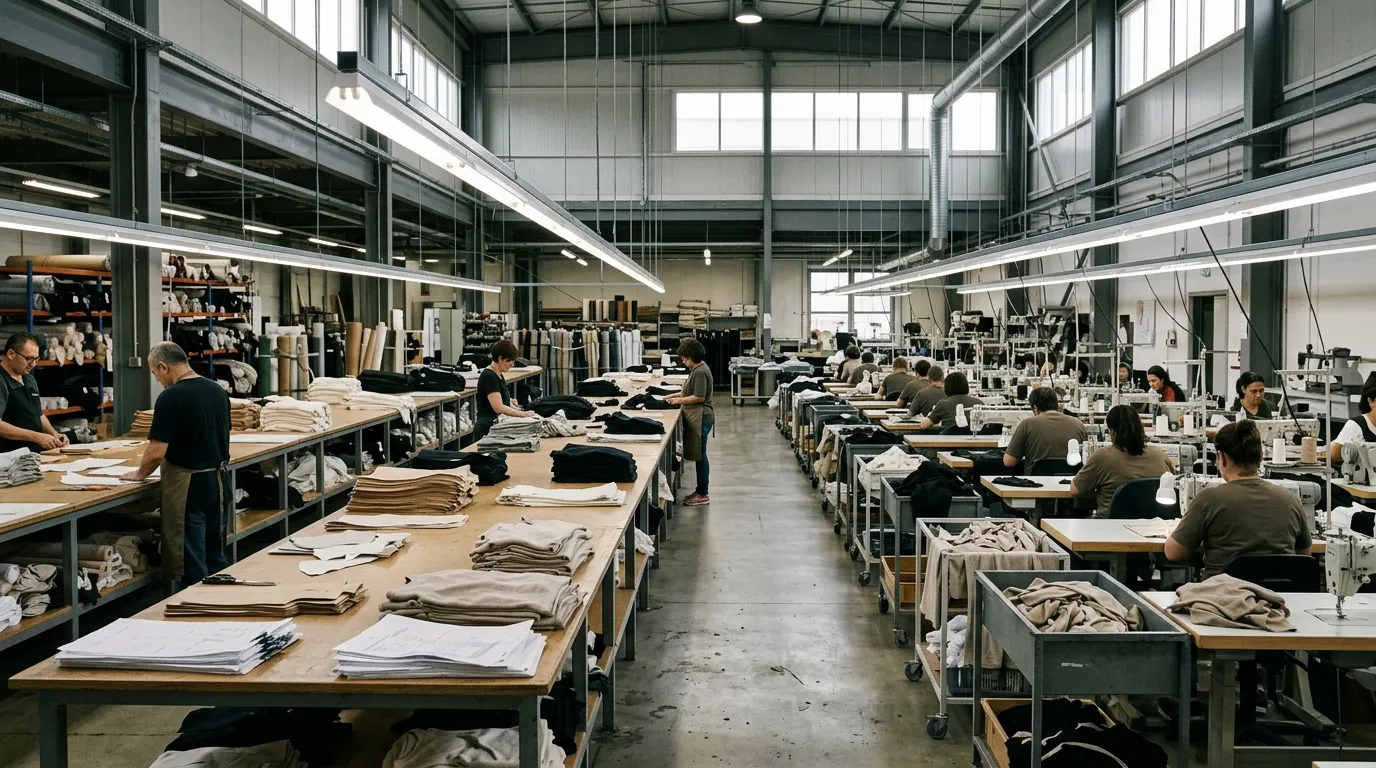
A reliable clothing factory is one whose identity, production site, quality controls and commercial terms you can evidence before you order. Reliability is a set of verified checks, not an impression formed from a website or a quote.
According to Easson Apparel's 2026 guide to Chinese clothing manufacturers, the verification checks buyers rely on most are product-category fit, minimum order quantity (MOQ), sampling, quality control (QC), certification and compliance, and quote comparison. A supplier-authored LinkedIn post from Guangzhou RuixI Clothing Co., Ltd. recommends a similar starting set: evaluate product specialization, MOQ, customization, capacity and sample availability before going further.
Two things follow from that. Reliability has more than one dimension, so a factory can be compliant and still be a poor fit for your garment. And every dimension is checkable with documents, samples and visits, which is why the rest of this page works as a sequence rather than a list of opinions.
Where Do Buyers Find Chinese Clothing Factories — and Why Isn't a Listing Proof?
Directories, B2B marketplaces and sourcing platforms are useful for building a shortlist, but none of them is verification. Sewport describes its own service as connecting brands with China-based clothing manufacturers and presents customer testimonials about supplier discovery and payment through its platform — a clear commercial interest in the transaction it facilitates.
That does not make listings useless. A listing tells you a supplier exists and wants inquiries; it does not tell you who owns the production site, what an audit covers, or whether your order will be made where you think. Use listings to assemble 10–20 candidates, then apply the checks below to narrow the field.
How to Verify a Chinese Clothing Factory: 9 Steps Before You Pay a Deposit
Work the nine checks in order. Each one either removes a supplier or gives you documented evidence to continue safely.
Step 1: Confirm who you are actually dealing with
Start with the contracting legal entity, the production-site address, and who owns that site. A clothing factory, a trading company and a sourcing agent carry different costs, control and risk, and the entity that quotes you is not always the entity that sews your order.
KnitSeek advises confirming the contracting entity, factory ownership, assigned production site and commercial terms — in its profile of one large supplier, those are four separate facts that buyers often assume are the same thing. Ask for registration details for the quoting entity, the address of the site that would run your order, and written confirmation of which entity signs the purchase order.
Step 2: Check audits and certificates properly
A certificate is evidence only when you verify its number, issuer, scope, validity dates, site address, legal entity and audit date. Easson Apparel advises checking exactly those details, and scope is the reason: a certificate applies to a named entity, at a named site, for defined processes or products, over a defined period.
[DIAGRAM: certificate scope map — four bands showing that a certificate covers a named entity, a named site, defined products or processes, and a defined period, not automatically your material or order]
Minghang Garments' website displays the claims "BSCI Audited" and "ISO 9001 Certified." Treat these, like any supplier's, as company-published claims until you have seen the documents: the published material does not establish the certificate's scope, issuer, site coverage or validity. Certificate scope varies by material and order, so a valid document for one product line does not automatically cover the fabric, trims or process you are buying.
Step 3: Visit the factory or run a live virtual walkthrough
A visit or a live virtual walkthrough lets you see the actual production line, equipment and workforce behind your quote. It is strong supporting evidence and weak standalone evidence: what you can see confirms visible operations, not ownership, compliance, capacity or order-specific quality.
[DIAGRAM: verification flow — listing → entity and site → certificate scope → visit or live walkthrough → sample approval → QC evidence → written payment terms, with pause points marked]
Use the walkthrough to test what the documents claim. If the site address you confirmed in Step 1 is the one you are walking, and the equipment matches the processes your garment needs, you have corroboration. If the walkthrough is a recorded video sent on request, treat it as a marketing asset rather than a verification step.
Step 4: Test with samples before bulk
Request samples for your exact product category, then inspect fabric, stitching, fit, decoration and packaging against your specification, not against the sample photo on a website. The Guangzhou RuixI Clothing Co., Ltd. post recommends checking precisely those five areas on samples before committing.
[DIAGRAM: sample-to-bulk control strip — approved sample → written spec → QC checkpoints → pre-shipment evidence]
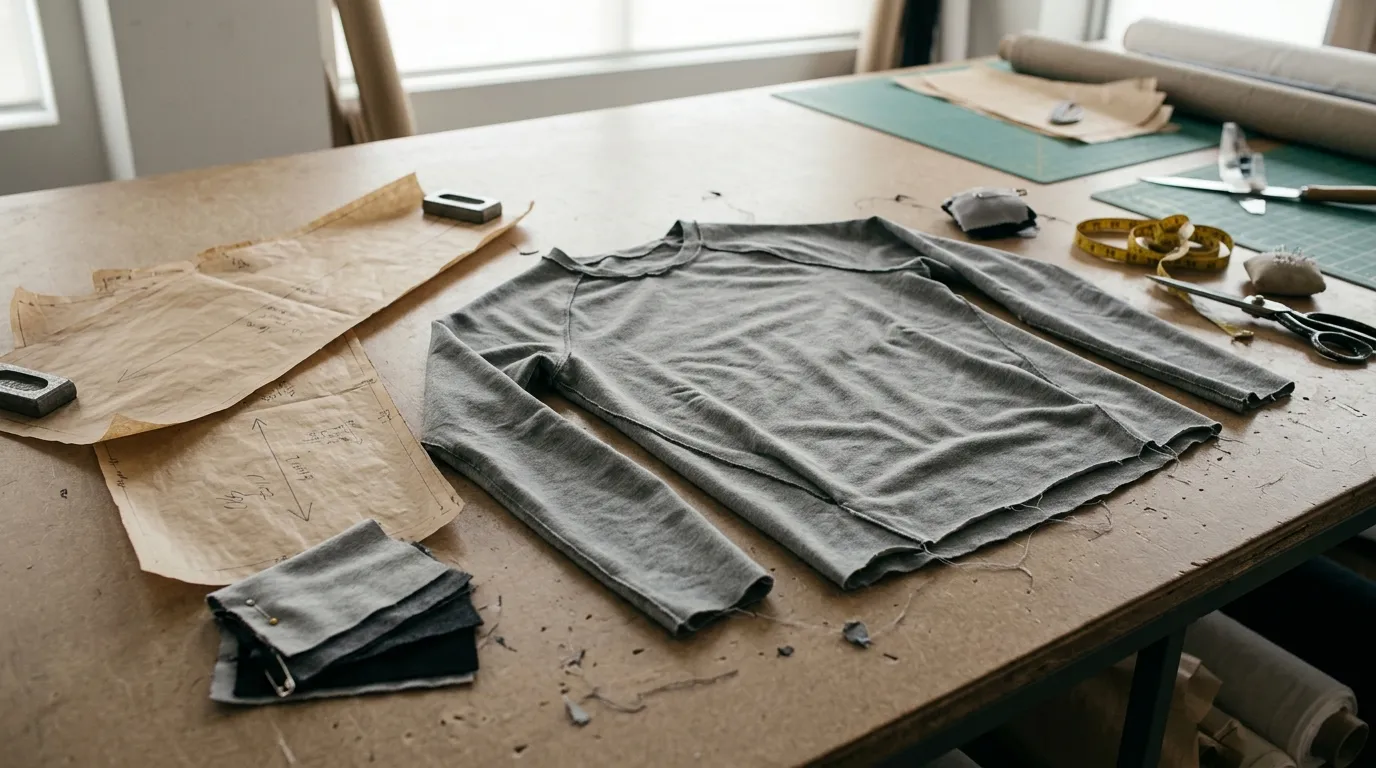
Brief the factory properly first: send your specification, measurements, fabric preference, decoration and packaging requirements so the sample tests the supplier rather than your brief. Record your comments in writing, have one version approved, and name that approved sample as the bulk-production reference. A sample that differs from the approved reference is then a documented problem rather than a matter of taste.
Step 5: Ask for the QC process, records and defect handling
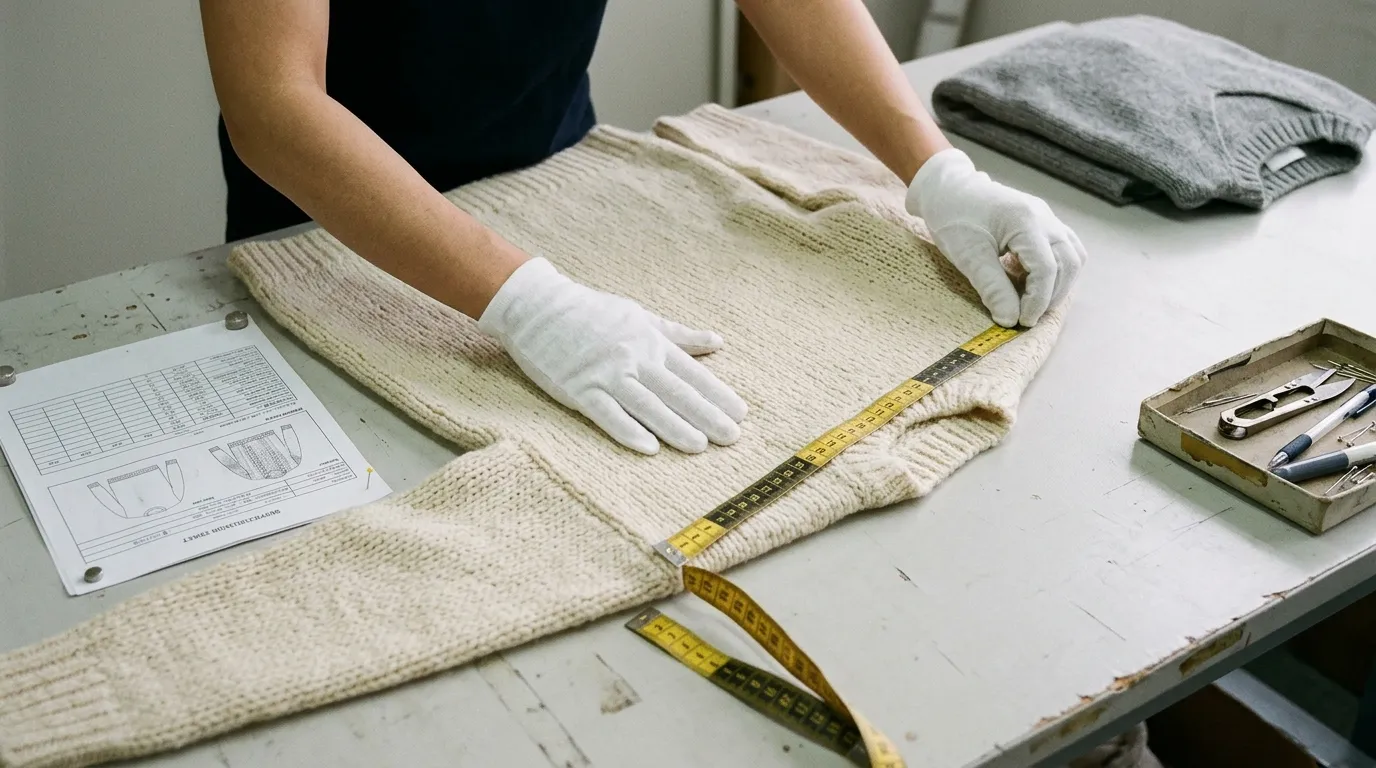
Ask what is checked, at which stage, by whom, and with what record — and how defects are escalated when something fails. "Quality assured" is not evidence; a checkpoint list and inspection records are.
Minghang Garments' website states that the company uses a 5+1 QC system and describes 100% final inspection as one of its checks. That is a company-published claim and a useful example of the level of detail to request, not an independent audit result. You can see how such a process is structured on the 5 1 step qc system page. When comparing suppliers, ask what the inspection actually covers: an inline workmanship check is a different control from a final inspection against your approved sample.
Step 6: Verify category fit, equipment and realistic capacity
Match the factory's proven product categories to your garment, and ask which site and what capacity would actually cover your order. Category fit matters more than general apparel experience: a factory that makes excellent knit T-shirts may have no relevant equipment or pattern experience for structured activewear, and the reverse is equally true.
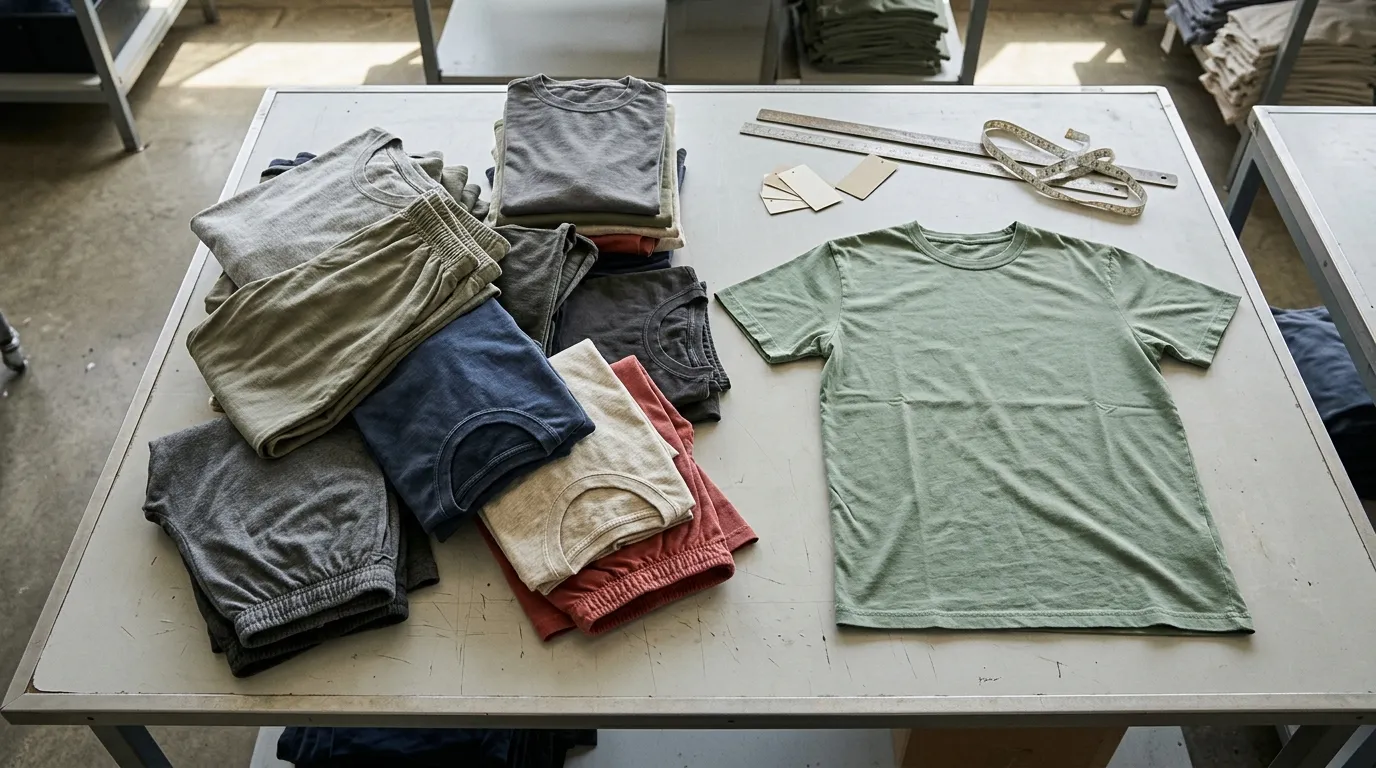
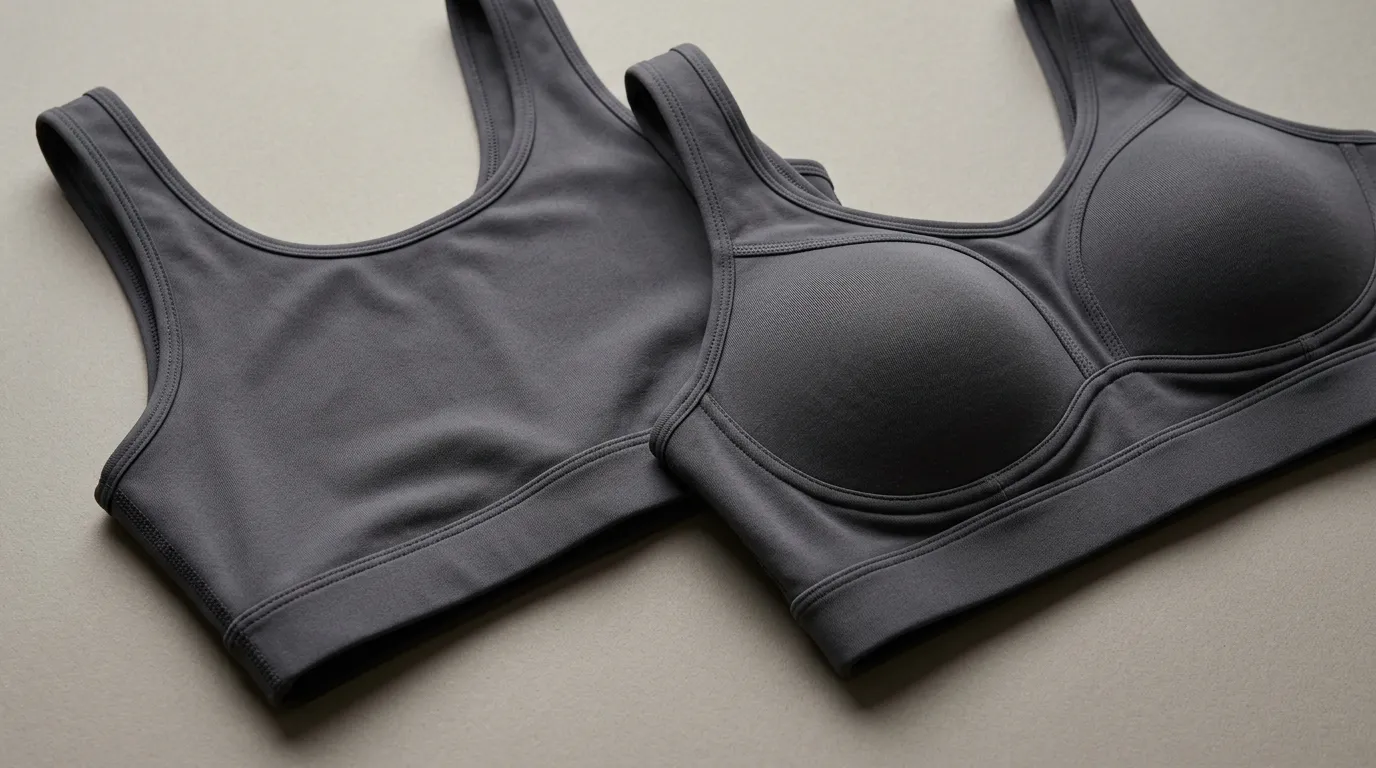
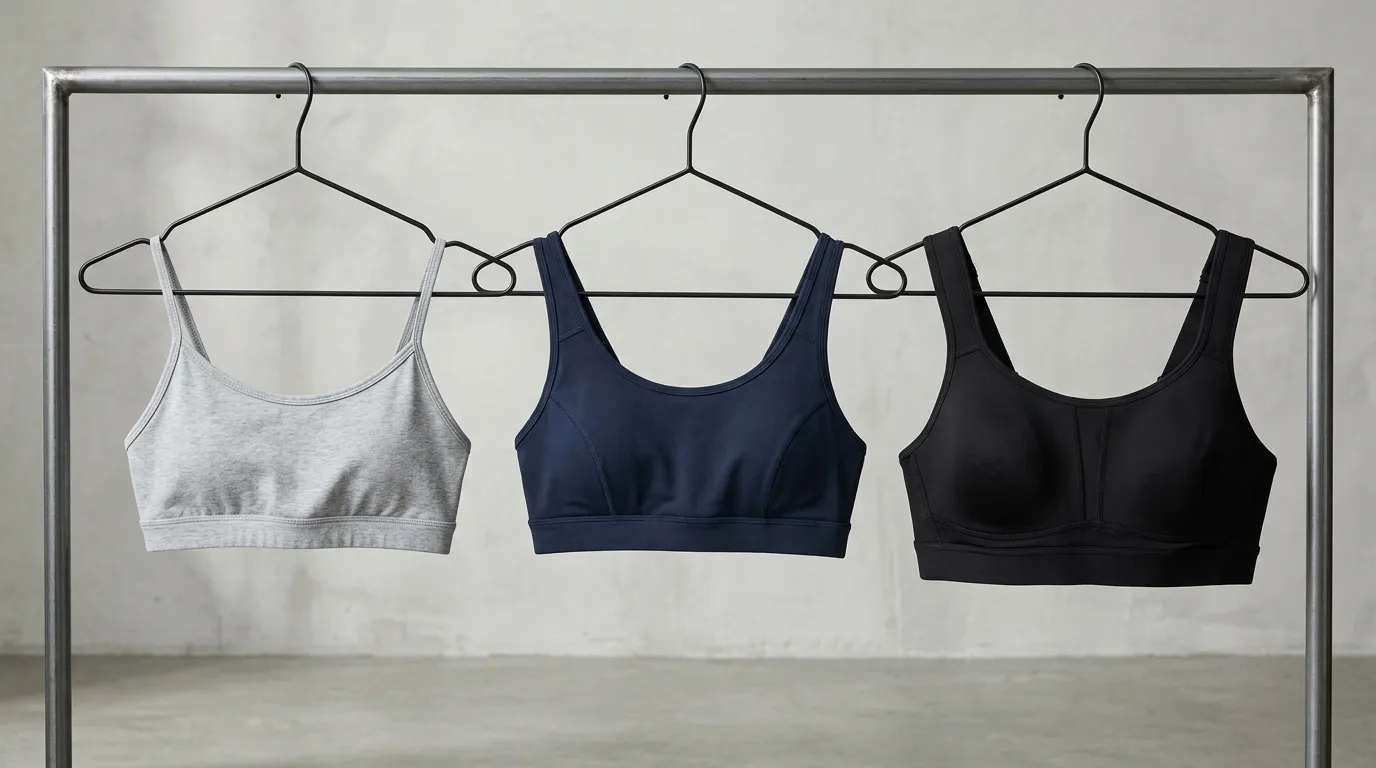
Minghang Garments manufactures activewear, sportswear, loungewear and streetwear — including sports bras, leggings, shorts, hoodies, sweatshirts, sweatpants, joggers and T-shirts — and lists its manufacturing capabilities as one supplier's own account of its range and processes. For scale context, the company is based in Dongguan, has operated since 2017, runs a 12,000 m² production floor and a 2,000 m² sample center, and states capacity of up to 500,000 pcs/month. Ask any supplier the equivalent questions and confirm the answer covers your order window rather than the annual headline.
Step 7: Lock quotation, payment terms and milestones in writing
A quotation should specify what is included, and the payment schedule should tie the deposit and balance to written specifications, sample approval, production milestones and inspection arrangements. No percentage or schedule is universal, so require the terms you agree to be recorded in the purchase order with reference to the approved sample and specification.
Ask what the quote excludes — shipping terms, duties, testing, packaging, labelling or decoration setup — because gaps between competing quotes usually reflect different inclusions rather than different pricing. If you are still narrowing your candidate list, the criteria on how to choose a clothing manufacturer cover the wider supplier-selection stage beyond payment terms.
Step 8: Compare MOQ, sample time and lead time as ranges
Treat MOQ, sampling time and production lead time as conditional ranges, because they move with fabric, colourways, size breaks, trims, decoration, packaging, season and capacity, according to Easson Apparel. A supplier quoting a single fixed number for every scenario is simplifying or guessing.
For one labelled example, Minghang Garments states MOQ from 100 pcs per colour per style on stock fabric, sampling in 7–15 working days and bulk production in 25–45 days. Those figures are this supplier's stated basis on stock fabric, not a market standard or a promise for your order — confirm the MOQ and timeline that apply to your fabric, colour count and decoration before committing.
Step 9: Warning signs that should pause the order
Five signals justify pausing rather than proceeding: pressure to pay before documents are shared; refusal to show the production site; vague answers about QC checkpoints and records; certificate images with no scope, site or dates; and quotes or MOQs that change without a stated cause.
Each maps to a check earlier in this list, which is why the sequence matters. None is proof of bad faith on its own — a smaller factory may hold no certificate at all — but an unanswered document request is a fact you can act on before money moves.
| Check | Evidence to request | What it verifies | Caveat |
|---|---|---|---|
| Entity and site | Registration details, production-site address, order signatory | Who you contract with and where goods are made | Factory, trader or agent changes cost and control |
| Audit and certificate | Certificate number, issuer, scope, validity, site, legal entity, audit date | Whether a standard actually applies | Scope varies by material, product and order |
| Visit or walkthrough | Dated site visit or live walkthrough | Visible operations and equipment | Does not prove ownership, compliance or order quality |
| Sample | Approved sample plus written comments | Category fit, workmanship, decoration, packaging | Only the approved version becomes the bulk reference |
| QC | Documented checkpoints and inspection records | How quality is controlled and defects handled | Confirm what the inspection covers |
| Commercial | Written quote, payment schedule, MOQ and timelines | Terms, milestones and conditions | MOQ and lead times are conditional ranges |
| Capacity | Site and capacity allocated to your order window | Whether the site can run your volume | Annual headline capacity is not an order guarantee |
Pre-Deposit Verification Checklist
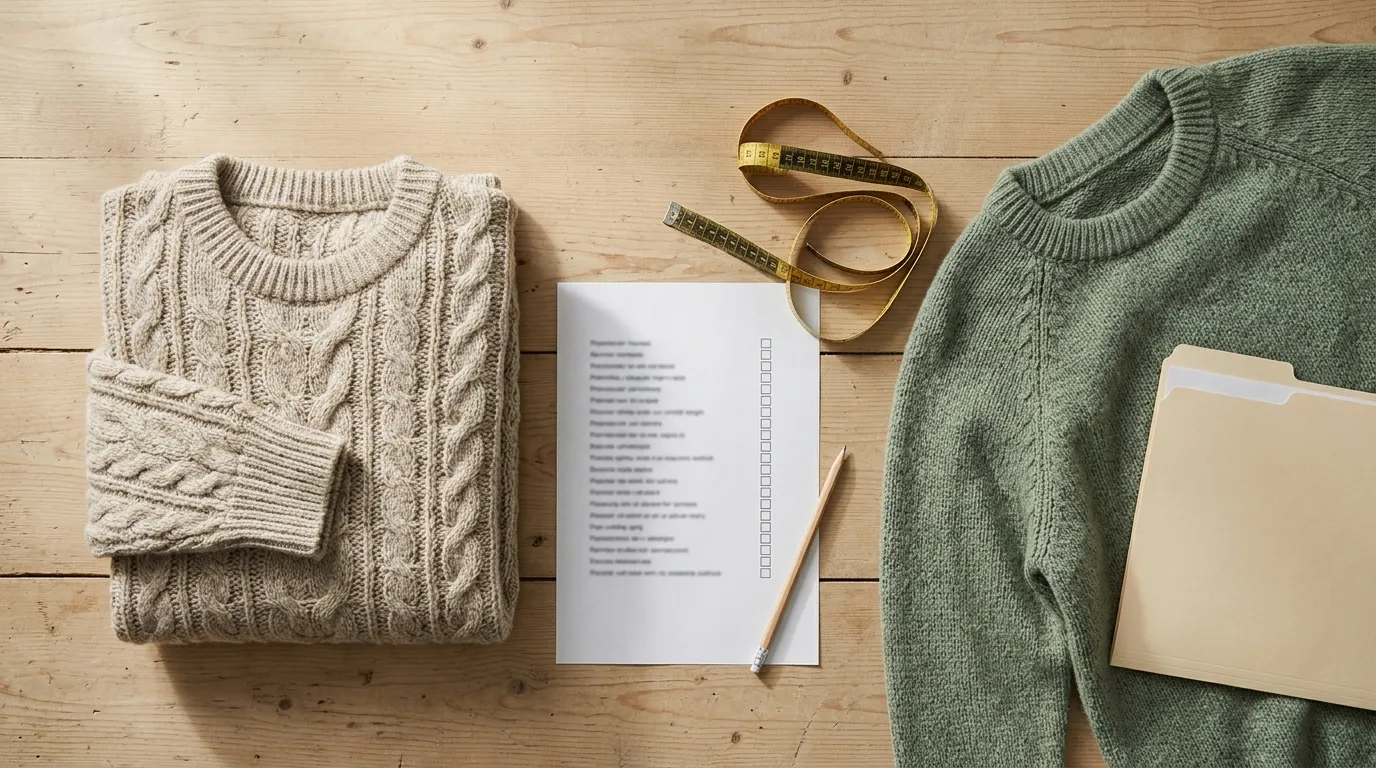
If you can tick all seven items below in writing, you have completed the checks on this page. If you cannot, keep verifying.
- Contracting legal entity and the address of the production site confirmed.
- Certificate details — number, issuer, scope, validity dates, site address, legal entity and audit date — reviewed.
- Factory visit or live walkthrough completed and dated.
- Sample approved in writing against your specification and named as the bulk reference.
- QC checkpoints, records and the defect process described by the factory.
- Quote line items, MOQ conditions and timeline ranges documented.
- Payment schedule tied to specification, sample approval, milestones and inspection.
Minghang Garments publishes its own claims, including BSCI audit and ISO 9001 certification, on its why us page. Read any supplier's version of this with the same standard you applied above: company-published claims are a starting point for verification, not the verification itself.
How long should verification take before I place a deposit?
There is no fixed duration, because it depends on document turnaround, how many sample rounds you need, and whether you book a site visit. Treat it as a sequence rather than a deadline: the order moves forward when each check is documented, and payment happens only after all seven checklist items are complete.
Do I need a third-party inspection or sourcing agent?
A third-party inspection or agent can help when you cannot visit the site or want independent eyes on a shipment, but the underlying checks do not change. Confirm who the agent contracts with and who pays them, since an agent paid by the factory has a different incentive from one paid by you.
What if a supplier refuses a factory visit or audit?
A refusal to show the production site is a pause signal, not automatically a disqualification. Some factories decline unannounced visits for security or scheduling reasons, and a live walkthrough or a documented audit report may be an acceptable substitute. Ask what alternative evidence they can provide, and treat a flat refusal with no alternative as a reason to keep looking.
Is a very low quote a sign of an unreliable manufacturer?
Not on its own. Compare quote line items, MOQ conditions and exclusions side by side, because unexplained gaps between quotes usually reflect different inclusions — packaging, decoration, testing or shipping terms — rather than genuinely better pricing. If a supplier cannot explain the difference in writing, that is the problem, not the number.
-
Share
-

-

-