 Contact Us

Table of Contents

Contact Us
Updated 4 weeks ago
How to Choose a Streetwear Clothing Factory in China?
arafatshuvo
Choose a streetwear clothing factory in China by testing four things against your own design: heavyweight fabric sourcing, pattern and fit development, coordinated washing and decoration, and sample quality that survives a wash test. Ask for evidence at each step — swatches, a graded measurement chart, pre- and post-wash measurements and a sample in your intended fit — rather than accepting a supplier page that simply says "streetwear."
Key takeaways
- Streetwear capability is proven by construction, fabric weight and finish evidence on your own product, not by the word "streetwear" on a supplier page.
- Sanchuan Apparel's 2026 guide describes premium hoodies as commonly using 320–400 GSM fleece; treat that as one source's guidance and confirm the exact weight and composition your design needs.
- Shrinkage cannot be assessed from a claim. Ask for pre- and post-wash measurements on the actual fabric and construction.
- Minghang Garments states MOQ from 100 pcs per color per style on stock fabric, sampling of 7–15 working days and bulk of 25–45 days.
- Confirm which processes — especially washing and decoration — run in-house and which go to named subcontractors, and who inspects them.
What separates a streetwear-capable factory from a general apparel supplier?
A general apparel supplier can sew a garment; a streetwear-capable factory can reproduce the weight, construction and finish your design depends on, and can show evidence of that on your fabric, your silhouette and your finishing. Test the factory against your exact product rather than against a category label.
QYOURECLO's streetwear manufacturer page is a useful example of the capability list a buyer should test line by line: it lists fleece, polar fleece and French terry fabrics alongside screen printing, embroidery, DTG, labels and packaging. Each claim on a list like that should be tied to something you can request and inspect — a swatch, a specification sheet, a sample or an inspection record. If a factory cannot produce the artifact, treat the claim as unproven.
| What to verify | Evidence to request | Warning sign |
|---|---|---|
| Fabric weight and composition | Mill name, composition, weight, physical swatch | Only a verbal "we can source it" |
| Fit and pattern | Graded measurement chart plus a sample in your silhouette | Approval based on a photo |
| Wash and finishing | Stated wash method and where it is performed | Process not named, or "we handle it" |
| Decoration | Print or embroidery sample on the production fabric | Sample made on a stand-in fabric |
| Shrinkage | Pre- and post-wash measurements at marked points | No measured result offered |
| Sample-to-bulk consistency | Approved sample and chart used as inspection reference | No written approval record |
| QC documentation | Named checkpoints and inspection stages | "We check everything" |
A practical vetting sequence looks like this:
- Screen the supplier against your product category and order size.
- Confirm the fabric: mill, composition, weight and swatch.
- Confirm fit and pattern: who drafts the pattern, who grades the sizes.
- Confirm washing and decoration: in-house or subcontracted, and who inspects.
- Inspect the sample, including a wash test where washing is involved.
- Confirm QC stages and commercial terms in writing before paying a deposit.
This article does not rank suppliers. It gives you the tests to apply to whichever custom streetwear manufacturer you are evaluating, including those that publish capability pages of their own.
[DIAGRAM: Vetching flowchart — six steps from supplier screen to bulk approval, with "stop / request more evidence" gates at the fabric, sample and wash-test stages.]
Can the factory actually source your heavyweight fabric?
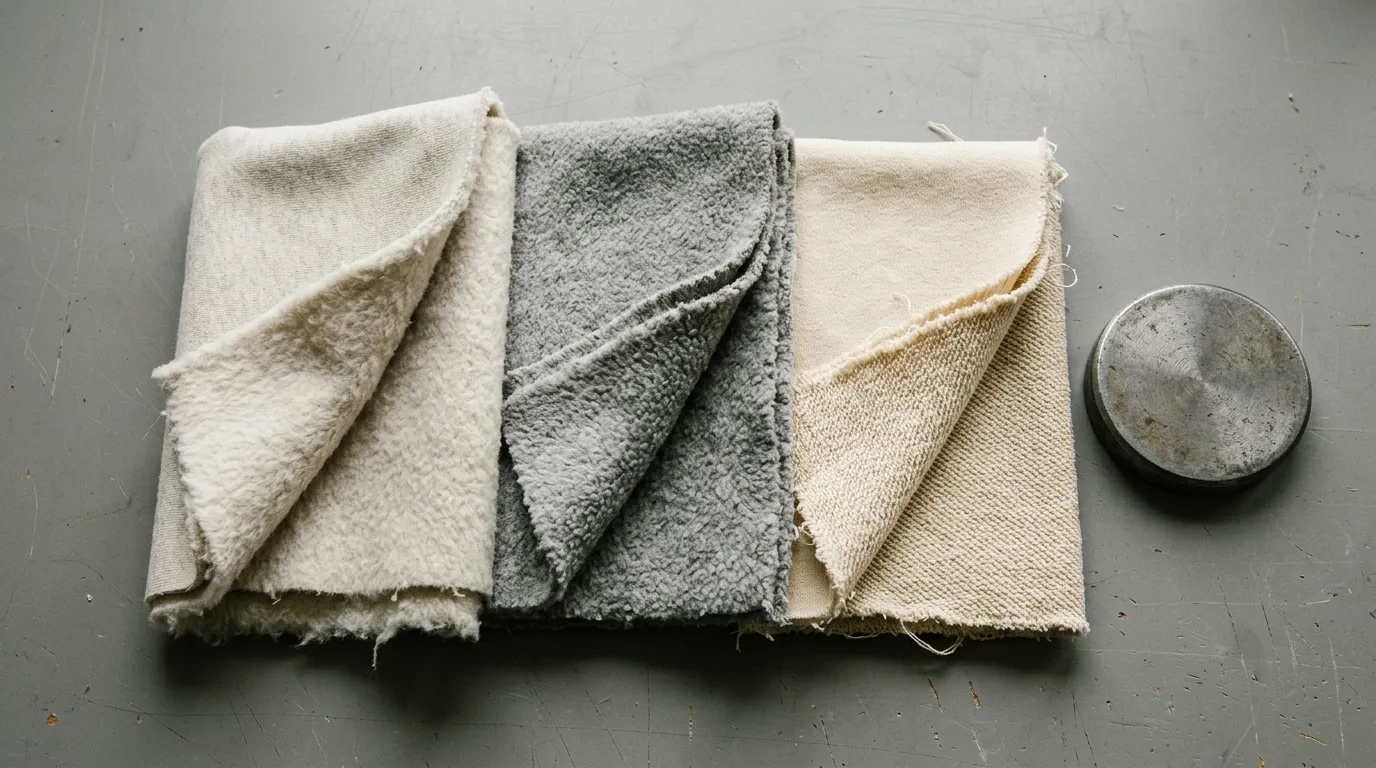
Ask which mill, which composition and which weight the factory can secure for your order, then request a swatch and the fabric details before discussing price. Weight and finish vary widely between mills, so a verbal confirmation is not evidence.
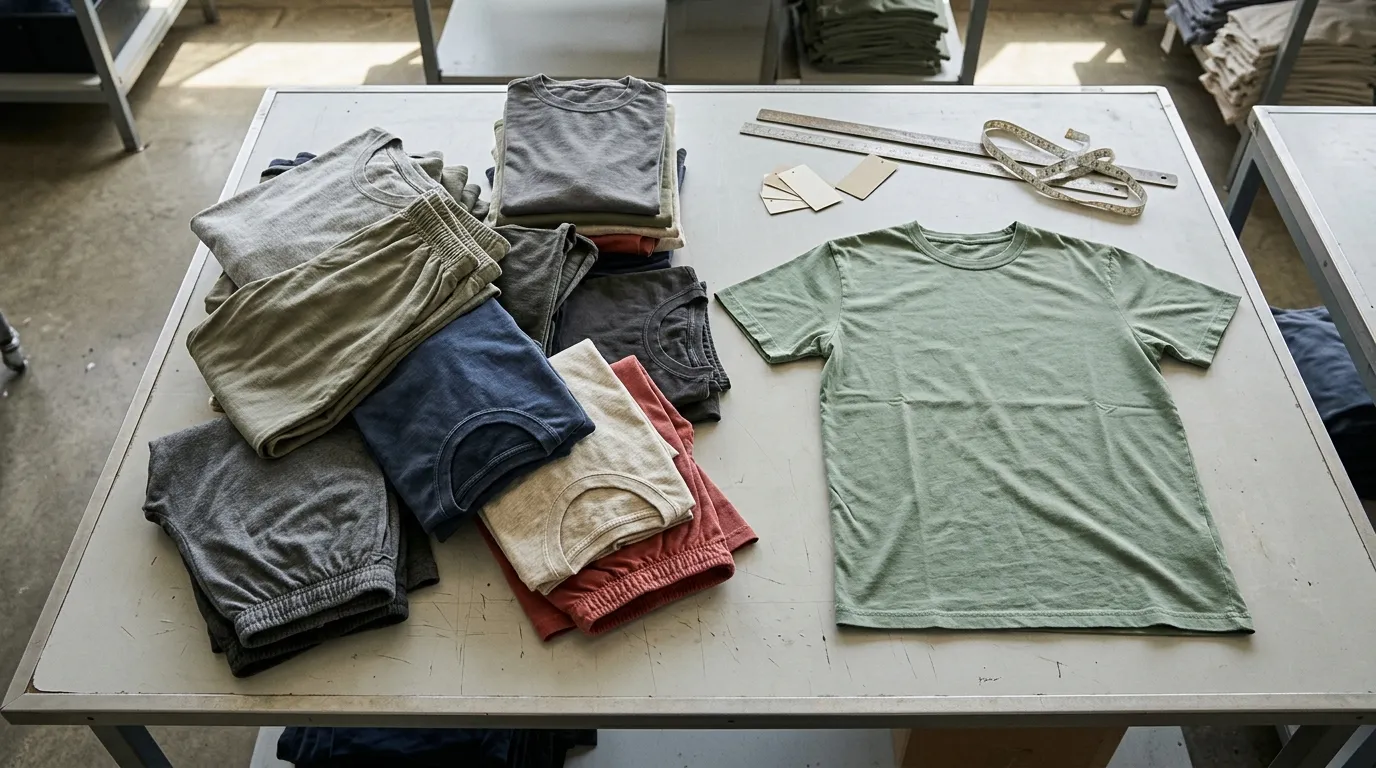
According to Sanchuan Apparel's 2026 guide, premium hoodies commonly use 320–400 GSM fleece, and streetwear construction typically includes elements such as drop shoulders, garment dyeing, washing and decoration. Treat that as that source's guidance rather than a universal specification — the correct weight depends on your design, your target hand feel and the finishing you plan to apply. QYOURECLO's streetwear manufacturer page lists fleece, polar fleece and French terry among its streetwear fabric options, which shows the range of substrates you may need to confirm separately rather than as one "heavy fabric" category.
[PHOTO: Two heavyweight fleece garments side by side, cut and annotated to show shoulder seam position, rib depth and stitch density.]
Questions to ask before accepting a fabric claim
- Which mill produces the fabric, and is it held as stock or ordered in against your order?
- What is the exact composition and weight, in grams per square metre?
- Which colours are available, and how consistent is the shade between dye lots?
- Can the factory supply a physical swatch of the production fabric, not a stock image?
- If the fabric is custom-developed or dyed, what minimum quantity applies?
Note the trade-off: a lighter fabric may hold a printed graphic more cleanly, while a heavier fleece can change how a screen print sits and how the garment drapes after washing. Decide which property matters more before you ask for quotes.
Can the factory build an oversized, boxy fit that matches your design?
Pattern development, not sewing capacity, decides whether an oversized silhouette lands correctly, so request a graded measurement chart and a sample in your intended fit before committing to bulk.
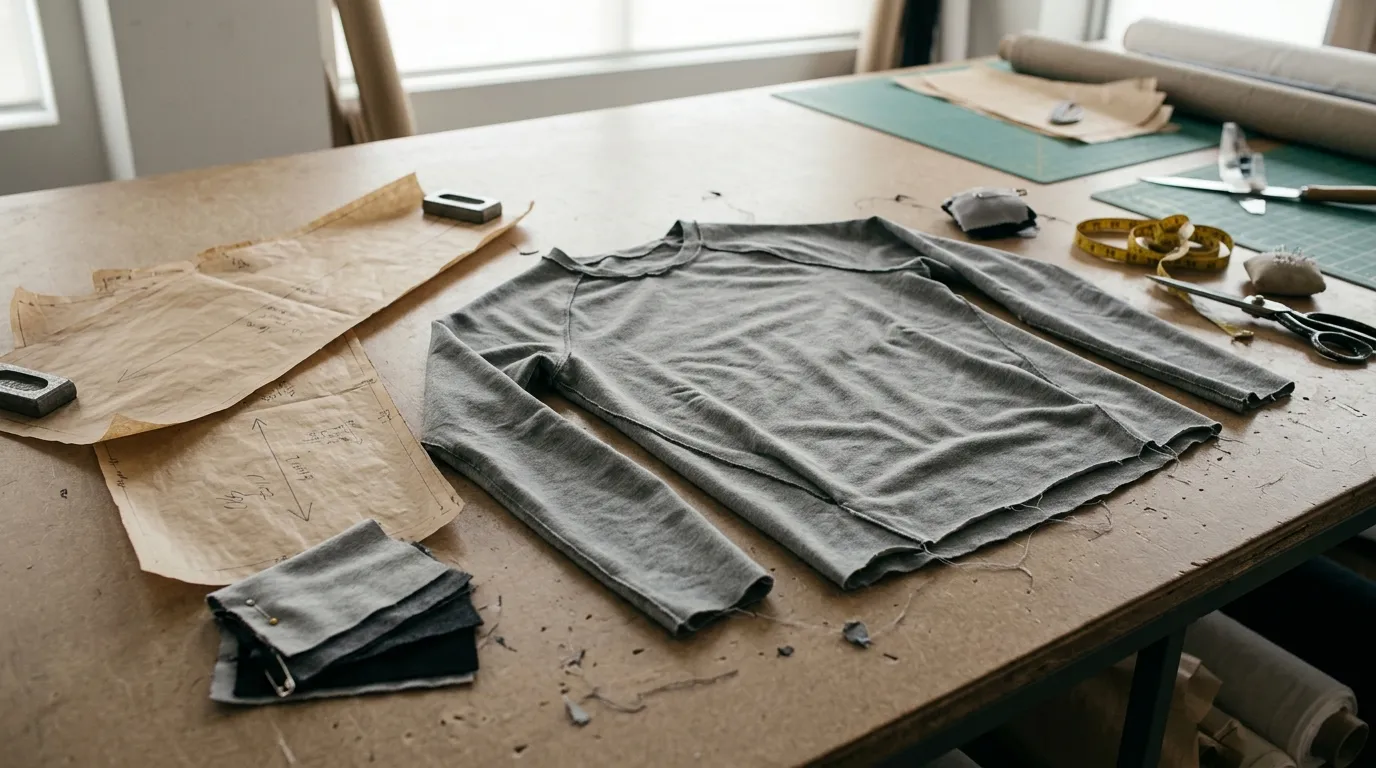
Approve fit on a measured chart plus a worn sample, not on a photograph. The chart should state chest, shoulder, body length, sleeve and hem measurements for every size you plan to sell, so grading errors surface before cutting begins. Sanchuan Apparel's 2026 guide lists oversized streetwear construction elements such as drop shoulders as part of streetwear capability, which is a useful prompt to ask how the factory sets shoulder position and sleeve volume rather than assuming it will match your reference garment.
Ask two direct questions: who drafts the pattern, and who grades the sizes? If the answer names a third party, that is not automatically a problem, but it changes where you send fit corrections and who is accountable for the approved chart.
Are washing and decoration handled in-house or subcontracted?
Ask directly which steps run inside the factory and which go to a named subcontractor, then confirm who inspects the washed or decorated garment before it returns to the sewing line.
QYOURECLO's streetwear manufacturer page states that it offers screen printing, embroidery, DTG, labels and packaging. Minghang Garments lists garment washing, printing, embroidery, labels and packaging among its services on its homepage, and its streetwear page notes that complex wash or decoration programs require additional development outside standard sampling. Those are examples to compare against, not proof of what any other supplier does.
A subcontractor is acceptable only when the factory names it, states who inspects the work, and accepts responsibility for the outcome. Unnamed handoffs are where timing slips and quality disputes start, because no single party owns the result.
How to check print and embroidery quality on the chosen fabric
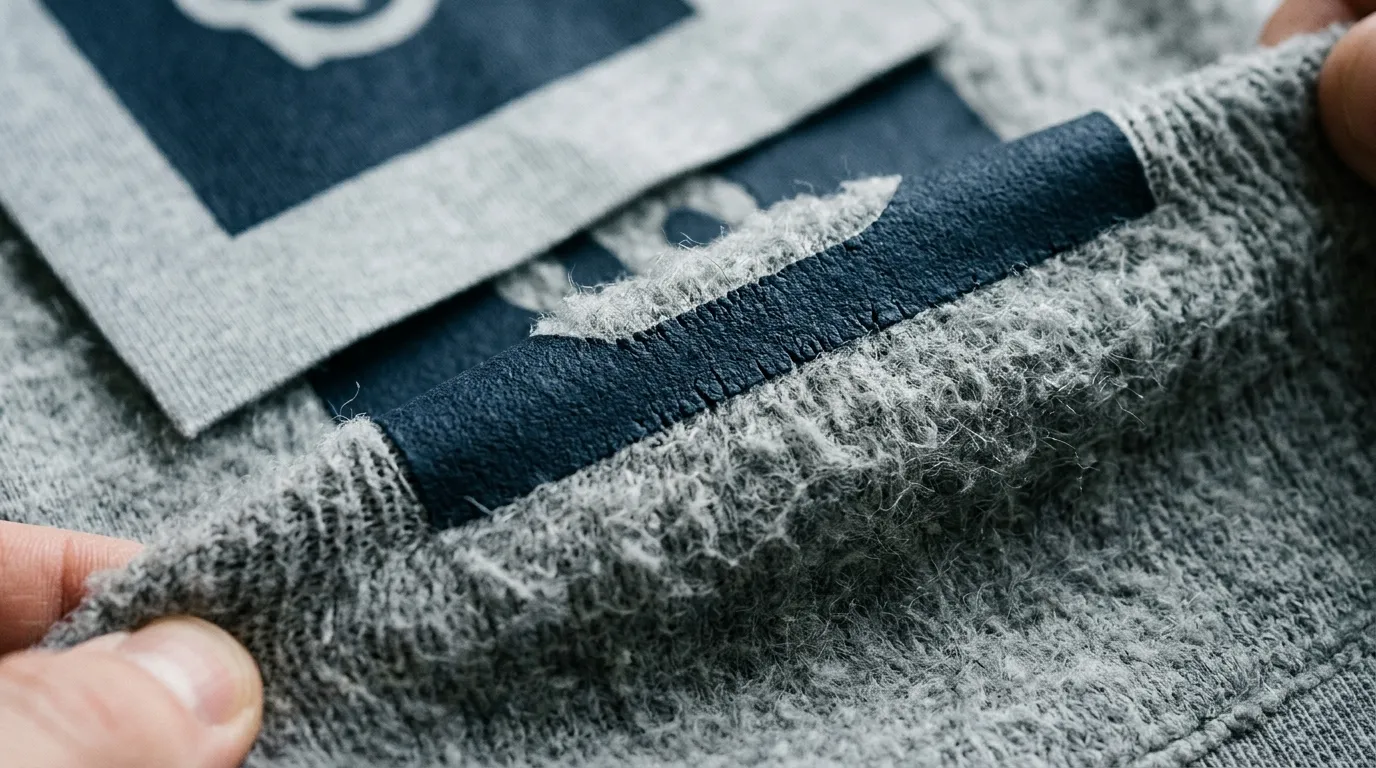
Judge decoration on the production fabric, not a stand-in. A print that looks acceptable on a plain cotton swatch can behave differently on brushed fleece or a garment-dyed base.
- Print: check opacity and coverage on the darkest garment colour, then check whether the print cracks, bleeds or lifts after the strap of the garment is stretched and after washing.
- Placement: measure the artwork position against the approved placement diagram on a finished garment, not on a flat panel.
- Embroidery: check stitch density, registration and backing choice, and look for puckering around the design edges.
- Combination work: where a garment is both washed and decorated, confirm the order of operations in writing, because washing after decoration and decoration after washing produce different results.
Before you ask a factory to confirm which processes sit under one roof, it helps to know what full-service manufacturing capabilities typically cover.
How do you check shrinkage and post-wash dimensional stability?
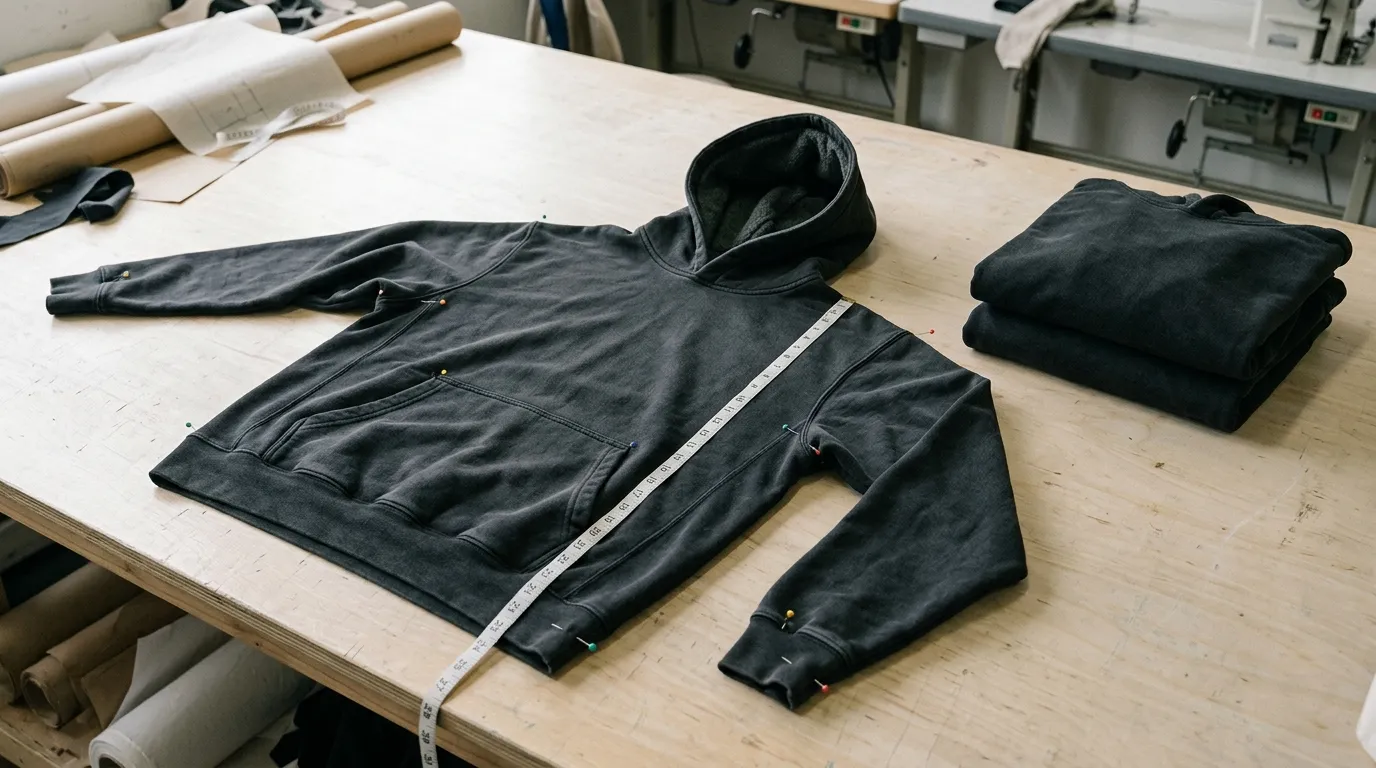
Require pre- and post-wash measurements on the actual fabric and construction, under the stated wash method, temperature and cycle, and compare the results with your approved measurement chart.
Shrinkage is the percentage change in a garment's dimensions after washing and drying. The retrieved sources do not establish a universal streetwear shrinkage tolerance, so ask the factory to state its own method and measured result rather than accepting a general assurance. Minghang Garments' streetwear page notes that complex wash or decoration programs need additional development outside standard sampling, which is a reasonable signal that finishing affects the timeline as well as the measurements.
Run the test yourself on the sample:
- Select the sample or a cut panel in the production fabric.
- Mark and record measurement points before washing — chest, body length, sleeve, hem and any point your chart controls.
- Wash and dry according to the method the finished garment will carry for your customer.
- Re-measure at the same marked points using the same technique.
- Record the percentage change for each point against the approved chart.
- Decide whether the result is acceptable for your size range, and confirm the decision in writing before bulk.
For a deeper look at how fabric and construction interact after washing, see this guide to how to control shrinkage in heavyweight hoodies.
What should you inspect in a sample before approving bulk?
Approve a sample that reflects production reality: your intended silhouette, your production fabric, your decoration on that fabric, and — where washing is involved — a washed sample measured against the specification.
According to Minghang Garments' streetwear page, standard streetwear samples typically take around 12–15 working days, with more complex wash or decoration programs requiring additional development. The same company's homepage gives sampling as 7–15 working days in general. The two figures differ by product type; confirm the applicable one for your specific style instead of merging them.
Work through this checklist before you sign off:
- Fit against the graded measurement chart, not against visual impression alone.
- Fabric and weight compared with the approved swatch.
- Stitch type, seam finish and clean edges inside the garment.
- Decoration judged on the production fabric, using the checks in the washing and decoration section.
- Wash result compared with the shrinkage protocol in the section above.
- Label placement, care labelling and packaging confirmation.
A sample that fails any of these tests is cheaper to fix now than after bulk cutting.
How do you confirm QC and sample-to-bulk consistency?
Ask for a documented inspection sequence that names each checkpoint, and confirm that the approved sample and its measurement chart are the reference used at final inspection.
Minghang Garments describes its 5+1 QC system as covering incoming materials, cutting, in-line sewing, semi-finished garments, 100% final inspection and pre-shipment verification. That structure is worth using as a comparison point: whatever a factory calls its process, every measurement or appearance failure should trace back to a named checkpoint and a signed approval record. If a supplier cannot describe where an inspection happens, the check is a promise rather than a process.
What should your tech pack and RFQ include?
Give the factory enough specification to quote accurately: construction, measurement chart, fabric and trim details, decoration artwork and placement, labelling, packaging and target quantities.
A tech pack is the document that tells a factory exactly what to make. When two factories quote the same style and the numbers differ sharply, compare the specification pack first — an unclear brief produces an unusable quote rather than a cheap one. No retrieved source supplies a price benchmark for streetwear in China, so this page does not state one.
Include these items in your RFQ:
- Style reference and full size range.
- Construction and stitch details, with any reference garment noted.
- Fabric and trim specification, with swatches where available.
- Graded measurement chart with tolerances you expect the factory to confirm.
- Decoration artwork, colour references and placement diagram.
- Labelling, hangtag and packaging requirements.
- Target quantity per colour and per size.
- Required sample date and required delivery date.
- Your wash and testing expectations for the finished garment.
- The point of contact and the approval process you will follow.
How do MOQ, sampling time and bulk lead time affect factory fit?
These three variables decide whether a factory suits your order size and launch calendar, and they change with fabric, colour and finishing complexity, so confirm them for your specific style rather than relying on a headline figure.
Minghang Garments states that most regular streetwear styles start at 100 pieces per color per style, while custom-developed fabrics or dyeing typically require 300–500 pieces. The same company gives sampling of 7–15 working days and bulk production of 25–45 days after sample and material approval, and its streetwear page states that standard streetwear samples typically take around 12–15 working days. Sanchuan Apparel's 2026 comparison table lists sample lead times of 7–25 days and bulk lead times of 20–60 days for the categories it covers. Those are source-reported comparison values, not market-wide standards.
| Variable | What to confirm for your style | Why it changes the answer |
|---|---|---|
| MOQ per colour and style | Minimum for your exact fabric and colour | Stock and custom fabric carry different minimums |
| Custom fabric or dyeing minimum | Quantity required for a developed or dyed fabric | Can exceed the standard MOQ substantially |
| Sampling time | Typical working days for your construction | Wash and decoration programs add development time |
| Bulk lead time | Working days counted from which approval point | The clock may start only after sample and material approval |
| Decoration or wash setup | Whether setup charges or minimums apply | Setup can reset the practical order minimum |
How do I tell a streetwear factory from a trading company?
Ask who owns the machines that cut, sew and finish your order, then ask for the address where the sample was made and who inspected it. A trading company can still be useful, but it should name its production partner and accept responsibility for quality, timing and the approved sample before you pay a deposit.
Which certifications or audits should I ask a streetwear factory for?
Ask the factory to state exactly which certifications it holds, who issued them and which site they cover, then verify each one with the issuing body. The retrieved sources do not establish a streetwear-specific certification standard, so treat any certificate you cannot verify independently as marketing material rather than evidence of manufacturing capability.
Which city in China is best for streetwear manufacturing?
Judge capability rather than the city. Ask where each step in your order runs — fabric sourcing, cutting, sewing, washing and decoration — and whether it happens in one facility or across several. Minghang Garments, for example, is based in Dongguan and describes combined production and sample facilities of 12,000 m² and 2,000 m² respectively.
If you would like to test these checks against a live order, Minghang Garments manufactures streetwear in Dongguan with MOQ from 100 pcs per color per style on stock fabric, sampling stated at 7–15 working days and bulk at 25–45 days, under a 5+1 QC system. You can review why us or send a tech pack for a specification review.
-
Share
-

-

-