 Contact Us

Table of Contents

Contact Us
Updated 1 month ago
Puff Print vs. Screen Print vs. Embroidery for Streetwear

Minghang Garments
Minghang Garments is a custom apparel manufacturer specializing in activewear, streetwear and private-label clothing development. Our team supports brands through fabric sourcing, product development, sampling, bulk production and quality control, with OEM and ODM solutions for startups, growing labels and established apparel businesses.
When Minghang Garments reviews a streetwear tech pack, decoration is evaluated as part of the garment—not as an isolated logo application. Artwork scale, fabric construction, GSM, stretch, garment wash, placement and production quantity all affect the result.
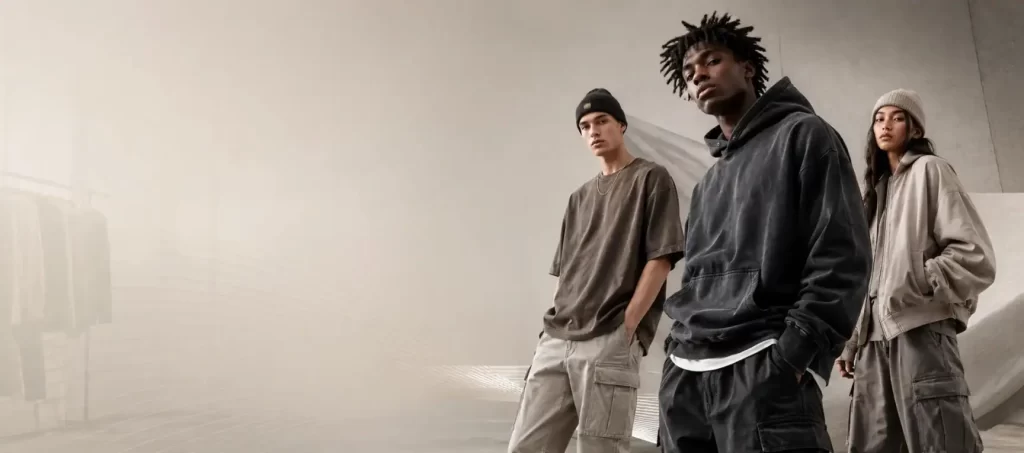
In Puff Print vs. Screen Print vs. Embroidery for Streetwear, puff print is suited to bold raised graphics, conventional screen printing provides greater flexibility for large or detailed artwork, and embroidery creates a structured textile finish. The correct method is the one that remains visually accurate and technically stable on the selected garment.
How the Three Decoration Methods Work
Puff Print: A Raised Screen-Printed Effect
Puff print is technically a form of screen printing. An expanding additive is mixed into the ink, which rises during heat curing to create a three-dimensional surface.
It works well for:
•Bold typography and simple wordmarks
•Thick outlines and solid graphic areas
•Vintage or collegiate-style streetwear
•Small-to-medium focal graphics
Puff ink expands both upward and outward. Fine lines, narrow gaps and small text may close during curing. The final loft depends on stencil thickness, mesh selection, ink deposit, print passes and heat consistency.
Conventional Screen Print: Flexible Graphic Reproduction
In this case, "screen print" means a flat ink layer as opposed to a puff effect. It can print spot colors, underbases, and halftones and can also print layered artwork. Because of this, it can be used for oversized back graphics and for multicolor collections.
Production accuracy depends on:
•Artwork separation and halftone preparation
•Mesh count and stencil selection
•Underbase opacity on dark garments
•Color-to-color registration
•Ink-film thickness and full curing
A large graphic may be technically printable but still feel too heavy if the ink deposit does not match the fabric and intended hand-feel.
Embroidery: Structure Through Thread
Embroidery converts artwork into a stitch file. Flat embroidery, 3D puff embroidery, chenille and appliqué can all create different streetwear effects.
Embroidery is commonly used for chest logos, sleeve marks, jackets, caps and compact branding. Large, high-density embroidery may restrict drape or distort lightweight knits, so digitizing, underlay, stitch direction, backing and hoop tension must be developed around the fabric.
Puff Print vs. Screen Print vs. Embroidery for Streetwear Compared
| Decision Factor | Puff Print | Screen Print | Embroidery |
| Visual character | Raised, rounded and tactile | Flat, sharp and graphic | Textured and structured |
| Best artwork | Bold text and simple shapes | Illustrations, halftones and large graphics | Small logos, badges and lettering |
| Fine-detail capacity | Limited by ink expansion | Generally the most flexible | Limited by thread and stitch size |
| Large-area use | Can become thick or uneven | Usually the most practical | May add weight and stiffness |
| Fabric interaction | Requires a stable print surface | Ink must match fiber and stretch | Fabric needs suitable stabilization |
| Main cost drivers | Ink deposit, passes and curing | Colors, screens and print area | Stitch count, density and machine time |
| Typical failure modes | Low loft, uneven rise or collapse | Misregistration, cracking or under-curing | Puckering, distortion or thread breaks |
No method is automatically the most durable. Durability depends on material compatibility, correct processing and verified wash performance.
Matching Decoration to the Garment
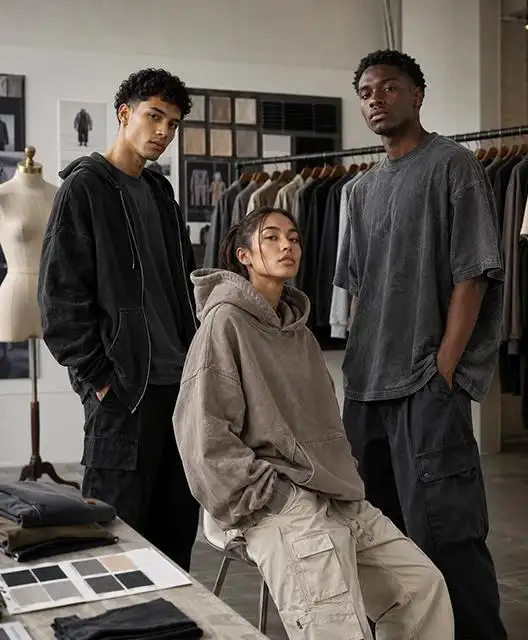
When considering Puff Print vs. Screen Print vs. Embroidery for Streetwear, we always look at the intent behind the design of the garment construction.
•If the design calls for a tactile element or a dimensional focal point, you would want to use a puff print.
•For large back designs, as well as multicolor graphics, photographic halftones, and designs that require sharper edges, you would want to use a screen print.
•Use embroidery for compact branding, structured outerwear and areas where thread texture adds value.
•Use a combined application when a collection needs visual hierarchy, such as a flat graphic with raised puff details and a small embroidered logo.
Placement also matters. Seams, pockets, zippers, rib panels and garment thickness can interfere with a flat printing surface or embroidery hooping.
Fabric, GSM and Washing Compatibility
Heavyweight jersey, fleece and French terry generally support substantial prints and embroidery better than lightweight or highly elastic knits. However, GSM alone is not enough; knitting density, surface texture, stretch recovery and drape must also be checked.
Common risks include:
•Fleece fibers interrupting a smooth ink surface
•Dense embroidery pulling lightweight fabric inward
•Thick ink films reducing fabric flexibility
•Polyester dye migration affecting light-colored prints
•Garment washing changing measurements and decoration appearance
Pigment dye, enzyme wash and vintage wash can alter shade, hand-feel and surface abrasion. The sequence of washing, printing and embroidery must therefore be confirmed during development. Printing before washing may create deliberate distressing, while printing after washing offers different color and surface control.
Critical Production Controls
Puff Print Control
Puff quality is particularly sensitive to heat. Insufficient curing can reduce wash resistance, while excessive temperature or dwell time can cause the expanded ink to collapse. A production sample should establish:
•Target puff height and edge profile
•Acceptable surface texture
•Ink deposit and print sequence
•Flashing and final-curing conditions
•Appearance after washing
Screen Print Control
For conventional screen printing, the approved standard should define color, opacity, placement, registration and hand-feel. On dark garments, the underbase must provide coverage without making the print unnecessarily rigid.
Embroidery Control
Embroidery approval should cover stitch count, stitch density, underlay, thread color, backing and finished dimensions. The factory should inspect the garment both flat and worn because puckering may become more visible when the fabric is under tension.
Cost, MOQ and Production Scale
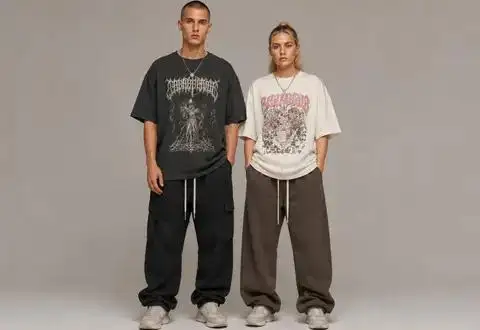
Cost cannot be ranked without reviewing the artwork. Screen-printing cost increases with color and screen count. Puff print may require additional setup, heavier ink deposits and closer curing control. Embroidery cost is primarily affected by stitch count, size, density and machine time.
At Minghang Garments, our standard cut-and-sew streetwear programs start at 100 pieces per style per color. More complex fabric programs, dyeing, and/or more intricate mixed-decoration programs will require a greater minimum order quantity. For more controlled and consistent smaller quantity orders, we recommend limiting the number of colors and decoration positions.
Quality Control Sampling and Bulk
Prior to bulk production, Minghang Garments checks:
•Decoration's compatibility with the fabric
•Dimensions, colors, and placement of graphics
•Puff height and surface consistency
•Screen print registration and curing
•Embroidery backing and puckering
•Garment shrinkage and post-wash appearance
The approved pre-production sample, along with the artwork files and tech packs, serve as reference for bulk production. Inline and final inspections are done against these reference standards.
Final Recommendation
The practical conclusion of Puff Print vs. Screen Print vs. Embroidery for Streetwear is not that one process wins. Puff print creates dimension, screen print provides graphic flexibility, and embroidery contributes textile structure. The right result comes from matching the process to the artwork, fabric, wash and intended silhouette.
If you have a tech pack, reference garment or graphic concept, Minghang Garments can review its production feasibility and develop a physical sample before bulk production. This provides a clearer basis for selecting the decoration method and controlling the finished collection.
FAQs
Q1. Can Minghang apply these techniques to washed streetwear?
Yes. Minghang supports selected pigment dye, enzyme wash, vintage wash and tie-dye effects. Because washing can change garment dimensions, surface texture and decoration appearance, the wash and application sequence must be tested before bulk production.
Q2. Can Minghang help us choose the right decoration method?
Yes. Minghang reviews the artwork, garment silhouette, fabric GSM, surface texture, stretch, wash process and target hand-feel before recommending a method. The decision is based on production compatibility rather than appearance alone.
Q3. What is Minghang Garments' MOQ for decorated streetwear?
The standard MOQ for cut-and-sew streetwear starts from 100 pieces per style per color. Custom-developed fabrics, special dyeing or complex mixed-decoration programs may require approximately 300–500 pieces per color, depending on the process.
Q4. Can puff print, flat screen print and embroidery be combined?
Yes. Multiple techniques can be used on one garment when their positions and production sequence are compatible. Minghang confirms whether washing, printing or embroidery should occur first and validates the combination through physical sampling.
Q5. How long does a custom streetwear sample take?
A standard streetwear sample usually requires around 12–15 working days after the materials, artwork and specifications are confirmed. Complex garment washes, embroidery programs or layered print effects may require additional development time.
Written by
Minghang Garments
Apparel Manufacturing Team
Minghang Garments is a custom apparel manufacturer specializing in activewear, streetwear and private-label clothing development. Our team supports brands through fabric sourcing, product development, sampling, bulk production and quality control, with OEM and ODM solutions for startups, growing labels and established apparel businesses.
-
Share
-

-

-